Adapalene and Benzoyl Peroxide for Acne Treatment
Learn how adapalene and benzoyl peroxide work together to clear acne. Discover application tips, side effects, and when to use this combination treatment.
SEO brief
- Primary keyword: Adapalene and benzoyl peroxide
- Secondary keywords: acne treatment, prescription acne gel, topical retinoid, benzoyl peroxide gel, acne irritation, UK pharmacy
- Search intent: Understand what the treatment does, how to use it, and whether the irritation is worth it
- Target reader: UK adults looking for practical acne advice across the counter
- Product/service mention: Prescription online pharmacy access in the UK
- Internal links available: Acne support page, tretinoin cream, Differin cream, hyperpigmentation page, Duac gel
You've probably stood in front of the mirror, tried a cleanser, a spot gel, maybe a few “miracle” products, and still found new spots the next week. Adapalene and benzoyl peroxide is a prescription acne gel that tackles breakouts from two angles, and it's often used when simple over-the-counter options haven't done enough. It can work well for mild to moderate acne vulgaris, especially when you've got both blocked pores and inflamed spots. The catch is irritation, so a key question is not just whether it works, but whether your skin can tolerate it long enough to benefit.
What Adapalene and Benzoyl Peroxide Does for Your Skin
If you've tried a basic cleanser, then a spot treatment, and the spots keep coming back, this combination can feel like a more serious step. Adapalene and benzoyl peroxide is a fixed-dose combination acne treatment that pairs a retinoid with an antimicrobial agent, so it works on clogged pores and acne inflammation at the same time Cleveland Clinic, NICE-style stepwise use is reflected in UK practice.
Featured-snippet answer: It's a prescription acne gel that helps stop pores blocking up and reduces acne bacteria at the same time.
It's usually used for mild to moderate acne vulgaris, especially when you've got a mix of blackheads, whiteheads, papules, and pustules. The product's strength is that it doesn't rely on one pathway alone. That matters because acne isn't just one problem, it's a mix of blocked follicles, inflammation, and bacterial activity.
For a quick reality check, this isn't a one-night fix. Clinical data show a median time to first response of 14 days in one study, and in pooled data the share with moderate or severe acne dropped from 92% at baseline to 51% at 4 weeks PubMed. Another study found 91.5% of patients improved after 12 weeks PubMed. That kind of timeline fits better with a patient who can stick with treatment, not someone expecting instant clearing.
Practical rule: If your acne is mostly a few occasional spots, a simpler option may be enough. If you keep getting both blocked pores and inflamed breakouts, this combination is more worth discussing.
For UK readers, it's especially relevant when you want an antibiotic-sparing option and need something stronger than a simple wash or single-ingredient gel. If your skin is very reactive, or your acne is mild and sporadic, a gentler starting point may make more sense. For general acne background, the Courier Pharmacy acne page is a useful place to compare the usual treatment steps.
How the Two Ingredients Work Together
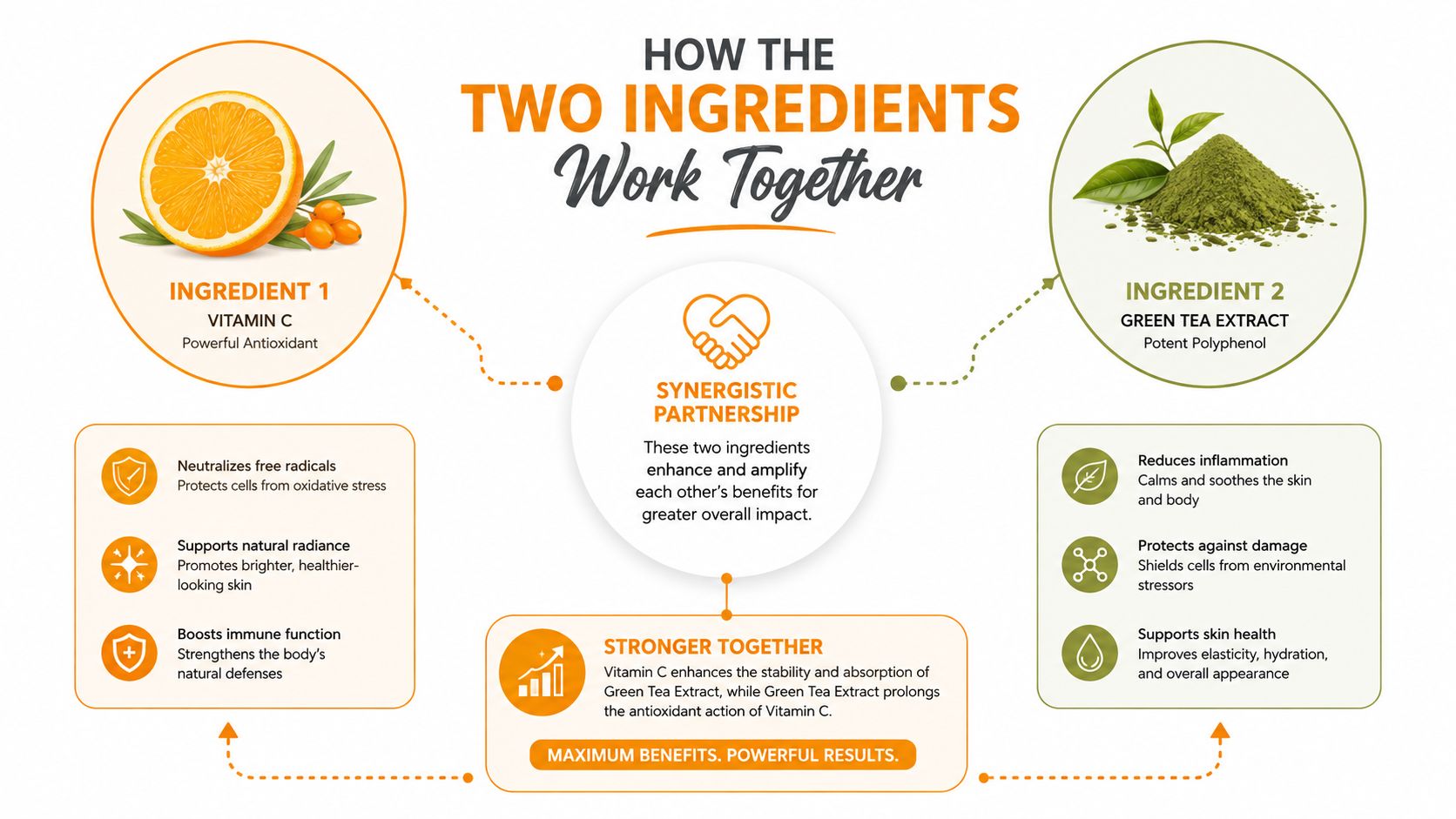
Adapalene and benzoyl peroxide do different jobs, and that's exactly why they fit together. Adapalene is a third-generation retinoid that helps normalise how skin cells shed, so pores are less likely to clog in the first place overview of adapalene and benzoyl peroxide. This is akin to keeping a drain clear, rather than waiting to unblock it after the sink overflows.
Benzoyl peroxide works in a different way. It penetrates the pilosebaceous unit and releases oxygen, which acne-causing bacteria don't tolerate well overview of adapalene and benzoyl peroxide. That makes it useful when inflamed spots are part of the picture, because it helps reduce the bacterial load without using an antibiotic.
Why the combination often works better than one ingredient alone
The combination matters because it hits both comedogenesis and inflammation. Ex vivo acne-skin studies found the two ingredients together significantly reduced Ki67, integrins α2 and α6, TLR-2, β-defensin 4, and IL-8, while single agents were less effective PubMed. In plain English, the gel doesn't just dry spots out. It also calms the inflammatory signals that keep the cycle going.
That split helps explain why different lesion types respond differently. Benzoyl peroxide tends to act faster on inflammatory lesions, while adapalene is stronger for comedonal acne, the blackheads and whiteheads that come from blocked pores PMC. Put together, you get broader coverage than you do from either ingredient alone.
The combination is useful when acne has more than one face. If you only treat the bacteria, you can leave the clogged-pore part untouched. If you only treat clogged pores, inflamed spots can still keep flaring.
This is also why clinicians often like it for patients who want an antibiotic-sparing routine. Benzoyl peroxide itself can reduce P. acnes by roughly 1.0 to 2.0 log10 in vivo, which helps explain its place in inflammatory acne care PubMed. The combination gives you that antibacterial effect alongside the retinoid action, without leaning on antibiotic creams.
Applying the Gel Correctly and Building Tolerance
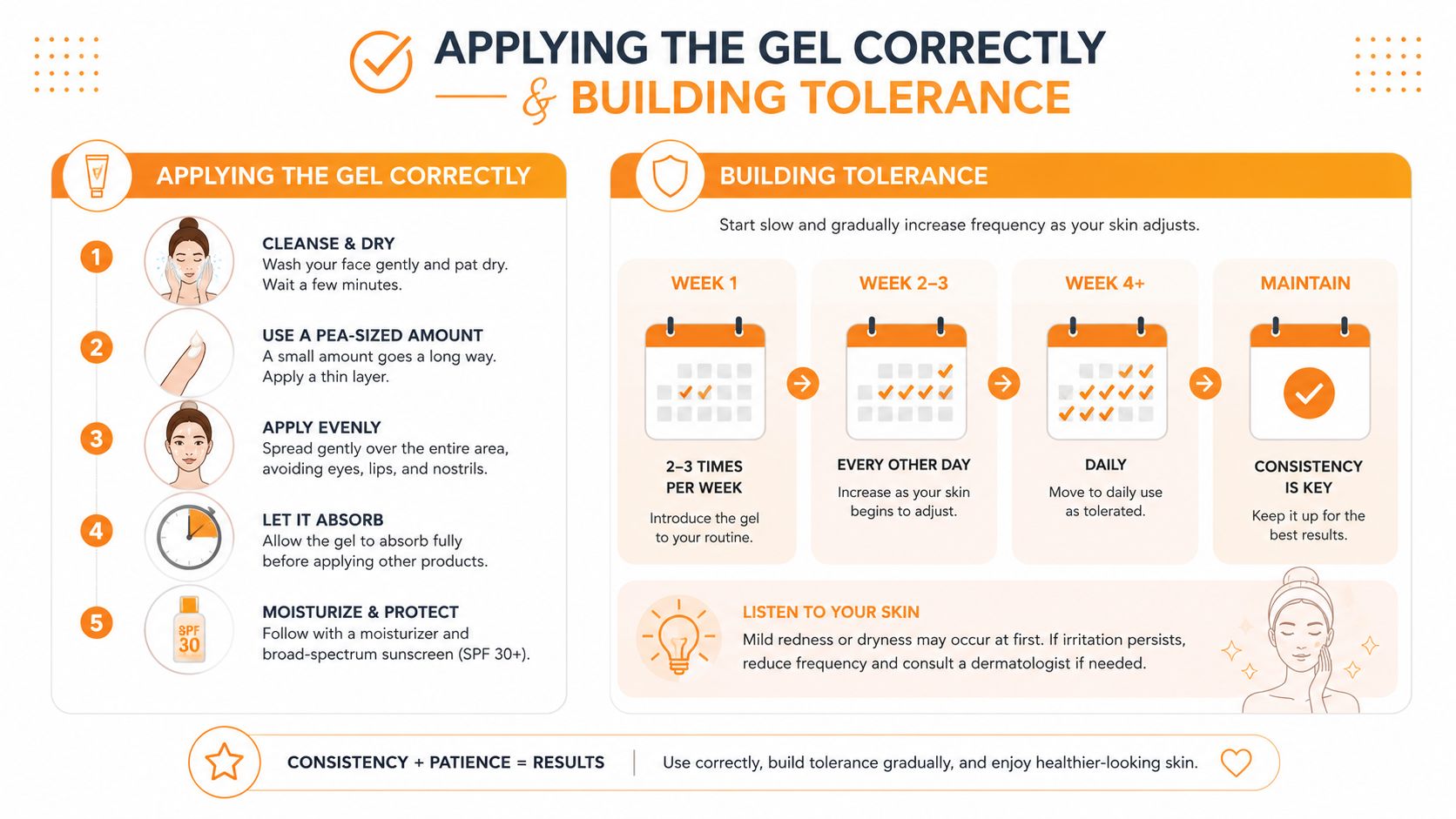
The biggest mistake I see is people using more because they want faster results. That usually backfires. Use a pea-sized amount for the face, because more product doesn't make it work quicker, it just raises the chance of irritation Mayo Clinic.
Apply it to clean, completely dry skin. Wet skin lets the gel spread and sting more, which is why damp application often feels harsher than people expect. Wash your hands before and after, and avoid eyes, lips, nostrils, and broken skin.
A sensible start-up routine
For many people, a gentler start helps skin settle.
- Week 1 to 2: Use it every other night if your prescriber agrees.
- If skin copes well: Move towards nightly use.
- If stinging builds: Step back to the last frequency your skin tolerated.
- Add a bland moisturiser: Choose one without scrubs, acids, or fragrance.
- Use sunscreen daily: Adapalene can make skin more photosensitive PrescriberPoint.
The first few weeks are often the awkward bit. That doesn't mean the treatment is failing. It usually means your skin is adjusting, which is why gentle cleansing matters more than heroic scrubbing. Skip harsh face washes, physical exfoliants, alcohol-heavy toners, and other active ingredients until your skin has settled.
Pharmacist's tip: Put moisturiser on after the gel has dried if your skin feels tight. If your face is already sore before bedtime, that's a sign to slow the schedule rather than push through.
Pharmacist's tip: If you're using other acne products, don't stack them all at once. Too many actives at the same time usually causes more redness, not faster clearing.
Pharmacist's tip: Sunscreen isn't optional on sunny days, even in the UK. If you're outdoors for work, commuting, or sport, make it part of the morning routine.
If severe irritation develops, stop the gel and speak to a pharmacist, GP, or dermatologist. Intense burning, swelling, blistering, or eye symptoms need proper review. The point is to build tolerance, not to “tough it out” until the skin barrier gives up.
Understanding Side Effects and the Irritation Trade-Off
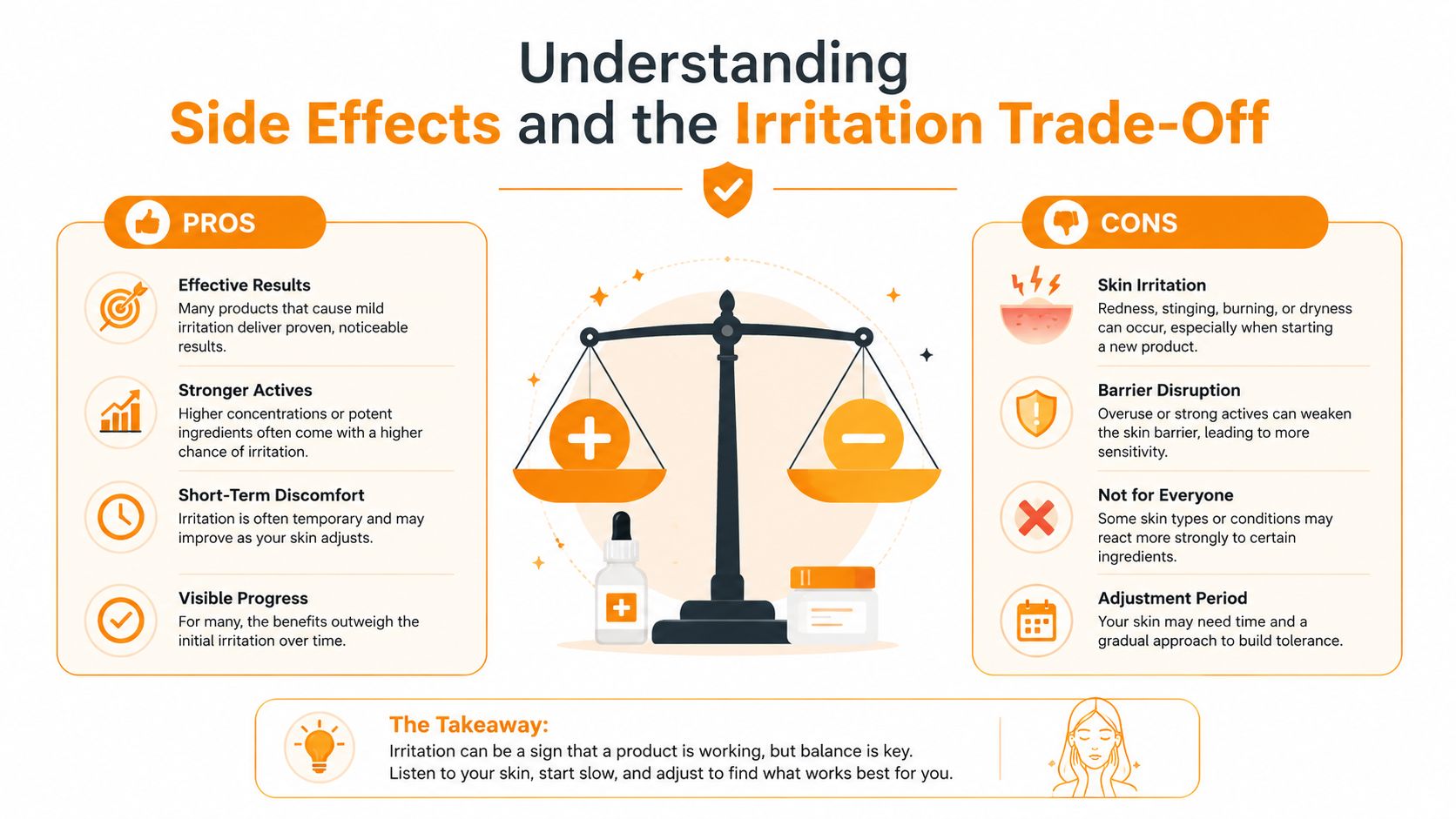
This is the question many individuals consider, because they've already had enough of sore, flaky skin. The honest answer is that adapalene and benzoyl peroxide can work well, but it can also irritate more than simpler options. A 2022 network meta-analysis found the combination was the most effective topical option versus vehicle, but it also had the highest withdrawals due to adverse events AAFP summary of the meta-analysis.
What side effects usually look like
The main practical issues are dry skin, contact dermatitis, application-site burning, application-site irritation, and skin irritation PrescriberPoint. These are usually local, not whole-body effects. They can feel annoying, but they don't automatically mean you've done something wrong.
The early phase is often the roughest. Many people notice dryness, redness, flaking, or warmth first, then see those effects settle as skin gets used to treatment Mayo Clinic. That said, not everyone adjusts at the same pace, and some skin types won't tolerate the combination well.
When to persist, and when to step back
If the skin is a bit dry but otherwise fine, individuals can often manage by reducing frequency and using a moisturiser. If the skin becomes painful, cracked, swollen, blistered, or very red, that's no longer standard adjustment. At that point, stop the treatment and get advice.
Practical rule: Mild dryness is common. Pain, swelling, blistering, or eye irritation isn't something to ignore.
The tolerability trade-off is personal. Some patients would rather accept a bit of dryness if it means faster improvement. Others would rather start with a simpler routine and keep the skin comfortable enough to stay consistent. Both choices can be reasonable.
For patients worried about skin marks after acne settles, it's worth being careful with irritation. The Courier Pharmacy hyperpigmentation page is a useful reminder that inflamed, over-irritated skin can leave its own trace, so protecting the barrier matters as much as chasing clearance.
Comparing Treatment Options for Different Acne Types
Not every acne pattern needs the same treatment. If your main issue is the odd breakout before your period or a few blocked pores, a simpler option may do the job. If you've got both clogged pores and inflamed spots, adapalene and benzoyl peroxide often makes more sense because it treats both sides of the problem PMC.
How it compares with common alternatives
| Treatment | How It Works | Best For | Key Considerations |
|---|---|---|---|
| Adapalene and benzoyl peroxide | Retinoid plus antimicrobial action | Mild to moderate acne with mixed lesion types | Strong topical option, but irritation can be the sticking point |
| Benzoyl peroxide alone | Antimicrobial and anti-inflammatory | Inflamed spots, simpler routines | Often easier to start with if skin is sensitive |
| Topical retinoid alone | Helps prevent blocked pores | Blackheads, whiteheads, maintenance | Can be better for comedonal acne on its own |
| Antibiotic-containing combination | Reduces bacteria and inflammation | Some inflammatory acne cases | Not the best long-term stewardship choice because of resistance concerns |
| Oral treatments | Work beyond the skin surface | More widespread or stubborn acne | Usually considered when topical treatment isn't enough |
The antibiotic-sparing advantage matters in real life. A 2021 review notes that this combination does not contribute to antibiotic resistance, although cost and limited availability can still affect use PubMed. That makes it appealing when someone needs a stronger non-antibiotic topical option and wants to avoid repeated antibiotic courses.
For some, however, the simplest regimen remains the smartest initial step. A busy parent requiring something they will use every night might do better starting with one active ingredient. A gym-goer who showers twice a day may tolerate a stronger plan, but still needs to consider dryness and sunscreen. The right choice depends on skin type, lesion type, and how much irritation you can live with.
Pharmacist's tip: If you've used a topical treatment for long enough and the acne is still active, ask about stepping up rather than endlessly repeating the same thing. Topical acne care works best when you review response and don't just keep hoping for a different result.
If you need stronger treatment, oral antibiotics, hormonal options, or isotretinoin may come into the picture through GP or dermatology care. That usually depends on acne severity, scarring risk, and how well you've done with topical treatment. A plain, structured treatment review is better than guessing for months.
Getting a Prescription Safely in the UK
In the UK, this is a prescription-only treatment, so the safe routes are the same ones you'd expect for other acne medicines. You can speak to your GP, get a dermatology referral, or use a regulated online pharmacy with proper clinical review. The online route can be convenient, but it still needs a real medical assessment.
A legitimate service should ask for your medical history, current medicines, allergies, and the details of your acne. With a regulated online pharmacy, the process usually involves a secure questionnaire and review by a human prescriber before anything is supplied. Courier Pharmacy uses secure, GDPR-compliant online questionnaires and human prescribers review each case individually, which is the sort of process you should expect from a proper service.
What to check before you order
- GPhC registration: Make sure the pharmacy is registered and traceable.
- Clinical questions: A real service asks about skin conditions, pregnancy risk, and other medicines.
- Follow-up support: You should be able to ask for advice if irritation develops.
- No shortcut selling: If a site offers prescription acne treatment without any health questions, walk away.
Pharmacist's tip: Be wary of unregulated sellers who skip the consultation. Prescription acne treatment isn't a cosmetic purchase, it's a medicine decision.
Costs and delivery times vary by service and product, so it's sensible to compare carefully rather than assuming the first option is the best fit. If your acne is severe, scarring, or not improving after a proper trial, in-person review is better than trying to manage everything online. That's especially important if your skin is painful, widespread, or reacting badly.
If you want a regulated UK route for acne treatment, Courier Pharmacy offers online prescribing with clinical review and can advise whether a prescription gel is appropriate for you. Visit Courier Pharmacy to complete a secure consultation and get guidance on acne treatment options that fit your skin and your tolerance.
Summary
Adapalene and benzoyl peroxide is a prescription acne gel that treats acne from two angles.
It helps with both blocked pores and inflamed spots.
It works best for mild to moderate acne vulgaris.
The main trade-off is irritation, especially in the early weeks.
Using a small amount on dry skin helps reduce that risk.
If your skin gets very sore, swollen, or blistered, stop and seek advice.
For some people, a simpler treatment is the better place to start.
FAQs
What is adapalene and benzoyl peroxide used for?
It's used to treat mild to moderate acne vulgaris. The combination helps reduce blocked pores and acne-causing bacteria at the same time Cleveland Clinic.
How long does adapalene and benzoyl peroxide take to work?
Some people notice a first response within about 14 days, but acne often improves more clearly over several weeks PubMed. It's a treatment that rewards consistency.
Can I use moisturiser with adapalene and benzoyl peroxide?
Yes. A gentle, non-irritating moisturiser can help with dryness and flaking. Many patients find that keeps them on treatment for longer.
Should I use sunscreen with this gel?
Yes. Adapalene can make skin more sensitive to sunlight, so sunscreen helps protect your skin PrescriberPoint. That matters even on cloudy UK days.
Is it normal for my skin to sting or peel?
Mild dryness, burning, and peeling are common early on Mayo Clinic. If the irritation is severe, stop and get advice.
Can I use adapalene and benzoyl peroxide with other acne products?
Not straight away, and not without checking first. Adding too many active ingredients can make irritation worse, especially at the start.
Is this better than benzoyl peroxide alone?
It can be, especially if you have both blocked pores and inflamed spots. Benzoyl peroxide alone may suit people who need a simpler and often gentler start.
Does it cause antibiotic resistance?
No, and that's one reason it's useful in acne care PubMed. It gives an option that doesn't rely on antibiotics.
When should I ask for more help?
If your acne is painful, scarring, spreading, or not improving after a proper trial, speak to a pharmacist, GP, or dermatologist. If the skin reaction is severe, stop the gel and get help sooner.
Meta description
Adapalene and benzoyl peroxide explained for UK acne treatment, including how it works, side effects, application tips, and when the irritation is worth it.
Internal links
Byline
Written by the Medical Mojo editorial team, UK pharmacy content writers.
Clinical review by a UK-registered pharmacist, GPhC-registered.
How this content was created
This article was written from verified trial data, peer-reviewed review literature, and UK-relevant pharmacy practice sources. It was then checked for safety, accuracy, and plain-English clarity before publication.
References
- Systematic review of fixed-dose adapalene and benzoyl peroxide, 2024
- Clinical study and pooled analysis of adapalene-benzoyl peroxide
- Overview of adapalene and benzoyl peroxide mechanisms
- Ex vivo acne-skin study of the combination
- Network meta-analysis summary on efficacy and withdrawals
- Review on antibiotic resistance and access issues
- Cleveland Clinic drug information
- PMC review on lesion types and treatment response
- PrescriberPoint safety and side effects summary
- Mayo Clinic topical application route information


