Can U Drink While Taking Doxycycline? UK Guide 2026
Can u drink while taking doxycycline? Alcohol can reduce its effectiveness. Get UK advice on risks and when to see a pharmacist.

If you want the safest answer, avoid alcohol for the whole course, because it can make doxycycline less effective, and no UK guidance sets a safe number of drinks. That is the honest position behind the late night search for “can u drink while taking doxycycline”, and it holds whether you're on a seven day course for an infection or a longer course for acne.
This guide unpicks the three separate worries hiding inside that question: whether alcohol weakens the antibiotic itself, whether it makes side effects and missed doses more likely, and who needs extra care before the first tablet. You'll get a situation by situation table, a daily routine that protects your treatment, four realistic UK scenarios, and the signs that mean picking up the phone.
Five key takeaways
- Avoid alcohol for the whole course where you can. That's the NHS position, and it's the simplest way to keep treatment reliable.
- No safe number of drinks exists. UK guidance gives no threshold, so nobody can promise that one glass or three is fine for you.
- Heavy or daily drinking is the case that matters most. Tell your prescriber before you start, because the dosing plan may change.
- Spacing a drink a few hours from your capsule isn't a proven fix. No cited NHS guidance sets such a rule.
- Never take extra tablets after a missed dose. Continue as directed and ask a pharmacist if you're unsure.
Can You Drink Alcohol While Taking Doxycycline?
The NHS doxycycline guidance tells patients to avoid alcohol while taking the medicine, because drink can interfere with it and make it work less well, particularly in people with a history of heavy drinking. That's a different warning from the one attached to metronidazole, which can trigger a violent reaction. Doxycycline doesn't sit in that group.
The concern here is quieter. Alcohol may weaken the antibiotic's effect, and it can make illness symptoms like nausea, dizziness or feeling generally unwell worse. The NHS suggests checking with a pharmacist or prescriber if avoiding alcohol is difficult, which is a realistic instruction rather than a telling off.
Can you drink on doxycycline? Avoid it where you can, and get advice if you can't.
Sorting your situation in seconds
Find your row, follow it, and read on for the reasoning behind it.
| Situation | Advice | Main concern |
|---|---|---|
| Occasional light drink | Avoid where possible; ask a pharmacist if it's hard to avoid | Less reliable treatment and feeling unwell |
| Regular or heavy drinking | Avoid for the whole course and tell your prescriber | Doxycycline may be less effective |
| Chronic alcohol dependence | Tell your prescriber before starting and seek advice | Doxycycline may stay in the body for less time |
| Liver disease or concerns about treatment failure | Seek advice before starting or continuing | Liver-related caution and poorer treatment response |
| Missed or delayed dose | Don't take extra tablets to catch up; ask for advice if unsure | Reduced antibiotic cover |
Doxycycline treats several bacterial infections in the UK, from skin and chest infections to dental problems, so finishing the course correctly carries real weight. If a dose is late or missed, the fix is never to swallow an extra tablet to catch up. Carry on as directed and ask if you're unsure.
Practical rule: find your row, follow it for the whole course, and let a pharmacist handle anything that doesn't fit neatly.
None of the UK sources here set a waiting time between your last tablet and your first drink. If you've got a night out planned for the day the course ends, ask a pharmacist or read your leaflet rather than guessing. And if avoiding alcohol feels impossible, say so early, because that's a conversation worth having before the first dose rather than after the last.
Why alcohol weakens doxycycline and who needs extra care
Doxycycline works best when a steady level of the medicine sits in your bloodstream across the whole course, keeping pressure on the bacteria. Think of a bath you keep topping up. The water has to stay above a certain line, and every gap between top-ups gives the infection room to recover.
Half-life is the time your body takes to clear half of a dose. Shorten it, and levels fall faster between tablets.
What alcohol does to that steady level
UK prescribing guidance from NHS England sets out the specific mechanism. In chronic alcohol dependence, alcohol may reduce doxycycline's half-life, so the drug stays in the body for less time and potentially provides less sustained antibacterial exposure. The same patient-group directions note that twice-daily dosing may reduce the practical significance of this, which is exactly the sort of thing a prescriber can plan around once they know.
Look at what that guidance doesn't offer. It gives no percentage reduction and no universal safe alcohol threshold. Anyone promising that a set number of drinks is harmless on doxycycline has gone past what UK sources support.
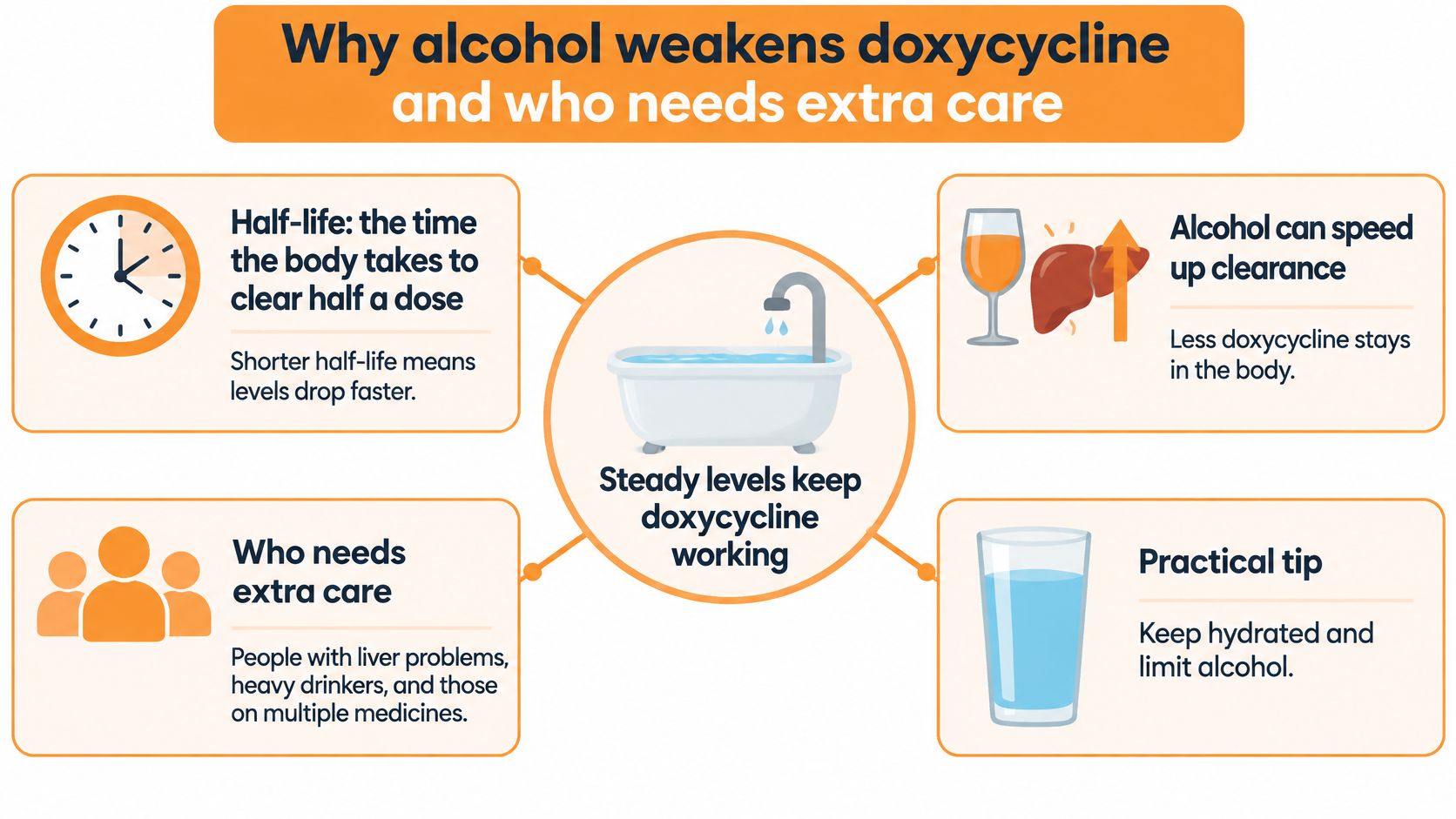
The NHS guidance on antibiotic interactions draws a clear line between doxycycline and antibiotics that cause a specific alcohol reaction, such as linezolid. With doxycycline, the main issue isn't a predictable flushing or collapse after one drink. It's reduced effectiveness, and the guidance warns specifically that the drug may be less effective in people with a history of heavy drinking.
Alcohol shortens the time doxycycline stays in the body. Less time in the body means less steady levels. Less steady levels mean a weaker effect on the infection.
Who needs to speak up before the first dose
Three groups should raise a hand before swallowing anything.
- People who drink heavily most days. Your prescriber may choose twice-daily dosing or a different antibiotic, and that decision needs to happen at the start.
- People with chronic alcohol dependence. NHS England lists it among the cautions needing extra advice, next to liver-related considerations and other medicine interactions.
- People with liver disease or a previous treatment failure. Both change how a clinician thinks about your next course.
Weaker cover matters in practice. An infection can linger, come back a fortnight later, or fail to clear because the drug never reached a reliable level. That's how a short course turns into a second course, a swap of antibiotic, or a repeat test.
If your prescriber decides a different tetracycline suits you better, our guide to lymecycline side effects covers the sister drug in detail. The principle stays the same across the group: steady levels, full course, honest answers about how much you drink.
How to Take Doxycycline Safely Every Day
Most day to day problems with doxycycline come from how people take it, not from the capsule itself. A routine that protects your gullet and your timing does more for your treatment than any single rule about alcohol.
A daily routine that protects your treatment
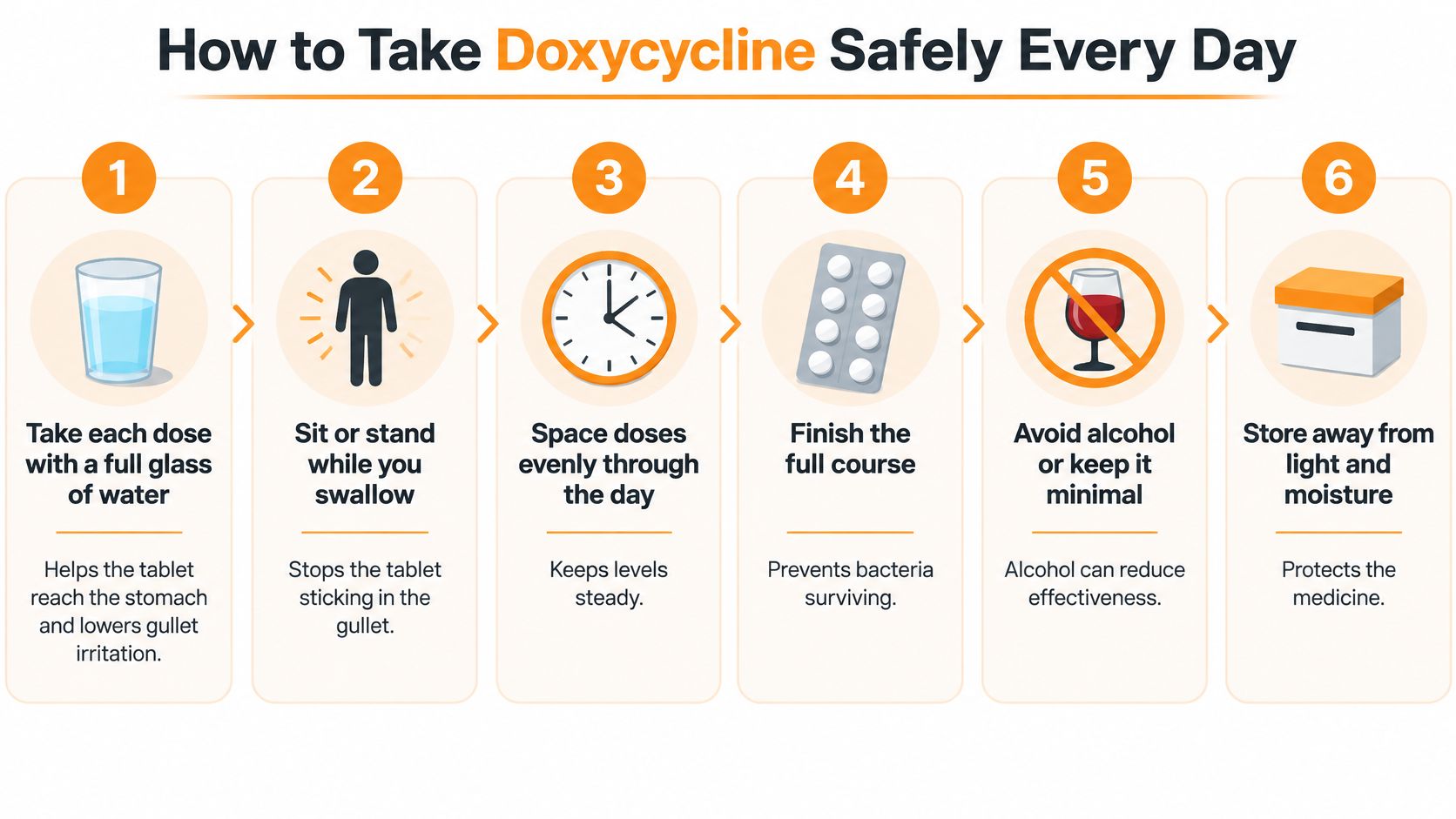
- Swallow each dose with a full glass of water. Plenty of fluid helps the tablet reach the stomach quickly instead of sitting in the food pipe.
- Sit or stand while you take it. Swallowing upright lets gravity do its job.
- Stay upright afterwards. Don't lie down straight away, because a tablet that lingers can irritate or ulcerate the gullet.
- Follow the food instructions on your own label. Some products work best on an empty stomach, others don't care.
- Set a phone alarm for each dose and keep the pack somewhere visible. Even spacing is what keeps levels steady.
- If you miss a dose, follow the leaflet and don't take extra tablets. Doubling up doesn't restore the missing cover.
- Keep antacids and mineral supplements away from your dose. Iron, calcium, magnesium and some supplements can reduce absorption by up to 100%, according to NHS antimicrobial guidance for doxycycline, so follow the spacing on your leaflet.
- Skip alcohol for the whole course. Not because one sip is dangerous, but because the guidance points that way and the alternatives are guesswork.
- Finish the full course, even once you feel better. Stopping early is how resistant bacteria survive, as our piece on how to prevent antibiotic resistance explains.
Steps five to eight are the ones a hangover wrecks. Nausea, reflux, dehydration, dizziness and broken sleep all get worse with alcohol, and each one makes a vomited or forgotten dose more likely. A missed dose lowers antibiotic exposure even when nothing chemical is happening between the drink and the drug.
A tablet that sticks in the gullet for a few minutes can cause days of soreness. Water and gravity prevent it, which is why both appear on every label.
Notice too that skipping alcohol doesn't cancel out bad spacing from antacids, calcium-rich drinks or iron tablets. Those are separate problems with separate fixes.
Watch for severe pain when swallowing or vomiting that won't settle. Either one means contacting a GP, NHS 111 or a pharmacist the same day rather than waiting it out.
Antacids, Supplements and Other Things That Block Absorption
Doxycycline is unusually fussy about what travels down with it. Minerals and antacids bind the drug in the gut so less of it reaches your bloodstream, which is why the label asks you to separate them.
| Product | Effect on absorption | Practical step |
|---|---|---|
| Antacids | Can reduce absorption (Gloucestershire Hospitals patient information) | Follow the spacing advice on the leaflet |
| Iron tablets or supplements | Can reduce absorption (NHS antimicrobial guidance) | Follow the spacing advice on the leaflet |
| Calcium supplements or calcium-rich products | Can reduce absorption (NHS antimicrobial guidance) | Follow the spacing advice on the leaflet |
| Magnesium supplements | Can reduce absorption (NHS antimicrobial guidance) | Follow the spacing advice on the leaflet |
| Zinc supplements | Can reduce absorption (Gloucestershire Hospitals patient information) | Follow the spacing advice on the leaflet |
| Alcohol | Can reduce the effect (Gloucestershire Hospitals patient information) | Avoid across the course; spacing from the capsule is not proven |
The Gloucestershire Hospitals doxycycline leaflet lists alcohol right alongside antacids and iron, zinc or calcium supplements as something that can reduce the medicine's effect. That grouping is the useful part. Patients often assume alcohol behaves differently, as if a gap of a few hours between the glass and the capsule neutralises it. No cited NHS guidance sets a spacing rule for alcohol, so the gap idea is a guess dressed up as a plan.
Can you just leave four hours between a drink and your tablet? There's no evidence based rule allowing that, so treat it as unproven.
Timing beats willpower: if you take several supplements, ask a pharmacist to write you a simple timetable you can stick on the fridge.
The right move is to check your own leaflet for the exact spacing it requires, and if you're juggling iron, calcium, magnesium, zinc or an indigestion remedy alongside your course, ask a pharmacist to build one schedule that fits them all. Our explainer on medication contraindications covers how these clashes get flagged in the first place.
Nights Out, Shifts and Busy Weeks on Doxycycline
Real life doesn't pause for a course of antibiotics. Here are four situations that come up constantly, and what helps in each.
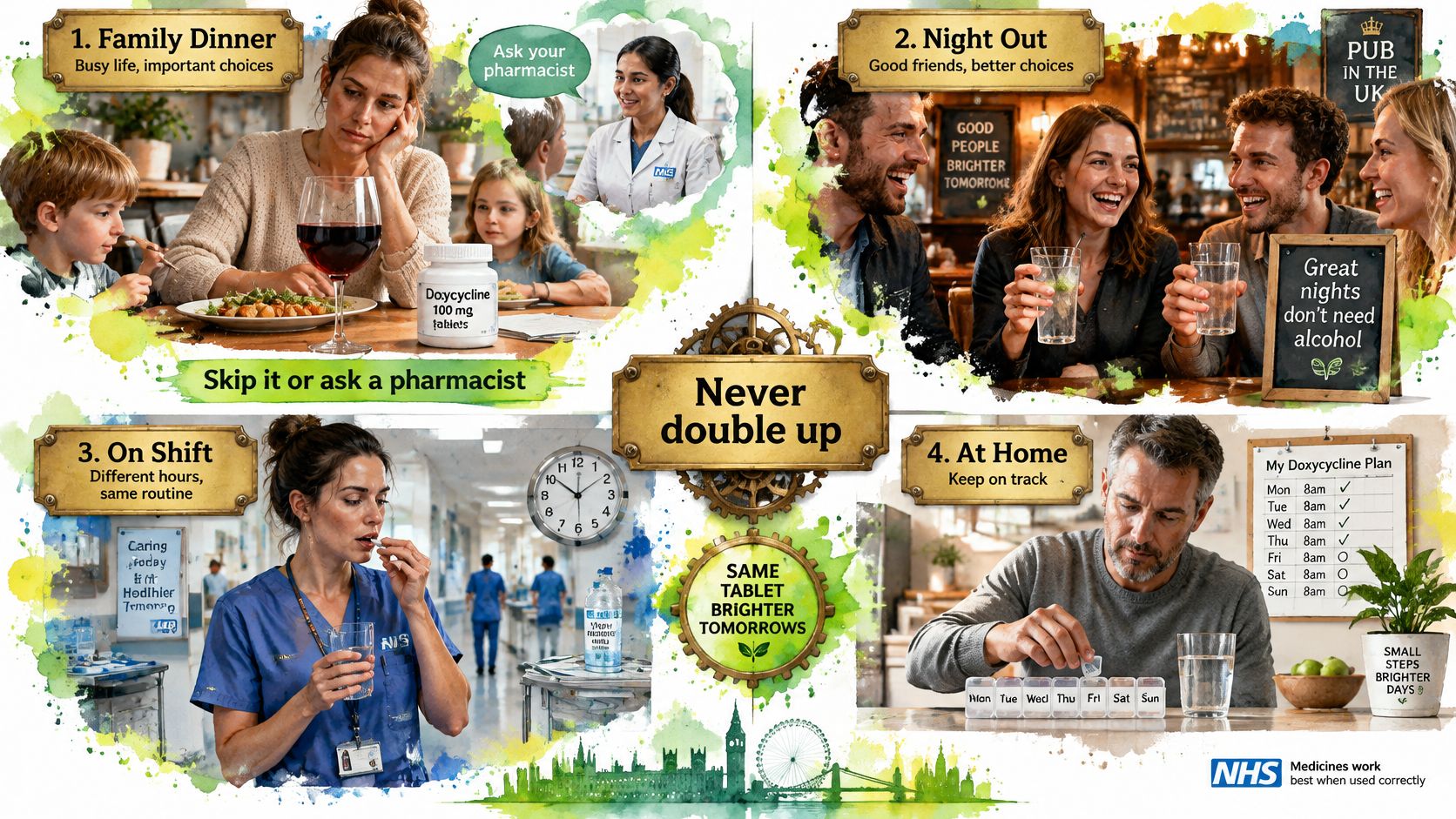
The busy parent. You're on doxycycline for a skin infection and the routine is school run, work, tea, then a glass of wine once the children are down. The sensible fix is to skip it for the fortnight or ask a pharmacist how to move an evening dose earlier. What you must never do is realise at midnight that the dose is late and take two tablets in the morning. If your course is for acne rather than an infection, our roundup of the best acne treatment in the UK covers how longer courses fit around normal life.
The shift worker. A nurse or warehouse worker finishing at 6am often unwinds with a drink before sleep. That combination hits hard, because the alcohol adds to the dehydration and tiredness already there, and the dose due at lunchtime gets slept through. Plan dose times around your sleep block, and keep the unwind drink for a day off.
The gym-goer. Beers after training on a hot evening feel earned, but dehydration plus doxycycline can leave you dizzy and queasy in a way neither would alone. Take your dose with a full glass of water before you leave the house, and put water between the pints.
That difference matters. Here's the short version of what the video below walks through.
The wedding weekend. A three-day celebration with heavy drinking is the scenario worth flagging to a pharmacist before the event, not after it. You can settle dose timing in a five minute chat and decide what you're going to drink in advance.
Before a big night: settle your dose times first, then decide what you're drinking. Doing it the other way round is how tablets get missed.
The test that settles most of these cases is simple. If drinking would make you sick, make you forget a dose, or stop you taking the medicine properly, that's reason enough to skip it this time. The course is short. The night out can wait a fortnight.
When to get urgent help
Many people never reach the signs below, and reading them doesn't mean you're heading there. They're here so you can act fast if something feels wrong.
Call 999 or go to A&E straight away for:
- Breathing difficulty. Any struggle to breathe or sudden wheeze needs emergency help.
- Swelling of the face, lips, tongue or throat. This is a serious allergic reaction and minutes matter.
Contact a GP, NHS 111 or a pharmacist the same day for:
- Severe pain when swallowing. A sharp, sticking pain in the chest or throat needs checking, not waiting.
- Persistent vomiting that stops doses staying down. You can't finish a course you can't keep down.
- A worsening infection. Symptoms that get worse, or don't improve as expected, need a review.
Heavy drinking makes vomiting and dehydration worse, so mention your drinking when you call. That one detail changes the advice you get. NHS 111 can help when it's unclear what to do next.
Confirm your drinking plan with a pharmacist
A pharmacist can check your doxycycline, your infection, your drinking pattern and everything else you take in a few minutes. Bring your pack, your usual weekly alcohol intake, any liver problems or alcohol dependence, and your supplement list.
Pharmacist's tip: ask about your alcohol plan before the first dose, not after a problem.
Pharmacist's tip: keep a full glass of water beside your dose, and drink water between alcoholic drinks.
Pharmacist's tip: if a dose is late or missed, call before taking anything extra.
Book a quick online pharmacist consultation before any drinking plans. This guide is informational only and isn't a substitute for medical advice. If symptoms change, a GP or NHS 111 can help.
Courier Pharmacy is a GPhC-registered online pharmacy, and a prescriber reviews every health questionnaire before anything is dispensed, so the alcohol question can sit in the same conversation as your dose timing and interactions. Customers who order antibiotics for water, ear or skin infections also get a free follow-up call from a prescriber to check the infection has cleared. Book with Courier Pharmacy before your next night out and get your drinking plan settled in one short chat.