How to Prevent Antibiotic Resistance at Home and in Care
Learn how to prevent antibiotic resistance with UK guidance on correct use, hygiene, vaccines and pharmacy support. Practical steps for patients.
In 2024, England recorded 20,484 antibiotic-resistant infections, up from 18,740 in 2023, with 2,379 deaths linked to these infections. The government said that was nearly 400 newly reported cases each week. UK Government data show why knowing how to prevent antibiotic resistance matters at home, in pharmacies and in healthcare.
Antibiotic resistance happens when bacteria change, so antibiotics no longer work against them. You can help slow this process by using antibiotics only when needed, taking prescribed doses correctly, preventing infections, supporting sensible testing and returning unwanted medicines to a pharmacy.
SEO brief
Primary keyword: how to prevent antibiotic resistance
Secondary keywords: antibiotic resistance prevention, antibiotic stewardship, taking antibiotics correctly, Pharmacy First, safe antibiotic disposal
Search intent: Practical health education and prevention advice
Target reader: UK adults, carers and health-curious readers
Product or service mention: Courier Pharmacy, mentioned once as a pharmacy support option
Internal links available: Relevant Courier Pharmacy condition, testing and online pharmacy pagesAssumptions: no specific Medical Mojo internal pages were supplied, so the available Courier Pharmacy links are used where requested.
Introduction to how to prevent antibiotic resistance
Antibiotic resistance means bacteria change in ways that stop antibiotics working. Prevention matters because every unnecessary dose gives bacteria another chance to adapt, while infections can also spread between people.
The UK has made progress. NHS reporting shows that human antimicrobial use was 5% below the 2019 baseline by December 2025, reaching the plan's reduction milestone. However, 67.3% of human antibiotic use was in the Access category, below the longer-term goal of at least 70%. NHS antimicrobial resistance reporting links good stewardship with surveillance, audits and electronic prescribing.
This guide focuses on practical choices. You'll learn when antibiotics help, how to take them safely, how to reduce infection spread, what tests and reviews can achieve, and how pharmacies fit into prevention.
Five actions that make a difference
- Use antibiotics only when needed: Colds, most coughs and many sore throats don't need them.
- Follow the prescription: Take each dose exactly as directed.
- Prevent infections: Handwashing, vaccination and good wound care reduce antibiotic demand.
- Support review and testing: Cultures can help clinicians choose, narrow or stop treatment.
- Dispose of leftovers safely: Return unwanted antibiotics to a pharmacy. Don't save or share them.
Quick answer
How do you prevent antibiotic resistance? Use antibiotics only for suitable bacterial infections, take them exactly as prescribed, prevent infections spreading, support appropriate testing and return unused medicines to a pharmacy.
Antibiotics remain vital. The aim isn't to avoid them at all costs. It's to use the right medicine for the right infection, for the right length of time. Lower and more targeted prescribing reduces the selective pressure that encourages resistant bacteria.
When antibiotics help and when they do not
Antibiotics treat some bacterial infections. They don't treat viruses, and many common illnesses improve without prescription medicine. NICE advises against antibiotics for self-limiting mild illnesses such as colds, most coughs, sinusitis, earache and sore throats. NICE antimicrobial stewardship guidance defines stewardship as an organisation-wide approach to careful antimicrobial use.
That doesn't mean you should diagnose yourself. Symptoms can overlap, and some people need assessment sooner, especially if they're frail, pregnant, immunosuppressed or have a long-term condition.
A simple guide for common illnesses
| Symptom or illness | Usually needs antibiotics | Safer next step |
|---|---|---|
| Cold | Usually no | Rest, fluids and advice from a pharmacist if needed |
| Most coughs | Usually no | Ask about symptom relief and watch for worsening symptoms |
| Mild sore throat | Usually no | Fluids, rest and suitable pain relief |
| Sinusitis | Often self-limiting | Seek advice if symptoms are severe, persistent or worsening |
| Earache | Not always | Ask a pharmacist, GP or NHS service for an assessment |
| Suspected bacterial infection | Sometimes | Arrange clinical assessment and follow the prescribed plan |
A useful starting point is the NHS advice for coughs and colds. A pharmacist can help you decide whether self-care is sensible or whether you need further assessment.
Featured answer: Antibiotics don't work for viral colds and flu. Taking them when they aren't needed exposes bacteria to the medicine without helping the virus.
Consider a busy parent whose child has a runny nose and a mild cough. The child may be uncomfortable, but antibiotics won't treat a viral cold. The parent can ask a pharmacist about fluids, rest and suitable symptom relief, while seeking urgent advice if the child becomes seriously unwell.
Now consider a shift worker with a sore throat before a night shift. Asking for antibiotics just to get through work may not help. A pharmacist can discuss symptoms and red flags, while the worker considers rest, fluids and staying away from others if infectious.
Stewardship protects your future options. It also helps clinicians preserve antibiotics for infections where they can prevent serious harm.
How to take antibiotics correctly and avoid common mistakes
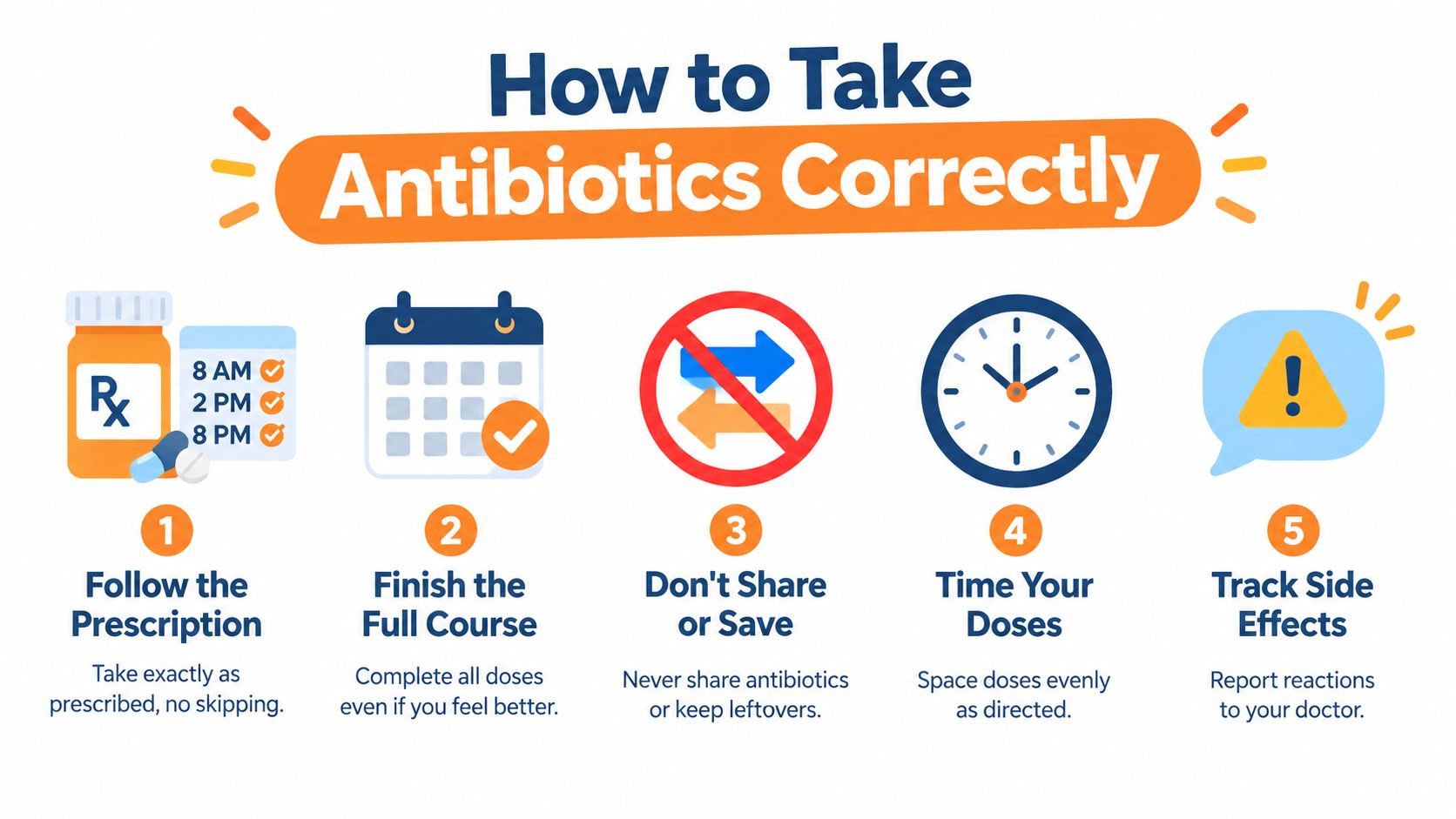
Once a prescriber gives you an antibiotic, how you take it matters. Follow the label and the instructions from your prescriber or pharmacist. Don't change the dose, stop early, stretch doses out or take someone else's medicine.
The NHS explains that resistance develops when bacteria change so antibiotics stop working. A Royal Free NHS patient leaflet also warns against sharing antibiotics, keeping leftovers or taking them irregularly or at a low dose. NHS antibiotic resistance advice supports taking treatment exactly as prescribed.
The mistakes to avoid
- Sharing medicine: Your infection, allergies, kidney function and other medicines may differ from another person's.
- Saving leftovers: A future illness may need no antibiotic, or it may need a different one.
- Changing the dose: Low or irregular exposure can give bacteria more opportunity to survive.
- Ignoring the label: Some antibiotics need specific spacing, food instructions or liquid storage.
- Forgetting other medicines: Tell your pharmacist about regular medicines, supplements and allergies.
Pharmacist's tip: Put dose times beside an existing routine, such as breakfast or brushing your teeth. Use an alarm if your schedule changes.
Pharmacist's tip: If you miss a dose, check the patient information leaflet or ask a pharmacist. Don't double the next dose unless a healthcare professional specifically tells you to.
Pharmacist's tip: Ask what side effects to expect and which ones need help. Severe allergic symptoms, such as swelling of the lips or difficulty breathing, need urgent medical attention.
If you're prescribed a medicine such as trimethoprim 200mg tablets, use the supplied directions rather than relying on an old prescription or advice from a friend.
The safe rule: Take antibiotics exactly as prescribed, never share them, and never keep them for later.
Everyday infection prevention that reduces the need for antibiotics
A gym-goer can reduce infection spread without turning the changing room into a laboratory. Wash your hands after using shared equipment, cover coughs and sneezes, and clean cuts before covering them. Don't train around others if you're clearly unwell.
A busy parent can keep handwashing simple. Wash hands after using the toilet, before preparing food and after wiping a child's nose. Clean bottles, dummies and frequently touched surfaces when illness moves through the household.
A shift worker may have less control over crowded spaces. Regular hand hygiene, good ventilation where possible and staying home when unwell can reduce transmission. Safe sex also matters because testing and prevention reduce the spread of infections that may require antibiotics.
Small habits, useful protection
- Wash hands well: Soap and water remove germs from your hands before they reach your mouth, food or another person.
- Care for wounds: Rinse minor cuts, keep them covered and seek advice if redness, swelling, pain or discharge worsens.
- Use vaccination services: Vaccines prevent infections, which can reduce the need for antibiotics. Ask your GP or pharmacist which vaccines you're eligible for.
- Handle food safely: Cook food properly, keep raw and ready-to-eat foods apart, and wash hands during preparation.
- Protect sexual health: Use condoms with new or casual partners and arrange testing after unprotected sex.
Featured answer: Vaccination helps prevent antibiotic resistance indirectly. Fewer infections mean fewer situations where people need antibiotics.
In hospitals, infection prevention has a direct role in resistance control. NHS reporting says antibiotics were prescribed to 34% of inpatients at any given time in 2023–24. The same reporting identifies Gram-negative bloodstream infections as a major prevention focus, with performance 8% above the 2019/20 baseline by March 2026. NHS AMR prevention information shows why hygiene, safer devices and targeted prescribing need to work together.
People with repeated urinary symptoms should ask for personalized advice rather than repeatedly using old antibiotics. Information about recurrent cystitis can help you prepare questions, but persistent or severe symptoms need clinical assessment.
Using tests and talking to your prescriber with confidence
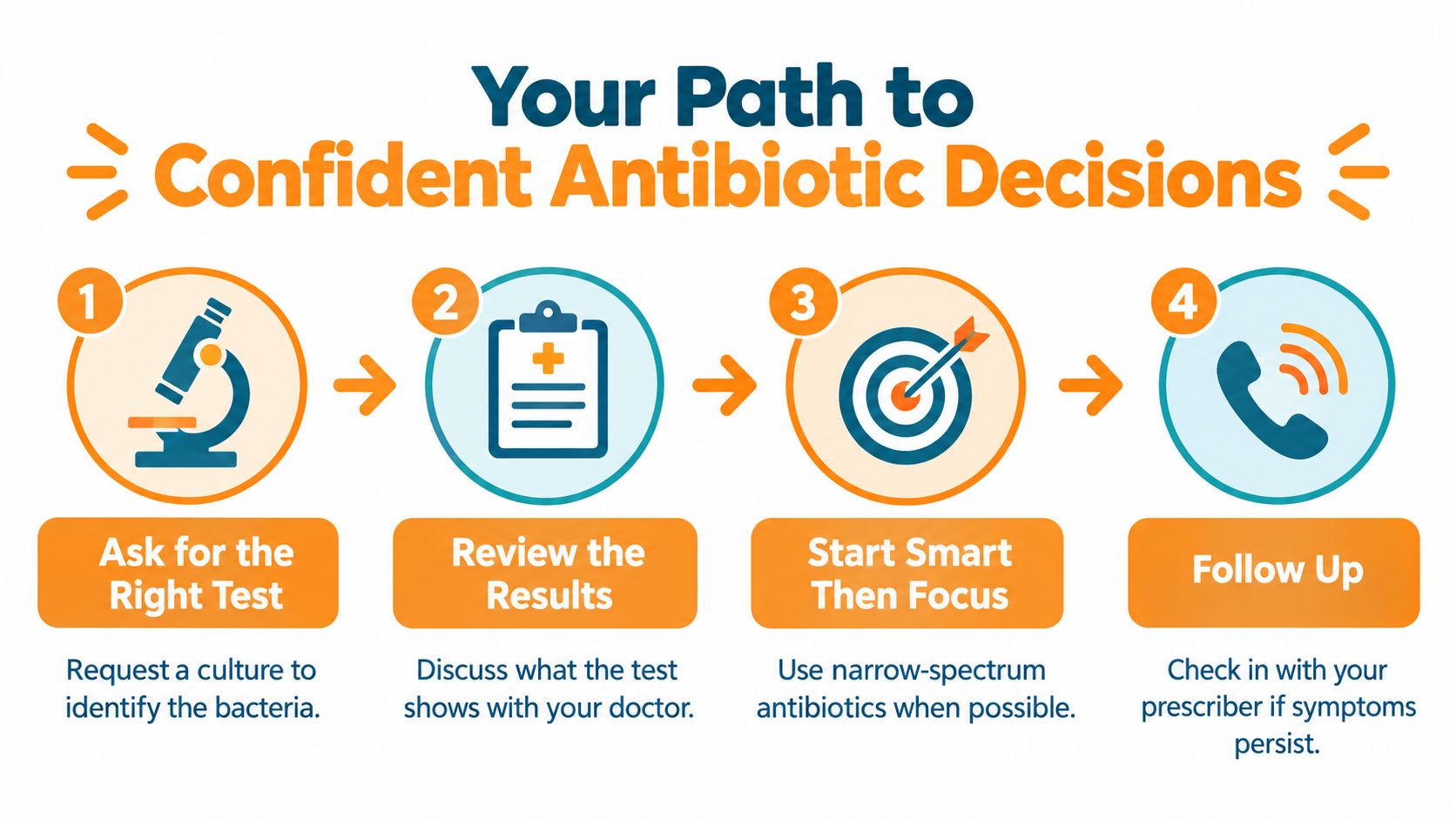
Good antibiotic decisions depend on good information. UK hospital guidance uses the Start Smart, Then Focus model. Clinicians start prompt effective treatment for life-threatening infection, collect cultures before antibiotics when possible, document the indication, route, dose and duration, then review treatment at 48 hours. Government stewardship guidance explains that review can lead to continuing, switching, narrowing or stopping treatment.
A culture tests a sample for bacteria. Susceptibility testing then helps show which antibiotics are likely to work. It isn't needed for every minor illness, and a clinician decides which test is appropriate.
Questions that improve the review
Ask clear questions before leaving the consultation:
- What infection are we treating? This clarifies whether the suspected cause is bacterial.
- Do I need a sample or test? A culture may help when symptoms, treatment history or severity make it useful.
- When should I notice improvement? Agree what to do if symptoms don't improve.
- When do I stop? Check the stop date and whether a review is planned.
- Are there interactions or allergy concerns? Mention every medicine and previous reaction.
For a home test, check what the test can and can't show. A result may support a conversation, but it doesn't replace an examination or professional diagnosis. This practical guide to using a home blood test kit in the UK can help you understand the process before ordering a test.
Imagine someone receives an antibiotic after a urine sample. They feel better quickly, but nobody explains whether the result should change treatment. A follow-up call can confirm the culture result, check side effects and identify whether the medicine should continue, switch or stop. That small checkpoint prevents an unfinished process from becoming unnecessary exposure.
The main operational problem is missed follow-up. If someone doesn't collect a sample, review the result or document a stop date, the care team may miss the chance to narrow treatment. Guidance also supports local antibiotic policies, benchmarking and improvement plans when prescribing patterns need attention.
Safe disposal pharmacy support and your next steps
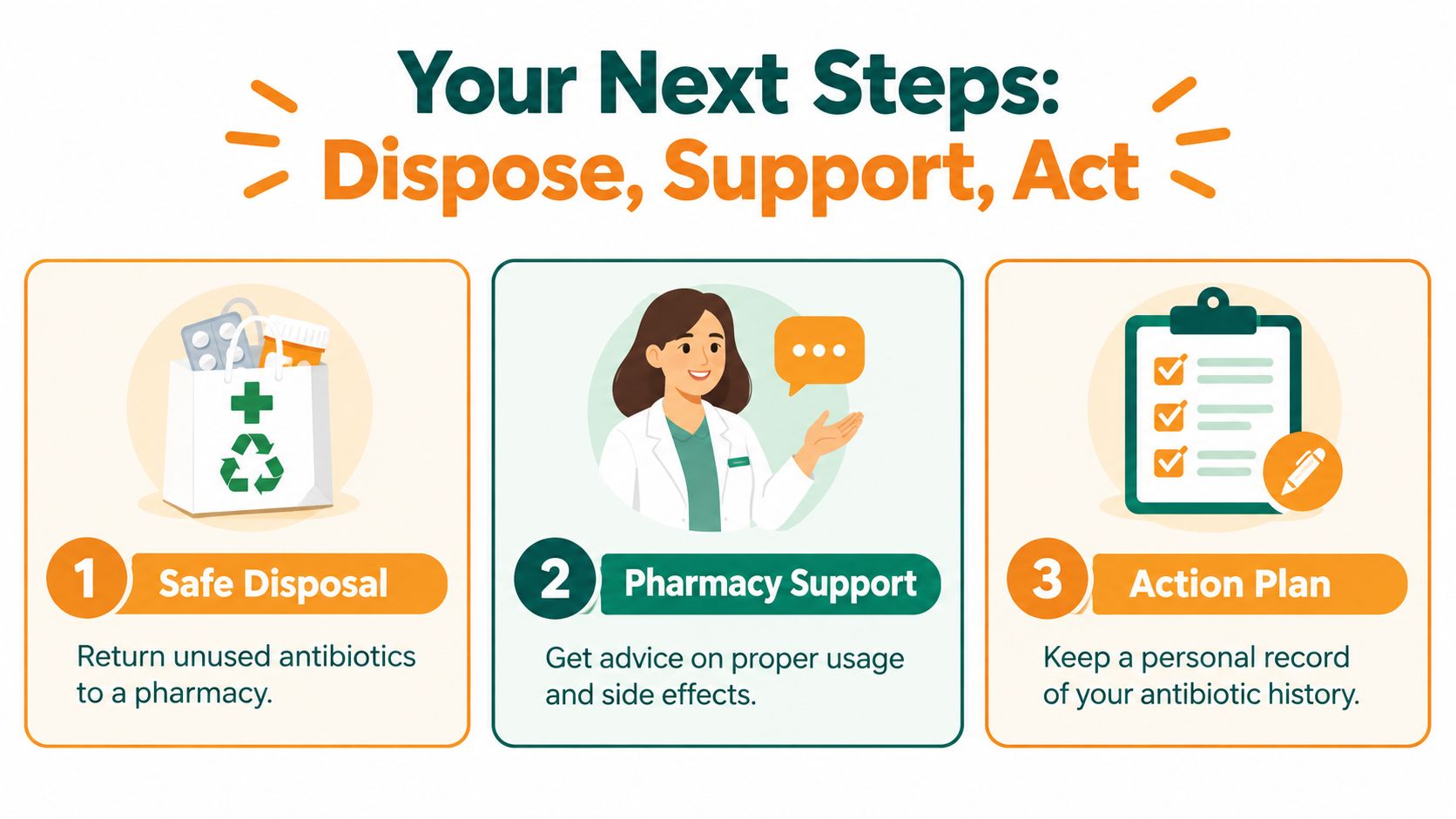
Unused antibiotics shouldn't become a household medicine cupboard backup. Don't share them, put them down the sink or flush them. Keep them safely away from children and pets, then ask a pharmacy about returning them for safe disposal.
Community pharmacies also support earlier advice. In England, primary care accounted for 79.6% of all antibiotics prescribed in 2024, while Pharmacy First represented 4% of primary-care prescribing in the 2024/25 ESPAUR reporting period. Evaluation data found that Pharmacy First consultations from February 2024 to November 2025 led to 232,055 antibiotic items, with 92.4% classified as Access antibiotics. ESPAUR reporting shows why the pathway still needs careful stewardship and follow-up.
Your repeatable action plan
- Before treatment: Ask whether the illness needs an antibiotic.
- During treatment: Follow the label and keep doses spaced as directed.
- At review: Check results, improvement, side effects and the stop date.
- After treatment: Return unused medicine to a pharmacy.
- For prevention: Wash hands, care for wounds, use vaccination services and reduce infection spread.
- For repeated problems: Ask for a prevention plan instead of repeatedly using leftover treatment.
England's wider AMR plan also adds reporting by age, sex, deprivation, geography and high-risk settings. Schools are due to implement revised guidance on AMR, vaccination and immunisation from September 2026. These plans matter because access to care and prevention isn't identical for everyone.
Summary
Antibiotic resistance makes bacterial infections harder to treat.
Use antibiotics only when a suitable clinician advises them.
Take every dose exactly as prescribed.
Prevent infections with hygiene, vaccination and safe wound care.
Ask about tests, results, review dates and treatment changes.
Return unused antibiotics to a pharmacy, and never share or save them.
Seek urgent help for severe breathing difficulty, swelling, confusion, collapse or rapidly worsening illness. If you're worried about symptoms, contact NHS 111, your GP, a pharmacist or emergency services according to the severity.
This article is for information only. It isn't a substitute for personal medical advice.
Frequently asked questions
What is the simplest way to prevent antibiotic resistance?
Use antibiotics only for infections where they're appropriate, then take them exactly as prescribed. Preventing infections and avoiding shared or leftover medicines also reduces unnecessary exposure.
Should I finish every antibiotic course?
Follow the exact instructions on your prescription and the advice from your prescriber or pharmacist. Don't stop, extend or restart treatment on your own. Ask for advice if you feel better early or develop side effects.
Can I use leftover antibiotics for a new infection?
No. The new illness may be viral, or it may need a different medicine and dose. Return leftovers to a pharmacy and seek fresh advice.
Do antibiotics treat colds?
No. Colds are usually viral, so antibiotics won't treat the cause. Rest, fluids and suitable symptom relief may help, but seek advice if symptoms become severe or unusual.
Can community pharmacy help prevent resistance?
Yes, pharmacy teams can assess suitable symptoms, explain self-care, advise on prescribed treatment and support appropriate pathways such as Pharmacy First. They still need to use clinical judgement and arrange further care when needed.
Why do doctors ask for cultures before antibiotics?
A culture can help identify bacteria and show which antibiotics may work. Clinicians may start treatment first when infection is serious, then review the choice when results become available.
What should I do with expired antibiotics?
Don't put them in household rubbish, pour them down the sink or flush them. Ask a community pharmacy how to return them safely.
Can good hygiene really affect antibiotic resistance?
Yes. Handwashing, wound care, respiratory etiquette and vaccination help prevent infections spreading. Fewer infections can mean less need for antibiotics.
When should I seek urgent help?
Seek urgent help for severe breathing problems, facial or throat swelling, collapse, confusion, blue lips or rapidly worsening illness. Call emergency services for life-threatening symptoms, or contact NHS 111 for urgent advice when you're unsure.
Suggested internal links for Medical Mojo
- NHS advice for coughs and colds
- Information about recurrent cystitis
- Guide to home blood testing in the UK
- Online pharmacy services
Visual ideas for the designer
- Home prevention checklist: Use bright lime green, pale yellow-green and light grey, with a painterly background and ornate brass plaque overlays. Alt text: “Checklist showing handwashing, vaccination, wound care and safe antibiotic use at home.”
- Pharmacy review pathway: Create a steampunk-inspired flow from symptom assessment to testing, review and safe disposal. Alt text: “Pharmacy pathway showing assessment, antibiotic review, follow-up and safe disposal.”
- Community infection prevention scene: Show a busy UK household using hand hygiene and covering coughs, with brass labels for each action. Alt text: “Family practising everyday infection prevention actions in a UK home.”
- Antibiotic stewardship dashboard: Use simple visual gauges for prescribing review, infection prevention and follow-up, without adding unsupported figures. Alt text: “Illustrated stewardship dashboard showing prescribing review, infection prevention and follow-up.”
Byline and clinical review
Byline: Medical Mojo editorial team, patient health education writers.
Clinical review: Review by a UK-registered pharmacist, with final publication checks against NHS, NICE and UK Government guidance.
How this content was created
This article was written from NHS, NICE and UK Government antimicrobial-resistance and stewardship guidance, alongside the supplied UK surveillance and Pharmacy First data. The content was checked for UK terminology, safety advice, source attribution and practical patient use. It doesn't replace an assessment from a qualified healthcare professional.
References
- NHS England, Antimicrobial resistance, accessed 12 September 2026.
- UK Government, Nearly 400 antibiotic-resistant infections each week in 2024, accessed 12 September 2026.
- UK Government, Antimicrobial resistance, applying All Our Health, accessed 12 September 2026.
- UK Government, Confronting antimicrobial resistance, 2024 to 2029, accessed 12 September 2026.
- NHS England, ESPAUR report 2024 to 2025, accessed 12 September 2026.
- NICE, Antimicrobial stewardship, accessed 12 September 2026.
- UK Department of Health and Social Care, Start Smart Then Focus, accessed 12 September 2026.
- NHS, Antibiotic antimicrobial resistance, accessed 12 September 2026.
- Courier Pharmacy, Coughs and colds, accessed 12 September 2026.
- Courier Pharmacy, Recurrent cystitis, accessed 12 September 2026.
- Courier Pharmacy, Home blood test kit guide, accessed 12 September 2026.
- Courier Pharmacy, Online pharmacy UK, accessed 12 September 2026.
Meta description: Learn how to prevent antibiotic resistance with practical UK advice on safe prescribing, correct doses, infection prevention, testing and disposal.
Courier Pharmacy provides online pharmacy services, prescription reviews and follow-up support where appropriate, helping patients use medicines safely. Visit Courier Pharmacy to explore regulated UK pharmacy support and treatment options.


