Lymecycline Side Effects: A Practical UK Guide
Clear UK guide to lymecycline side effects, from common stomach upsets to rare allergic reactions. Learn what to watch for and when to seek help.
The most common lymecycline side effects are nausea, stomach pain, diarrhoea and headache, each classed as affecting up to 1 in 10 people, a maximum estimated frequency of 10%. Stop taking the capsule and seek urgent help for breathing trouble, facial or throat swelling, blistering skin, jaundice, or a severe or persistent headache with new vision problems.
You might be reading the leaflet at the kitchen table, between sorting tea and getting the children ready for bed. A long list of possible reactions can make a new prescription feel daunting. The useful question isn't whether you could get every listed effect. It's which symptoms you can watch, which need a phone call, and which need urgent care.
SEO brief
- Primary keyword: lymecycline side effects.
- Secondary keywords: Tetralysal side effects, lymecycline headache, lymecycline diarrhoea, lymecycline and alcohol, acne antibiotic treatment.
- Search intent: practical advice on symptoms and safe treatment.
- Target reader: UK adults taking lymecycline for acne.
- Product/service mention: prescription assessment and pharmacy follow-up.
- Internal links available: supplied pharmacy pages. Medical Mojo page suggestions appear below without unverified URLs.
Starting lymecycline and what to expect
Nausea, stomach pain, diarrhoea and headache are the main everyday effects to watch for. A busy parent starting treatment for persistent acne may notice mild queasiness and wonder whether to take the next capsule. That's a sensible question, not an overreaction.
Lymecycline is a tetracycline antibiotic, a member of a family of antibiotics used for conditions including acne. Your pack may say lymecycline or Tetralysal 300 mg. Follow the dose printed on your own dispensing label, and ask your pharmacist if the strength on the box seems confusing.
The NHS describes the common effects as usually mild and short-lived. However, you shouldn't push through symptoms that worsen or disrupt daily life. The NHS overview of lymecycline supports a practical distinction between routine discomfort and warning signs. [4]
Five key takeaways
- Watch mild symptoms: short-lived queasiness or a mild headache may be manageable.
- Phone about worsening symptoms: persistent diarrhoea, repeated vomiting or troublesome pain need advice.
- Act on warning signs: swelling, breathing trouble, blistering or new vision problems need urgent help.
- Check other medicines: include supplements, acne treatments and medicines bought without a prescription.
- Plan a treatment review: antibiotic prescriptions shouldn't roll on without a clinical check.
Your pharmacist can also explain how the capsule fits alongside your skin treatment. A prescription for acne isn't just a box of antibiotics. It should come with a plan for checking both your skin and your comfort during treatment.
For broader treatment information, the acne treatment page provides a useful starting point. Keep your leaflet somewhere accessible rather than folding it into the box and forgetting it.
How UK side-effect categories actually work
What does “common” mean on a lymecycline leaflet? It means the effect may affect up to 1 in 10 people, equivalent to a maximum estimated frequency of 10%, according to the Tetralysal patient information leaflet. [1]
That figure applies to the listed effect. It doesn't mean you have that chance of getting every symptom together. Nor does it predict what will happen to you personally.
Medicine leaflets use categories to describe how often reported effects occur. Uncommon and rare describe lower frequency bands than common. Don't assume those words apply to a reaction unless your leaflet assigns that category.
Why “not known” matters
The phrase frequency not known means the available evidence can't support a reliable percentage. It doesn't mean the reaction is imaginary, harmless or definitely rare.
The leaflet puts vomiting, dizziness, sun sensitivity, rash and itching in this category. It also lists liver inflammation, jaundice, intestinal inflammation and changes in blood-cell counts without a dependable numerical frequency. [1]
| Leaflet wording | Plain-English meaning |
|---|---|
| Common | A recognised effect with an estimated frequency range |
| Uncommon or rare | Lower frequency categories, where the leaflet assigns them |
| Frequency not known | Not enough information to calculate a reliable frequency |
This is why symptom severity matters more than a reassuring-looking label. A mild stomach upset and a severe allergic reaction need different actions, even when the leaflet can't provide a number for the latter.
Pharmacist's tip: Ask your pharmacist to mark the common effects and urgent warning signs on your leaflet. It's easier to find the right advice when you don't feel well.
You don't need to memorise the full list. Keep the distinction between how often something happens and how urgently it needs attention clear.
Everyday effects and how to manage them
A shift worker may notice stomach discomfort after taking the capsule before daytime sleep. A gym-goer may develop loose stools after a morning dose and wonder whether breakfast, exercise or the medicine caused it. These are illustrative situations, not reports of actual patients.
Timing can help your pharmacist assess a symptom. However, a symptom after a dose doesn't prove that the capsule caused it. Write down when it started, how long it lasted and whether it's getting worse.
Stomach symptoms
Lymecycline can affect how comfortable your gut feels. Antibiotic treatment can also disturb the usual mix of microbes in the gut. The NHS advice on lymecycline side effects covers nausea, stomach pain and diarrhoea, and notes that antibiotic courses can trigger thrush. [3]
For mild discomfort, use a simple approach:
- Keep drinking: take regular fluids, especially if you have loose stools.
- Keep meals comfortable: choose foods you can tolerate rather than forcing a large meal.
- Check capsule instructions: ask about water, posture and taking it with food.
- Don't self-treat severe diarrhoea: get advice before adding remedies.
Don't assume probiotic yoghurt or drinks will prevent side effects. Equally, don't create your own dairy restriction from general advice about other antibiotics. Ask your pharmacist about your exact product and any supplements you use.
Headache, dizziness and thrush
A mild headache without other symptoms is different from a severe headache or one with vision changes. Rest and fluids are reasonable first steps. Ask your pharmacist whether a painkiller such as paracetamol suits you.
Dizziness has frequency not known, rather than a common rating. Oral or vaginal thrush can occur after antibiotics disturb normal microbial flora. Both deserve advice if they trouble you. [1,3]
Pharmacist's tip: Describe the symptom rather than just saying the medicine “doesn't agree with you”. “I feel sick after each capsule but can eat and drink” gives us much more to work with.
Mild, manageable symptoms should remain:
- Limited: uncomfortable, but not severe.
- Short-lived: settling rather than steadily worsening.
- Isolated: without swelling, blistering, jaundice or vision changes.
A symptom-based decision guide
How do you tell a normal side effect from a dangerous reaction? Look at its severity, whether it persists, and whether you have warning signs alongside it.
This guide isn't a diagnosis. It's a way to choose your next action without treating every symptom as an emergency or dismissing something important.
Lymecycline side effects at a glance
| Severity tier | Symptoms | What to do |
|---|---|---|
| Green, monitor | Mild, short-lived queasiness, stomach discomfort or an isolated mild headache | Monitor, keep drinking and follow your prescription instructions |
| Amber, contact a clinician | Persistent or worsening diarrhoea, repeated vomiting, troublesome headache or a new itchy rash without blistering | Contact your pharmacist or prescriber promptly. Don't wait for a routine review |
| Red, urgent assessment | Significant abdominal pain, severe diarrhoea, severe or persistent headache, or new vision problems | Seek urgent medical advice. Stop treatment where the leaflet advises this |
| Red, emergency warning signs | Breathing difficulty, face or throat swelling, extensive blistering or peeling, or mouth or genital ulcers | Stop the capsule and get emergency medical help |
The UK product information supports clinical assessment for persistent or severe diarrhoea, significant abdominal pain, repeated vomiting and troublesome headache. Its urgent warnings cover allergic, skin, liver and neurological symptoms. [1,2]
Don't use a fixed waiting period if you're getting worse. Severe cramps or repeated vomiting shouldn't sit on a "phone later" list because there's no rash.
Make the phone call useful
Tell the pharmacist or prescriber:
- Your medicine: the name on the pack and your prescribed dose.
- Your symptom: what it feels like and when it began.
- Your intake: whether you can keep food and fluids down.
- Other signs: rash, swelling, dark urine, headache or vision changes.
- Other treatments: prescription medicines, supplements and acne products.
Practical rule: If a symptom changes from mild to severe, change your action too. Don't keep following yesterday's advice when today's symptoms are different.
For possible mouth symptoms, the oral thrush information page offers background information. A pharmacist can help distinguish possible thrush from another mouth problem.
Pharmacist's tip: Keep the medicine box beside you when you call. Don't independently extend, restart or change the course while waiting for advice.
Rare but serious reactions you must not ignore
The important serious reactions don't have dependable percentages in the UK prescribing information. The UK Summary of Product Characteristics lists raised pressure inside the skull, severe skin reactions and serious allergic reactions among its warnings. [2]
The heading “rare but serious” shouldn't lead you to assign a rare frequency to each reaction. For these warnings, frequency not known is the more accurate label.
Headache and vision changes
Intracranial hypertension means raised pressure inside the skull. A severe or persistent headache, especially with new visual disturbance, needs urgent assessment. [2]
Don't wait to see whether another painkiller fixes it. You don't need to identify the cause yourself before asking for help.
Skin and allergic warning signs
Stevens–Johnson syndrome is a serious skin reaction. Warning signs include extensive blistering or peeling, or ulcers affecting the mouth, lips, genital or anal areas. The leaflet advises stopping treatment and seeking urgent care for these symptoms. [1,2]
Anaphylaxis is a serious allergic reaction. Angioedema means swelling, which can affect the face, lips, tongue or throat. Breathing trouble, swelling and hives need immediate attention. [2]
- Breathing or throat symptoms: get emergency help, not a routine pharmacy appointment.
- Blistering or peeling: stop treatment and seek urgent assessment.
- Mouth or genital ulcers: don't dismiss these as ordinary acne-treatment dryness.
Liver warning signs
Liver inflammation and jaundice also appear in the UK product information. Dark urine or yellow skin or eyes should prompt urgent medical advice. Significant abdominal pain also needs assessment. [2,3]
Pharmacist's tip: For breathing difficulty or throat swelling, get emergency help immediately. For other urgent warning signs, use NHS 111 or attend A&E as appropriate rather than waiting for a routine GP slot.
Reading these warnings can feel unsettling. Knowing what to look for doesn't mean you should expect it to happen. It means you have a clear action if something unusual does occur.
Interactions, sun exposure, pregnancy and contraception
A medicine review includes more than prescriptions from your GP. Tell your pharmacist about vitamins, gym supplements, heartburn remedies and skin treatments too.
Bring the actual names or photographs of the packaging. “A supplement for skin” doesn't give enough detail to check safely.
Check combinations before taking them
Ask specifically about isotretinoin, oral vitamin A, methotrexate, warfarin, antacids, iron supplements and sucralfate. Don't assume they all pose the same problem. Your pharmacist should check whether a combination affects safety, absorption or monitoring.
In particular, don't add another oral acne medicine yourself. A specialist changing your acne treatment needs to know you're taking lymecycline.
- Prescription medicines: share a complete current list.
- Bought medicines: include indigestion remedies and painkillers.
- Supplements: show the ingredients, not just the brand.
- Timing questions: ask for product-specific advice rather than guessing a spacing interval.
Pharmacist's tip: Keep your medicine list on your phone and update it when anything changes. Show it before a new prescription, not after symptoms start.
Sun exposure
Photosensitivity, meaning an unusual reaction to sunlight, appears in the leaflet with frequency not known. [1] Use sensible sun protection, cover exposed skin and avoid sunbeds.
If you develop a rash after sun exposure, contact your pharmacist or prescriber. Don't assume sun exposure makes blistering or peeling harmless.
Pregnancy, breastfeeding and the pill
Tell your prescriber if you're pregnant, breastfeeding or trying for a baby. Ask them to check your treatment before you continue. Don't rely on general acne advice to decide whether your medicine suits pregnancy.
For the contraceptive pill, distinguish a medicine interaction from vomiting or diarrhoea affecting how you take or absorb the pill. Ask your pharmacist to check your pill's own instructions, including whether you need extra protection.
Alcohol questions also deserve an individual answer, particularly if you already feel sick or have trouble staying hydrated. Don't use advice about a different antibiotic as your guide.
The lymecycline capsules information page can help you prepare questions. Your dispensing label, leaflet and pharmacist remain the right sources for your own dosing instructions.
Treatment length, antibiotic stewardship and online pharmacy access
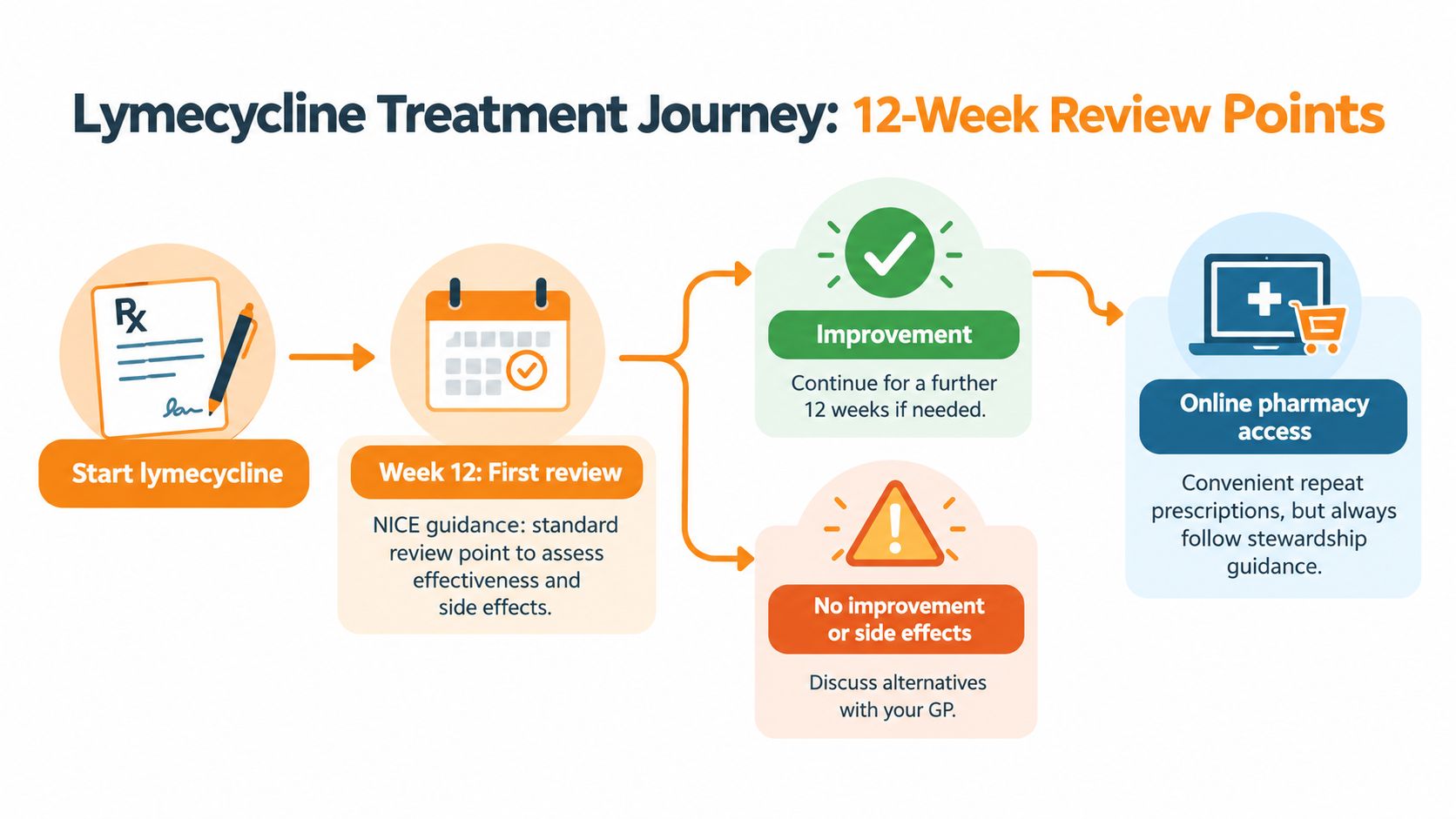
NICE recommends reviewing acne treatment at 12 weeks. If acne has improved but hasn't cleared, an oral antibiotic may continue with topical treatment for up to a further 12 weeks, under NICE acne treatment recommendations. [5]
Antibiotic-containing treatment should continue beyond 6 months only in exceptional circumstances. NICE then calls for reviews at 3-monthly intervals and stopping the antibiotic as soon as possible. [5]
This supplied visual illustrates the treatment-review journey.
Make renewal a review
Antibiotic stewardship means using antibiotics carefully and stopping when they're no longer needed. A renewal should consider your skin, side effects and ongoing treatment plan, not just whether the box is empty.
Ask which topical treatment to continue. You can discuss options using the Acnecide gel information page, rather than adding products without advice.
Online access without skipping safety
Courier Pharmacy is one online option alongside local pharmacies and GP care. Patients complete secure questionnaires for human prescribers to review. Where appropriate, the team offers free follow-up calls after antibiotic treatment.
Before using an online pharmacy:
- Check registration: ask for its GPhC registration number and verify it.
- Check accountability: look for a named superintendent pharmacist and physical UK address.
- Expect assessment: prescriptions should depend on clinical suitability.
- Ask about supply: check how the pharmacy sources licensed medicines.
The publisher states that it sources licensed medicines from MHRA-registered wholesalers. Convenience shouldn't replace a review or urgent care for warning symptoms.
An accompanying video is available below; it doesn't replace your leaflet or clinical advice.
Frequently asked questions and safety reminders
Can I drink alcohol with lymecycline?
Ask your pharmacist about your circumstances and other medicines. If you feel sick or have diarrhoea, avoiding alcohol is a sensible choice while you get advice.
Does lymecycline affect the contraceptive pill?
Don't stop your pill on the basis of a general warning about antibiotics. Ask your pharmacist to check the combination, and follow your pill's instructions if vomiting or diarrhoea occurs.
What should I do if I miss a dose?
Check the missed-dose instructions in the leaflet supplied with your pack. If you're unsure, ask your pharmacist rather than taking extra capsules to catch up.
Is an itchy rash a serious allergy?
An itchy rash without other warning signs still needs prompt advice. Swelling, breathing trouble, hives, blistering or peeling require urgent action under the leaflet's warnings. [1,2]
What counts as an emergency?
Breathing difficulty and facial or throat swelling need emergency help. Severe skin reactions and severe headache with visual symptoms also need urgent assessment, not a routine appointment. [2]
Can I take it while trying for a baby?
Tell your prescriber before continuing treatment. They need to review your acne medicines and advise on a suitable plan.
Does “frequency not known” mean harmless?
No. It means there isn't enough evidence to calculate a reliable frequency. Your symptoms, rather than a missing percentage, should guide your next action. [1]
Can antibiotics cause thrush?
Yes, the NHS notes that antibiotic courses can trigger thrush. Ask a pharmacist to assess suspected symptoms rather than assuming every mouth or vaginal symptom is thrush. [3]
Summary
Mild, short-lived symptoms can often be monitored.
Persistent or worsening symptoms deserve a phone call.
Severe symptoms need faster assessment.
Don't ignore swelling, blistering, jaundice or vision changes.
Keep your leaflet and medicine list close by.
Make antibiotic renewal a clinical review.
Customers can use the UK online pharmacy information page to understand the service. The publisher describes discreet Signed For packaging and free follow-up calls where appropriate after antibiotics.
Publication details
Byline: Educational editorial content. No named author or professional credentials have been confirmed.
Clinical review: No named clinical reviewer or completed clinical review has been confirmed. A registered pharmacist should review this content before publication.
How this content was created: This content draws on UK product information, NHS advice and NICE acne guidance. The examples illustrate decisions rather than patient outcomes; clinical and service details need editorial verification before publication.
Meta description: Understand lymecycline side effects, common symptoms and urgent warning signs. Get practical UK advice on when to monitor, call a pharmacist or seek help.
Suggested Medical Mojo internal pages: Acne treatment overview, oral antibiotic safety, oral thrush, and sun-sensitive skin. Use verified existing pages before adding links.
Visual suggestions for the designer:
- Symptom decision card: bright lime green, pale yellow-green and light grey, with painterly details and ornate brass plaques. Alt text: “Lymecycline symptoms grouped by monitoring, clinical advice and urgent help.”
- Medicine-call checklist: steampunk-inspired notebook with clear, accessible labels. Alt text: “Information to have ready when calling a pharmacist about side effects.”
References
[1] Electronic Medicines Compendium (n.d.) Tetralysal 300 mg patient information leaflet. Patient leaflet reference.
[2] Electronic Medicines Compendium (n.d.) Lymecycline Summary of Product Characteristics. UK prescribing information reference.
[3] NHS (n.d.) Side effects of lymecycline. NHS side-effect guidance.
[4] NHS (n.d.) About lymecycline. NHS medicine overview.
[5] NICE (n.d.) Acne vulgaris management, recommendations. NICE acne guidance.
Disclaimer: This information isn't a substitute for personal medical advice. Read your own patient leaflet and contact a pharmacist, GP or NHS 111 if something feels wrong. Get emergency help for breathing difficulty or throat swelling.
Courier Pharmacy offers online prescription assessment and pharmacist support, with follow-up calls where appropriate after antibiotic treatment. Visit Courier Pharmacy to discuss acne treatment and questions about lymecycline side effects, but seek urgent medical help rather than an online consultation for warning symptoms.


