Allergy Testing Online: A Safe UK Guide
Explore safe allergy testing online in the UK. Compare IgE blood tests, avoid IgG pitfalls, and learn how clinician-reviewed pathways protect your health.
Buying an allergy kit online sounds simple. It isn't the same as receiving a diagnosis. In the UK, safe allergy testing online should connect your symptoms and medical history with a targeted test, laboratory analysis, and proper clinical review. A finger-prick sample can make testing easier, but it can't decide what your symptoms mean on its own.
This guide explains how online allergy testing fits into UK care, which tests have a sound clinical role, where popular kits fall short, and what to do after a result. It also covers home sample collection, patch testing, urgent warning signs, privacy, children, and practical next steps.
Five key takeaways
- A home sample isn't a diagnosis: Symptoms and clinical history must guide testing.
- Specific IgE has a clear role: It can support assessment of suspected allergy when a clinician chooses the right targets.
- IgG and hair tests are not reliable allergy tests: UK guidance warns against several alternative methods.
- Clinician review matters: A positive result can show sensitisation, not necessarily a real-world allergy.
- Severe reactions need urgent care: Don't delay emergency help while waiting for an online test.
Why a Home Kit Is Not a Diagnosis
The most popular advice about allergy testing online is often the least safe: order a broad panel, post a sample, and let the report name every trigger. That approach treats the sample collection method as the important part. In practice, the clinical pathway matters far more than whether blood came from your finger or a vein.
The NHS presents allergy testing as a specialist pathway. A GP may arrange a skin prick test, blood test, or referral to a specialist allergy clinic. NHS-linked guidance also explains that specific IgE blood testing measures IgE antibodies made in response to a suspected allergen, while results need interpretation by a specialist NHS allergy guidance.
What a useful assessment includes
A clinician starts with questions such as:
- What happened: Did you develop hives, swelling, wheezing, vomiting, or another symptom?
- How soon it happened: Timing can help separate immediate allergy from other causes.
- What you ate or touched: The suspected trigger needs a clear connection.
- How often it happens: One isolated episode may need a different approach from a repeated pattern.
- What else was present: Exercise, infection, medicines, alcohol, and skin products can affect symptoms.
Testing then adds evidence. It doesn't replace the conversation.
For example, a broad food panel may find IgE antibodies to foods you eat without symptoms. If you remove those foods without advice, you could create an unnecessary and restrictive diet. The NHS warns that some internet-sold food intolerance tests have limited evidence and may wrongly suggest avoiding several foods NHS food allergy evidence update.
Practical rule: Choose a test because your symptoms point towards it, not because the panel contains the most items.
Home collection can still offer a useful logistical benefit. NHS trust pathways already use blood testing, laboratory analysis, and remote follow-up in some settings. Results can take three or more days in some NHS services, which shows that the laboratory and review stages remain central, even when collection happens away from a clinic Manchester University NHS Foundation Trust allergy investigations.
Before ordering, read this guide to using a home blood test in the UK. Check who reviews the result, which laboratory processes the sample, what happens if the sample fails, and how the service handles symptoms that need an NHS referral.
Separating Valid IgE Tests from IgG Pitfalls
IgE and IgG are different antibodies with different meanings. Specific IgE testing looks for antibodies linked with immediate allergic reactions to a suspected allergen. A finding can support an allergy assessment, but it still needs comparison with your symptoms and history.
IgG testing doesn't answer the same question. Food exposure can produce IgG antibodies, so detecting them doesn't prove that a food causes an allergy. A report may look detailed and scientific while offering little help with the reaction you experience.
The tests worth questioning
The British Dietetic Association says the science behind many home allergy kits is poorly supported. Its guidance notes that NHS, Allergy UK, Allergy Academy, and NICE don't recommend many of these services because they can produce false readings and encourage unnecessary food restriction British Dietetic Association guidance on home allergy kits.
NICE advises against serum specific IgG testing for food allergy diagnosis. It also advises against hair analysis and applied kinesiology for this purpose NICE recommendations for food allergy assessment.
| Test type | What it measures | UK clinical stance |
|---|---|---|
| Specific IgE blood test | IgE antibodies linked with a suspected allergen | Can support assessment when a clinician has taken an allergy-focused history |
| Skin prick test | A skin response to a small amount of suspected allergen | Used in a suitable clinical setting with trained staff and emergency facilities |
| IgG food panel | IgG antibodies associated with food exposure | Not recommended for diagnosing food allergy |
| Hair analysis | Claimed reactions from a hair sample | Not supported for food allergy diagnosis |
| Applied kinesiology | Muscle-response claims used to identify triggers | Not recommended for food allergy diagnosis |
| Patch testing | Delayed skin reaction to contact substances | Specialist pathway for suspected contact allergy |
The distinction matters because a misleading result can change behaviour. Someone may stop eating dairy, wheat, fruit, or several other foods without a confirmed reason. That can make meals difficult, worsen anxiety, and hide the underlying cause of symptoms.
Don't confuse allergy with intolerance
An allergy involves the immune system. An intolerance may cause unpleasant symptoms without the same immune process. A blood test designed for specific IgE can't identify every cause of stomach discomfort, bloating, headache, or fatigue.
If your symptoms follow a food but don't match an immediate allergic pattern, speak to a GP, pharmacist, or dietitian. You may need a different assessment rather than a larger online panel. For readers exploring related immune symptoms, this overview of MCAS testing advances may help, but it doesn't replace individual medical advice.
How the Home Testing Process Actually Works
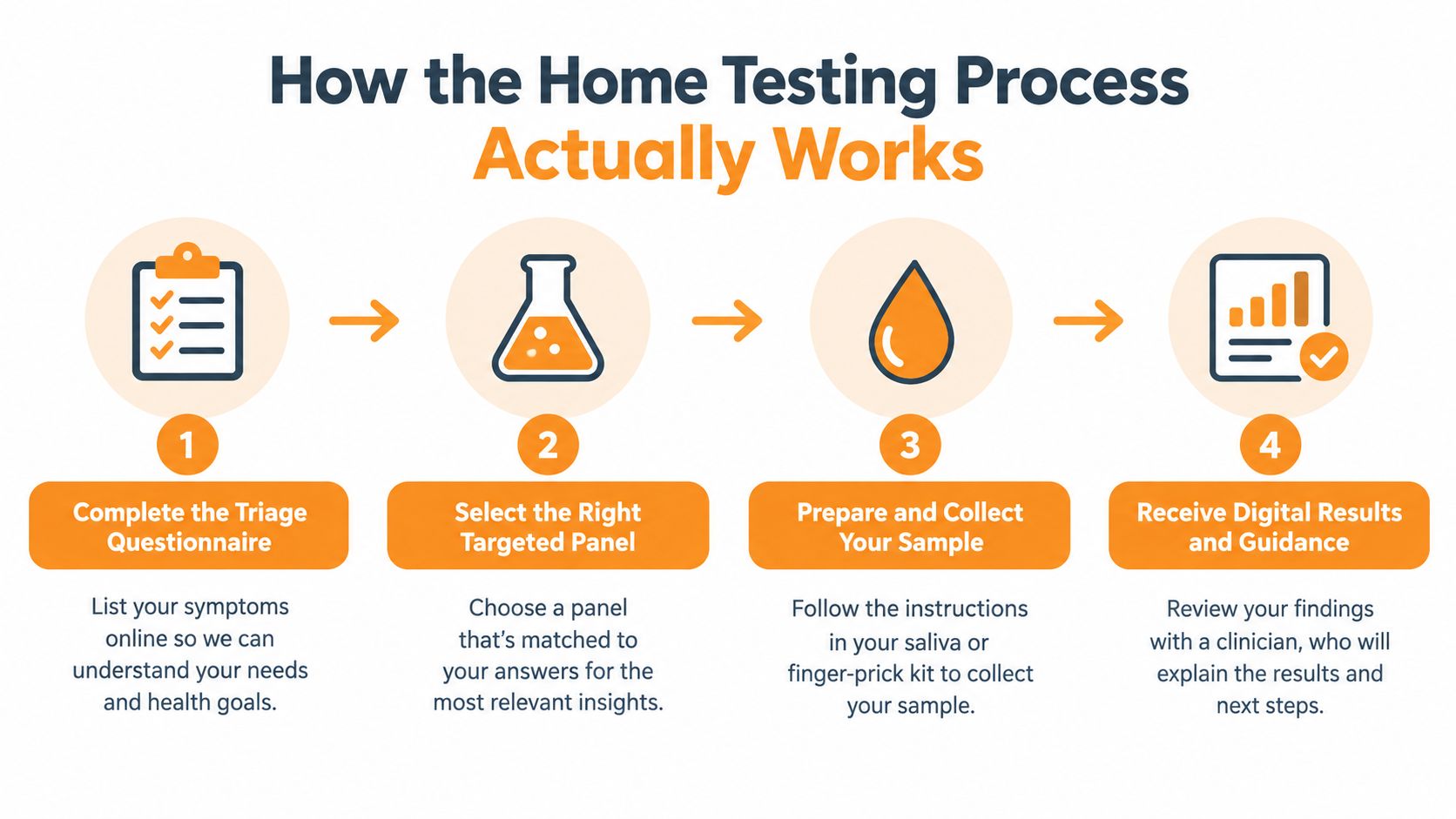
A sensible online pathway begins before you open the kit. The service should ask about your symptoms, possible triggers, medicines, and any reaction that needs urgent assessment. Those answers help decide whether home collection is suitable and whether a targeted test makes sense.
Four practical stages
1. Complete the triage questions. Give clear details about what happened, when it happened, and how long symptoms lasted. Mention asthma, eczema, previous severe reactions, pregnancy, and medicines.
2. Select a targeted panel. A good service should match the test with the history. A suspected reaction to one food may call for a focused test rather than a wide screen.
3. Collect the sample carefully. Follow the kit instructions. A finger-prick test uses capillary blood. Some newer devices aim to make home collection easier and less uncomfortable. A venous draw may still be needed when the required test or sample volume can't be collected at home.
4. Wait for laboratory analysis and review. The laboratory processes the sample. A clinician should then explain what the findings mean alongside your answers.
Finger-prick collection can suit a busy parent or someone who finds clinics difficult. It may not suit everyone. Cold hands, difficulty forming a sample, an unsuccessful collection, or a test that needs venous blood can all change the plan.
Preparing for collection
Preparation depends on the service and the test. Don't stop prescription medicines unless a clinician tells you to. Tell the reviewing team about antihistamines, steroids, biologic medicines, supplements, and other treatments.
For skin prick testing, preparation can differ. NHS guidance notes that antihistamines may need to stop before testing, and the clinic should give specific instructions. That requirement doesn't automatically apply to a blood sample, so ask rather than guessing.
Posting the sample also needs care. Check the collection window, packaging instructions, and final posting time. A delayed or unsuitable sample may need repeating.
You can compare the practical options in these home blood test kits. Look for transparent information about sample collection, laboratory processing, review, and follow-up, not just a long list of allergens.
The Critical Role of Clinician Review
A laboratory report gives information. A clinician turns that information into a safe decision.
NICE says clinicians should take an allergy-focused history first when IgE-mediated food allergy seems possible. They can then offer a skin prick test or a specific IgE blood test for suspected foods and likely co-allergens. NICE also says testing shouldn't happen without that history, and results must be interpreted in its context NICE food allergy recommendations.
Why a result can mislead
A positive specific IgE result may show sensitisation, meaning the immune system recognises an allergen. It doesn't prove that eating or touching the substance causes symptoms. A negative result can also fail to explain symptoms when the problem involves another allergen, a delayed reaction, or a non-allergic condition.
An automated app can flag a result. It can't reliably decide whether you should remove a food, keep taking a medicine, or ask for specialist care. It may also miss the importance of a reaction involving breathing, circulation, or several body systems.
A proper review considers:
- The reaction pattern: Symptoms, timing, amount, and repeat exposure.
- The test choice: Whether the panel matched the suspected trigger.
- Other explanations: Intolerance, infection, reflux, eczema, asthma, or irritant exposure.
- Risk level: Previous airway symptoms or collapse need a different pathway.
- The next action: Monitoring, treatment, dietary advice, or referral.
A number without the story behind it can create false reassurance or unnecessary fear.
Blood testing isn't the answer to every skin reaction
Contact allergy often causes delayed eczema or irritation after exposure to cosmetics, creams, gloves, shoes, plants, or workplace materials. It may need patch testing, usually arranged through a specialist clinic. NHS guidance asks patients to bring details of real-world products and exposures, because the correct substances for testing depend on daily life NHS Borders guidance on allergy tests.
A gym-goer with hand eczema after using rubber equipment may need a contact assessment, not a food IgE panel. A person whose face reacts to a new moisturiser may need product-led investigation. Choosing the wrong test can delay the right answer.
Safety must sit around the test
NICE states that skin prick tests should only take place where staff can manage an anaphylactic reaction NICE food allergy assessment and diagnosis. That safety requirement explains why a home blood sample isn't equivalent to carrying out a skin exposure test at home.
Pharmacist's tip: Keep a short reaction diary. Record the suspected trigger, time to symptoms, symptoms, medicines taken, and what happened next. Bring photographs of hives or swelling if they have faded before your appointment.
Real Scenarios and Safety Red Flags
A busy parent notices that their child develops patches of eczema after some meals. The child remains well, breathes normally, and has no lip or tongue swelling. An online questionnaire may help organise the history, but a broad home panel could create confusion. The safer route is to discuss the pattern with a GP or pharmacist and use targeted testing only when the history supports it.
A shift worker has a sudden reaction after eating during a night shift. Their throat feels tight, their voice changes, and they struggle to breathe. This isn't a situation for ordering a kit or waiting for a report. Call 999 and follow the emergency advice given by the emergency service. If the person has a prescribed adrenaline auto-injector, use it as directed and call for emergency help.
Red flags need urgent action
Seek emergency help for signs such as:
- Breathing trouble: Wheezing, gasping, severe cough, or tightness in the throat.
- Swelling: Rapid swelling of the tongue, lips, mouth, or throat.
- Circulation symptoms: Fainting, collapse, confusion, or marked weakness.
- Rapid progression: Symptoms spreading or worsening quickly.
- Multiple systems: Skin symptoms with breathing, stomach, or circulation problems.
Don't drive yourself if you may be having anaphylaxis. Don't deliberately eat a suspected trigger to “prove” the allergy. A supervised food challenge belongs in an appropriate clinical setting.
A third example involves a nurse whose hands crack and flare after using gloves and cleaning products. A food allergy panel may not answer the question. The exposure history points towards contact allergy and possible patch testing instead.
This anaphylaxis information and support page can help you understand emergency planning and pharmacist support, but online information can't assess an active severe reaction.
For a visual explanation of severe allergic reactions, watch this short video after reading the safety points above.
Pharmacist's tip: Keep emergency medicines easy to reach, not buried in a handbag or locker. Ask your prescriber whether you need an up-to-date written allergy action plan.
Next Steps and the Courier Pharmacy Pathway
A test result should lead to a clear plan, not a longer list of worries. If the review supports a suspected allergy, the next step may involve avoiding a confirmed trigger, managing symptoms, or arranging specialist assessment. The right action depends on the reaction and the certainty of the finding.
What may happen after review
Your clinician may suggest:
- A focused food plan: Don't remove several foods without suitable advice.
- Symptom treatment: A pharmacist or prescriber may discuss an antihistamine where appropriate.
- Emergency planning: People at risk may need advice about adrenaline auto-injectors.
- A specialist referral: Severe reactions, unclear results, children with suspected food allergy, and likely contact allergy may need NHS or allergy-clinic care.
- Further testing: A skin prick test, patch test, or another assessment may fit better than repeating a broad blood panel.
Elimination diets need care. Removing a suspected food for a short, agreed period can sometimes support assessment, but reintroduction should follow professional advice when allergy is possible. Never test a suspected severe trigger at home.
Pharmacist's tip: Ask three questions before you finish a consultation: “What does this result mean for me?”, “What should I avoid, if anything?”, and “What should I do if symptoms return?”
A regulated online service can support logistics, prescribing, and follow-up, but it shouldn't replace emergency care or specialist diagnosis. Courier Pharmacy offers secure online questionnaires reviewed by human prescribers, home and venous blood draws, and medicine support for people who need particular formulations because of allergies, intolerances, or needle concerns. You can read how ordering treatment works at Courier Pharmacy before deciding whether its pathway suits you.
The service you choose should explain who reviews your answers, how medicines are supplied, how your data is protected, and when it will direct you to NHS care. Convenience is helpful. Clinical boundaries are essential.
Common Questions About Online Allergy Testing
Is allergy testing online accurate?
It can provide useful laboratory information when the service uses an appropriate, targeted method and a clinician interprets the result. A result alone doesn't confirm or exclude every type of allergy. The value comes from matching the test with your symptoms and history.
Are home finger-prick tests as good as clinic blood tests?
The sample collection method isn't the only issue. The test method, sample quality, laboratory process, and clinical review all matter. Some situations still need a venous sample or specialist testing.
How much does online allergy testing cost?
Prices vary between providers, panels, laboratory methods, and review services. Check the full price before ordering, including collection, laboratory work, clinician review, repeat sampling, and follow-up.
Is my allergy test data private?
Use a provider that explains its privacy policy and data handling. Ask who can access your answers and results, how the service stores them, and whether it shares information with other organisations. Don't assume every online seller follows the same process.
Can children use online allergy testing?
Children with suspected food allergy need careful clinical assessment. NICE recommends an allergy-focused history before testing, and a GP or specialist should guide the pathway. Don't use a consumer panel to place a child on a restrictive diet without professional advice.
Can an online blood test diagnose contact allergy?
Usually, no. Contact allergy often needs patch testing based on the products and substances touching your skin. A specialist clinic can choose relevant patches and interpret delayed skin reactions.
Should I stop antihistamines before a home blood test?
Don't stop medicines without advice. Antihistamines can affect some skin tests, but preparation for blood testing may differ. Ask the testing service or your clinician what applies to your test.
What should I do after a positive result?
Don't remove every food or avoid an animal based on the report alone. Arrange clinical review so the result can be compared with your reaction history and a sensible plan can be agreed.
What should I do if I have breathing problems after eating?
Treat breathing difficulty, throat swelling, collapse, or rapidly worsening symptoms as an emergency. Call 999 and follow emergency instructions. Testing can wait until you're safe.
This article is for information only and isn't a substitute for advice from your GP, pharmacist, allergy specialist, or emergency service.
Courier Pharmacy can help with secure online clinical questionnaires, home or venous blood testing, and treatment discussions where appropriate. Visit Courier Pharmacy to explore the available pathway and ask the team which option fits your symptoms.
Summary
- Online allergy testing works best as part of clinical care.
- A home sample doesn't diagnose an allergy by itself.
- Specific IgE testing can support a targeted assessment.
- IgG, hair analysis, and applied kinesiology aren't supported for food allergy diagnosis.
- Contact reactions may need patch testing instead.
- Severe symptoms need emergency help, not an online kit.
- Always discuss results before making major diet or treatment changes.
Internal links to consider
- Home blood test guide
- Home blood test kits
- Anaphylaxis support
- MCAS testing advances
- Courier Pharmacy ordering process
Visual ideas for the design team
- Clinical pathway illustration: A painterly, steampunk-inspired route from symptoms to history, targeted testing, laboratory review, and follow-up. Use bright lime green, pale yellow-green, light grey, and ornate brass plaque overlays. Alt text: “Clinical pathway showing how symptoms guide targeted allergy testing and review.”
- IgE versus IgG comparison: A clean infographic with brass-framed panels explaining the difference between targeted IgE assessment and unsupported IgG screening. Alt text: “Comparison of specific IgE allergy testing with unsupported IgG food screening.”
- Contact allergy visual: Show cosmetics, gloves, creams, and workplace exposures around a patch-testing clinic pathway. Use the Medical Mojo palette with light grey space and brass details. Alt text: “Common contact allergy exposures leading to specialist patch testing.”
- Emergency red flags card: A simple, high-contrast safety card showing breathing difficulty, throat swelling, collapse, and the instruction to call 999. Alt text: “Anaphylaxis warning signs requiring urgent emergency help.”
Meta description
Allergy testing online explained for UK patients, including IgE tests, home samples, clinician review, false results, patch testing and urgent safety advice.
Byline
Written by: Courier Pharmacy editorial team, with UK pharmacy and medicines information experience.
Clinically reviewed by: A registered UK pharmacist, credentials and reviewer name to be confirmed by the publisher before publication.
How this content was created
This article draws on NHS, NICE, NHS trust, British Dietetic Association, and Allergy UK guidance supplied for the topic. The content was organised around UK clinical pathways, checked for safety wording, and written for patient readability. The publisher should complete the named clinical review before publication.
References
NHS. (n.d.) Allergies. NHS.
Manchester University NHS Foundation Trust. (n.d.) Allergy investigations and procedures. MFT.
British Dietetic Association. (n.d.) Home allergy testing kits, more harm than good. BDA.
NICE. (n.d.) Food allergy in under 19s, recommendations. National Institute for Health and Care Excellence.
NICE. (n.d.) Food allergy in under 19s, assessment and diagnosis. National Institute for Health and Care Excellence.
NHS Borders. (n.d.) About allergy tests. NHS Borders.


