Anti Sickness Tablets Prochlorperazine Guide for UK Patients
Learn how anti sickness tablets Prochlorperazine works for nausea and vomiting. Get UK dosing, side effects, interactions, and online access tips.

You're feeling sick, the room may be spinning, or a migraine has made food and fluids difficult. Prochlorperazine is a prescription anti-sickness medicine used in the UK for nausea, vomiting, dizziness and vertigo, but the right formulation and dose depend on your age, symptoms and health. This guide explains how anti sickness tablets prochlorperazine work, when clinicians use them, how standard and buccal tablets differ, and which side effects need attention. It also covers pregnancy, older adults, children, everyday safety, and online access to treatment.
Five key takeaways
- Prochlorperazine blocks dopamine signals involved in nausea and vomiting.
- Standard tablets and buccal tablets aren't interchangeable, so follow your prescription.
- NHS guidance usually gives two to three doses daily, while children need weight-based dosing. [1]
- Older adults and children may face extra risks, including movement problems and confusion. [2]
- Seek urgent help for severe muscle spasms, breathing trouble, fainting or unusual movements.
Understanding prochlorperazine antiemetic properties
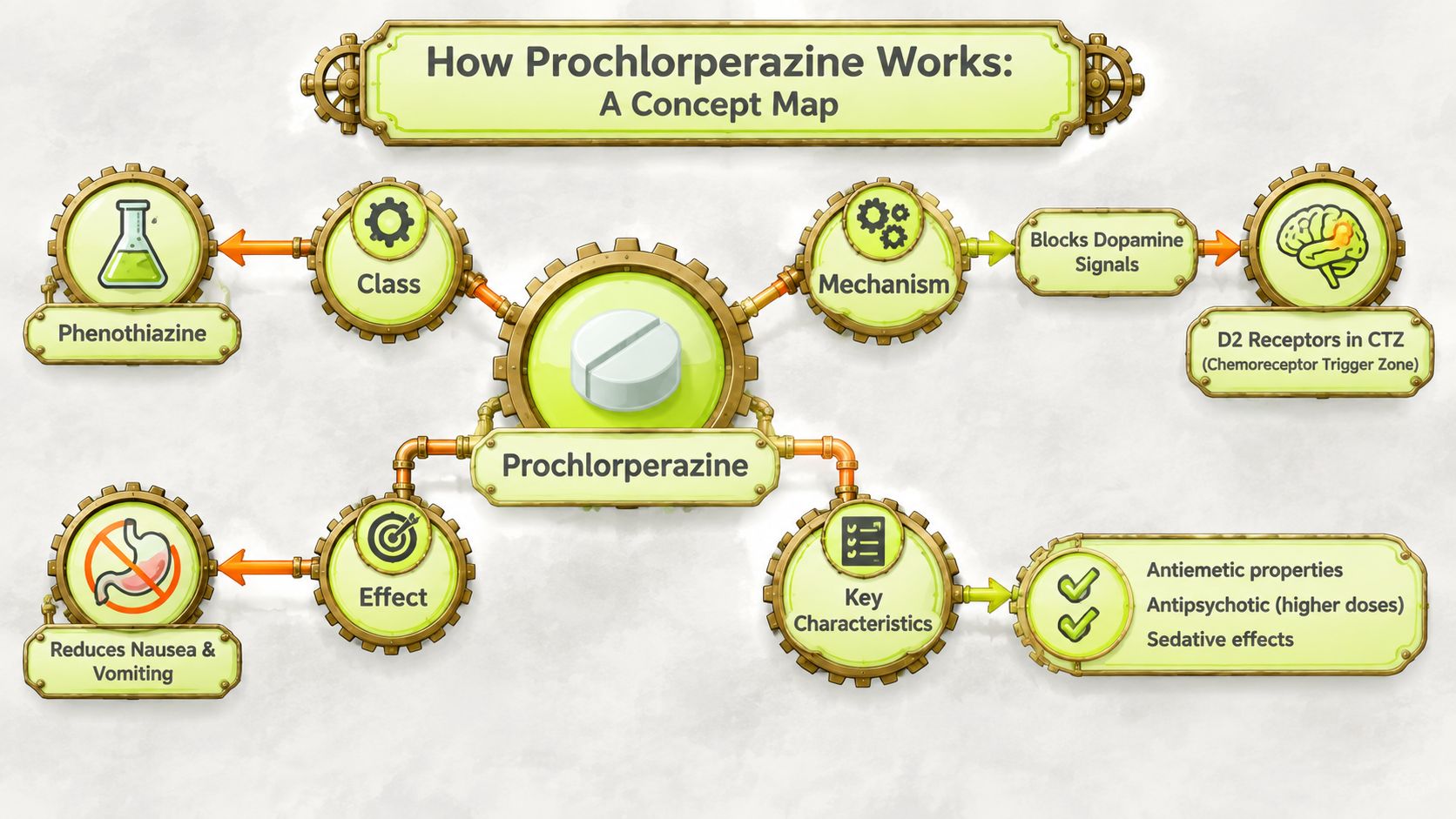
Prochlorperazine is a phenothiazine antiemetic, which means it belongs to a medicine family that can reduce nausea and vomiting. In simple terms, your brain receives chemical messages that can trigger the vomiting reflex. Prochlorperazine blocks some dopamine signals involved in that process, helping calm the “sickness alarm”.
Dopamine has many roles in the body. Prochlorperazine's anti-sickness action comes from blocking dopamine receptors linked with the brain's vomiting pathways. It can also cause effects such as sleepiness, which explains why you should take care with driving and other activities.
The medicine has a long UK history. The British Pharmacopoeia first published a monograph for prochlorperazine mesilate in BP 1963, and modern UK products still include oral and injectable forms. That places its formal UK pharmacopoeial presence at more than 60 years. [3]
Why the form matters
Standard tablets pass through your digestive system after you swallow them. Buccal tablets sit high between the upper gum and lip, where they dissolve. This can help when nausea makes swallowing difficult.
Other antiemetics work in different ways. For example, ondansetron affects serotonin pathways rather than dopamine pathways. Your prescriber or pharmacist can help decide which option suits the cause of your sickness. You can read about ondansetron 8 mg tablets for comparison, but don't swap medicines without clinical advice.
Pharmacist's tip: Treat the formulation on your prescription as part of the dose. A buccal tablet isn't simply a standard tablet in a different package.
When to use prochlorperazine for nausea and vomiting
Prochlorperazine can help with several causes of nausea, vomiting and dizziness. The NHS lists it under the brands Stemetil and Buccastem, with uses that include nausea, vomiting, dizziness and vertigo. [4]
Common clinical situations include:
- Migraine-related sickness: It may ease nausea and vomiting linked with migraine.
- Vertigo: Clinicians may use it for vertigo, including vertigo associated with Ménière's syndrome.
- General nausea and vomiting: UK product information includes nausea and vomiting from any cause, including migraine-associated nausea. [5]
- Pregnancy sickness: Clinicians may use it in pregnancy, but this use is off-label and needs individual advice.
The MHRA granted a new UK national marketing authorisation for prochlorperazine maleate tablets on 9 May 2023. The approved indications include nausea and vomiting from any cause, including migraine, and vertigo due to Ménière's syndrome. [4]
That doesn't mean prochlorperazine suits every episode of sickness. Vomiting can result from infection, migraine, medication, pregnancy, an inner-ear problem or a condition needing urgent assessment. Treating the symptom without checking the cause can delay the right care.
For example, a gym-goer who feels sick after exercising may need rest and fluids, especially if heat or dehydration caused the symptoms. A person with sudden severe dizziness, weakness, trouble speaking or a severe headache needs urgent medical assessment rather than relying on an anti-sickness tablet.
For practical information about symptoms and treatment options, see nausea and vomiting support.
Typical dosing and how to take prochlorperazine
Your prescriber will choose the dose and form. Never increase the dose because one tablet hasn't worked quickly, and don't take someone else's medicine.
Standard tablets are swallowed with water. Buccal tablets go high between the upper gum and lip, where they dissolve. Don't swallow a buccal tablet whole unless a clinician or the product instructions tell you to do so.
| Formulation | Dose | Notes |
|---|---|---|
| Standard tablets | Often 5 mg two to three times daily when prescribed for adults | Swallow with water and follow your label. |
| Buccal tablets | Adults and children aged 12 years and over usually take one or two 3 mg tablets twice daily | Place high in the upper gum until dissolved. |
| Children aged 1 to 17 years | Dose based on body weight | A prescriber must calculate the amount. |
The NHS says prochlorperazine is usually taken two to three times a day, while children's doses depend on body weight rather than a fixed adult amount. [1] Buccal product information states that children under 12 years aren't recommended to use that presentation. [6]
Take the medicine exactly as directed on the dispensing label. If you vomit after taking a dose, ask a pharmacist before repeating it. The answer depends on the formulation, timing and whether the medicine may already have been absorbed.
Practical rule: Keep a note of each dose, especially when you feel unwell. It's easy to forget a dose when nausea disrupts your routine.
There isn't one universal course length. Some people need short-term relief, while others need assessment of ongoing vertigo or recurrent vomiting. Contact your prescriber if symptoms continue or return regularly.
Side effects interactions and safety notes
Sleepiness and a dry mouth can occur with prochlorperazine. You may also notice blurred vision, constipation or difficulty concentrating. Alcohol can worsen drowsiness, so avoid it until you know how the medicine affects you.
The medicine can also affect movement and blood pressure. Important problems include drug-induced parkinsonism, postural hypotension, confusion and dystonic reactions. A dystonic reaction causes sudden, painful muscle spasms, which may affect the neck, eyes, jaw or tongue.
Specialist UK guidance warns against prescribing prochlorperazine for dizziness in older adults because of risks including parkinsonism, postural hypotension and confusion. Long-term use can also cause tardive dyskinesia, a condition involving unusual repetitive movements. [2]
What to check before taking it
Tell your prescriber or pharmacist if you:
- Feel faint when standing: Prochlorperazine may worsen low blood pressure.
- Have movement problems: Mention Parkinson's disease or previous reactions to anti-sickness medicines.
- Take sedating medicines: Sleeping tablets, strong painkillers and some antihistamines may increase drowsiness.
- Have heart, liver or blood conditions: Your clinician may need extra information before prescribing.
- Are pregnant or breastfeeding: Ask for advice before taking a dose.
Don't drive, cycle on busy roads or operate machinery until you know your response. If you develop severe muscle stiffness, uncontrolled movements, marked confusion, fainting, breathing difficulty or swelling of the face and throat, seek urgent medical help.
For some people, another medicine may suit their symptoms better. Don't change to domperidone 10 mg tablets without a prescriber's assessment, because anti-sickness medicines have different risks and restrictions.
UK prescribing rules and precautions
A medicine can have a long history of use without holding a licence for every situation. In the UK, clinicians may prescribe a licensed medicine off-label when they judge it suitable for a different age group, condition, dose or formulation.
Pregnancy sickness is a key example. UK guidance identifies prochlorperazine as an off-label option for severe nausea and vomiting in pregnancy. It suggests trying oral tablets first, while buccal tablets may help when vomiting prevents swallowing. [7]
That doesn't make the treatment automatically safe for everyone. A prescriber should consider your stage of pregnancy, symptom severity, other medicines and risk of dehydration. Some regional guidance also places Xonvea alongside prochlorperazine as a first-line option in recent updates, so local practice can vary.
Groups needing extra care
Children and young adults may develop dystonic reactions or dyskinesias. Older people may be more vulnerable to confusion, falls, low blood pressure and drug-induced parkinsonism. Your prescriber needs an accurate list of medicines, including products bought from a shop or online.
If vomiting prevents you from keeping fluids down, contact your GP, NHS 111 or maternity team. Severe pregnancy sickness can need assessment and treatment beyond an anti-sickness tablet.
Online healthcare can support access, but it shouldn't replace urgent assessment. If you're considering an online pharmacy in the UK, use a regulated service that checks your medical information before supplying prescription treatment.
Real-life scenarios with pharmacist tips
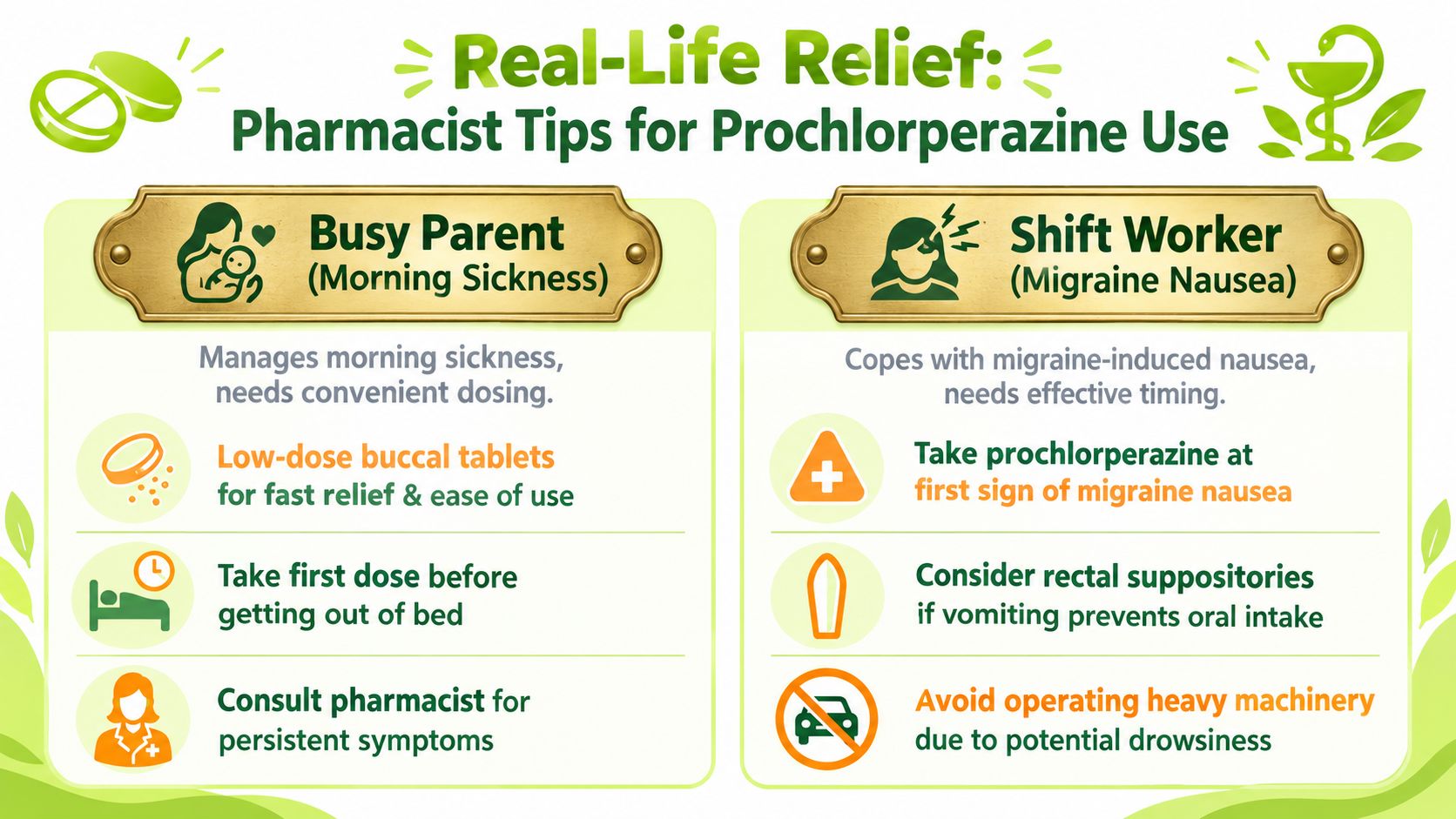
A busy parent with morning sickness may struggle to swallow anything before the school run. Their prescriber might consider an oral tablet first, then discuss a buccal option if vomiting makes swallowing unreliable. The parent should follow the prescribed schedule rather than copying advice from another pregnancy.
A shift worker with migraine nausea faces a different problem. They may need to plan around driving, machinery or night work. Taking a prescribed dose at the start of migraine nausea may be useful, but drowsiness can make operating equipment unsafe.
Pharmacist's tip: Keep the original packaging with you. It shows the formulation, strength and directions if another clinician needs to check your treatment.
Pharmacist's tip: Ask for an interaction check before starting. Include migraine medicines, sleep aids, painkillers, antihistamines and herbal products.
Pharmacist's tip: Contact your prescriber if you need repeated doses for several days, or if the cause of the nausea remains unclear.
If nausea occurs after starting a GLP-1 medicine, don't assume prochlorperazine is the right answer. The cause, timing and severity matter, so discuss symptoms with a clinician and review GLP-1-related nausea before adding treatment.
Summary of key points
- Prochlorperazine reduces nausea by blocking dopamine signals involved in vomiting.
- Standard and buccal tablets work through different routes, so use the form prescribed.
- Adults usually take it two to three times daily, while children need weight-based dosing.
- Older adults and children need extra care because movement, blood pressure and confusion problems can occur.
- Pregnancy use is often off-label, with formulation choice guided by swallowing and vomiting.
- Urgent symptoms include severe spasms, fainting, breathing problems and uncontrolled movements.
FAQs about prochlorperazine
What are anti sickness tablets prochlorperazine used for?
Prochlorperazine can treat nausea and vomiting, including sickness linked with migraine. It can also help with dizziness and vertigo, including vertigo associated with Ménière's syndrome. [4]
Can I take prochlorperazine when pregnant?
Clinicians may use prochlorperazine for severe pregnancy sickness, but this use is often off-label. UK guidance suggests oral tablets first and buccal tablets when vomiting prevents swallowing. Ask your GP, midwife or pharmacist before taking it. [7]
Can I use prochlorperazine while breastfeeding?
Ask a healthcare professional before using prochlorperazine while breastfeeding. They'll consider your dose, treatment length, your baby's health and possible effects such as sleepiness.
How long should I wait before driving?
Don't drive until you know whether prochlorperazine makes you sleepy, dizzy or less alert. If it affects you, avoid driving and machinery, and ask your pharmacist when it's safe to resume.
What should I do if I miss a dose?
Take the missed dose when you remember, unless it's nearly time for the next one. Don't double the dose. If you're unsure, check the label or ask a pharmacist.
Can children take prochlorperazine?
Many children aged one year and over can take prochlorperazine when a clinician prescribes it. The dose depends on body weight, and the buccal presentation isn't recommended for children under 12 years. [1][6]
Is prochlorperazine suitable for older people with dizziness?
Specialist UK guidance advises caution and warns against prescribing it for dizziness in older adults because of parkinsonism, low blood pressure and confusion. Ask for a medication review if these symptoms appear. [2]
When should I seek urgent help?
Seek urgent help for breathing difficulty, facial swelling, fainting, severe muscle spasms, marked confusion or uncontrolled movements. Get medical advice promptly if vomiting prevents fluids from staying down or symptoms keep returning.
Informational content only. This article isn't a substitute for medical advice, diagnosis or treatment.
Courier Pharmacy offers online clinical assessments for suitable prescription treatments, including nausea and vomiting options. Visit Courier Pharmacy to complete a secure consultation and discuss whether prochlorperazine is appropriate for your symptoms.
Suggested internal links
Suggested visual ideas
- Mechanism concept map: Painterly steampunk gears, brass plaques, lime-green highlights and pale yellow-green nodes. Alt text: “Concept map showing how prochlorperazine blocks dopamine signals to reduce nausea and vomiting.”
- Formulation comparison: A split illustration showing a swallowed tablet and a buccal tablet placed near the upper gum. Alt text: “Comparison of standard and buccal prochlorperazine tablets.”
- Safety checklist: Ornate brass plaque with icons for drowsiness, dizziness, muscle spasms and urgent help. Alt text: “Safety checklist for prochlorperazine side effects and warning signs.”
Meta description: Anti sickness tablets prochlorperazine explained for UK patients, including uses, doses, buccal tablets, pregnancy advice, side effects and safe online access.
Byline: Medical Mojo Editorial Team, UK patient-information writers.
Clinical review: Content should be reviewed by a UK-registered pharmacist or prescriber before publication.
How this content was created: This article uses UK NHS, MHRA, British Pharmacopoeia and specialist NHS guidance. The content was checked for formulation, licensing, dosing and safety details, then written in plain UK English for patients and carers.
References
[1] NHS. (n.d.) How and when to take prochlorperazine. Accessed 7 September 2026.
[2] NHS Lanarkshire. (n.d.) Drugs used in nausea and vertigo. Accessed 7 September 2026.
[3] NICE British National Formulary. (n.d.) Prochlorperazine. Accessed 7 September 2026.
[4] NHS. (n.d.) Prochlorperazine. Accessed 7 September 2026.
[5] Electronic Medicines Compendium. (n.d.) Prochlorperazine buccal tablets summary of product characteristics. Accessed 7 September 2026.
[6] Electronic Medicines Compendium. (n.d.) Buccal prochlorperazine product information. Accessed 7 September 2026.
[7] Royal Cornwall Hospitals NHS Trust. (n.d.) Hyperemesis gravidarum in pregnancy, severe nausea and vomiting. Accessed 7 September 2026.


