Your Guide to Over-the-Counter Antibiotic Creams in the UK
Find out about antibiotic cream over the counter uk options, why many are prescription-only, and safer antiseptic alternatives for minor wounds.
In this article
- Five Key Takeaways
- Understanding the rules for skin infection creams
- Why you can’t buy antibiotic cream over the counter in the UK
- Choosing the best over-the-counter antiseptic creams
- Real-life examples: When to use an antiseptic cream
- When you definitely need a prescription antibiotic cream
- Signs you need to see a doctor
- Smart wound care is more than just cream
- How modern pharmacies help you get treatment safely
- Summary
- Frequently Asked Questions
Got a minor cut and wondering if you can buy an antibiotic cream over the counter in the UK? The short answer is no, you cannot buy traditional antibiotic creams like Fucidin without a prescription. This is a vital public health measure to combat the global threat of antibiotic resistance, ensuring these powerful medicines work when we truly need them.
However, this doesn't mean you're left without options. Your local pharmacy is full of excellent antiseptic creams that are perfect for managing minor skin issues and preventing infection. This guide will walk you through the effective alternatives available, explain why this distinction is so important, and help you know when it's time to see a healthcare professional.
Five Key Takeaways
- No Prescription, No Antibiotics: True antibiotic creams (like Fucidin) are prescription-only in the UK to fight antibiotic resistance.
- Antiseptics Are Your Go-To: For minor cuts and scrapes, use over-the-counter antiseptic creams (like Savlon or Dettol).
- Clean, Treat, Cover: The best wound care starts with cleaning the area thoroughly before applying any cream.
- Know the Red Flags: See a doctor if a wound shows spreading redness, increasing pain, pus, or if you feel unwell.
- Pharmacists Can Help: For persistent or worsening skin infections, a pharmacist or online service can provide expert advice and prescriptions if needed.
Understanding the rules for skin infection creams
The UK's approach to healthcare puts a strong focus on effective self-care. It’s why our over-the-counter market was valued at a massive USD 3,780 million in 2023 [1]. You have access to a wide range of treatments, but true antibiotic creams are kept behind the prescription counter for a very good reason.
Why you can’t buy antibiotic cream over the counter in the UK
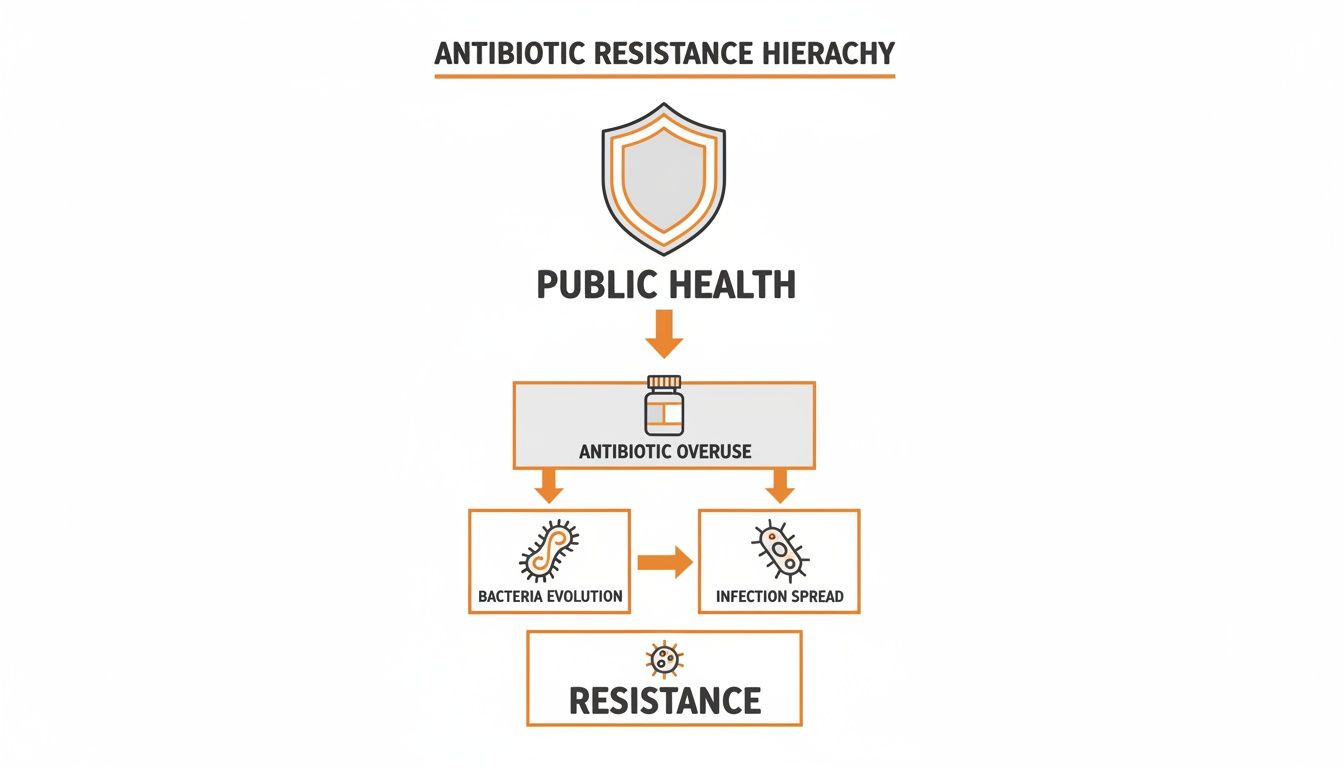
The main reason you need a prescription for antibiotic creams is to tackle antimicrobial resistance (AMR). When we use antibiotics unnecessarily—for minor issues our bodies can handle—we give bacteria a chance to evolve and develop defences. This creates "superbugs" that our strongest medicines cannot defeat, making serious infections much harder to treat.
This isn’t just a future problem; it's happening now. A recent survey showed that 64% of UK adults worry about the rise of these resistant germs [2]. By reserving antibiotics for confirmed bacterial infections, we protect these vital medicines for everyone. For a deeper dive into a specific prescription option, our complete guide to Fucidin cream is a useful resource.
In a nutshell: Limiting access to antibiotics is a crucial national strategy to keep them effective for serious, life-threatening infections.
Choosing the best over-the-counter antiseptic creams
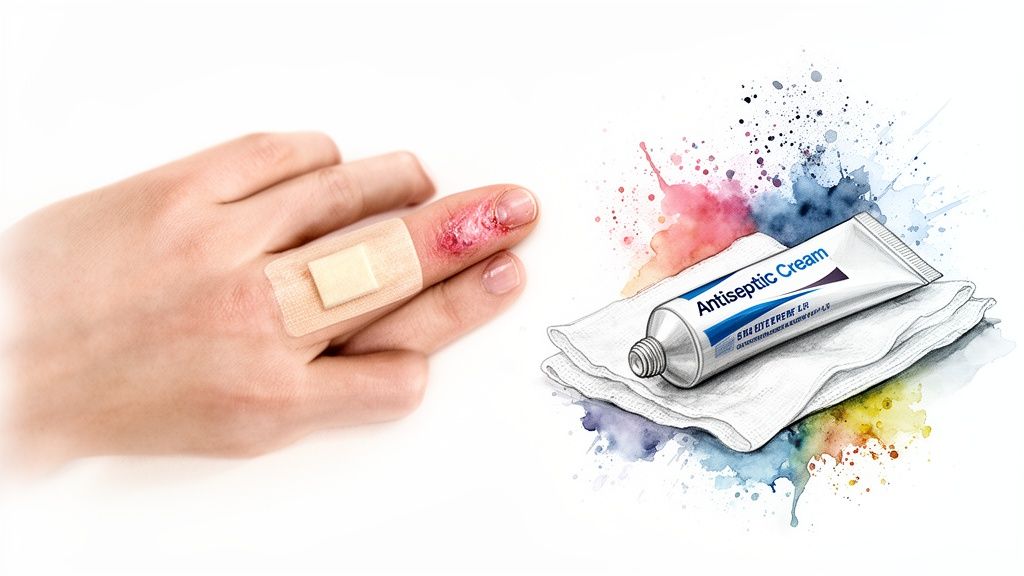
When you head to a UK pharmacy for a minor cut, you're looking for an antiseptic cream, not an antibiotic one. Antiseptics are your first line of defence. They work by cleaning the skin and killing a broad range of germs to prevent an infection from starting.
Think of it like this:
- Antiseptics are for preventing infection in clean, minor wounds.
- Antibiotics are for treating a confirmed bacterial infection that has already taken hold.
Pharmacist's tip: Always read the label. Look for active ingredients like chlorhexidine, cetrimide, or povidone-iodine. These are proven to be effective for preventing infection in everyday scrapes, small cuts, and insect bites.
Real-life examples: When to use an antiseptic cream
- A busy parent: Your child takes a tumble in the park and gets a scraped knee. After cleaning the graze with water, applying a thin layer of antiseptic cream and covering it with a fun plaster is the perfect response.
- A gym-goer: You get a small friction burn or blister from your new trainers. An antiseptic wipe followed by a protective dressing helps keep it clean while it heals, preventing it from getting infected in the sweaty gym environment.
If you are dealing with a more specific skin irritation, such as flare-ups of dry, itchy skin, you might want to learn more about finding the best cream for dermatitis.
| Cream Type | Main Purpose | How it Works | UK Availability |
|---|---|---|---|
| Antiseptic | Infection prevention for minor cuts, scrapes, and burns. | Kills a wide range of germs on the skin's surface. | Over the counter. |
| Antibiotic | Infection treatment for confirmed bacterial skin infections. | Kills specific types of bacteria causing the infection. | Prescription only. |
When you definitely need a prescription antibiotic cream
Antiseptic creams are great for minor wounds, but some situations need stronger, targeted treatment. Knowing when to stop self-treating and seek professional advice is key to preventing a small problem from becoming a serious one.
This is where prescription-only antibiotic creams like Fucidin (containing fusidic acid) are necessary. A doctor or prescriber may recommend them for confirmed bacterial infections such as:
- Impetigo: A contagious skin infection that causes sores and blisters.
- Infected eczema: When areas of eczema become weepy, crusted, or filled with pus. You can find practical advice in our guide to treating infected eczema.
- Infected wounds: A cut or surgical site that shows clear signs of a bacterial infection.
Signs you need to see a doctor
Don't ignore these red flags. If you see any of the following signs around a wound, contact your GP or a pharmacist right away:
- Spreading redness, warmth, or swelling.
- Pain that gets worse instead of better.
- Yellow or green pus oozing from the wound.
- Feeling unwell in yourself, such as having a fever or chills.
Pharmacist's tip: Trust your instincts. If you are worried about a wound or it just doesn't seem to be healing properly, getting it checked is always the safest option.
Smart wound care is more than just cream
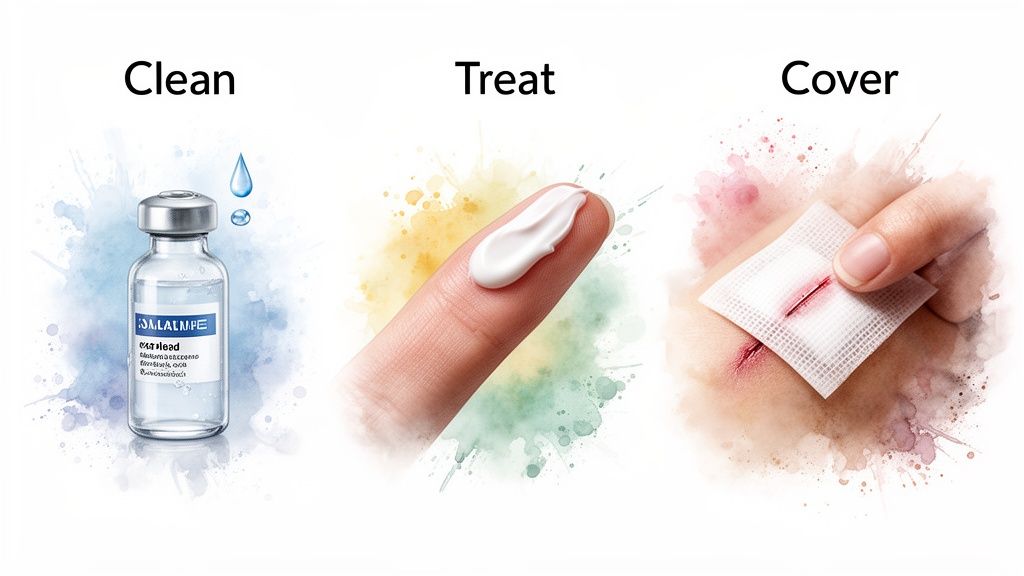
Reaching for a tube of cream is often our first instinct, but effective wound care is a simple three-step process: Clean, Treat, and Cover.
- Clean: First, thoroughly clean the wound. Gently wash the area with clean, running water or a sterile saline solution. This flushes out dirt and bacteria and is the single most important step in preventing infection.
- Treat: Next, you can apply a thin layer of your chosen over-the-counter antiseptic cream to the clean, dry skin.
- Cover: Finally, protect the area with a sterile dressing or plaster. This keeps the wound clean and creates a moist environment, which helps it to heal faster.
You can find all the essentials, from sterile wipes to dressings, in our online range of medical supplies.
Pharmacist's tip: Over-the-counter creams are only for minor injuries. Never use them on deep cuts, animal bites, or puncture wounds. These all require immediate medical attention.
How modern pharmacies help you get treatment safely
We’ve all been there. You have a nagging health worry—like a skin infection that won’t clear up—and getting a timely GP appointment feels impossible. This is where regulated services, like our online pharmacy, provide a safe and convenient bridge to professional advice.
You can fill out a confidential health questionnaire from home, at a time that suits you. A UK-registered clinical prescriber will then review your symptoms and medical history. If they decide a prescription medication is appropriate and safe for you, they can issue one directly. Your treatment is then sent in discreet packaging straight to your door, giving you a trustworthy route to care.
Summary
In the UK, you cannot buy antibiotic creams over the counter; they are prescription-only to help combat antibiotic resistance. For everyday minor cuts and scrapes, antiseptic creams are the safe and effective choice available from any pharmacy. The best way to manage a minor wound is to clean it well, apply an antiseptic cream, and cover it with a dressing. If you notice any signs of a worsening infection, such as spreading redness, increasing pain, or pus, it is crucial to seek medical advice from a doctor or pharmacist promptly.
Frequently Asked Questions
Is Savlon an antibiotic cream? No, Savlon is an antiseptic cream. It contains active ingredients like cetrimide and chlorhexidine, which are excellent for cleaning minor wounds and preventing a wide range of germs from causing an infection. It is a great first-aid choice for everyday cuts and scrapes.
What is the difference between antiseptic and antibacterial? An antiseptic is a substance you apply to your skin to stop or slow the growth of many types of microorganisms, including bacteria and fungi. An antibiotic (or antibacterial) cream is a specific medicine designed to kill bacteria that are already causing an infection. While many antiseptics have antibacterial properties, true antibiotic creams are targeted treatments that require a prescription in the UK.
When should I worry about a cut? Most minor cuts heal well with basic first aid. However, you should see a doctor if you spot signs of infection, such as redness spreading out from the wound, increasing pain or swelling, yellow or green pus, or if you start to feel generally unwell with a fever.
Can I get Fucidin cream over the counter in the UK? No, Fucidin cream contains the antibiotic fusidic acid and is only available with a prescription in the UK. It is used to treat confirmed bacterial skin infections like impetigo or infected eczema. You must have a consultation with a doctor or another qualified prescriber to get it.
What is a good alternative to antibiotic cream for minor cuts? Excellent over-the-counter alternatives include antiseptic creams like Savlon, Dettol Antiseptic Cream, or Germolene. These products effectively clean the wound and help prevent infection from developing in minor cuts, grazes, and burns, which is usually all that is needed.
Why is antibiotic resistance such a big deal? Antibiotic resistance is a major global health threat. When bacteria are exposed to antibiotics but are not killed, they can mutate and become resistant. These "superbugs" can cause infections that are extremely difficult or impossible to treat with our current medicines, making routine surgeries and treatments much riskier.
Meta description: Looking for an antibiotic cream over the counter in the UK? Learn why they're prescription-only and discover the best antiseptic alternatives for minor cuts.
Disclaimer: This article is for informational purposes only and should not be used as a substitute for professional medical advice, diagnosis, or treatment. Always seek the advice of your physician or another qualified health provider with any questions you may have regarding a medical condition.
How this content was created: This article was written based on information from trusted sources, including the NHS, NICE, and PAGB. All content is fact-checked and clinically reviewed by a qualified healthcare professional to ensure it is accurate, up-to-date, and patient-friendly.
Byline: Written by The Medical Mojo Editorial Team. Clinically reviewed by Scott McDougall, MPharm (Independent Prescriber).
References: [1] Maximize Market Research. UK Over-the-Counter (OTC) Pharmaceuticals Market. [Online] Available at: https://www.maximizemarketresearch.com/market-report/uk-over-the-counter-pharmaceuticals-market/223306/ [2] Statista. Public concern about the growth of antibiotic resistant germs in the UK 2022. [Online] Available at: https://www.statista.com/topics/10528/antibiotic-use-in-the-uk/ [3] PAGB. The economic and social impact of self-care in the UK. [Online] Available at: https://www.pagb.co.uk/content/uploads/2023/07/20230712-Frontier-PAGB-OTC-Impact-Report-v1-0.pdf


