Apple Cider Vinegar Shampoo: A UK Expert Guide 2026
Is apple cider vinegar shampoo good for your hair? Our UK pharmacist guide explains the science, benefits, risks, and safe usage for healthy hair and scalp.
Apple cider vinegar shampoo is a hair-cleansing product that contains ACV and is mainly used to clarify the scalp, lift product build-up, and support a scalp-friendly pH. In the UK, products explicitly mentioning apple cider vinegar grew by about 38% between 2015 and 2022, and by 2021 they made up roughly 1.2% of the total shampoo category by value [1].
Primary keyword: Apple cider vinegar shampoo
Secondary keywords: ACV shampoo, apple cider vinegar hair rinse, clarifying shampoo, dandruff shampoo, scalp pH, itchy scalp treatment
Search intent: Informational with safety-focused buying and self-care guidance
Target reader: UK adults with oily scalp, build-up, dandruff-like flaking, or curiosity about natural hair care
Product/service mention: Courier Pharmacy consultation and scalp treatment support
Internal links available: Assumed from Courier Pharmacy hair loss, dermatitis, scalp treatment, and blog resources
If you're reading this after spotting flakes on a black jumper, greasy roots by lunchtime, or a social feed full of “miracle” scalp fixes, you're not alone. Apple cider vinegar shampoo sounds simple and natural, which is exactly why so many people try it.
Some people do find it helpful. The catch is that helpful and medically effective are not the same thing. Used well, it can be a reasonable clarifying tool. Used badly, especially as a harsh DIY rinse on an already sore scalp, it can make things worse.
Introduction and Key Takeaways
Apple cider vinegar shampoo has become a mainstream option, not just a niche beauty trend. It can help remove residue, excess oil, and styling product build-up, but the bigger promises around “detox”, hair growth, or treating scalp disease usually run ahead of the evidence.
That matters if your scalp is greasy after dry shampoo and gym sessions. It matters even more if your scalp is sore, flaky, or inflamed. In those cases, choosing the wrong product can delay proper treatment.
As a practical rule, think of ACV shampoo as a clarifying cosmetic product first, not a cure. If you like ingredient-led hair care, that's fine. Just keep your expectations sensible and your scalp barrier protected.
For broader pharmacist-led self-care advice, the Courier Pharmacy blog is a useful place to start.
Five key takeaways
- Best use case: Apple cider vinegar shampoo is most useful for build-up, oiliness, and that coated scalp feeling.
- Big claim check: Evidence for major health claims is limited, especially for hair growth.
- Formulation matters: Safer commercial products are usually pH-balanced, unlike raw vinegar.
- Dandruff reality: If a product helps dandruff, it's often because it contains a proven antifungal active, not just ACV.
- Know when to stop: Burning, redness, worsening itch, sores, or ongoing flakes need medical advice, not more vinegar.
What is Apple Cider Vinegar Shampoo and Why is it Popular
A common scenario is someone washing their hair after a week of dry shampoo, styling products, hard water, and gym sessions, then noticing the scalp still feels coated. That is the gap ACV shampoo is trying to fill.
What ACV shampoo actually is
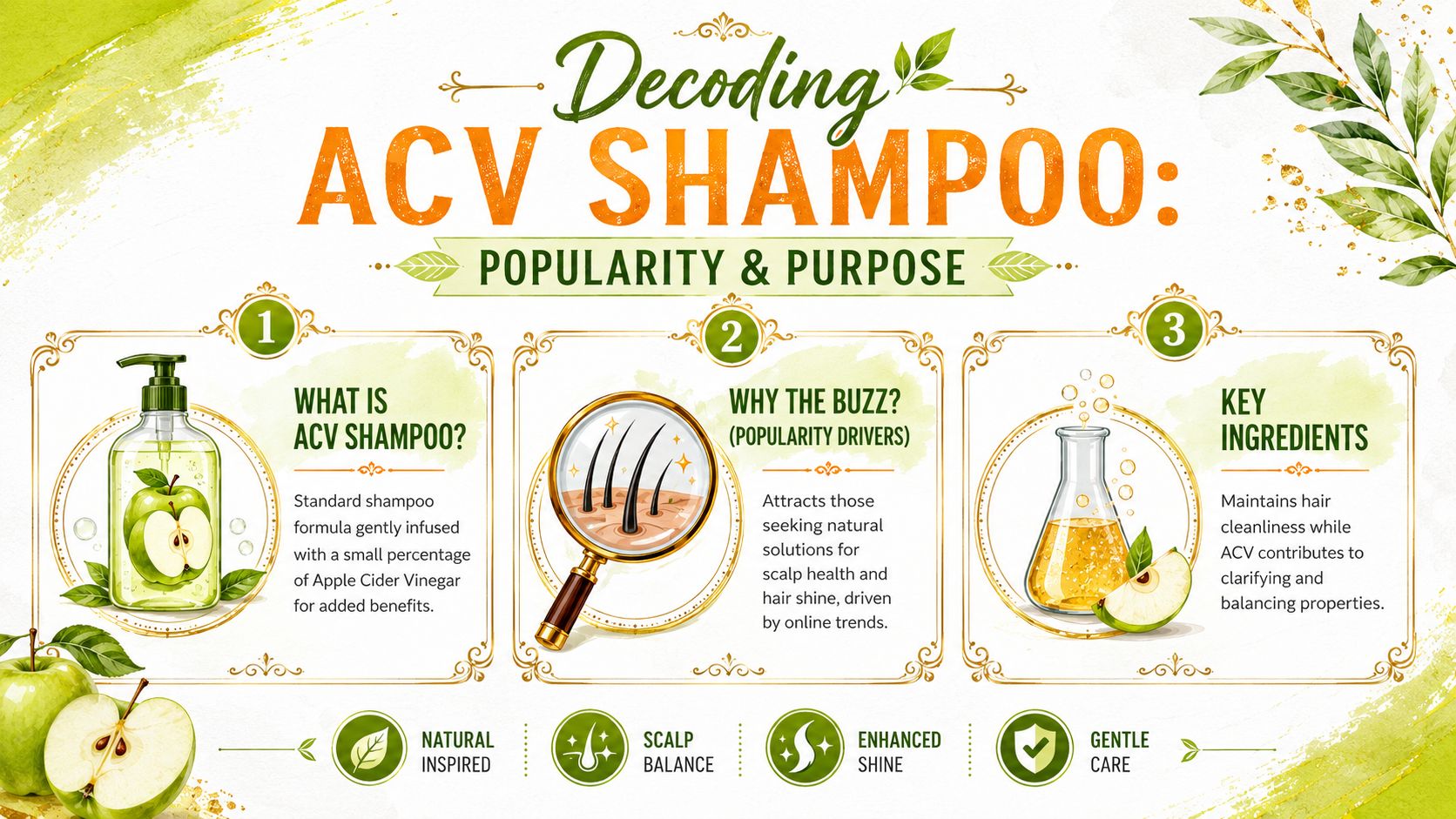
Apple cider vinegar shampoo is usually a standard shampoo formula with a small amount of apple cider vinegar, acetic acid, or an apple-derived acidic ingredient added. In practice, it sits closer to a clarifying shampoo than a treatment shampoo. The aim is to lift residue and oil while leaving hair feeling cleaner and less heavy.
That appeal is easy to understand. If hair feels dull, flat, or sticky from leave-in products and repeated washing, an ACV shampoo may give a cleaner finish than a very mild everyday shampoo.
Why shoppers keep choosing it
Its popularity comes from a mix of marketing, user experience, and a real consumer preference for products that sound more natural without giving up the convenience of a bottled shampoo. “Balance”, “purify”, and “refresh” are common label claims because they match what some users notice after a clarifying wash.
There is also a trust issue behind the trend. Some people want a product that feels gentler or simpler than heavily fragranced shampoos, even if the formula itself is still a modern cosmetic product rather than kitchen vinegar in a bottle.
That said, popularity is not a marker of medical benefit.
From a pharmacist's point of view, ACV shampoo has a reasonable place if the problem is build-up, oiliness, or that waxy scalp feeling after repeated product use. It is much less convincing if the concern is persistent dandruff, scalp eczema, psoriasis, infection, or hair shedding. Those problems need proper assessment and, in many cases, a treatment with an active ingredient chosen for the diagnosis.
Hair thinning is a good example. An ACV shampoo may make the scalp feel fresher, but it does not have the evidence base of established options discussed in this guide to minoxidil and how it supports hair growth.
A realistic example helps. Someone who uses dry shampoo between washes, applies styling paste most days, and exercises often may get on well with ACV shampoo once or twice a week. Someone with burning, broken skin, thick scale, or ongoing flakes should not keep switching between “natural” shampoos and hoping for the best.
The Science Behind ACV for Hair and Scalp Health
A scalp usually tolerates products best when they stay close to its normal mildly acidic surface. That matters more than the marketing language on the bottle. Raw apple cider vinegar is far more acidic than the scalp, so the main scientific case for an ACV shampoo is not that vinegar is “healing”. It is that a well-formulated product may help cleanse away oil, residue, and hard-water dullness without leaving the hair feeling as heavy as some richer shampoos [2].
Why pH matters
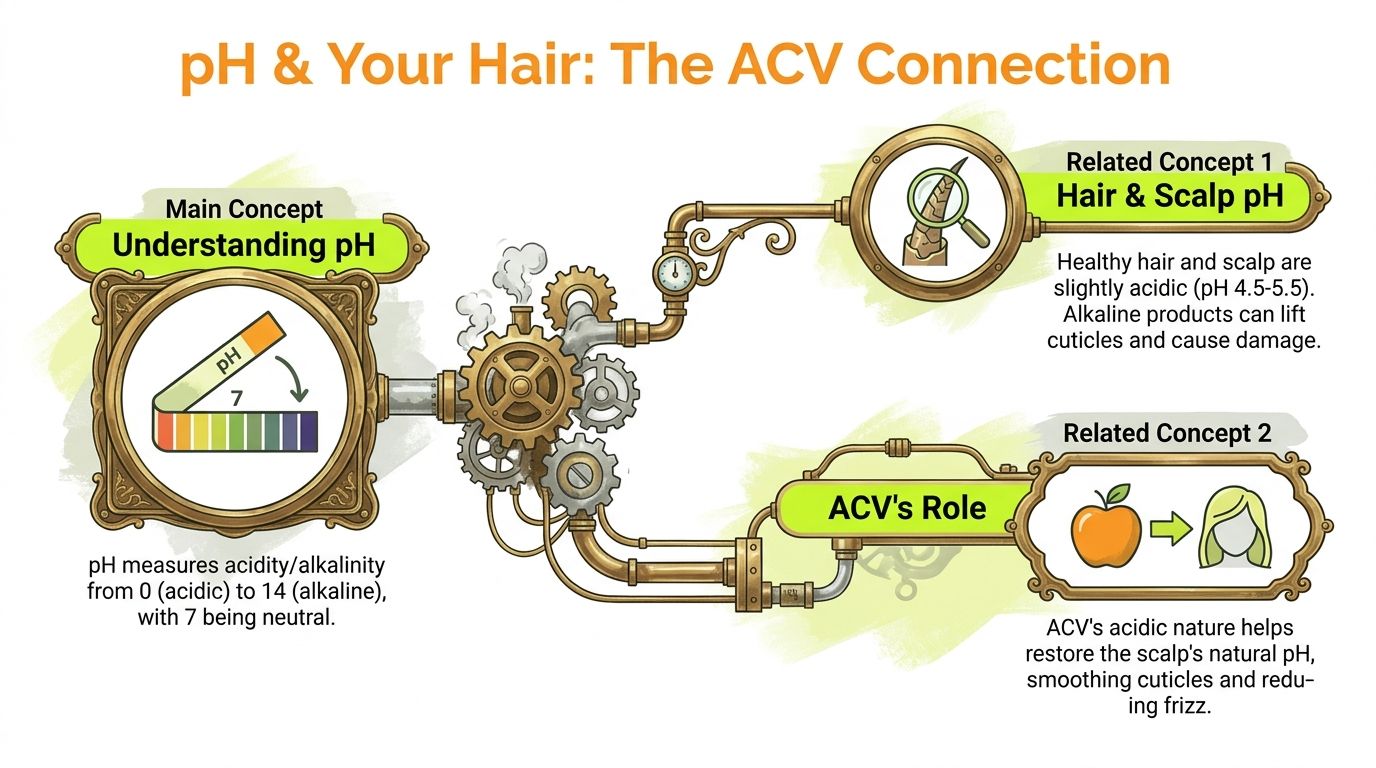
Hair fibres and scalp skin both respond to pH. If a product is too acidic or too harsh for the skin barrier, the result can be sting, dryness, and more irritation rather than less. That is why commercial ACV shampoos are adjusted to a scalp-friendlier pH, while kitchen vinegar is much less predictable in practice.
This is the first safety line I would draw in the pharmacy. A buffered shampoo designed for cosmetic use is one thing. Raw vinegar applied to an already sore, flaky, or scratched scalp is another.
What ACV can and cannot do
The actual benefit is a clarifying one. ACV shampoos may help lift sebum, residue from styling products, and some loose surface scale, which can leave the scalp feeling cleaner and hair looking less coated [3]. For someone whose main problem is build-up, that can be useful.
The evidence becomes much weaker once brands imply treatment of dandruff, infection, or hair loss. Acetic acid does show antimicrobial activity in laboratory settings, but that does not mean an ACV shampoo on a shop shelf will behave like a medicine on the scalp. In real formulations, the vinegar component is usually kept mild because stronger acidity raises the risk of irritation. That is the trade-off.
From a pharmacist's perspective, there is a need to tighten expectations. If a product improves comfort because it removes residue and reduces greasiness, that is a cosmetic win. It does not confirm treatment of seborrhoeic dermatitis, psoriasis, fungal infection, or inflammatory scalp disease.
Hair shedding is a separate issue again. A fresher scalp can make hair feel better to manage, but it does not address the biology behind pattern hair loss or other common causes of thinning. Readers comparing cosmetic scalp products with evidence-based hair loss treatment can look at this guide to minoxidil and hair growth mechanisms.
A simple rule helps. ACV shampoo is reasonable as an occasional clarifying product. It is not a substitute for a diagnosed treatment plan when the scalp is persistently itchy, inflamed, crusted, painful, or shedding hair more than usual.
How to Use ACV Shampoo and Rinses Safely
Commercial shampoo first, DIY second
If you want to try apple cider vinegar shampoo, start with a commercial product, not raw vinegar. Commercial formulas are typically adjusted to a final pH of 5.5 to 6.5, while raw ACV sits at pH 2 to 3, which is much harsher than the scalp's preferred pH 4.5 to 5.5 [2].
Use it like any clarifying shampoo. Start once weekly. If your scalp feels comfortable and your hair doesn't become dry, you can decide whether that frequency suits you.
Pharmacist's tip: Patch test any new scalp product first. Apply a small amount behind the ear or on a small scalp area, then wait before full use.
DIY rinse safety
A DIY apple cider vinegar hair rinse needs far more caution. Typical home dilutions for scalp use are 1 part ACV to 2 to 3 parts water, with the rinse left on for 1 to 3 minutes after shampooing before rinsing out [5].
Keep it simple:
- Shampoo first: Use your normal shampoo before the rinse.
- Dilute properly: Never apply neat vinegar to the scalp.
- Keep contact short: Leave it on briefly, then rinse well.
- Stop if it stings: Tingling is not a badge of success.
Pharmacist's tip: Never use undiluted ACV on your scalp. Raw vinegar is too acidic and can irritate or worsen an already damaged scalp barrier.
DIY ACV rinse vs Commercial ACV shampoo
| Feature | DIY ACV Rinse | Commercial ACV Shampoo |
|---|---|---|
| Cost | Usually cheaper upfront | Usually costs more |
| Convenience | Messier and less predictable | Easy to use in a normal wash routine |
| pH control | Hard to judge at home | Formulated for scalp safety |
| Smell | Strong vinegar smell | Usually fragranced and milder |
| Best use | Occasional clarifying rinse | Regular, more controlled clarifying wash |
| Risk of irritation | Higher if mixed badly or overused | Lower, though still possible |
| Medical benefit | Limited | Limited unless paired with proven actives |
A busy parent is a good example here. If someone washes quickly between school runs and work, a ready-made shampoo is far less likely to be overdone than a homemade rinse mixed by eye in the shower.
Pharmacist's tip: If you already use a medicated scalp product, don't layer in an ACV rinse on the same day unless a clinician has told you it's sensible. Too many “active” steps can tip a sore scalp into irritation.
Potential Risks and Who Should Avoid ACV Shampoo
Some scalps cope well with apple cider vinegar shampoo. Others don't. The biggest problems I see are irritation, dryness, and confusion between a cosmetic fix and a medical treatment.
There is a clear lack of practical guidance for people trying to fit ACV products into routines for medically managed scalp conditions such as seborrhoeic dermatitis or psoriasis, which becomes critical where avoiding irritants is important [6].
Who needs extra caution
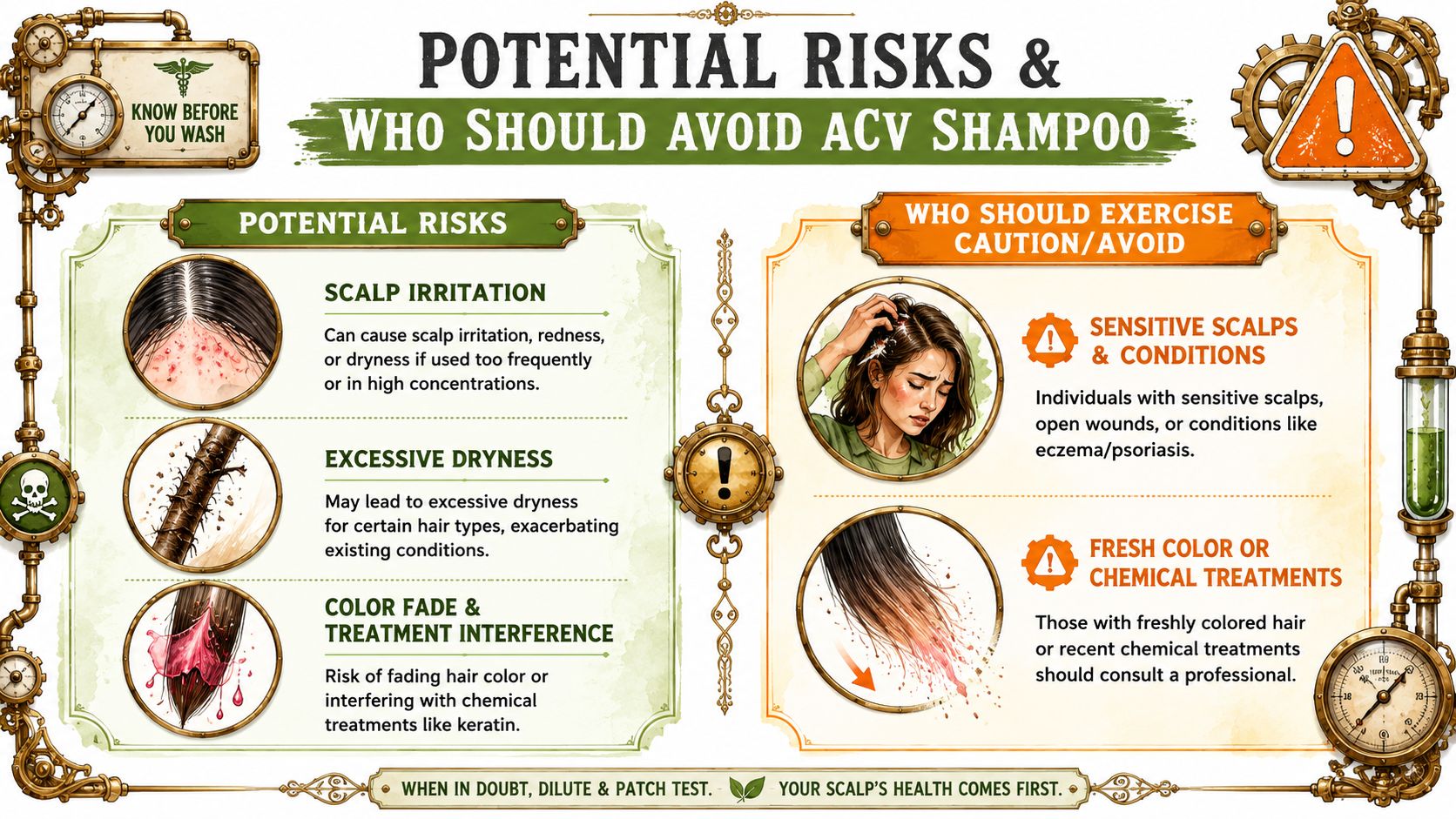
Be careful, or avoid it altogether, if any of these apply:
- Inflamed scalp: Psoriasis, eczema, folliculitis, or a scalp that already burns or cracks
- Fresh colour or chemical treatment: Colour fade and dryness may become more noticeable
- Very dry or damaged hair: Clarifying products can make brittle hair feel worse
- Open skin: Scratches, sores, or broken skin can sting badly with acidic products
For dermatitis-prone skin, this broader UK guide to finding the best cream for dermatitis can help you think about barrier protection more generally.
Two real-world examples
A shift worker with scalp psoriasis might try ACV shampoo after seeing it praised online for flakes. Their logic is understandable. But if the scalp is already inflamed, acidic products can increase sting and redness rather than settle it.
A busy parent with freshly coloured hair may use a strong DIY rinse because their roots feel heavy from dry shampoo. Their scalp may feel cleaner. Their hair colour may also look duller faster, and the ends may feel rough.
Here's a useful explainer if you want to watch the topic discussed in a more visual format:
Stop immediately if you get burning, marked redness, or worse itching after use.
Pharmacist's tip: If you experience any redness, burning, or increased itching, stop using the product immediately and rinse with cool water.
When to See a Pharmacist for Scalp Problems
Apple cider vinegar shampoo may help a mildly oily, coated scalp. It doesn't replace proper care for dandruff that keeps coming back, psoriasis, infected follicles, or unexplained hair shedding.
Signs you need proper medical advice
Ask a pharmacist or GP for help if you have:
- Persistent flaking: Especially if standard anti-dandruff shampoos haven't helped
- Strong itch or soreness: A painful scalp needs assessing
- Hair loss: New or worsening shedding deserves a proper history
- Scabs, pustules, or broken skin: These can point to infection or inflammatory disease
- Patchy redness or thick scale: This may be more than simple dandruff

What usually works better for true scalp disease
For genuine dandruff or seborrhoeic dermatitis, shampoos with established medicated ingredients are usually the better path. Depending on symptoms, that may include options such as ketoconazole, selenium sulphide, coal tar, or steroid scalp treatments when inflammation is driving the problem.
There's also growing need for advice that connects scalp care with functional genomic testing, especially for people with a tendency toward sensitive skin or hair loss, where personalised medicine may help guide product choice and treatment planning [7].
A sore scalp is not the time to experiment with stronger DIY vinegar mixes.
If inflammation is part of the picture, prescription scalp treatments may be appropriate. For example, Betnovate scalp application is one of the recognised treatment routes used for certain inflammatory scalp problems under professional guidance.
When to seek urgent help
Get prompt medical advice if you have rapid swelling, spreading rash, severe pain, fever, or signs of an allergic reaction after using any new scalp product.
Summary
Apple cider vinegar shampoo can be a sensible option if your main problem is build-up, greasy roots, or a scalp that feels coated after lots of product use. It works best as a clarifying wash, not as a cure for scalp disease.
The science behind the bigger claims is modest. Commercial products are safer than DIY vinegar because they are pH-balanced for scalp use. If a product helps dandruff, the benefit often comes from a proven antifungal ingredient rather than the ACV itself.
If your scalp is sore, persistently flaky, or linked with hair loss, don't keep experimenting. Ask a pharmacist or GP for proper advice.
Your Questions About ACV Shampoo Answered FAQs
Can apple cider vinegar shampoo cause hair loss?
It doesn't typically lead to direct hair loss. But if a product irritates your scalp badly, that irritation can worsen shedding in the short term. If hair loss is ongoing, think beyond shampoo and get it checked.
How often should I use apple cider vinegar shampoo?
A good starting point is once a week. If your scalp stays comfortable, you can judge whether occasional or regular clarifying suits you. Daily use often isn't necessary unless the product is specifically made for frequent washing and your scalp tolerates it well.
Does apple cider vinegar shampoo help dandruff?
Sometimes, but not always for the reason people think. It may help remove oil and flakes from the scalp surface. Persistent dandruff usually responds better to medicated shampoos with proven antifungal ingredients.
Is it safe for curly hair?
It can be, especially if build-up is a problem. Curly hair can also become dry more easily, so follow with a conditioner if needed and don't overuse clarifying products.
Can I use a DIY ACV rinse instead of shampoo?
Not really. A rinse can complement shampoo, but it doesn't replace proper cleansing. It also carries more risk because home dilution is less precise.
Will it help my hair grow faster?
There's no good reason to expect that. A cleaner scalp can feel healthier, but that isn't the same as stimulating hair growth. Hair-loss treatments work through different mechanisms.
Is apple cider vinegar shampoo good for oily hair?
Yes, that's one of the more realistic uses. It can help remove excess sebum and residue, so hair feels lighter and less coated.
Can I use it on hair extensions or freshly coloured hair?
Use caution. Acidic or clarifying products may affect colour freshness and could interfere with extension aftercare depending on the system used. If in doubt, ask your stylist before trying it.
For readers dealing with shedding as well as scalp symptoms, the Courier Pharmacy hair loss information hub is a sensible next step.
Meta description: Apple cider vinegar shampoo explained by a UK pharmacist. Learn benefits, risks, pH safety, dandruff limits, and when to seek proper scalp advice.
Suggested internal links for medicalmojo.co.uk
- Hair loss treatment guide
- Seborrhoeic dermatitis treatment guide
- Psoriasis scalp care guide
- Dandruff vs dry scalp explainer
- Minoxidil guide
- Contact dermatitis and sensitive skin guide
Visual ideas for the designer
Scalp pH explainer infographic
Alt text: “Infographic showing scalp pH, raw apple cider vinegar pH, and the safer pH range for commercial ACV shampoos.”Clarifying vs medicated shampoo decision chart
Alt text: “Decision chart helping readers choose between clarifying ACV shampoo and medicated dandruff shampoo.”Who should avoid ACV shampoo illustration
Alt text: “Illustrated warning guide showing sensitive scalp, psoriasis, coloured hair, and broken skin as caution groups.”Bathroom shelf comparison graphic
Alt text: “Painterly comparison of DIY apple cider vinegar rinse and commercial ACV shampoo with safety notes.”
Byline: Medical Mojo Editorial Team, reviewed in a UK clinical pharmacy style
Clinical review: Clinical review by a UK-registered pharmacist
How this content was created
This article was written using the verified evidence supplied, with a safety-first editorial review focused on UK patient use. The content was checked for medical plausibility, overclaiming, and practical self-care advice, with emphasis on when home treatment stops being enough.
Disclaimer: This article is for information only and isn't a substitute for personal medical advice. If your symptoms are persistent, painful, or getting worse, speak to a pharmacist or GP.
References
[1] Morocco Method. Apple Cider Vinegar Shampoo. Available at: https://shop.morroccomethod.com/products/apple-cider-vinegar-shampoo
[2] Hairlust. ACV for Scalp and Hair. Available at: https://hairlust.com/blogs/blog/acv-for-scalp-and-hair
[3] Smytten. 7 Surprising Benefits of Apple Cider Vinegar for Hair. Available at: https://smytten.com/blogs/haircare/7-surprising-benefits-of-apple-cider-vinegar-for-hair
[4] Ralph Lauren Fragrances. Apple Cider Vinegar Shampoo. Available at: https://www.ralphlaurenfragrances.com/en_US/blog/apple-cider-vinegar-shampoo.html
[5] ELLE UK. Apple Cider Vinegar Benefits for Hair. Available at: https://www.elle.com/uk/beauty/hair/g63769331/apple-cider-vinegar-benefits-hair/
If your scalp symptoms keep returning, or you're not sure whether you need a cosmetic product or a proper treatment, Courier Pharmacy offers discreet UK online support, pharmacist-led advice, and access to suitable scalp and hair-loss treatment pathways.


