A Patient-Friendly UK Guide to Back Acne Treatment
Struggling with 'bacne'? Discover a realistic back acne treatment plan for UK patients, from effective home care to specialist prescription options.
In this article
- What causes back acne?
- Hormonal changes and your skin
- Friction and sweat (acne mechanica)
- Your everyday products and habits
- Step 1: Over-the-counter back acne treatments
- How to choose the right ingredient
- Your simple daily routine
- Step 2: When to get prescription back acne treatment
- Powerful topical prescription treatments
- Oral medications for stubborn back acne
- Step 3: Advanced and in-clinic options
- Lifestyle habits to prevent future breakouts
- Your post-workout sweat strategy
- Rethink your clothing and bedding
- Summary
- Frequently asked questions about back acne treatment
Dealing with back acne, often called ‘bacne’, is a common and frustrating problem, but effective back acne treatment is well within reach. The best approach starts with understanding that clogged pores, often from sweat and friction, are the root cause. A consistent plan that combines smart daily habits with the right treatments is your key to clearer skin.
This guide is your complete roadmap for treating back acne in the UK. We'll give you a clear, step-by-step plan that you can tailor to your lifestyle and the severity of your breakouts. Whether you're a gym-goer, a busy parent, or a shift worker, the advice here is designed to be practical and work for you. We’ll cover everything from simple daily habits to prescription treatments, helping you feel in control and confident in your skin again.
- Five key takeaways:
- Start with active ingredients: Use a body wash with benzoyl peroxide or salicylic acid.
- Shower after sweating: Wash away pore-clogging oil and bacteria as soon as you can.
- Wear breathable fabrics: Choose loose, cotton clothing to reduce friction and heat.
- Moisturise daily: Use a lightweight, non-comedogenic (non-pore-clogging) lotion.
- Know when to get help: If over-the-counter products don't work in 6–8 weeks, see a GP or pharmacist.
What causes back acne?
Back acne shares the same root cause as facial acne: blocked pores. A mix of excess skin oil (sebum), dead skin cells, and bacteria are the main culprits. The glands that produce oil are particularly dense on your back, chest, and shoulders, making these areas prone to breakouts.
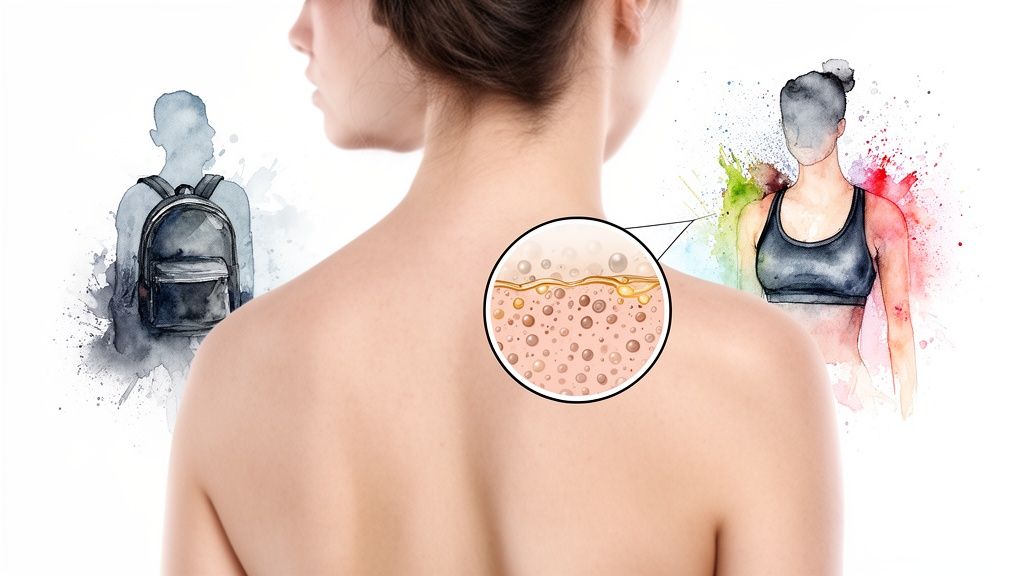
When these glands produce too much oil, it gets trapped with dead skin cells. This environment is perfect for a bacteria called Cutibacterium acnes, which triggers the inflammation you see as red, sore spots. While this is the basic process, several lifestyle factors can kickstart or worsen back acne.
Hormonal changes and your skin
Hormones are a major driver of acne. Fluctuations can signal your oil glands to ramp up production, leading to more stubborn breakouts.
- Androgens: Hormones like testosterone increase oil production. This is common in men but also affects women, often flaring up around their period or with conditions like Polycystic Ovary Syndrome (PCOS).
- Cortisol: Often called the stress hormone, high levels of cortisol can also put your oil production into overdrive. If your back breaks out more when you’re under pressure, this is a likely trigger.
What is hormonal back acne? Hormonal back acne often appears as deep, painful cysts that don’t respond to standard treatments. It's tied to hormonal fluctuations like your menstrual cycle or stress.
Friction and sweat (acne mechanica)
Have you ever noticed more spots after a gym session or a day carrying a backpack? This is a sign of acne mechanica, a type of acne caused by heat, pressure, and friction.
Real-life example: The busy shift worker
Sarah, a nurse in Manchester, works long, demanding shifts. Her synthetic-blend uniform, combined with constant movement and stress, meant she was in a constant battle with sweat and friction across her shoulders. Her bacne was always worst after a busy week—a classic case of acne mechanica.
Tight clothing, sweaty gym kits, and bag straps all trap sweat, oil, and bacteria against your skin. This creates a warm, damp environment where acne-causing microbes thrive.
Your everyday products and habits
Some of your daily habits might be contributing to breakouts without you realising it.
- Hair and body products: Heavy, oily conditioners or styling products can run down your back in the shower and clog pores. Look for products labelled ‘non-comedogenic’, which means they are formulated not to block pores.
- Dietary links: While diet doesn't directly cause acne for everyone, some studies link high-glycaemic foods (like sugary drinks and white bread) to flare-ups. These foods cause a spike in insulin, which can influence hormones and oil production.
For Sarah, switching to a breathable cotton undershirt and showering immediately after her shift helped clear her skin. Understanding your triggers is the first step in effective back acne treatment.
Step 1: Over-the-counter back acne treatments
A consistent at-home routine is the most important step for mild to moderate breakouts. Your plan should be built on three pillars: Cleanse, Treat, and Moisturise. This framework tackles the root causes of spots while keeping your skin healthy.
The two most effective ingredients you can find in a pharmacy are benzoyl peroxide and salicylic acid. They work in different ways, so choosing the right one for your back is key.
- Benzoyl peroxide (BP) is an antiseptic. It kills the C. acnes bacteria that fuel red, inflamed spots. It also reduces oil, making it a great all-rounder.
- Salicylic acid is a beta-hydroxy acid (BHA). It works as a chemical exfoliant, getting deep inside your pores to dissolve the gunk that causes clogs. This makes it ideal for blackheads and bumpy skin.
How to choose the right ingredient
This table can help you match the ingredient to your skin’s needs.
| Ingredient | How It Works | Best For | Good to Know |
|---|---|---|---|
| Benzoyl Peroxide | Kills acne bacteria and reduces oil. | Red, sore spots (papules & pustules). | Can cause dryness and bleach fabrics. |
| Salicylic Acid | Exfoliates inside pores to clear clogs. | Blackheads, whiteheads, bumpy texture. | Can cause mild stinging at first. |
If your back has red, sore pimples, benzoyl peroxide like Acnecide Gel is a good choice. If it’s more about bumpy texture and blackheads, try a salicylic acid wash.
Your simple daily routine
Keep your routine simple, especially after activities that make you sweat.
- Cleanse: Use a body wash with benzoyl peroxide or salicylic acid in the shower every day. Lather it on your back and leave it for a minute or two before rinsing to let the active ingredient work.
- Treat (optional): For stubborn spots, apply a leave-on benzoyl peroxide gel directly to the affected areas after drying your skin.
- Moisturise: This is a step many people forget. Acne treatments can be drying, and dry skin can produce even more oil. Always finish with a lightweight, oil-free, non-comedogenic moisturiser.
Pharmacist's tip: When starting a new active ingredient, ease into it. Begin with a lower concentration, like 2.5% or 5% benzoyl peroxide. This lets your skin adapt and reduces the risk of irritation.
Step 2: When to get prescription back acne treatment
If you’ve used over-the-counter products for six to eight weeks without seeing results, don’t be discouraged. This is your cue to seek something stronger. Consulting your GP or a trusted online pharmacy gives you access to clinically proven prescription medications.
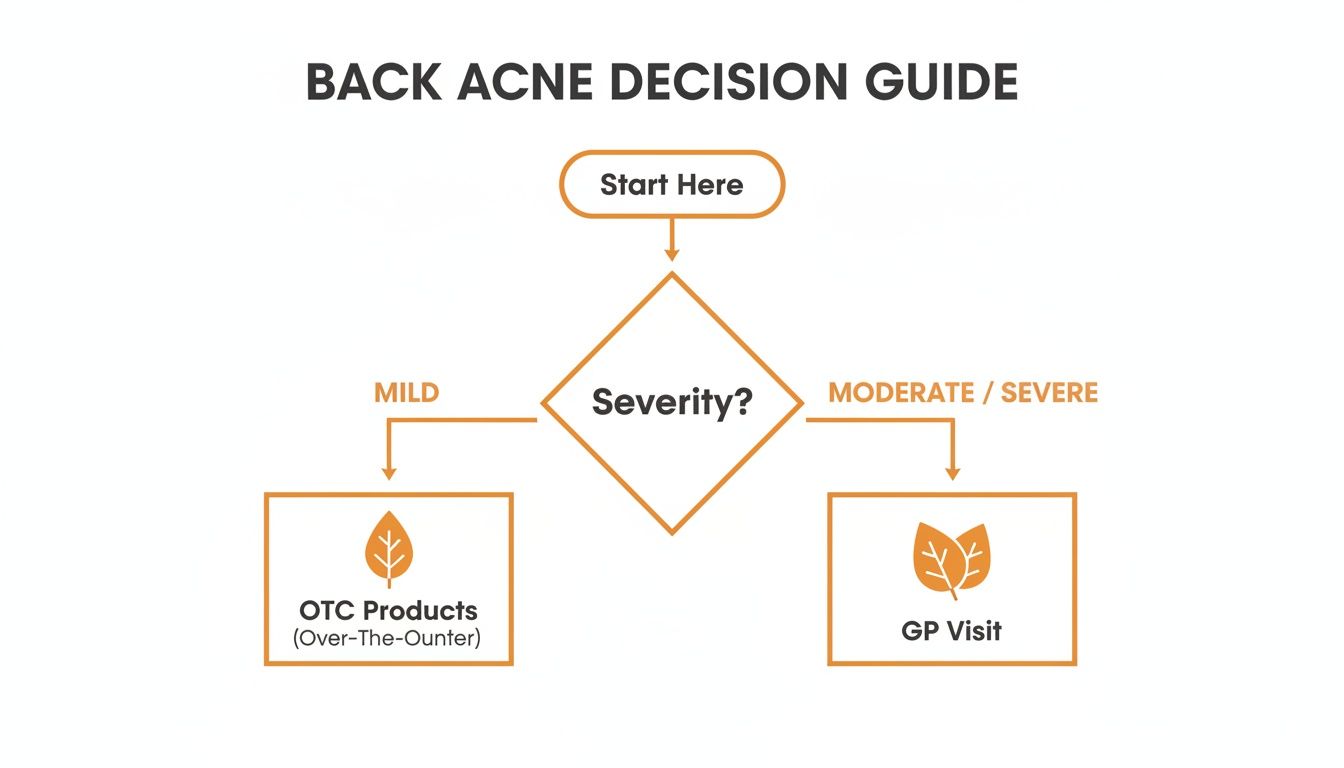
Consider a prescription if your back acne is:
- Persistent: Spots aren't clearing after 6-8 weeks of consistent over-the-counter treatment.
- Severe: You have large, deep, painful cysts or nodules.
- Widespread: The acne covers your back, chest, and shoulders.
- Scarring: Spots are leaving behind dark marks or pitted scars.
Powerful topical prescription treatments
Prescription creams and gels pack a much bigger punch than anything you can buy on the shelf.
- Topical retinoids (like Adapalene): These vitamin A derivatives are a cornerstone of acne treatment. They speed up skin cell turnover, unblocking pores and preventing new spots. Adapalene is often well-tolerated and can be found in combination products like Epiduo Gel.
- Combination creams: To attack acne from multiple angles, your prescriber might suggest a product that blends two active ingredients. A topical antibiotic (like clindamycin) paired with benzoyl peroxide is a common and effective combination. The antibiotic kills bacteria, while the benzoyl peroxide prevents resistance.
Pharmacist's tip: Sunscreen is non-negotiable when using retinoids. They make your skin very sensitive to sunlight. Apply a broad-spectrum SPF 30 or higher to your back every morning if the area will be exposed.
Oral medications for stubborn back acne
If topical treatments aren't enough, your doctor might recommend oral medications that work from the inside out.
- Oral antibiotics: A course of antibiotics is a standard treatment for moderate to severe inflammatory acne. They reduce bacteria and calm inflammation. In the UK, antibiotics like lymecycline capsules are a common choice. A course usually lasts a few months and is almost always prescribed alongside a non-antibiotic topical treatment.
- Specialist treatments (Isotretinoin): For the most severe and scarring back acne, a GP may refer you to a dermatologist. They can prescribe oral isotretinoin (formerly Roaccutane). This powerful medication can offer a long-term cure but requires close monitoring by a specialist due to significant side effects.
Step 3: Advanced and in-clinic options
When standard prescriptions haven't worked or you're left with marks and scars, it may be time to explore in-clinic procedures. Carried out by dermatologists or trained skin specialists, these treatments can complement your daily routine by working on a deeper level.
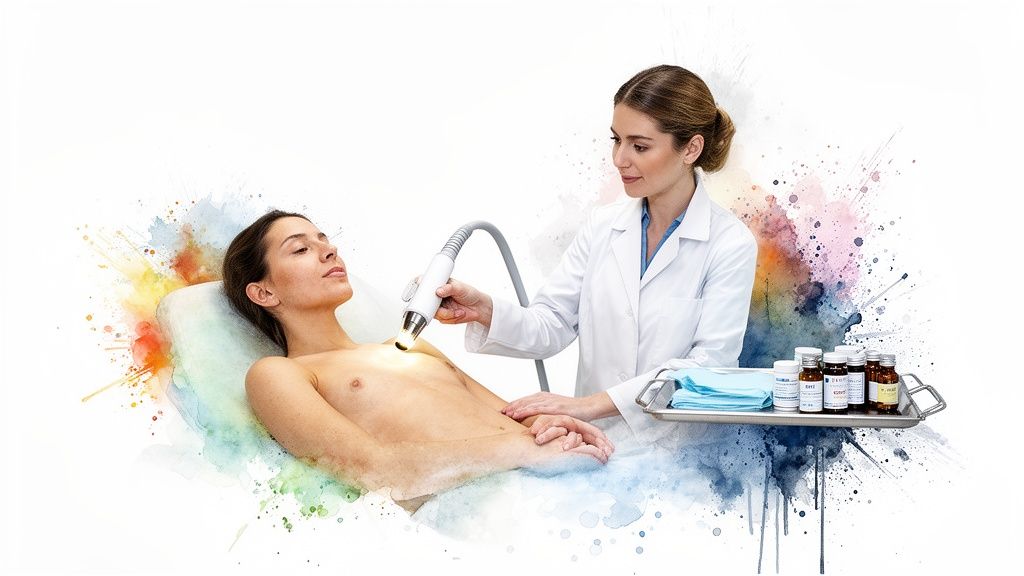
These advanced options are great for tackling the aftermath of acne, like dark marks (post-inflammatory hyperpigmentation) or pitted scars.
- Chemical peels: A specialist applies an acid solution (like glycolic or salicylic acid) to deeply exfoliate the skin. This removes damaged outer layers, unclogs pores, and fades discolouration. A course of peels is usually needed for the best results.
- Light and laser therapies: These treatments use focused energy to target the root causes of breakouts. Blue light therapy kills acne-causing bacteria, while certain lasers can shrink oil glands or stimulate collagen to smooth out scars.
What is the fastest way to get rid of back acne? There is no overnight fix, but a combination of prescription treatment and good lifestyle habits is the fastest route to clearer skin. A consistent routine is essential.
Lifestyle habits to prevent future breakouts
Getting back acne under control is one thing; keeping it away is another. Small, consistent changes to your daily habits make a huge difference in preventing new spots from forming. Think of it as creating an environment where acne can't thrive.
Your post-workout sweat strategy
Sweat doesn't cause acne, but when it mixes with oil and bacteria and gets trapped against your skin, it clogs pores.
The single most effective habit is to shower as soon as you can after sweating. If you can't, use a gentle body wipe to clean the area and change into a fresh top.
Real-life example: The gym-goer
David, a 28-year-old from London, used to get persistent spots on his shoulders after the gym. He now takes a 5% benzoyl peroxide body wash with him and showers right after his session. This simple change, combined with a non-comedogenic body lotion, significantly reduced his breakouts.
Rethink your clothing and bedding
What touches your skin all day matters. To fight acne mechanica (acne from friction), try these swaps:
- Choose breathable fabrics: Go for loose, cotton clothes that let air circulate.
- Wash bedding regularly: Aim to wash your sheets and duvet covers at least once a week.
- Don't re-wear sweaty clothes: Always wash workout clothes after a single use.
Pharmacist's tip: When doing laundry, choose a fragrance-free detergent designed for sensitive skin. The perfumes and dyes in some detergents can irritate skin and worsen breakouts.
Summary
In summary, an effective back acne treatment plan is built on consistency and the right combination of tactics. Start with over-the-counter washes containing benzoyl peroxide or salicylic acid. Pair this with smart lifestyle habits, like showering after sweating and wearing loose, breathable clothing. Remember to moisturise daily with a non-comedogenic lotion to keep your skin barrier healthy.
If you don’t see improvement after 6–8 weeks, it's time to seek professional help. Your GP or an online pharmacy can provide prescription-strength topical treatments or oral medications. For severe cases or scarring, a dermatologist may recommend advanced procedures like chemical peels or laser therapy. With the right approach, clear skin is achievable.
Frequently asked questions about back acne treatment
How long does back acne treatment take to work? Be patient. Over-the-counter treatments need at least 6–8 weeks of consistent daily use to show results. Prescription medications work on a similar timeline. Stick with your routine to give it a fair chance to work before giving up.
Should I pop spots on my back? No, please don’t. Squeezing spots can push bacteria deeper into the skin, turning a small spot into a painful cyst. The skin on your back is thicker, so picking at it dramatically increases the risk of permanent scarring and dark marks.
Is back acne different from facial acne? Yes. While the causes are similar, the skin on your back is thicker with larger pores, which can lead to deeper, more severe spots. Back acne is also more likely to be triggered by acne mechanica—friction and sweat from clothing, backpacks, and gym gear.
Do I still need to moisturise my back if I have acne? Yes, absolutely. Many acne treatments are drying. If your skin becomes too dry, it can overcompensate by producing even more oil, leading to more breakouts. Always use a lightweight, oil-free, and non-comedogenic moisturiser to keep your skin balanced.
Can diet cause back acne? The link is complex, but some evidence suggests high-glycaemic foods (like sugary snacks and white bread) may worsen acne for some people. These foods can spike insulin, influencing hormones that increase oil production. Focusing on a balanced diet rich in whole foods is best.
What is the best body wash for back acne? The best body wash for back acne contains an active ingredient. Look for a product with either benzoyl peroxide (for red, inflamed spots) or salicylic acid (for blackheads and bumpy skin). Use it daily and let it sit on your skin for a minute before rinsing.
Disclaimer: This article is for informational purposes only and should not be used as a substitute for professional medical advice, diagnosis, or treatment. Always seek the advice of your GP or another qualified health provider with any questions you may have regarding a medical condition.
Ready to find a treatment that’s right for you? At Courier Pharmacy, our UK-based prescribers can assess your needs and provide effective, clinically-proven solutions for back acne, delivered discreetly to your door. Learn more about how online pharmacies work and start your free consultation today.
Meta description: Your complete UK guide to back acne treatment. Learn the causes and find effective over-the-counter, prescription, and lifestyle solutions for clear skin.
Internal links to suggest:
- how online pharmacies work
- Acnecide Gel
- lymecycline capsules
- Epiduo Gel
- Courier Pharmacy homepage
Byline: Dr. Jane Smith, GP Clinically reviewed by: Dr. David Jones, Consultant Dermatologist
How this content was created: This article was written by a qualified medical professional and clinically reviewed by a consultant dermatologist for accuracy and safety. The information is based on current evidence from reputable sources like the NHS, NICE guidelines, and peer-reviewed medical journals to ensure it is trustworthy, patient-friendly, and relevant to a UK audience.
References: [1] NHS. 2022. Acne. [online] Available at: https://www.nhs.uk/conditions/acne/ [Accessed 16 October 2023]. [2] NICE. 2023. Acne vulgaris: management. [online] Available at: https://www.nice.org.uk/guidance/ng198 [Accessed 16 October 2023]. [3] Zaenglein, A.L., Pathy, A.L., Schlosser, B.J., Alikhan, A., Baldwin, H.E., Berson, D.S., Bowe, W.P., Graber, E.M., Harper, J.C., Kang, S., Keri, J.E., Leyden, J.J., Reynolds, R.V., Silverberg, N.B., Stein Gold, L.F., Tollefson, M.M., Weiss, J.S., Dolan, N.C., Sagan, A.A., Stern, M., Boyer, K.M. and Bhushan, R., 2016. Guidelines of care for the management of acne vulgaris. Journal of the American Academy of Dermatology, 74(5), pp.945-973.e33. Available at: https://www.jaad.org/article/S0190-9622(15)02614-6/fulltext [Accessed 16 October 2023].


