Bepanthen Cream for Tattoos: A Practical UK Guide
Bepanthen cream for tattoos explained: how to apply it, when to start and stop, safety tips, and how it compares to common UK aftercare alternatives.
You've just left the tattoo studio, and the small tube of Bepanthen is already in your bag. The advice may sound simple, but UK tattoo aftercare can be surprisingly mixed. Some artists recommend Bepanthen. Others prefer a lighter moisturiser or advise against it altogether.
Bepanthen cream for tattoos can be used carefully, but the amount and timing matter more than the brand. Use a very thin layer on freshly cleaned skin, follow your tattooist's instructions, and stop using a heavy ointment once the skin has closed. This guide explains the difference between standard Bepanthen and Bepanthen Tattoo, how often to apply it, when to switch products, and which symptoms need medical help.
Five key takeaways
- Use very little: A pea-sized amount can cover an average palm-sized tattoo area, creating a barely visible film.
- Apply regularly, not thickly: UK advice ranges from two to four applications daily, depending on the protocol. Bepanthen's UK tattoo guidance advises up to four applications daily.
- Clean and dry first: Wash hands, clean with lukewarm water and mild fragrance-free soap, then pat dry.
- Stop when the skin closes: Move to a plain, fragrance-free moisturiser when the tattoo no longer looks open or weepy.
- Act on red flags: Hot skin, spreading redness, pus, worsening swelling, or fever needs medical advice. NHS aftercare guidance advises contacting a GP for concerning inflammation and seeking same-day help for severe redness, swelling, or fever.
What Bepanthen Is and Why It Shows Up in Tattoo Aftercare
Bepanthen is an over-the-counter skin ointment containing dexpanthenol, a provitamin form of vitamin B5. It helps protect the skin surface and supports moisture retention while the skin barrier repairs. That explains why many people associate it with healing irritated skin and fresh tattoos.
Two products often get confused. Standard Bepanthen nappy-care cream is the older, familiar option. Bepanthen Tattoo is a newer product line positioned specifically for tattoo aftercare. The manufacturer's UK tattoo page gives tattoo users a structured routine, including a thin layer and repeated daily application. It also says that only a small amount is needed and that users can warm the ointment between their hands before applying it. Read the UK product guidance for Bepanthen Tattoo.
Bepanthen has become a common reference point in British studios because it's easy to find and familiar to artists. It's available through mainstream UK retailers, and many tattooists have used it within their own aftercare routines for years. That doesn't make it the only suitable choice, or automatically the best choice for every person.
Standard Bepanthen and Bepanthen Tattoo
The key difference is product positioning, not a guarantee that one product will heal every tattoo better. The Tattoo line focuses on tattoo care, while the original cream remains a general skin-protection product commonly mentioned in studio advice.
Your skin type matters. So does the tattoo's location, how much friction it gets, and whether your artist used a protective film. Follow the artist's instructions first, unless you develop symptoms that suggest irritation or infection.
Practical rule: Bepanthen is an option, not a national standard. Thin application and clean hands matter more than loyalty to a particular tube.
If you're prone to dry, irritated skin, you may also find this UK guide to choosing a cream for dermatitis useful. Tattoo aftercare still needs a fresh-wound approach, though. Don't treat a new tattoo like ordinary dry skin.
How Often to Apply Bepanthen on a New Tattoo
There isn't one agreed UK studio routine. Some tattooists advise a thin layer two to three times daily, while others suggest applying it after washing during the first few days and then only when the tattoo feels tight. Some studios recommend Bepanthen for longer. Others advise a different product or avoid it because they feel a thick ointment can irritate sensitive skin. Watford Tattoo Studio's aftercare advice shows how much professional guidance can differ.
Bepanthen Tattoo's UK guidance gives a more structured schedule. It advises a thin layer two to three times daily for the first two to three days after cleaning, while its wider product guidance allows application up to four times daily. The specific tattoo-care instructions provide the early-healing timeframe.
Studio guidance compared with manufacturer guidance
| Aspect | UK studio guidance | Bepanthen Tattoo guidance |
|---|---|---|
| Amount | Very thin layer, often described as a barely visible film | Small amount, spread thinly |
| Frequency | Commonly two to four times daily, depending on the artist | Two to three times daily after cleaning in the early stage, with wider product guidance allowing up to four applications daily |
| Duration | Often limited to the first few days, then plain moisturiser | Supports continued use during the healing routine |
| Main warning | Avoid over-application, rubbing, soaking, and tight clothing | Keep application thin and use only a small amount |
My practical view is simple. Use a pea-sized amount for a palm-sized tattoo area, spread into a thin layer, and apply it two to four times daily on freshly cleaned skin. Keep that routine brief, then reassess when the surface has closed. Many people can move to plain moisturiser after the first few days if the tattoo no longer looks open or weepy.
Don't increase the amount because the tattoo feels dry. A thick layer can trap moisture and increase irritation, whatever the brand. If you need a lighter option for later healing, compare it with a non-greasy emollient gel such as Doublebase.
How to Apply Bepanthen Step by Step
A good routine takes only a few minutes. The aim is to remove sweat and residue without scrubbing, then replace only the moisture the skin needs.
- Wash your hands. Use soap and water before touching the tattoo. Clean hands reduce the chance of transferring dirt and bacteria.
- Clean the tattoo gently. Use lukewarm water and a mild, fragrance-free soap. Don't use a flannel, exfoliating cloth, or scented body wash.
- Pat it dry. Use a clean paper towel and press gently. Rubbing can disturb tender, peeling skin.
- Let the surface air-dry. Wait a few minutes until the tattoo feels dry rather than damp.
- Measure a small amount. Start with a pea-sized amount for a palm-sized area. Warm it between clean fingertips if the ointment feels stiff.
- Spread a barely visible layer. Use a light touch. Don't massage hard, and don't leave a thick white coating.
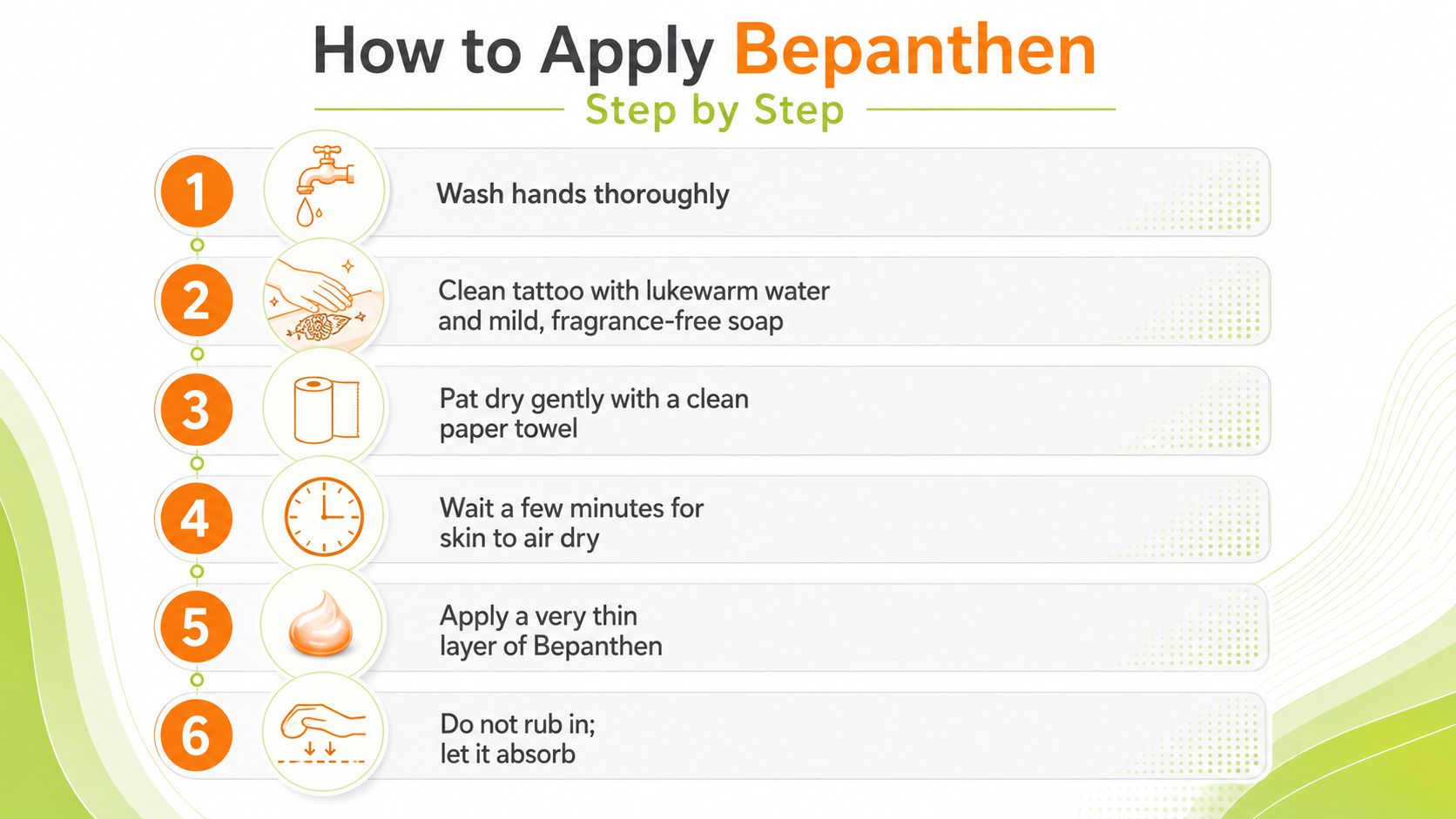
Repeat the routine two to four times daily during the early healing stage, or follow your artist's specific plan if it differs. Wash your hands before and after application. Don't cover Bepanthen with cling film unless your tattooist has given you a specific dressing plan.
Two everyday examples
A night-shift worker might shower after waking, clean the tattoo, let it dry, and apply a thin layer before leaving home. They could carry a small, clean tube for use after the next wash, rather than dipping repeatedly into a shared pot.
A gym-goer should clean the tattoo after exercise and apply a thin layer after a cool shower. Wear loose, breathable clothing, and avoid heavy kit rubbing against the area during the first 48 hours, following UK tattoo aftercare advice from Valkyrie Tattoo.
Pharmacist's tip: Don't apply ointment to wet skin. Water trapped beneath an occlusive layer can leave the tattoo soggy and more irritated.
Safety, Side Effects, and When to Switch Off Bepanthen
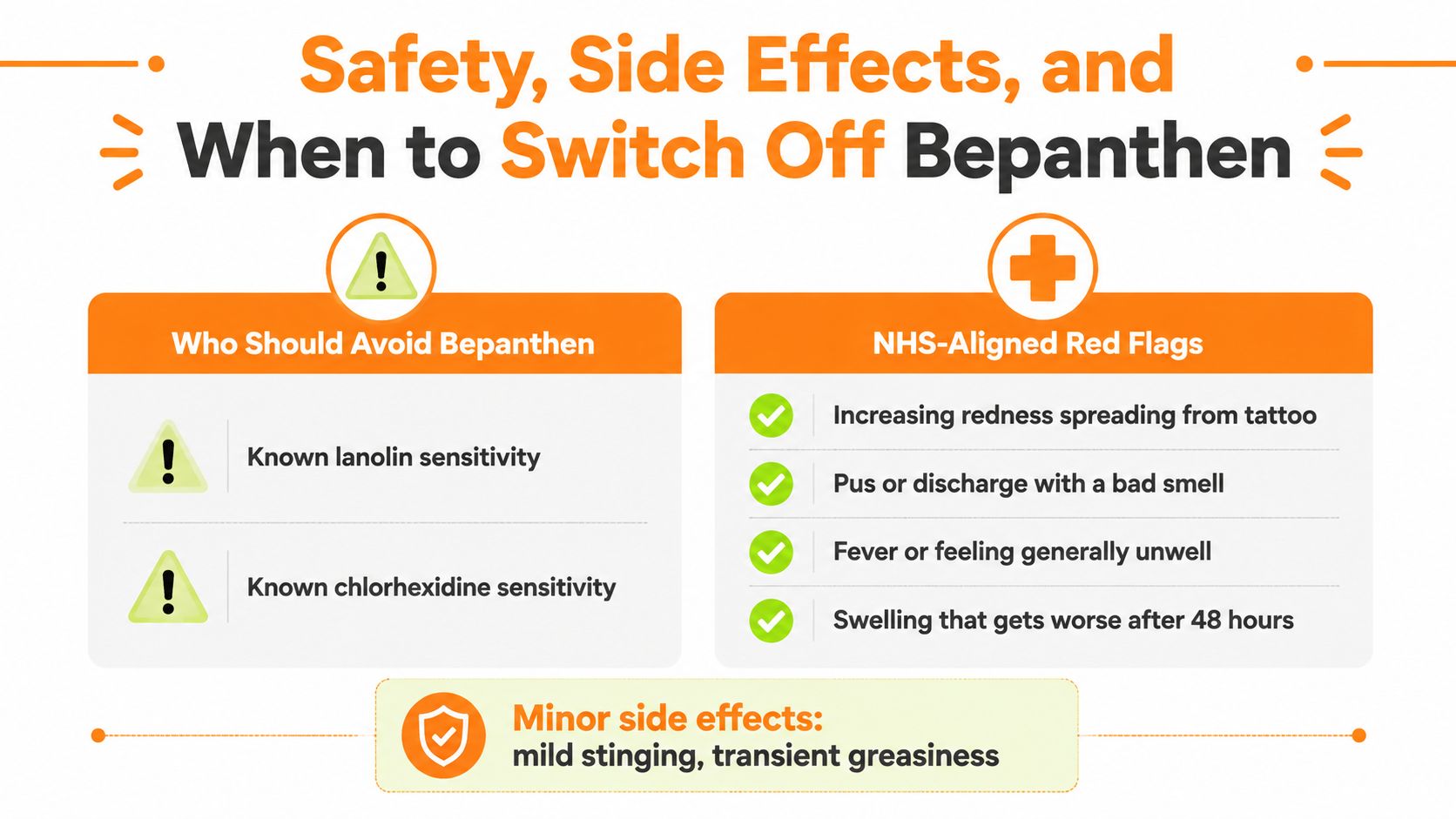
A little stinging or temporary greasiness can happen after application. Those effects should settle rather than steadily worsen. Stop using the product and ask a pharmacist or clinician for advice if you develop a clear rash, marked itching, or swelling beyond the tattooed area.
Avoid Bepanthen if you already know you're sensitive to one of its ingredients, including lanolin or chlorhexidine, where present in the product you plan to use. Check the packaging carefully because formulations can differ.
Normal healing or a warning sign
A new tattoo can feel tender and look mildly red at first. That should gradually improve. Increasing redness that spreads, hot skin, pus, worsening swelling, red streaks, fever, or feeling unwell are not symptoms to ignore.
The NHS advises contacting your GP if the tattoo becomes inflamed, moist, red, or hot. Same-day urgent assessment may be needed if the area becomes very red or swollen, or if you have a fever. Review the NHS medical tattooing aftercare advice.
When to change to plain moisturiser
Use Bepanthen while the skin remains broken, weepy, or visibly raw, if your artist has recommended it. Once the surface has closed, switch to a plain, fragrance-free moisturiser. That usually means the tattoo no longer looks wet or open and instead feels dry, tight, or flaky.
A heavy ointment can be unnecessary at that stage. Apply a small amount of a simple moisturiser and stop if it causes burning, a rash, or worsening redness.
Pharmacist's tip: Keep the tattoo clean, dry it fully, and use one product at a time. Changing products repeatedly makes it harder to identify the cause of irritation.
If you're worried about infection, don't self-treat with leftover antibiotics. Read this guide to Fucidin cream and skin infections and seek professional advice instead.
Bepanthen Compared with Common UK Aftercare Alternatives
Bepanthen isn't the only product people consider. UK readers often compare it with petroleum jelly, a plain moisturiser, or a specialist tattoo balm. The right choice depends on the healing stage, not on which product has the most memorable branding.
Petroleum jelly can feel protective, but it's highly occlusive and may be difficult to wash away. Plain fragrance-free moisturisers usually make more sense once the skin has closed. Specialist balms may offer a lighter texture, but they can cost more and still cause irritation if they contain fragrance or botanical ingredients.
| Product | Best stage | Occlusion risk | Wash-out | Irritation risk | UK availability | Approx weekly cost |
|---|---|---|---|---|---|---|
| Bepanthen | Early, broken-skin stage when advised | Moderate to high if overused | Can feel greasy | Depends on ingredients and skin sensitivity | Widely available | Varies by pack and use |
| Petroleum jelly | Only if specifically advised for very early protection | High | Often difficult | Low ingredient count, but may trap moisture | Widely available | Usually low |
| Fragrance-free moisturiser | Closed, dry, peeling skin | Low to moderate | Usually easy | Lower when fragrance-free, but not risk-free | Widely available | Varies by product |
| Specialist tattoo balm | Product-dependent, often later healing | Varies | Varies | Depends on fragrance and plant ingredients | Common online and in tattoo shops | Varies widely |
These are practical comparisons, not controlled healing results. Publicly available UK guidance doesn't provide controlled success rates comparing Bepanthen with alternatives. Gravity Tattoo Shop's UK aftercare guide makes the useful point that a small amount goes a long way and describes a barely visible film.
My preferred rule is thin Bepanthen during the early open-skin stage, then a plain fragrance-free moisturiser once the tattoo has closed. Avoid heavy balms until the surface has settled. Don't use prescription or antibiotic ointments, such as mupirocin ointment, unless a clinician prescribes them for a diagnosed infection.
Common Myths and Real Risks During Tattoo Healing
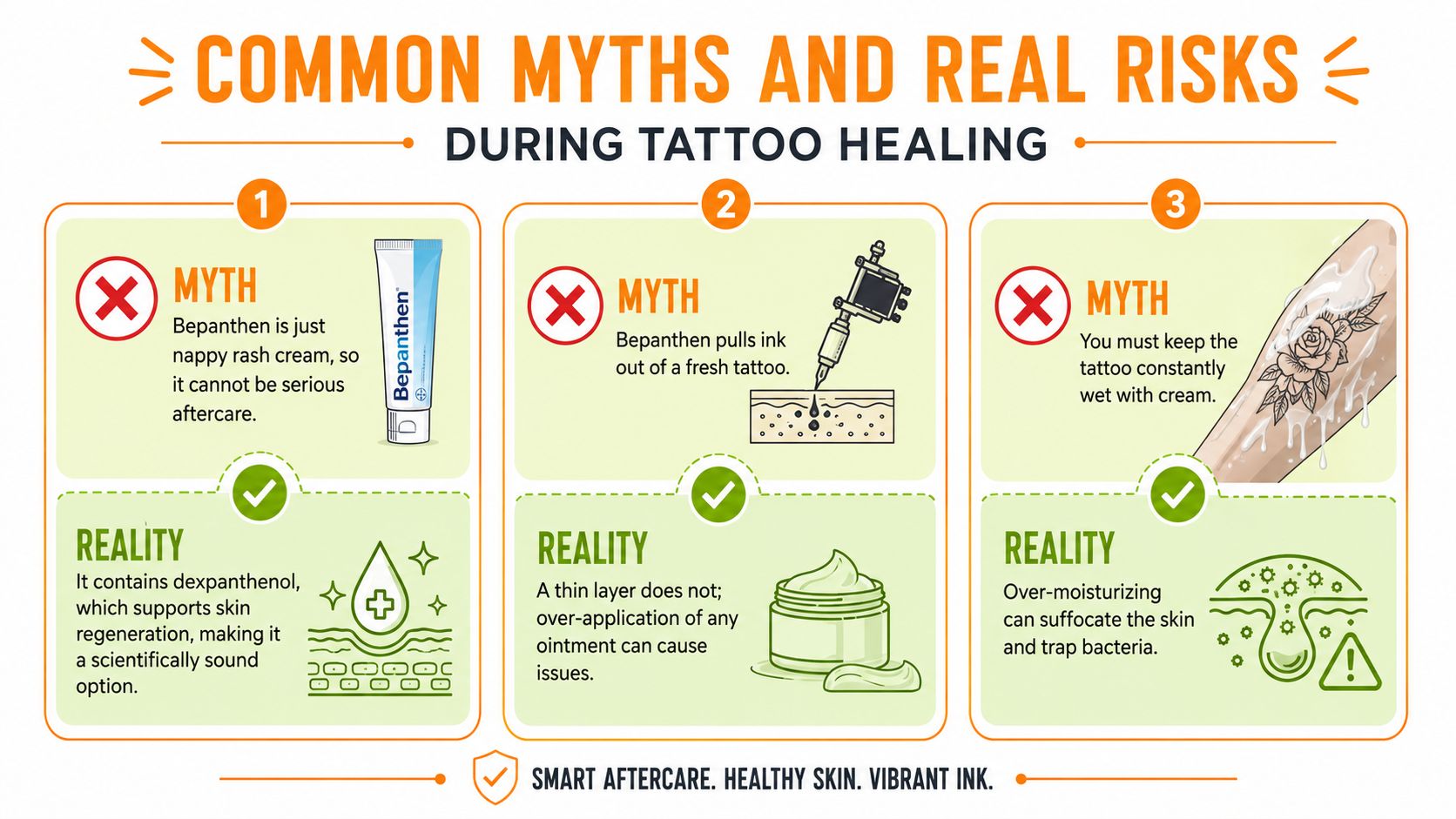
Myth one, it's only nappy cream
Standard Bepanthen began as a nappy-care product, but that label doesn't tell you everything about its ingredients or skin action. Dexpanthenol supports moisture retention and barrier repair, which explains its place in skin-care routines. It still needs careful use on a tattoo because the product can feel heavy.
Myth two, it pulls ink out
A thin layer of ointment doesn't pull tattoo pigment from the skin. Problems usually come from poor aftercare habits, such as applying too much product, rubbing the area, picking flakes, or soaking the tattoo before the skin closes.
Myth three, you must keep using ointment
You don't need to keep a tattoo covered in ointment throughout healing. Once the surface has closed, a plain moisturiser is usually the more sensible choice. The aim is comfortable, flexible skin, not a permanently greasy coating.
The risks that matter more
Your daily routine can affect healing more than the choice between two similar creams. Pay attention to these common problems:
- Sweat and friction: Gym sweat trapped beneath tight clothing can irritate the tattoo.
- Soaking: Avoid swimming, pools, hot tubs, baths, and saunas while the skin heals. NHS patient leaflets advise avoiding these exposures for at least two weeks after medical tattooing. Read the Royal United Hospitals Bath NHS leaflet.
- Sun exposure: Keep a new tattoo away from direct sunlight during healing. Cloudy UK weather doesn't remove ultraviolet exposure.
- Picking and scratching: Let flakes come away naturally. Pulling them can damage the surface.
- Over-moisturising: A thick layer can trap moisture and increase irritation.
A local council's tattoo aftercare guidance also stresses hand washing, gentle cleaning, patting dry, and caution with heavy or petroleum-based creams. Those basics deserve more attention than arguments about which brand is “best”.
For advice about dark marks left after irritation has settled, see this guide to skin hyperpigmentation. Don't apply brightening products to a fresh tattoo.
FAQs and Quick Summary for Busy Readers
Can I use standard Bepanthen from day one?
Yes, some UK tattoo studios recommend standard Bepanthen from the first day. Others prefer Bepanthen Tattoo or a different product. Use the product your artist recommends, apply a thin layer, and never put it on dirty or wet skin.
How long should I use Bepanthen before switching?
Use it during the early open-skin stage, then switch once the tattoo has closed. For many people, that means reassessing after the first few days rather than automatically continuing a thick ointment throughout peeling.
What if the tattoo weeps more than normal or feels hot?
Clean it gently, pat it dry, and don't seal it beneath a thick layer of ointment. Hot skin, spreading redness, pus, worsening swelling, fever, or feeling unwell needs medical advice. Seek same-day help if severe redness, swelling, or fever develops, as advised by NHS guidance.
Is Bepanthen safe for black and coloured tattoos?
Bepanthen doesn't need a different routine for black or coloured ink. Use the same thin application and hygiene steps. The main concern is the condition of the skin, not the ink colour.
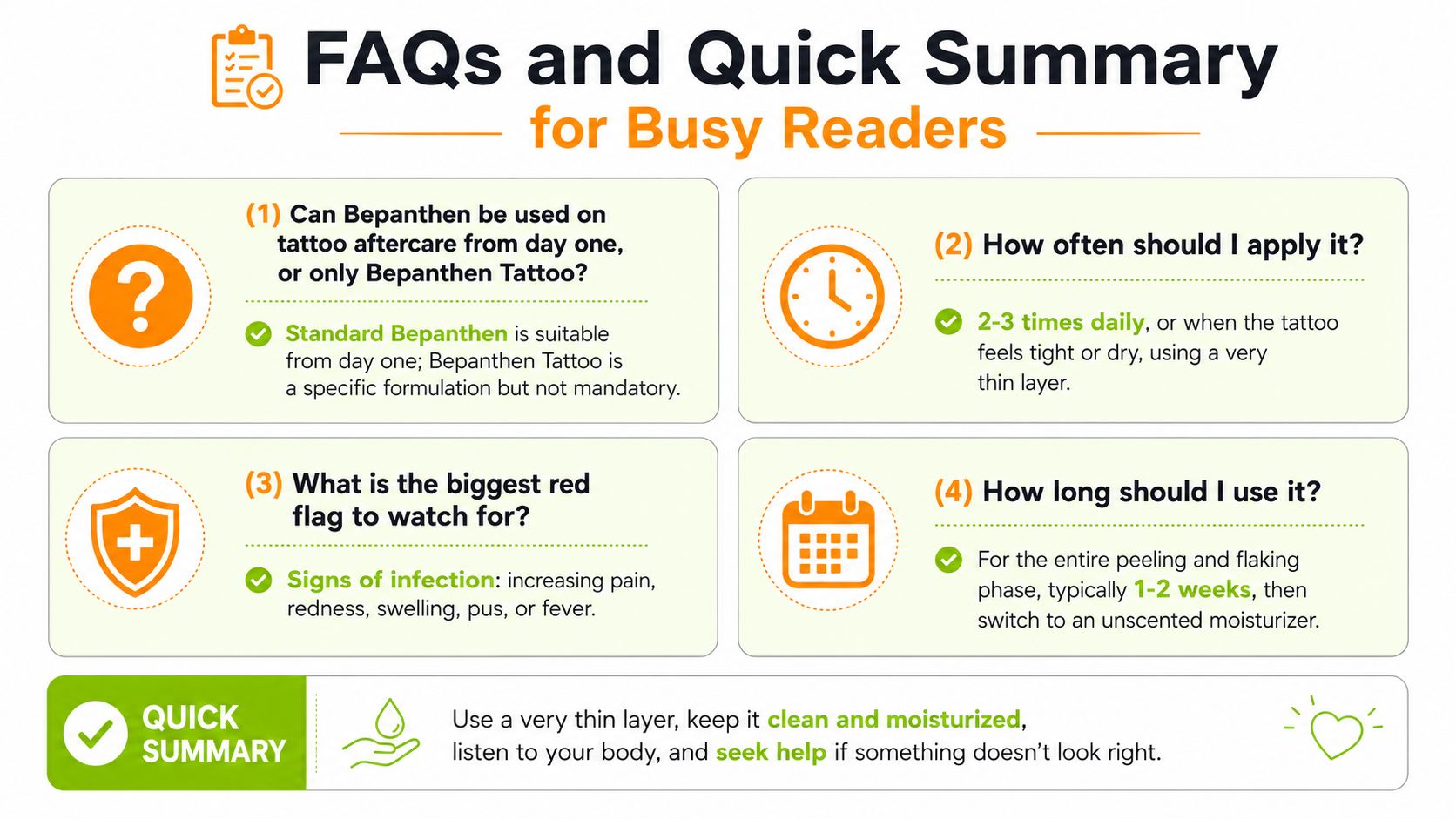
Quick summary
- Wash your hands before touching the tattoo.
- Clean it with lukewarm water and mild fragrance-free soap.
- Pat it dry and let the skin air-dry briefly.
- Apply a pea-sized amount in a barely visible layer.
- Use it two to four times daily during the early stage.
- Switch to plain, fragrance-free moisturiser once the skin closes.
- Seek help for spreading redness, heat, pus, worsening swelling, red streaks, or fever.
Pharmacist's tip: Keep your tattooist's written aftercare advice, the product packaging, and your GP or NHS 111 details together. That makes it easier to act quickly if the skin changes.
This article is for information only and isn't a substitute for advice from your tattooist, pharmacist, GP, or other qualified healthcare professional.
For cleaner aftercare planning and advice about skin treatments, visit Courier Pharmacy. Its UK-regulated pharmacy team provides access to prescription and over-the-counter treatments through secure online assessments, with personalised support when appropriate.
Suggested internal links
- Finding the best cream for dermatitis
- Doublebase gel
- Fucidin cream guide
- Bactroban ointment
- Skin hyperpigmentation guide
Suggested visual ideas
- Application routine: A painterly, steampunk-inspired brass plaque showing clean hands, gentle washing, drying, and a thin layer of ointment. Alt text: “Step-by-step Bepanthen tattoo aftercare routine using clean hands and a thin layer.”
- Safety checklist: A light grey and pale yellow-green checklist with brass details and lime-green ticks beside irritation and infection warning signs. Alt text: “Safety checklist for Bepanthen use on a fresh tattoo, including allergy and infection warning signs.”
- Healing timeline: A simple illustrated progression from open skin to closed, peeling skin, using lime green accents and ornate brass labels. Alt text: “Tattoo healing stages showing when to use a thin ointment and when to switch to plain moisturiser.”
- Lifestyle precautions: A steampunk-style plaque showing a gym bag, loose clothing, sun protection, and a crossed-out swimming pool. Alt text: “Everyday activities to avoid while a new tattoo heals.”
Byline and clinical review
Written by: Medical Mojo editorial team, UK health content writers.
Clinically reviewed by: A suitably qualified UK pharmacist or healthcare professional before publication.
How this content was created
This guide combines UK manufacturer guidance, NHS patient information, local UK tattoo-aftercare advice, and pharmacist-led editorial review. Recommendations were checked against the supplied sources, with disagreement between studio protocols and manufacturer advice stated plainly.
References
[1] Bepanthen Tattoo UK. (n.d.) Intense Care Ointment. Available at: Bepanthen Tattoo UK product guidance (Accessed: 1 September 2026).
[2] Bepanthen Tattoo UK. (n.d.) Tattoo care tips. Available at: Bepanthen Tattoo UK tattoo-care instructions (Accessed: 1 September 2026).
[3] Watford Tattoo Studio. (n.d.) Tattoo aftercare. Available at: Watford Tattoo Studio aftercare advice (Accessed: 1 September 2026).
[4] Valkyrie Tattoo. (n.d.) Tattoo aftercare. Available at: Valkyrie Tattoo aftercare guidance (Accessed: 1 September 2026).
[5] Gravity Tattoo Shop. (n.d.) Is Bepanthen good for tattoos? Available at: Gravity Tattoo Shop aftercare guide (Accessed: 1 September 2026).
[6] Braintree District Council. (n.d.) Tattoo aftercare. Available at: Braintree Council tattoo aftercare document (Accessed: 1 September 2026).
[7] Bedford Borough Council. (n.d.) Advice and safe practice for tattooing. Available at: Bedford Borough Council tattooing guidance (Accessed: 1 September 2026).
[8] Royal United Hospitals Bath NHS Foundation Trust. (n.d.) Areolar tattoo aftercare. Available at: NHS patient leaflet on areolar tattoo aftercare (Accessed: 1 September 2026).
[9] NHS, University Hospitals of Derby and Burton. (n.d.) Medical tattooing aftercare advice. Available at: NHS medical tattooing aftercare advice (Accessed: 1 September 2026).


