Best Cream for Varicose Veins: A UK Guide
Looking for the best cream for varicose veins in the UK? Learn what creams can and cannot do, what NHS guidance says, and your safe next steps.

No cream can fix varicose veins themselves, but a good emollient or prescribed topical steroid can relieve the dry, itchy, or eczematous skin that often comes with them. The best cream for varicose veins is therefore the one that calms your skin, not one that promises to remove the veins.
You may be standing at the bathroom mirror, rubbing an itchy patch over raised veins and wondering whether an advert has finally found the answer. It hasn't. Creams can soothe skin symptoms, but they can't repair faulty vein valves or close enlarged veins.
This guide explains what topical products can do, which ingredients make sense, how to apply them safely, and when a GP or vascular service is the better next step.
Five key takeaways
- No cream removes varicose veins. It may ease dryness, itch, scaling, or irritation.
- Emollients are the mainstay for dry skin. Use them regularly, not only during a flare.
- Topical steroids need care. A GP or pharmacist should guide treatment for varicose eczema.
- Herbal “vein creams” aren't first-line NHS treatment. Marketing claims often run ahead of evidence.
- Pain, swelling, skin changes, or ulcers need medical review. Cream alone isn't enough.
What Topical Products Can and Cannot Do for Varicose Veins
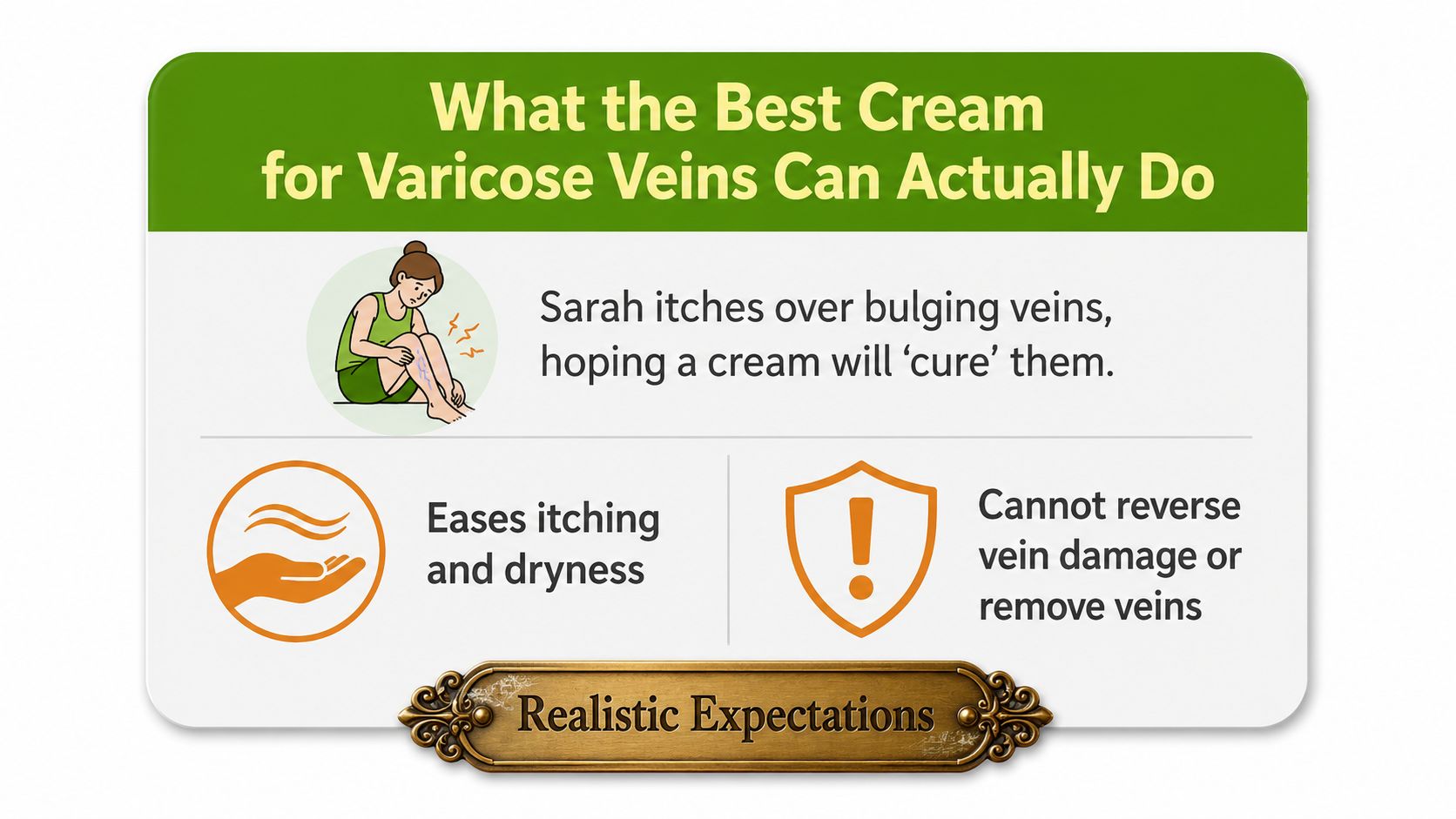
Sarah has itchy, dry skin over bulging veins and searches for a cream that will “cure” them. The answer is clear: no over-the-counter or prescription cream can shrink, remove, or reverse varicose veins themselves.
Creams still have a useful role. They can:
- Soothe itching and dryness
- Reduce scaling and cracking
- Support the skin barrier
- Calm mild irritation
- Help manage varicose eczema when prescribed treatment is needed
- Make compression hosiery more comfortable
The NHS recommends moisturising cream or lotion for skin that feels dry, flaky, or itchy. This treats the skin, not the faulty vein beneath it. NHS guidance on varicose veins places procedures, rather than topical products, at the centre of treatment for the underlying vein problem.
Define “best” properly
The best cream for varicose veins matches the skin problem.
Choose a plain emollient for rough, flaky skin. A urea-based product may suit thickened, very dry areas. A GP may prescribe a short course of topical corticosteroid for red, inflamed patches.
Treat claims about dissolving veins, restoring circulation, or removing bulges with scepticism. A product may smooth the skin's surface without treating the vein disease.
Practical rule: Use cream for comfort. Seek clinical assessment when the veins or symptoms are the main problem.
Some people ask about heparinoid products such as Hirudoid cream. Ask a pharmacist whether a product suits your symptoms, medicines, and skin condition. Do not use topical treatment to postpone review of worsening pain, swelling, or skin damage.
Understanding Varicose Veins and Why Creams Have Limits
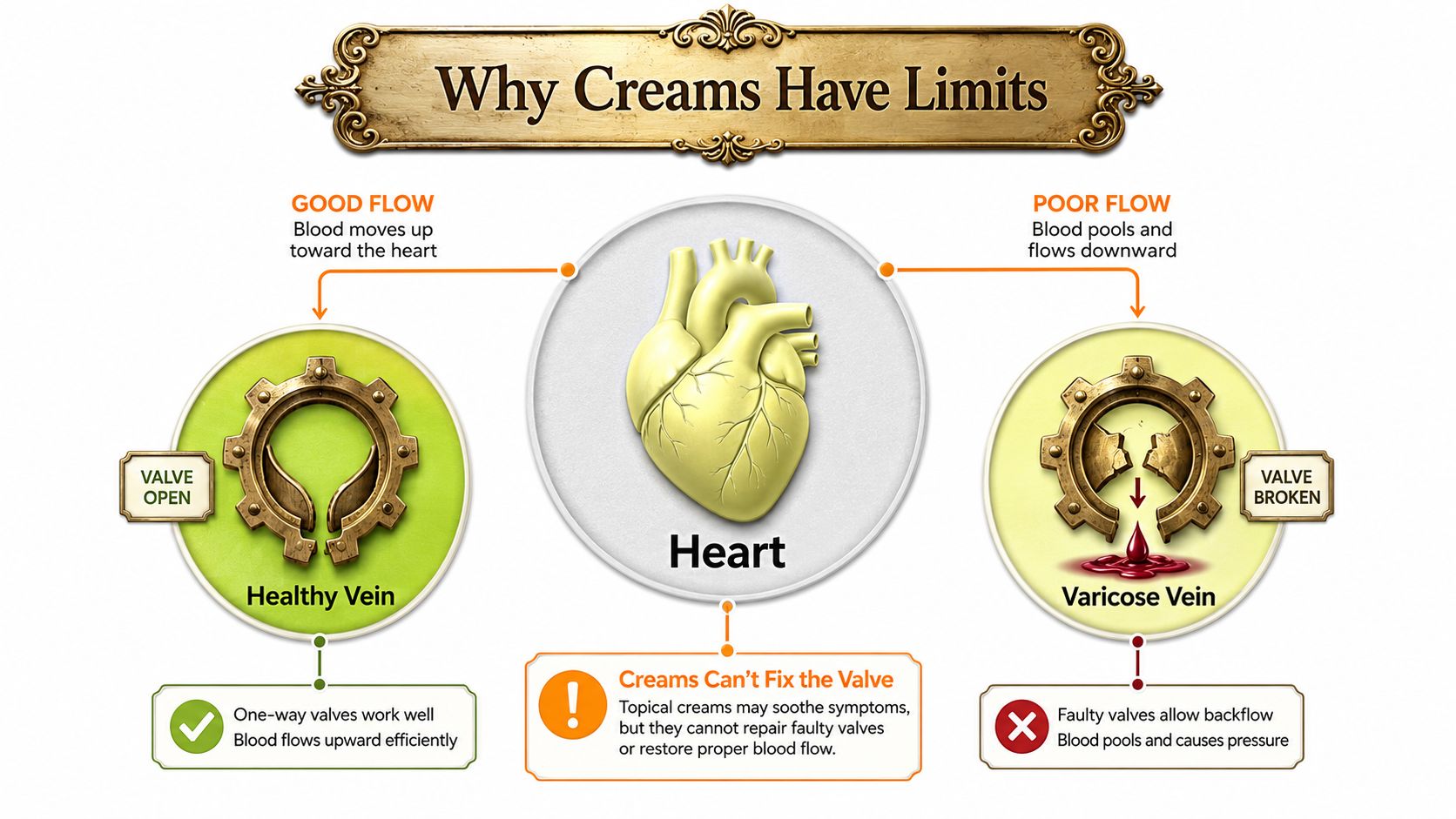
Healthy leg veins use small one-way valves. They help blood travel upwards towards the heart and stop it falling back down.
With varicose veins, those valves can fail. Blood then flows backwards and collects in the vein. Pressure rises, and the vein stretches until it becomes enlarged, twisted, or visibly bulging.
Think of it as a plumbing problem. The faulty part sits inside the pipe, beneath the skin and fatty tissue. A product spread on the surface can't reach the valve, repair it, or reverse the pressure inside the vessel.
The skin shows the damage
The vein may be hidden beneath the surface, but the skin often shows the effects. People can develop:
- Dryness and scaling
- Itching
- Brown or darker discolouration
- Irritation around the veins
- Varicose eczema
- Cracks or ulcers in more advanced disease
That explains why a moisturiser can help while the vein remains unchanged. The emollient supports the outer barrier. It reduces water loss and helps prevent cracking. It doesn't correct venous reflux, which means blood flowing the wrong way through a faulty valve.
This distinction matters. If your main issue is tight, itchy, flaky skin, sensible topical care may bring useful relief. If your main issue is aching, swelling, heaviness, prominent veins, or ongoing skin change, you need assessment of the veins as well.
In the UK, NICE recommends referral to a vascular service for symptomatic varicose veins. When testing confirms truncal reflux, NICE recommends endothermal treatment first, followed by ultrasound-guided foam sclerotherapy, then surgery if needed. NICE guideline CG168
What UK Guidance Says About Creams and Active Ingredients
UK guidance draws a clear line between emollients, which support damaged skin, and procedures, which treat faulty veins themselves. The NHS recommends moisturisers for dry, flaky, or itchy skin, while NICE recommends vascular assessment and treatment for suitable patients with symptomatic varicose veins.
Ingredients that make sense for skin symptoms
Plain emollients commonly contain white soft paraffin, liquid paraffin, or both. They form a protective layer that helps dry skin retain moisture. Urea-based products can soften rough or thickened areas, while glycerin and other humectants help increase hydration in the outer skin layer.
A GP may prescribe a topical corticosteroid for varicose eczema. Hydrocortisone may suit limited inflammation, while clobetasone or betamethasone may be chosen for more troublesome flares when a prescriber considers them appropriate. These medicines reduce inflammation and itching, but they do not repair venous reflux.
Antibiotic creams are not routine treatment for uncomplicated dry or eczematous skin. They are used when bacterial infection is suspected, following proper clinical advice.
| Ingredient | Typical use | UK guidance position |
|---|---|---|
| White soft paraffin | Very dry, cracked skin | Useful emollient support |
| Liquid paraffin | Dry or scaly skin | Useful emollient support |
| Urea-based emollient | Rough or thickened dryness | Commonly used for dry skin |
| Glycerin and humectants | General moisturising | May support hydration |
| Hydrocortisone | Mild inflammatory flare | Use only as advised |
| Clobetasone or betamethasone | More troublesome eczema flares | Prescription treatment, not vein treatment |
| Antibiotic cream | Suspected bacterial infection | Not routine for uncomplicated eczema |
| Horse chestnut, witch hazel, or troxerutin | Marketed for comfort or appearance | Limited topical evidence, not NHS first-line care |
The NICE recommendations for varicose vein treatment favour endothermal ablation, foam sclerotherapy, or surgery when intervention is suitable. Creams belong to symptom control, not treatment of the faulty vein.
Follow the prescriber's directions for any steroid. You can read about a prescription option such as betamethasone cream, but do not start a strong steroid because a product page mentions eczema.
Comparing Cream Types for Dry, Itchy or Eczematous Leg Skin
The texture matters more than many adverts admit. A lotion feels light but may not last on very dry leg skin. An ointment feels greasy, yet that extra layer can protect cracked skin far better.
Choose by skin state, not by the picture on the packet.
| Format | Best for | Pros | Cons | UK availability |
|---|---|---|---|---|
| Emollient cream | Everyday dryness and mild scaling | Easier to spread, less greasy | May need frequent reapplication | OTC and prescription |
| Ointment | Severe dryness and cracks | Strong barrier, longer-lasting | Greasy and less pleasant under clothing | OTC and prescription |
| Urea-based emollient | Rough or thickened skin | Softens hard, flaky areas | Can sting cracked or inflamed skin | OTC and prescription |
| Paraffin-based product | Very dry, fragile skin | Strong moisture barrier | Slippery, greasy, fire-safety precautions | OTC and prescription |
| Topical steroid | Red, itchy varicose eczema | Calms inflammation quickly | Needs short, careful use | Prescription, with some mild OTC options |
Match the product to the problem
For routine dryness, start with a plain emollient cream. Apply it consistently, including when the skin looks better. NHS advice says to use emollients at least twice daily and to smooth them on rather than rub them in. NHS varicose eczema treatment
For rough, thick skin, a urea-based product may work better than a light lotion. Start cautiously if the skin is cracked, because urea can sting.
For a red, itchy flare, don't keep adding moisturiser and hope for the best. Ask a GP or pharmacist whether you need a short steroid course. Products such as Epaderm ointment may suit very dry skin, but greasy products can make clothing and floors slippery.
Paraffin-based emollients also need fire-safety care. Keep them away from naked flames and smoking materials, and wash clothing or bedding regularly because residue can increase fire risk.
A lighter lotion may feel more comfortable for a busy shift worker during the day. An ointment may prove more useful overnight, when it can stay on the skin without interfering with work or exercise.
You'll find further practical guidance in this UK guide to choosing a cream for dermatitis.
How to Use Emollients and Steroid Creams Safely at Home
A good product won't help much if you apply it sparingly once a week. Dry venous skin needs regular, gentle care.
A simple daily routine
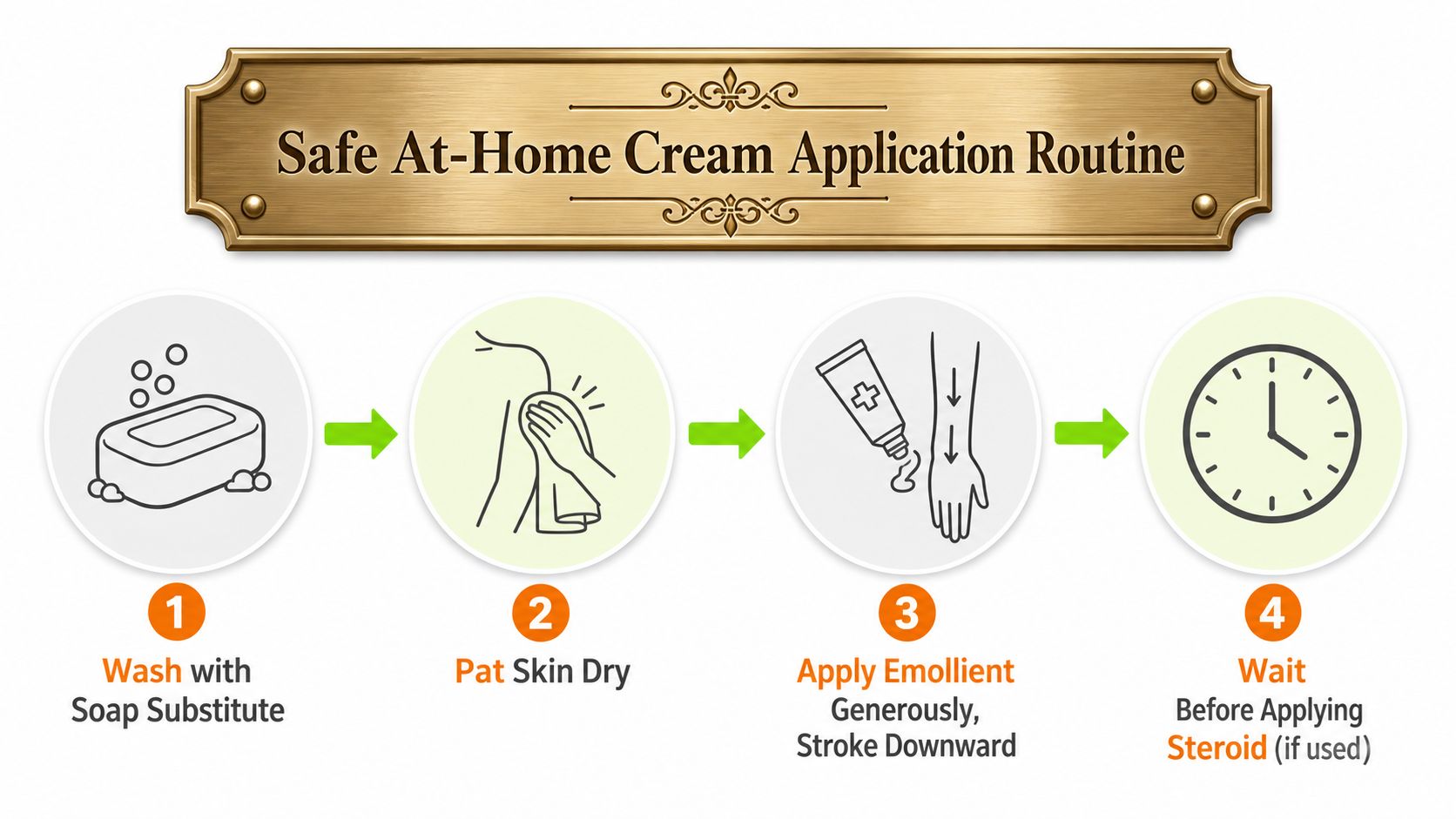
- Wash gently. Use an emollient soap substitute instead of ordinary soap if soap leaves your legs tight or itchy.
- Pat dry. Don't rub fragile skin. Leave it slightly moist after bathing or showering.
- Apply generously. Smooth the emollient down the leg in the direction of hair growth. Don't massage hard over prominent veins.
- Repeat regularly. Use emollient at least twice daily, and whenever the skin feels dry.
Applying moisturiser straight after a bath or shower helps trap moisture. Give it time to settle before dressing.
Pharmacist's tip: Scoop emollient from a tub with a clean spoon or spatula. This reduces contamination and keeps the product fresher.
Adding a topical steroid
If your GP prescribes a steroid for varicose eczema, apply the emollient first. NHS advice says to wait about 30 minutes before applying the steroid, so the moisturiser doesn't dilute or spread it onto unaffected areas. NHS varicose eczema guidance
Apply the steroid only to affected skin. A fingertip unit, the amount squeezed from an adult fingertip, can help you judge quantity. Follow the prescribed amount and course. NHS guidance describes treatment commonly lasting 7 to 14 days, with continuation for 48 hours after the flare settles.
Don't use strong steroids every day for long periods unless a clinician specifically tells you to. Avoid putting steroid cream on broken or infected skin without medical advice.
Pharmacist's tip: Oily emollients can make baths, showers, and floors slippery. Use a non-slip mat and take care when standing.
Safety, Red Flags and When to Speak to a GP or Pharmacist
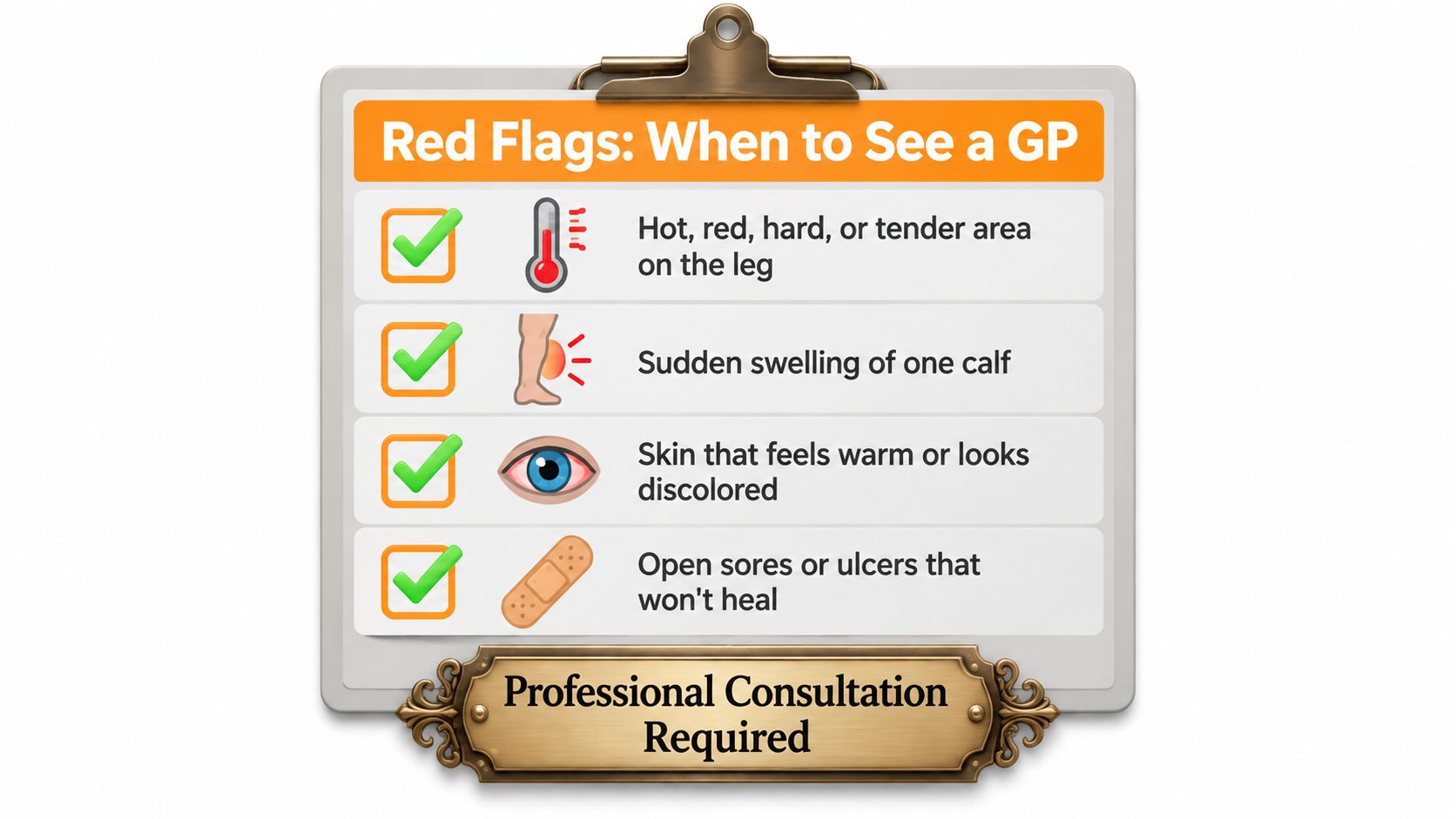
Leg symptoms vary widely, and cream addresses only a narrow subset. Contact a GP or seek urgent advice if the leg becomes hot, red, hard, or tender, particularly around one vein.
A suddenly swollen calf needs prompt assessment. Swelling with pain or tightness can indicate deep vein thrombosis and requires urgent medical attention. Call NHS 111 for urgent advice. Call 999 for sudden breathlessness, chest pain, or collapse.
Arrange a routine review when symptoms persist
Book a GP appointment for:
- Varicose eczema that keeps returning
- Bleeding from a varicose vein
- Open skin or an ulcer that doesn't heal
- Pus, spreading redness, or fever
- Worsening pain, swelling, or heaviness
- Skin colour changes around the ankle or lower leg
NICE recommends vascular referral for symptomatic varicose veins. Assessment can identify reflux and suitable procedural treatment, rather than leaving you to manage the effects with creams alone. Creams may soothe dry or itchy skin, but they cannot correct faulty veins.
Clinical caution: If you take warfarin or another anticoagulant, or already use prescribed compression, check with a clinician before adding a topical product or changing your routine.
Strong steroid creams can thin skin when used for too long. Do not borrow someone else's prescription, and do not assume a stronger cream will suit every flare.
For information about infection symptoms and treatment, read this guide to Fucidin cream. Antibiotic treatment requires the correct diagnosis.
A Practical Plan Combining Creams, Lifestyle and NHS Care
Start with the skin, but don't stop there.
Morning: wash with an emollient soap substitute if needed. Apply a plain cream or a suitable urea-based product to dry areas. Give it time to settle before dressing.
During the day: break up long periods of sitting or standing. NHS England suggests short walks or rocking on the balls of your feet when you're standing still. NHS England decision support for varicose veins
Evening: raise your legs while resting, such as on the arm of a sofa. Reapply emollient while the skin remains dry or tight. If a prescriber has supplied a steroid, use it only as directed during a flare.
Compression can help some people manage symptoms, but NICE says not to offer compression hosiery as treatment for varicose veins when intervention is suitable. If compression is used after an intervention, NICE says it shouldn't continue beyond 7 days. NICE compression guidance
Don't buy compression stockings blindly if you have circulation concerns, severe swelling, or fragile skin. Ask a pharmacist, nurse, or GP to check the fit and suitability.
If symptoms continue despite careful skin care, ask your GP about vascular assessment. A pharmacist can help with repeat emollients and product choice. An online pharmacy may also support repeat supplies and a prescribing consultation where appropriate, but it can't replace urgent assessment for red-flag symptoms.
Frequently Asked Questions About Creams for Varicose Veins
Can any cream shrink varicose veins?
No. Creams can soothe the skin, but they can't repair faulty valves, remove enlarged veins, or reverse reflux. NICE recommends vascular assessment and procedural treatment for suitable symptomatic cases.
What's the difference between an emollient and a steroid cream?
An emollient moisturises and protects the skin barrier. A steroid cream reduces inflammation during eczema flares. They do different jobs and may be used together under clinical guidance.
How long should I use a steroid cream on my legs?
Follow your prescriber's directions. NHS guidance describes topical steroid treatment for varicose eczema as usually lasting 7 to 14 days, with use for 48 hours after the flare settles.
Do horse chestnut or herbal creams have NHS backing?
They aren't NHS first-line treatments for varicose veins. Products containing horse chestnut, witch hazel, or troxerutin may be marketed for comfort, but topical evidence remains limited.
Where can I get stronger emollients in the UK?
Many emollients are available from pharmacies, and some are prescribed when clinically suitable. A pharmacist can help match the texture and ingredients to your skin.
Should I wear compression with cream?
Compression isn't a routine stand-alone treatment when intervention is suitable, according to NICE. Ask a clinician about it, especially if you have fragile skin, swelling, or other circulation problems.
What should I do if a vein becomes painful, red, or swollen?
Seek medical advice promptly. A hot, red, hard, tender area or sudden swelling in one calf needs assessment, while breathlessness or chest pain requires emergency help.
Can I use moisturiser every day?
Yes, NHS advice supports regular emollient use for dry, flaky, or itchy skin. Apply it at least twice daily and smooth it on rather than rubbing hard.
Suggested visual alt text: Lower-leg skin care routine showing emollient use for itchy skin over varicose veins.
Summary
- No cream cures or removes varicose veins.
- Plain emollients help dry, itchy, flaky skin.
- Urea products may suit rough, thickened areas.
- Steroids can calm varicose eczema, but use them briefly and carefully.
- Herbal vein creams aren't NHS first-line treatment.
- Ask your GP about vascular referral for persistent symptoms.
- Seek urgent help for sudden swelling, severe pain, chest pain, or breathlessness.
Disclaimer: This article is for information only. It isn't a substitute for medical advice, diagnosis, or treatment from a qualified clinician.
Internal links to consider: Link to the Hirudoid cream information page, the betamethasone cream page, the Epaderm ointment page, and the dermatitis cream guide.
Meta description: Best cream for varicose veins in the UK. Learn what emollients can soothe, when steroids help, and when painful or swollen veins need medical care.
Byline: Written by the Medical Mojo editorial team, with UK pharmacy and patient-care input.
Clinical review: Review by a UK-registered pharmacist, subject to final clinical sign-off before publication.
How this content was created: This guide uses NHS and NICE guidance, NHS England patient decision support, and peer-reviewed UK evidence. The advice was checked for UK terminology, medicine safety, topical treatment limits, and clear referral warnings.
References
- National Institute for Health and Care Excellence (NICE) (2013) Varicose veins in the legs: diagnosis and management, CG168. Available at: NICE guidance on varicose veins.
- National Health Service (NHS) (n.d.) Varicose veins. Available at: NHS varicose veins advice.
- National Health Service (NHS) (n.d.) Varicose eczema. Available at: NHS varicose eczema information.
- National Health Service (NHS) (n.d.) Treatment for varicose eczema. Available at: NHS varicose eczema treatment.
- NHS England (2024) Making a decision about treatment for varicose veins. Available at: NHS England patient decision support.
- National Institute for Health and Care Excellence (NICE) (2013) Varicose veins in the legs: diagnosis and management, recommendations PDF. Available at: NICE recommendations PDF.
- Courier Pharmacy (n.d.) Hirudoid cream. Available at: Hirudoid cream.
- Courier Pharmacy (n.d.) Betamethasone 0.1% cream. Available at: Betamethasone cream.
- Courier Pharmacy (n.d.) Epaderm ointment. Available at: Epaderm ointment.
Courier Pharmacy can help with suitable emollients, prescription consultations, and repeat medicine supplies where clinically appropriate. Visit Courier Pharmacy to discuss your skin symptoms with a pharmacy team and choose the safest next step.


