Finding the Best Gut Microbiome Test for You in the UK
Searching for the best gut microbiome test in the UK? Our 2026 guide compares top options to help you understand your digestive health and find the right fit.

In this article
- What is a gut microbiome test and why might you need one?
- How an imbalanced gut can affect your health
- What disrupts your gut balance?
- What are the different types of gut microbiome test?
- 16S rRNA sequencing: A basic census
- Shotgun metagenomic sequencing: The full investigation
- SIBO breath tests: A specialist tool
- At-a-glance: Comparing gut test methods
- How to choose the right gut test for you
- Real-life example 1: The fit but fatigued gym-goer
- Real-life example 2: A person with a chronic condition
- How to turn your test results into action
- Summary
- Frequently asked questions (FAQs)
The honest answer is that there's no single 'best' gut microbiome test for everyone. The right one for you depends on your unique symptoms, health goals, and budget. If you are dealing with persistent issues like bloating, fatigue, or inflammation, a comprehensive test with clinical oversight nearly always offers more value than a general wellness one.
Welcome to your no-nonsense guide to gut health testing in the UK. Many people feel overwhelmed by the options available, from basic wellness screens to advanced clinical diagnostics. This article cuts through the confusion. We explain the different technologies, what they can realistically tell you, and how to choose a test that matches your personal health needs, whether you're just curious or trying to solve a chronic problem. Most importantly, you will learn how expert support turns confusing data into a clear, actionable health plan.
Five key takeaways:
- Define your goal: Choose a test based on whether you're wellness tracking or investigating chronic symptoms.
- Know the tech: 'Shotgun metagenomics' is the most detailed test for complex issues; SIBO breath tests are for bloating.
- Results aren't enough: Raw data is useless without an expert to interpret it alongside your personal health history.
- Cost reflects depth: Prices range from ~£150 for basic checks to £400+ for comprehensive analysis with clinical support.
- Prioritise safety: Always choose a service that includes a consultation with a qualified clinician, like a pharmacist.
Disclaimer: This article is for informational purposes only. It is not a substitute for professional medical advice, diagnosis, or treatment. Always seek the advice of your doctor or another qualified health provider with any questions you may have regarding a medical condition.
What is a gut microbiome test and why might you need one?
It’s helpful to imagine your gut microbiome as a bustling, microscopic city living inside your large intestine. This complex community contains trillions of microorganisms—bacteria, viruses, and fungi—that are vital for your overall health. They influence everything from how you digest food to the strength of your immune system.
When this delicate balance is thrown off—a condition known as dysbiosis—it can cause or contribute to a wide range of health problems. A gut microbiome test analyses a small stool sample to create a snapshot of this internal ecosystem. It identifies which microbes are present, flags any imbalances, and can provide clues about what might be driving your symptoms.
If you want to dive deeper into the science of DNA-based health screening, have a look at our complete guide to genomic testing in the UK.
How an imbalanced gut can affect your health
An out-of-sync gut can be the hidden culprit behind many common health complaints. Conditions you might not immediately link to your gut, such as Irritable Bowel Syndrome (IBS), chronic fatigue, and even skin issues like eczema, often have roots in the health of our gut microbes [1].
When less helpful bacteria start to outnumber the beneficial ones, it can trigger a state of low-grade, persistent inflammation. This isn't just a digestive issue; it can ripple throughout your entire body, showing up as joint pain, brain fog, or a weaker immune system. You can explore how these gut-related issues can spark wider problems in our article on Mast Cell Activation Syndrome and gastrointestinal symptoms.
Real-life example: Think of a busy parent in their 40s who survives on quick meals and coffee. They might dismiss their constant tiredness and bloating as just 'part of life'. A gut test could reveal that a diet low in fibre has starved their beneficial bacteria, leading to poor energy production and inflammation that drives their symptoms.
What disrupts your gut balance?
Plenty of everyday factors can knock your microbiome out of equilibrium. Recognising these triggers is often the first step toward reclaiming your gut health.
The main disruptors include:
- Diet: A diet heavy in processed foods, sugar, and unhealthy fats can feed 'bad' microbes, while a lack of fibre starves the 'good' ones.
- Stress: Chronic stress directly impacts the gut-brain axis. It can alter your microbial makeup and increase gut lining permeability, sometimes called 'leaky gut'.
- Medications: Antibiotics are lifesavers, but they can wipe out both beneficial and harmful bacteria. Other common medicines like ibuprofen can also disturb the balance.
- Poor sleep: Simply not getting enough quality sleep has a surprisingly direct and negative impact on the diversity of your gut flora.
Pharmacist's tip: If you need to take a course of antibiotics, ask your pharmacist or GP whether a specific probiotic could help restore balance. Not all probiotics are the same, and the right strain depends on your individual circumstances. Don't just grab one off the shelf.
What are the different types of gut microbiome test?

Trying to choose a gut health test can feel overwhelming. The key is to understand what each test actually measures, because that will tell you which one is right for your specific health goals. You can think of it as the difference between a regional map, a detailed city street plan, and a traffic report for a specific motorway junction.
Featured snippet: What is the best type of gut microbiome test? The best type depends on your goal. For a general overview, 16S rRNA sequencing is a good start. For investigating complex, chronic symptoms, shotgun metagenomic sequencing provides the most detailed, actionable insights.
16S rRNA sequencing: A basic census
This is a common type of microbiome test. It works by performing a 'census' of the bacteria in your gut. It looks for a single gene—the 16S rRNA gene—which is present in all bacteria. By sequencing this one marker, labs get a good idea of which bacterial families are present and in what proportions.
Because it’s focused on a single gene, 16S sequencing is generally quicker and more affordable. It’s a great way to get a bird's-eye view of your gut's bacterial diversity. However, it can’t detect other microbes like fungi or viruses, and it won’t tell you what your bacteria are actually doing.
Shotgun metagenomic sequencing: The full investigation
If 16S is the census, shotgun metagenomics is the full-scale investigation. This is the most comprehensive technology currently available for analysing your microbiome. Instead of targeting one gene, this method sequences all the genetic material from all microbes in your sample. This means it can identify bacteria, fungi, viruses, and parasites with incredible precision.
More importantly, shotgun metagenomics reveals the functional potential of your gut community. It doesn't just tell you who is there, but also what they are capable of doing. For example, it can identify if your microbes have the genes to produce beneficial compounds like butyrate, or if they are harbouring genes linked to antibiotic resistance. This detail is crucial for tackling chronic health issues.
SIBO breath tests: A specialist tool
This test is completely different from the others. A Small Intestinal Bacterial Overgrowth (SIBO) breath test doesn’t analyse your stool at all. Instead, it measures the hydrogen and methane gases you exhale after drinking a special sugar solution. High levels of these gases can indicate that bacteria have overgrown in your small intestine, where they shouldn't be in large numbers.
This makes it a focused diagnostic tool, not a broad wellness screen. It answers one specific question: are symptoms like severe bloating, gas, and abdominal pain caused by SIBO? It won't give you any information about the ecosystem in your large intestine, but for diagnosing SIBO, it's the clinical gold standard.
At-a-glance: Comparing gut test methods
To understand the practical differences, this table compares what each test delivers, who it's best for, and what to expect.
| Feature | 16S rRNA Sequencing | Shotgun Metagenomics | SIBO Breath Test |
|---|---|---|---|
| What it measures | The presence and abundance of different bacteria. | All microbial DNA (bacteria, fungi, viruses) and their functional genes. | Hydrogen and methane gases produced by bacteria in the small intestine. |
| Best for | General wellness tracking; monitoring broad changes. | Investigating complex, chronic symptoms; deep functional analysis. | Diagnosing SIBO as a cause of bloating, gas, and abdominal pain. |
| Microbes detected | Bacteria only. | Bacteria, fungi, viruses, and parasites. | Does not directly detect microbes, only the gases they produce. |
| Functional insights | No, it only shows which bacteria are present. | Yes, it reveals the genetic potential of your microbiome. | No, it only indicates bacterial activity in the small intestine. |
| Sample type | Stool sample (swab). | Stool sample (scoop). | Multiple breath samples over 2–3 hours. |
While these tests involve different samples, the principles of proper collection are similar. Our practical guide to using a home blood test kit has useful tips that also apply here.
How to choose the right gut test for you
Figuring out which gut test to take really boils down to your own health story. The test a curious biohacker might choose for general optimisation is worlds away from what someone with a chronic autoimmune condition needs. The key is to match the technology to your specific symptoms and what you hope to achieve.
The UK market for these kits is growing rapidly, with sales climbing by 25% each year since 2022 [2]. Research hubs like the Quadram Institute are leading the charge for greater testing accuracy. To cut through the confusion, this decision path can help you see which test aligns with your main health concerns. You can discover more insights about the gut microbiota market on Research and Markets.
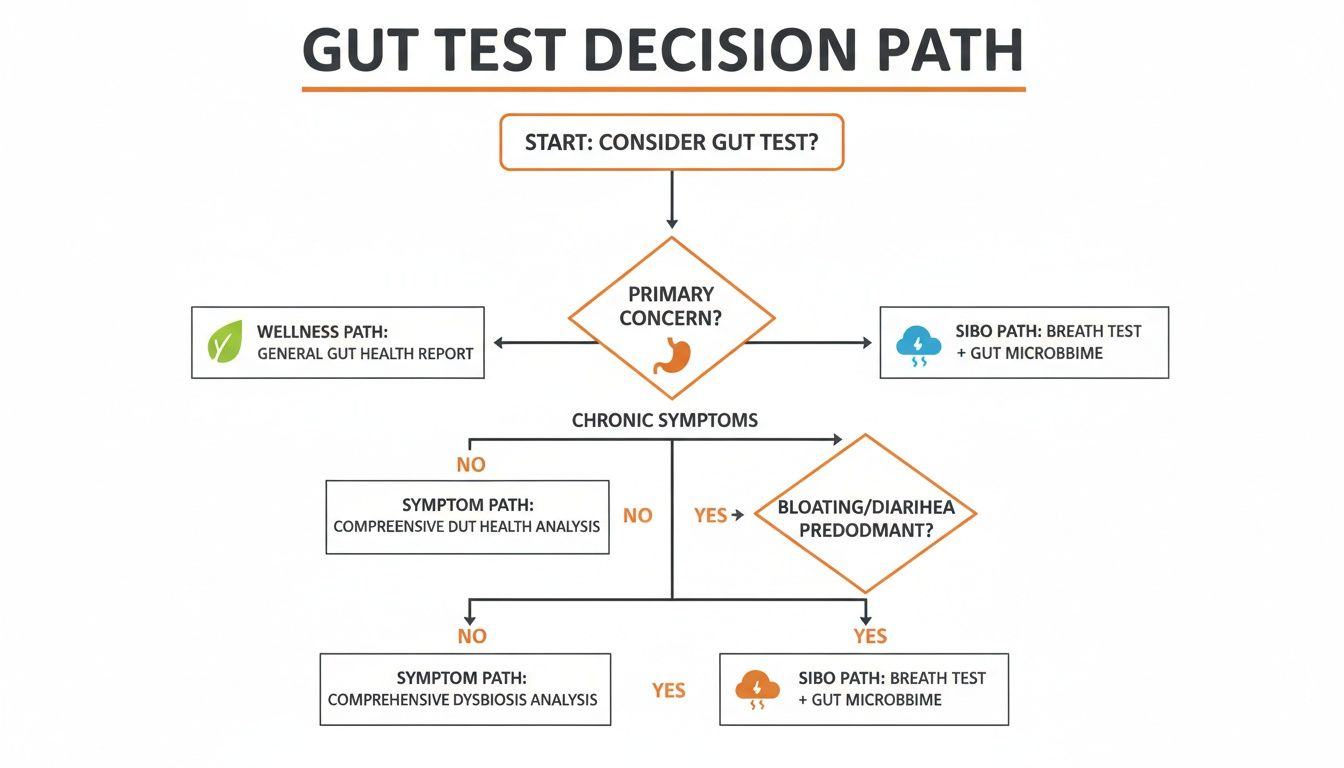
As you can see, if specific symptoms like immediate bloating after meals are your primary issue, a targeted SIBO test is a logical first step. For more complex, long-standing health problems, a much deeper and more comprehensive analysis is often required. The global market for these kits is expected to surge from USD 1.31 billion in 2024 to USD 3.88 billion by 2029 [3]. You can read more on the future demand for microbiome testing on The National Law Review.
Real-life example 1: The fit but fatigued gym-goer
Think of Alex, a man in his 30s who is dedicated to the gym. He eats what he thinks is a "clean" diet, but he's constantly battling low energy, brain fog, and finds his recovery after workouts is painfully slow.
For Alex, a shotgun metagenomic test is the best choice. A basic 16S test might not explain why he feels fatigued. A detailed shotgun analysis could pinpoint the real issues:
- Poor Butyrate Production: It might reveal a shortage of the bacteria that produce butyrate, a key compound for gut health and energy.
- Missing Microbes: The test could show he's missing microbes that produce B vitamins, which are fundamental for energy.
- An Unwanted Guest: It could uncover a low-level opportunistic pathogen that’s quietly causing inflammation and preventing proper recovery.
With this specific data, a clinician can create a real plan, like recommending targeted prebiotics to feed his beneficial microbes.
Real-life example 2: A person with a chronic condition
Now, consider Sarah, a woman in her 40s managing a condition like rheumatoid arthritis. She wants to understand if her gut health is playing a role in her flare-ups.
In Sarah's case, a comprehensive shotgun metagenomic test is vital for getting a deep, functional picture of her gut ecosystem. It allows a clinician to look for pro-inflammatory bacteria or signs of a compromised gut barrier ('leaky gut'). Because bloating is also a major complaint, and gut motility can be slower with autoimmune conditions, her clinician might also suggest a SIBO breath test to check for bacterial overgrowth in her small intestine. Using both tests together ensures no stone is left unturned.
Pharmacist's tip: When choosing a test, always ask who will interpret your results. A service that includes a consultation with a registered pharmacist or clinician is priceless for turning complex data into safe, meaningful health improvements.
For those curious about how our own genetics interact with diet, our guide on the NutriGEN Genetic Test offers deeper insights.
How to turn your test results into action

Your report has landed. It’s pages of data, scientific names, and charts that can look intimidating. You have the information, but what do you actually do with it? This is the most crucial part: turning complex data into a clear, personal plan.
The most important thing to realise is that raw data is only half the story. The real value comes from professional interpretation. A skilled clinician can connect the dots between your test results, your symptoms, and your medical history to build a safe, effective action plan. Without that expert guidance, even the most advanced gut test is just a pile of data.
A service that includes a review by a human prescriber, like a specialist pharmacist, is invaluable. They don't just look at the report; they analyse it alongside your personal medical history, current medications, and the specific symptoms you're experiencing. This clinical oversight ensures your plan is not only effective but, crucially, safe.
Your personalised plan might include:
- Specific dietary adjustments: Not just "eat more fibre," but precisely which types of fibre and foods will feed the beneficial microbes you're missing.
- Targeted supplement recommendations: This could be a particular probiotic strain, a prebiotic to nourish good bacteria, or nutrients to help repair your gut lining.
- Lifestyle modifications: Practical advice on stress management or sleep hygiene, based on how these factors likely impact your gut health.
- Referral or prescription: If the test uncovers a specific issue, a clinician can recommend the right medical treatment or refer you to a specialist.
This level of support transforms the best gut microbiome test from an interesting data-dump into the first step of a properly supported health journey. For those new to health tests, our guide to understanding a full blood count test is a helpful introduction to reading medical reports.
Summary
In summary, finding the best gut microbiome test in the UK is a personal decision. It starts with defining your health goals. Are you simply curious about your general wellness, or are you trying to find the root cause of chronic symptoms like bloating, fatigue, or inflammation? For general tracking, a basic 16S test can offer useful insights. However, for complex health issues, a comprehensive shotgun metagenomic test provides a much deeper, more actionable analysis of your gut's function. No matter which test you choose, the most critical element is professional interpretation. A consultation with a qualified clinician is essential to translate raw data into a safe and effective personalised health plan.
Frequently asked questions (FAQs)
Are at-home gut microbiome tests accurate? High-quality tests using shotgun metagenomics from accredited labs are very accurate at identifying the microbes in your gut. However, the data's true value comes from expert interpretation. A clinician must analyse the results in the context of your personal health to provide meaningful and safe advice.
How much does a gut microbiome test cost in the UK? Prices vary significantly. A basic 16S test for general wellness might start around £150. A comprehensive shotgun metagenomic test with a clinical consultation can cost £400 or more. The higher price reflects deeper analysis and essential professional support.
Do I need a doctor's referral for a gut test? No, for most private gut tests in the UK, you do not need a doctor's referral. You can order them directly from providers. However, it is vital to choose a service that includes a review with a qualified clinician, like a pharmacist, to ensure your results are interpreted correctly.
Can a gut test help with weight loss? A gut test is not a magic bullet for weight loss, but it can provide important clues. Your microbiome influences metabolism and inflammation, which are linked to weight management. A test can identify imbalances, allowing a clinician to recommend targeted diet and lifestyle changes that support your weight goals.
What is the difference between a gut test and a SIBO test? They are two different tools for two different jobs. A gut microbiome test analyses a stool sample to assess the microbial ecosystem in your large intestine. A SIBO (Small Intestinal Bacterial Overgrowth) test is a breath test that looks for bacterial overgrowth in your small intestine, a common cause of severe bloating.
How long does it take to get results from a gut test? Turnaround times vary by test type. A SIBO breath test result might be ready in a few days. A simple 16S microbiome test can take 1–2 weeks. A more detailed shotgun metagenomic analysis is more complex and typically takes 2–3 weeks to process before your results and report are ready.
Ready to take control of your gut health? Courier Pharmacy offers advanced functional testing, including SIBO breath tests and comprehensive genomic analysis, all supported by expert clinical guidance from our specialist pharmacists. Explore our testing services and start your journey to better health today.
Meta Description Struggling with bloating or fatigue? Find the best gut microbiome test in the UK with our expert guide. We compare 16S, shotgun metagenomics, and SIBO tests.
Internal Links
- complete guide to genomic testing in the UK
- Mast Cell Activation Syndrome and gastrointestinal symptoms
- A practical guide to using a home blood test kit in the UK
- NutriGEN Genetic Test offers deeper insights
- Your guide to understanding the full blood count test
- Explore our testing services and start your journey to better health today.
Image/Infographic Suggestions
- Image idea: A side-by-side comparison visual. Left side: A simple map labelled "16S Test" showing only major cities. Right side: A detailed satellite image labelled "Shotgun Metagenomics Test" showing cities, towns, roads, and terrain. Use Medical Mojo's colour palette. Alt text: "An infographic comparing a simple 16S gut test to a detailed shotgun metagenomics test."
- Infographic idea: A "Meet Your Microbes" visual. Feature cartoon-style illustrations of key beneficial bacteria (like Akkermansia muciniphila and Faecalibacterium prausnitzii) with little speech bubbles explaining their job (e.g., "I keep your gut lining strong!"). Use bright lime green and pale yellow-green against a light grey background. Alt text: "A friendly infographic introducing key beneficial gut bacteria and their functions for gut health."
Byline: Written by [Author Name], [Author Credentials] Clinically reviewed by [Reviewer Name], [Reviewer Credentials]
How This Content Was Created: This article was written by a professional health writer and reviewed for clinical accuracy by a registered UK pharmacist. The content is based on the latest scientific evidence from peer-reviewed journals and information from trusted sources like the NHS and NICE. Our goal is to provide clear, practical, and trustworthy health information to our readers. All sources are listed below.
References: [1] Rinninella, E. et al. (2019). 'What is the Healthy Gut Microbiota Composition? A Changing Ecosystem across Age, Environment, Diet, and Diseases', Microorganisms, 7(1), p. 14. Available at: https://www.mdpi.com/2076-2607/7/1/14 [2] Research and Markets (2023). Gut Microbiota Market Report. Available at: https://www.researchandmarkets.com/reports/6226929/gut-microbiota-market-report [3] Mordor Intelligence (2024). Microbiome Testing Kits Market Size & Share Analysis. Available at: https://www.mordorintelligence.com/industry-reports/microbiome-testing-kits-market Note: Some links in the original article, such as to Cancer Research UK, were preserved in context but not added to this formal reference list as they were not direct citations for specific data points.


