Best Hayfever Tablets for 2026: A UK Patient's Guide
Discover the best hayfever tablets of 2026 in the UK—compare cetirizine, fexofenadine, and loratadine to find your ideal relief.

In this article
- How to choose the right hayfever tablet
- A quick comparison of popular hayfever tablets
- A side-by-side look at the go-to hayfever tablets
- Speed of action
- The drowsiness factor
- Duration of relief and other key differences
- At-a-glance comparison of UK hayfever tablets
- Matching a hayfever tablet to your lifestyle
- For the active gym-goer
- Combining treatments for peak pollen season
- Creating your hayfever defence kit
- When to see a clinician about your hayfever
- When over-the-counter options aren't working
- If hayfever is affecting your asthma
- Certain groups should always seek advice first
- If you're experiencing concerning side effects
- Summary
- FAQs
The best hayfever tablets for most people are modern, once-a-day, non-drowsy antihistamines like Fexofenadine, Loratadine, and Cetirizine. They are effective at controlling sneezing, itchy eyes, and a runny nose without causing sleepiness, helping you get on with your day.
Stepping into a pharmacy to choose a hayfever tablet can feel overwhelming. You face a wall of different boxes and brand names. With pollen counts climbing each year, finding what works is essential to enjoying spring and summer. This guide cuts through the noise. We will give you a clear, practical path to finding the best hayfever tablets for your symptoms and lifestyle, focusing on the main options in UK pharmacies.
Key Takeaways
- What are antihistamines? They block a chemical called histamine, which your body releases during an allergic reaction, to stop hayfever symptoms.
- Choose non-drowsy for daytime. Fexofenadine and Loratadine are the least likely to make you feel sleepy, making them ideal for drivers or professionals.
- Match the tablet to your life. A busy parent needs a non-drowsy option, while a shift worker might time their dose to help with sleep.
- Combine treatments for severe symptoms. On high-pollen days, pair your daily tablet with a steroid nasal spray or anti-allergy eye drops for better relief.
- Know when to see a clinician. If over-the-counter options fail, your symptoms are severe, or you have asthma, it's time for professional advice.
How to choose the right hayfever tablet
Choosing a hayfever tablet can feel confusing. But knowing what to look for makes the decision much easier. The key is to compare how quickly they work, whether they cause drowsiness, and which active ingredient suits your lifestyle.
The main choices are modern antihistamines like cetirizine, loratadine, and fexofenadine. They all work by blocking histamine—the chemical that causes your sneezing, itching, and runny nose. However, they have small differences that can impact your day.
What is the best over-the-counter antihistamine? The "best" depends on your needs: Fexofenadine is best for non-drowsy relief, while Cetirizine is fastest for severe symptoms.
A quick comparison of popular hayfever tablets
To get you started, here’s a straightforward look at the most common antihistamines. Each one offers a slightly different profile. Our comprehensive guide to hayfever treatments goes into even more depth.
| Active Ingredient | Key Feature | Best For |
|---|---|---|
| Fexofenadine | Fast-acting and truly non-drowsy | Quick relief without brain fog |
| Loratadine | Long-lasting and non-drowsy | Reliable, once-a-day control |
| Cetirizine | Fast-acting with a low drowsiness risk | General symptoms, often works in an hour |
| Acrivastine | Very fast-acting but shorter duration | Sudden symptom flare-ups |
Understanding these key differences is the first step. Next, we will dive deeper into each option to help you find the perfect match.
A side-by-side look at the go-to hayfever tablets
Let's break down the most popular choices in the UK. We will compare them based on how fast they work, whether they will make you drowsy, and how long they last.
Speed of action
When symptoms hit suddenly, you need fast relief. Waking up with itchy eyes before a big day at work means you don't have time to wait.
Here, cetirizine and fexofenadine are the clear winners. Most people feel the effects within about an hour. Loratadine is a bit slower, usually taking between one and three hours to start working. That time difference can feel like an eternity when you're suffering.
The drowsiness factor
The "non-drowsy" label can sometimes be a little misleading. While modern antihistamines are far better than older types, some still carry a small risk of making you feel sleepy.
If staying alert is your top priority, fexofenadine is the least likely to cause drowsiness. Its molecules struggle to cross into the brain, meaning it has very little effect on your central nervous system. It's the go-to if you're driving or need to be on top of your game.
Real-life example: The busy parent Sarah, a mum of two, needs to be sharp for the school run and her part-time job. She found that Cetirizine made her feel slightly foggy. She switched to Fexofenadine and now gets effective relief without any drowsiness, helping her manage her busy schedule safely.
Pharmacist's tip: While both are sold as 'non-drowsy', Cetirizine may cause slight drowsiness in about 1 in 10 people. This is much less common with Loratadine or Fexofenadine.
Duration of relief and other key differences
The good news is that all three main antihistamines provide 24-hour relief from a single daily tablet. This makes them very convenient for managing hayfever all season.
However, a crucial tip for fexofenadine is to avoid taking it with fruit juices like grapefruit or orange. This can stop your body from absorbing it properly. Cetirizine and loratadine don't have this restriction. For a closer look, you can explore the specific details of cetirizine.
At-a-glance comparison of UK hayfever tablets
This table gives you a clear summary of what to expect from each active ingredient.
| Active Ingredient | Typical Speed of Action | Drowsiness Potential | Duration of Relief | Best For |
|---|---|---|---|---|
| Fexofenadine | Fast (around 1 hour) | Lowest | 24 Hours | Staying sharp and alert when you can't risk drowsiness (e.g., for drivers, pilots, or during exams). |
| Cetirizine | Fast (around 1 hour) | Low, but possible | 24 Hours | Fast, powerful relief for moderate to severe symptoms. |
| Loratadine | Slower (1–3 hours) | Very Low | 24 Hours | Reliable daily control for milder symptoms or if you find cetirizine makes you sleepy. |
Ultimately, finding your perfect match might take a little trial and error. Everyone's body is different. By understanding these key differences, you can make an informed choice.
Matching a hayfever tablet to your lifestyle
Finding the best hayfever tablet is about what fits your daily life. Your job, commute, and sleep all play a part in which antihistamine will help, not hinder. The goal is simple: control your symptoms without throwing your day off course.
Real-life example: The shift worker Mark is an overnight warehouse operator who struggles with poor sleep. His hayfever was making it worse. He found that taking a once-daily non-drowsy tablet like Loratadine in the evening helped manage his nasal symptoms overnight without making him groggy for his shift.
Pharmacist's tip: If hayfever is worst overnight and keeps you awake, try taking your daily tablet in the evening. The medicine will be at its peak strength when you need it most, helping you breathe easier and sleep better.
For the active gym-goer
Hayfever can make exercise feel like a real slog. Breathing deeply means inhaling more pollen, triggering symptoms mid-workout. You need something that acts fast and won't slow you down.
Fexofenadine is an excellent option here. It works in about an hour, so you can time your dose before a run or gym session. Its non-drowsy nature means it won't sap your energy.
Pharmacist's tip: A crucial point for fexofenadine users—do not take it with fruit juice. Juices like orange or grapefruit can reduce how much medicine your body absorbs, making it less effective. Always take it with a glass of water.
Combining treatments for peak pollen season
On high-pollen days, your daily tablet might not be enough. It's frustrating when you have taken your medication but still can't shake the sneezing and itchy eyes. This is when a combination approach can make all the difference.
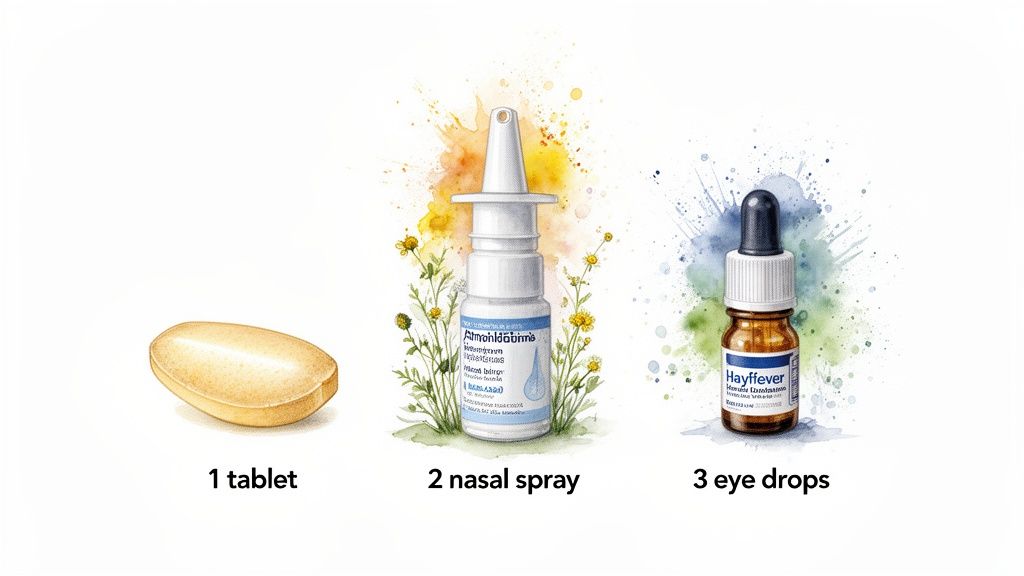
Think of your antihistamine tablet as your foundation. For breakthrough symptoms, you may need to add reinforcements like nasal sprays and eye drops.
What is the most effective hayfever treatment? The most effective treatment is often a combination: a daily antihistamine tablet for overall control, a steroid nasal spray for congestion, and eye drops for itchy eyes.
Creating your hayfever defence kit
A good hayfever toolkit tackles symptoms from all angles. A well-stocked kit usually contains:
- A Steroid Nasal Spray: These calm inflammation in your nasal passages, targeting congestion and a runny nose.
- Antihistamine Eye Drops: These provide fast, direct relief for streaming, itchy eyes.
- A Barrier Balm: A dab of petroleum jelly around your nostrils can trap pollen before you inhale it.
For severe symptoms, a prescription-only product like Dymista Nasal Spray, which combines an antihistamine and a steroid, can be a game-changer. You can discuss this option with a clinician if you're struggling.
When to see a clinician about your hayfever
Over-the-counter tablets are brilliant for mild symptoms, but they have their limits. Knowing when to seek professional advice is key to getting proper relief. If hayfever disrupts your daily life despite pharmacy treatments, it’s a clear sign you need more support.
When over-the-counter options aren't working
It’s a common story. You have tried cetirizine, loratadine, and fexofenadine, but your symptoms remain. If a runny nose, sneezing, and itchy eyes still rule your days, it's time to get help. A clinician can explore other options, like prescription-strength antihistamines.
If hayfever is affecting your asthma
For anyone with asthma, uncontrolled hayfever is a health risk. Pollen-triggered inflammation can aggravate your airways, leading to a tight chest, wheezing, and a higher chance of an asthma attack. If you have asthma and your hayfever is not well-managed, see a clinician promptly. You can learn more in our guide to understanding asthma treatments.
Certain groups should always seek advice first
Most adults can choose a hayfever tablet confidently. However, some people should always chat with a doctor or pharmacist first.
Always seek professional advice if you are:
- Pregnant or breastfeeding
- Buying for a child
- Elderly or have other health conditions (e.g., kidney or liver issues)
- Taking other medications
If you're experiencing concerning side effects
Modern antihistamines are very safe, but side effects are possible. Seek advice if you notice blurred vision, difficulty urinating, or confusion. These are rare but warrant a conversation with a healthcare professional. They can help you find a better alternative.
Summary
Finding the right way to manage your hayfever is about matching a non-drowsy antihistamine—like fexofenadine, loratadine, or cetirizine—to your life. Always start with the lowest effective dose and read the patient information leaflet. For severe symptoms, you can often get better results by pairing your daily tablet with a targeted nasal spray or eye drops. If over-the-counter options are not enough, or if you are pregnant, a quick chat with your pharmacist or doctor is the right next step. A little planning goes a long way.
FAQs
1. What is the strongest hayfever tablet? There isn't a single "strongest" one, as effectiveness varies from person to person. Prescription options like Fexofenadine 180mg are high-strength, but the best tablet is the one that works for you. Trying different active ingredients can help you find your best fit.
2. Why has my hayfever tablet stopped working? This can happen if your body gets used to one active ingredient. This is known as tachyphylaxis. Switching to a different type (e.g., from cetirizine to loratadine) for a few weeks can often restore its effect.
3. Can I take two different hayfever tablets together? No, you should never take two different oral antihistamines at the same time unless a doctor tells you to. This will not provide extra relief but will significantly increase your risk of side effects like dizziness and drowsiness. Instead, add a different type of treatment, like a nasal spray.
4. Does the brand of hayfever tablet matter? No, the active ingredient and its strength are what count. A generic supermarket brand of "Cetirizine 10mg" is identical to a well-known brand's version. All medicines in the UK must meet the same strict safety standards, so choosing generic is a great way to save money.
5. Can I drink alcohol with hayfever tablets? It is best to be careful. Alcohol can increase the drowsiness caused by some antihistamines, even newer "non-drowsy" types. While one drink is unlikely to cause a problem for most, the safest bet is to limit your alcohol intake.
6. What's the best time of day to take my tablet? This depends on when your symptoms are worst. If you wake up sneezy, take your tablet the night before. If symptoms peak during the day, take it with breakfast. Since most provide 24-hour relief, the key is to take it at roughly the same time each day.
7. Can I buy prescription-strength hayfever tablets? Yes, some treatments like Fexofenadine 180mg, Desloratadine, and Rupatadine are only available on prescription in the UK. You can get these after a clinical assessment if over-the-counter options are not effective enough for you.
8. Are tablets better than nasal sprays? Not necessarily, as they work differently. Tablets are great for all-over symptoms like skin itching and hives. Steroid nasal sprays are often more effective for nasal congestion and a runny nose. Many people find using both is the most effective strategy.
At Courier Pharmacy, our clinical team is ready to help you build a personalised plan to tackle your hayfever. We supply a full range of over-the-counter and prescription treatments, backed by expert advice to help you find what truly works. Learn more about our hayfever clinic and how we can help.
Disclaimer: This article is for informational purposes only and should not be taken as a substitute for professional medical advice. Always consult with a qualified healthcare provider for any health concerns or before making any decisions related to your health or treatment.
Meta description: Searching for the best hayfever tablets in the UK? Our 2026 guide compares Fexofenadine, Loratadine, and Cetirizine to help you find non-drowsy relief.
Internal links to include:
- comprehensive guide to hayfever treatments
- the specific details of cetirizine
- Dymista Nasal Spray
- understanding asthma treatments
- Learn more about our hayfever clinic and how we can help
Image/infographic suggestions:
- Image: An illustrated comparison table of Fexofenadine, Loratadine, and Cetirizine, using icons for "Speed," "Drowsiness," and "Duration." Style: Painterly icons with ornate brass plaque headings. Alt text: Comparison of the best hayfever tablets: Fexofenadine, Loratadine, and Cetirizine, showing speed, drowsiness risk, and duration.
- Infographic: A "Day in the Life" visual showing different user profiles (e.g., driver, office worker, gym-goer) and recommending the best tablet for each. Style: Steampunk-inspired character illustrations against a light grey background with lime green highlights. Alt text: Infographic showing the best hayfever tablets for different lifestyles, including drivers, office workers, and active people.
Author: Scott McDougall, MPharm Clinical Reviewer: Dr. Chun Tang, MRCGP
How this content was created: This article was written by a qualified pharmacist using evidence-based sources to provide accurate, patient-friendly information. All content was reviewed by a practicing GP for clinical accuracy. We use trusted sources like the NHS, NICE, and peer-reviewed medical journals to ensure our information is reliable and up-to-date.
References: [1] NHS. 2023. Antihistamines. [online] Available at: https://www.nhs.uk/conditions/antihistamines/ [2] NICE. 2023. Allergic rhinitis. [online] Available at: https://cks.nice.org.uk/topics/allergic-rhinitis/ [3] MHRA. 2022. Fexofenadine hydrochloride: available over the counter. [online] Available at: https://www.gov.uk/government/news/fexofenadine-hydrochloride-available-over-the-counter


