The Best Supplements for Fibromyalgia: A UK Patient's Guide
Discover the best supplements for fibromyalgia to manage pain, fatigue & brain fog. Our UK guide helps you choose safe, evidence-based options.
In this article
- How supplements can help you manage fibromyalgia
- Tackle pain at its source
- Recharge your body’s batteries
- Clear the fibro fog
- The 3 core supplements for fibromyalgia
- Magnesium: The muscle-soothing mineral
- Vitamin D: The sunshine vitamin for pain relief
- Coenzyme Q10: The spark plug for your cells
- Which form of supplement is best?
- More support for brain fog and energy
- Acetyl L-Carnitine for cutting through fibro fog
- SAMe for mood and pain
- D-Ribose for an energy boost
- How to choose and use supplements safely in the UK
- What to look for on the label
- Talk to your doctor or pharmacist first
- A quick summary
- FAQs
- What are the top 3 supplements for fibromyalgia?
- How long does it take for fibromyalgia supplements to work?
- Can I take several supplements for fibromyalgia at once?
- Are supplements safe to take with my prescription medication?
- How do I get my vitamin levels checked in the UK?
- What is the best time of day to take fibromyalgia supplements?
- Can I cure fibromyalgia with supplements?
- Can diet help with fibromyalgia?
Dealing with fibromyalgia can feel like a constant battle against pain and exhaustion. If you're looking for the best supplements for fibromyalgia, the evidence points towards three key players: Magnesium, Vitamin D, and Coenzyme Q10. These nutrients can help manage muscle pain, reduce fatigue, and improve sleep, offering a solid starting point for managing your symptoms.
Living with fibromyalgia means navigating a sea of information, which can be overwhelming. This guide cuts through the noise. Written by a pharmacist, it gives you a clear, evidence-based look at which supplements can genuinely make a difference. We’ll cover how they work, how to use them safely, and what to look for on the label. My goal is to give you the confidence to make informed choices for your health.
Here's what you'll find in this guide:
- The "Big Three": A deep dive into Magnesium, Vitamin D, and CoQ10.
- Targeted Support: Options for tackling brain fog and low energy.
- Choosing Safely: How to spot quality products in the UK.
- Practical Tips: Real-life examples and pharmacist-led advice.
- Your Questions Answered: Clear answers to common concerns.

How supplements can help you manage fibromyalgia
Living with fibromyalgia is a daily challenge for an estimated 1.5 to 2 million people in the UK [1]. The condition causes widespread pain, deep fatigue, and cognitive issues often called "fibro fog". It affects far more women than men.
There isn't a cure for fibromyalgia. However, a mix of medication, lifestyle changes, and targeted supplements can greatly improve your quality of life. Supplements are a key part of this approach. They can help your body tackle the root causes of your symptoms.
What is fibromyalgia? Fibromyalgia is a long-term condition that causes pain all over the body, severe tiredness, and brain fog.
Tackle pain at its source
The pain in fibromyalgia isn't just sore muscles. It’s an issue with how your nervous system processes pain signals. Doctors call this "central sensitisation". Think of it as your body's pain volume dial being turned up too high.
Certain supplements can help turn that volume down.
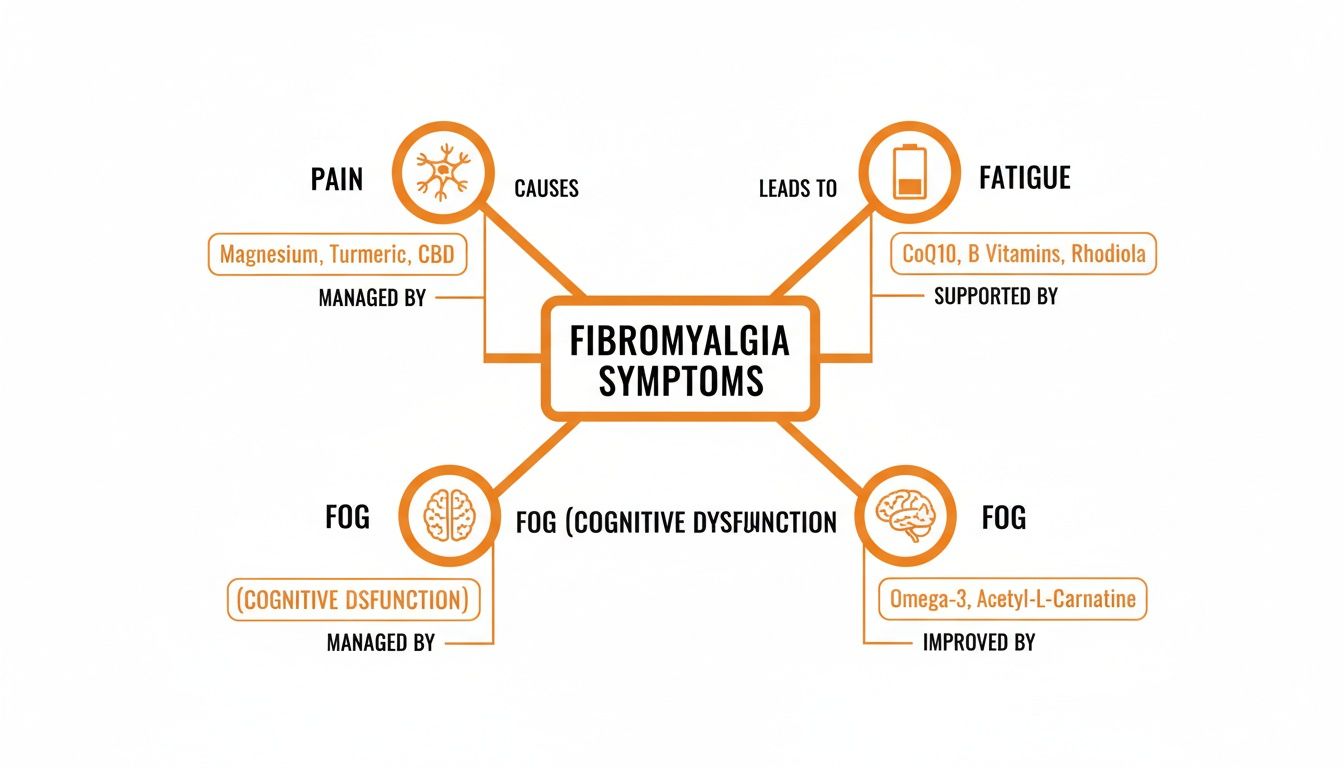
- Soothing overactive nerves: Minerals like magnesium help calm your nerve signals. They block receptors in the brain that amplify pain when overexcited. This can reduce muscle tightness and pain sensitivity.
- Cooling down inflammation: While fibromyalgia isn't an inflammatory disease like arthritis, low-level inflammation can make pain worse. Nutrients like Omega-3 fatty acids act as natural anti-inflammatories.
For more details on essential nutrients, our guide on vitamins and minerals is a great resource.
Recharge your body’s batteries
The bone-deep fatigue you feel with fibromyalgia is often due to a problem with your mitochondria. Mitochondria are the tiny power plants inside your cells. In fibromyalgia, these power plants can become sluggish and fail to produce enough energy.
This is where some supplements can give your cells the high-grade fuel they need.
Featured Snippet: A supplement like Coenzyme Q10 helps your cell's 'engine' run more smoothly and generate energy more efficiently, which can fight fatigue.
Coenzyme Q10 (CoQ10) is vital for this energy production process. Studies show people with fibromyalgia often have low levels of CoQ10 [2]. Topping up these levels can give your cells a much-needed boost, leading to less fatigue and better stamina.
Clear the fibro fog
"Fibro fog" is the frustrating mix of memory loss, poor concentration, and mental slowness. This isn't just in your head. It's linked to energy shortages in the brain and unbalanced brain chemicals (neurotransmitters).
Supplements can support your brain in a few ways:
- Fuel brain cells: Your brain uses a lot of energy. Nutrients like CoQ10 and Acetyl L-Carnitine support your cellular power plants. This gives your brain the energy it needs to think clearly.
- Balance brain chemistry: B vitamins are essential for making the neurotransmitters that control mood and focus. A good supply can lead to sharper thinking and better mental clarity.
The 3 core supplements for fibromyalgia
When you have fibromyalgia, the amount of advice can be overwhelming. Instead of trying everything, it's better to focus on a few key supplements. The science points to three that can genuinely help with pain, fatigue, and poor sleep.
Let’s look at magnesium, vitamin D, and Coenzyme Q10 in detail. We'll explore what they do, why they work, and how to use them safely. Think of this as your starting point for a chat with your GP or pharmacist.
Magnesium: The muscle-soothing mineral
Magnesium is a real workhorse. It’s involved in over 300 processes in your body. For fibromyalgia, its key jobs are in muscle and nerve function. It acts like a natural brake, helping your muscles relax. When magnesium levels are low, muscles can stay tense, causing cramps and tightness.
Studies show that many people with fibromyalgia have low magnesium levels inside their cells [3]. Topping up these levels can calm the hypersensitive nervous system that makes pain feel worse.
Real-life example: Sarah is a busy parent who is on her feet all day. Her deep muscle aches are exhausting. Taking magnesium glycinate in the evening helps ease her muscle tension and leads to deeper, more restorative sleep.
A good starting dose is usually around 200–400 mg per day.
Pharmacist's tip: The type of magnesium you choose really matters. Magnesium oxide is cheap but poorly absorbed and can cause stomach upset. I recommend forms like magnesium glycinate or magnesium malate. They are much gentler and better absorbed, making them a smarter choice for long-term use.
Vitamin D: The sunshine vitamin for pain relief
Living in the UK means many of us don't get enough sun to make vitamin D, especially in autumn and winter. For someone with fibromyalgia, this is a serious issue. Low vitamin D is directly linked to higher levels of pain.
Vitamin D is vital for healthy bones and muscles. Low levels can cause or worsen body aches. Research shows its importance. One large trial found that taking vitamin D daily cut pain scores by 28% and fatigue by 22% in fibromyalgia patients [4]. You can explore the research on Vitamin D's impact on chronic pain to learn more.
Vitamin D is a fat-soluble vitamin. You'll absorb it better if you take it with a meal that contains healthy fats, like olive oil, nuts, or avocado.
Pharmacist's tip: The NHS advises most people in the UK to take a 10-microgram (400 IU) vitamin D supplement daily in autumn and winter. However, for fibromyalgia pain, you might need a higher dose. It's best to get your vitamin D levels tested first. Your doctor can then recommend the right dose for you.
Coenzyme Q10: The spark plug for your cells
The deep fatigue of fibromyalgia is often linked to struggling mitochondria—the tiny power stations in our cells. Coenzyme Q10 (CoQ10) is the "spark plug" that creates energy. Research shows that people with fibromyalgia often have much lower levels of CoQ10 [2].
Supplementing with CoQ10 is like recharging your cellular battery. It can boost your energy, reduce the "payback" fatigue after activity, and even help clear some fibro fog.
Real-life example: David is a shift worker who struggles with energy crashes during long nights. He finds taking ubiquinol, a form of CoQ10, helps him fight off fatigue and get through his shifts more easily.
Effective doses in studies are typically between 100–300 mg per day.
Pharmacist's tip: CoQ10 is sold in two forms: ubiquinone (standard) and ubiquinol (active). Ubiquinol is ready for your body to use and is absorbed more efficiently, especially as you get older. If standard CoQ10 didn't work for you, switching to ubiquinol could make a real difference.
Which form of supplement is best?
Not all supplements are created equal. The form can affect how well your body absorbs it and whether you have side effects. This is especially true for magnesium. The table below breaks down the most common forms.
| Supplement Form | Why Choose It? | Best For... |
|---|---|---|
| Magnesium Glycinate | Highly absorbable with a calming effect. Very gentle on the stomach. | Improving sleep quality, reducing anxiety, and general muscle relaxation. |
| Magnesium Malate | Well-absorbed and may also support cellular energy production. | Targeting both muscle pain and fatigue. A popular choice for fibromyalgia. |
| Vitamin D3 | The most effective form. It is identical to what your body makes from sunlight. | Raising and maintaining healthy vitamin D levels for most people. |
| CoQ10 (Ubiquinol) | The "active" form that your body can use immediately. Better absorbed. | People over 40 or those who didn't get results with standard CoQ10. |
More support for brain fog and energy
Once you have the basics covered, you can explore other options for fibromyalgia's most draining symptoms. When brain fog and fatigue get in the way of your life, a few specific supplements show real promise.
We’ll now look at options like Acetyl L-Carnitine, SAMe, and D-Ribose. The evidence is still developing for these. However, many people find them a valuable part of their toolkit.
Acetyl L-Carnitine for cutting through fibro fog
Acetyl L-Carnitine (ALCAR) is an amino acid that helps your cells generate energy, especially in the brain. It acts like a taxi service, moving fatty acids into your mitochondria to be burned as fuel. This is important because your brain is an energy-hungry organ.
For someone with fibromyalgia, ALCAR can potentially help in two ways:
- Sharpening mental clarity: By helping brain cells create fuel more efficiently, ALCAR may cut through the sluggishness of fibro fog.
- Easing pain and fatigue: Some studies suggest ALCAR's role in energy production could also reduce physical tiredness and pain [5].
A typical dose is 1,000 to 2,000 mg per day, split into two doses.
SAMe for mood and pain
S-adenosylmethionine (SAMe) is a compound your body makes naturally. It helps manage key brain chemicals like serotonin and dopamine, which are vital for your mood.
Some research suggests people with fibromyalgia have lower levels of SAMe [6]. Supplementing with it may help lift a low mood, which often comes with chronic illness. It may also help reduce pain. A common starting dose is 200–400 mg per day, taken on an empty stomach.
Pharmacist's tip: SAMe can interact with antidepressant medications like SSRIs. This could increase the risk of a rare but serious condition called serotonin syndrome. You must speak with your doctor or pharmacist before taking SAMe if you are on any medication for your mood.
D-Ribose for an energy boost
D-Ribose is a type of simple sugar that is a building block of ATP—your body's main energy currency. In fibromyalgia, energy production is often faulty. Giving your body a direct supply of D-Ribose could help cells rebuild their energy reserves more quickly.
Real-life example: Mark is a gym-goer with fibromyalgia. Even gentle exercise triggers severe fatigue. He finds that taking D-Ribose before and after a workout helps speed up his recovery and lessens the "payback" fatigue.
Doses used in studies are typically around 5 grams, one to three times daily. We explore similar energy mechanisms in our article on Coenzyme Q10 and long COVID.
How to choose and use supplements safely in the UK
Starting a new supplement can feel tricky, but you don't have to be an expert to choose wisely. With the right know-how, you can find safe and effective products to help manage your fibromyalgia. Let's walk through how to shop smart and build a routine that supports you.
What to look for on the label
The quality of supplements can vary hugely between brands. Learning to read the label is your best tool.
Pharmacist's tip: Always look for GMP certification on the packaging. GMP stands for Good Manufacturing Practice. This quality seal confirms the supplement was made in a controlled environment and contains exactly what the label says it does.
Use this quick checklist to feel confident in your choice:
- Clear labelling: Does the label clearly state the ingredient and the exact dose? Vague information is a red flag.
- Minimal fillers: Check the "other ingredients" list. You want to see as few unnecessary binders or fillers as possible.
- Third-party testing: The best brands often get their products tested by an independent lab for purity. This is an excellent sign of quality.
Talk to your doctor or pharmacist first
This is the most important step. Before starting any new supplement, talk to a healthcare professional. They can check if it's safe for you and won't interact with any other medications you take. This conversation is essential for your safety.
A quick summary
Finding the best supplements for fibromyalgia is about targeting your specific symptoms.
The evidence strongly supports starting with Magnesium, Vitamin D, and Coenzyme Q10. These can help with muscle pain, fatigue, and sleep. For brain fog and extra energy, you might consider ALCAR or D-Ribose.
Always choose high-quality products with GMP certification. Most importantly, talk to your doctor or pharmacist before starting anything new. They can ensure your choices are safe and right for you. Combining supplements with a healthy lifestyle offers the best path to feeling more in control of your health.
For other treatment options, our UK patient's guide to Low-Dose Naltrexone for fibromyalgia may be a helpful read.
FAQs
What are the top 3 supplements for fibromyalgia?
The top three supplements with the best evidence are Magnesium, Vitamin D, and Coenzyme Q10. Magnesium helps with muscle pain and sleep. Vitamin D reduces widespread pain. CoQ10 fights fatigue by boosting cellular energy.
How long does it take for fibromyalgia supplements to work?
It varies. You might notice small changes in a few weeks. However, supplements work slowly to correct underlying issues. You should take them consistently for at least 12 weeks to feel the full benefits.
Can I take several supplements for fibromyalgia at once?
Yes, but it's vital to do it safely. Start one new supplement at a time and wait a week or two before adding another. This helps you see what's working and what isn't. Always tell your doctor about everything you take.
Are supplements safe to take with my prescription medication?
You must check with your doctor or pharmacist first. Some supplements can interact with prescription drugs. For example, SAMe can affect antidepressants. A quick chat can prevent serious problems and ensure your treatment plan is safe.
How do I get my vitamin levels checked in the UK?
You have a few options. Your GP can run blood tests for common deficiencies like Vitamin D. You can also use private clinics or at-home finger-prick test kits to check your nutrient levels conveniently.
What is the best time of day to take fibromyalgia supplements?
Timing can help absorption. Take Magnesium in the evening to help with sleep. Take Vitamin D with a meal containing fat to improve absorption. Take CoQ10 in the morning or at lunchtime to boost your energy for the day.
Can I cure fibromyalgia with supplements?
No, supplements cannot cure fibromyalgia. There is no known cure for the condition. However, the best supplements for fibromyalgia can be powerful tools for managing your symptoms and improving your quality of life. They work best as part of a wider management plan.
Can diet help with fibromyalgia?
Yes, a healthy diet can make a big difference. Focus on whole foods like fruits, vegetables, lean proteins, and healthy fats. Many people find that avoiding inflammatory foods like sugar, processed foods, and gluten can help reduce their symptoms.
Disclaimer: This article is for informational purposes only. It is not a substitute for professional medical advice, diagnosis, or treatment. Always seek the advice of your doctor or another qualified health provider with any questions you may have regarding a medical condition.
Meta description: Struggling with fibromyalgia? Discover the best supplements for fibromyalgia, including Magnesium and Vitamin D, in our expert UK patient guide.
Internal links to include:
- /conditions/fibromyalgia/ (overview of fibromyalgia treatments)
- /conditions/vitamins-and-minerals/ (guide on vitamins and minerals)
- /coenzyme-q10-and-long-covid/ (Coenzyme Q10 and long COVID)
- /is-it-safe-to-take-melatonin-every-night/ (taking melatonin safely)
- /low-dose-naltrexone-for-fibromyalgia-a-uk-patients-guide/ (UK patient's guide to Low-Dose Naltrexone for fibromyalgia)
Byline: Written by: [Author Name], MPharm Clinically reviewed by: [Reviewer Name], MRPharmS, Independent Prescriber
How this content was created: This article was written by a qualified pharmacist using high-quality evidence from sources like the NHS, NICE, and peer-reviewed medical journals. All information was fact-checked and clinically reviewed by a senior pharmacist to ensure it is accurate, up-to-date, and patient-friendly.
References: [1] NHS. Fibromyalgia. Available at: https://www.nhs.uk/conditions/fibromyalgia/ (Accessed: [Date]) [2] Cordero MD, et al. Oxidative stress and mitochondrial dysfunction in fibromyalgia. Neuroendocrinology Letters. 2010;31(2):169-73. Available at: https://pubmed.ncbi.nlm.nih.gov/20421838/ [3] Bagis S, et al. Is magnesium citrate treatment effective on pain, clinical parameters and functional status in patients with fibromyalgia? Rheumatology International. 2013;33(1):167-72. Available at: https://link.springer.com/article/10.1007/s00296-011-2334-8 [4] Wepner F, et al. Effects of vitamin D on patients with fibromyalgia syndrome: a randomized placebo-controlled trial. Pain. 2014;155(2):261-8. Available at: https://journals.lww.com/pain/fulltext/2014/02000/effects_of_vitamin_d_on_patients_with.10.aspx [5] Rossini M, et al. Double-blind, multicenter trial comparing acetyl l-carnitine with placebo in the treatment of fibromyalgia patients. Clinical and Experimental Rheumatology. 2007;25(2):182-8. Available at: https://pubmed.ncbi.nlm.nih.gov/17543140/ [6] Jacobsen S, et al. Oral S-adenosylmethionine in primary fibromyalgia. Double-blind clinical evaluation. Scandinavian Journal of Rheumatology. 1991;20(4):294-302. Available at: https://onlinelibrary.wiley.com/doi/abs/10.3109/03009749109165313


