The Best Weight Loss Injections UK A Comprehensive Comparison
Discover the best weight loss injections UK. This guide compares Wegovy, Mounjaro, and Saxenda on efficacy, cost, and real-world results to help you choose.

In this article
- 5 Key Takeaways for Your Weight Loss Journey
- Wegovy vs Mounjaro vs Saxenda: A Detailed Analysis
- The Science Behind the Injections
- Comparing Clinical Efficacy
- At-a-Glance Comparison of UK Weight Loss Injections
- The Patient Experience: Dosing and Side Effects
- Making the Right Choice for You
- Determining Your Eligibility for Treatment
- The Role of BMI in Your Assessment
- Understanding Weight-Related Conditions
- Important Health Exclusions and Contraindications
- How to Access Weight Loss Injections in the UK
- The NHS Pathway
- The Private Healthcare Route
- A Practical Cost Comparison
- Achieving Sustainable Results After Treatment
- Building Your Post-Treatment Plan
- Integrating Sustainable Nutrition
- The Importance of Regular Physical Activity
- Summary
- Frequently Asked Questions
- How Quickly Will I See Results?
- Are There Effective Non-Injectable Alternatives?
- What Should I Do If I Miss a Dose?
Choosing the best weight loss injection in the UK isn't just about picking a name like Wegovy, Mounjaro, or Saxenda. It’s about finding the one that truly fits your health, your lifestyle, and your goals. These treatments are powerful allies in managing weight, but they absolutely must be used under medical supervision and sourced from a regulated UK pharmacy.
With several effective options now available, this guide will walk you through a straightforward comparison of the leading treatments. We'll look at how they work, their effectiveness, and why a clinician's guidance is non-negotiable.
5 Key Takeaways for Your Weight Loss Journey
- This Isn't a "Quick Fix": Think of these injections as a powerful tool to support long-term change, not a magic bullet. They work best when you pair them with healthier eating habits and regular physical activity. The goal is sustainable change.
- Medical Supervision is Essential: These are prescription-only medicines for a reason. You need a qualified clinician to check if you’re a suitable candidate, keep an eye on your progress, and help you manage any side effects along the way.
- Effectiveness Varies: While they all work well, clinical studies show some differences. For example, Mounjaro often leads to slightly higher average weight loss because it works on two different hormone pathways, not just one.
- Sourcing Safely is Crucial: Always get your medication from a GPhC-registered UK pharmacy like Courier Pharmacy. This is your guarantee that you’re receiving genuine, regulated medicine and the proper clinical support.
- Eligibility Criteria Apply: Getting a prescription, whether privately or through the NHS, depends on meeting specific criteria. This usually involves your BMI and whether you have any weight-related health conditions.
A Pharmacist's Tip: "I often advise patients to start a simple food and activity diary a week or two before their consultation. It gives your clinician a clearer picture of your current lifestyle, helping us tailor advice and set realistic expectations for your treatment journey. A real-life example is a patient who discovered they were consuming hundreds of 'hidden' calories in sugary drinks each day. Simply switching to water made a huge difference even before starting treatment."
Wegovy vs Mounjaro vs Saxenda: A Detailed Analysis
When you start looking into prescription weight-loss injections in the UK, three names pop up again and again: Wegovy, Mounjaro, and Saxenda. While they’re all designed to help you achieve significant weight loss, they are definitely not interchangeable. Getting to grips with how they work, how effective they are, and what they’re like to use day-to-day is key to having a productive chat with your clinician.
This isn't just about the basic facts. We're going to dive into a real-world comparison of these leading treatments, looking at the science, what the clinical data actually means for you, and how things like dosing frequency can make a real difference to your life.
This quick overview gives you a snapshot of the key differences and how each injection supports your weight loss journey.
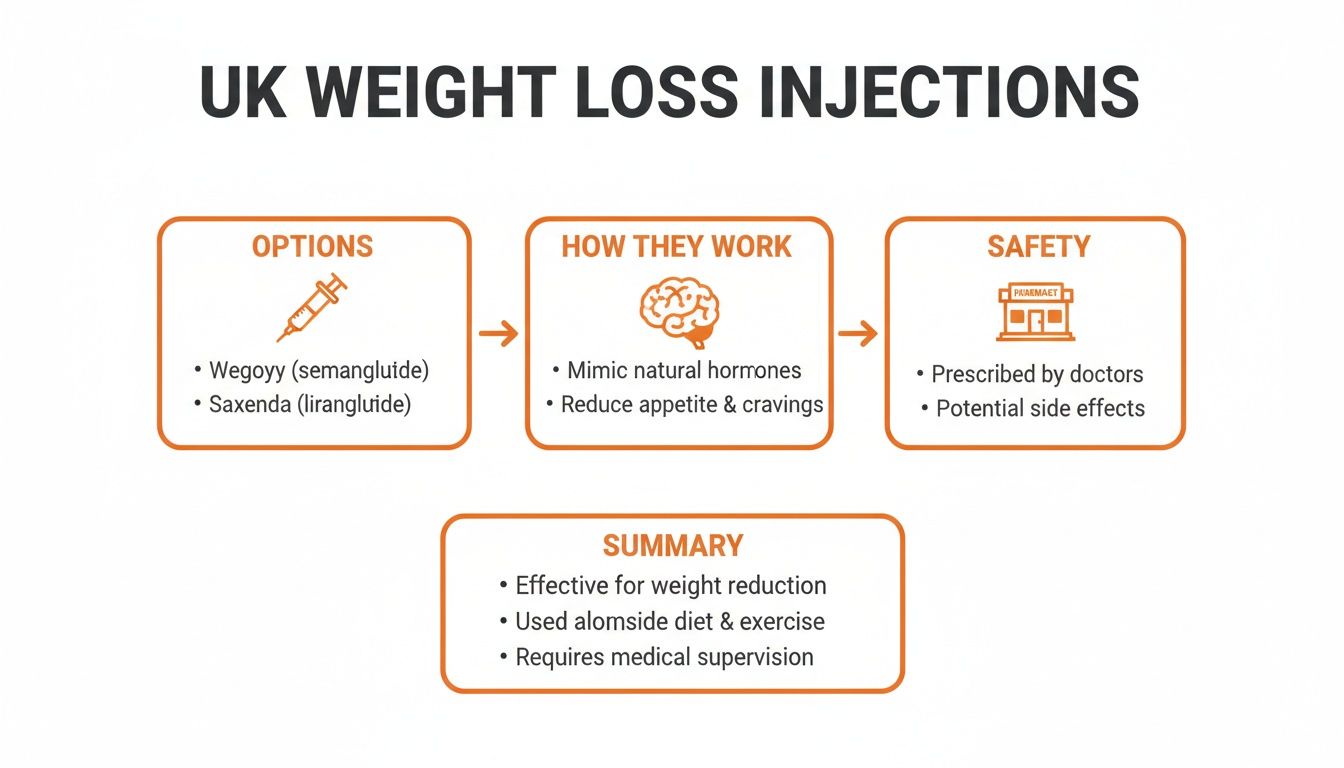
As the infographic highlights, although all three come in a user-friendly injection pen, what goes on inside your body is quite different. This requires careful clinical consideration to find the right fit.
The Science Behind the Injections
At their heart, both Wegovy and Saxenda are what’s known as GLP-1 (glucagon-like peptide-1) receptor agonists. They work by mimicking a natural gut hormone that’s crucial for managing your appetite. When that hormone is activated, it sends a signal to your brain telling you you’re full, slows down the rate your stomach empties, and helps keep your blood sugar in check.
Mounjaro, on the other hand, is a bit different. It’s a dual-action medication, acting as both a GLP-1 and a GIP (glucose-dependent insulinotropic polypeptide) receptor agonist. By targeting two distinct hormone pathways involved in appetite and metabolism, Mounjaro often delivers a more powerful punch when it comes to both weight loss and blood sugar control.
Pharmacist's Insight: "Think of it like this: Wegovy and Saxenda are turning down the volume on your hunger signals. Mounjaro does that too, but it also helps fine-tune your body's metabolic response to food. This dual action is why we often see a greater average weight loss in patients using Mounjaro."
Comparing Clinical Efficacy
The clinical trials really tell the story of what patients can realistically expect. Wegovy has shown some seriously impressive results in UK clinical trials, with patients achieving up to a 14.9% reduction in body weight over 68 weeks—that’s a figure that leaves many traditional methods in the dust.
Mounjaro, while still being studied in direct head-to-head comparisons, consistently shows slightly higher average weight loss, often tipping over the 20% mark at its highest dose. Saxenda, being an older medication, generally results in an average weight loss of around 5-10%.
It’s one thing to talk in percentages, but what does that look like in the real world? For someone who weighs 100kg (around 15 stone 10 lbs), the potential loss could break down like this:
- Saxenda: A loss of 5-10kg (11-22 lbs)
- Wegovy: A loss of around 15kg (33 lbs)
- Mounjaro: A loss of over 20kg (44 lbs)
Of course, these are just averages. Your individual results will always depend on things like how well you stick to the treatment, your diet, and how active you are.
At-a-Glance Comparison of UK Weight Loss Injections
To make things easier, here’s a side-by-side look at the key features of each medication. This table should help you quickly compare Wegovy, Mounjaro, and Saxenda and see which one might align best with your needs and lifestyle.
| Feature | Wegovy (Semaglutide) | Mounjaro (Tirzepatide) | Saxenda (Liraglutide) |
|---|---|---|---|
| How It Works | GLP-1 receptor agonist | Dual GLP-1/GIP receptor agonist | GLP-1 receptor agonist |
| Dosing Frequency | Once-weekly injection | Once-weekly injection | Once-daily injection |
| Average Weight Loss | Around 15% | Up to 20%+ | Around 5-10% |
| Primary Side Effects | Nausea, diarrhoea, constipation, vomiting | Nausea, diarrhoea, constipation, vomiting | Nausea, diarrhoea, constipation, vomiting |
| Best For | Those seeking a highly effective, weekly option | Individuals needing maximum efficacy, especially with type 2 diabetes | People who may prefer a daily routine or cannot tolerate newer options |
This table provides a snapshot, but remember, the best choice is always one made in consultation with a healthcare professional who understands your complete medical history.
The Patient Experience: Dosing and Side Effects
Let’s be honest, beyond the numbers, the practical side of treatment is what really shapes your success. This is where one of the biggest differences between the medications comes into play: the dosing schedule.
- Wegovy & Mounjaro: Are taken as a once-weekly injection.
- Saxenda: Needs a once-daily injection.
For most people, a weekly injection is just more convenient and easier to fit into a busy life than a daily one. This simple difference often makes Wegovy and Mounjaro the more attractive options from a lifestyle point of view.
When it comes to side effects, all three are quite similar because they share that GLP-1 mechanism. The most common issues are gastrointestinal—things like nausea, diarrhoea, constipation, and vomiting. These side effects are usually at their worst when you first start the medication or increase your dose, but they tend to settle down as your body gets used to it. If you're thinking about changing from one treatment to another, it helps to know what to expect. For more detail, have a read of our guide on switching from Mounjaro to Wegovy.
Making the Right Choice for You
Ultimately, choosing between these powerful medications is a decision you need to make with a healthcare professional. Mounjaro’s superior results might make it the front-runner for those with a higher BMI or related conditions like type 2 diabetes. That said, Wegovy is still an incredibly effective treatment with the major plus of weekly dosing.
Saxenda, while not quite as potent, has been on the market longer. It can be a good starting point for some patients or a solid alternative for those who don’t get on well with the newer drugs. The "best" weight loss injection is simply the one that is safe, effective, and sustainable for you.
Determining Your Eligibility for Treatment
Weight loss injections are powerful medical treatments, not cosmetic quick fixes. This means they aren't suitable for everyone. Before you can get a prescription, a qualified clinician needs to take a careful look at your health to make sure the treatment is both safe and right for you. Understanding the eligibility criteria is the first step on this journey.
The process involves checking your Body Mass Index (BMI), your overall health, and any existing medical conditions you might have. Both the NHS and private clinics follow strict guidelines to figure out who is a good candidate.
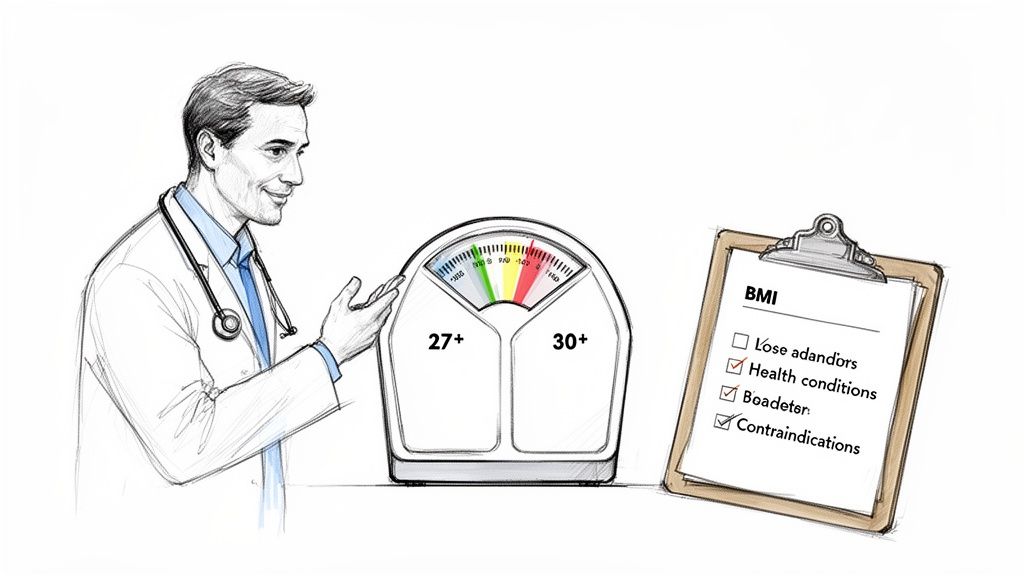
The Role of BMI in Your Assessment
The main starting point for eligibility is your Body Mass Index (BMI). It's a measure that uses your height and weight to see if you're in a healthy range. For weight loss injections in the UK, the criteria are pretty specific.
Typically, you'll need to meet one of these thresholds:
- A BMI of 30 kg/m² or higher, which is classified as clinically obese.
- A BMI of 27 kg/m² or higher plus at least one weight-related health condition.
That second point is really important. It means that if your BMI is between 27 and 29.9, you must also have a condition that is either caused or made worse by carrying excess weight.
Understanding Weight-Related Conditions
So, what counts as a "weight-related health condition"? It's a medical issue that can improve with weight loss. A clinician will be looking for things like:
- Type 2 diabetes or pre-diabetes
- High blood pressure (hypertension)
- High cholesterol (dyslipidaemia)
- Obstructive sleep apnoea
For example, someone with a BMI of 28 who also has high blood pressure would probably be considered eligible. On the other hand, a person with a BMI of 26 who just wants to lose a bit of weight for cosmetic reasons wouldn't meet the clinical criteria.
Important Health Exclusions and Contraindications
Safety is always the number one priority. Because of this, there are several health conditions, known as contraindications, that will rule you out for these medications. It's absolutely vital that you're completely honest with your clinician about your medical history.
Key contraindications include:
- A personal or family history of medullary thyroid carcinoma (MTC).
- A history of Multiple Endocrine Neoplasia syndrome type 2 (MEN 2).
- Previous bouts of pancreatitis.
- Being pregnant, breastfeeding, or actively trying to conceive.
Your prescriber also needs to know about every medication you're taking, as some can interact with these GLP-1 drugs. While side effects are a possibility with any medicine, understanding them is part of being prepared; you can read about potential Mounjaro side effects to get a better idea of what to expect.
Pharmacist's Tip: "Come to your consultation prepared. Have a list of your current medications, any allergies, and any significant family medical history. This helps your clinician make an accurate and safe assessment, ensuring the chosen weight loss injection is right for you."
How to Access Weight Loss Injections in the UK
Once you and a clinician decide you’re a good candidate for weight-loss injections, the next question is a big one: how do you actually get a prescription? In the UK, you have two main routes to access treatments like Wegovy, Mounjaro, or Saxenda – either through the National Health Service (NHS) or by going to a private healthcare provider.
Each path comes with its own process, costs, and timeline. Understanding the differences is crucial to figuring out which option is the right one for your circumstances. The route you choose will have a big impact on how quickly you can begin your treatment and the kind of service you’ll receive along the way.
The NHS Pathway
Getting weight-loss injections on the NHS is possible, but it’s a very structured and often slow-moving process. It isn’t as straightforward as just asking your GP for a prescription.
Typically, the NHS journey looks something like this:
- GP Consultation First: Your GP will be the first port of call. They'll assess if you’re eligible based on NICE guidelines, looking closely at your BMI and any weight-related health issues you have.
- Referral to Specialist Services: If you tick the boxes, you’ll usually be referred to a specialist tier 3 or tier 4 weight management service. These are not just doctors; they're teams made up of dietitians, psychologists, and other specialists.
- A Broader Programme: The injections aren’t a standalone treatment. They're prescribed as one part of a much bigger, holistic programme that requires you to fully commit to lifestyle changes, including specific diet and exercise plans.
- Long Waiting Lists: This is the biggest hurdle. Demand is incredibly high, which means waiting lists for these specialist services can be punishingly long. We're talking many months, and in some parts of the country, even years.
This path is really designed for people who need intensive, long-term support, but those wait times can be a major barrier for many who are ready to start now.
The Private Healthcare Route
For anyone wanting to get started much more quickly, private healthcare has become a very popular alternative. Demand has exploded. In the period from early 2024 to early 2025 alone, an estimated 1.6 million adults in the UK used weight loss injections. That figure completely dwarfs the NHS's initial targets and shows just how much the private sector has stepped in.
Going private usually means using a regulated online pharmacy UK service, which makes the whole process more direct and convenient.
Some of the key benefits of the private route are:
- Speed: You can often have your consultation and get your medication within just a few days, completely bypassing those lengthy NHS waiting lists.
- Convenience: Consultations are usually handled online through secure questionnaires, which are then reviewed by qualified UK-based prescribers.
- Direct Delivery: If you're approved, the medication is sent discreetly to your home, often packaged with all the supplies you need to get started.
Pharmacist’s Tip: "When you’re looking at private providers, your number one priority has to be safety. Always check that the pharmacy is registered with the General Pharmaceutical Council (GPhC). That registration is your proof that you’re dealing with a legitimate provider who sources genuine medication and follows strict UK safety standards."
A Practical Cost Comparison
There’s no getting around it—the financial difference between the two routes is massive.
- On the NHS: If you manage to get through the waiting list and are deemed eligible, you'll only pay the standard NHS prescription fee for England per item. Prescriptions are free in Scotland, Wales, and Northern Ireland.
- Privately: The costs are significantly higher. You’re paying for the medication out of pocket, which can be anywhere from £150 to over £300 per month. This price varies depending on the specific drug and the dose you’re taking. This fee typically includes the cost of the private prescription and any clinical support.
Achieving Sustainable Results After Treatment
Weight loss injections are a powerful way to kickstart your journey, but they aren't a lifelong solution. The real success story is written after the treatment ends. This is all about the crucial next step: how to maintain your hard-earned results and build a foundation for lasting health.
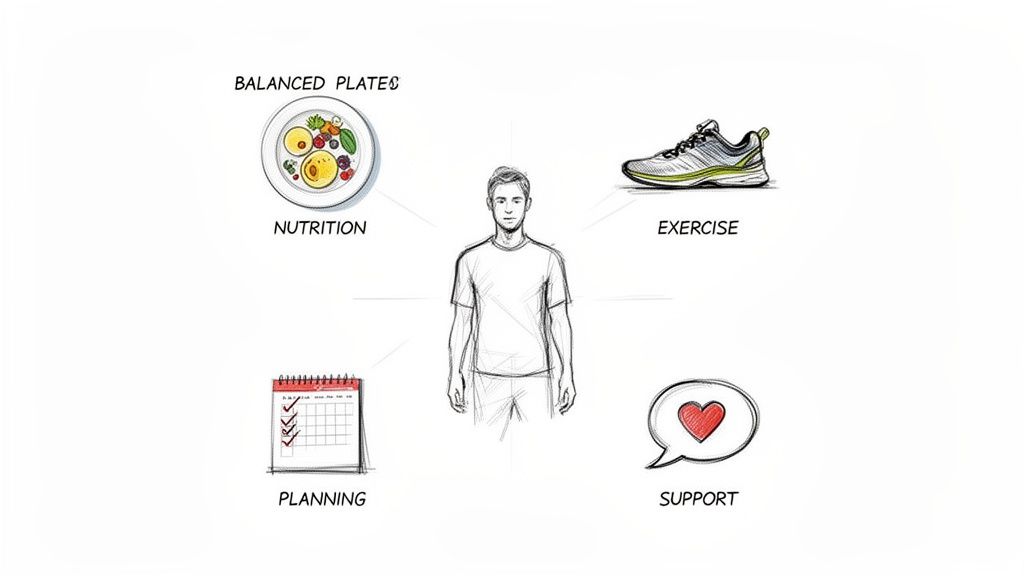
Think of these medications as a window of opportunity—a period where a quietened appetite and fewer cravings make it much easier to lock in healthier habits. Viewing them as a temporary support system, rather than a permanent fix, is the key to managing your weight for good.
Building Your Post-Treatment Plan
Coming off your medication requires a solid strategy. It’s the habits you build during your treatment that will carry you forward. Without a plan, the risk of regaining the weight is frustratingly high.
This isn’t just speculation; real-world data from the UK highlights the challenge of maintenance. Studies show that around half of all GLP-1 users stop their treatment within a year and can experience faster weight regain than those using traditional dieting methods. As Cancer Research UK rightly points out, these injections are not silver bullets. Your focus on diet and exercise has to continue for long-term success. You can read more on these findings in the research published by the NIHR.
To avoid this rebound effect, you need to focus on two core pillars: nutrition and physical activity. They have to become non-negotiable parts of your daily routine.
Integrating Sustainable Nutrition
While on your medication, the appetite suppression makes eating less feel almost effortless. The real test comes when your natural hunger signals return and you have to maintain those mindful eating habits.
- Prioritise Protein: Protein is absolutely vital for preserving lean muscle mass, especially when you're losing weight. It also helps you feel fuller for longer, which is a huge advantage once the medication’s effects wear off. Try to include a source of lean protein with every single meal.
- Focus on Fibre: Foods packed with fibre—think vegetables, whole grains, and legumes—are brilliant for your gut health and also contribute to that feeling of fullness.
- Stay Hydrated: Drinking plenty of water is essential for your metabolism and can help you manage hunger cues, which are often just your body telling you it's thirsty.
A structured eating plan can make a world of difference. For some practical guidance on creating balanced meals, have a look at our insights in The Ultimate Mounjaro Diet Guide—the principles in there are just as relevant after your treatment ends.
A Pharmacist’s Tip: "I often see patients struggle when their appetite returns. My advice is to plan your meals for the week ahead. This removes the guesswork and makes it far easier to make healthy choices, especially on busy days when you might otherwise reach for convenience foods."
The Importance of Regular Physical Activity
Exercise does so much more than just burn calories. It builds muscle, boosts your metabolism, and works wonders for your mental wellbeing. During and after your treatment, a combination of cardio and strength training is the ideal mix.
- Strength Training: Lifting weights or doing bodyweight exercises at least twice a week helps build and maintain muscle. The more muscle you have, the more calories your body burns, even when you're resting.
- Cardio Exercise: Aim for at least 150 minutes of moderate-intensity activity a week. This could be anything from brisk walking and cycling to swimming.
Ultimately, the best exercise routine is one you actually enjoy and can stick with. It doesn't have to be a punishing gym session every day; a consistent daily walk can be just as effective.
Summary
Choosing the right weight loss injection is a significant decision that requires careful thought and professional medical advice. Mounjaro and Wegovy stand out for their once-weekly dosing and impressive clinical results, with Mounjaro often showing a slight edge in total weight loss due to its dual-action mechanism. Saxenda remains a solid daily option, particularly for those who have used it successfully before or who may not tolerate the newer alternatives.
However, these medications are not magic wands. Their true power lies in their ability to support you while you build lasting healthy habits. Eligibility is strictly determined by clinical need, based on your BMI and any related health conditions. You can access these treatments via the NHS, which involves long waiting lists, or more quickly through private, regulated online pharmacies.
The most important takeaway is that success is defined by sustainable change. The "best" injection is the one that is safe for you, fits your lifestyle, and empowers you to maintain your results long after the treatment course is finished. Always consult with a qualified clinician to create a personalised plan that is right for your health journey.
Frequently Asked Questions
When you're thinking about weight loss injections, it’s completely normal to have a lot of questions. We get it. To help clear things up, here are some straightforward answers to the queries we hear most often from our patients here in the UK.
How Quickly Will I See Results?
This is usually the first thing people want to know, and it’s important to set realistic expectations from the start. While you might feel your appetite decrease within the first week or two, significant weight loss is more of a marathon than a sprint.
Typically, you can expect to see noticeable changes on the scales within the first 4-8 weeks, as long as you’re also making positive shifts in your diet and exercise habits. The most dramatic results, like those seen in clinical trials, build up over several months.
Just remember, these medications work best when the dose is increased slowly and carefully to keep side effects at bay. Patience really is key here—the aim is steady, sustainable progress, not a quick fix.
Are There Effective Non-Injectable Alternatives?
Absolutely. Injections aren't the only route for medical weight management. If you’re not keen on needles or they simply aren't the right fit for you, there are several effective alternatives worth discussing with a clinician.
- Oral Medications: Prescription tablets like Mysimba and Orlistat offer different ways to support weight loss. Mysimba works on the brain’s reward pathways to help curb cravings, while Orlistat acts in your gut to block some of the fat from being absorbed from your meals.
- Evidence-Based Programmes: Don't underestimate the power of a structured weight management service. These often combine professional dietary support, tailored exercise plans, and psychological coaching to help you build healthy habits that stick for good.
The best approach is always found through a full consultation, where you can explore which option—injectable or otherwise—truly fits your health needs and lifestyle.
A Pharmacist's Tip: "Don't get fixated on one type of treatment. The most successful weight loss journeys are personalised. For example, a patient of mine who had a phobia of needles had great success with oral medication combined with support from a dietitian. Be open with your clinician so they can find the safest path for you."
What Should I Do If I Miss a Dose?
Forgetting to take a weekly injection like Wegovy or Mounjaro can happen to anyone. What to do next really depends on how long it’s been since your scheduled dose.
If it’s been less than 5 days since you were supposed to inject, go ahead and take the missed dose as soon as you remember. After that, you can just carry on with your next dose on your usual scheduled day.
However, if it's been more than 5 days, it’s best to skip the missed dose altogether. Just wait and take your next one on your normal day. It’s important that you do not take a double dose to catch up, as this can really ramp up the risk of side effects. If you're ever in doubt, the safest bet is always to get in touch with your prescribing pharmacy for advice.


