A Pharmacist's Guide to Canesten BV Treatment
Explore our expert guide on Canesten BV treatment. Learn how it works to restore balance, proper usage tips, and when to see a doctor for your symptoms.
In this article
- 5 Key Takeaways on Using Canesten BV Treatment
- Your Guide to Managing Bacterial Vaginosis
- Understanding What Bacterial Vaginosis Really Is
- The Garden Analogy: An Imbalance, Not an Infection
- Spotting the Telltale Signs of BV
- BV vs Thrush: A Clear Comparison
- How Canesten BV Treatment Restores Natural Balance
- The Two-Step Restoration Process
- Correct Application for Best Results
- Navigating Potential Side Effects and Precautions
- Key Precautions to Keep in Mind
- When to Be Cautious
- Comparing Canesten BV with Prescription Antibiotics
- Two Different Ways of Thinking About Treatment
- Breaking Down the Key Differences
- BV Treatment Options: Canesten vs. Prescription Antibiotics
- When You Should Talk to a Doctor or Pharmacist
- Red Flag Situations for Self-Treatment
- When Symptoms Signal Something More
- Summary
- Frequently Asked Questions About BV Treatment
- Can I Use Canesten BV Gel During My Period?
- Is Canesten BV Treatment an Antibiotic?
- How Can I Prevent BV From Coming Back?
- Can My Partner Get BV From Me?
When you’re dealing with uncomfortable vaginal symptoms, it’s easy to feel a bit lost. Is it bacterial vaginosis (BV) or thrush? Getting it wrong can mean using a treatment that doesn't help, which is just frustrating. This guide is designed to clear up the confusion around BV and introduce a simple, effective, and accessible solution: Canesten BV treatment. We’ll walk you through everything you need to know, drawing from the kind of practical advice you’d get from a pharmacist.
5 Key Takeaways on Using Canesten BV Treatment
- BV is a pH Imbalance, Not an Infection: BV is caused by an overgrowth of certain bacteria when the vagina's natural pH level is disrupted. Canesten BV treatment works by restoring this delicate acidic balance, not by killing bacteria like an antibiotic.
- Correct Diagnosis is Crucial: BV's key signs are a thin, greyish discharge and a distinct fishy odour. This is different from the thick, white, odourless discharge and intense itching of thrush. Using the wrong treatment won't work.
- Application Timing Matters: For best results, apply the gel internally right before you go to sleep. Pharmacist Tip: "Lying down for several hours minimises leakage and allows the gel to work effectively overnight."
- Complete the Full Course: While you might feel better in 2-3 days, you must complete the full seven-day course. A patient of mine, Sarah, felt better after a few days and stopped, only for her symptoms to return. Completing the full treatment is key to preventing a quick recurrence.
- Know When to Seek Professional Advice: If this is your first time with these symptoms, you're pregnant, the treatment doesn't work, or the issue keeps coming back, it’s essential to talk to a pharmacist or doctor.
Your Guide to Managing Bacterial Vaginosis
Navigating intimate health can feel overwhelming, but figuring out what's going on is the first step towards feeling better. Bacterial vaginosis isn't an "infection" you catch in the traditional sense; it’s an imbalance in your vagina's delicate ecosystem.
Think of it like a beautifully kept garden where, for some reason, the weeds have started to take over. This disrupts the natural harmony and pH balance. The good news? You don't always need a heavy-duty approach like antibiotics to fix it.
An effective Canesten BV treatment works by directly addressing the root of the problem—the pH level. It helps your body’s natural defences get back in control, restoring that healthy balance.
Understanding What Bacterial Vaginosis Really Is
Let's clear up the confusion around bacterial vaginosis. It’s an incredibly common condition, but it's so often misunderstood. This can lead to women trying the wrong treatments and getting stuck in a frustrating cycle of discomfort. The first real step towards relief is understanding what’s actually happening inside your body.
Think of your vaginal microbiome as a finely balanced garden. In a healthy state, this garden is filled with beneficial bacteria called Lactobacilli. These are the 'good guys', and their main job is to produce lactic acid, which keeps the vaginal environment slightly acidic (at a pH below 4.5). This acidity acts like a natural bodyguard, stopping less friendly microbes from overgrowing.
The Garden Analogy: An Imbalance, Not an Infection
Bacterial vaginosis happens when this delicate garden gets thrown off balance. It’s not a sexually transmitted infection you can 'catch' from a partner; it's an internal shift. Certain triggers—anything from hormonal changes to using perfumed soaps or bubble baths—can cause the vaginal pH to rise, making it less acidic.
This change in environment is like changing the soil in your garden. Suddenly, the protective Lactobacilli can't thrive, and other types of bacteria, known as anaerobic bacteria, start to take over. You can think of these as the 'weeds'. It’s this overgrowth that leads to the classic symptoms of BV.
Pharmacist's Tip: "One of the most common mistakes I see is women assuming any vaginal discomfort is thrush. But BV and thrush are entirely different. Trying to treat a pH imbalance with an antifungal cream simply won't work and can sometimes make the irritation worse. Nailing down the specific symptoms is crucial for choosing the right solution, like a targeted Canesten BV treatment."
Spotting the Telltale Signs of BV
So, how can you be sure it's BV? The signs are quite distinct from other common issues like thrush. Paying close attention to the specific symptoms is your best tool for getting the diagnosis right and finding relief faster.
The two most prominent signs of BV are:
- Discharge: A thin, watery, and often greyish-white discharge is the most common sign. This is very different from the thick, clumpy, 'cottage cheese' texture that’s associated with a thrush infection.
- Odour: A noticeable and often described as 'fishy' odour is the hallmark symptom of BV. This smell can become more obvious after sex or during your period.
It’s also important to note what BV doesn't usually cause. While you might feel some mild discomfort, BV isn’t typically associated with the intense itching, redness, or soreness that are the main complaints with thrush. Getting a clear picture of your symptoms is key. For a deeper dive, check out our complete guide to bacterial vaginosis.
BV vs Thrush: A Clear Comparison
To confidently figure out what you might be experiencing, it really helps to see the symptoms side-by-side. Misdiagnosis is a common hurdle that stops people from getting better.
| Symptom | Bacterial Vaginosis (BV) | Thrush (Yeast Infection) |
|---|---|---|
| Primary Cause | A bacterial imbalance and pH shift. | An overgrowth of Candida yeast. |
| Discharge | Thin, watery, greyish-white. | Thick, white, cottage cheese-like. |
| Odour | Distinctive, strong 'fishy' smell. | Usually odourless, or slightly yeasty. |
| Main Sensation | Odour and unusual discharge. | Intense itching, soreness, and redness. |
This difference is precisely why treatments are formulated so differently. A Canesten BV treatment is designed specifically to restore the vaginal pH, getting to the root cause of the bacterial imbalance. Thrush treatments, on the other hand, contain antifungal agents to fight the yeast overgrowth.
BV is far from rare. Here in the UK, it’s estimated that bacterial vaginosis affects between 15-30% of women of reproductive age, making it one of the most common vaginal conditions. To put that in perspective, data from Public Health England in 2018 showed over 86,000 diagnoses in sexual health clinics alone, and that doesn't even count the many more cases managed by GPs.
How Canesten BV Treatment Restores Natural Balance
When you’re dealing with the discomfort of bacterial vaginosis, you want a solution that works with your body, not against it. Canesten BV treatment takes a clever, gentle approach to restoring harmony. It sidesteps the aggressive "scorched earth" method of some treatments that can wipe out both good and bad bacteria.
Think of it like tending to a garden. Instead of spraying harsh chemicals everywhere, this treatment focuses on rehabilitating the soil and helping the good plants thrive. It provides precisely what your body needs to get its natural defences back in control, tackling the root cause of BV—a pH imbalance—for effective and lasting relief from symptoms like unusual discharge and odour.
The Two-Step Restoration Process
Canesten BV treatment uses a smart, dual-action formula that approaches the problem from two angles at once. It makes the environment hostile for the 'bad' bacteria while giving the 'good' bacteria the nutrients they need to flourish.
Immediate pH Correction with Lactic Acid: The key player here is lactic acid. Once applied, it immediately gets to work lowering the vaginal pH, bringing back the natural acidic environment that keeps harmful bacteria in check. This makes it incredibly difficult for the anaerobic bacteria responsible for that tell-tale fishy odour to survive, let alone multiply.
Nourishing Good Bacteria with Glycogen: The formula also contains glycogen. This acts as a specialised fertiliser for your beneficial Lactobacilli bacteria. By providing a ready source of food, glycogen helps these protective microbes repopulate and reclaim their territory. This reinforces your body's natural defences and re-establishes a healthy, balanced microbiome.
The diagram below gives you a clear picture of how this delicate balance works and what happens when it gets thrown off.
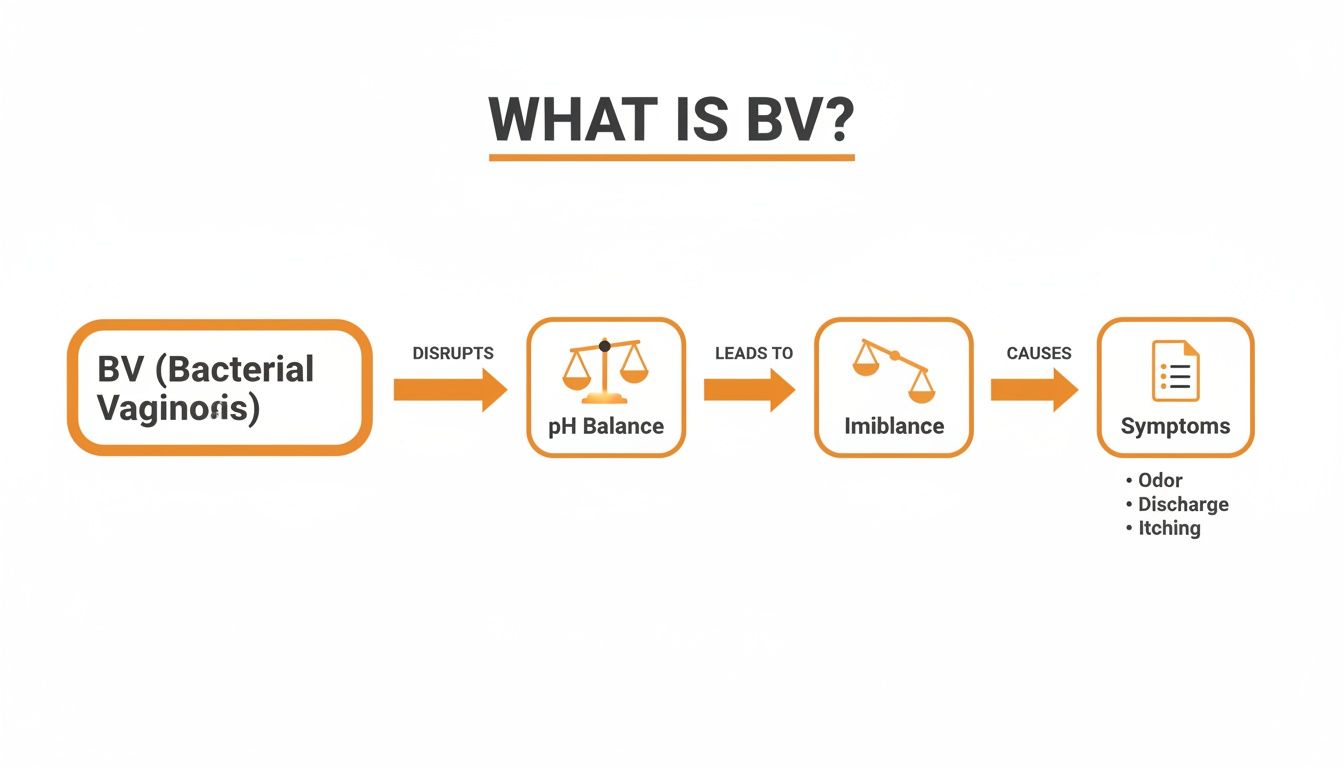
As you can see, a healthy pH is the cornerstone of vaginal wellness. When that balance is disrupted, the symptoms we associate with BV are sure to follow.
Correct Application for Best Results
Using the treatment correctly is the key to getting the full benefit and seeing a quick improvement in your symptoms. The pre-filled applicators are designed to be simple and hygienic.
Here’s a simple step-by-step guide:
- Wash your hands thoroughly before opening the package.
- Twist off the cap of the single-use applicator.
- Get into a comfortable position, like lying on your back with your knees bent.
- Gently insert the neck of the applicator as far as is comfortable into your vagina.
- Squeeze the applicator firmly to dispense all of the gel.
- Keeping it squeezed, withdraw the applicator and dispose of it.
Pharmacist's Top Tip: "The absolute best time to apply the Canesten BV treatment gel is right before you go to sleep. Applying it at night and then lying down for several hours minimises leakage and allows the gel to stay in place, maximising its contact time and effectiveness."
While many women start to notice relief from odour within just 2-3 days, it's vital to complete the full 7-day course. Stopping early can allow the imbalance to creep back in. Consistency is everything when it comes to fully restoring your natural balance. For other intimate health solutions, you can also learn more about Canesten pessaries for treating thrush.
This non-antibiotic approach is backed by solid evidence. While Canesten is famous for its thrush treatments, its effectiveness for BV is clear. In the UK, real-world data shows over 90% of women report symptom improvements after using Canesten products for vaginal infections. What's more, clinical trials on lactic acid gels for BV showed symptom resolution in 75% of confirmed cases. This really highlights the power of rebalancing treatments. You can read the full research about these findings on PMC.
Navigating Potential Side Effects and Precautions

Before starting any new treatment, it’s smart to get familiar with how your body might react. The good news is that Canesten BV treatment is designed to be gentle and works with your body, so it’s generally very well-tolerated. Even so, it's wise to be aware of a few potential mild side effects and safety points before you begin.
Most women use the gel without any issues at all. However, some users report a slight stinging or burning feeling when they first apply it. This is often temporary and can happen because the gel is acidic—which is exactly how it restores your natural pH—and the vaginal tissues might already be a bit sensitive or irritated from the BV itself.
If the sensation is mild and disappears quickly, it's usually nothing to worry about. But if the irritation feels severe, is really uncomfortable, or just doesn't go away, it's best to stop using the product. A quick chat with a pharmacist can help you figure out what to do next.
Key Precautions to Keep in Mind
Beyond a bit of mild irritation, there are a few important safety details to consider. Following these ensures the Canesten BV treatment is both effective and safe for you, helping you avoid any unwanted interactions or issues.
A pharmacist would always highlight these points:
Contraception Compatibility: The gel can potentially damage latex condoms and diaphragms. This could make them less effective at preventing pregnancy or sexually transmitted infections. It's a good idea to use an alternative method of contraception during the seven-day treatment and for a few days after you finish.
Trying to Conceive: The acidic nature of the gel, while great for restoring vaginal pH, can create an environment that isn't ideal for sperm. If you are actively trying to get pregnant, it's best to avoid using this product.
A Pharmacist's Advice: "Before you even open the box, the most important step is to read the patient information leaflet inside. It contains the most comprehensive and up-to-date safety information specific to the product. It’s your best resource for understanding potential side effects and precautions."
When to Be Cautious
In certain situations, it pays to be a bit more cautious or to check in with a professional before starting treatment. It's all about making sure this is the right and safest choice for your specific circumstances.
Think about these points before you start:
Allergies: Always check the ingredients list. If you have a known allergy to lactic acid, glycogen, or any other component, you shouldn't use this product. An allergic reaction could cause significant irritation, a rash, or worse.
Unusual Symptoms: If your symptoms include things like blood-stained discharge, pain in your lower stomach, or a fever, it could point to a different or more serious condition. In these cases, a Canesten BV treatment is not the right approach, and you should see a doctor as soon as you can.
By keeping these simple precautions in mind, you can use Canesten BV treatment confidently and safely, getting the best possible results while putting your well-being first.
Comparing Canesten BV with Prescription Antibiotics
When you're trying to tackle bacterial vaginosis, you'll find two main routes: over-the-counter options like a Canesten BV treatment and prescription antibiotics. It’s not about one being flat-out better than the other, but about picking the right tool for the job. Knowing how they differ is key to making a smart choice.
Think of it this way: Canesten BV Gel is like a gentle gardener, working to restore the soil's natural balance so healthy plants can flourish again. On the other hand, prescription antibiotics are like a targeted weedkiller, brought in to eliminate the overgrown 'weeds' directly. Both approaches work, but they do so in completely different ways and are best for different situations.
Two Different Ways of Thinking About Treatment
The biggest split between these treatments is how they actually work. Canesten BV Gel is not an antibiotic. Instead, it works by introducing lactic acid to lower the vaginal pH, bringing it back to its natural acidic state. This makes life difficult for the bacteria causing BV and also provides glycogen to feed the good Lactobacilli bacteria. It’s all about rebalancing the ecosystem.
Prescription antibiotics, like Metronidazole, are much more direct. These are systemic medications, meaning they work throughout your body to kill the specific anaerobic bacteria that have overgrown and caused the infection. This powerful approach is often needed for more severe, stubborn, or recurring infections where simply rebalancing the pH isn't enough to get things under control.
Breaking Down the Key Differences
To give you a clearer picture, let's put these two options side-by-side. The table below really highlights the differences in how you get them, when you'd use them, and what effects they might have on your body.
BV Treatment Options: Canesten vs. Prescription Antibiotics
Here’s a look at how over-the-counter and prescription treatments for Bacterial Vaginosis stack up against each other.
| Treatment Type | How It Works | Best For | Potential Side Effects |
|---|---|---|---|
| Canesten BV Gel | Restores vaginal pH balance with lactic acid and feeds good bacteria with glycogen. | Mild, uncomplicated cases of BV, especially if it's your first time. | Generally mild and localised, like slight stinging. Less likely to affect gut bacteria. |
| Prescription Antibiotics | Directly kills the harmful bacteria causing the infection throughout the body. | More severe, persistent, or recurring BV that hasn’t responded to other treatments. | Can include nausea, a metallic taste, and interaction with alcohol. May disrupt gut and vaginal flora. |
Understanding these differences helps you and your healthcare provider decide on the best starting point for your specific situation.
A Pharmacist’s Perspective: "For a first-time, mild case, I often suggest starting with a pH-balancing gel like Canesten. It’s a great way to support the body’s natural defences. But if the symptoms are severe or it keeps coming back, we need to bring out the stronger tools. That’s when prescription options, like those available through Courier Pharmacy’s Metronidazole service, become the right and necessary next step."
This step-by-step approach is standard practice in healthcare. You start with the gentlest effective treatment, only moving to something stronger when needed. This helps protect the body's natural microbiome and reduces the wider risks of antibiotic resistance.
And BV is a widespread issue in the UK. Health models estimate that around 21% of women experience BV, with about 74,000 seeking treatment at any given moment. While first-line antibiotics like metronidazole work for about 75% of these cases, that still leaves thousands who need another option, showing just how important it is to have a range of effective treatments available. You can discover more insights about these BV treatment statistics in the UK from NHS Wales.
Ultimately, both Canesten BV and prescription antibiotics are valuable treatments. The trick is to understand your symptoms, your history with BV, and to chat with a healthcare professional to figure out which path is the best one for you.
When You Should Talk to a Doctor or Pharmacist
While over-the-counter solutions like Canesten BV treatment are incredibly convenient and effective for many, they aren’t a one-size-fits-all answer. Self-treating has its limits, and knowing when to hit pause and seek professional advice is a crucial part of looking after your intimate health.
A quick chat with a pharmacist or your doctor can rule out other potential issues and make sure you’re on the right track. Sometimes, what looks like a classic case of BV might be something else entirely, or a bit more complicated. It’s always better to be safe than sorry.
Red Flag Situations for Self-Treatment
Think of these as important stop signs. If any of the following sound familiar, it’s vital to hold off on starting or continuing with a Canesten BV treatment and speak to a healthcare professional first.
- First-Time Symptoms: If this is your first time dealing with these kinds of symptoms, getting a proper diagnosis is non-negotiable. A professional can confirm it’s actually BV and not another condition that presents in a similar way.
- Pregnancy or Breastfeeding: Your body goes through massive changes during this period. You should always talk to a doctor or midwife before using any new medicines to ensure they're completely safe for you and your baby.
- Treatment Isn't Working: Have you finished the full seven-day course of Canesten BV Gel, but your symptoms are still hanging around or have even gotten worse? That’s a clear sign it’s time to get checked out.
- Recurrent Episodes: If BV keeps coming back (often defined as more than two episodes in six months), it could point to an underlying issue that needs a different, more targeted approach than an over-the-counter gel.
When Symptoms Signal Something More
Beyond the usual signs of BV, certain symptoms should be taken much more seriously. These can indicate a different or more significant condition that requires a specific diagnosis and prescription treatment.
"As a pharmacist, I always tell patients to listen to their bodies. If you experience pelvic pain, a fever, chills, or any unusual bleeding alongside your other symptoms, please don't wait. These are not typical for BV and need to be investigated by a doctor promptly."
These kinds of symptoms are your body's way of telling you that something more than a simple pH imbalance might be going on. A professional consultation ensures that nothing important gets missed.
For those times when an over-the-counter product isn't the right fit, professional services offer a discreet and reliable alternative. Online platforms like Courier Pharmacy bridge the gap, allowing you to have a secure consultation and, if appropriate, receive prescription treatments like Metronidazole delivered right to your door. This is especially helpful for recurrent BV, where a stronger, prescribed treatment is often needed. To get a better feel for how it works, you can learn about the patient journey and data privacy at Courier Pharmacy, so you can feel confident and informed every step of the way.
Summary
Bacterial vaginosis is a common condition caused by a pH imbalance, not an infection you can "catch." Its key symptoms are a thin, greyish discharge and a fishy odour, which differentiate it from thrush. Canesten BV treatment offers a gentle, effective solution by using lactic acid and glycogen to restore your vagina's natural acidic environment and support beneficial bacteria. For the best results, use the gel at night for the full seven-day course. While this treatment is great for mild, uncomplicated cases, it's crucial to see a doctor or pharmacist if your symptoms are severe, new, don't improve, or if you're pregnant. Understanding your symptoms and choosing the right approach is the first step towards lasting relief.
Frequently Asked Questions About BV Treatment
Can I Use Canesten BV Gel During My Period?
It's really best to wait until your period has completely finished before starting the treatment. Menstrual blood can mess with your vaginal pH and might wash the gel out, making it far less effective. For the best results, you'll want to use the full seven-day course without any interruptions. Just start it as soon as your period ends.
Is Canesten BV Treatment an Antibiotic?
No, it isn't, and that's one of the key things that makes it different from prescription options. The gel works by getting your vagina's natural environment back in balance. It uses lactic acid to restore the normal acidic pH and glycogen to give the good, protective bacteria a food source. In short, it helps your body fix the problem itself rather than killing off bacteria directly.
How Can I Prevent BV From Coming Back?
Stopping BV from becoming a recurring nightmare is all about protecting your natural vaginal flora. One of the biggest culprits for repeat infections is using harsh products that upset the delicate balance down there. That means avoiding douching and steering clear of perfumed soaps, bubble baths, or shower gels in your intimate area.
Here are a few simple, pharmacist-backed tips:
- Wash Gently: All you really need is warm water. If you prefer to use a cleanser, make sure it’s extremely mild and completely unperfumed.
- Wear Breathable Fabrics: Stick to cotton underwear. Synthetic materials can trap moisture, creating an environment where the wrong bacteria can thrive.
- Wipe Correctly: Always wipe from front to back after using the loo. This simple habit helps prevent bacteria from the rectum spreading to the vagina.
It's also useful to know the difference between BV and other common conditions. You can learn more about vaginal thrush to help you better understand your symptoms.
A Pharmacist's Insight "Many women don't realise that even overwashing can trigger BV. Your vagina is brilliantly self-cleaning, and interfering with that process using harsh products is a common cause of recurring issues. When it comes to intimate hygiene, simplicity is your best friend."
Can My Partner Get BV From Me?
Bacterial vaginosis isn't considered a sexually transmitted infection (STI), so male partners don't need to be treated. It’s simply an imbalance of the bacteria that are normally found in the vagina. That said, sexual activity can sometimes be a trigger. Semen is alkaline, which can temporarily change the vaginal pH, and that's often why symptoms become more noticeable after intercourse.
At Courier Pharmacy, we believe in providing discreet, expert-led access to the health treatments you need. Whether it's an effective over-the-counter solution or a prescription following a professional consultation, we're here to help you manage your health with confidence and convenience. Explore our services and take control of your well-being today at https://courierpharmacy.co.uk.


