Canesten Cream for Thrush: A UK Patient Guide
Searching for Canesten cream for thrush? Our UK pharmacist guide explains how to use it, what it treats, safety tips, and how to get discreet treatment.
SEO brief
- Primary keyword: canesten cream for thrush
- Secondary keywords: thrush cream, Canesten thrush external cream, Canesten internal cream, clotrimazole cream for thrush, recurrent thrush treatment
- Search intent: Informational with treatment guidance for UK patients
- Target reader: UK adults with suspected vaginal thrush who want clear, safe self-care advice
- Product/service mention: Courier Pharmacy online support and treatment access
- Internal links available: Assumed from brief and included where requested
Canesten cream for thrush can work very well, but it helps to know which cream does what. Canesten Thrush Internal Cream gave relief from itching and burning within one day for 86% of users (75 out of 87), and across all Canesten products 42% of people felt some relief within 4 hours [1].
If you're reading this while sitting uncomfortably at work, changing out of gym kit, or wondering whether the itching means “yes, it’s thrush again”, you’re not alone. Thrush is common, miserable, and often confusing because Canesten makes several products that sound similar but work in different ways. The key point is simple. External cream soothes the outside. Internal treatment tackles the infection inside. Used properly, they can work well together.
What is thrush and why does it happen
Thrush is a yeast infection, usually caused by an overgrowth of Candida albicans. This yeast often lives harmlessly on the body, but sometimes the balance changes and it starts causing irritation, soreness, and discharge.
For many women, it appears at the most annoying moment possible. A busy parent finishes a course of antibiotics for a chest infection, then gets itching a few days later. A gym-goer sits in damp leggings after a class and notices soreness that evening. Exam stress, poor sleep, hormonal shifts, and warm, tight clothing can all tip things the wrong way.

What thrush actually is
Thrush is common. It affects up to 75% of women at least once in their lifetime, and 5 to 8% have recurrent episodes [1]. That matters because many people feel embarrassed by it, even though it’s something pharmacists deal with all the time.
Common symptoms include:
- Itching and irritation around the vulva or entrance to the vagina
- Soreness or burning
- White discharge that may look clumpy
- Discomfort when passing urine or during sex
Thrush is common and treatable. Feeling uncomfortable is normal. Feeling embarrassed isn't necessary.
Why it flares up
Candida likes a warm, moist environment. It also takes advantage when the normal balance in the vagina shifts.
Typical triggers include:
- Antibiotics: these can disturb the normal bacteria that usually keep yeast in check
- Hormonal changes: periods, pregnancy, and HRT can all play a role
- Skin irritation: perfumed washes, soaps, and wipes can make things worse
- Heat and friction: tight clothing, synthetic underwear, or staying in wet clothes
A real-life example I often see is the shift worker who grabs quick showers with scented products, spends long hours in fitted uniforms, then assumes the irritation will settle on its own. Sometimes it does not. Early, correct treatment tends to be easier than waiting and hoping.
When it may not be thrush
Not every vaginal symptom is thrush. If the discharge smells unpleasant, if you have pelvic pain, if sex is painful in a new way, or if you have sores or unusual bleeding, stop self-diagnosing and get checked.
If you want a simple overview of symptoms and treatment routes, the vaginal thrush guidance page can help you compare options before you buy anything.
Understanding the different Canesten creams for thrush
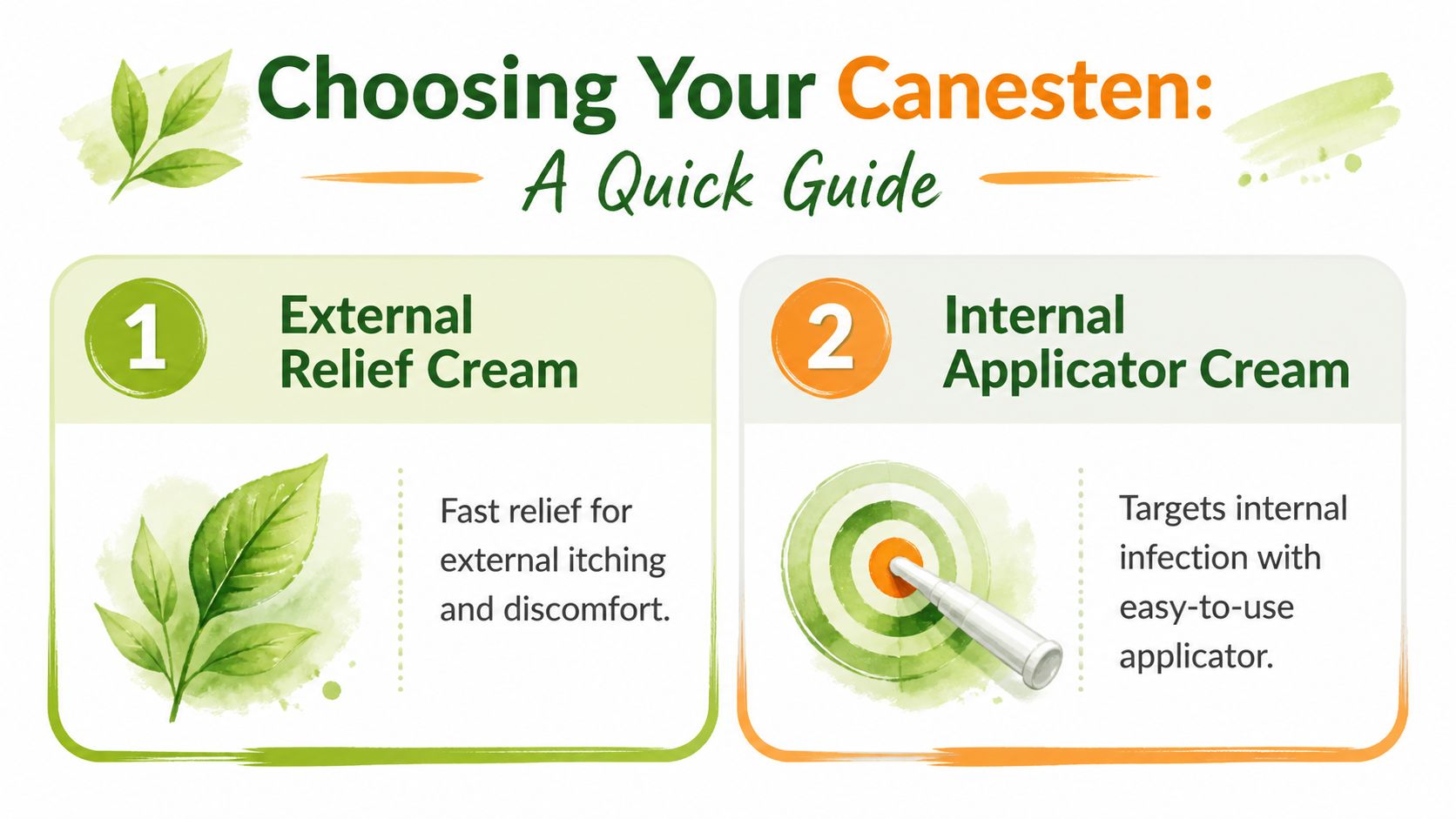
Canesten products can be confusing because the word “cream” appears on more than one box. The important detail is where the treatment is meant to work. One cream treats the inside of the vagina. The other treats the outside skin.
Canesten products use clotrimazole, an antifungal medicine. In vaginal thrush, it tackles the yeast causing the infection. The outside cream also helps calm the sore, itchy skin around the vulva [2].
Internal and external creams are not the same
This is the point many people miss.
Canesten Thrush External Cream contains 2% w/w clotrimazole and is for candidal vulvitis, which means thrush-related soreness and itching on the outside [2]. You rub a thin layer onto the vulva and surrounding skin.
Canesten Thrush Internal Cream goes inside the vagina using an applicator. That’s the treatment aimed at the internal infection. In a UK real-world study, 86% of users (75 out of 87) reported relief from itching and burning within one day, and 42% of participants across all Canesten products noticed some relief within 4 hours [1].
If you only use the external cream when you have clear internal symptoms, you may feel a bit soothed but not properly treated.
Choosing the right Canesten thrush treatment
| Product Type | Primary Use | What It Treats | Best For |
|---|---|---|---|
| External cream | Soothes the outside | Itching, soreness, irritation of the vulva | People with strong external discomfort |
| Internal cream | Treats inside the vagina | The internal thrush infection | People who prefer a cream applicator |
| Pessary | Internal treatment | The internal thrush infection | People who prefer a vaginal pessary rather than cream |
| Combi or duo pack | Treats and soothes | Internal infection plus outside symptoms | People with both internal and external symptoms |
A quick product check can help. The clotrimazole 1% cream page may also help if you're comparing antifungal creams and want to understand ingredient strengths and intended use.
When combination treatment makes sense
If you’ve got both itching outside and the classic internal symptoms, combination treatment often makes the most sense. That usually means an internal product plus external cream.
Here’s the plain-English version:
- External symptoms only: external cream may help, but be careful. Sometimes “external only” irritation turns out not to be thrush.
- Internal symptoms with discharge and soreness: choose an internal treatment.
- Both together: an internal treatment plus external cream is often the most practical route.
Practical rule: If the itch is outside but the infection is inside, soothing the skin alone won't finish the job.
Featured snippet style mini answers
Does Canesten external cream cure thrush on its own?
It helps the outside symptoms. It does not usually clear internal vaginal thrush by itself.
What works faster for itching, internal or external treatment?
External cream can soothe local soreness, but internal treatment addresses the actual vaginal infection.
How to use Canesten cream for thrush correctly
Using canesten cream for thrush properly makes a real difference. Most treatment failures I see are not because the product is poor. They happen because the wrong product was chosen, the cream was stopped too soon, or the partner issue was ignored.
How to apply the external cream
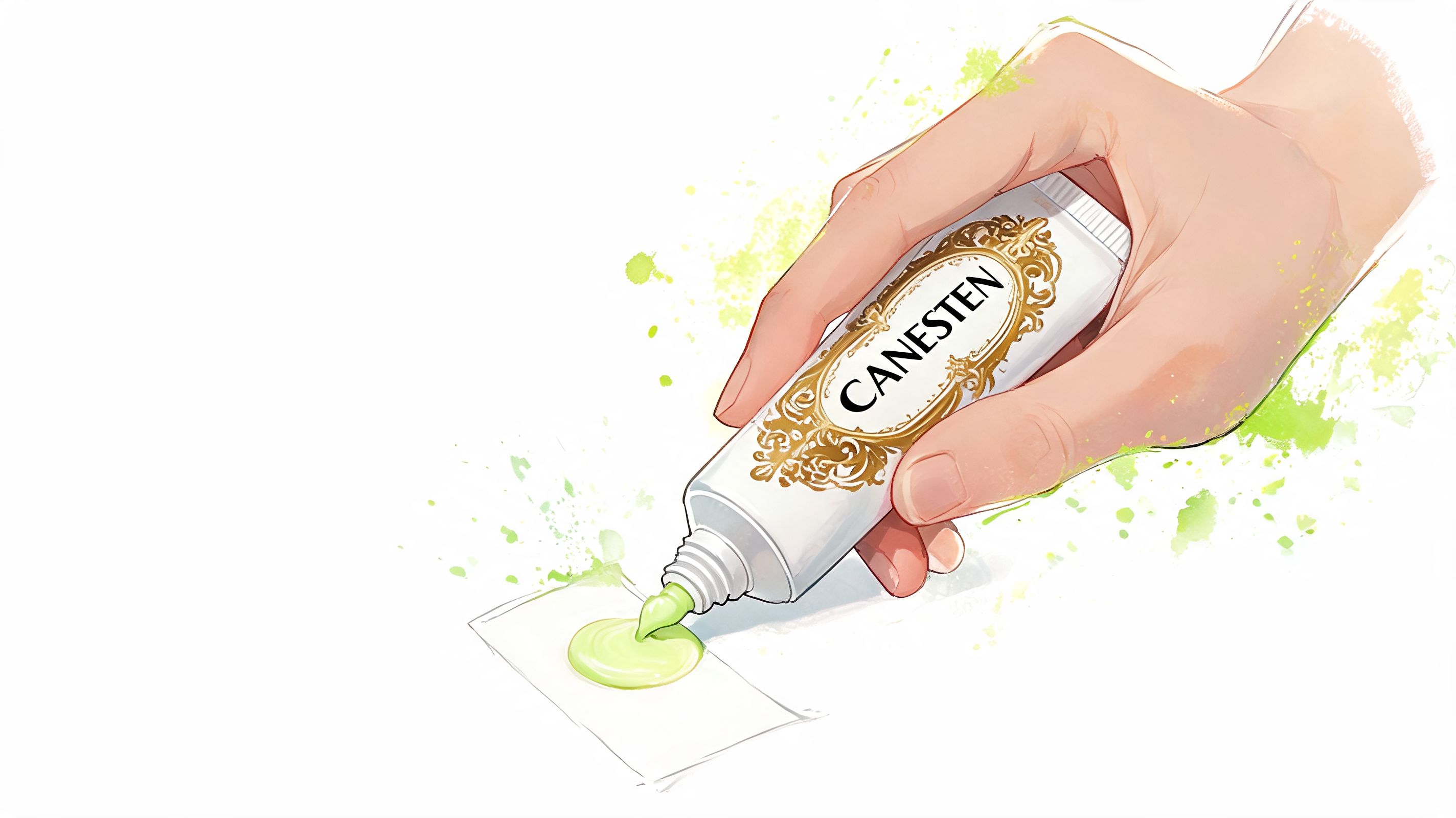
Canesten Thrush External Cream contains 2% w/w clotrimazole. Apply it thinly 2 to 3 times daily to the vulva and surrounding skin [2].
Use it like this:
Wash your hands first.
Keep the area clean, but skip scented soap.Use a small amount.
A thin layer is enough. More is not better.Apply to the sore outer area only.
Gently smooth it over the vulva and nearby irritated skin.Wash your hands again after use.
This helps avoid spreading cream to sensitive areas like the eyes.Keep going until symptoms settle.
The patient leaflet says treatment usually continues until symptoms resolve, typically within 7 days when used alongside vaginal therapy [2].
Pharmacist's tip: Wash with water or a gentle emollient, then pat dry. Rubbing with a towel can make sore skin sting more.
How to use internal cream with an applicator
Internal cream is for the vaginal infection itself. Depending on the product, dosing schedules vary, so always follow the leaflet for the exact pack you bought.
General steps are straightforward:
- Fill the applicator as directed by the pack instructions
- Insert it gently into the vagina, often at bedtime for comfort
- Press the plunger to release the cream
- Remove the applicator carefully and dispose of or clean it if instructed by the product leaflet
Lying on your back with your knees bent can make insertion easier. Many people worry they’re “doing it wrong”, but gentle placement is usually enough. It doesn’t need to be forced high up.
A useful visual guide can help if the process feels awkward at first:
Partner treatment and practical points
This is one of the most misunderstood parts of thrush care. Male partners may need treatment with the external cream applied to the penis 2 to 3 times daily for up to two weeks to help reduce reinfection [2].
That doesn’t mean every partner always needs treatment. But if thrush keeps bouncing back, it is worth thinking about.
A few practical examples:
- Busy parent: You treat yourself, feel better, then symptoms return after sex a week later. Partner treatment may have been the missing step.
- Night shift worker: You use external cream for two days, then stop as soon as the itch improves. The infection may not be fully settled.
Pharmacist's tip: If the outside feels better quickly, don't assume the whole problem has gone. Follow the full instructions for the internal treatment you chose.
Pharmacist's tip: Wear loose cotton underwear and change out of wet or sweaty clothes promptly while treating thrush. It won't replace treatment, but it often makes you more comfortable.
Featured snippet style mini answers
How often do you apply Canesten thrush external cream?
Apply a thin layer 2 to 3 times a day [2].
How long should a male partner use Canesten cream for thrush?
The patient leaflet advises application 2 to 3 times daily for up to two weeks [2].
Is Canesten always the right choice? Safety and side effects
Canesten is a useful treatment, but it isn't the right answer for every itchy, sore symptom. The safest approach is to treat confidently when the picture is typical, and pause when it is not.
Clotrimazole is generally used without major problems. When side effects happen, they are usually mild skin reactions such as stinging, redness, or irritation. Rarely, more obvious allergic skin reactions can occur [3].
Common side effects and what to watch for
The SmPC notes that reactions such as blistering or urticaria can occur in rare cases, and some reactions may be linked to excipients such as cetostearyl alcohol. This may affect 1 to 2% of people with atopy [3].
Stop and seek advice if you notice:
- Blistering or hives
- Marked swelling
- Severe burning that gets worse instead of better
- A rash spreading beyond the treated area
If the cream makes the area steadily more inflamed, don't keep pushing on. Recheck the diagnosis.
When to get medical advice instead
Self-treatment is not always the right move. Arrange a proper review if any of these apply:
- It’s your first suspected thrush episode
- You’re pregnant or breastfeeding
- You’re under 16 or over 60
- You have diabetes, a weakened immune system, or ongoing cancer treatment
- You have irregular vaginal bleeding, ulcers, or sores
- You’re not improving within 7 days [3]
- You keep getting similar symptoms repeatedly
If you're weighing another option, such as an oral capsule, the fluconazole 150mg thrush capsule page is useful for checking whether that route may suit you better.
Condoms, latex and treatment timing
A very practical safety point often gets missed. Vaginal creams and pessaries for thrush can affect latex condoms and diaphragms, so don’t rely on them for contraception during treatment unless the product leaflet says it’s safe.
Pharmacist's tip: If you might have sex during treatment, check the leaflet first and plan alternative contraception. This matters more than is often realized.
Featured snippet style mini answers
Can Canesten cream cause side effects?
Yes. Mild stinging or irritation can happen, and rare allergic skin reactions such as blistering or urticaria are possible [3].
When should I see a doctor if Canesten is not helping?
Get reviewed if there’s no improvement within 7 days [3].
Alternatives and managing recurrent thrush
If thrush does not settle, the answer is not always “use more cream.” Sometimes the diagnosis is wrong. Sometimes the first treatment was not completed properly. Sometimes the infection keeps returning and needs a longer plan.
If the first treatment did not work
A second course of clotrimazole can still help. In cases of initial treatment failure, a second course succeeded in about 67% of cases [4].
That said, repeat symptoms deserve a bit more thought. Recurrent thrush can affect up to 50% of women, and longer treatment courses such as 2 weeks are often recommended to lower the risk of recurrence [4].
Other treatment options
For some people, an oral fluconazole capsule is more convenient than internal cream or a pessary. It may suit someone who hates applicators or knows that a topical treatment is hard to complete around work, travel, or childcare.
However, oral treatment is not right for everyone. It may be unsuitable in pregnancy and can interact with other medicines. If symptoms don’t fit the usual thrush pattern, a clinician may recommend testing or a different treatment entirely.
There is also the possibility that it is not thrush at all. If the main problem is an unusual odour or a thin greyish discharge, compare symptoms with bacterial vaginosis treatment information before repeating antifungals that may not help.
Simple habits that may help reduce flare-ups
These won't cure active thrush, but they can make recurrence less likely for some people:
- Choose breathable underwear and avoid staying in damp exercise clothes
- Skip perfumed washes and sprays around the vulval area
- Pat dry after washing rather than rubbing
- Review recent antibiotics if flare-ups seem to follow them
- Think about timing if symptoms cluster around periods, sex, or travel
A realistic example is the gym-goer who treats each episode but stays in wet leggings for hours after training. Another is the office worker who keeps switching soaps and intimate washes because the area feels sore, then ends up more irritated. Less product often helps.
How Courier Pharmacy supports your treatment journey
Good thrush care is not just about handing over a box. It’s about choosing the right treatment, checking for red flags, and making sure symptoms improve.
Courier Pharmacy combines online convenience with pharmacist oversight. You complete a confidential questionnaire, and a real prescriber reviews it before treatment is supplied if appropriate. That matters for conditions like thrush, where the details often decide whether self-care is sensible or whether you need referral.
The pharmacy is UK regulated and GPhC registered, and it has operated since 2014. Medicines come through proper UK supply routes, and support does not stop at checkout. Free follow-up is part of the service in appropriate cases, which is especially useful when symptoms are persistent, recurring, or difficult to pin down.
If you want treatment without a high-street queue, you can start through the Courier Pharmacy online pharmacy service.
If you think you may have thrush and want discreet, pharmacist-reviewed treatment, Courier Pharmacy offers a secure UK online service with confidential assessment, tracked delivery, and follow-up support where appropriate.
Summary
Canesten cream for thrush can work well, but the type of cream matters.
External cream treats the sore, itchy skin outside. Internal treatment treats the vaginal infection itself.
Used correctly, clotrimazole products can bring quick symptom relief for many people [1][2].
Partner treatment may also help reduce reinfection in some cases [2].
If symptoms are unusual, severe, or not improving within 7 days, get medical advice [3].
And if thrush keeps coming back, think beyond one-off treatment and look at the bigger pattern [4].
FAQs
Can Canesten cream cure thrush?
Canesten Thrush External Cream helps the outside symptoms of thrush, such as itching and soreness. If the infection is inside the vagina, you usually need an internal treatment as well.
Which Canesten cream is for internal thrush?
The internal cream is the one designed to go inside the vagina using an applicator. The external cream is for the vulva and surrounding skin.
How quickly does Canesten internal cream work?
In a UK study, 86% of users (75 out of 87) reported relief from itching and burning within one day [1]. Across all Canesten products in that study, 42% felt some relief within 4 hours [1].
How often should I use Canesten Thrush External Cream?
Apply it thinly 2 to 3 times daily [2]. Follow the leaflet for the product you have bought.
Can I use external cream on its own?
You can if the problem is only external irritation linked to thrush. But if you have internal vaginal thrush symptoms too, the external cream alone is unlikely to be enough.
Should my partner use Canesten cream too?
The patient leaflet says male partners should apply the cream to the penis 2 to 3 times daily for up to two weeks to help prevent reinfection [2]. This can be especially relevant when symptoms keep coming back.
What if Canesten doesn’t work?
If your first clotrimazole treatment fails, a second course can still work in about 67% of cases [4]. If you’re still not improving, or you get repeated episodes, you need a clinical review.
When should I see a doctor about thrush?
Seek medical advice if it’s your first episode, you’re pregnant, symptoms are unusual, or there is no improvement within 7 days [3]. Also get checked if you keep having repeat episodes.
Can Canesten cause side effects?
Yes. Mild irritation can happen, and rare reactions such as blistering or urticaria are possible [3]. Stop and get advice if the reaction seems significant or keeps worsening.
Is recurrent thrush common?
Yes. Recurrent thrush can affect up to 50% of women [4]. When it keeps returning, longer treatment and a proper review are often needed.
Meta description
Canesten cream for thrush can soothe itching and treat infection when used correctly. Learn the difference between internal and external creams in this UK guide.
Internal links to suggest for medicalmojo.co.uk
- Vaginal thrush symptoms and treatment guide
- Fluconazole vs clotrimazole for thrush
- Bacterial vaginosis vs thrush symptoms
- Can you use thrush treatment in pregnancy
- When vaginal itching is not thrush
Visual guidance for the designer
Comparison infographic
Alt text: “Comparison of Canesten external cream, internal cream, pessary, and combi treatment for thrush.”
Style: painterly icons, ornate brass labels, lime green and pale yellow-green panels on white.Step-by-step treatment visual
Alt text: “Step-by-step guide showing how to apply external thrush cream and use internal applicator cream safely.”
Style: soft medical illustration with light grey background and brass plaque headings.Safety checklist card
Alt text: “Red flag symptoms and side effects that mean you should seek medical advice for suspected thrush.”
Style: steampunk-inspired checklist with muted warning icons.
Byline
By Medical Mojo Editorial Team
Health content writers and UK pharmacy research team
Clinical review: Pharmacist reviewer, UK GPhC-registered pharmacist
How this content was created
This article was written using UK medicines information, patient leaflet and SmPC data, plus peer-reviewed real-world evidence on Canesten products. A pharmacy-trained reviewer checked the content for clarity, safety, and UK relevance before publication.
Disclaimer
This article is for information only and is not a substitute for medical advice, diagnosis, or treatment. If you are unsure whether your symptoms are thrush, speak to a pharmacist, GP, or sexual health clinician.
References
[1] Sherrard, J., Wilson, J., Donders, G., Mendling, W., Jensen, J.S. and Palmeira-de-Oliveira, A. (2022) ‘A real-world evidence study on the impact of vaginal vulvovaginal candidiasis treatment on symptoms and quality of life’, Infectious Diseases and Therapy. Available at: https://pmc.ncbi.nlm.nih.gov/articles/PMC8969009/
[2] Medicines.org.uk (n.d.) Canesten Thrush External Cream Patient Information Leaflet. Available at: https://www.medicines.org.uk/emc/files/pil.2206.pdf
[3] Medicines.org.uk (n.d.) Canesten Thrush External Cream Summary of Product Characteristics. Available at: https://www.medicines.org.uk/emc/product/2206/smpc
[4] NPS MedicineWise (n.d.) Canesten clotrimazole thrush treatment 3 day cream. Available at: https://www.nps.org.au/medicine-finder/canesten-clotrimazole-thrush-treatment-3-day-cream


