Chances of Getting Pregnant on the Pill: A UK Guide
Your clear UK guide to chances of getting pregnant on the pill, with perfect vs typical use, missed pill rules, and when to seek help.
Fewer than 1 in 100 people become pregnant in a year with perfect pill use, but about 9 in 100 do with typical use. That gap usually reflects missed or late pills, sickness, late restarts, or medicine interactions, rather than the pill failing by itself.
The NHS figures can sound confusing, especially when your own routine doesn't look perfectly organised. A late shift, a forgotten packet in a travel bag, or vomiting after a dose can all change the advice. This guide explains the chances of getting pregnant on the pill, how the combined pill differs from the progestogen-only pill, and what to do after a possible lapse.
- Perfect use gives very high protection, with fewer than 1 in 100 users becoming pregnant in a year.
- Typical use is less reliable, with about 9 in 100 users becoming pregnant over a year.
- The timing of a missed pill matters, especially at the start or end of a pack.
- Vomiting, severe diarrhoea, and some medicines can reduce protection.
- A pharmacist, GP, sexual health clinic, or NHS service can guide you quickly after a contraceptive mishap.
How likely is pregnancy on the pill
More than 99% effective with perfect use, the combined pill and progestogen-only pill provide very strong protection. With typical use, they're about 91% effective, so about 9 in 100 people may become pregnant over a year. The NHS explanation of contraceptive effectiveness explains that the gap usually comes from missed or late pills, rather than the medicine failing by itself.
Perfect use means taking every active pill as directed. The dose must also be absorbed properly, and another medicine must not reduce its effect. Vomiting soon after a dose or taking an interacting medicine can therefore change the advice, even if you remembered the pill.
Typical use reflects ordinary routines. A weekend lie-in, a packet left in a travel bag, or a late restart after the break can interrupt protection. Shift work, childcare, and managing several medicines can make daily timing harder than it sounds.
Perfect and typical pill use failure rates
| Pill type | Perfect use | Typical use |
|---|---|---|
| Combined pill | More than 99% effective, fewer than 1 in 100 pregnant in a year | 91% effective, about 9 in 100 pregnant in a year |
| Progestogen-only pill | More than 99% effective, fewer than 1 in 100 pregnant in a year | 91% effective, about 9 in 100 pregnant in a year |
These are yearly figures, not a prediction from one late dose. Your situation depends on the pill you take, how late it was, where you were in the pack, whether sex happened during the gap, and whether sickness or another medicine was involved. A single mistake does not automatically mean pregnancy, but it does need prompt, product-specific advice.
Practical rule: Treat a missed dose as a timing problem to solve promptly, not as proof that pregnancy has occurred.
Combined pill vs progestogen-only pill
The combined oral contraceptive, or combined pill, contains oestrogen and progestogen. It mainly stops ovulation, while also thickening cervical mucus so sperm find it harder to pass through.
The progestogen-only pill, known as the POP or mini pill, contains no oestrogen. Its effects vary by formulation. All types thicken cervical mucus and alter the womb lining, while some also stop ovulation.
The late-pill window therefore depends on the product in your packet. NHS guidance says protection remains in place if a traditional POP is taken within 3 hours, a desogestrel pill within 12 hours, or a drospirenone pill within 24 hours. Check the name and instructions supplied with your pill, because “the mini pill” describes several different products. [2]
| Feature | Combined pill | Progestogen-only pill |
|---|---|---|
| Hormones | Oestrogen and progestogen | Progestogen only |
| Main action | Usually stops ovulation and thickens cervical mucus | Thickens cervical mucus, changes the womb lining, and may stop ovulation |
| Timing | Take daily as prescribed, following the relevant missed-pill rules | The late window depends on the formulation |
| Common timing windows | A delay of less than 24 hours is usually handled differently from missed doses | Traditional POP, 3 hours. Desogestrel, 12 hours. Drospirenone, 24 hours |
| STI protection | None | None |
A 21-day combined pill includes a planned hormone-free break. Missing tablets immediately before or after it can lengthen that gap, giving ovulation more opportunity to occur. UK clinical guidance identifies the beginning and end of a pack as higher-risk points, especially after a late restart or missed pills in week one. [3]
A medicine used to delay a period does not replace contraception. You can read about norethisterone 5mg tablets and ask a qualified clinician whether they are suitable alongside your contraceptive plan.
Real UK scenarios where pregnancy risk creeps in
A late pill can become a wider gap in protection, particularly when it happens around a planned break or pack restart.
Maya is 32, lives in Bristol and is breastfeeding. She takes a desogestrel POP, which has a 12-hour late window. Broken sleep, changing feeds and school runs gradually push her evening dose later. One morning, she finds two tablets still in the packet and remembers having sex around the missed doses.
Her next steps depend on the details: when she last took an active pill, how late each dose was and whether sex happened during a period when protection may have been reduced. She should take prompt advice about extra contraception and emergency contraception, rather than assuming breastfeeding or taking the next tablet restores protection immediately.
Aisha works hospital night shifts in Manchester and uses a 21-day combined pill. She normally keeps the packet beside her toothbrush, but several tablets fall into the sink during rushed mornings. Her prescription then runs out before she can collect the next supply.
The risk increases if she starts the next pack late and lengthens the pill-free interval. The position of the lost tablets also matters. Tablets missed near the end of one pack or the beginning of the next can allow the ovaries more opportunity to recover and ovulation to occur. UK guidance highlights this timing as a higher-risk point. [3]
Spot your own risk window
Routine changes can create the same problem:
- Breastfeeding and broken sleep: A night feed can make a dose easy to forget.
- Shift work: Your usual time may change between day and night shifts.
- Weekend lie-ins: The delay may pass the permitted window.
- Travel: Time-zone changes can disrupt daily dosing.
- Prescription delays: A late restart can extend the hormone-free interval.
If daily timing regularly causes problems, ask about a method that does not depend on remembering a tablet. For online prescription and pharmacy support, you can review Courier Pharmacy's UK online pharmacy service, while checking that any treatment suits your medical history.
What to do after a missed pill
The right response depends on which pill you take, how late it is, and where you are in the pack. Check the packet or patient leaflet before changing your routine. If the instructions are unclear, ask a pharmacist or sexual health service rather than guessing.
Combined pill checklist
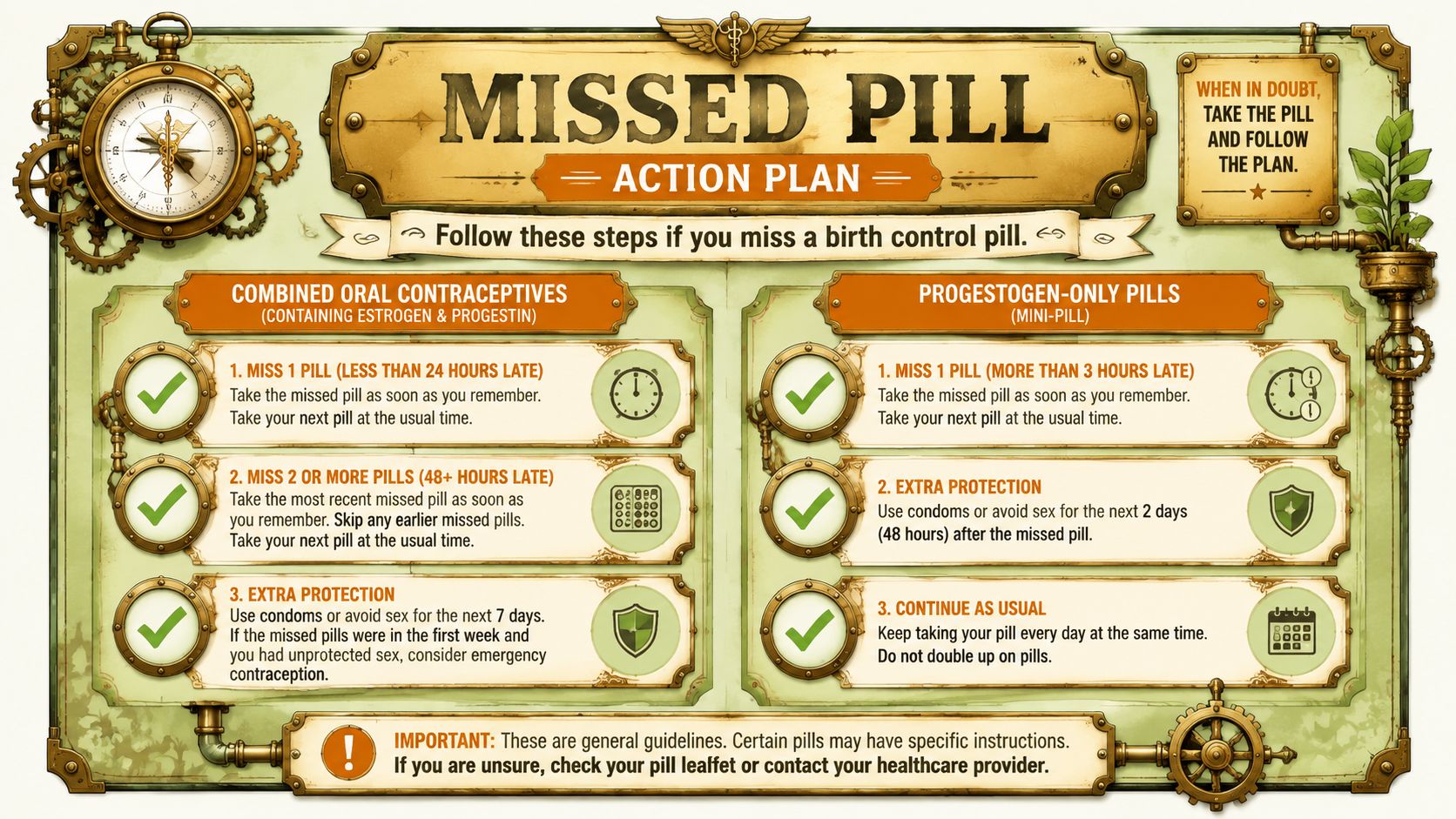
- One pill missed anywhere in the pack: Take it as soon as you remember, then continue as usual. After one missed pill, extra contraception is usually not needed under NHS-aligned guidance. [4]
- Two or more pills missed: Take the most recent missed pill now, leave any earlier missed pills, and continue the pack. Use condoms until you have taken active pills for 7 days.
- Pills missed near the start or end of the pack: Get advice promptly. A missed pill just after the hormone-free break, or a late restart after the last active pills, can extend the gap when the ovaries may become active again.
- Two or more pills missed in the final active week: Your leaflet may tell you to skip the hormone-free interval and begin a new pack. Follow the instructions for your brand or ask a pharmacist.
- Unprotected sex during the risk period: Seek urgent advice about emergency contraception. Do not wait for pregnancy symptoms, which may take time to appear.
Progestogen-only pill checklist
The permitted delay depends on the formulation:
- Traditional POP: Protection is maintained when taken within 3 hours of your usual time.
- Desogestrel POP: Protection is maintained within 12 hours.
- Drospirenone POP: Protection is maintained within 24 hours.
If you pass your pill's window, take the late tablet as soon as possible and continue daily doses. Use extra contraception according to the product guidance. If unprotected sex happened during the gap, ask promptly about emergency contraception. Some UK patient leaflets advise condoms for the next 2 days after a late traditional or desogestrel POP. [5]
Pharmacist's tip: Save the pill name and permitted late window in your phone. “The mini pill” covers different products, so the packet name helps you follow the correct rule.
If you are also using treatment that affects bleeding or hormones, ask for personalised advice before changing your schedule. Information about period-delay treatment should not replace advice about continuing contraception.
Medicines, sickness and other risk factors
A late or missed tablet is only one way pill protection can weaken. Some medicines make the liver break down contraceptive hormones faster. Hormone levels can then fall, allowing ovulation to become more likely.
Tell your pharmacist or prescriber if you take treatment for TB, epilepsy, or HIV, or use griseofulvin or St John's wort. Rifampicin and some enzyme-inducing epilepsy medicines need particular attention. Do not stop prescribed treatment yourself. Ask what extra contraception is suitable, especially if sex happened during a possible protection gap.
| Factor | Why it matters | Recommended action |
|---|---|---|
| St John's wort or enzyme-inducing medicines | They may lower contraceptive hormone levels | Ask about backup contraception |
| Some TB, epilepsy, or HIV medicines | They may affect pill effectiveness or emergency contraception choices | Seek advice promptly |
| Vomiting soon after a dose | The tablet may not have been absorbed fully | Follow missed-pill advice in your leaflet |
| Severe diarrhoea | Illness may interfere with absorption | Use extra protection and seek advice |
| Late restart after the break | The hormone-free gap becomes longer | Check missed-pill rules and ask about emergency contraception |
| Incorrect pack use | Pills may be taken in the wrong order or a gap may be extended | Follow the brand leaflet or contact a pharmacist |
A vomiting episode soon after taking your pill is similar to missing that dose: your body may not have received enough hormone. Severe diarrhoea can create the same concern, particularly if it continues. Check the product instructions rather than assuming every illness has the same effect.
Older advice sometimes treats every antibiotic as a problem. The medicine matters. Enzyme-inducing treatment is the main concern, while sickness can affect whether the tablet reaches your system.
Pharmacist's tip: Keep an up-to-date list of prescriptions, over-the-counter medicines, and herbal products. St John's wort is easy to miss because it is sold as a supplement.
Weight-loss medicines also deserve a check before you start or change treatment. Read this guide to Mounjaro and contraception and ask a pharmacist whether your pill routine or backup contraception needs adjusting.
Emergency contraception, testing and next steps
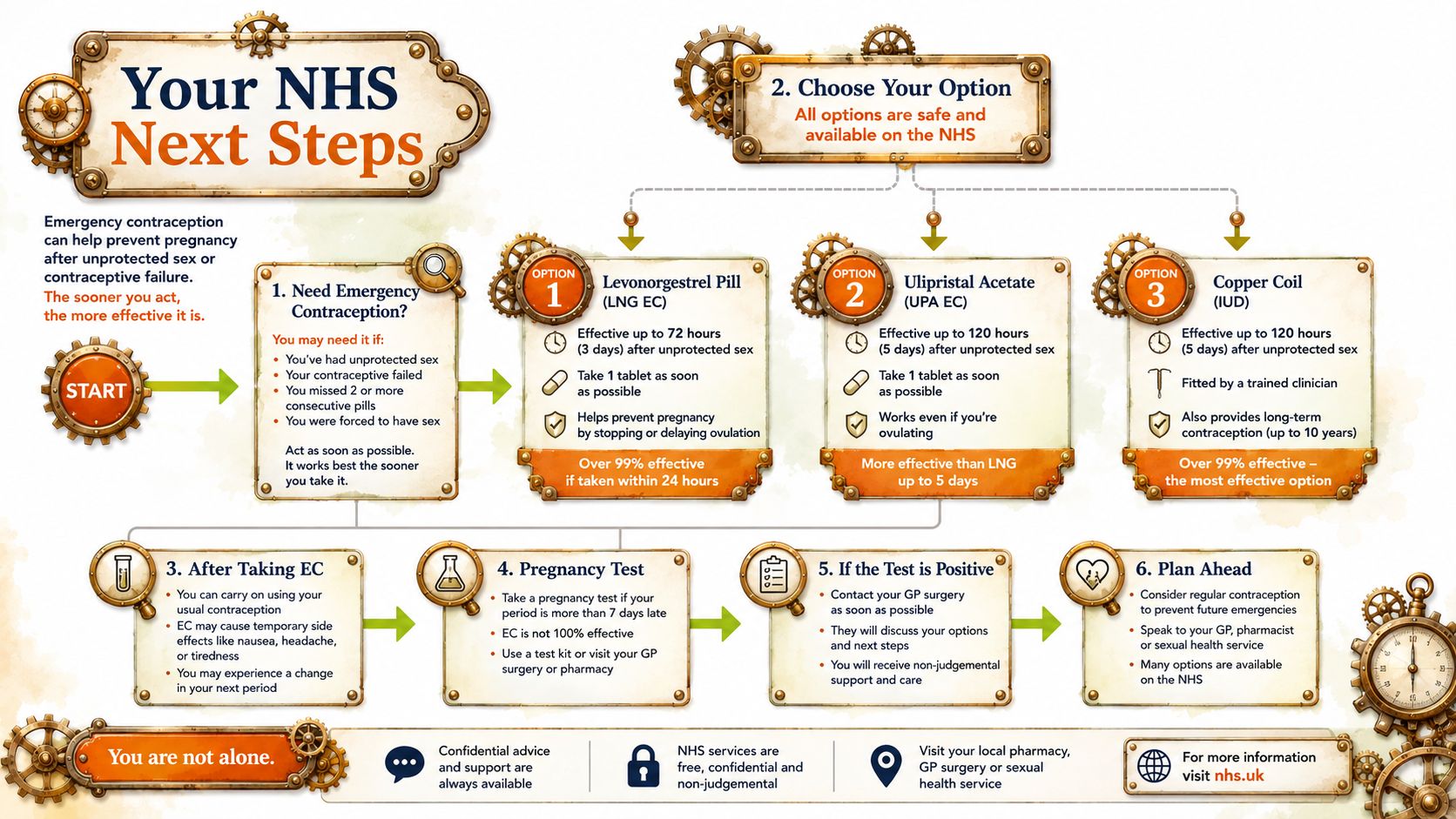
If sex happened during a possible protection gap, seek advice promptly. Emergency contraception prevents pregnancy before it develops, so timing affects which options remain available. It does not end an established pregnancy.
The main UK options
- Copper intrauterine device: A trained clinician can fit this as emergency contraception. NHS services describe it as the most effective option and state that it can be used up to 5 days after ovulation.
- Ulipristal acetate: This emergency contraceptive pill can work up to 5 days after sex. It can interact with regular hormonal contraception, so ask when to restart your usual pill.
- Levonorgestrel: This emergency contraceptive pill works up to 3 days after sex. Its suitability can depend on timing, medicines, and body weight, so ask a pharmacist or clinician.
The right choice depends on your circumstances, rather than which tablet is available. Tell the pharmacist which pill you use, which doses were late or missed, when sex happened, whether you vomited, and what other medicines or supplements you take. That information helps them check interactions and recommend the next NHS step.
Testing after a possible failure
A pregnancy test cannot answer the question immediately after sex. Testing too early may produce a negative result before pregnancy hormones are detectable. Take a test 3 weeks after the suspected contraceptive failure, then seek further advice if the result is negative but your bleeding pattern or symptoms remain concerning.
Testing may be available through a GP, sexual health clinic, local pharmacy, or at home. For a discreet option, see the fertility insights home test kit. Check that the test is intended to detect pregnancy and follow its instructions carefully.
A pharmacist can arrange a repeat prescription, review whether your current method fits your routine, and explain how to change methods safely. Courier Pharmacy offers online consultations and delivery for selected medicines and tests. Emergency contraception still requires a timely clinical assessment.
This short video explains the basic choices, but it cannot replace individual advice:
Seek same-day medical help for severe lower abdominal pain, heavy bleeding, fainting, shoulder-tip pain, or marked dizziness, particularly after a positive pregnancy test. These symptoms require urgent assessment because an ectopic pregnancy can be serious.
Summary and FAQs
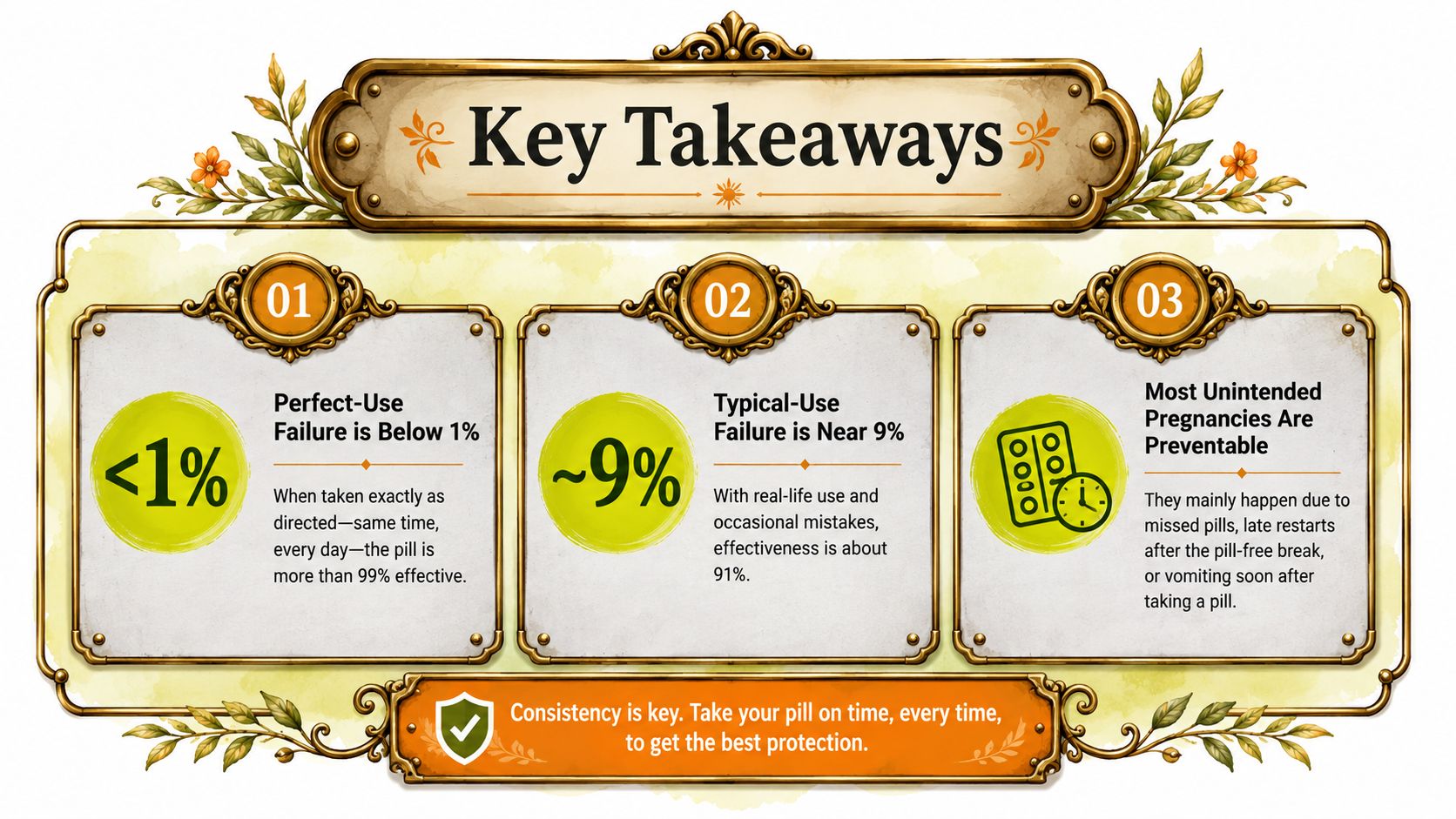
With perfect use, fewer than 1 in 100 pill users become pregnant in a year. With typical use, about 9 in 100 become pregnant over a year. The gap usually comes from missed tablets, late restarts, vomiting, diarrhoea, or medicines that reduce protection.
Combined pills and progestogen-only pills have different rules for late doses. Check the name and instructions for your own product rather than relying on advice for another pill. Emergency contraception may help if sex happened during a period when protection could have been reduced.
How soon should I take a pregnancy test after a missed pill?
Take a pregnancy test 3 weeks after the suspected contraceptive failure. Testing sooner may be too early to give a clear result. Do not wait for a test if you have severe pain, heavy bleeding, fainting, or dizziness. Seek urgent medical help instead.
Do antibiotics affect the pill?
Some medicines for TB, epilepsy, or HIV can reduce contraceptive protection. St John's wort and griseofulvin can also affect it. Many antibiotics do not have the same interaction, but vomiting or diarrhoea while taking any medicine can prevent the pill being absorbed. A pharmacist can check your exact medicines.
When should I restart the pill after vomiting?
Vomiting soon after a tablet may mean the dose was not absorbed. Treat this like a missed pill until you have checked the product leaflet or received professional advice. Use condoms while protection may be reduced, and ask promptly about emergency contraception if sex took place during the possible gap.
Can I switch methods safely?
Yes, but switching needs a plan. The right steps depend on your current pill, the method you are starting, the timing of your last active tablet, and whether you have had sex recently. A pharmacist, GP, or sexual health clinic can help you avoid an unprotected gap.
Is pregnancy possible if I only missed one combined pill?
After one missed combined pill, NHS-aligned guidance usually advises taking it as soon as you remember and carrying on with the pack. Extra contraception is generally not needed for that single missed tablet. Advice changes if you missed two or more pills, made the hormone-free break longer, or also had vomiting, diarrhoea, or an interacting medicine.
Is the POP still effective if I take it late?
The late window depends on the POP. Traditional pills allow 3 hours, desogestrel pills allow 12 hours, and drospirenone pills allow 24 hours. After passing your product's window, take the dose, use extra protection, and seek advice if sex occurred during the lapse.
Can the pill protect against sexually transmitted infections?
No. Neither the combined pill nor the POP protects against STIs. Condoms reduce STI risk and add pregnancy protection when pill-taking has been disrupted.
This article is for information only and cannot replace personal medical advice. Your pharmacist, GP, sexual health clinic, or prescriber can assess your pill, timing, medicines, and health needs.
Courier Pharmacy provides online prescription consultations, repeat-prescription support, selected contraception services, and home delivery of medicines or tests. You can discuss a missed-pill concern or review whether your current contraception suits your routine.
Meta description
Learn the chances of getting pregnant on the pill, missed-dose rules, medicine interactions, emergency contraception, testing, and UK pharmacist advice.


