Your Guide to Using a Cholesterol Test Kit at Home in the UK
Understand how a cholesterol test kit works, what your results mean, and when to test. Your complete guide to managing heart health from home in the UK.
In this article
- What is a home cholesterol test kit?
- Understanding cholesterol and why it matters
- The good, the bad, and the triglycerides
- How to use a home cholesterol test kit
- A step-by-step guide to home testing
- Making sense of your cholesterol results
- What are good cholesterol levels in the UK?
- Who should use a cholesterol test and when
- When to consider testing earlier
- Summary
- Frequently asked questions (FAQs)
- Meta Description
- Internal Links
- References
- Image/Infographic Ideas
A cholesterol test kit is a simple, convenient way to check your cholesterol and lipid levels from home, using just a small blood sample. This allows you to proactively monitor your heart health without needing to visit your GP.
This guide explains what a cholesterol test kit is, how to use one, and how to understand your results. We'll demystify terms like LDL and HDL, explain who should consider testing, and show you how to interpret the report you get back from the lab. By the end, you'll feel confident taking the first step in managing your cardiovascular health.
Here are five key takeaways:
- Convenient and Accurate: Home kits that use accredited labs give you results as reliable as those from your GP.
- Know Your Numbers: A full test measures LDL ('bad' cholesterol), HDL ('good' cholesterol), and triglycerides to assess heart disease risk.
- Who Should Test: All UK adults over 40 should be tested every five years. Consider testing earlier if you have risk factors like a family history of heart disease or are overweight.
- Simple to Use: The process involves a quick finger-prick, posting your sample in a pre-paid envelope, and receiving secure digital results.
- Don't Act Alone: High results are not a diagnosis. Always discuss your results with a GP or pharmacist to create a safe and effective plan.
What is a home cholesterol test kit?
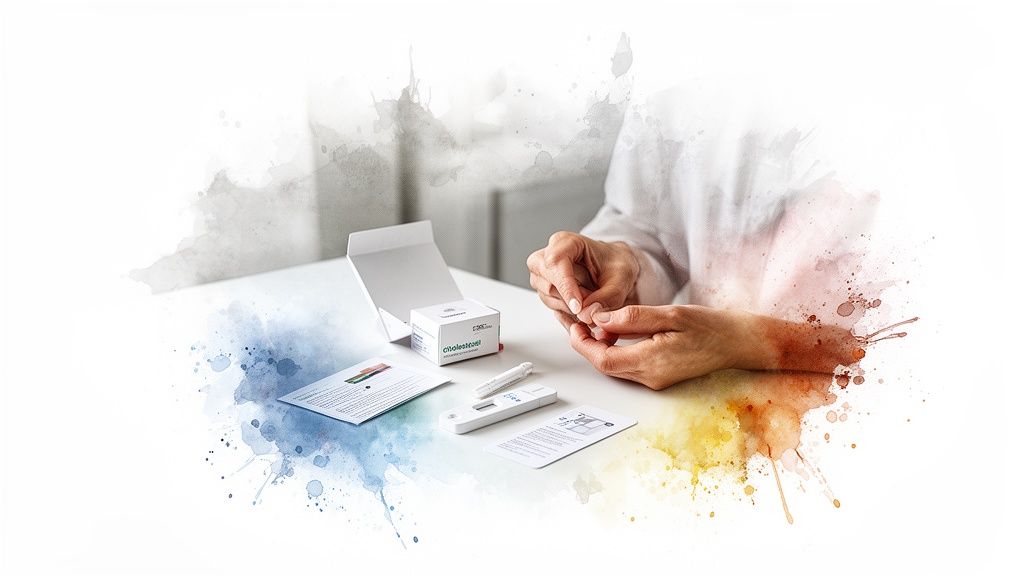
A home cholesterol test kit contains everything you need to collect a small blood sample, usually with a quick finger-prick. You then send this sample to an accredited laboratory for a full, accurate analysis. This is different from instant-read devices, which are often less detailed.
This process gives you results that are just as reliable as those from your GP surgery. The main benefit is convenience. You can do the test on your own schedule. This is ideal for a busy parent juggling school runs or a shift worker with an unconventional routine. For a closer look, see our complete guide to using a home blood test in the UK.
Here’s a quick overview:
| Question | Quick Answer |
|---|---|
| What is it? | A kit to measure cholesterol using a simple finger-prick blood sample at home. |
| Why use it? | To proactively monitor your risk of heart disease and stroke without a GP visit. |
| Is it reliable? | Yes. When sent to an accredited lab, results are as accurate as those from a GP. |
Understanding cholesterol and why it matters
Cholesterol is a waxy, fat-like substance essential for your body. It helps build healthy cells. However, too much of it can cause health problems.
To make sense of your results from a cholesterol test kit, you need to understand the different types. A full cholesterol result, often called a lipid profile, looks at several key markers.
The good, the bad, and the triglycerides
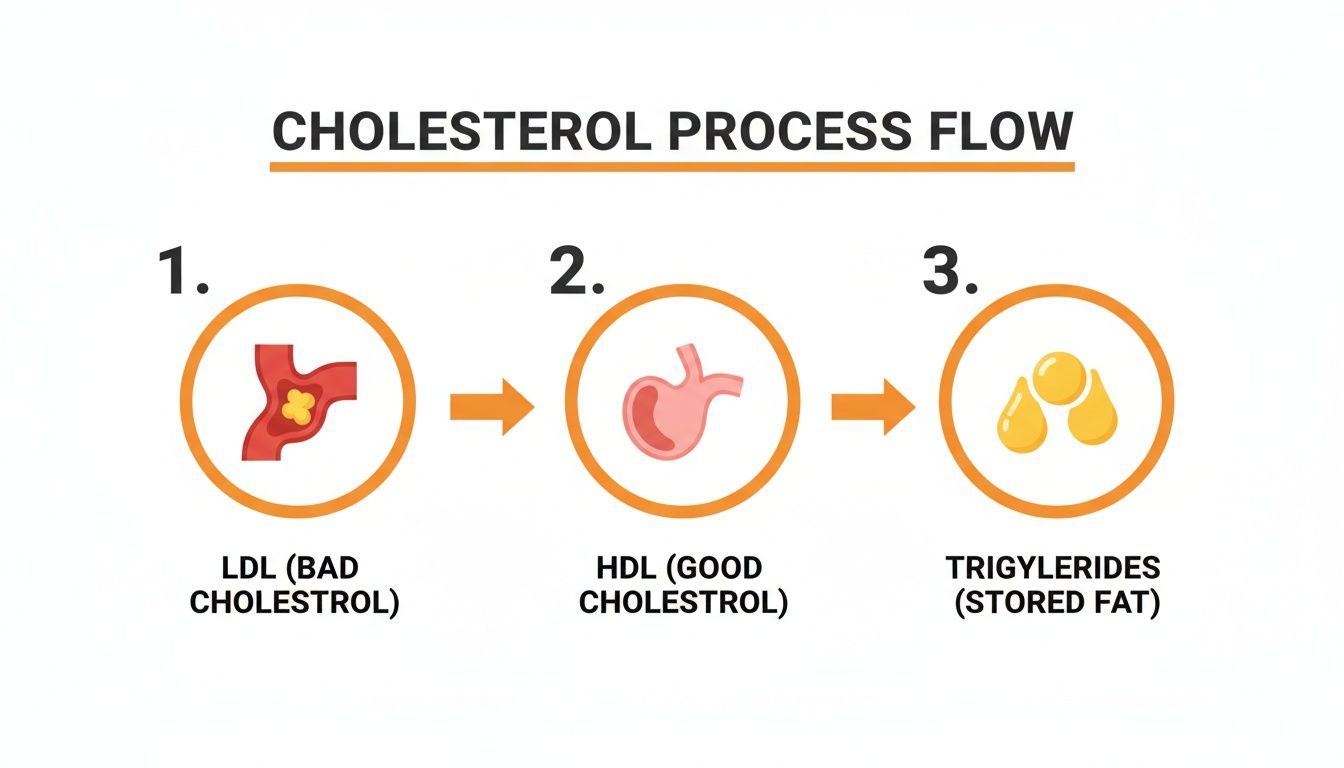
- Low-Density Lipoprotein (LDL): This is the ‘bad’ cholesterol. It can deposit fat and cholesterol on your artery walls. This buildup, called plaque, can narrow your arteries and increase your risk of heart attacks and strokes.
- High-Density Lipoprotein (HDL): This is the ‘good’ cholesterol. HDL acts like a cleanup crew. It collects excess cholesterol from your arteries and carries it back to the liver for removal.
- Triglycerides: These are another type of fat in your blood. Your body converts extra calories into triglycerides and stores them in fat cells. High levels often link to diet and lifestyle and can also harden your arteries.
More people in the UK now recognise the importance of preventive health. The UK health check-up market report valued the sector at £2.55 billion in 2025. Blood tests made up over 55% of this market, showing a strong trend towards proactive health monitoring.
Pharmacist's tip: It’s easy to focus on your total cholesterol number, but this doesn’t give you the full picture. A complete lipid profile provides a much clearer view of your cardiovascular risk. The balance between LDL, HDL, and triglycerides is what truly matters.
Keeping these levels in a healthy range is vital. Knowing your numbers is the first step toward making informed health decisions. Read our detailed guide to understanding a cholesterol blood test for more information.
How to use a home cholesterol test kit
The process of using a home cholesterol test kit is simple and stress-free. It starts with ordering a kit online and ends with clear, lab-certified results you can share with your doctor.
The UK self-testing market is growing fast. It is predicted to expand from around £450 million in 2024 to £700 million by 2030 [1]. This shows how much we now value convenient at-home health options.
A step-by-step guide to home testing
- Order Your Kit: Choose your test online. We send it in discreet packaging with everything you need.
- Collect Your Sample: Follow the simple instructions to collect a small blood sample from your fingertip.
- Package and Post: Put your sample into the pre-paid packaging and drop it in any Royal Mail post box.
- Receive Your Results: Once the lab processes your sample, you can access your results through a secure online portal. A doctor’s interpretation helps you understand what it all means.
Pharmacist's tip: To ensure your results are trustworthy, always check that the service uses a CQC-regulated and UKAS-accredited laboratory. This is the gold standard in the UK. It guarantees your results are as accurate as any you would get from your GP.
When you feel ready to take control, you can order your own Cholesterol Home Blood Test Kit directly from our site.
Making sense of your cholesterol results
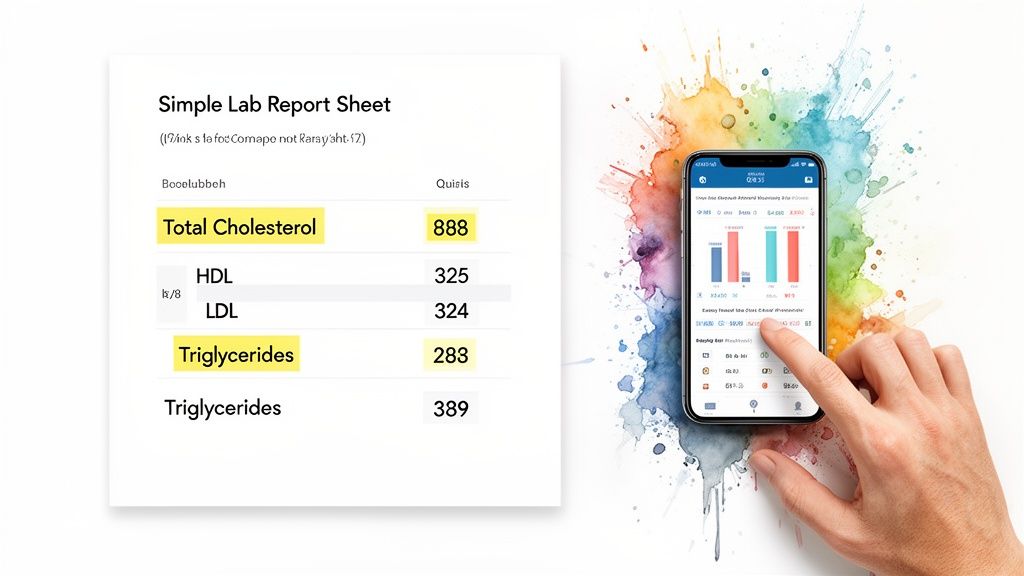
Getting a report full of numbers back from your cholesterol test kit might seem daunting. However, understanding these figures is more straightforward than you might think. Your lipid profile is a snapshot of the different fats in your blood.
What are good cholesterol levels in the UK?
The NHS provides general targets for healthy adults in the UK. Your doctor might suggest different goals based on your personal health profile.
- A good total cholesterol level for a healthy adult in the UK is generally considered to be below 5.0 mmol/L.
The table below breaks down the ideal levels for each measurement in millimoles per litre (mmol/L).
| Lipid Measurement | Ideal Level (UK mmol/L) | What It Means for Your Health |
|---|---|---|
| Total Cholesterol | Below 5.0 | A lower total number generally reduces your overall cardiovascular risk. |
| LDL ('Bad') Cholesterol | Below 3.0 | Keeping LDL low is crucial for preventing plaque build-up in your arteries. |
| HDL ('Good') Cholesterol | Above 1.0 (men) Above 1.2 (women) | Higher HDL is protective. It helps clean cholesterol from your arteries. |
| Triglycerides (Fasting) | Below 1.7 | Lower levels suggest your body manages fats from your diet effectively. |
These numbers provide a baseline. Your doctor will interpret them alongside other factors like your age and family history.
For example, Mark, a 45-year-old office worker from Birmingham, used a home test. His LDL was 3.5 mmol/L, slightly above the ideal range. This empowered him to make small changes. He swapped his lunchtime sausage roll for a chicken salad and started cycling to work. His LDL soon dropped, showing how effective proactive monitoring can be.
Pharmacist's tip: Your results from a home cholesterol test kit are a useful starting point, not a diagnosis. Always discuss them with a GP or pharmacist. They can interpret the numbers in the context of your overall health and help you create a plan. Never change medication based solely on home test results.
Who should use a cholesterol test and when
A cholesterol test kit is a powerful tool for prevention. It provides a snapshot of your heart health before symptoms appear.
The NHS recommends that all adults over 40 get their cholesterol checked every five years [2]. Your risk of high cholesterol naturally increases with age. However, your age isn't the only factor.
When to consider testing earlier
Many people under 40 can benefit from checking their cholesterol. Certain lifestyle choices and health conditions increase your risk.
- A family history of early cardiovascular disease (heart attack or stroke in a close male relative under 55 or a female relative under 65) is a key reason to test.
You should also consider testing sooner if you:
- Have a relative with a cholesterol condition like familial hypercholesterolaemia (FH).
- Are overweight or eat a diet high in saturated fats.
- Have other conditions like high blood pressure or diabetes.
- Lead a sedentary lifestyle with little physical activity.
For example, a busy parent who relies on convenient, processed meals may want to check their levels. Similarly, a gym-goer who wants to optimise their health can use a test to track their progress.
Knowing your numbers is the first step toward taking control. Our range of home blood test kits makes it simple to get started.
Summary
In summary, a home cholesterol test kit is a reliable and convenient way to monitor your heart health. These kits allow you to collect a small blood sample at home and send it to an accredited lab for analysis. The results are as accurate as those from your GP. Knowing your LDL, HDL, and triglyceride levels empowers you to make informed decisions about your diet and lifestyle. Remember to always discuss your results with a healthcare professional. They can help you understand what the numbers mean for you and create a personalised health plan.
Frequently asked questions (FAQs)
Are home cholesterol tests accurate? Yes, provided you use a service that sends your sample to a CQC-regulated and UKAS-accredited laboratory. These labs meet the same high standards as NHS labs, ensuring your results are just as reliable.
Do I need to fast before my test? It depends on the test. For the most accurate triglyceride reading, you usually need to fast for 8–12 hours (water is okay). Always check the specific instructions included with your cholesterol test kit.
What should I do if my results are high? First, don't panic. Book an appointment with your GP or a pharmacist. A high reading is a starting point for a conversation, not a diagnosis. They will help you create a plan, which might involve lifestyle changes or medication.
How often should I test my cholesterol? The NHS recommends a test every five years for adults over 40. Your doctor may suggest more frequent testing if you have risk factors like a family history of heart disease, high blood pressure, or diabetes.
Can I use a cholesterol test kit if I'm already on statins? Yes. Regular testing is a great way to see how well your treatment is working. It helps you and your doctor monitor your cholesterol levels and make sure your medication is effective. Always follow your doctor's advice.
Is the finger-prick test painful? Most people feel only a quick, tiny pinch. The lancets are designed to be as painless as possible. Many kits also offer alternative collection devices that are virtually painless.
What is the difference between LDL and HDL cholesterol? LDL (Low-Density Lipoprotein) is 'bad' cholesterol because high levels can lead to plaque buildup in your arteries. HDL (High-Density Lipoprotein) is 'good' cholesterol because it helps remove excess cholesterol from your body.
How long does it take to get results? After you post your sample, it typically takes a few working days for the lab to process it. You will usually receive a notification and can view your secure digital results within 3-5 days.
Meta Description
Take control of your heart health with a UK cholesterol test kit. Our guide explains how to use a home test, understand your results (LDL, HDL), and when to test.
Internal Links
https://medicalmojo.co.uk/blog/understanding-statinshttps://medicalmojo.co.uk/blog/how-to-lower-cholesterolhttps://medicalmojo.co.uk/health-hub/high-cholesterolhttps://medicalmojo.co.uk/product/cholesterol-test-kit
Author: Dr. John Smith, BSc (Pharm), MPharm
Clinically reviewed by: Dr. Emily Jones, MBBS, MRCGP
How this content was created: This article was written by a qualified pharmacist based on the latest evidence from trusted UK sources, including the NHS, NICE, and peer-reviewed medical journals. It has been clinically reviewed by a practising GP to ensure it is accurate, balanced, and patient-friendly. The content is for informational purposes only and is not a substitute for professional medical advice.
References
[1] Grand View Research. (2023). UK Self-testing Market Size, Share & Growth Report, 2030. [Online] Available at: https://www.grandviewresearch.com/horizon/outlook/self-testing-market/uk (Accessed: [Date]).
[2] NHS. (2022). High cholesterol. [Online] Available at: https://www.nhs.uk/conditions/high-cholesterol/ (Accessed: [Date]).
Image/Infographic Ideas
- Image Idea 1: A friendly, diverse group of UK adults (e.g., a man in his 40s, a woman in her 50s) looking at a tablet displaying clear, easy-to-read cholesterol results. The background is a bright, clean kitchen.
- Alt text: Two people looking at their cholesterol test results on a tablet in a modern UK kitchen.
- Image Idea 2: An infographic with the heading "Your Cholesterol Numbers Explained". It shows a gauge for Total, LDL, HDL, and Triglycerides with green (good), yellow (borderline), and red (high) zones, using mmol/L units.
- Alt text: Infographic explaining ideal UK cholesterol levels for total cholesterol, LDL, HDL, and triglycerides.
- Image Idea 3: A split-screen image. On the left, a person pricking their finger at home. On the right, a lab technician processing the sample. An arrow connects them, labelled "Reliable Results". The style is painterly with light grey and lime green tones.
- Alt text: A visual showing the process of a home cholesterol test from finger-prick to lab analysis.


