Navigating Chronic Fatigue Syndrome Treatment in the UK: A Complete Guide
chronic fatigue syndrome treatment uk: Explore NHS pathways, personalised management, and emerging therapies to help you manage symptoms and reclaim daily life.
In this article
- 5 Key Takeaways for Managing ME/CFS
- Understanding The True Scale of ME/CFS in The UK
- Navigating Your NHS Treatment Pathway
- Exploring Personalised Care and Emerging Therapies
- Summary: Your Path Forward
- FAQs: Your Questions Answered on ME/CFS Treatment
- How do I get an ME/CFS diagnosis in the UK?
- Is Low-Dose Naltrexone available on the NHS?
- What is the difference between ME/CFS and Long COVID?
Finding your way through Chronic Fatigue Syndrome (ME/CFS) treatment can feel like navigating a maze without a map, but you're not on this journey alone. Getting the right chronic fatigue syndrome treatment in the UK is all about building a partnership between you and your healthcare team, blending established NHS pathways with strategies tailored just for you. This guide is here to give you clear, practical information, helping you get a better handle on managing ME/CFS and feel more confident when you talk to your doctors.
5 Key Takeaways for Managing ME/CFS
- Pacing is Foundational: Learning to live within your "energy envelope" is the single most important strategy. It's about balancing rest and activity to avoid post-exertional crashes.
- Symptom Control is Crucial: Targeting specific issues like pain, poor sleep, and dizziness with dedicated treatments can dramatically improve your day-to-day quality of life.
- A Personalised Plan is Essential: Your experience is unique. Your management plan must be tailored to your specific symptoms, triggers, and energy limits. A one-size-fits-all approach rarely works.
- NHS Services are the Starting Point: Your GP is your first port of call for a diagnosis and a referral to specialist NHS services—the official pathway to getting support.
- Knowledge Empowers You: The more you understand ME/CFS, the better you can advocate for yourself. This is key to navigating the healthcare system and finding the best treatment options available to you.

Understanding The True Scale of ME/CFS in The UK
Myalgic encephalomyelitis/chronic fatigue syndrome (ME/CFS) is far more widespread than most people realise. For a long time, the numbers were underestimated, but recent data paints a much clearer, and frankly, more concerning picture of just how many lives are affected across the UK.
The latest studies show a huge jump in diagnoses. It’s now thought that somewhere between 390,000 and 403,922 people—roughly 0.6% of the UK population—are living with ME/CFS. That’s a staggering 62% increase from older figures, a reality detailed in the UK government's own delivery plan on ME/CFS statistics.
This sharp rise may be partly due to the growing recognition of post-viral illnesses, an area we explore further in our guide on understanding long COVID, which shares many overlapping symptoms. This new understanding underscores the critical need for better access to effective chronic fatigue syndrome treatment in the UK.
Navigating Your NHS Treatment Pathway
For most people in the UK, the journey to finding effective treatment for chronic fatigue syndrome begins with a visit to their GP. This appointment is your first, crucial step towards getting a referral to a specialist ME/CFS clinic, although it’s worth knowing that waiting lists can often be quite long.
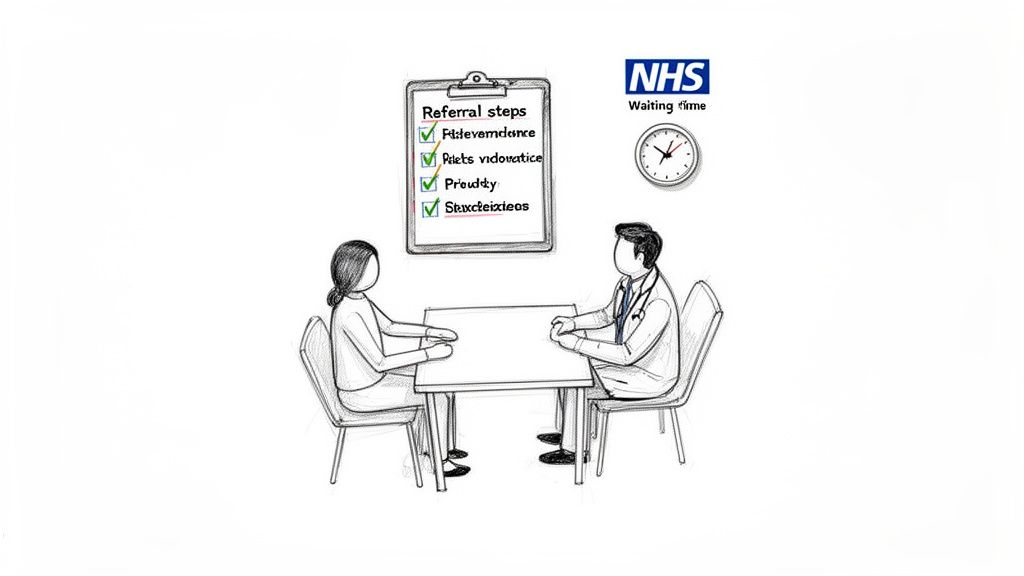
Once you get that specialist appointment, the focus will shift to creating a management plan tailored to your needs. This usually involves expert guidance on energy management – often called ‘pacing’ – and sometimes includes medication to help with specific symptoms like pain or sleep problems. For example, a patient named Sarah found that working with her specialist on a strict pacing plan helped her identify that doing laundry and a food shop on the same day would trigger a crash, allowing her to schedule her activities better.
And these services really do help. One major study looking at NHS patients found that their fatigue scores dropped by an average of -6.8 points, and their physical function improved as well. You can read more about ME/CFS treatment outcomes in the UK in the full study.
Pharmacist's Tip: To get the most out of your GP visit, it’s a great idea to bring a detailed symptom diary with you. Try to note down your fatigue levels (e.g., on a scale of 1-10), what activities you've done, and any 'crashes' you experience. This kind of clear evidence helps your doctor grasp the full impact of the condition and strengthens the case for a specialist referral.
Exploring Personalised Care and Emerging Therapies
Because ME/CFS presents so differently from person to person, a standard, one-size-fits-all treatment plan often misses the mark. This is precisely where personalised medicine steps in, shifting the focus to therapies that target the unique drivers behind your specific symptoms, which are often best explored through private specialist services.
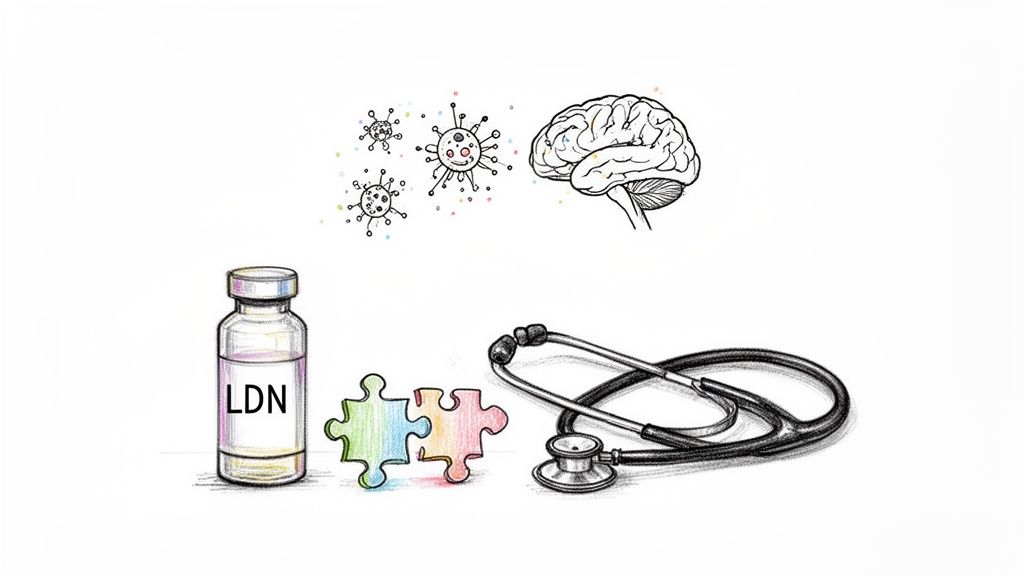
One of the most promising emerging therapies is Low-Dose Naltrexone (LDN). The thinking behind LDN is that it may help dial down the immune system's overreaction and reduce the neuroinflammation that is so closely linked with ME/CFS. You can dive deeper into how Low-Dose Naltrexone may help manage chronic conditions in our detailed guide.
It’s also vital to look for co-existing conditions that might be making your symptoms worse. Things like Mast Cell Activation Syndrome (MCAS) or Small Intestinal Bacterial Overgrowth (SIBO) can fly under the radar but have a huge impact. Many patients, like Mark, a 45-year-old former teacher, discovered through private testing that underlying gut issues were exacerbating his fatigue. Treating his SIBO alongside his ME/CFS protocol led to a noticeable improvement in his energy levels and brain fog.
Pharmacist's Tip: Functional testing can be a real game-changer here. Specialised tests for gut health or specific nutrient deficiencies can uncover underlying problems that standard blood tests might miss. This information helps build a truly individualised treatment plan that is far more likely to be effective.
Summary: Your Path Forward
Living with ME/CFS is a marathon, not a sprint, but it’s a journey you don’t have to run alone. As this guide has shown, there are effective strategies for chronic fatigue syndrome treatment in the UK that blend NHS pathways with more personalised care. The key is to start with your GP, get a specialist referral, and become an expert in your own body through pacing and symptom tracking. For those who need more, exploring personalised therapies like LDN or functional testing can unlock new avenues for improvement. Feeling empowered in your own health and having a dedicated partner on your side can make all the difference in creating a sustainable, long-term plan to manage your condition.
Many post-viral conditions seem to share similar underlying issues, and getting cellular energy right is often a big piece of the puzzle. You can explore the role of Coenzyme Q10 in Long COVID recovery in our related guide.
FAQs: Your Questions Answered on ME/CFS Treatment
Trying to make sense of chronic fatigue syndrome treatment in the UK can feel overwhelming, and it's natural to have a lot of questions. To bring some clarity, we've put together answers to some of the most common queries we hear about getting diagnosed and managing ME/CFS.
How do I get an ME/CFS diagnosis in the UK?
Your first port of call should always be your GP. They'll start by running tests to check for other conditions that can mimic ME/CFS symptoms, like thyroid issues or anaemia, just to rule them out. Under the current NICE guidelines, your doctor can start to consider an ME/CFS diagnosis if you've been struggling with persistent, activity-limiting fatigue for at least 3 months. The key clincher is the presence of post-exertional malaise (PEM). From there, your GP will likely refer you to a specialist NHS ME/CFS service who can provide a confirmed diagnosis and help you map out a management plan.
Is Low-Dose Naltrexone available on the NHS?
Right now, Low-Dose Naltrexone (LDN) isn't a routine prescription on the NHS for ME/CFS. This is because it's considered an ‘off-label’ use, meaning the medicine is being used for a condition it wasn't originally licensed to treat. However, a growing number of private doctors and specialist clinics with deep experience in ME/CFS do prescribe it. Our service can connect you with a qualified prescriber who can assess whether LDN could be a good fit for you.
What is the difference between ME/CFS and Long COVID?
This is a big question, as there’s a massive overlap in symptoms. Both conditions often feature debilitating fatigue, post-exertional malaise (PEM), and cognitive problems, or ‘brain fog’. The main difference really comes down to the trigger: Long COVID symptoms start after a confirmed or suspected COVID-19 infection. In fact, many people now living with Long COVID actually meet the diagnostic criteria for ME/CFS, and researchers are exploring the idea that the underlying biological mechanisms could be very similar. Sleep disruption is another major issue in both conditions. For a deeper dive into this, you can read our guide on why melatonin is regulated in the UK.
At Courier Pharmacy, we provide access to specialist consultations, diagnostic testing, and personalised medications like LDN to support your long-term health management. Discover how our patient-focused services can help you build a sustainable treatment plan today.


