Comprehensive Health Check UK: Your Complete Guide
Discover everything about a comprehensive health check in the UK. Learn NHS screening vs private options, what tests to expect, and how home blood tests work.
A comprehensive health check pulls together measurements, blood tests, lifestyle questions and, where appropriate, specialist tests to identify health risks before they become problems. Rather than chasing a single complaint, it's closer to reading your body's entire dashboard at once.
What a Comprehensive Health Check Includes
An NHS appointment for a new symptom has a different purpose entirely. NHS screening programmes target specific diseases for particular age groups. Private health checks cast a wider net, though they sit alongside (not in place of) your GP relationship and NHS screening invitations.
The process works by assembling a health picture from multiple layers:
- Basic measurements: blood pressure, pulse, body mass index
- Blood biomarkers: cholesterol, blood sugar, full blood count, liver function, kidney function, thyroid markers
- Lifestyle review: sleep quality, nutrition, movement habits, alcohol, smoking, stress levels
- Extra testing: hormone panels, vitamin levels, SIBO breath tests or genomic screening — but only when there's a clinical reason to include them

A standard health check covers several core areas, but the depth of testing can vary quite a bit between basic and more advanced packages.
Core Components of a Comprehensive Health Check
| Component | Purpose | Typical method |
|---|---|---|
| Vital signs | Flags common risks like hypertension early | Clinic visit or home assessment |
| Blood panels | Assesses organ function and metabolic health | Finger-prick kit or venous blood draw |
| Lifestyle review | Adds context that raw numbers can't provide | Structured questionnaire and consultation |
| Functional tests | Investigates specific symptoms in greater depth | Breath testing, hormone panels or nutrient analysis |
| Genomic testing | Provides DNA-based health insights | Saliva sample or cheek swab |
Every result is a starting point, not a diagnosis. A qualified professional interprets it alongside your full symptom history and clinical picture.
Five Key Takeaways
- Scope matters: Check exactly which tests a package covers before you commit.
- Timing helps: Book your check when you feel well, unless you're actively investigating symptoms.
- Prepare carefully: Follow fasting, medication and sample collection instructions to the letter.
- Choose your route: Home testing wins on convenience; clinic visits work better for complex blood draws.
- Follow-up counts: A clear action plan from your results matters far more than a long list of numbers with no guidance.
For a deeper look at DNA-based testing options, this guide to genomic testing in the UK covers both NHS and private routes. Courier Pharmacy provides home and venous blood draws along with selected functional tests, though any concerning symptoms should always be discussed with your GP first.
A comprehensive health check shifts the focus from waiting for something to go wrong towards catching issues early enough to act on them. It can surface hidden problems, like elevated blood pressure or depleted vitamin D stores, long before you'd notice anything was off.
Think of it like servicing your car. You wouldn't wait for the brakes to fail before having them looked at. Health checks work in much the same way: measurements, targeted questions and blood work combine to flag areas that might need attention while you're still feeling perfectly fine.
Prevention Supports Public Health
The NHS runs well-established screening programmes for certain conditions and age groups. Bowel cancer, breast cancer and abdominal aortic aneurysm screening all aim to pick up disease at an earlier stage, often before symptoms develop, when treatment tends to be more effective.
A private health check doesn't replace those invitations or sideline your GP. It simply adds another layer of information, particularly for people who fall outside the standard screening categories or who have concerns that warrant a broader look.
Take a younger adult struggling with persistent fatigue. A routine screening appointment might not cover enough ground. Likewise, someone dealing with hormonal shifts, ongoing digestive troubles or a family history of certain conditions may benefit from a wider conversation that goes beyond what standard screening offers.
Screening is most useful when it leads to sensible follow-up, not simply a longer list of numbers.
Silent Risks Need Attention
Some health changes can simmer quietly for years. High blood pressure rarely announces itself with obvious warning signs, yet it significantly increases the risk of stroke and heart disease. Low vitamin D can be similarly stealthy, particularly through the darker winter months, though fatigue, muscle weakness or bone discomfort may eventually crop up.
A broader assessment helps tie these findings together with the bigger picture: how you sleep, what you eat, stress levels, any medications you're taking and daily habits. That context matters enormously, because a single result rarely tells the whole story.
Preventative testing can highlight areas worth raising with a GP or pharmacist, including:
- Blood pressure and cholesterol, both key indicators for heart and blood vessel health.
- Blood sugar, which may point to an elevated risk of type 2 diabetes.
- Thyroid markers, useful when investigating unexplained fatigue or weight fluctuations.
- Vitamin levels, especially where symptoms or lifestyle factors suggest a likely shortfall.
When a Wider Check May Help
A comprehensive assessment works well for someone who feels generally fine but wants to understand their personal risk profile. It can also support people managing persistent, hard-to-pin-down symptoms, as long as the testing never delays proper medical investigation.
A busy parent, for example, might opt for home sampling rather than carving out time away from family and work. A shift worker might prefer flexible testing paired with a follow-up call to walk through the results at a convenient time.
That said, urgent symptoms demand urgent care. Chest pain, severe breathing difficulty, sudden weakness, heavy bleeding or confusion should always prompt an immediate call to NHS services. A private health check should never stand in the way of emergency assessment.
Read also: learn more about accessing pharmacy services in the UK.
A comprehensive health check pulls together several tests to give you a fuller picture of where things stand. Standard panels tend to cover a full blood count, liver and kidney markers, cholesterol, HbA1c, and thyroid function.
Standard Blood Markers
It helps to think of these results like a car dashboard. One warning light might mean very little on its own, but a cluster of them starts pointing you in a useful direction.
- Full blood count looks at red cells, white cells, and platelets, and can help investigate anaemia or infection. This guide to understanding a full blood count breaks it down in more detail.
- Liver tests track enzymes and proteins that reflect how your liver is coping.
- Kidney tests assess waste removal, usually through creatinine and eGFR.
- Lipid profile measures cholesterol and triglycerides, giving a rough estimate of cardiovascular risk.
- HbA1c reflects average blood sugar over roughly two to three months, rather than a single moment.
- Thyroid tests can support an investigation into persistent fatigue, unexplained weight changes, or feeling unusually cold.
A result outside the reference range does not automatically mean disease. Your symptoms, medicines, and clinical history matter too.
Vitamin D also deserves a mention. Deficiency is remarkably common across the UK, particularly through the darker months, so it often forms part of a wider assessment.
Functional And Genomic Options
Some people benefit from more targeted testing. A SIBO breath test, for instance, measures gases in your breath after a test drink and may help investigate bloating, abdominal discomfort, or irregular bowel habits. It cannot explain every digestive symptom, nor confirm a diagnosis by itself.
Genomic testing examines DNA patterns that might shed light on how you process certain nutrients or respond to particular medications. The results can open up useful conversations with your clinician, but they do not predict your future health with certainty.
Other add-ons worth knowing about:
- Hormone testing as part of a menopause work-up
- Vitamin and mineral checks where symptoms suggest a shortfall
- Inflammation markers, where there is a clinical reason to look
Courier Pharmacy offers home blood draws, venous sampling via the Tasso device, SIBO breath tests, and genomic panels. The best route depends entirely on what you are experiencing and your medical background.
Handling Borderline Results
A busy parent presenting with tiredness might have a slightly low result that simply reflects a run of poor sleep or a recent virus. In cases like that, a pharmacist or GP will often suggest repeating the test before drawing firm conclusions from a single figure.
Pharmacist's tip: Ask what the result actually means for you, not simply whether it has been flagged. Borderline findings usually call for context, a medication review, or a repeat sample rather than immediate treatment.
Before any test, follow the prep instructions carefully, particularly around fasting, supplements, and medications. Never stop a prescribed treatment without professional guidance. And seek urgent medical attention for chest pain, severe breathlessness, sudden weakness, confusion, or heavy bleeding, regardless of what your test results say.
A comprehensive health check can happen at home or in a clinic. The right choice depends on what you're testing for, how comfortable you are with different collection methods, and how quickly you need answers.
Home sampling makes sense when life is hectic, when needles make you queasy, or when you want the privacy of checking hormones or sexual health markers without a waiting room. Clinic venous draws open up a wider menu of tests and give you someone right there to reassure you — particularly useful when you're ordering complex panels.
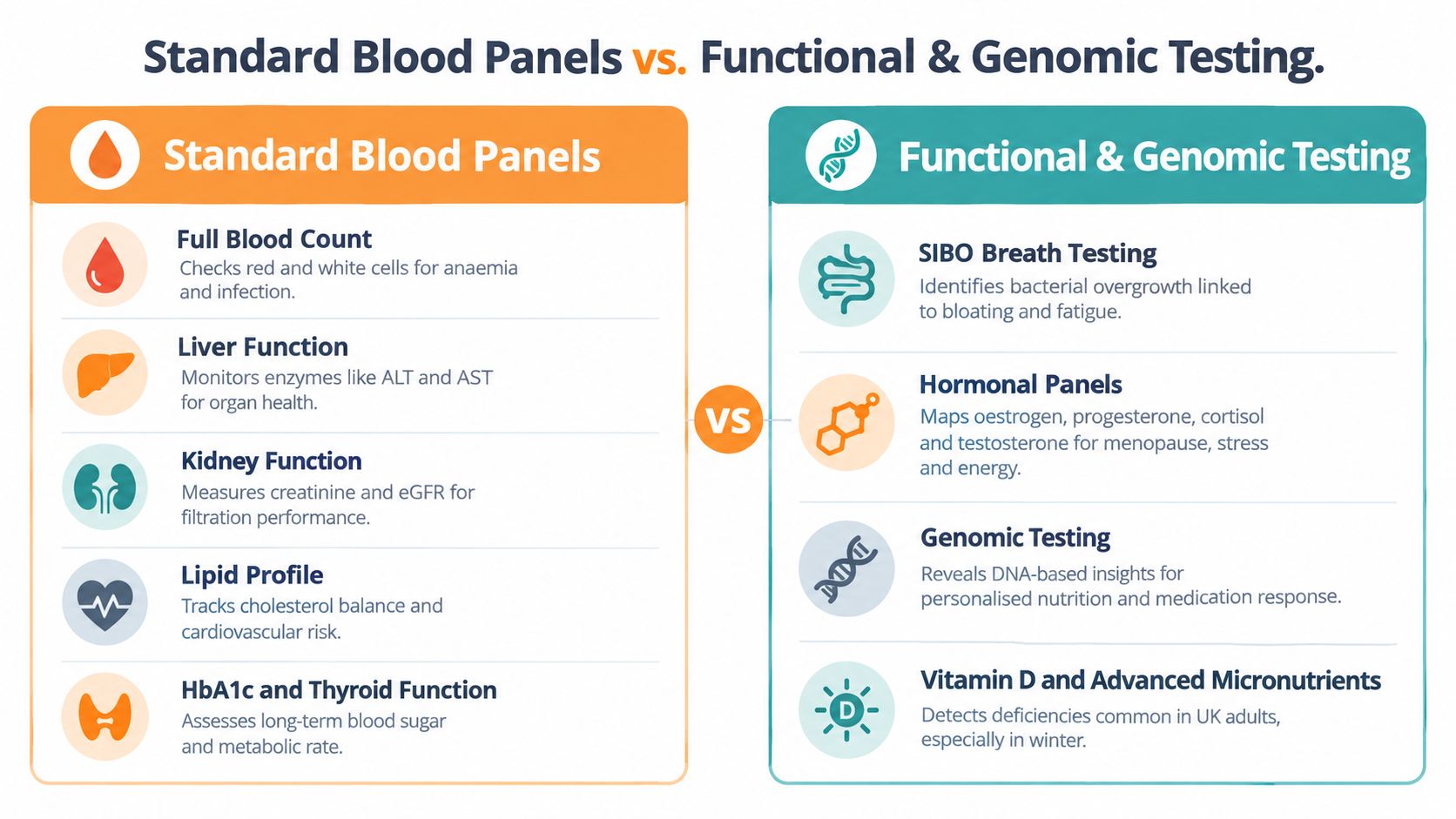
This comparison chart shows how standard blood panels differ from functional and genomic options, mapping out which markers each route can explore. The takeaway is straightforward: standard tests cover the fundamentals, and anything beyond that should be driven by your actual symptoms and clinical goals.
Home Versus Clinic Blood Testing Comparison
| Factor | Home Testing | Clinic Venous Draw |
|---|---|---|
| Comfort | Private, familiar setting | Professional support on site |
| Test range | Covers selected panels well | Better for larger or complex panels |
| Timing | Collect whenever it suits you | Booked appointment, fixed time |
| Privacy | Fully discreet at home | Private clinical room, staff nearby |
| Support | Written instructions plus remote review | Immediate face-to-face guidance |
Home testing typically uses a finger-prick kit or a device like the Tasso system. Both cut out travel and lower the anxiety barrier considerably. That said, technique matters — a rushed or poorly done collection can leave you with too little blood or a sample the lab simply can't use.
Home testing works best when convenience supports completion, not when it replaces needed clinical care.
Clinic draws are the safer bet when you need several tubes filled, when specialist sample handling is required, or when fainting and anxiety are real concerns. They also make sense when a clinician needs to assess your symptoms in the same appointment rather than weeks later over the phone.
Making Your Choice
Home sampling tends to be the better fit when:
- Your chosen tests work with finger-prick or device-based collection
- Privacy and flexible timing matter to you
- Travel, work, childcare, or needle anxiety would otherwise stop you booking at all
A clinic draw makes more sense when:
- Your panel needs a full venous sample
- You've had an invalid sample returned in the past
- You'd feel better having a trained professional guide you through it
Real life shapes these decisions. A night-shift worker might collect a sample at noon after sleeping, rather than rushing to an appointment on fumes. A parent dragging through unexplained tiredness might prefer testing at home, then unpacking the results during a follow-up call.
Pharmacist's tip: Read every instruction before you start. Wash and dry your hands, warm your fingers, use the correct lancet, and fill each tube to its marked line.
Don't squeeze the finger aggressively, don't drink alcohol beforehand, and don't ignore fasting requirements. Keep the sample at the stated temperature and post it within the window given. If you feel unwell or the kit fails, contact the provider rather than guessing what went wrong.
Have a look at this practical guide to using a home blood test kit in the UK before you collect your sample. Courier Pharmacy offers home blood draws, Tasso sampling, venous testing, SIBO breath tests, genomic testing, and follow-up calls, depending on what your clinical picture calls for.
A comprehensive health check works best when it bends around your life, not the other way round. Here are two realistic UK examples showing how testing can help when you're dealing with vague symptoms, a packed schedule, or a genuine dread of needles.

A Busy Parent Investigates Persistent Fatigue
Sarah works full time and looks after two young children. For months, she felt wiped out even after a full night's sleep. The headaches and brain fog didn't help either, and fitting multiple clinic appointments around childcare felt near impossible.
After a conversation with a healthcare professional, Sarah opted for home blood sampling. A finger-prick kit or Tasso device let her collect a sample on her own schedule, without dragging the kids to a waiting room. She then booked a follow-up call to go over the results and figure out whether a GP referral was actually needed.
Her check didn't hand her a neat answer on a plate. What it did was give a structured look at blood count, thyroid function, blood sugar and vitamin levels. That matters because fatigue is maddeningly non-specific. It could be anaemia, an underactive thyroid, chronic stress, a lingering infection, or simply the cumulative toll of broken sleep.
A health check is a map, not a diagnosis. Symptoms and results need professional context.
Sarah also has a proper fear of needles. Doing the collection at home took the edge off that anxiety, though she followed the instructions to the letter and accepted that a dodgy sample might mean doing it again.
A Shift Worker Reviews Metabolic Risk
Amir does rotating night shifts at a warehouse. His eating pattern is all over the place, and he's put on weight over the last year. With his father having type 2 diabetes, he wanted something more useful than a generic "see you in twelve months" nudge.
Flexible testing slotted into his routine. He arranged collection for after he woke up, rather than forcing himself into an early appointment straight off a night shift. Alongside the usual markers, he explored whether genomic testing might shed light on how his body processes certain nutrients.
Genomic results won't tell Amir his future, and they don't replace medical care. But they can feed into a more informed conversation about diet, how he might respond to certain medications, and what his family history actually means for him personally. He treated the findings as one piece of the puzzle, sitting alongside HbA1c, cholesterol, blood pressure, sleep quality and activity levels.
Pharmacist's Tip
Test timing should follow your risk and your symptoms, not some arbitrary annual calendar. If your results have been stable for a while, you probably don't need the same frequency as someone starting a new treatment, managing diabetes, or trying to pin down fresh symptoms.
Worth asking a pharmacist or GP:
- Which markers actually need monitoring in your case?
- When is the right time to repeat them?
- What symptoms should prompt you to seek help sooner rather than later?
Courier Pharmacy provides home blood draws, Tasso sampling, genomic testing, SIBO breath tests and follow-up calls. These options cover a range of needs, but they don't replace urgent NHS care. If you're experiencing chest pain, severe breathlessness, sudden weakness, confusion or heavy bleeding, seek immediate help through the NHS.
Your comprehensive health check gives you clues, not a final verdict. A healthcare professional looks at each number alongside your reference range, your symptoms, any medicines you're taking and your medical history before recommending what comes next.
Read Results in Context
A flagged result simply sits outside the laboratory's usual range. That doesn't automatically mean something is wrong. Healthy people can throw the odd outlier, and a "normal" result doesn't rule out every possible issue either.
The sensible next step might involve:
- Repeating a borderline result after a suitable interval has passed
- Tweaking your diet, sleep, activity levels or alcohol intake
- Reviewing your medicines and any supplements you're taking
- Asking your GP about further tests or a specialist referral
Numbers are signposts, not diagnoses. What you do with the results matters far more than any single figure.
For example, slightly raised cholesterol might lead to lifestyle advice and a broader cardiovascular risk review. You can learn more about understanding a cholesterol blood test ahead of your follow-up appointment.
Know When to Escalate
A pharmacist follow-up call can walk you through your results and help you sort out sensible next steps. That said, urgent symptoms always need immediate attention, no matter what your test results show.
Call 999 for chest pain, severe breathing difficulty, sudden weakness, new confusion or heavy bleeding. Contact NHS 111 or your GP promptly if you're experiencing worsening symptoms, unexplained weight loss, a persistent fever or any marked changes in how you feel.
Build a Monitoring Plan
Long-term conditions like Long COVID, MCAS or hormonal issues often need repeated review over time. Your clinician may suggest retesting after a change in treatment, a shift in your symptoms or after a set period has passed.
Keep a straightforward record of:
- Your result and the date it was taken
- Your symptoms and how severe they were
- Any medicines, supplements or lifestyle changes you've made
- The agreed review date
Pharmacist's tip: Never stop a prescribed medicine based on an online result alone. Always check with a pharmacist or your GP first. A clear follow-up call can turn a confusing pile of data into a manageable plan you actually understand.
How Often Should I Have a Comprehensive Health Check?
There's no one-size-fits-all schedule for health checks. Your age, symptoms, family history, current medications, and overall risk factors should all shape how often you get tested. Have a conversation with your GP or pharmacist about what makes sense for your situation.
Are Home Blood Tests as Accurate as Clinic Tests?
When done properly with an approved kit and processed by a laboratory that follows quality standards, home blood tests can deliver reliable results. That said, some markers require a larger venous sample than a finger-prick kit can provide. In those cases, visiting a clinic for a traditional blood draw might be the better option.
What Should I Avoid Before Testing?
Pay close attention to any prep instructions you receive, particularly around fasting, alcohol, exercise, supplements, and medications. These can all skew your results if ignored.
Never stop prescribed treatment without speaking to a healthcare professional first.
Will My NHS GP Accept Private Results?
Your GP will typically review private test results, but it's ultimately their call whether those results meet their clinical needs. Bring the complete report, laboratory details, and a clear account of your symptoms to make the most of your appointment.
How Do I Prepare for a SIBO Breath Test?
Stick closely to the provider's diet and fasting instructions — they matter more than you might think. Certain antibiotics, probiotics, and medications can interfere with results, so always ask before making any changes to your routine.
Do Genomic Tests Need Special Preparation?
Most genomic tests use a saliva sample or cheek swab, which keeps things simple. Just follow the kit instructions around eating, drinking, smoking, and brushing your teeth beforehand. The window is usually short but important.
What Happens After My Results?
A pharmacist or clinician should walk through any flagged findings and recommend next steps. Depending on the results, you might need a repeat test, lifestyle adjustments, or a referral to your GP.
Results offer clues, not a diagnosis. If you experience chest pain, severe breathlessness, sudden weakness, or confusion, seek urgent medical help rather than waiting.
For flexible testing options and dedicated follow-up support, take a look at Courier Pharmacy.


