Finding the Best Cream for Rosacea: A UK Patient Guide
Discover the best cream for rosacea to calm redness and bumps. Our guide explains UK prescription and OTC options to help you find the right treatment.
In this article
- Five Key Takeaways
- What is rosacea and how common is it?
- The four main types of rosacea
- How many people in the UK have rosacea?
- What is the most effective cream for rosacea?
- Metronidazole for bumps and inflammation
- Azelaic acid: the multi-tasker
- Ivermectin to target demodex mites
- Comparing common prescription creams for rosacea
- Matching your cream to your rosacea symptoms
- Creams for redness and flushing
- Creams for bumps and pustules
- Real-life example: a combined approach
- How lifestyle and trigger management support your treatment
- Identifying your personal rosacea triggers
- Common culprits and how to manage them
- Real-life example: David’s story
- How to get rosacea cream in the UK
- The traditional NHS pathway
- A convenient online alternative
- Summary
- Frequently Asked Questions
The best cream for rosacea depends entirely on your symptoms. For persistent redness, you need a different cream than you would for bumps and spots. In the UK, the most effective treatments, such as azelaic acid and metronidazole, are prescription-only, as they target the underlying inflammation. This guide helps you understand which treatment is right for you, how to get it, and how to manage your skin for lasting relief.
We'll break down the science behind the most effective creams for rosacea and share practical, real-world advice to help you feel confident about managing your skin. While there is no cure, you can absolutely control rosacea with the right approach.
Five Key Takeaways
- Match your cream to your symptoms: Use anti-inflammatory creams (like azelaic acid) for bumps and spots. Use vasoconstrictor gels (like brimonidine) for redness.
- Effective treatments are prescription-only: In the UK, you need a prescription for powerful ingredients like metronidazole, ivermectin, and brimonidine.
- Be patient with results: Anti-inflammatory creams can take 4–8 weeks to show a noticeable improvement.
- Manage your triggers: Sun, stress, and spicy food are common triggers. Identifying yours makes your treatment much more effective.
- Always use SPF 50: Daily sunscreen is the most important step in any rosacea skincare routine to prevent flare-ups.
What is rosacea and how common is it?
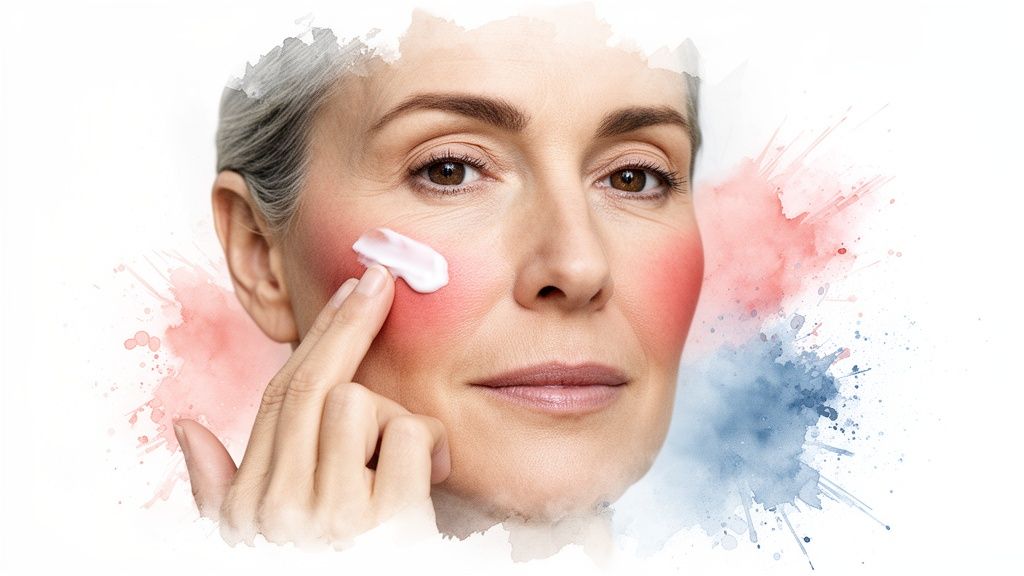
Rosacea is a long-term skin condition that mainly affects the face. It causes symptoms like flushing, persistent redness, and sometimes bumps and spots. It's much more than just a tendency to blush easily. At its core, rosacea is an inflammatory condition where the blood vessels in your face overreact to triggers like stress, sunshine, or a spicy meal.
Getting a proper diagnosis is the most important first step. People often mistake rosacea for adult acne or a skin allergy, but the treatments are very different. Understanding exactly what you're dealing with helps you find a cream for rosacea that’s targeted to your specific symptoms.
The four main types of rosacea
Rosacea shows up differently from person to person. Clinicians have identified four main subtypes. It’s also common to have symptoms that overlap between types.
Type 1: Erythematotelangiectatic Rosacea (ETR) This type causes persistent redness and flushing across the central face. You might also see tiny, broken blood vessels (telangiectasias) on your cheeks and nose.
Type 2: Papulopustular Rosacea (PPR) Often confused with acne, this type brings on red bumps (papules) and some pus-filled spots (pustules). The key difference is that with rosacea, you won’t see the blackheads typical of acne.
Type 3: Phymatous Rosacea This is a much rarer form where the skin thickens and develops a bumpy, uneven texture. It most famously affects the nose, leading to a condition called rhinophyma.
Type 4: Ocular Rosacea This type targets the eyes, leaving them looking watery, bloodshot, or irritated. Many people experience a gritty feeling, burning, stinging, or frequent styes.
How many people in the UK have rosacea?
You might be surprised to learn how many people in the UK live with rosacea. While anyone can develop it, it’s most common in people over 30 with fairer skin.
Featured Snippet Answer: Research shows rosacea affects about 1 in 10 people in the UK, though many remain undiagnosed. It most often appears in people over the age of 30.
A major UK study found that rosacea has an incidence rate of 1.65 new cases per 1,000 people each year. Around 80% of these diagnoses were in people over 30 [1]. The same study highlighted that eye symptoms were already present in over 20% of patients at their first diagnosis, showing that eye irritation can be an early sign.
If this sounds familiar, our detailed guide to rosacea offers more insight. Speaking to a GP or pharmacist is the best first step.
What is the most effective cream for rosacea?
If you have tried over-the-counter creams with no success, it is likely time to explore prescription options. These medicated creams and gels are designed to tackle rosacea at its source. Let's walk through the most common prescription treatments so you understand what your clinician might suggest and why.
Metronidazole for bumps and inflammation
One of the most trusted treatments for the spots and bumps of rosacea is metronidazole. It is an antibiotic, but for rosacea, it works mainly as a powerful anti-inflammatory.
It calms the inflammation that causes sore, red bumps (papules and pustules). It does not, however, help with background redness or flushing. Clinical trials show metronidazole can reduce these bumps by up to 70%. You will usually apply a thin layer of the gel or cream once or twice a day. It can take 4 to 8 weeks of consistent use to see a real change.
Azelaic acid: the multi-tasker
Azelaic acid is another fantastic all-rounder for rosacea. It has anti-inflammatory properties to soothe irritated skin. It also gently helps to unblock pores by slowing down keratin production, a protein that can cause spots. By calming inflammation and clearing pores, it tackles the problem from two different angles. Our guide on Finacea 15% Gel explains how this popular treatment works.
Pharmacist's tip: When using any medicated cream, remember that less is more. A pea-sized amount is enough for your whole face. Dot it onto your forehead, cheeks, nose, and chin, then gently smooth it in, avoiding your eyes and mouth.
Ivermectin to target demodex mites
A more recent but very effective option is ivermectin cream. This treatment targets Demodex mites with its anti-inflammatory and anti-parasitic properties.
These microscopic mites live on everyone's skin. However, people with rosacea often have significantly higher numbers of them. The theory is that an overgrowth of these mites triggers an inflammatory reaction. Ivermectin works by reducing the mite population while calming that inflammation. It is usually applied once a day in the evening and is known for being gentle on the skin.
Comparing common prescription creams for rosacea
This table helps compare the main prescription rosacea treatments. Your prescriber will recommend the best fit for your specific symptoms.
| Active Ingredient | Best For | How It Works | Time to See Results | Common Side Effects |
|---|---|---|---|---|
| Metronidazole | Bumps, spots & inflammation (Papulopustular Rosacea) | Reduces inflammation | 4–8 weeks | Mild stinging, dryness, metallic taste (rare) |
| Azelaic Acid | Bumps, spots & mild redness (Papulopustular Rosacea) | Anti-inflammatory & unblocks pores | 4–8 weeks | Burning, stinging, or itching at first |
| Ivermectin | Bumps, spots & inflammation (Papulopustular Rosacea) | Anti-inflammatory & targets Demodex mites | 2–4 weeks | Skin irritation, dryness, burning sensation |
| Brimonidine | Persistent redness & flushing (Erythematotelangiectatic Rosacea) | Temporarily constricts blood vessels | Within 30 minutes | Rebound redness, stinging, headache |
The first three options control the bumps and spots of rosacea. Brimonidine, however, is in a class of its own. It is designed purely to manage background redness for up to 12 hours, offering temporary relief rather than a long-term fix.
Matching your cream to your rosacea symptoms
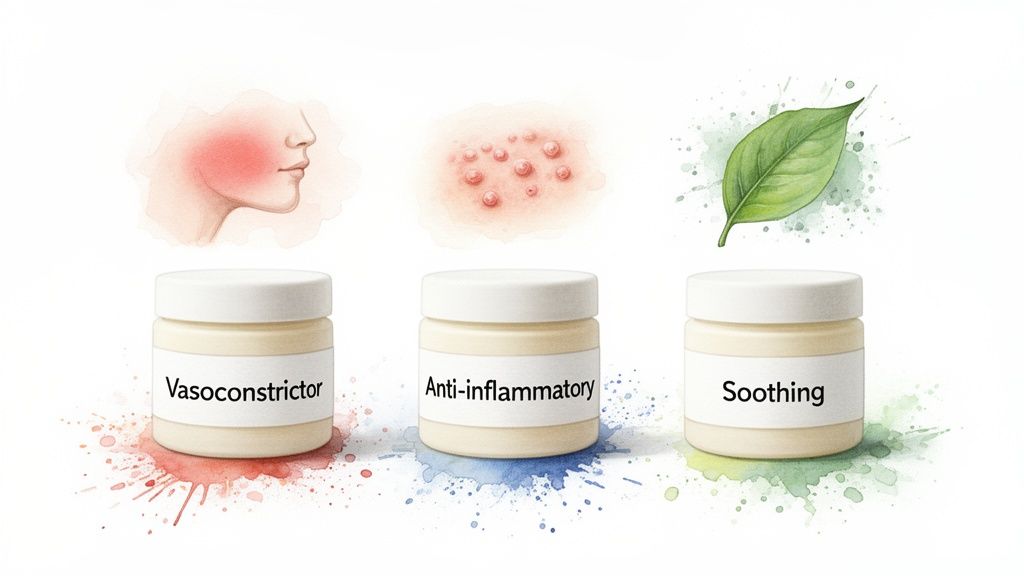
One of the biggest frustrations when treating rosacea is that not all creams do the same job. The cream for flushing is entirely different from the one for spots. Using the wrong one will lead to disappointing results.
Featured Snippet Answer: For rosacea redness, use a vasoconstrictor gel like brimonidine. For bumps and spots, use an anti-inflammatory cream like azelaic acid or metronidazole.
Creams for redness and flushing
First, let's talk about creams for the persistent redness and flushing of Type 1 rosacea. These contain active ingredients like brimonidine or oxymetazoline.
These ingredients are vasoconstrictors. They narrow the small blood vessels in your skin, reducing blood flow to the surface. This quickly tones down redness. The effect is fast, often kicking in within 30 minutes, but it is temporary. It’s a management tool, usually lasting up to 12 hours.
Pharmacist's tip: A small number of users experience 'rebound redness' where flushing returns more intensely as the cream wears off. Always start with a tiny test patch and apply it no more than once a day as prescribed.
Creams for bumps and pustules
Next, we have the creams that target the red bumps and spots of Type 2 rosacea. This is where anti-inflammatory ingredients like metronidazole, azelaic acid, and ivermectin come in.
These treatments are for the long haul. They work over weeks and months to calm the underlying inflammation and stop spots from forming. Their goal is to make flare-ups less frequent and severe.
Real-life example: a combined approach
Let’s imagine Sarah, a 35-year-old teacher in Manchester. She has both persistent redness and regular flare-ups of spots. Her clinician suggests a combined approach.
- Morning Routine: Sarah applies azelaic acid gel every morning. This is her long-term maintenance treatment to keep inflammation down and prevent new bumps.
- As-Needed Basis: She also has a tube of brimonidine gel (Mirvaso Gel) on hand. She uses this on days when she needs to control flushing, like before parents' evening or a social event.
This two-pronged strategy allows her to manage both of her main symptoms effectively.
How lifestyle and trigger management support your treatment
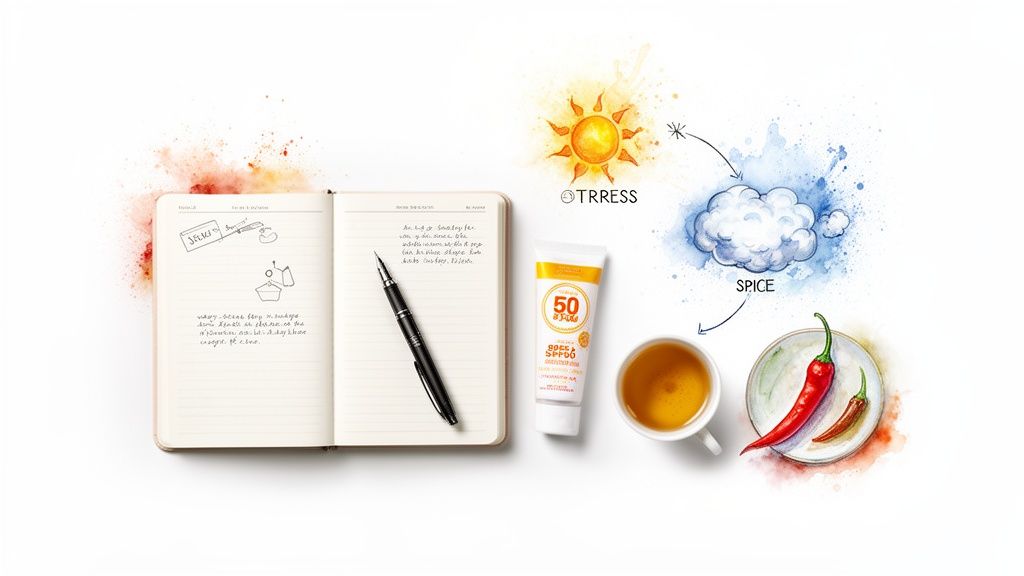
A good cream for rosacea is powerful, but it works best with good lifestyle choices. Think of your cream as the firefighter, putting out the flames of a flare-up. Managing your triggers is the fire prevention plan, stopping a blaze from starting in the first place.
When you know what causes your skin to react, you put yourself back in control. This means fewer flare-ups, giving your skin time to heal and allowing your cream to work more effectively.
Identifying your personal rosacea triggers
Rosacea triggers are very personal. Your job is to become a detective for your own skin. Keeping a simple diary in a notebook or on your phone can be a game-changer. Jot down what you eat and drink, your stress levels, and the weather. When a flare-up happens, you can look back and connect the dots.
A large 2016 UK survey of 1,066 people with rosacea highlighted the most common culprits. These included sun exposure, stress, spicy foods, and hot drinks [2]. You can explore the full findings of the rosacea trigger survey to learn more.
Common culprits and how to manage them
- Sun Exposure: This is the number one trigger for many. Wear a broad-spectrum, mineral-based SPF 50 every single day, even on cloudy British days.
- Stress: A high-pressure job or a busy family life can take a toll. Gentle exercise, mindfulness apps, or just taking ten minutes for a quiet cup of tea can make a real difference.
- Diet: Common triggers include spicy curries, very hot drinks, alcohol (especially red wine), and sometimes dairy.
- Harsh Skincare: Many over-the-counter products contain ingredients that irritate rosacea-prone skin. It can sometimes be difficult to distinguish rosacea from other conditions, so you might want to compare with our guide on the best cream for dermatitis.
Pharmacist's tip: When it comes to skincare, your motto should be 'gentle and simple'. Look for products that are fragrance-free and made for sensitive skin. Avoid harsh physical scrubs, alcohol-based toners, and strong exfoliants like glycolic acid.
Real-life example: David’s story
David, a 48-year-old shift worker from Birmingham, found his rosacea flared up during his night shifts. His skin would feel hot, tight, and covered in red bumps. He kept a diary and a pattern quickly emerged.
His worst flares happened after relying on strong coffee to stay alert and grabbing a spicy takeaway on the way home. He made two simple swaps: he switched to decaf coffee during shifts and opted for milder foods. By managing these triggers, David’s flare-ups became far less frequent, allowing his prescribed rosacea cream to finally get the inflammation under control.
How to get rosacea cream in the UK
So, you’ve realised you need a prescription cream for rosacea. How do you get it in the UK? You have a couple of clear routes to explore.
The traditional NHS pathway
Your local GP is often a sensible starting point. Your doctor can give you an official diagnosis and write an NHS prescription. You can then take it to any high street pharmacy. The only drawback is that getting a GP appointment can sometimes involve a wait.
A convenient online alternative
A regulated UK online pharmacy is a fantastic modern option for a faster, more direct route to treatment. This is perfect if you have been diagnosed before or have a clear idea of what you need. A regulated online pharmacy in the UK operates with your safety and convenience in mind.
The process is simple:
- Online Consultation: You fill out a confidential online form about your symptoms and medical history.
- Clinician Review: A UK-based qualified prescriber reviews your answers to ensure the treatment is safe for you.
- Discreet Delivery: Once approved, the pharmacy sends your medication directly to your door in plain, tracked packaging.
This saves you time and a trip to the clinic, giving you a direct line to effective rosacea treatments from home. At Courier Pharmacy, we offer a confidential and straightforward way to get a rosacea diagnosis and treatment online. Visit us at Courier Pharmacy to begin your consultation.
Summary
Finding the right cream for rosacea is about matching the treatment to your specific symptoms—whether that's persistent redness or inflammatory bumps and spots. The most effective options, like azelaic acid, metronidazole, and brimonidine, are only available on prescription in the UK. Being patient is key, as many creams take several weeks to show results. Your treatment will be most successful when you also identify and manage your personal triggers, such as sun exposure, stress, and certain foods. Finally, always protect your skin with a daily high-factor SPF to prevent flare-ups and support your skin's health.
Frequently Asked Questions
1. Can you buy an effective cream for rosacea over the counter? In the UK, the most effective treatments like azelaic acid and metronidazole are prescription-only. Over-the-counter products can help soothe sensitive skin, but they don't contain the active ingredients needed to control moderate to severe rosacea.
2. How long does it take for rosacea cream to work? Anti-inflammatory creams for bumps and spots (like metronidazole or azelaic acid) usually take 4 to 8 weeks of consistent daily use to show a noticeable improvement. Gels for redness (like brimonidine) work much faster, often within 30 minutes, but their effect is temporary.
3. What happens if I stop using my rosacea cream? Rosacea is a chronic condition, so treatments manage symptoms rather than cure the condition. If you stop using your prescribed cream, it is very likely your redness and bumps will slowly return over time.
4. Can I wear makeup with rosacea cream? Yes, you can. Apply your medicated cream to clean, dry skin and let it absorb for 5-10 minutes. Afterwards, you can apply your moisturiser, sunscreen, and then makeup. Look for mineral-based or 'non-comedogenic' makeup, as it's less likely to clog pores.
5. Are rosacea creams safe to use during pregnancy? Some active ingredients in rosacea creams are not recommended during pregnancy or breastfeeding. It is essential to tell your doctor or prescriber if you are pregnant, trying to conceive, or breastfeeding. They will recommend the safest option for you and your baby.
6. What is the best daily moisturiser for rosacea? The best daily moisturiser for rosacea is a gentle, fragrance-free formula designed for sensitive skin. Look for ingredients like ceramides, hyaluronic acid, and niacinamide, which help repair the skin barrier and calm inflammation without causing irritation.
7. Can a pharmacist prescribe rosacea cream? Yes, specially trained prescribing pharmacists in the UK can assess your symptoms and issue a private prescription for rosacea treatments. This is often done through a regulated online pharmacy service, providing a convenient alternative to a GP appointment.
Disclaimer: This article is for informational purposes only and should not be considered medical advice. Always consult with a qualified healthcare professional for diagnosis and treatment of any medical condition.
Author: [Author Name], [Credentials] Clinically Reviewed by: [Reviewer Name], [Credentials]
How This Content Was Created: This article was written based on a thorough review of the latest clinical evidence and guidelines from reputable UK sources, including the NHS, NICE, and the British Association of Dermatologists. All information has been fact-checked and clinically reviewed by a qualified healthcare professional to ensure it is accurate, patient-friendly, and trustworthy.
References: [1] Spooner, L. N., et al. (2014). The prevalence and incidence of rosacea in the UK: a primary care database study. British Journal of Dermatology, 171(5), pp.1125–1131. Available at: https://academic.oup.com/bjd/article/171/5/1125/6638061 [2] National Rosacea Society. (2016). Rosacea Triggers Survey. [Online] Available at: https://www.statista.com/statistics/715626/rosacea-triggers-in-the-united-kingdom-uk/


