Finding the Best Cream for Scabies in the UK
Discover the most effective cream for scabies available in the UK. This guide explains your treatment options, how to apply them, and how to get fast relief.

In this article
- Understanding your scabies treatment options
- The best cream for scabies: Permethrin 5%
- The alternative option: Malathion 0.5% liquid
- A quick comparison of UK scabies treatments
- Real-life examples: Scabies treatment in action
- How to apply scabies cream correctly
- Preparing for treatment
- Step-by-step guide to applying the cream
- The vital second treatment
- Treating your home and family at the same time
- The golden rule: treat everyone at once
- Cleaning your home: a simple checklist
- What to expect after your scabies treatment
- How to manage the lingering itch
- When to seek medical advice after treatment
- Frequently asked questions about scabies treatment
- Can you buy scabies cream over the counter in the UK?
- How quickly does the treatment work?
- Why do I still itch after using the cream?
- Should I tell my partner if I have scabies?
- Can scabies go away without treatment?
- Is it possible to get scabies from a toilet seat?
- How this content was created
- References
The most effective cream for scabies in the UK is permethrin 5% cream. Doctors and pharmacists recommend it as the first-choice treatment to kill the tiny mites that cause the intensely itchy rash. Getting the right diagnosis and applying the treatment correctly are key to getting relief.
Dealing with a scabies infestation is incredibly stressful, but effective treatments are available. This guide provides clear, practical advice to help you understand your options and use them correctly. We’ll explain how to treat yourself, your home, and your family to get rid of scabies for good.
Here are five key takeaways from this guide:
- Permethrin 5% cream is the top choice in the UK for treating scabies effectively.
- Apply the cream everywhere from the neck down, not just on the rash.
- A second application after 7 days is essential to kill any newly hatched mites.
- Treat everyone in your household at the same time to prevent reinfection.
- Itching can continue for a few weeks after treatment—this is normal.
Understanding your scabies treatment options
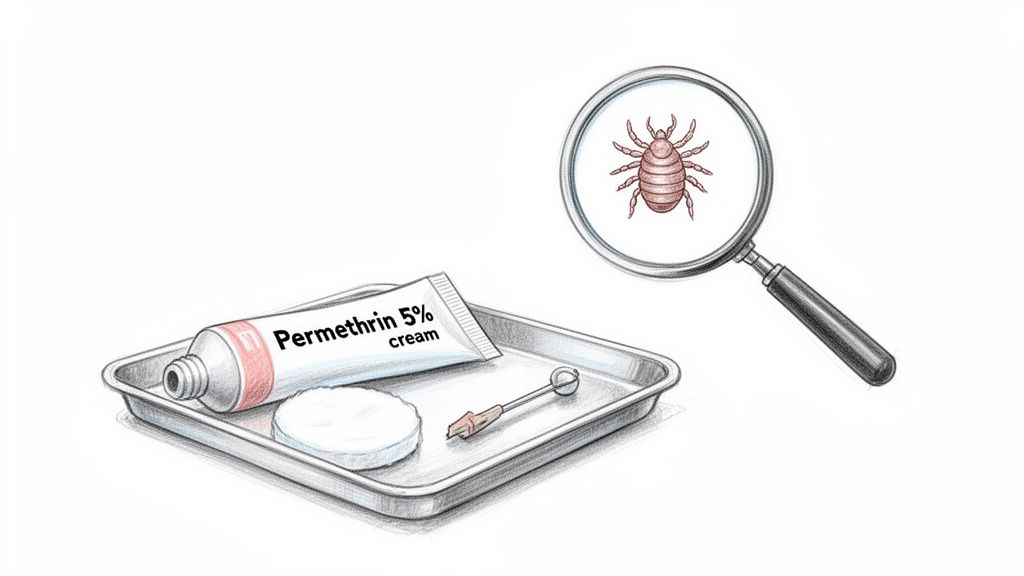
Scabies is a skin condition caused by a tiny mite called Sarcoptes scabiei. These mites burrow into your skin to live and lay eggs. Your body's reaction to the mites causes an intensely itchy rash.
It’s a myth that scabies is linked to poor hygiene. Anyone can get it from prolonged skin-to-skin contact with an infected person. This is why it spreads easily in places like homes, care homes, and student halls. Our main scabies treatment page has more detail on the condition.
The best cream for scabies: Permethrin 5%
Doctors in the UK nearly always recommend permethrin 5% cream first [1]. It is a powerful insecticide that kills scabies mites by attacking their nervous system.
You apply a thin layer of the cream to your whole body from the neck down. One application, left on for 8-12 hours, kills the living mites. A second treatment seven days later is crucial. This second dose kills any mites that have hatched since the first application.
The alternative option: Malathion 0.5% liquid
If permethrin isn't suitable for you, your doctor might suggest malathion 0.5% aqueous liquid. This is another insecticide that works in a similar way.
You apply malathion liquid all over your body. You must leave it on for a full 24 hours. This longer application time makes it less convenient than permethrin, especially for a busy parent or a shift worker. However, it is a very effective alternative.
A quick comparison of UK scabies treatments
Here is a simple table comparing the two main prescription treatments for scabies.
| Treatment | How It Works | Key Instruction | Suitable For |
|---|---|---|---|
| Permethrin 5% Cream | An insecticide that paralyses and kills scabies mites. | Apply to the whole body and leave on for 8–12 hours. Repeat after 7 days. | Most adults and children. The NHS first-choice treatment. |
| Malathion 0.5% Liquid | An alternative insecticide that also targets the mite's nervous system. | Apply to the whole body and leave on for 24 hours. Repeat after 7 days. | A good second-choice option if permethrin isn't suitable. |
Permethrin is usually the first choice because its shorter application time is more practical.
Pharmacist's tip: Always tell your pharmacist if you are pregnant, breastfeeding, or treating a young child. They need this information to ensure the treatment is safe for you.
Real-life examples: Scabies treatment in action
Let’s look at two realistic scenarios to see how treatment choices are made.
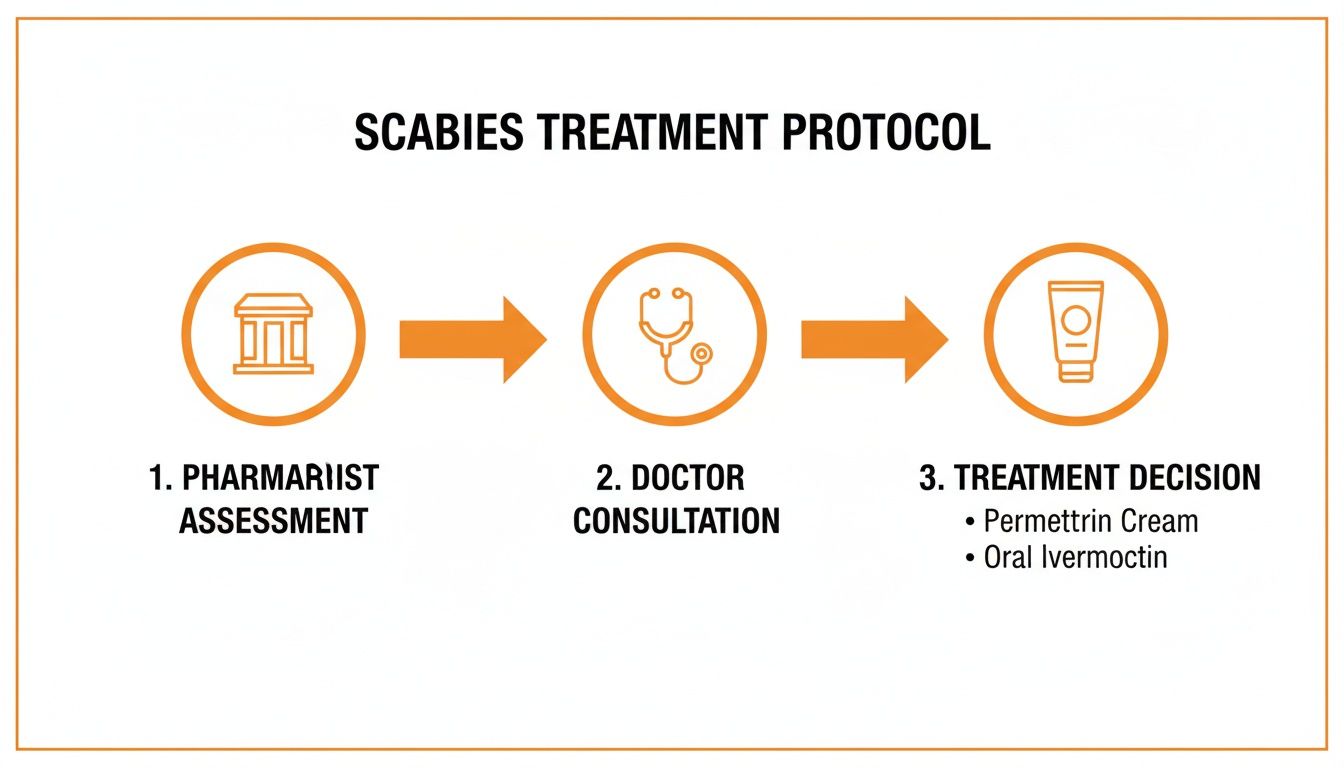
Example 1: The busy gym-goer Ben, a regular gym-goer, develops an intensely itchy rash. His pharmacist diagnoses scabies. Because Ben is healthy with no skin issues, the pharmacist prescriber provides permethrin 5% cream. They advise Ben to avoid the gym and close contact until the first treatment is complete.
Example 2: The carer for an elderly parent Maria cares for her elderly father at home and they both develop scabies symptoms. Her GP prescribes permethrin 5% cream for both of them. The doctor stresses they must apply the treatment on the same night to avoid passing the mites back and forth.
Treatment must be tailored to your life and health needs. You can get treatment from a regulated service like our UK online pharmacy.
How to apply scabies cream correctly
Applying the cream correctly is the most important part of the treatment. A small mistake can cause the treatment to fail. Think of it like painting a wall—miss a spot, and the job isn’t done right.
Following these instructions carefully gives you the best chance of success.
Preparing for treatment
First, prepare your skin. This helps the cream for scabies work properly.
Have a cool or lukewarm shower, not a hot one. Hot water can make the itching worse. Pat your skin dry with a clean towel. Then, wait for your skin to cool down completely for about 30 minutes. This stops you from sweating the cream off.
Next, trim your fingernails and toenails. Mites love to hide under nails, especially if you have been scratching. This simple step helps you apply the cream into these tricky spots.
Pharmacist's tip: Apply the cream in the evening before bed. This gives the treatment a long, undisturbed period to work overnight while you sleep. You can simply wash it off in the morning.
Step-by-step guide to applying the cream
Now you are ready to apply the cream. An adult usually needs one full 30g tube to cover their entire body. Apply a thin but complete layer. Do not miss any areas.
Here’s how to do it:
- Start at the neck. Apply the cream to your whole body from the neck down.
- Focus on hidden areas. Pay close attention to places mites love, like between fingers and toes, on the soles of your feet, in your armpits, and around your waist.
- Cover your genitals. Remember to apply the cream to your genital area and buttocks.
- Get help for your back. Ask someone to help you apply the cream to your back and other places you can’t reach.
Pharmacist's tip: Use a soft brush, like an old toothbrush, to gently work the cream under your fingernails and toenails. Many people forget this crucial step.
Leave the cream on for the recommended time (8 to 12 hours for permethrin). If you wash your hands during this period, you must reapply the cream to them immediately. After the time is up, wash the cream off with soap and water. You can find treatment like Permethrin 5% Cream through our service.
The vital second treatment
The first application kills the live mites. However, scabies eggs can often survive. These eggs will hatch a few days later, starting a new infestation.
This is why a second application is essential. One week (seven days) after your first treatment, you must repeat the entire process. This follow-up dose kills any newly hatched mites before they can lay more eggs.
Treating your home and family at the same time
Getting rid of scabies involves more than just applying cream. You must treat your home and everyone you live with at the same time. This coordinated effort leaves the mites with nowhere to go.
The golden rule: treat everyone at once
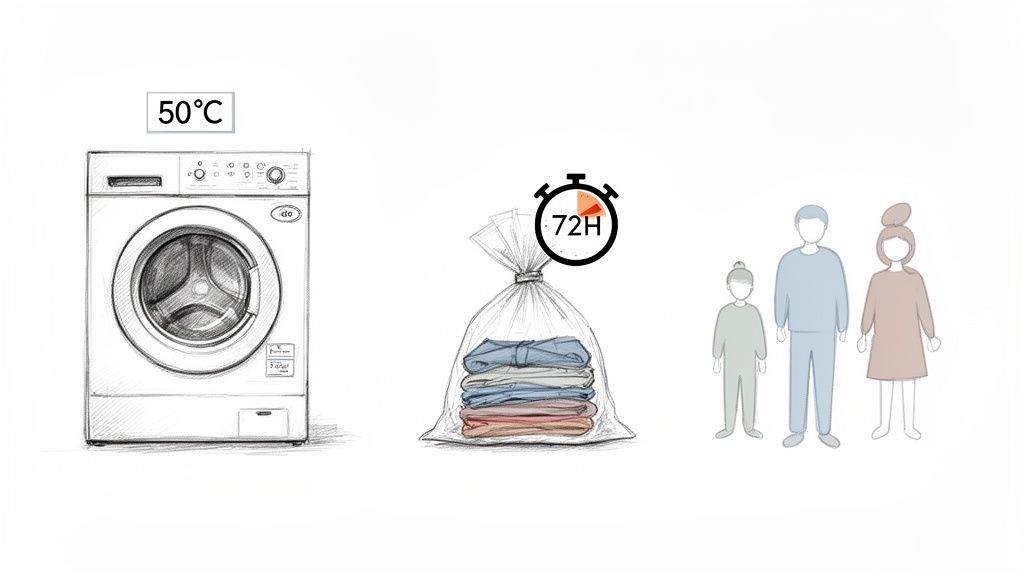
The most important step is simple: everyone in your household must be treated on the same day. This includes any sexual partners.
Why? Because it can take weeks for scabies symptoms to appear. Someone could have scabies without knowing it. Treating everyone together wipes out the mites from all human hosts at once. This is the only way to break the cycle of reinfection.
Pharmacist's tip: Talk openly with everyone in your home. Explain that you all need to do the treatment together for it to work. Make it a team effort to solve the problem quickly.
Cleaning your home: a simple checklist
While your skin treatment is working, you need to decontaminate your living space. Scabies mites can live for up to 72 hours away from a person, hiding in bedding, clothes, and furniture.
Follow this practical checklist:
- Wash everything on hot. On the day of treatment, wash all bedding, towels, and clothes used in the last three days. Use a hot wash cycle (50°C or higher).
- Tumble dry on high. If you have a tumble dryer, use a high heat setting to be extra sure.
- Bag and seal items you can't wash. Put items like shoes, coats, or soft toys in a sealed plastic bag. Leave it for at least 72 hours. The mites will die without a human host.
- Vacuum your home. Vacuum carpets, rugs, and upholstered furniture. Empty the vacuum cleaner or throw the bag away into an outside bin straight away.
Cleaning your home stops you from being reinfected by mites lurking in your environment. Where topical treatments are not suitable for everyone, a doctor might suggest an alternative like oral Ivermectin tablets.
What to expect after your scabies treatment
The scabies mites are dead after the treatment, but your skin still needs time to heal. It’s important to know what a normal recovery looks like.
The biggest thing to know is that the itching does not stop immediately. It can continue for several weeks. This is completely normal. Your body is having an allergic reaction to the dead mites and their waste under your skin. This reaction will fade as your skin renews itself.
How to manage the lingering itch
The post-scabies itch can be very frustrating. Here are a few simple ways to soothe your skin and find relief.
- Moisturise often. Use a gentle, unperfumed moisturiser to keep your skin hydrated.
- Stay cool. Have a cool bath or apply a cool, damp cloth to itchy areas.
- Wear loose clothing. Choose soft, breathable fabrics like cotton to avoid irritating your skin.
- Try antihistamines. An over-the-counter antihistamine may help reduce itching, especially at night. Ask your pharmacist for advice.
Pharmacist's tip: Avoid any perfumed soaps, lotions, or bath products while your skin is healing. These can contain irritants that make the itching worse. Simple, hypoallergenic products are best.
When to seek medical advice after treatment
While a lingering itch is normal, some signs indicate a problem. You need to watch for signs that the treatment has failed or that you have a skin infection from scratching.
Here’s when you should see your doctor:
| Sign of a Problem | What it Could Mean | What to Do |
|---|---|---|
| New burrows or spots appear. | This is a clear sign that live mites are still present in your skin. | Contact your GP or pharmacist. You will likely need to repeat the treatment. |
| The itch gets much worse after 4 weeks. | If the itch isn't improving, it could be a sign of reinfection. | Seek medical advice to check if you need further treatment. |
| Signs of infection develop. | Look for increased redness, swelling, warmth, or pus. This suggests a bacterial skin infection. | See your doctor. You may need an antibiotic. See our guide on Fucidin cream for skin infections for more information. |
Frequently asked questions about scabies treatment
It’s normal to have lots of questions about scabies. Here are clear, simple answers to the most common ones.
Can you buy scabies cream over the counter in the UK?
No, the most effective cream for scabies (permethrin 5%) is a prescription-only medicine in the UK. You need a prescription from a GP or a pharmacist independent prescriber. This ensures you get a proper diagnosis and the right advice.
How quickly does the treatment work?
The cream starts working right away. One correct application of permethrin kills the live mites within 8 to 12 hours. However, the itch can last for several more weeks. This is a normal part of the healing process.
Why do I still itch after using the cream?
Itching for up to four weeks after treatment is very common. It is caused by an allergic reaction to the dead mites and their waste products under your skin. As your skin renews, the itch will gradually go away.
Should I tell my partner if I have scabies?
Yes, you must tell your partner and any other close contacts. Scabies spreads easily through skin-to-skin contact. Everyone in your household and any sexual partners must be treated at the same time, even if they have no symptoms.
Can scabies go away without treatment?
No, scabies will not go away on its own. The mites will continue to reproduce in your skin. This will make the rash and itching worse, and you risk spreading it to others. Seeking treatment quickly is the only way to cure it.
Is it possible to get scabies from a toilet seat?
It is extremely unlikely you will get scabies from a toilet seat. The mites are nearly always spread by direct, prolonged skin-to-skin contact. They can only survive for about 48 to 72 hours away from a human body.
Disclaimer: This article is for informational purposes only. It is not a substitute for professional medical advice, diagnosis, or treatment. Always seek the advice of your doctor or another qualified health provider with any questions you may have regarding a medical condition.
At Courier Pharmacy, we provide expert, confidential care for conditions like scabies. Our UK-regulated service allows you to complete a secure online consultation. If treatment is appropriate, our prescribers can arrange for it to be delivered discreetly to your door.
How this content was created
This article was written and clinically reviewed by qualified UK healthcare professionals. We used reliable, evidence-based sources such as the NHS, NICE, and the UK Health Security Agency (UKHSA) to ensure the information is accurate, up-to-date, and easy for patients to understand. Our goal is to provide trustworthy health information to support you in your health journey.
- Written by: Dr. Sarah Jarvis MBE (GP & Clinical Director)
- Clinically reviewed by: Scott McDougall MPharm (Superintendent Pharmacist)
References
[1] National Institute for Health and Care Excellence (NICE). Scabies: Permethrin. [Online] Available at: https://cks.nice.org.uk/topics/scabies/prescribing-information/permethrin/


