Discreet Delivery from Online Pharmacies in the UK
Discreet delivery from UK online pharmacies explained — packaging, tracking, signatures, redelivery options, and privacy tips for sensitive medicines.

You're expecting a parcel at a shared house, but you'd rather nobody knew what treatment you ordered. Discreet delivery means protecting your privacy across the whole journey, not just using a plain box. That includes the sender name, tracking alerts, who can accept the parcel and where the courier leaves it.
UK pharmacies must also protect medicine safety. Packaging needs to suit the medicine, and delivery arrangements should help prevent loss, damage or handover to the wrong person. Here's how to check the details, choose a delivery option and make a practical plan if you won't be home.
Five key takeaways
- Check the whole chain: Packaging, sender details, alerts and handover all affect privacy.
- Use tracking thoughtfully: It helps you plan for delivery, but check what the courier's messages reveal.
- Choose a suitable recipient: Agree in advance whether someone else can accept the parcel.
- Balance privacy and access: A controlled handover can prevent unattended parcels without making delivery unworkable.
- Speak up about damage: Don't use medicine if the parcel looks opened or its seal is broken. Contact the pharmacy.
What Discreet Delivery Actually Means for UK Patients
Discreet delivery should protect your treatment information until the medicine reaches an agreed recipient. Ask the pharmacy what that means in practice. “Plain packaging” answers only part of the question.
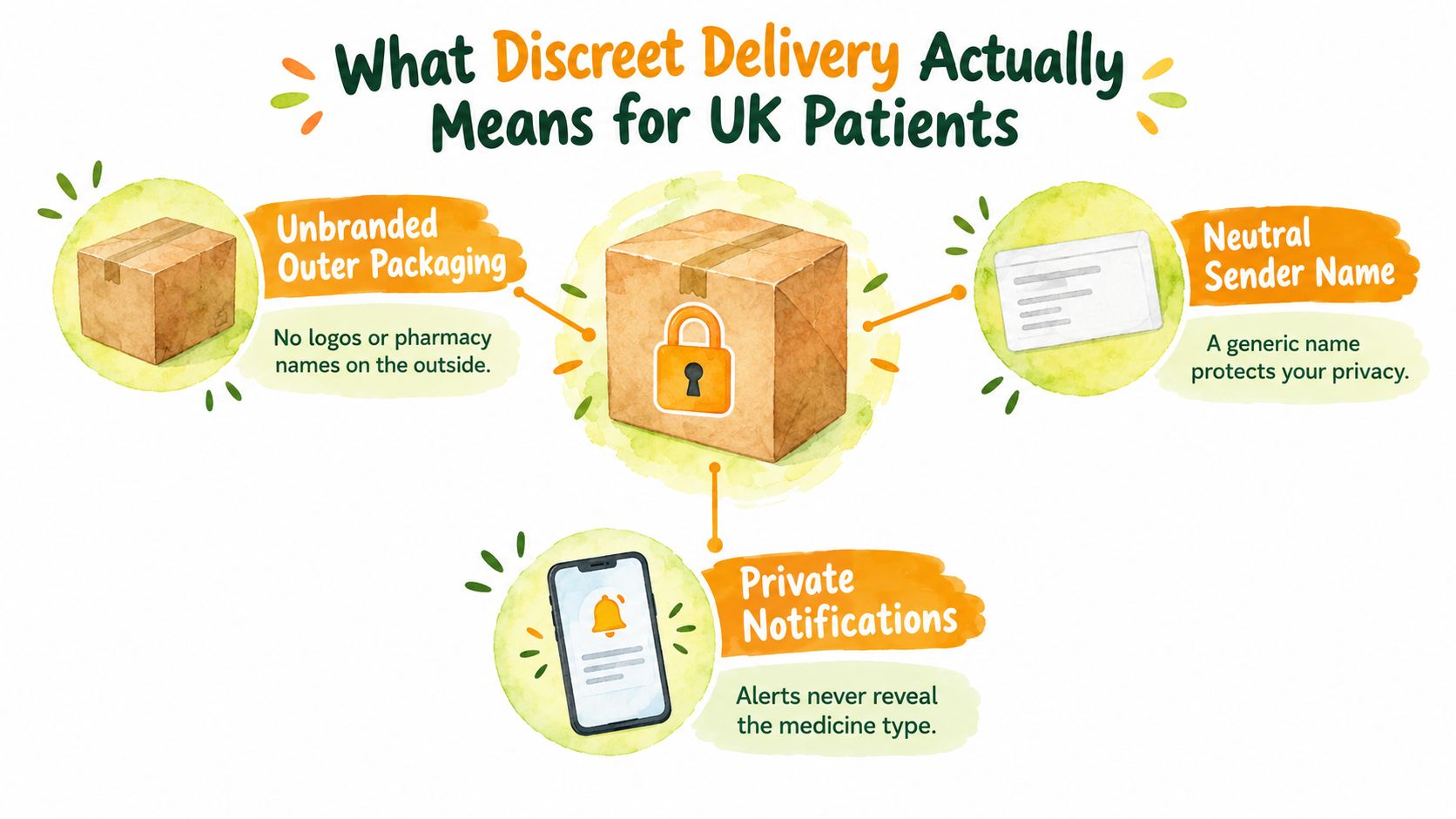
For a sensitive NHS prescription, an unmarked box can still carry a recognisable pharmacy name. A courier alert on a shared screen can expose the sender, too. Decide what you're comfortable revealing before choosing the delivery arrangements.
Safety belongs in that decision. GPhC guidance on pharmacy services at a distance covers suitable packaging, secure access and monitoring through to receipt. NHS medicines transport guidance calls for sealed, tamper-evident packages that protect confidential treatment information from outside observers.
Use these questions as your ordering checklist:
- Outer packaging: Does the label reveal the pharmacy or treatment, even if the box is unbranded?
- Recipient: Have you authorised a housemate, neighbour or carer to accept it? For controlled medicines, ask about extra checks before relying on someone else.
- Tracking: What appears in messages and lock-screen previews? Choose contact details you can access privately.
- Handover: Can you manage the proposed collection or doorstep arrangement if fatigue or limited mobility makes it difficult? Ask for a workable alternative. Check whether a safe place leaves the parcel accessible to others or exposed to damage.
Pharmacist's tip: Choose privacy with safe receipt. Agree who can accept the parcel before dispatch, and don't select a safe place simply to avoid answering the door. An inaccessible collection point or unattended parcel can leave you without your medicine.
UK Legal and Safety Rules That Shape Discreet Delivery
A pharmacy's responsibility continues after dispatch. Your medicine needs to reach the right person in a condition fit for use, and privacy needs to hold throughout that process. Check the pharmacy's registration and how it meets the standards described in the GPhC information on online pharmacy services.
The GPhC's distance-service guidance calls for delivery risk assessments, suitable packaging, secure access and monitoring through to receipt. Tamper-evident seals and a controlled handover can help a pharmacy identify interference or investigate a missing parcel. Ask how the service handles a failed delivery before placing your order.
Privacy also depends on a safe clinical review.
Some medicines require further checks before supply. The GPhC highlights medicines liable to misuse, antimicrobials, medicines carrying greater risk of serious harm in overdose, and treatments needing ongoing monitoring. The prescriber may need two-way contact with you or information from your GP or regular prescriber. Make time for those checks, and ask for a private way to communicate if calls or messages could reveal your treatment.
Pharmacist's tip: Avoid sellers promising prescription-only medicines without a prescription. Check GPhC registration before ordering. A polished website and plain-packaging promise prove nothing about safe practice.
Use this guide to online pharmacies in the UK to understand the ordering process. Before paying, confirm who handles clinical queries, what happens if receipt fails, and whether the handover arrangements are workable for you. For controlled medicines, ask about any extra checks before agreeing delivery. A service should explain its safeguards clearly enough for you to make an informed choice.
Inside the Parcel, Packaging, Tracking and Notifications
A plain parcel arrives, but the delivery alert on a shared tablet names the pharmacy. That is a privacy gap worth fixing before despatch. Check the packaging, the messages and who will receive it.
Inside, keep the information needed for safe use: patient details, medicine identification, warnings, storage instructions and the patient information leaflet. Discretion should never mean removing medicine labels.
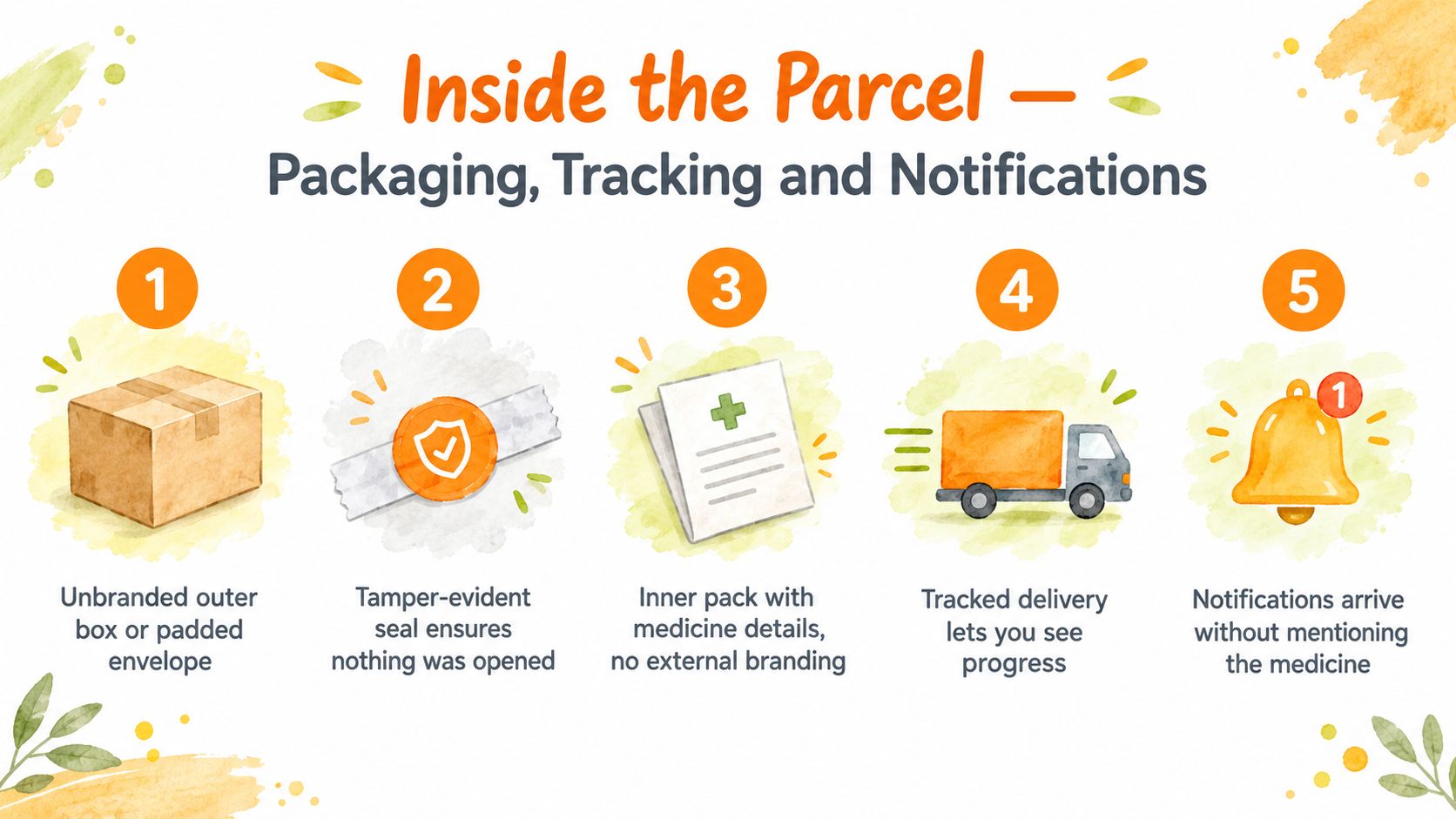
Packaging must protect the contents. The pharmacy medicine-delivery guidance describes strong outer packaging, tamper-proof seals and leak-proof containers for liquids. Some solid items need sift-proof packaging; temperature-sensitive products need suitable handling.
Check what others can see
Visible privacy checklist
- Outside: Ask for plain packaging without treatment names or prominent pharmacy branding.
- Seal: Check the closure on arrival. Report damage or signs of opening to the pharmacy.
- Label: Confirm the address and ask what sender details will appear.
Agree who may receive the parcel. If fatigue or limited mobility makes reaching the door difficult, explain that when arranging delivery. Check whether a proposed safe place exposes the parcel to neighbours or leaves it insecure.
Despatch emails, tracking pages, delivery-window alerts and receipt notifications can reveal information through shared devices or lock-screen previews.
Hidden privacy checklist
- Sender field: Ask whether emails and tracking show the pharmacy name.
- Alert preview: Hide notification details on your locked phone.
- Shared accounts: Use an inbox or number that others cannot access.
Pharmacist's tip: Ask to see the notification wording before ordering. If someone else handles your messages or receives your parcels, agree exactly what they can see and do. For controlled medicines, confirm that these arrangements meet the pharmacy's extra checks.
Delivery Options Compared, Tracking, Signatures and Redelivery
Choose delivery based on the medicine, your address and who can collect the parcel. A signature can improve control, but it may also mean a missed delivery if nobody can answer. Policies vary between pharmacies and couriers, so check the actual options before placing an order.
| Option | Privacy level | Signature needed | If you are out | Best for |
|---|---|---|---|---|
| Standard post | Depends on packaging and sender details | Usually not, check the service | May be delivered or handled under the postal service's rules | Routine items where delivery arrangements suit the medicine |
| Tracked delivery | Better visibility over progress | Not always | Check tracking for next steps | Orders where you want to plan for arrival |
| Signed-for delivery | More controlled handover | Usually | The courier may leave instructions for redelivery or collection | Sensitive items or parcels that shouldn't be left unattended |
| Safe-place delivery | Depends on how private and secure the location is | Usually not | Courier may leave it in the agreed place | Items suitable for unattended receipt |
| Collection point | Keeps the parcel off a shared doorstep | Rules vary by provider | Collect it using the courier's instructions | People who can't be home during delivery hours |
Standard post can work for an uncomplicated delivery, but don't assume it offers live progress updates or a controlled handover. Tracked delivery helps you plan, although tracking alone doesn't stop a parcel being left in an exposed spot.
Signed-for delivery is useful when a medicine shouldn't go to a neighbour or sit unattended. It can be inconvenient if your work hours make it hard to answer the door. Safe-place delivery is only sensible if you control the location, it protects the parcel from weather and passers-by, and the medicine can safely wait there.
A collection point may suit a shift worker or someone who wants to keep deliveries away from a shared entrance. Check that the pharmacy and courier allow it, and that the medicine's storage needs won't be affected. If you miss a delivery, follow the courier's card or online instructions to arrange redelivery or collection. Ask the pharmacy if the failed handover could affect the medicine.
Pharmacist's tip: Choose a signed handover when another person shouldn't receive the parcel or unattended delivery would be unsafe. For routine refills, tracking may be enough if the packaging and delivery plan suit you.
Real Patient Scenarios and How to Handle Them
A shift worker orders erectile dysfunction treatment and shares a communal hallway with other tenants. They sleep during the courier's usual delivery window, so leaving a parcel by the front door would create both privacy and security concerns. They check whether the pharmacy offers a collection point or a delivery window that fits their rota. If a trusted person can receive it, they arrange that with the pharmacy and courier in advance.
A daughter helps care for a parent with fibromyalgia who has fatigue and struggles to reach the door quickly. A signature-only option may lead to a missed handover, but an open hallway isn't a safe alternative. With the patient's agreement, they check whether an authorised recipient can accept the parcel or whether a secure, accessible delivery arrangement is available.
Make the plan fit the household
For either situation, confirm the details before dispatch:
- Recipient: Ask who can accept the medicine, and get the patient's agreement.
- Timing: Choose an available delivery window if the service offers one.
- Alternative: Consider a trusted neighbour or collection point only if it works for that medicine.
- Instructions: Keep driver notes clear and practical without sharing unnecessary health details.
A carer should follow the pharmacy's process for authorised receipt, rather than assuming any household member can take the parcel. Some medicines need particular storage or a more controlled handover. If you're unsure what happens after an unsuccessful delivery, ask before ordering. This guide to how online treatment orders work may help you understand what communication to expect.
Privacy and accessibility often support each other when the plan matches the person's needs. The right arrangement is the one that protects confidentiality while giving the medicine a safe, realistic route to the patient.
Controlled Medicines and Extra Safety Checks
A plain parcel does not settle who can receive a controlled medicine. Before ordering, ask the pharmacy whether your prescription requires identification, personal receipt or a delivery arrangement that rules out safe-place drop-offs. Record the answer so you can arrange a handover that meets those requirements.
Some treatments also need closer clinical oversight. A questionnaire alone may be insufficient for medicines liable to misuse, certain antimicrobials, medicines with a higher risk of serious harm in overdose, or treatments requiring ongoing monitoring. The prescriber may need a timely conversation, relevant records or contact with your GP or regular prescriber, as outlined in GPhC guidance on online pharmacy services.

Confirm the rules for your particular prescription.
A neighbour or household member should only accept it if the pharmacy permits that arrangement. If fatigue or limited mobility makes answering the door difficult, explain this before dispatch and ask what authorised alternatives are available. Also establish what happens after a missed handover. A safe place is unsuitable if the pharmacy's rules exclude it.
Prepare before the parcel leaves:
- Complete the clinical questions carefully. Give accurate details about your health and medicines.
- Stay reachable. Ask how the pharmacy will contact you if the prescriber needs clarification.
- Plan to receive the parcel. Confirm any identification or personal-receipt requirement, and who else is authorised to accept it.
- Check storage needs. Ask whether the proposed delivery arrangement suits the medicine.
These checks protect appropriate treatment and safe receipt while keeping unnecessary health details out of delivery instructions.
This video introduces the pharmacy delivery process; confirm your prescription's specific requirements directly:
Pharmacist's tip: Respond promptly to requests for information. Agree the handover early, particularly if someone else needs to receive your medicine. Changes after dispatch may be harder to arrange.
Privacy Tips, Common Trade-offs and When to Speak Up
Maximum secrecy can make delivery less safe. If you refuse every alternative recipient, delivery window or collection option, you may miss the courier and leave the medicine exposed for longer. Choose a plan that protects your information and gets the medicine to you in suitable condition.
Before dispatch, use this checklist:
- Pick the handover: Choose tracked or signed-for delivery when the medicine or address calls for closer control.
- Review the sender: Ask whether the pharmacy can use neutral sender details.
- Set your alerts: Silence previews on a shared device or screen.
- Choose safe places carefully: Use only a location you control and that suits the medicine.
- Name a trusted recipient: Get their agreement, and check the pharmacy allows them to accept it.
A neighbour may be convenient, but don't assume they can receive a medicine parcel on your behalf. The delivery process may need the named patient or an authorised representative, and the medicine may need specific storage. Also check whether courier notifications reveal the sender or delivery details. The pharmacy's privacy information can help you understand how it handles personal information.
When to contact the pharmacy
If the parcel arrives damaged, opened or with a broken seal, don't use the medicine until you've spoken to the pharmacy. Keep the packaging and contact the pharmacy promptly for advice about what to do next. If the parcel is delayed, lost or left somewhere unsafe, report that too so the pharmacy can help trace it and advise on replacement or storage.
For urgent medical concerns, contact NHS 111 for advice or call 999 in a genuine emergency. A privacy concern shouldn't delay urgent care.
Summary and Frequently Asked Questions
- Discreet delivery protects privacy throughout the journey, not just on the box.
- Check the sender name, notifications, recipient rules and handover method.
- Choose tracking, a signature, a collection point or another option to suit your needs.
- Make accessibility and medicine storage part of the plan.
- Contact the pharmacy if a parcel is missing, damaged or unsealed.
- Get urgent medical help when you need it, regardless of delivery concerns.
Can medicines ordered from abroad incur customs charges?
Customs rules and import requirements depend on the medicine and where it comes from. Don't assume an overseas website can lawfully supply a medicine to the UK. Check with the pharmacy and relevant authorities before ordering, especially for prescription-only medicines.
What should I do if my parcel is lost or damaged?
Contact the pharmacy and courier using the order details, and explain what happened. If the parcel looks open, damaged or unsealed, don't use the medicine until the pharmacy advises you. Keep the packaging while the pharmacy investigates.
Can my neighbour refuse a parcel on my behalf?
A neighbour can't necessarily accept or refuse a medicine parcel for you. The pharmacy or courier may require the named patient or an authorised recipient, and some medicines need a controlled handover. Check the service's rules before asking a neighbour to help.
How can I check if an online pharmacy is GPhC registered?
Use the GPhC's online pharmacy information and registration resources to check the pharmacy's status. Confirm that the details match the business you plan to use, rather than relying on a registration claim on its website. If you're unsure, contact the GPhC before ordering.
This article provides general information only. It isn't a substitute for personal advice from your pharmacist, prescriber or another healthcare professional.
Meta description: Discreet delivery from UK online pharmacies: learn how packaging, tracking, notifications and handovers protect your privacy and keep medicines safe.
Internal links to consider: Online pharmacy services, delivery and tracking information, privacy policy, treatment ordering guide.
Suggested visuals for the designer
- A parcel privacy concept map showing packaging, sender details and alerts. Alt text: “Plain packaging, neutral sender details and private alerts shown as parts of discreet medicine delivery.”
- A packaging and tracking checklist with icons for seals, medicine information and delivery updates. Alt text: “Checklist showing how packaging, tamper seals and tracking support safe medicine delivery.”
- A delivery choice comparison graphic showing signed delivery, collection points and safe-place options. Alt text: “UK medicine delivery options compared by handover and privacy.”
- A privacy checklist showing notification settings, trusted recipients and damaged-parcel actions. Alt text: “Practical privacy steps for receiving medicine parcels safely.”
Byline: By the Courier Pharmacy editorial team.
Clinical review: Review by a GPhC-registered pharmacist before publication.
How this content was created: We drew on UK pharmacy regulator guidance, NHS medicines-transport information and published material about parcel delivery and patient privacy. A pharmacist should check the clinical and delivery guidance before publication.
References
- Ofcom, Post monitoring report 2023–24.
- General Pharmaceutical Council, Guidance for registered pharmacies providing pharmacy services at a distance.
- NHS Greater Glasgow and Clyde, Guidance on the transport and posting of medicines.
- Shropshire Council, pharmacy medicine-delivery guidance.
- General Pharmaceutical Council, online pharmacy services.
Courier Pharmacy offers online access to prescription and over-the-counter treatments, with discreet, tracked delivery options for approved orders. Visit Courier Pharmacy to review its services and delivery information before deciding whether they suit your needs.


