Your Guide to Fibromyalgia Medication in the UK
Discover the fibromyalgia medication UK options available on the NHS. Learn about pregabalin, amitriptyline, and LDN to better manage your symptoms.
In this article
- Five Key Takeaways for Your Journey
- Understanding Why Fibromyalgia Is So Complex
- The Frustrating Cycle of Symptoms
- The Reality of Diagnosis in the UK
- The Core Medications Prescribed by the NHS
- Amitriptyline For Better Sleep and Less Pain
- Duloxetine For Pain and Mood
- Pregabalin and Gabapentin For Nerve Pain
- NHS-Recommended Fibromyalgia Medications at a Glance
- Why Standard Painkillers Often Don't Work
- Beyond the Standard Script: Emerging Fibromyalgia Treatments
- Low-Dose Naltrexone: A Different Path to Relief
- Getting Hold of LDN in the UK
- The Cautions Around Using Tramadol
- How to Partner with Your Doctor for Better Care
- Prepare for Your Appointment
- Ask Powerful Questions
- Discussing Treatment Changes
- Building Your Complete Fibromyalgia Management Plan
- Beyond the Prescription Pad
- Summary
- Frequently Asked Questions
Trying to get your head around fibromyalgia is tough enough without the added stress of figuring out your medication options. Staring at a new prescription can feel completely overwhelming, especially when you’re already trying to manage widespread pain and the dreaded fibro fog. Think of this guide as your practical, no-nonsense roadmap to making sense of the treatments available in the UK, with real-life tips from a pharmacist to help you feel more in control.
Five Key Takeaways for Your Journey
Before we dive in, here are five essential points to help you feel more prepared for what's ahead:
- Most Medications are 'Off-Label': In the UK, no drugs are specifically licensed for fibromyalgia. This means doctors often prescribe medications like Amitriptyline 'off-label' because they are known to work well for fibromyalgia symptoms, even though they are officially licensed for other conditions like depression.
- Treatment is Highly Personalised: There is no one-size-fits-all pill. What works wonders for one person might do very little for another. The goal is to find the right medication, at the right dose, that manages your specific symptoms with the fewest possible side effects.
- Communication is Crucial: Working in partnership with your GP or specialist is key. Learning how to describe your symptoms clearly and ask direct questions can make a world of difference to the quality of your care.
- A Holistic Plan is Best: Medication is just one piece of the puzzle. The most effective management plans always combine medication with non-drug approaches like gentle exercise, pacing your activities, and psychological support.
- Specialist Options Exist: While the NHS provides core treatments, some promising options like Low-Dose Naltrexone (LDN) are gaining traction but often require specialist knowledge from services like a functional medicine pharmacy to access.
Understanding Why Fibromyalgia Is So Complex
Ever wondered why you can’t just pop a standard painkiller and make fibromyalgia disappear? It’s a question that gets right to the heart of what makes this condition so misunderstood. Fibromyalgia isn’t a straightforward problem like a broken bone or a pulled muscle; it’s a complex, system-wide issue rooted in a misfiring central nervous system.
Think of your nervous system as a highly sensitive car alarm. In most people, it only goes off when there's a real threat, like a window breaking. But with fibromyalgia, that alarm's sensitivity is dialled all the way up. Now, something as minor as a gentle breeze or a passing cat is enough to trigger a full-blown siren. This is a concept known as central sensitisation.
What this means is your brain and spinal cord are literally amplifying pain signals. Sensations that shouldn't hurt at all, like the soft touch of clothing or a friendly pat on the back, are processed by your brain as intensely painful. This is precisely why traditional painkillers often don’t touch the sides—they're designed to target inflammation or injury at a specific location, not a nervous system that’s stuck in overdrive.
The Frustrating Cycle of Symptoms
This overactive nervous system is responsible for a tough trio of core symptoms. Worse still, they all feed into each other, creating a cycle that can feel impossible to break.
- Widespread Pain: This isn't just an ache in one spot. It’s a dull, persistent pain that feels like it’s settled deep in your muscles, tendons, and ligaments all over your body. It can shift around and change in intensity from one day to the next.
- Profound Fatigue: This is so much more than just feeling tired. It’s a bone-deep, debilitating exhaustion that sleep never seems to fix. It can leave you feeling like you’ve run a marathon when all you’ve done is make a cup of tea.
- Cognitive Fog ('Fibro Fog'): Many people describe this as feeling like their brain is wading through treacle. It causes frustrating problems with memory, concentration, and even finding the right words, making simple tasks feel monumental.
These three symptoms lock you into a vicious loop. The constant pain makes it hard to sleep, which makes the fatigue even worse. That exhaustion then turns up the volume on the pain and thickens the cognitive fog. It’s a relentless cycle that can make daily life a real struggle.
The Reality of Diagnosis in the UK
Adding another layer of difficulty is the challenge of just getting a diagnosis. There’s no single blood test or scan that can definitively say, "You have fibromyalgia." Instead, getting diagnosed in the UK relies on a clinical assessment based on NICE guidelines. This involves ruling out other conditions that cause similar symptoms and carefully evaluating your specific pattern of pain, like having widespread pain for more than three months.
This process often leads to long, frustrating waits for answers. Fibromyalgia affects roughly 1 in 50 people in the UK, but a shocking 1 in 4 never receive a formal diagnosis, leaving many struggling without support for years. Because it’s an "invisible" illness with symptoms that overlap with conditions like chronic fatigue syndrome or long COVID, it's often misunderstood. A 2023 UK survey highlighted this, finding that 40% of people were unaware of fibromyalgia, a lack of public understanding that can seriously delay someone getting the care they need. You can read more about these challenges in the full report from the University of Aberdeen.
Because the symptoms can be so similar, comparing fibromyalgia with other conditions can be helpful. You can learn more by reading our guide on what is chronic fatigue syndrome and how it differs. Understanding the root cause of your condition is the first, most powerful step toward finding an effective management plan and the right fibromyalgia medication UK specialists can offer.
The Core Medications Prescribed by the NHS
When you're dealing with fibromyalgia, getting your head around your prescription is a huge step toward feeling more in control. Because fibromyalgia isn't caused by the kind of inflammation or damage that standard painkillers can fix, your GP will likely turn to a different set of tools. The National Institute for Health and Care Excellence (NICE) in the UK has specific guidance on a few core medications to help manage the complex web of symptoms.
These medications aren't your typical painkillers. Instead, they work on the central nervous system to help turn down the 'volume' on pain signals and improve your sleep. Let's break down the main options your doctor might discuss, how they actually work, and what you can realistically expect.
The image below shows the three main pillars of fibromyalgia symptoms that medication aims to address: misfiring nerves, widespread pain, and deep fatigue.
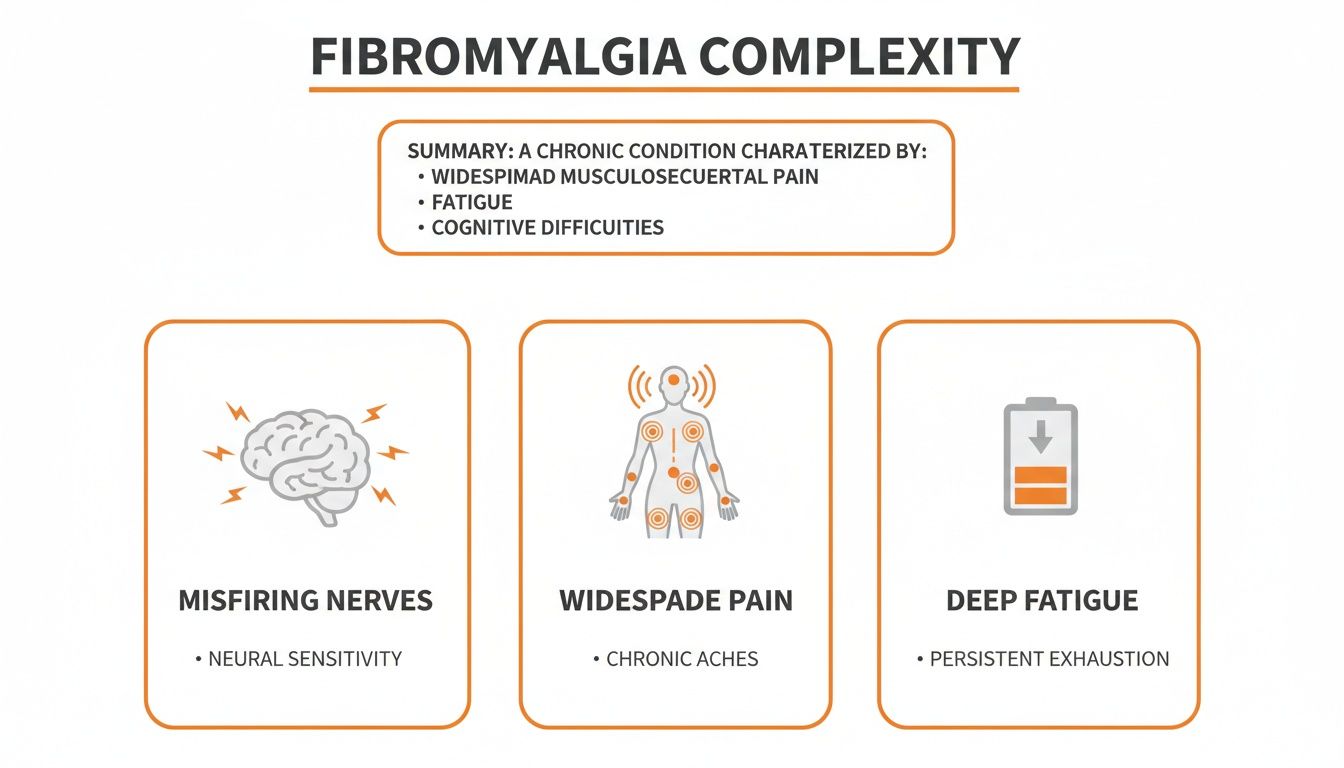
It really highlights how interconnected the symptoms are and why a multi-faceted approach to treatment, including medication, is so vital for managing the condition.
Amitriptyline For Better Sleep and Less Pain
Amitriptyline is often one of the very first medications prescribed for fibromyalgia here in the UK. It's technically a tricyclic antidepressant, but when used for fibromyalgia, it’s prescribed at a much lower dose than it is for depression.
Its main goal is to improve your sleep quality. By helping you get more restorative sleep, it can have a brilliant knock-on effect, reducing both pain and fatigue. It works by increasing the levels of certain chemicals in the brain, like serotonin and noradrenaline, which helps to block pain signals from getting through.
- Typical Starting Dose: It's usually a very low dose to begin with, around 10mg taken once a day, typically in the evening.
- How it's Increased: Your doctor might slowly increase this over several weeks, up to a maximum of 75mg, depending on how you're getting on with it.
- Common Side Effects: The most common complaint is a dry mouth. Some people also feel a bit drowsy the next morning, which is why it’s often recommended to take it early in the evening.
A Pharmacist’s Tip: "I always advise patients starting amitriptyline to take their dose about 2-3 hours before they plan to go to sleep. This helps ensure the peak drowsiness effect happens when you want it to, not when your alarm clock is ringing the next morning."
Duloxetine For Pain and Mood
Duloxetine is another type of antidepressant, known as a serotonin and noradrenaline reuptake inhibitor (SNRI). It can be particularly useful if you're struggling with both the widespread pain of fibromyalgia and low mood, as it's licensed to treat both.
This medication works by boosting the levels of serotonin and noradrenaline throughout your nervous system. These brain chemicals aren't just important for mood; they also play a key role in dampening down pain signals travelling to the brain. For many, it can reduce the overall pain level and provide a welcome lift in energy and mood.
Pregabalin and Gabapentin For Nerve Pain
Pregabalin and its close relative, gabapentin, are medications known as anticonvulsants. They were originally developed to treat epilepsy but are now widely used to manage nerve-related pain, which is a core feature of fibromyalgia.
Imagine your over-sensitised nerves are like faulty electrical wires, constantly sparking and sending out unnecessary pain signals. These medications help to calm down this excessive electrical activity. They effectively act as stabilisers for your nerve cells, reducing the number of pain signals they're able to fire off to your brain.
- Typical Starting Dose: Pregabalin often starts at 25mg-75mg per day, usually split into two doses.
- How it's Increased: The dose is normally increased gradually over a few weeks to find the sweet spot between benefit and side effects.
- Common Side Effects: Dizziness and drowsiness are common, especially when you first start taking it or when the dose is increased.
Here’s a quick overview of the main medications recommended by the NHS to help you see how they compare.
NHS-Recommended Fibromyalgia Medications at a Glance
| Medication Name | Type of Drug | Primary Use in Fibromyalgia | Typical UK Starting Dose | Key Side Effects to Watch For |
|---|---|---|---|---|
| Amitriptyline | Tricyclic Antidepressant | Improving sleep quality and reducing pain perception. | 10mg once daily (evening) | Dry mouth, drowsiness, constipation. |
| Duloxetine | SNRI Antidepressant | Reducing widespread pain and improving low mood. | 30mg once daily, rising to 60mg. | Nausea, dry mouth, fatigue, dizziness. |
| Pregabalin | Anticonvulsant | Calming overactive nerve pain signals. | 25mg-75mg daily (split dose) | Dizziness, drowsiness, blurred vision. |
| Gabapentin | Anticonvulsant | Similar to pregabalin; calming nerve pain. | 100mg-300mg daily | Drowsiness, dizziness, fatigue. |
As you can see, each medication tackles fibromyalgia from a slightly different angle, which is why treatment is often highly personalised. Your doctor will consider your main symptoms—be it pain, poor sleep, or mood—when deciding on the best starting point for you.
Why Standard Painkillers Often Don't Work
One of the most common points of frustration for people with fibromyalgia is finding that over-the-counter painkillers like ibuprofen or paracetamol do very little to help. This isn't in your head; there's a clear medical reason for it. These drugs are designed to target inflammation, which simply isn't the root cause of fibromyalgia pain.
Drugs like ibuprofen are non-steroidal anti-inflammatory drugs (NSAIDs). They work by blocking the production of chemicals that cause swelling and pain right at the site of an injury. But since fibromyalgia pain stems from a sensitised central nervous system—a problem with pain processing—these medications just don't address the underlying issue. For a deeper dive into how different types of painkillers work, you might find our guide on what is naproxen and its uses interesting.
Beyond the Standard Script: Emerging Fibromyalgia Treatments
When the usual NHS-prescribed medications for fibromyalgia aren't cutting it, it’s easy to feel like you’ve hit a brick wall. But this is often the point where talking to a specialist can unlock a whole new set of options. Beyond the familiar names like amitriptyline and pregabalin, there are other treatments that tackle symptoms from a completely different angle.
This next level of care often involves medications that are either unlicensed for fibromyalgia or used in highly specialised ways, so they need a real depth of clinical expertise. Let’s look at two of the most talked-about options: Low-Dose Naltrexone (LDN) and Tramadol, exploring their potential upsides and the serious cautions that go with them.
Low-Dose Naltrexone: A Different Path to Relief
Low-Dose Naltrexone, or LDN, is creating a real buzz in fibromyalgia circles, and for a good reason. It works on a completely different biological pathway compared to standard antidepressants or nerve pain drugs. Naltrexone was originally developed in much higher doses (50-100mg) to help people with opioid or alcohol dependency.
But then researchers stumbled upon something fascinating. At a tiny dose—usually between 1mg and 4.5mg—it seems to have a unique balancing effect on the body's immune system and inflammation. For fibromyalgia, the working theory is that LDN helps dial down neuroinflammation—that’s inflammation affecting the central nervous system.
A Pharmacist’s Insight: "You can think of LDN as a kind of 'reset switch' for your body's own pain-control system. By briefly blocking certain cell receptors, it nudges your body into producing more of its own natural endorphins. These are powerful, built-in painkillers. It's a world away from simply dampening down nerve signals."
Because its mechanism is so different, LDN can be a game-changer for people who haven't had much luck with other treatments or have been plagued by side effects.
Getting Hold of LDN in the UK
It's crucial to understand that LDN is an unlicensed treatment for fibromyalgia in the UK. This just means it hasn't gone through the huge, expensive clinical trials needed for a specific fibromyalgia medicine licence.
This unlicensed status is why most NHS GPs are hesitant or unable to prescribe it. Accessing LDN usually means seeing a private doctor or a specialist clinic with experience in using it.
- Specialist Knowledge is Key: Prescribing LDN isn't as simple as writing a normal prescription. It needs a careful, 'low-and-slow' titration. You'd start on a tiny dose like 0.5mg or 1mg and gradually build up over weeks or months to find the sweet spot that works for you.
- Compounding Pharmacies are a Must: Standard naltrexone tablets only come in a 50mg strength. To get the tiny doses needed for LDN, the prescription has to be sent to a specialist compounding pharmacy, like Courier Pharmacy. Here, pharmacists can create custom-made capsules or liquids at the exact dose your prescriber has ordered.
This is where services like ours become essential. We can help arrange a consultation with a prescriber who knows LDN inside-out and then provide the specialist compounding needed to create your personalised medication. To learn more, check out our in-depth guide on how Low-Dose Naltrexone can help in fibromyalgia.
The Cautions Around Using Tramadol
Tramadol is another drug that might be considered when other painkillers have failed. It’s an opioid-based painkiller that also has a mild effect on serotonin and noradrenaline, a bit like some antidepressants. While it can give some people effective short-term relief, the official NICE guidelines urge extreme caution.
The biggest red flag with Tramadol is the high risk of dependence and addiction. Over time, your body gets used to it, meaning you need higher and higher doses to get the same pain relief. This can trap you in a difficult cycle of dependency and withdrawal.
For this reason, Tramadol is almost never recommended for the long-term management of fibromyalgia. If a doctor does prescribe it, it should only be for a very short period to get you through a severe flare-up, and always under close medical watch. The entire focus in modern fibromyalgia care has shifted away from long-term opioid use towards treatments that tackle the root causes of central sensitisation.
How to Partner with Your Doctor for Better Care
Your GP appointment is the single most important moment in your treatment journey. It can also feel rushed, confusing, and overwhelming. Learning how to prepare for it is the key to shifting from a passive patient to an active partner in your own healthcare. These are a few simple strategies to help you make every minute count, ensuring your voice is heard and your treatment plan feels right for you.
Prepare for Your Appointment
Walking into your appointment armed with clear, specific information is a total game-changer. It’s the difference between saying "I feel awful" and giving your doctor the concrete details they need to truly help. One of the most powerful tools you have is a simple symptom diary.
There’s no need to write an essay. For a week before your appointment, just jot down a few notes each day. Simple bullet points are perfect.
- Pain Levels: Try rating your pain from 1 to 10 and note where you feel it. For example: "Pain level 7/10, mostly in my shoulders and lower back."
- Sleep Quality: How many hours did you get? Crucially, did you wake up feeling refreshed? Something like: "Slept for 5 broken hours, woke up feeling exhausted."
- Energy Levels: Think of your energy as a phone battery percentage. "Started the day at 40%, down to 10% by lunchtime after a food shop."
- Fibro Fog: Make a note of any specific struggles with memory or focus. "Forgot a friend's name mid-conversation; couldn't concentrate enough to read a book."
Ask Powerful Questions
Once you’re in the room, having a handful of key questions ready can steer the conversation in a much more productive direction. It shows your doctor you're engaged and helps you leave with a clear, actionable plan.
Try asking questions like these:
- "If we start this new medication, how will we know if it's working?"
- "What are the most common side effects, and which ones would mean I need to call you straight away?"
- "How long should I give this treatment before we schedule a review?"
- "What is our plan B if this medication doesn't help or the side effects are too much?"
Discussing Treatment Changes
It’s completely normal for a medication not to work out. If you feel a treatment isn't helping, or if it's causing difficult side effects, it's so important to speak up. The trick is to frame the conversation constructively.
Pharmacist’s Tip: Instead of saying 'this drug is useless,' try this: 'I've been taking this for six weeks as prescribed, and my sleep hasn't improved. The morning drowsiness is also making it hard to get my kids to school. Could we explore other options?' This gives your doctor specific problems to solve and keeps the conversation collaborative.
This approach helps maintain a positive, team-based relationship with your clinician. Given the sheer number of people needing support, these collaborative strategies are more important than ever. An estimated 2.5-5.5% of UK women and 1.5-3% of men live with fibromyalgia, yet only about 25% are formally diagnosed, often after years of delay.
This reality drives the high demand for fibromyalgia medication in the UK. By 2023, NHS England was reporting over 10 million pregabalin prescriptions yearly. When standard options aren't cutting it, an online pharmacy in the UK with specialist services can provide access to alternatives and expert guidance. For more context on these figures, you can discover more insights about the fibromyalgia treatment market.
Building Your Complete Fibromyalgia Management Plan
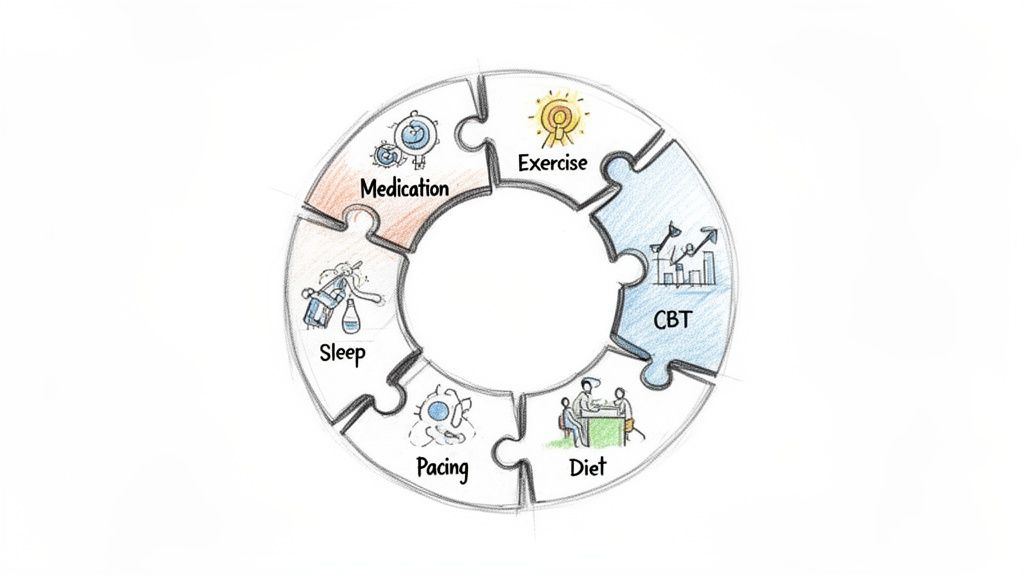
Medication can be a powerful tool for turning down the volume on fibromyalgia symptoms, but it’s rarely the whole story. Think of it as just one piece of the puzzle. To see the full picture of improved wellbeing, you need the other pieces to fit neatly alongside it.

This is where a more complete, holistic approach comes in. It's about combining medication with non-drug therapies that empower you to manage your condition day-to-day. In fact, the UK’s NICE guidelines strongly recommend this blended strategy, focusing on things that improve your overall quality of life, not just your pain levels.
Beyond the Prescription Pad
When you start weaving other therapies into your routine, you can really boost the effectiveness of your fibromyalgia medication UK treatment plan. These methods help you build resilience, conserve precious energy, and handle the mental and emotional toll that comes with living with chronic pain.
A well-rounded plan often includes several key components:
- Pacing Your Activities: This is all about learning to listen to your body and finding the right balance between rest and activity. Instead of pushing through until you crash, you learn to stop before the fatigue and pain set in, helping you break free from that awful boom-and-bust cycle.
- Graded Exercise Therapy: The very thought of exercise can feel impossible when you're in constant pain. This approach starts incredibly small—maybe just a few minutes of gentle stretching a day—and builds up ever so gradually. It helps improve strength and stamina without triggering a flare-up.
- Psychological Therapies: Cognitive Behavioural Therapy (CBT) can be a game-changer. It gives you practical tools to reframe how you think about and respond to pain, helping to break the vicious cycle where anxiety and stress make your symptoms feel even worse.
- Improving Sleep Hygiene: Never underestimate the power of good sleep. Simple habits like a consistent bedtime, a dark and quiet room, and avoiding screens before bed can make a huge difference to your sleep quality—which is absolutely fundamental to managing fibromyalgia.
A Pharmacist's Tip: "I often encourage people to try 'activity snacking.' Instead of aiming for one big 30-minute walk that feels overwhelming, try three 10-minute walks spread throughout the day. It feels so much more manageable and helps you stay active without overdoing it."
Your healthcare team, including your GP and pharmacist, are there to help you find the right resources and build a plan that works for you. The goal is to create a personalised toolkit that gives you more control and, ultimately, helps you live a better, fuller life with fibromyalgia.
Summary
Managing fibromyalgia in the UK involves a personalised game plan, often using 'off-label' medications like Amitriptyline, Duloxetine, and Pregabalin to tackle symptoms like widespread pain and poor sleep. Effective treatment is built on a strong partnership with your healthcare provider, clear communication, and being open to both standard and newer therapies. Ultimately, medication works best as part of a complete management plan that includes lifestyle adjustments like pacing and gentle exercise, putting you back in the driver's seat of your health.
Frequently Asked Questions
1. Why aren't there any licensed fibromyalgia medications in the UK? The European Medicines Agency (EMA), which regulates medicines across Europe, hasn't approved any drugs specifically for fibromyalgia. This is different from the US, where the FDA has. As a result, UK doctors rely on medications that are proven to be effective for the symptoms, even if they were originally developed for something else. This is known as 'off-label' prescribing.
2. Can I get fibromyalgia medication online in the UK? Yes, it's possible to get prescriptions from a fully regulated online pharmacy in the UK. This process always involves a secure online consultation with a registered prescriber. They will assess whether the treatment is safe and appropriate for you before issuing a prescription, which is especially useful for specialist medications like Low-Dose Naltrexone.
3. Will I have to take medication for the rest of my life? Not necessarily. For some people, medication is a long-term tool for managing a chronic condition. For others, it might be used to break a cycle of pain and poor sleep, which then allows them to engage more effectively in other therapies like physiotherapy or gentle exercise. Your treatment plan should be reviewed regularly and adjusted based on how you're doing.
4. How long does it take for fibromyalgia medication to work? Patience is key. Unlike a standard painkiller, most fibromyalgia medications can take four to six weeks to build up in your system and have a noticeable effect. Doctors will start you on a very low dose and increase it gradually to find the most effective dose with the fewest side effects.
5. Why won't my doctor prescribe strong painkillers? Doctors in the UK avoid long-term use of strong opioids like tramadol for fibromyalgia because the condition is caused by a sensitised nervous system, not tissue damage. These drugs carry a high risk of dependence and can sometimes even make pain sensitivity worse over time, a phenomenon known as opioid-induced hyperalgesia.
At Courier Pharmacy, we understand just how complex managing fibromyalgia can be. We provide confidential consultations and access to specialist medications, including compounded Low-Dose Naltrexone, to support your unique treatment journey. Learn how we can help you create a comprehensive management plan.


