Fibromyalgia Treatment Medication: A Practical UK Guide
Explore fibromyalgia treatment medication options in the UK. Learn which drugs target pain, sleep or fatigue, plus safe prescribing routes and what to expect.

SEO brief
Primary keyword: Fibromyalgia treatment medication Secondary keywords: fibromyalgia medicine, pregabalin, duloxetine, amitriptyline, milnacipran, NHS fibromyalgia treatment Search intent: Learn which fibromyalgia medicines help which symptoms, how they compare, and how to use them safely in the UK Target reader: UK adults with fibromyalgia, carers, and readers asking their GP or pharmacist about treatment options Product/service mention (if any): Courier Pharmacy, low-dose naltrexone consultation, regulated online pharmacy access Internal links available: courierpharmacy.co.uk fibromyalgia, low-dose naltrexone, side effects, online pharmacy pages
A week after another broken night, you're up before the alarm, stiff, foggy and already behind. The school run, a work shift or a day at the desk still needs doing, but your body feels like it's arguing with every step. That's the experience many people face before they start looking at fibromyalgia treatment medication.
The honest answer is simple. Medicine can help, but it usually helps one symptom at a time, and the benefit is often modest rather than dramatic. The best results come from matching the drug to the symptom that causes the most trouble, then combining it with movement, sleep care and pacing. If you've felt overwhelmed by the options, that's normal. The names sound similar, the side effects blur together, and every online forum has a different opinion. A calm, stepwise plan makes far more sense than chasing a miracle tablet.
Five key takeaways:
- No single medicine cures fibromyalgia, so treatment is about symptom control, not a quick fix.
- Pain, sleep, fatigue and mood often need different medicine choices.
- Amitriptyline, duloxetine, pregabalin and milnacipran are the core UK-relevant options.
- Common painkillers like ibuprofen and paracetamol aren't recommended for fibromyalgia treatment.
- Review early and switch if needed, because a fair trial should show real benefit.
Living With Fibromyalgia and What Medication Can Really Do
A busy parent wakes up already sore, with a head full of mist and a back that feels braced against every movement. A night-shift worker finishes work, tries to sleep in the day, and then wonders why the ache never seems to settle. This is the reality many people face with fibromyalgia treatment medication, because the need for relief often becomes urgent before the treatment plan is clear.
The first thing to know is that these medicines are not a cure. The NHS says the main treatments are exercise, talking therapies and medicines, and medicines sit inside a wider plan rather than replacing it. In practice, medication is used to dull pain, help sleep, lift some of the fog or ease low mood. It rarely does all four well at once.
Practical rule: if a medicine does not change your most troublesome symptom, it probably is not the right one for you.
That is why a fair trial matters. The aim is to see a clear, real-world improvement, not to wait forever hoping the tablet will transform everything. NICE-style care is stepped and symptom-targeted because fibromyalgia medicines have limited average effect and often need a quick review if they are not helping enough Annals of the Rheumatic Diseases.
The options can still feel confusing. Some people mainly want less pain. Others are desperate for sleep. Some want enough daytime energy to get through work, and others want less anxiety around the constant discomfort. That is why the best starting point is to ask, “Which symptom is ruining my day most?”
Your medicine choice usually follows that answer. If sleep is the biggest problem, the conversation looks different from a case dominated by pain plus anxiety or low mood. A symptom-led approach is the thread running through the rest of this guide, and it is the approach I would want a patient to use in a pharmacy consultation too. For background on the condition itself, many patients find it helpful to review the dedicated fibromyalgia information page.
How Fibromyalgia Medicines Work in the Body
Fibromyalgia is not caused by one damaged joint or one inflamed muscle. The main problem seems to be that the nervous system processes pain too loudly, so ordinary input can feel amplified. A practical way to understand it is as a volume dial set too high.
Turning down the pain signals
Medicines used for fibromyalgia try to turn that dial down. Amitriptyline is a tricyclic antidepressant, but in fibromyalgia it is usually used for its nerve-calming and sleep-supporting effect. Duloxetine and milnacipran are SNRIs, which means they affect serotonin and noradrenaline, two brain chemicals involved in pain and mood. Pregabalin works in a different way, by calming overactive nerve signalling.
These are not standard painkillers. They act more like nervous-system stabilisers. That is why they can help even when the pain feels widespread, deep and hard to localise.
Why common painkillers usually disappoint
People often reach first for ibuprofen or paracetamol. Fibromyalgia usually does not behave like a simple injury, so these medicines do not address the main problem. NCBI's patient medicine summary says common painkillers such as ibuprofen or paracetamol are not recommended for fibromyalgia treatment NCBI Bookshelf.
Pain relief in fibromyalgia is usually about calming the nervous system, not numbing a bruise.
That is why antidepressants and gabapentinoids appear in fibromyalgia care even if mood is not the main complaint. They are chosen for their effect on pain signalling, sleep quality and related symptoms, not because every patient has depression.
The trade-off is modest benefit. The evidence shows duloxetine, milnacipran and pregabalin can give substantial pain relief for only about 1 in 10 adults over 4 to 12 weeks, and there is no clear evidence of sustained benefit beyond 6 months Rheumatology. That does not mean the medicines are useless. It means the right one should be chosen for the symptom that causes the most trouble, then reviewed if the benefit is too small.
Low-dose naltrexone is another medicine patients often ask about, and the evidence base is still developing. For a plain-English overview of the idea, see this guide to how LDN is thought to work in fibromyalgia.
If you want a simple question to take to your GP, ask this, “Which medicine best fits my main symptom cluster, pain, sleep, fatigue or mood?”
First-Line Fibromyalgia Treatment Medication Options in the UK
A patient usually comes to the pharmacy or GP surgery with one main complaint, poor sleep, pain that feels everywhere, exhaustion that never quite lifts, or low mood that has settled in alongside the pain. The first-line medicines used in UK practice are chosen around that dominant symptom cluster, so the discussion starts with fit rather than a blanket list of drug names.
Amitriptyline is often the first medicine to discuss when sleep is poor and mornings feel heavy. Duloxetine fits better when pain sits alongside low mood or anxiety. Pregabalin is often considered when neuropathic-style pain and sleep disruption dominate. Milnacipran is another SNRI option, although it comes up less often in routine UK conversations with patients.
Comparative evidence supports that symptom-led approach. One review found duloxetine 120 mg showed stronger effects for pain and depression, while amitriptyline performed better for sleep, fatigue and health-related quality of life PMC. That does not make one medicine universally better. It means the symptom pattern should guide the choice.
| Medicine | Best for | Typical starting dose | Key cautions |
|---|---|---|---|
| Amitriptyline | Sleep, fatigue, night-time pain | Start low, often at night | Dry mouth, drowsiness, next-day grogginess |
| Duloxetine | Pain with low mood or anxiety | Start low, then review | Nausea, sleep changes, blood pressure issues in some people |
| Pregabalin | Pain plus poor sleep, nerve-like pain | Start low, then titrate | Dizziness, sleepiness, weight gain |
| Milnacipran | Pain with broader symptom burden | Start low, then increase if tolerated | Nausea, sweating, sleep disturbance |
The exact dose and timing should come from your prescriber, because tolerability matters as much as the drug name. In fibromyalgia, a higher dose is not automatically a better one. A small dose that you can live with is often more useful than a stronger dose that leaves you foggy.
Real-world use is often cautious and mixed, which matches what many patients report in clinic. A large observational study of 1,700 patients found pregabalin used by 24.5%, duloxetine by 26.8%, and milnacipran by 8.9%. Patients were taking an average of 2.6 medications for fibromyalgia, and 77.8% used concomitant medication PMC. That points to fibromyalgia care as layered symptom relief, not one perfect prescription.
Pharmacist's tip: if a medicine makes you sleepy but does not reduce the symptom you care about, tell your prescriber early. That is a valid reason to review it.
A shift worker with severe night-time pain and broken sleep may do better starting with a night-time option such as amitriptyline or pregabalin, because daytime drowsiness matters less when sleep is already poor.
A parent who feels pain and low mood together may find duloxetine more useful than a sedating option, especially if school runs and work calls leave no room for next-day grogginess.
Pharmacist's tip: give a medicine a fair trial, but do not stay loyal to a bad fit. If it blunts you more than it helps you, that is useful information.
Second-Line and Off-Label Options Patients Often Ask About
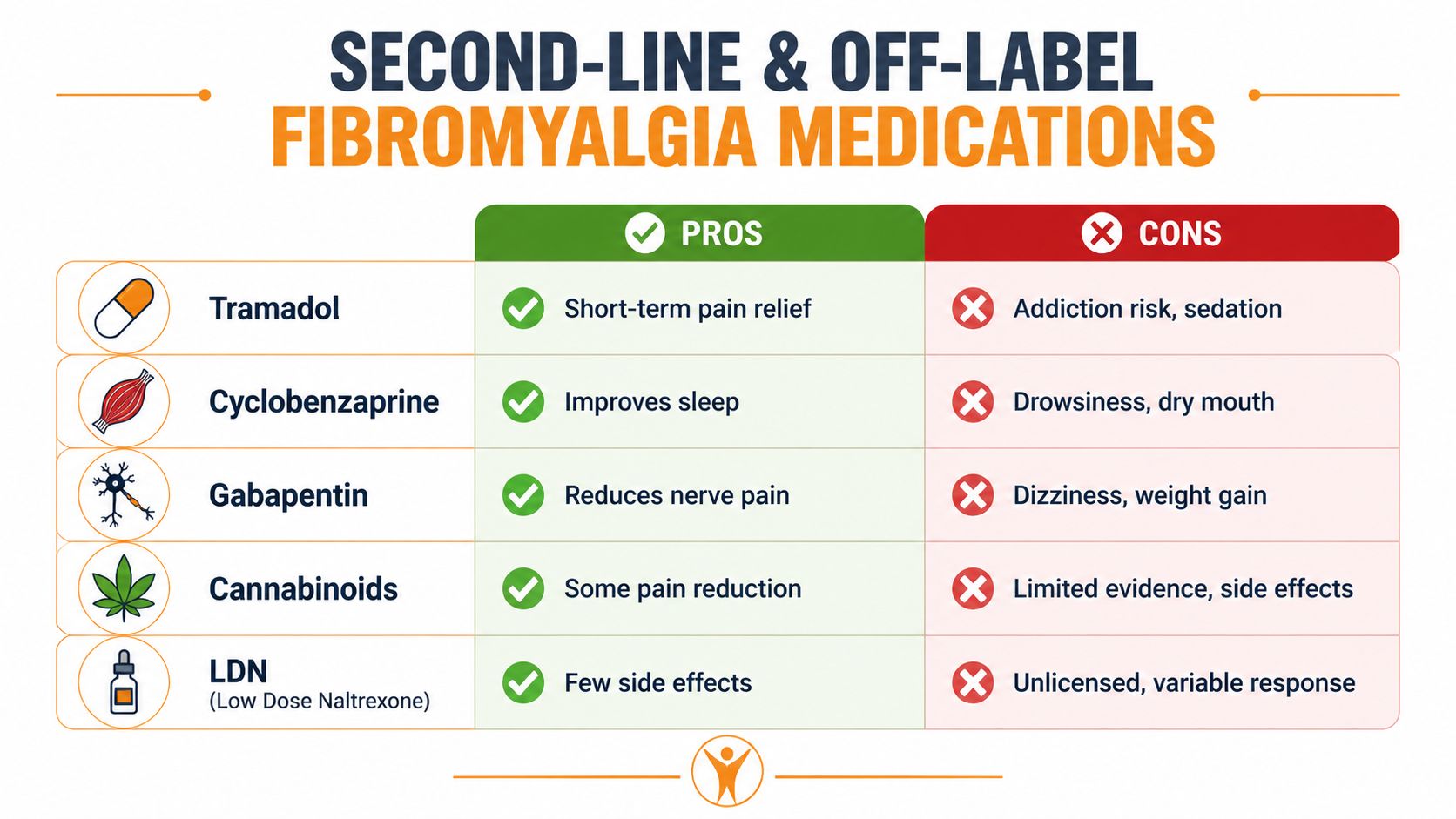
A patient who has tried the usual first-line choices and still wakes unrefreshed will often ask about medicines mentioned in support groups. The names that come up most often are tramadol, cyclobenzaprine, gabapentin, cannabinoids and low-dose naltrexone. That question is reasonable, because these options are discussed widely, but the evidence is less even than many online posts suggest.
What's worth knowing before trying them
Tramadol can ease pain for some people, especially when pain is the symptom that still dominates the day, but it carries dependence risk and can cause sedation. Cyclobenzaprine is sometimes used when sleep is the main problem, though dry mouth and next-day drowsiness are common. Gabapentin may suit people whose symptoms feel more like nerve pain or disturbed sleep, yet response is variable and side effects can limit how far it goes. Cannabinoids and low-dose naltrexone attract interest for pain and sleep, but the evidence base is still uneven, so they are not standard first-line NHS answers.
Matching the medicine to the symptom cluster matters more than the drug name itself. A patient whose worst problem is pain may hear a different conversation from someone whose main issue is broken sleep, and someone with low mood alongside fatigue may need a different discussion again. That is how UK prescribing should be approached, with stepped care and a clear view of what each option might realistically improve.
It also helps to be clear about whether a medicine is licensed, off-label or experimental in your setting. That distinction matters more than a claim made in a forum thread, because it affects what a clinician is likely to offer, how closely they will monitor it, and how much uncertainty sits around the choice.
The wider literature still returns to non-drug care as the foundation, even while interest in off-label medicines keeps growing. Reviews note that exercise, CBT and education remain the strongest non-pharmacological options, while evidence for many medicines outside the core group stays limited or inconsistent PMC.
Why opioids are usually a poor fit
Fibromyalgia pain is not the same as acute injury pain. Strong opioid-style treatment often disappoints over time, or brings more harm than help, because it does not match the underlying pattern well. Tramadol sits in a grey area, since some clinicians do use it, but it is still not a clean long-term answer.
If a patient asks me whether an opioid is the next step, I bring the conversation back to the symptom that is still least controlled and the side effects they can tolerate. That matters even more when pain, sleep and mood are all feeding into one another. A medicine that helps pain a little but leaves someone foggy all morning may not be a good trade.
For a UK-specific discussion of one emerging option, the low-dose naltrexone guide explains where it sits in current practice.
Pharmacist's tip: if a medicine is described as “worked for someone on a forum”, ask which symptom improved, how long the benefit lasted, and what the side effects were. That detail matters more than the headline.
Safety, Side Effects and When to Change Your Medication
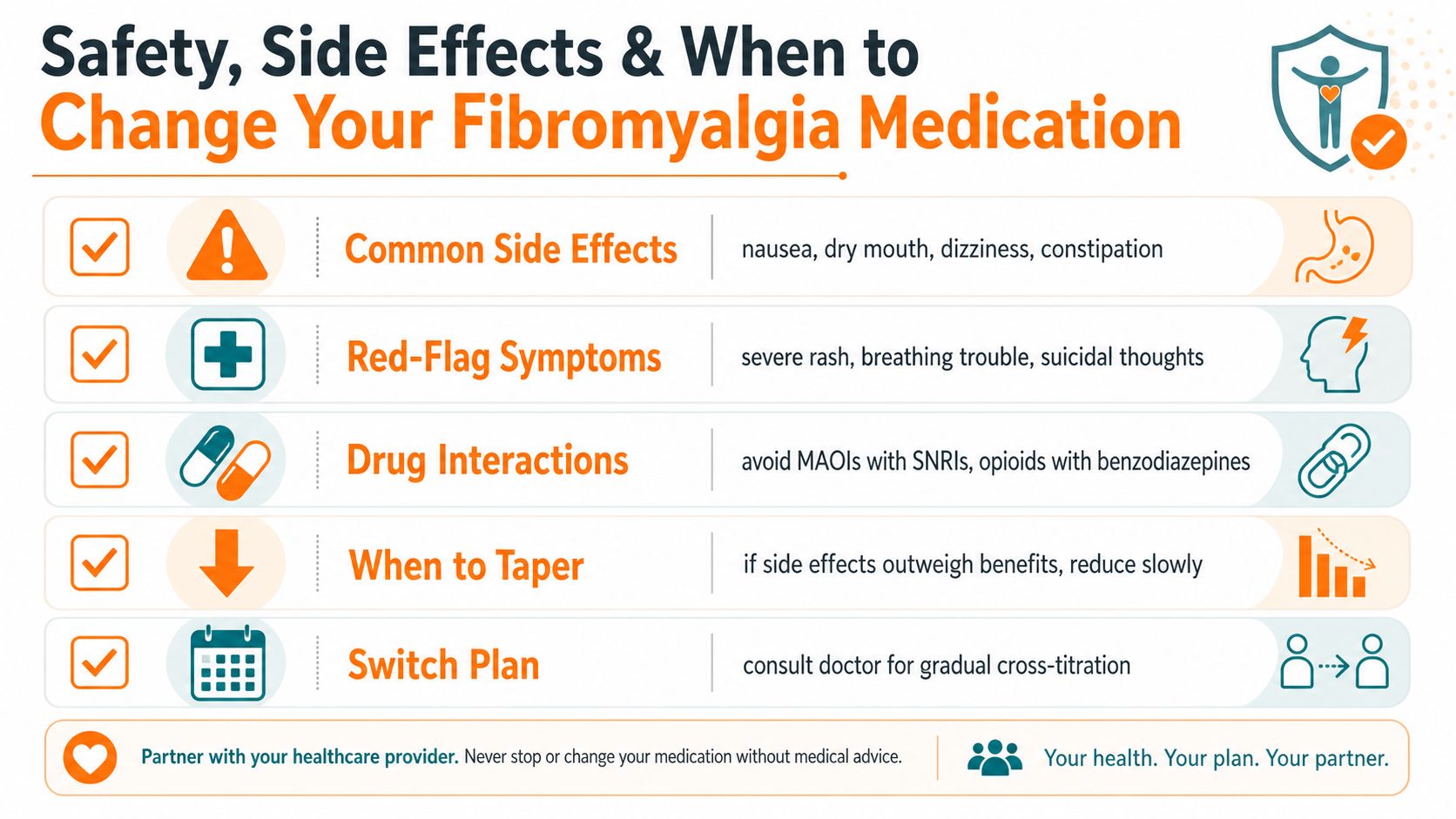
The first few weeks often tell you more about a fibromyalgia medicine than the prescription label does. A drug may ease pain a little, settle sleep, or lift daytime function, but it can also leave you drowsy, light-headed, sick, or dry-mouthed before any benefit is clear. The practical job is to watch the pattern, rather than reacting to one rough day.
Common issues to expect
Amitriptyline often causes sleepiness, dry mouth and a morning hangover. Duloxetine can bring nausea or changes in sleep. Pregabalin may cause dizziness and weight gain. Milnacipran can feel activating for some people, which is unhelpful if sleep is already fragile.
The question is whether the effect is mild and settling, or whether it is taking more from your day than the medicine is giving back. If the side effects are getting in the way of work, driving, caring responsibilities, or basic daily function, a review makes sense.
Red flag: severe rash, breathing trouble or suicidal thoughts need urgent medical help.
Don't stop suddenly without advice
Some medicines need tapering. Stopping too quickly can make you feel worse, not better, and that can create the false impression that the drug was helping after all. In practice, it usually means your body needs a slower exit plan.
A straightforward medication review checklist helps:
- Write down your main symptom: pain, sleep, fatigue or mood.
- Note the side effects: when they started and whether they eased.
- Track one clear outcome: better sleep, less pain, or more daytime function.
- Bring all medicines: prescriptions, over-the-counter products and supplements.
- Ask about interactions: especially if you take other sedating drugs or antidepressants.
A review should focus on whether the medicine still matches the symptom cluster that matters most to you. If sleep is the main problem, a drug that mainly helps pain but leaves you groggy may be the wrong trade-off. If pain is the issue, a treatment that only nudges sleep but causes nausea may not be worth continuing. For a UK-specific discussion of low-dose naltrexone side effects, the Courier Pharmacy guide to low-dose naltrexone side effects gives a useful overview.
Pharmacist's tip: if you can't tell whether a medicine helps after a fair trial, that is a sign to review it, not to keep waiting in silence.
A note on driving and alcohol
If a medicine makes you sleepy, dizzy or slow to react, be careful with driving and with alcohol. The safest approach is to check how you respond first, then avoid stacking extra sedatives on top.
Combining Medication With Daily Life and Non-Drug Therapies
A tablet rarely carries fibromyalgia on its own. Medicines work better when they sit alongside steady daily habits, especially exercise, talking therapies and pacing, because fibromyalgia usually needs more than one form of support. Small changes done often tend to help more than big bursts of effort that are hard to keep up.
The right fit also depends on the symptom that bothers you most. A shift worker taking pregabalin or amitriptyline may need to watch timing closely, because drowsiness at the wrong point in the day can make early starts harder. Someone who feels brightest late morning may do better with a short walk or gentle stretch then, rather than forcing activity late in the evening when energy has already dipped. The medicine class can be the same, but the routine around it often needs to be different.
A simple way to layer things
Start with the smallest change that has a realistic chance of helping. That might mean a regular sleep routine, a short daily walk, pacing household tasks or a brief talking therapy appointment. Exercise and sleep hygiene are not glamorous, but when they are steady and achievable, they often do more than people expect.
The same approach helps when you review medicine. A short note on sleep quality, morning stiffness and daytime stamina gives a prescriber something concrete to compare with memory, which is often patchy when pain and poor sleep have been dragging on for months. It also makes it easier to tell whether the medicine is helping the symptom cluster you wanted to target, or whether it is only adding side effects.
Two UK examples
A gym-goer who still wants to train may do better with a lower-impact plan, then judge whether a medicine makes recovery easier or leaves them more tired. A busy carer may care less about complete pain relief and more about getting a small reduction in night-time pain, because being able to get through the morning is the aim.
For day-to-day coping, many people combine medicine with pacing, heat, gentle stretching and other self-help methods. That is usually more realistic than waiting for one medicine to solve everything. If you are comparing regulated online options in the UK, a regulated online pharmacy route can be part of that wider plan when it is clinically appropriate.

Pharmacist's tip: don't judge a medicine only by pain scores. If you sleep better, wake less wrecked, or cope better with work, that still counts.
How UK Patients Can Access Fibromyalgia Prescriptions Safely
In the UK, the usual first step is still your GP, who can assess symptoms, rule out other causes and start treatment if appropriate. Some people need a specialist referral, especially if symptoms are complex, treatment has already failed, or the picture isn't straightforward. That route matters because fibromyalgia is often managed best when the diagnosis and treatment plan are both reviewed properly.
Online care can also be useful if it's regulated and done well. Courier Pharmacy uses secure online questionnaires reviewed by human prescribers, with discreet home delivery and, where appropriate, follow-up support. It also provides formulations for people with allergies or intolerances, and it offers LDN consultations when clinically suitable, including a regulated online pharmacy route.
How to check an online pharmacy
Use these checks before you order:
- Look for GPhC registration: the pharmacy should be properly registered.
- Check MHRA compliance: medicines should come through legitimate UK channels.
- Read the process: a questionnaire alone shouldn't replace clinical review.
- Confirm contact options: you should be able to ask questions if something changes.
- Be wary of bargain sites: if it looks too easy, it may be unsafe.
What to ask for at review
If you're already on treatment, ask whether your current medicine matches your main symptom now. Symptoms change, so the best drug six months ago may not be the best one today. That's especially true if sleep has improved but pain or fatigue still dominates.
Courier Pharmacy is one option for people who want a regulated online route with prescription review and, when needed, formulations. For many patients, that convenience matters because chronic symptoms make repeated travel hard.
Key Takeaways and Common Fibromyalgia Medication Questions
A patient who wakes up stiff, drags through the afternoon, and then lies awake at night often needs a medicine matched to the symptom that is driving the day. Fibromyalgia treatment medication is for symptom control, not cure. In UK practice, amitriptyline, duloxetine, pregabalin and milnacipran are the main options people ask about, and the right choice usually depends on whether pain, sleep, fatigue or mood is the bigger problem.
If the first medicine falls short, that does not mean treatment has failed. It often means the drug does not fit the symptom pattern, the dose needs adjusting, or the plan needs more non-drug support. The aim is a worthwhile reduction in symptoms, with fewer bad days and better function, not perfection.
FAQs
Can fibromyalgia medicines cure the condition?
No. They can ease pain, improve sleep or reduce distress, but they do not cure fibromyalgia. They are one part of a wider treatment plan.
Which medicine is best for sleep problems?
Amitriptyline is often discussed when broken sleep is the main issue. Pregabalin may also suit people whose pain and sleep problems are tightly linked.
Which medicine is most useful if mood is low too?
Duloxetine is often a practical option when pain sits alongside low mood or anxiety. It fits that symptom mix better than a medicine chosen mainly for sedation.
Are ibuprofen or paracetamol useful for fibromyalgia?
Usually not. They are not standard treatments for fibromyalgia, so they tend to play a limited role, if any, in ongoing symptom control.
How long should I try a medicine before deciding it's not working?
Long enough to judge the response fairly, but not so long that you stay on a medicine that clearly is not helping. If there is no meaningful benefit, a review is sensible.
Can I drive on fibromyalgia medication?
Sometimes, but only if you know how it affects you. Sedation, dizziness and slower reaction time matter more than the diagnosis itself, especially with medicines that can make people feel drowsy at first.
What if the first medicine causes side effects?
Tell your prescriber early. A side effect may lead to a lower dose, a slower increase, or a switch to a different medicine that better matches your main symptom.
Is low-dose naltrexone an option in the UK?
It is an off-label option some patients ask about, but it is not the routine first choice. A specialist discussion helps if you are considering it.
When should I seek urgent help?
Seek urgent help for severe rash, breathing trouble or suicidal thoughts. Those symptoms need prompt medical attention.
What should I do next if I think my current medicine isn't right?
Book a review and bring a short symptom diary. If you want regulated access to consultation and prescription support, visit Courier Pharmacy to explore pharmacist-led options, including care for fibromyalgia and related medication questions.
Disclaimer: This article is for information only and isn't a substitute for personalised medical advice. If you're unsure about a medicine, speak to your GP or pharmacist before making changes.


