7 Foods to Help Penile Growth: What Evidence Shows
Discover what foods to help penile growth can and cannot do, plus safer nutrition advice, ED treatment options and when to seek medical help.
No food has been proven to increase penile size permanently. A balanced diet may support blood flow and erection quality, while persistent erection problems need medical assessment.
Searches for foods to help penile growth often mix two different goals. Penile size and erection fullness aren't the same. Better blood flow can help an erection become firmer, which may make the penis look or feel fuller, but it doesn't create permanent growth in an adult.
The NHS recommends weight loss when appropriate, stopping smoking, a healthy diet and daily exercise for men with erection problems [1]. That advice supports vascular health, not enlargement. The evidence also favours overall eating patterns, especially Mediterranean-style food, rather than a single miracle ingredient [2].
This guide reviews seven popular choices, explains what each can and can't do, and highlights safety points for medicines and medical conditions. You'll also find practical UK examples, pharmacist advice, warning signs and routes to proper care.
Five key takeaways
- No proven enlargement food: Food hasn't been shown to increase adult penile length or girth permanently.
- Blood flow matters: Healthy eating may support erections by supporting the heart and blood vessels.
- Patterns beat miracles: Fruit, vegetables, pulses, whole grains, nuts, seeds and oily fish fit the strongest advice.
- Supplements need caution: “Natural” enlargement products may contain hidden or unsafe ingredients.
- Persistent ED deserves care: A GP, pharmacist or prescriber can check causes and discuss suitable treatment.
1. Watermelon and L-citrulline
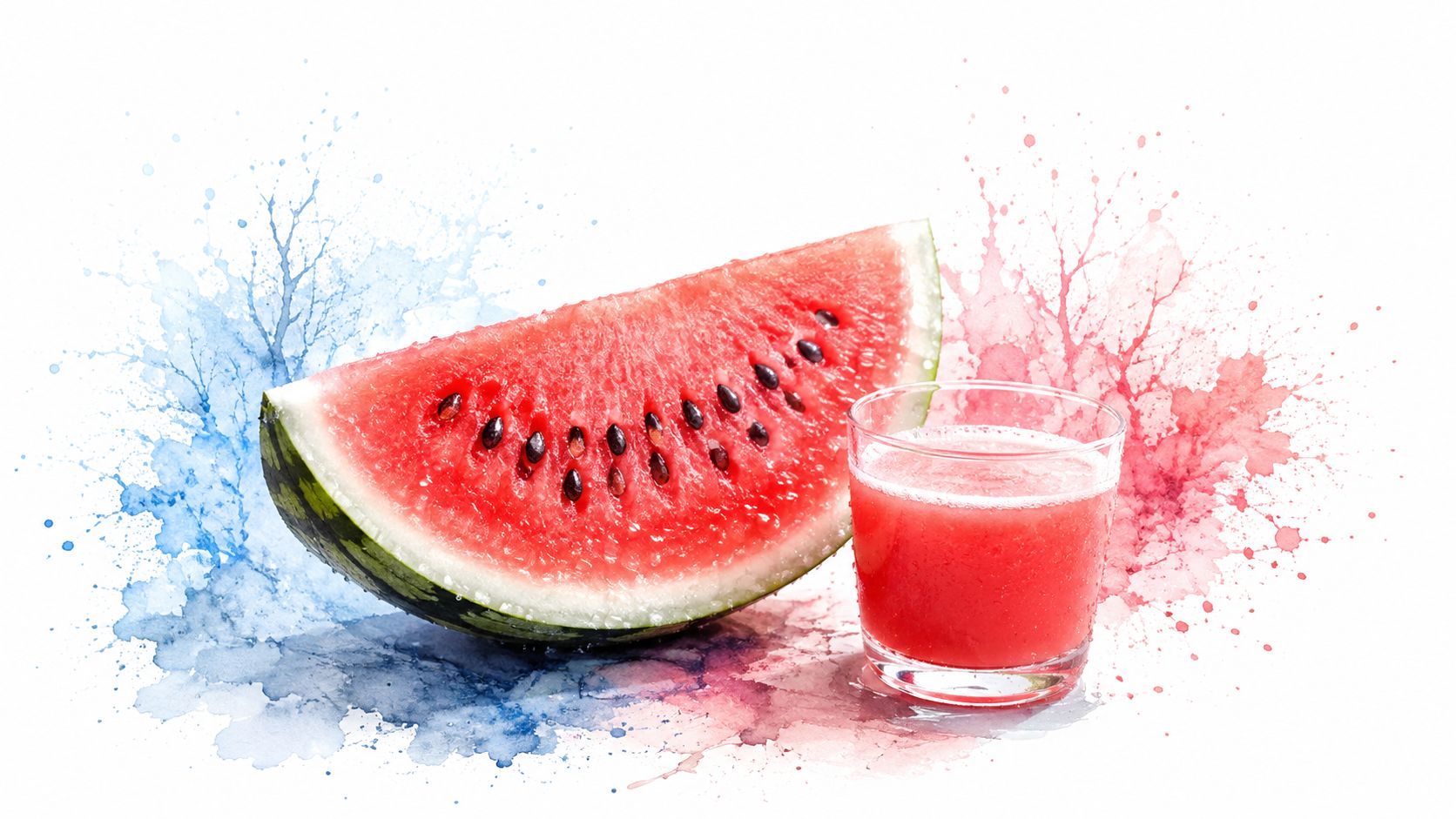
Watermelon is a sensible food for general vascular health, but it isn't one of the proven foods to help penile growth. It contains L-citrulline, an amino acid involved in the body's nitric-oxide pathway. Nitric oxide helps blood vessels relax, which supports blood flow during an erection.
That distinction matters. Improved blood flow may support erection firmness or perceived fullness. It doesn't increase the adult penis permanently. UK guidance frames diet as support for erectile function, not penile enlargement [1].
A practical serving could include chopped watermelon with yoghurt, or a small smoothie without added sugar. However, food provides variable amounts of L-citrulline, so you shouldn't treat watermelon as a measured medical dose. Large quantities also add natural sugar and may not suit everyone with diabetes or a fluid-restricted diet.
Pharmacist's tip: Don't replace a prescribed ED medicine with a food or supplement. Ask a pharmacist to check possible interactions before adding concentrated products.
A busy gym-goer might choose watermelon after exercise, alongside vegetables, whole grains and regular movement. If erections remain unreliable, that pattern is more useful than focusing on one ingredient. Men taking tadalafil can read practical dosing information in this guide to taking tadalafil, but a prescriber should personalise treatment.
The NHS also advises men using sildenafil that they can generally eat normally, while avoiding grapefruit because it can increase side effects [1]. Watermelon isn't a size-enhancement treatment, but it can be part of a balanced diet that supports circulation.
2. Dark chocolate with high cocoa content
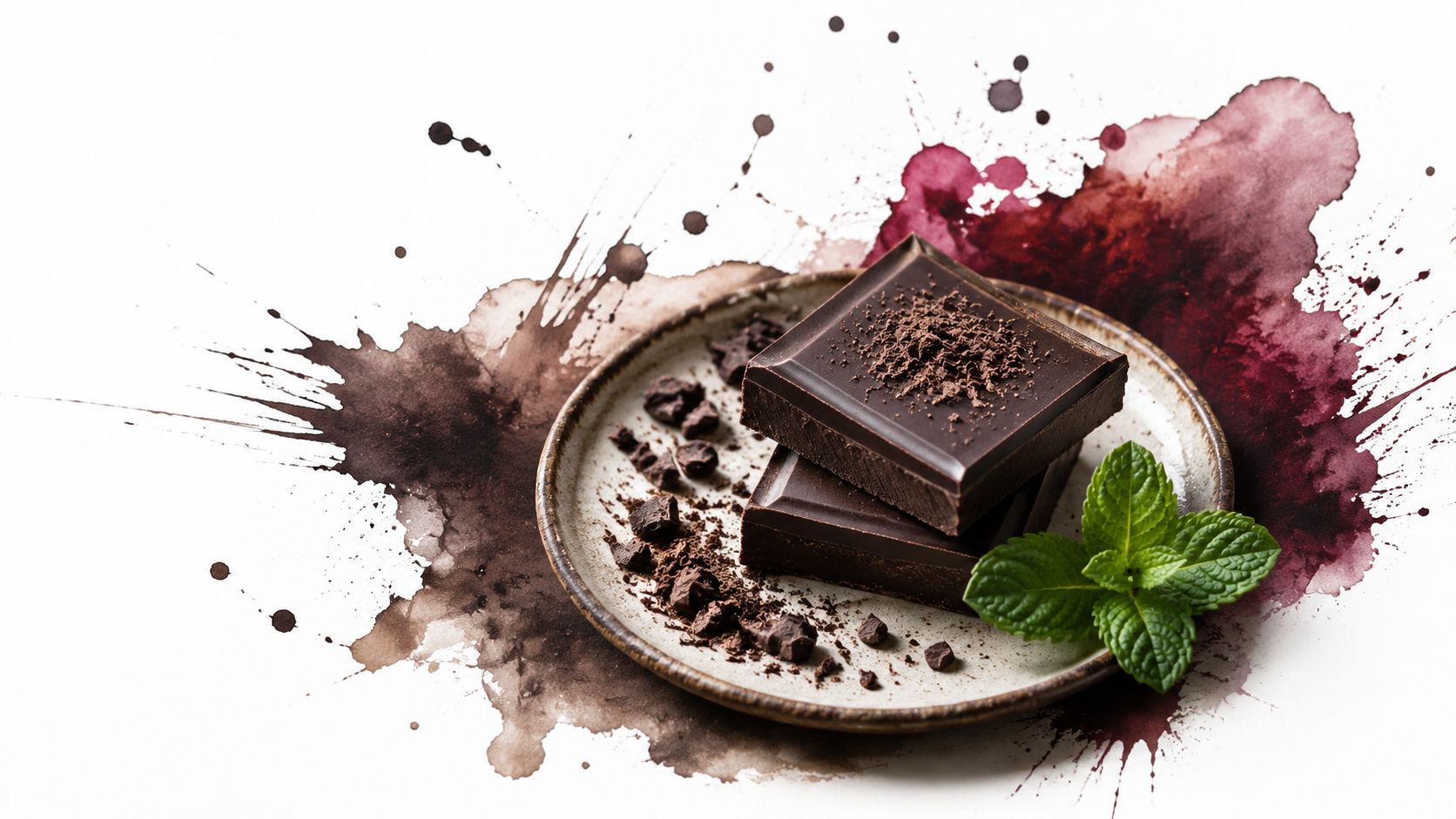
Dark chocolate contains flavonoids, plant compounds found in cocoa. Flavonoid-rich foods are associated with vascular health, but dark chocolate still won't enlarge the penis. Its useful role is as a small part of a wider diet, not as a daily enlargement remedy.
Choose a product with a high cocoa content and keep portions modest. Many bars contain added sugar and saturated fat, so eating large amounts could work against heart-health goals. NIDDK advice for erectile dysfunction favours vegetables, fruits, pulses, unsaturated fats and whole grains, while limiting saturated fats, refined carbohydrates, added sugars, packaged foods and alcohol [3].
A realistic option is a small piece after a meal, rather than an entire bar while watching television. Pairing it with berries or plain yoghurt can make it easier to keep the portion sensible.
Pharmacist's tip: If you take regular medicines, mention frequent dark-chocolate use during a medication review. This matters especially when your diet changes alongside treatment for blood pressure or blood clotting.
A shift worker with mild erection concerns might improve breakfast, replace processed snacks with fruit and nuts, and keep dark chocolate as an occasional treat. If the problem continues, the diet change shouldn't delay assessment. You can also read this explanation of how long sildenafil lasts and when it starts working.
Dark chocolate may support a heart-friendly eating pattern when used carefully. It cannot change penile tissue or produce permanent growth. The more useful question is whether your overall diet supports healthy blood vessels.
3. Fatty fish such as salmon, mackerel and sardines
Fatty fish supply unsaturated fats, including omega-3 fats. Salmon, mackerel and sardines can replace foods higher in saturated fat, supporting a heart-conscious eating pattern. NIDDK lists fatty fish among foods providing unsaturated fats for people managing erectile dysfunction 3.
That evidence relates to vascular health, not penile enlargement. Erections require blood to enter and remain in penile tissue, so a diet that supports cardiovascular function may help erection quality over time. It does not increase penile length or girth permanently.
Try grilled salmon with whole grains and leafy vegetables. Tinned sardines make a practical lunch with wholegrain toast, tomatoes and salad. Mackerel works with potatoes and steamed greens, although packaged varieties may contain considerable salt.
Someone who replaces some red-meat meals with sardines may find the change easier to maintain than a strict diet. Keeping tinned mackerel at work can also provide a healthier lunch without relying on supplements. If sexual confidence improves, overall vascular and lifestyle changes are a more plausible explanation than penile growth.
Pharmacist's tip: Ask before taking an omega-3 supplement if you use anticoagulants, have a bleeding condition or have an upcoming procedure.
The strongest dietary evidence concerns eating patterns rather than isolated foods. A review associated Mediterranean-style eating with better erectile outcomes and identified vegetables, fruit, nuts, seeds, whole grains and fish as practical components [2]. Fatty fish therefore has a useful place on the plate, but no special enlargement effect.
People who avoid fish can discuss suitable alternatives with a pharmacist or GP. High-dose supplements are not automatically safer than food, and persistent erection problems warrant medical assessment rather than a search for foods promising permanent growth.
4. Chilli peppers and capsaicin
Chilli peppers contain capsaicin, the compound responsible for their heat. Capsaicin may influence blood-vessel activity, but the evidence doesn't prove that eating chilli increases penile size. At most, chilli can add flavour to a diet that supports healthier food choices.
Use it in beans, vegetable soups, grilled fish or tomato-based dishes. Start with a small amount, particularly if you rarely eat spicy food. Eating chilli with a meal may feel more comfortable than taking it on an empty stomach.
A 38-year-old who adds chilli to home-cooked meals may also reduce reliance on salty sauces. A 50-year-old with mild blood-pressure concerns might use herbs, garlic and chilli while walking more often. If sexual confidence improves, several changes may explain it. Chilli alone shouldn't receive the credit.
When chilli isn't a good fit
Capsaicin can trigger heartburn, stomach discomfort or bowel symptoms in some people. Reduce the amount if symptoms appear. Seek advice if symptoms persist, especially if you have reflux, inflammatory bowel disease or take medicines that affect your stomach.
The broader food message is stronger than the chilli claim. NIDDK advises limiting sodium, added sugars, packaged foods, saturated fats and alcohol while favouring vegetables, fruit, pulses, whole grains, nuts, seeds and unsaturated fats [3]. Chilli can help make those foods more appealing, which is a practical benefit.
A useful rule: Choose chilli because it helps you enjoy healthy meals, not because it promises enlargement.
People with persistent ED shouldn't keep increasing chilli intake in search of a result. A vascular problem, diabetes, medicine side effect, anxiety or hormone issue may need proper assessment.
5. Pomegranate juice and seeds
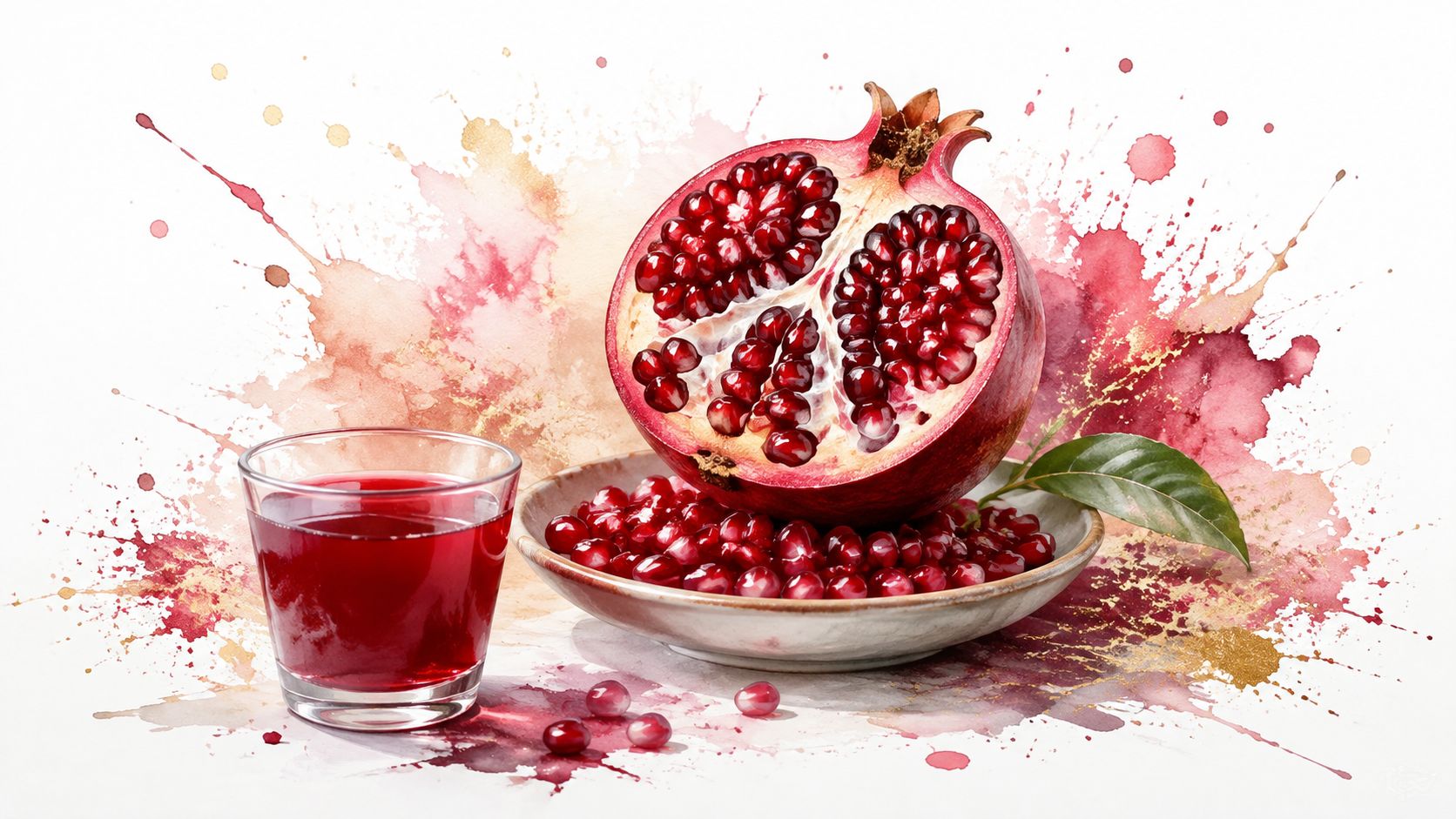
Pomegranate contains polyphenols, plant compounds that may support the body's defence against oxidative stress. Small studies have explored pomegranate juice and erectile function, but the verified UK evidence for this topic supports a cautious conclusion. Pomegranate may fit a heart-conscious diet, yet it hasn't been proven to enlarge the adult penis.
Seeds provide texture and fibre, while juice can contain a concentrated amount of natural sugar. If you choose juice, avoid products with added sugar and consider a smaller serving or dilution. Seeds work well over porridge, plain yoghurt or a salad.
A 55-year-old might add seeds to breakfast instead of a sweet topping. A 48-year-old could choose pomegranate alongside more exercise and less alcohol. If erections improve, the likely explanation is the combined effect of healthier habits, improved fitness, reduced stress and any prescribed treatment.
Check medicines before combining products
Pomegranate products can raise medication questions. The safest approach is to tell your GP or pharmacist about regular use, especially if you take medicines for blood pressure, cholesterol, blood clotting or erectile dysfunction.
Pharmacist's tip: Don't judge a food by a supplement advert. Supplements may contain concentrated extracts that behave differently from ordinary servings.
You can arrange a wider review through a male hormone health check if low libido, tiredness or other symptoms raise questions about hormones. Testing should support clinical decisions, not encourage self-treatment.
The practical conclusion remains modest. Pomegranate may add variety and plant compounds to meals. It can't change adult penile anatomy.
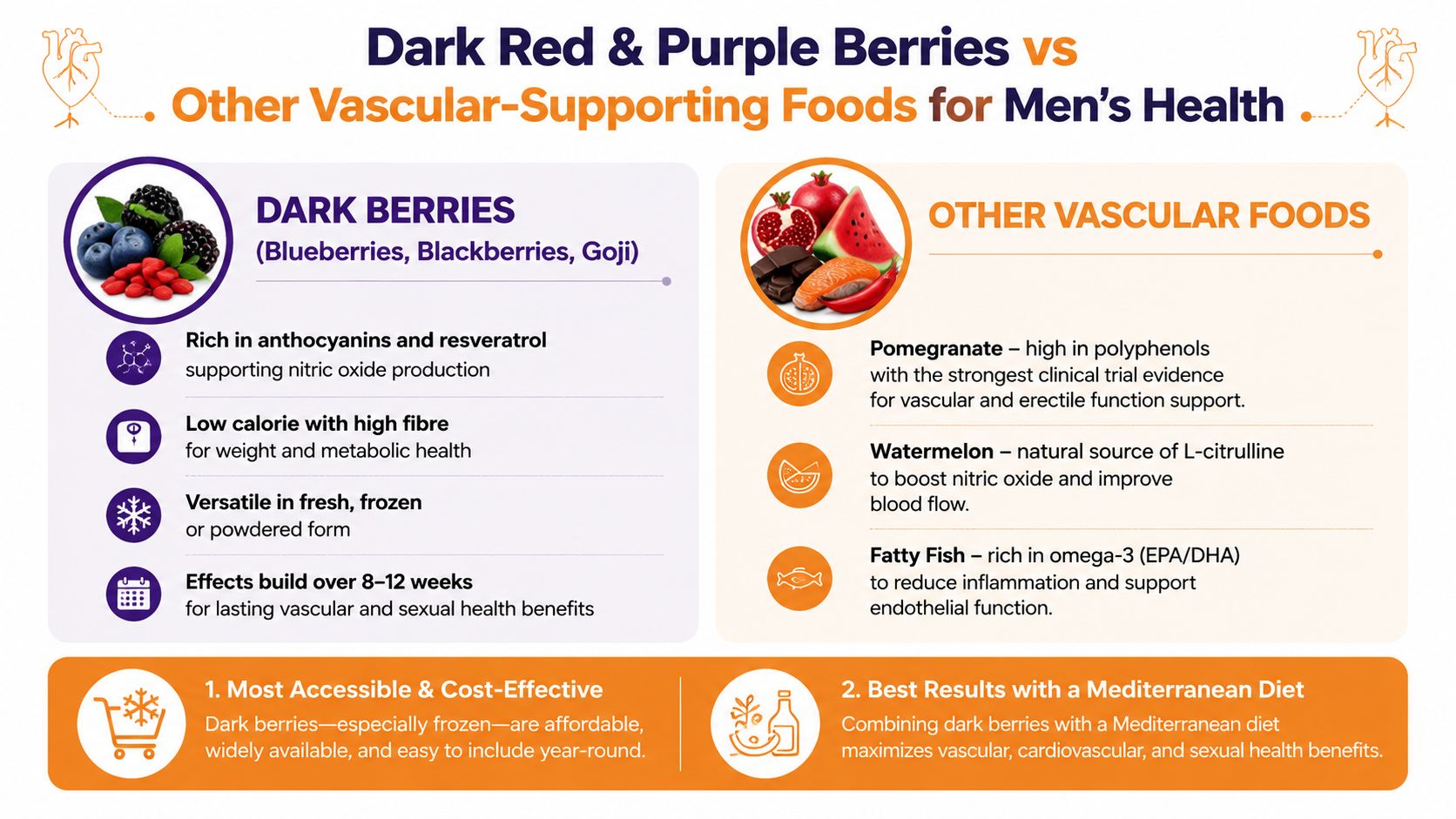
6. Dark red and purple berries
Blueberries and blackberries contain anthocyanins, plant pigments found in many dark-coloured fruits. Flavonoid-rich fruit has attracted interest because it may support blood-vessel function. The important claim is about erection support, not permanent penile growth.
A BBC evidence summary reported that men with the highest fruit intake were 14% less likely to experience erectile dysfunction [4]. The same summary discussed citrus flavanones and L-arginine-rich foods as biologically plausible supports for nitric-oxide production and blood flow [4]. This doesn't prove that a particular berry will solve ED or make the penis larger.
Frozen berries are often convenient for a busy parent. Add them to porridge, plain yoghurt or a smoothie. Nuts and seeds can add unsaturated fats, while oats or another whole grain can make breakfast more filling.
A 42-year-old gym-goer might use frozen blueberries after training, then notice better energy after improving sleep and reducing alcohol. A 60-year-old may rotate berries into breakfast while monitoring blood glucose with a GP. Those are realistic lifestyle changes, not proof of a berry-driven size increase.
Pharmacist's tip: Check labels on berry drinks and powders. A product marketed as “natural” may contain added sugar, stimulants or other active ingredients.
The broader evidence supports dietary patterns. A flavonoid study associated higher intakes of flavanones, flavones and anthocyanins with 9% to 11% lower ED incidence, while fruit intake showed the 14% lower risk noted above [2]. These associations help explain why fruit matters, but they don't turn berries into enlargement products.
7. Practical guidance, expectations and pharmacy support
The most useful plan combines food with realistic expectations. No item on this list has proven permanent effects on adult penile length or girth. A healthy eating pattern may support erection quality by helping blood flow, weight and cardiovascular risk, which is the focus of NHS guidance [1].
Start with changes you can repeat:
- Build balanced plates: Include vegetables, fruit, pulses, whole grains, nuts, seeds and unsaturated fats.
- Choose fish where suitable: Use salmon, sardines or mackerel as practical alternatives to some higher-saturated-fat meals.
- Review habits together: Include exercise, sleep, smoking cessation, stress support and sensible alcohol choices.
- Avoid risky promises: Be wary of pills, creams and supplements sold as penis-enlargement treatments.
- Track the right outcome: Notice erection reliability, libido and wellbeing, not only measurements.
A man with mild ED may combine dietary changes with exercise and a confidential consultation. A clinician can review symptoms, medicines and health risks before discussing treatment. NICE's UK-only CKS information focuses on assessment and treatment of ED, including PDE5 inhibitors where suitable, rather than food-driven growth [5].
The NHS-linked prescribing support document says patients should receive eight doses over eight weeks of a PDE5 inhibitor at the maximum dose, with sexual stimulation, before clinicians consider non-response [6]. That detail shows why supervised treatment needs a fair trial. It also shows why food shouldn't replace a proper plan.
Courier Pharmacy offers online men's health consultations, prescription treatment where suitable, testing and pharmacist support. Its services include erectile-dysfunction care and hormone-related assessments, but you still need an individual clinical review.
If you're asking whether Viagra can make you bigger, the answer is no. ED medicines help blood flow during sexual stimulation. They don't permanently enlarge the penis.
7-Item Comparison: Foods for Penile Growth
| Item | Implementation Complexity 🔄 | Resources & Dosage ⚡ | Expected Outcomes 📊⭐ | Ideal Use Cases 💡 | Key Advantages ⭐ |
|---|---|---|---|---|---|
| Watermelon (L‑Citrulline) | Low, eat fresh or juice; seasonal sourcing | Large food volumes for study doses; ~200–300 g/day food or 1.5–3 g supplement | Modest improvement in blood flow/erection quality (⭐⭐); weeks to months | Mild ED, hydration-focused diets, adjunct to lifestyle changes | Natural L‑citrulline source; low calorie; cardiovascular support |
| Dark Chocolate (70%+) | Low, daily square(s); easy to include | Small daily portion ~30 g (2–3 squares) | Moderate endothelial and erectile benefit (⭐⭐⭐); cumulative over weeks | Palatable daily treat within heart-healthy diet | High flavonoids; easy adherence; mood benefits |
| Fatty Fish (Salmon, Mackerel, Sardines) | Low–Moderate, meal prep/cooking required | 2–3 servings/week (~150 g per serving) | Good vascular benefit and reduced inflammation (⭐⭐⭐); months for full effect | Replace red meat; those needing omega‑3s for CV and sexual health | EPA/DHA for endothelial function; multiple preparation options |
| Chilli Peppers & Capsaicin | Low, culinary adjustment and tolerance build | Small amounts (1–2 chillies or 1–2 tsp sauce) 2–3×/week | Modest vasodilation and metabolic effects (⭐⭐); variable by tolerance | Spice lovers; calorie‑free flavouring; adjunct for vascular support | Affordable, anti‑inflammatory, thermogenic |
| Pomegranate Juice & Seeds | Low, daily habit (juice/seeds) | 250 ml unsweetened juice or 50–100 g seeds daily | Evidence-backed improvements in some RCTs (⭐⭐⭐); 4–12 weeks | Men with mild ED seeking food-based evidence; those wanting antioxidants | Strong clinical support among foods; concentrated polyphenols |
| Dark Red & Purple Berries | Low, fresh or frozen; minimal prep | 3–5 servings weekly; 50–100 g per serving | Improved endothelial function and metabolic markers (⭐⭐⭐); 8–12 weeks | Weight management, Mediterranean diet adherents, antioxidant support | High anthocyanins; versatile; frozen options for affordability |
| Practical Guidance & Courier Pharmacy Services | Moderate, requires consultations and monitoring | Access to testing, prescribers, and possible medications; costs vary | Personalised management with higher effectiveness when combined (⭐⭐⭐⭐); tailored timelines | Persistent/moderate‑severe ED, low T, need for medical oversight | Integrated clinical assessment, prescriptions, and targeted testing |
Build healthier erections, not bigger promises
Food hasn't been proven to enlarge an adult penis permanently.
A balanced diet can support blood flow and general heart health.
Better circulation may improve erection firmness and perceived fullness.
Mediterranean-style eating is more credible than a miracle food.
Avoid unverified enlargement pills, creams and concentrated supplements.
Persistent ED or low libido deserves a GP, pharmacist or prescriber review.
Chest pain or a prolonged painful erection needs urgent medical help.
A sensible action plan is straightforward. Choose more fruit, vegetables, pulses, whole grains, nuts, seeds and oily fish. Use watermelon, dark chocolate, chilli, pomegranate and berries as ordinary foods, not treatments. Add exercise, better sleep and smoking support where relevant.
Common questions
Can food make the penis grow permanently?
No food has proven permanent penile-enlargement effects in adults. Food may support vascular health and erection quality, but that isn't the same as anatomical growth.
Which foods support erections?
NIDDK lists vegetables, fruits, legumes, whole grains, nuts, seeds and fatty fish as useful food groups for erectile health [3]. The NHS also advises a healthy diet, daily exercise, weight loss when appropriate and stopping smoking for men with erection problems [1].
Can watermelon make erections stronger?
Watermelon contains L-citrulline, which is linked to the nitric-oxide pathway. It may fit a healthy diet, but food-based watermelon hasn't been proven to treat ED or enlarge the penis.
Do berries help erectile dysfunction?
Fruit intake and certain flavonoids have been associated with better ED outcomes [2][4]. That evidence supports regular fruit within a balanced diet, not a guarantee from one type of berry.
Can Viagra or sildenafil make the penis bigger?
No. Sildenafil supports erections during sexual stimulation. It doesn't permanently increase penile length or girth.
When should I speak with a doctor?
Speak with a GP or pharmacist if erection problems persist, recur or concern you. ED can relate to cardiovascular risk, diabetes, medicines, stress or other health issues.
When is an erection an emergency?
Seek urgent help for a prolonged painful erection, especially if it doesn't settle. Seek emergency care for chest pain, severe breathlessness, fainting or other severe symptoms.
Should I use penis-enlargement supplements?
Avoid products with unsupported promises or unclear ingredients. Ask a pharmacist or doctor before using any supplement, particularly alongside prescription medicines.
Three practical pharmacist tips
Pharmacist's tip: Bring a complete list of medicines, supplements and health conditions to an ED consultation.
Pharmacist's tip: Avoid grapefruit with sildenafil unless a clinician specifically advises otherwise, because the NHS warns it can increase side effects [1].
Pharmacist's tip: Don't increase a prescribed dose because a food or supplement hasn't helped. Contact the prescriber instead.
Two realistic UK scenarios
A busy parent may start with frozen berries at breakfast, oily fish at lunch and more walking. That approach supports a repeatable routine, but persistent ED still needs assessment.
A night-shift worker may improve sleep around shifts, reduce smoking and ask a pharmacist about treatment. Combining those steps is more realistic than expecting pomegranate juice or chilli to change penile size.
Suggested Medical Mojo internal links
- Erectile dysfunction treatment and support
- Healthy eating for heart and sexual health
- Men's health checks
- Understanding low testosterone
Visual ideas for the designer
- Food and blood flow illustration: A painterly plate of berries, leafy greens and oily fish, with brass anatomical-style plaque overlays. Alt text: “Heart-healthy foods that may support blood flow and erections.”
- Myth versus evidence graphic: A split image contrasting a miracle enlargement pill with a balanced meal. Use lime green, pale yellow-green and light grey. Alt text: “Food supports erection health but does not permanently enlarge the penis.”
- Pharmacist consultation scene: A UK patient speaking with a pharmacist beside a tablet showing a secure consultation. Alt text: “Confidential pharmacist discussion about erectile dysfunction and medicines.”
- Seven-food overview: An ornate brass-plaque infographic showing the seven foods and their realistic roles. Alt text: “Seven foods assessed for erection support and penile growth claims.”
Summary
No food has been proven to increase adult penile size permanently.
Healthy eating may support erections through better blood flow.
Fruit, vegetables, pulses, whole grains, nuts, seeds and oily fish are strong choices.
Use individual foods as part of a pattern, not as miracle cures.
Avoid unverified enlargement supplements and unsafe dosing.
Speak with a GP, pharmacist or prescriber about persistent ED or low libido.
Seek urgent care for chest pain or a prolonged painful erection.
This article is for information only. It isn't a substitute for personal medical advice, diagnosis or treatment.
Byline: Medical Mojo editorial team, UK health content specialists.
Clinical review: Placeholder for review by a UK-registered clinician with relevant men's health credentials.
How this content was created: We compared the food claims with NHS, NICE, NIDDK, BBC and peer-reviewed evidence supplied for this article. We separated claims about erection support from claims about permanent penile enlargement and highlighted medicine-safety issues for UK readers.
References
[1] NHS (2026) Erection problems, erectile dysfunction. Available at: NHS guidance on erection problems (Accessed: 26 August 2026).
[2] Cassidy, A. et al. (2016) Dietary flavonoid intake and erectile dysfunction evidence. Available at: University of East Anglia research paper (Accessed: 26 August 2026).
[3] National Institute of Diabetes and Digestive and Kidney Diseases (NIDDK) (n.d.) Eating, diet and nutrition for erectile dysfunction. Available at: NIDDK diet advice for ED (Accessed: 26 August 2026).
[4] BBC Food (n.d.) Diet and erectile dysfunction. Available at: BBC Food evidence summary (Accessed: 26 August 2026).
[5] NICE (n.d.) Erectile dysfunction, Clinical Knowledge Summaries. Available at: NICE CKS erectile dysfunction guidance (Accessed: 26 August 2026).
[6] Vale of York Clinical Commissioning Group (n.d.) PDE5 inhibitor prescribing support. Available at: UK prescribing support document (Accessed: 26 August 2026).
Courier Pharmacy offers confidential men's health consultations, erectile-dysfunction treatment where clinically suitable, hormone assessments and home blood testing. Visit Courier Pharmacy to discuss your symptoms and choose a safe, supervised next step.


