Functional Medicine UK: A Practical Guide to Root-Cause Care
Discover how functional medicine UK works, what it treats, costs, regulations, and how to find safe, evidence-based practitioners for chronic conditions.
SEO brief
- Primary keyword: Functional medicine UK
- Secondary keywords: root cause care, private functional medicine, functional medicine tests, UK regulations, cost transparency, chronic illness support
- Search intent: Understand what functional medicine means in the UK, what it costs, how it differs from NHS care, and how to judge safety and evidence
- Target reader: UK adults exploring functional medicine for chronic or complex symptoms, plus carers and health-curious readers
- Product/service mention, if any: Courier Pharmacy, alongside other legitimate care options
- Internal links available: Home blood test kits, chronic fatigue syndrome, online pharmacy UK, genomic testing UK, low-dose naltrexone guide
A nationally representative UK survey found that 65.9% of adults used at least one form of traditional, complementary or integrative medicine in the previous 12 months [1]. That's the real backdrop for functional medicine UK. It's not a fringe curiosity, it sits inside a much wider demand for personalised, prevention-focused care. The key question isn't whether people want it, it's whether a given clinic uses it well, safely, and with honest limits.
Five key takeaways
- Functional medicine looks for interacting causes, not just symptom labels.
- Private consultations and tests can add up fast, so ask for full pricing up front.
- Some interventions are sensible adjuncts, but they shouldn't replace NHS workup when red flags exist.
- UK regulation matters, especially for medicines, herbs, and practitioner scope.
- Good care feels measured, collaborative, and clear about what's proven versus exploratory.
What Functional Medicine Actually Means in the UK
Functional medicine in the UK is a systems-biology approach. It tries to understand how different body systems interact, then looks for upstream drivers of long-term illness rather than treating each symptom in isolation [4]. In practice, that usually means a longer consultation, a deeper history, and more focus on diet, sleep, stress, gut health, and medication review than you'd get in a routine appointment.
That matters because demand for this kind of care is already there. A UK survey in BMJ Open found that 65.9% of adults had used some form of TCIM in the previous 12 months, based on 1,559 adults across the UK [1]. The same study found 19.1% had seen a practitioner and 63.3% used a product or practice, which tells you this is mainstream consumer behaviour, not niche health tourism [1].

How it sits alongside NHS care
Functional medicine isn't the same as NHS primary care. NHS GP appointments are often short and designed to triage, diagnose, and manage risk efficiently. Functional medicine usually spends more time on pattern-finding, which can feel helpful if you've got fatigue, gut symptoms, pain, or a cluster of issues that don't fit neatly into one diagnosis.
Practical rule: if a practitioner talks only about “balancing” the body but won't name what they're measuring, walk away.
The model usually relies on multi-matrix testing, often blood, urine, stool, and saliva, then interprets those results together [4]. That can be useful when the clinician knows what they're looking for. It can also become expensive noise if testing is broad but the clinical question is vague.
A good functional medicine UK consultation should sound grounded. It should link symptoms to specific markers, explain why a test is being ordered, and say when NHS care still matters. If it sounds like a full replacement for conventional medicine, that's a red flag rather than a selling point.
How Functional Medicine Differs from Conventional GP Care
The biggest difference is structure. Functional medicine often starts with a long review, then uses serial follow-up and broader testing. Conventional GP care usually starts with a focused assessment, then moves to targeted investigation or treatment based on the most likely diagnosis.
That difference can help some patients. It can also create mismatched expectations. If you're hoping for a quick answer to a complex problem, functional medicine may feel more attentive. If you need urgent diagnosis, medication review, or rule-out of serious disease, standard care is usually the right first stop.
| Aspect | Functional Medicine | Conventional GP Care |
|---|---|---|
| Consultation style | Longer, history-heavy, pattern-based | Shorter, problem-focused, triage-led |
| Testing | Broader panels, often across several systems [4] | Targeted tests tied to symptoms and diagnosis |
| Treatment focus | Root-cause thinking, lifestyle, supplements, sometimes medicines | Diagnosis, symptom control, evidence-based prescribing |
| Follow-up | More serial monitoring and plan changes | Often episodic, with review if needed |
| Best for | Complex, multi-system complaints | Red flags, new symptoms, clear medical conditions |
For people with overlapping symptoms, the appeal is obvious. The approach asks, “What's driving this?” instead of “What label fits this?” That can be useful in chronic illness, but it doesn't make every test valuable, and it doesn't make every result actionable.
What the trade-offs look like
The trade-off is cost, time, and certainty. Functional medicine can spend more time on personal context, but it can also drift into over-testing. Conventional GP care may feel brisk, but it's built around established pathways and referral thresholds.
The other practical difference is monitoring. Functional medicine often depends on repeat review, which means a plan is only as good as the follow-through. A single consultation without clear next steps rarely changes much.
For patients, the best question isn't “Which system is better?” It's “Which system is safer and more useful for this problem?” For a new lump, chest pain, blood in the stool, or unexplained weight loss, conventional care comes first. For a long history of symptoms with partial answers, a well-run functional review may add value.
Common Tests and Treatments You Might Encounter
A lot of the language around testing sounds more advanced than it is. The useful question is simple: what does the test change? If the answer is “nothing important”, it's probably not worth paying for.
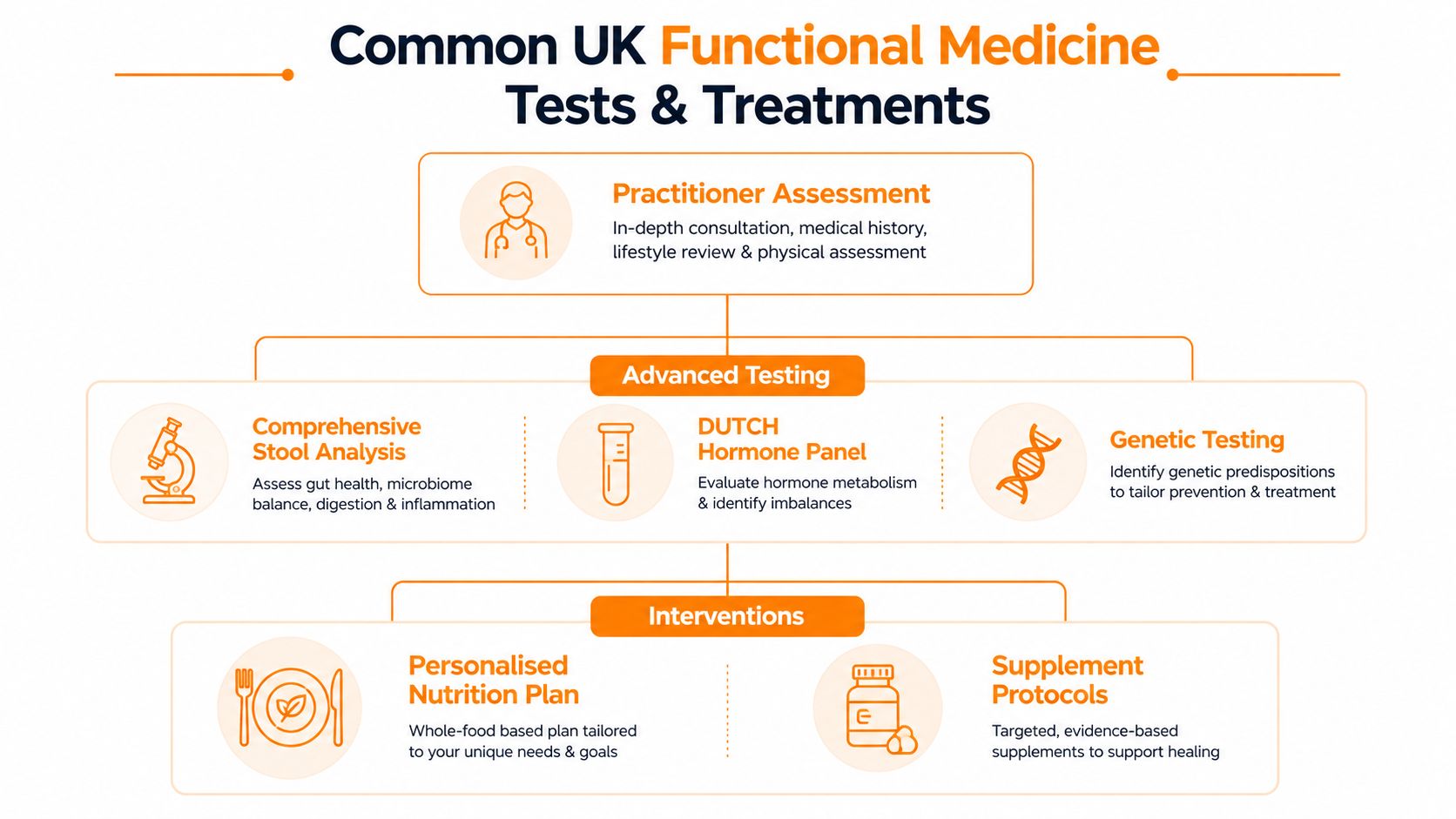
The functional medicine literature describes a systems-biology workflow that uses blood, urine, stool, and saliva to build a bigger picture of health [4]. In real practice, that can include gut markers, endocrine markers, inflammatory markers, and nutrient status. The value comes from interpretation, not from stacking tests for their own sake.
What patients most often see
- Blood panels: These can check inflammation, glucose control, thyroid markers, iron, B12, vitamin D, and other basics. They're most helpful when the result will change treatment.
- Stool testing: This looks at gut patterns and may help when symptoms point to persistent digestive trouble. It's best used with a clear clinical question.
- Saliva or dried urine hormone panels: These are usually used when sleep, stress, or cycle-related symptoms are part of the picture. They're only useful if the interpretation is clinically disciplined.
- Genomic testing: This may help with personalised nutrition or medicine response, but it's not a diagnosis by itself.
- SIBO breath testing: This can support assessment of bacterial overgrowth in the right context, but symptoms alone aren't enough to prove it.
If you're using home testing, read the process carefully before you buy. A practical overview of what a home blood test kit involves is available in this guide to using a home blood test kit in the UK.
Pharmacist's tip: the right test is the one that leads to a clear next step, not the one with the longest report.
Treatments worth discussing carefully
You'll also hear about nutraceuticals, diet changes, and sometimes medicines such as Low-Dose Naltrexone, GLP-1 therapies, or bespoke compounded formulations. The key issue is legality, quality, and indication. A branded plan only helps if the ingredients, dose, and follow-up are sensible.
For some patients, targeted prescription treatment matters more than broad supplement stacks. For others, the main gain comes from better nutrition, sleep, and symptom tracking. The best clinics mix those ideas without pretending supplements can do everything.
What the Evidence Actually Shows for Chronic Conditions
Some of the enthusiasm around functional medicine comes from a real gap in ordinary care. People with long-term, multi-factorial symptoms often want more time, more explanation, and a plan that fits daily life. That part is understandable. The evidence question is whether the added testing and treatment improves outcomes in a reliable way.
The honest answer is mixed. The UK survey in BJGP Open showed that complementary-medicine use has long clustered around musculoskeletal conditions, especially back pain, and also around mental health [2]. That fits the pattern you see in clinics, people seek out extra help when symptoms are chronic, burdensome, and only partly solved by standard care.
Where it can help most
Functional medicine tends to fit best as an adjunct for lifestyle optimisation, symptom tracking, and careful review of triggers. That can be useful in gut symptoms, fatigue, stress-related problems, and some long-term pain presentations. It can also help patients stay engaged with diet, sleep, movement, and medication routines.
The hard limit is evidence strength. A thoughtful plan is not the same as a proven cure. If a practitioner claims they can reverse a serious autoimmune disease, chronic fatigue syndrome, or hormonal disorder without proper medical workup, that claim is too big.
For chronic fatigue presentations, a careful conventional diagnosis still matters. If you're looking for a plain-English overview of the condition itself, this UK guide to chronic fatigue syndrome is a useful starting point.
When it should not stand alone
Functional medicine should never be the only model if you've got red flags. Seek urgent conventional help for chest pain, fainting, neurological loss, black stools, vomiting blood, severe breathlessness, or rapidly worsening symptoms. Those are not situations for supplement tweaks and stool tests.
Serious symptoms need serious medicine first. A helpful adjunct is still an adjunct.
The best use of functional medicine is often narrow and specific. It can support behaviour change, careful monitoring, and more joined-up thinking. It should not replace diagnosis, cancer pathways, emergency care, or standard treatment when those are needed.
UK Regulations and How to Verify Practitioner Credentials
UK regulation matters because “natural” doesn't mean unregulated. In the UK, functional medicine itself isn't broadly outlawed, but advertising and scope are still constrained by separate rules, including restrictions on claims for certain diseases such as cancer and tuberculosis [5]. There are also specific rules for chiropractic and osteopathy, plus a wider history of calls for more coherent CAM regulation [5].
Medicines are tightly controlled. A medicine can generally only be marketed after the MHRA has assessed it for quality, safety, and efficacy and granted a Marketing Authorisation [6]. The NHS Specialist Pharmacy Service also states that from 1 January 2025, licensed medicines in the UK are approved and authorised by the MHRA through UK-wide Marketing Authorisations, and medicines without a valid UK Marketing Authorisation are classed as unlicensed medicines [6].
Herbal products have their own rules. The UK government says herbal medicinal products need either a Marketing Authorisation or a Traditional Herbal Registration before they can be marketed, and the THR route requires evidence of at least 30 years of traditional use, generally including 15 years in the EU, plus safety evidence, manufacturing standards, and user information [7]. Practitioner-supplied exempt herbal remedies are also limited to specific circumstances under Human Medicines Regulations 2012 regulation 241 [8].
What to check before booking
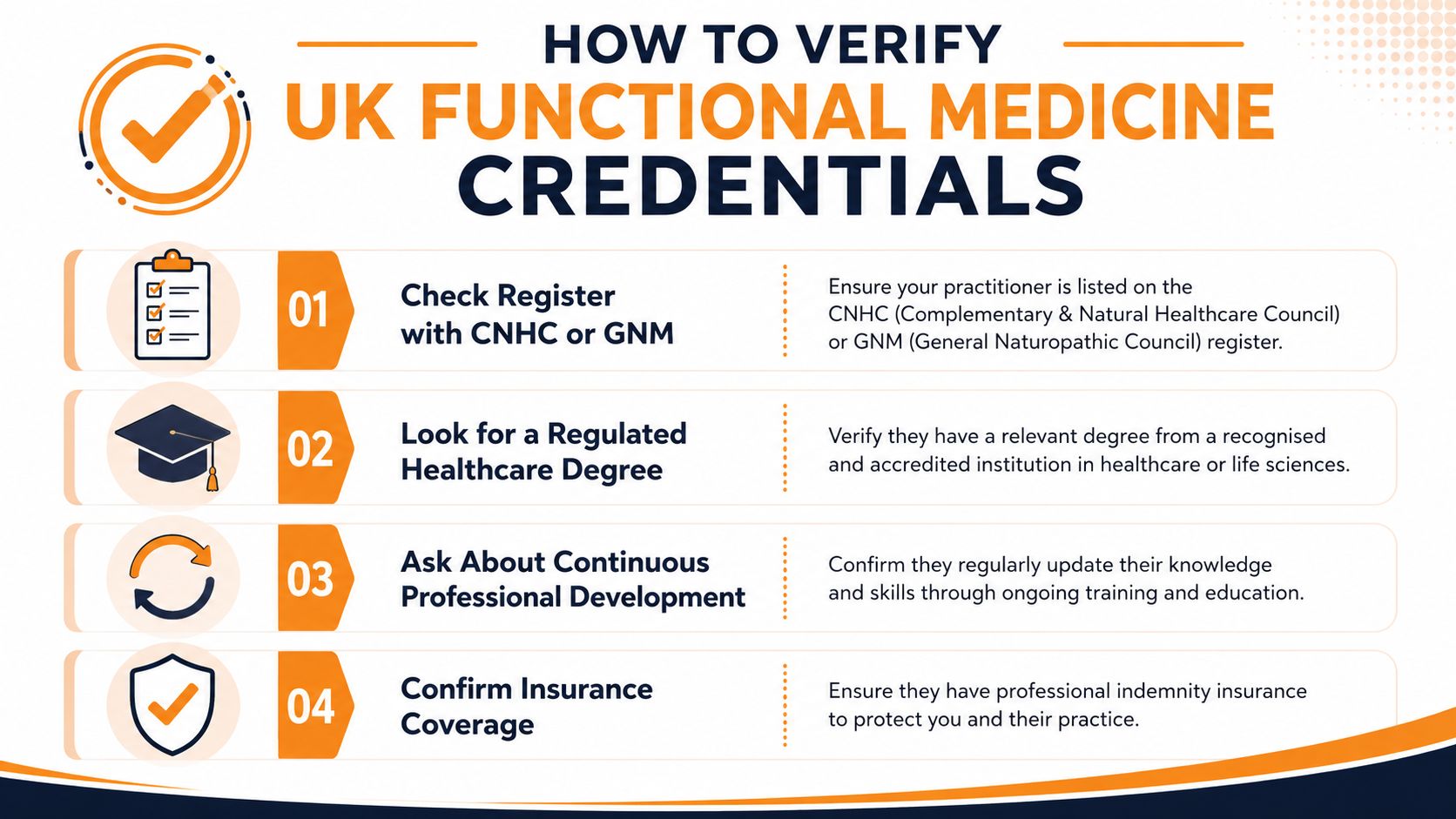
- Registration: Confirm the practitioner's role and regulator, such as the GMC, GPhC, or HCPC, where relevant.
- Medicine status: Ask whether any prescription product is licensed, unlicensed, or exempt.
- Herbal supply chain: Ask where the product comes from and whether it has a proper quality trail.
- Claims: Be wary of anyone promising to treat serious disease without proper diagnostics.
If you're considering a pharmacy-led service, the standard still matters. A legitimate online pharmacy should be easy to identify and transparent about prescribers, medicines, and supply. A practical overview of how a regulated service should work is covered in this online pharmacy guide.
Pharmacist's tip: if a clinic won't tell you whether a product is licensed, assume you need to ask harder questions.
Understanding Costs and Insurance Coverage in the UK
Price is where many people get surprised. UK directory data show initial functional medicine consultations ranging from £0 to £725, with follow-ups ranging from £0 to £495 [3]. That spread tells you two things. First, fees vary wildly. Second, the total bill depends on time, testing depth, and how much review is bundled into the plan [3].
The big cost driver is not always the first appointment. Advanced panels, repeat interpretation, and ongoing monitoring can push the price up quickly. That's especially true when the consultation includes several tests and a treatment plan that needs multiple check-ins.
Questions to ask before you pay
- What's included? Ask whether the fee covers interpretation, written plans, and follow-up.
- Which tests are optional? Find out what's essential and what's exploratory.
- What happens if results are unclear? Good clinics explain the next step before you book.
- What does insurance cover? Don't assume private cover includes functional testing or supplements.
Some private insurers may help with certain consultations, but many won't cover broad functional testing or nutraceuticals. Ask for the pricing in writing before you commit. If a provider can't give a clear figure, that's a problem.
For genomic testing, the cost issue is often the breadth of the panel and the interpretation time. A useful overview of that field is in this genomic testing guide. The same principle applies across most functional medicine services, clarity first, extras second.
Real UK Patient Scenarios and When Functional Medicine Fits
A busy parent with IBS and fatigue might benefit from a focused gut review, diet changes, and sensible symptom tracking. The useful part is not the label, it's the follow-through. If bowel symptoms are persistent but stable, targeted support can sit alongside NHS care without conflict.
A shift worker with sleep disruption and weight gain may need a different plan. Here, functional medicine can sometimes help with routine, food timing, and selected tests, but the bigger win is usually consistency. If the person is also on medicines that affect sleep, glucose, or mood, a pharmacist-led medication review can make more difference than another supplement.
A gym-goer who suddenly loses performance often needs a broader check. Low iron, poor recovery, under-fuelling, or another medical issue can all sit behind that change. A practical route is to review bloods, nutrition, and training load together rather than chasing one dramatic explanation.
The same caution applies to pain conditions. If someone asks about Low-Dose Naltrexone, that conversation should happen with proper clinical oversight, especially if they're already taking other medicines. For a UK-focused explanation of that option, see this Low-Dose Naltrexone guide for fibromyalgia.
Pharmacist's tip: supplements can interact with prescribed medicines, so keep a single updated list of everything you take.
The best scenario fit is simple. Functional medicine works better when the problem is chronic, the goals are realistic, and the clinician stays disciplined about evidence and safety. It works poorly when someone wants a miracle or wants to stop conventional care too soon.
Your Next Steps and Questions to Ask Before Booking
Start with the basics. Check the practitioner's registration, look at their qualifications, and read reviews with a sceptical eye. Then prepare a simple health timeline, your current medicines, and any previous results.
Bring direct questions. Ask what training they have, how they collaborate with your GP, what the total cost will be, and what they do when results don't fit the story. If the answers are vague, keep looking.

Red flags and green flags
- Red flag: guaranteed cures or pressure to stop prescribed treatment.
- Red flag: unlicensed products with no clear sourcing or labelling.
- Green flag: transparent pricing and realistic expectations.
- Green flag: willingness to work alongside NHS care when needed.
Functional medicine can be useful in the right hands, for the right problem. It should feel measured, not magical. If you want a clinic that takes medication safety, personalised care, and follow-up seriously, start there, not with the loudest promise.
Courier Pharmacy offers regulated, prescriber-led online care, home and venous blood testing, and personalised medicine pathways that can fit alongside conventional treatment. If you're weighing up functional medicine in the UK, visit Courier Pharmacy to see how a pharmacy-led approach handles testing, treatment, and follow-up in one place.
Summary
Functional medicine in the UK responds to a real patient demand for personalised care.
It can be useful for chronic, multi-factorial symptoms when the goals are realistic.
It should not replace urgent diagnosis, emergency care, or standard treatment.
Costs vary widely, so ask for full pricing before you book.
UK medicines and herbal products are regulated, and that matters for safety.
The best clinics explain what's proven, what's exploratory, and what comes next.
FAQs
What is functional medicine in the UK?
It's a systems-based approach that looks for interacting causes of chronic illness. It usually uses detailed history-taking, broader testing, and personalised plans.
Is functional medicine legal in the UK?
Yes, but it operates within normal UK rules on medicines, advertising, and professional scope. Some claims and products are still tightly regulated.
Does functional medicine replace my GP?
No. It can sit alongside NHS care, but it shouldn't replace diagnosis or urgent treatment. Serious symptoms always need conventional medical assessment first.
What tests are common in functional medicine?
You may see blood tests, stool analysis, hormone testing, genetic testing, and SIBO breath testing. The key question is whether the result will change management.
Why do functional medicine costs vary so much?
Fees depend on consultation length, testing depth, interpretation time, and follow-up. UK directory data show a very wide spread for both initial and follow-up appointments [3].
Are supplements enough to treat chronic illness?
Usually not. Supplements can support a plan, but they don't replace diagnosis, medicine, or lifestyle changes where those are needed.
How do I know if a practitioner is credible?
Check their registration, qualifications, insurance, and how clearly they explain costs and risks. Good practitioners are specific about what's licensed, what's optional, and what needs GP involvement.
What should I bring to my first appointment?
Take a list of medicines, supplements, symptoms, prior tests, and your main goals. A short timeline of when symptoms started can also help.
Can I use functional medicine if I'm already under NHS care?
Yes, many people do. The safest approach is to keep your NHS team informed and make sure private advice doesn't conflict with essential treatment.
Disclaimer
This article is for information only and isn't a substitute for medical advice, diagnosis, or treatment from a qualified clinician.
How this content was created
This article was written using UK regulatory sources, peer-reviewed research, and pharmacy-focused clinical judgement. It was checked against the verified data provided and kept within the limits of what those sources support.
References
- BMJ Open. Nationally representative UK survey on TCIM use. Available at: https://pmc.ncbi.nlm.nih.gov/articles/PMC12815132/
- BJGP Open. English survey on complementary and alternative medicine use. Available at: https://bjgpopen.org/content/2/4/bjgpopen18x101614
- Doctify UK. Functional medicine specialist directory data. Available at: https://www.doctify.com/uk/find/functional-medicine/united-kingdom/specialists
- Peer-reviewed UK-relevant functional medicine overview. Available at: https://pmc.ncbi.nlm.nih.gov/articles/PMC9173848/
- PubMed. UK CAM regulation and advertising restrictions. Available at: https://pubmed.ncbi.nlm.nih.gov/12442817/
- NHS Specialist Pharmacy Service. Explaining the licensed status of medicines. Available at: https://sps.nhs.uk/articles/explaining-the-licensed-status-of-medicines/
- UK government report on herbal medicines licensing and THR. Available at: https://assets.publishing.service.gov.uk/media/6a035312e71c4cdf4026bac6/GN8_FINAL_20260512.pdf
- British Herbal Medicine Association. Legislation on herbal medicines. Available at: https://bhma.info/legislation-on-herbal-medicines/


