Real GLP-1 Weight Loss Results You Can Expect In The UK
Discover the real GLP-1 weight loss results from UK studies. This guide explains timelines, key success factors, and how to maintain your progress safely.

In this article
- What GLP-1 results can you realistically expect?
- Clinical trials: the best-case scenario
- Real-world UK results: still life-changing
- GLP-1 results at a glance: clinical trials vs real-world UK data
- Why understanding the difference is key
- Why real-world results differ from clinical trials
- The impact of adherence and side effects
- Real-world data: a closer look at the numbers
- The role of lifestyle and support
- Your month-by-month GLP-1 weight loss timeline
- Month 1: The adjustment phase
- Months 2 to 3: Feeling the effects
- Months 4 to 6: Hitting your stride
- Months 6 to 12 and beyond
- Key factors that influence your success
- Consistency is your superpower
- How to maximise your GLP-1 results
- Real-life examples in the UK
- Navigating side effects and prioritising safety
- Common and manageable side effects
- Rare but serious risks to be aware of
- Thinking long-term: life after initial weight loss
- What happens when you stop taking GLP-1s?
- The power of ongoing support and coaching
- Summary
- FAQs
- What is a realistic amount of weight to lose on GLP-1s?
- How quickly will I see results on GLP-1s?
- Will I regain weight if I stop taking GLP-1s?
- Do GLP-1s work without diet and exercise?
- Are GLP-1 injections safe for long-term use?
- What are the most common side effects of GLP-1s?
- How much do GLP-1s cost in the UK?
- Can I drink alcohol while on GLP-1s?
- Meta Description
- Internal Links
- Byline and Review
- How This Content Was Created
- References
On average, real-world GLP-1 weight loss results in the UK show a significant 7% to 12% loss of total body weight over a year. While clinical trials often report higher figures of 15% to 21%, the results seen in everyday life are still life-changing. You've probably seen the headlines, but this guide will cut through the noise. We'll set realistic expectations, explain why your results might differ from a clinical trial, and show you what the journey actually looks like, month by month. We'll give you practical, UK-focused tips to help you get the very best results from your treatment.
Five Key Takeaways:
- Expect 7-12% Weight Loss: Real-world UK results are excellent but differ from the 15-21% seen in controlled clinical trials.
- Lifestyle is Key: Medication is a tool, not a magic bullet. Success depends on pairing it with a balanced diet and regular activity.
- Slow Titration is Normal: You'll start on a low dose and increase it gradually over months to minimise side effects.
- Safety Comes First: Only use GLP-1s from a regulated UK pharmacy and know the signs that require urgent medical help.
- Maintenance is a Mindset: Long-term success is about building sustainable habits while on the medication to prevent weight regain later.
What GLP-1 results can you realistically expect?
When you see numbers for medications like Wegovy and Mounjaro, it’s easy to get excited. But it is vital to understand where these figures come from. They don't always translate perfectly from the lab to your real life.
Clinical trials: the best-case scenario
The headline-grabbing percentages—often between 15% and 21% of body weight lost—come from highly controlled clinical trials. Think of it like an elite athlete’s training camp.
In these trials, participants are carefully screened. They follow strict protocols and get intensive, one-on-one support. It’s the perfect environment, designed to show the medication's maximum potential. It's science in a bubble.
Real-world UK results: still life-changing
So, what happens when these medications meet the real world? For the average person juggling work, family, and daily life, a more realistic goal is a weight loss of 7% to 12% over a year.
Make no mistake, this is a life-changing amount. It’s enough to significantly improve your health. It can reduce the risk of weight-related conditions and help you feel much better.
To put this into perspective, let's compare the numbers side-by-side.
GLP-1 results at a glance: clinical trials vs real-world UK data
| Medication | Clinical Trial Results (Average Weight Loss) | Real-World UK Results (Average Weight Loss) |
|---|---|---|
| Wegovy (semaglutide) | Up to 15-17% | Around 7-10% |
| Mounjaro (tirzepatide) | Up to 21% | Around 9-12% |
This table clearly shows that real-world results are still incredibly effective. They represent a huge step forward in weight management.
Why understanding the difference is key
Knowing this gap isn't meant to be discouraging—it's empowering. It helps you set achievable goals. You can avoid disappointment and focus on what really matters: consistent, healthy progress.
Your weight loss journey is a marathon, not a sprint. A steady loss supported by good habits will always be more effective in the long run.
Success with GLP-1s is a partnership. The medication is a powerful tool. But it works best when you pair it with positive lifestyle choices.
Here’s what truly moves the needle:
- A balanced diet: Prioritise protein, fibre, and healthy fats. A structured approach can make a huge difference, as explained in our guide to building a healthy Mounjaro diet plan.
- Regular activity: Find something you enjoy. Whether it's brisk walking or swimming, consistency beats intensity every time.
- Professional support: Working with a clinical team, like our pharmacists, is a game-changer. They help you manage side effects, stay motivated, and fine-tune your approach.
Why real-world results differ from clinical trials
You’ve probably seen the big numbers from major clinical trials promising 15% to 21% weight loss. So why do we often talk about a more realistic 7% to 12% in the real world? The medication is just as powerful. However, the conditions are completely different.
Think of a clinical trial as a pro athlete's training camp. It’s a perfectly controlled bubble. Every variable is optimised for success. But real life? It’s beautifully messy. It’s juggling work, family, and unpredictable schedules. This is where the gap between the lab and real life appears.
The impact of adherence and side effects
One of the biggest factors is medication adherence—how consistently people stick with their treatment. In a clinical trial, participants are highly motivated and constantly monitored. This keeps them on track. In the real world, life just gets in the way.
Side effects like nausea or constipation can also cause problems. While they’re usually manageable, they can sometimes make someone stop their treatment early. This, of course, will impact their final weight loss results.
Real-world data: a closer look at the numbers
So, what does the data from everyday UK users actually show? Studies looking at real-world use prove that GLP-1 drugs still deliver significant, life-changing weight loss.
For example, real-world data shows semaglutide (Wegovy) users achieve an average 7.7% body weight reduction after one year. For tirzepatide (Mounjaro), the results are even more impressive, sitting around 12.4% after 12 months. The difference from trial figures often comes down to about 50% of patients stopping treatment within a year due to cost, side effects, or access issues.
Pharmacist's tip: Don't get discouraged if your progress doesn't match a clinical trial headline. Consistent weight loss of 1-2 pounds a week is a brilliant and sustainable achievement. Your own journey is what truly matters.
The role of lifestyle and support
It is also vital to remember that clinical trials almost always include intensive lifestyle support. Think regular sessions with dietitians and trainers. That level of constant coaching isn't available to most people in their daily lives.
This is exactly why having a structured support system is so valuable. It helps bridge the gap between the perfect "lab" environment and your actual life. If you hit a plateau, it can be helpful to explore our guide on why you might not be losing weight on Mounjaro.
Your month-by-month GLP-1 weight loss timeline
Starting a GLP-1 treatment is a gradual journey, not an overnight fix. It all begins with a process called titration. Put simply, you start on a very low dose. This dose is then slowly increased over several weeks or months.
This careful approach gives your body time to adjust. It’s the best way to minimise common side effects like nausea. Your progress won’t always be a straight line—and that’s completely normal.
To give you a clearer picture, we've broken down the typical timeline. This visual guide offers a great overview of the journey.
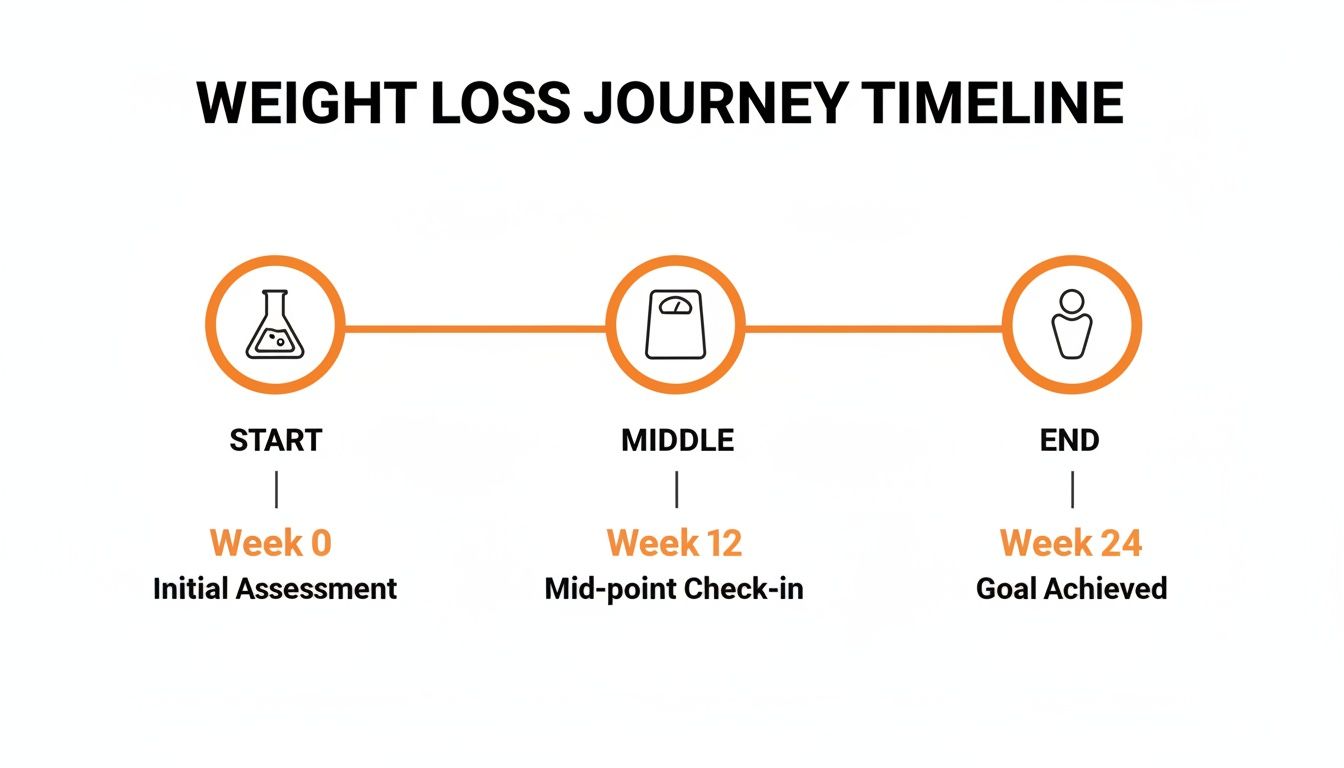
As you can see, it’s a steady progression. You will move from an initial adjustment period to consistent weight management over several months.
Month 1: The adjustment phase
Think of the first month as getting used to the treatment. You’ll be on the lowest starting dose. The main goal is to help your body adapt to the medication. Some people notice mild side effects like nausea, but they usually settle down quickly.
Weight loss is often gentle at the start. You might lose a few pounds. The biggest win is often a noticeable drop in your appetite and that constant "food noise." This is the first sign the medication is working.
Months 2 to 3: Feeling the effects
As you move into your second and third months, your prescriber will likely guide you to increase your dose. This is where most people start to feel the full, consistent effects.
The appetite suppression becomes more pronounced. This makes it feel much easier to make healthier food choices. Weight loss also tends to become more steady during this time.
Months 4 to 6: Hitting your stride
By this point, many people have reached their stable, effective dose. This is called the maintenance dose. Side effects have usually disappeared, and you are settled into a solid routine. You can find out more about specific doses, like the Wegovy 2.4mg weight loss injection, on our product pages.
This is the period where you can expect to see the most consistent GLP-1 weight loss results. The medication is working at its best. Your new lifestyle habits—like balanced meals and regular movement—are becoming second nature.
Pharmacist's tip: Patience is your best friend during the titration phase. It’s tempting to want the highest dose right away, but that will make side effects worse. Trust the process and never compare your timeline to someone else's. A slow, steady start is the foundation for long-term success.
Months 6 to 12 and beyond
After six months, the focus shifts towards long-term sustainability. Your rate of weight loss might slow down a bit. This is a completely normal part of any weight management journey. This phase is about cementing the healthy habits that will support you for life.
You’ll continue working with your clinical team. They will monitor your progress, celebrate your wins, and build a solid plan for maintaining your hard-earned results.
Key factors that influence your success
GLP-1 medication is a powerful ally, but it doesn't work in isolation. Think of it as the engine in a car. You still need good fuel, regular maintenance, and a skilled driver. Your daily habits and choices are what truly unlock the full potential of your treatment.
Several key variables can significantly boost your GLP-1 weight loss results. Success is a combination of consistency, smart lifestyle choices, and working with your clinical team.
Consistency is your superpower
The single most important factor is taking your medication exactly as prescribed. Missing doses or stopping and starting can disrupt your body's response. Sticking to a consistent weekly schedule is fundamental.
This consistency allows the medication to maintain a steady level in your system. This helps to keep your appetite regulated and blood sugar stable.
How to maximise your GLP-1 results
To get the most out of your GLP-1 journey, you need to combine the medication with supportive lifestyle habits. The medication makes it easier to adopt these changes, but it does not replace them. This table breaks down the key areas to focus on.
| Influencing Factor | Why It Matters for Your Success | Actionable Tip to Implement Today |
|---|---|---|
| Supportive Nutrition | The medicine reduces appetite, but what you eat still matters. A diet rich in protein and fibre helps you feel full and preserves muscle mass. | Aim to include a source of lean protein (like chicken, fish, or lentils) with every meal. This helps maintain muscle while you lose fat. |
| Regular Activity | Exercise boosts your metabolism, improves heart health, and enhances your mood. It also helps you lose fat, not precious muscle. | Find a form of movement you enjoy. A brisk 30-minute walk each day is a brilliant place to start and makes a huge difference. |
| Managing Side Effects | Proactively managing side effects like nausea means you're more likely to stick with your treatment long-term, leading to better overall results. | Stay well-hydrated by sipping water throughout the day. Eat smaller, more frequent meals to help manage any feelings of nausea. |
| Starting Weight | Those with a higher starting body mass index (BMI) often see a larger initial weight loss in terms of pounds, which can be highly motivating. | Focus on percentage of body weight lost, not just the number on the scales. This gives a more accurate picture of your personal success. |
Real-life examples in the UK
Putting these principles into practice can feel challenging. Here’s how two different people in the UK adapted their routines for success.
Real-life example 1: The busy parent Sarah, a mother of two from Manchester, struggled to find time for the gym. She started "exercise snacking." She began with a 15-minute brisk walk on her lunch break. She also did 10 minutes of bodyweight exercises at home. These small, consistent efforts helped her build strength and boost her metabolism.
Real-life example 2: The shift worker David, a nurse in Birmingham, worked irregular night shifts. This made healthy eating difficult. He found success with batch cooking. Every Sunday, he would prepare a big batch of lean protein and roasted vegetables. This made it easy to grab a healthy meal before his shift instead of relying on takeaways.
Pharmacist's tip: Talk openly with your prescriber. If you're struggling with side effects, don't just stop your treatment. Your pharmacist or doctor can offer practical advice or adjust your titration schedule. We are here to help you stay on track safely.
Finally, your individual biology plays a role. Everyone's body responds differently to medication. This is why comparing your journey to someone else's is rarely helpful. Focus on your own progress and celebrate your personal milestones. You can learn more about the importance of protein intake while taking Mounjaro in our detailed guide.
Navigating side effects and prioritising safety
Starting any new medication is a big step. Your health and safety should always come first. While GLP-1 treatments are generally safe and effective, it's important to know about potential side effects. This way, you can handle them confidently and know when to get medical help.
The good news is that most side effects are mild. They tend to fade as your body gets used to the medication. Being well-informed from the start makes for a much smoother journey.
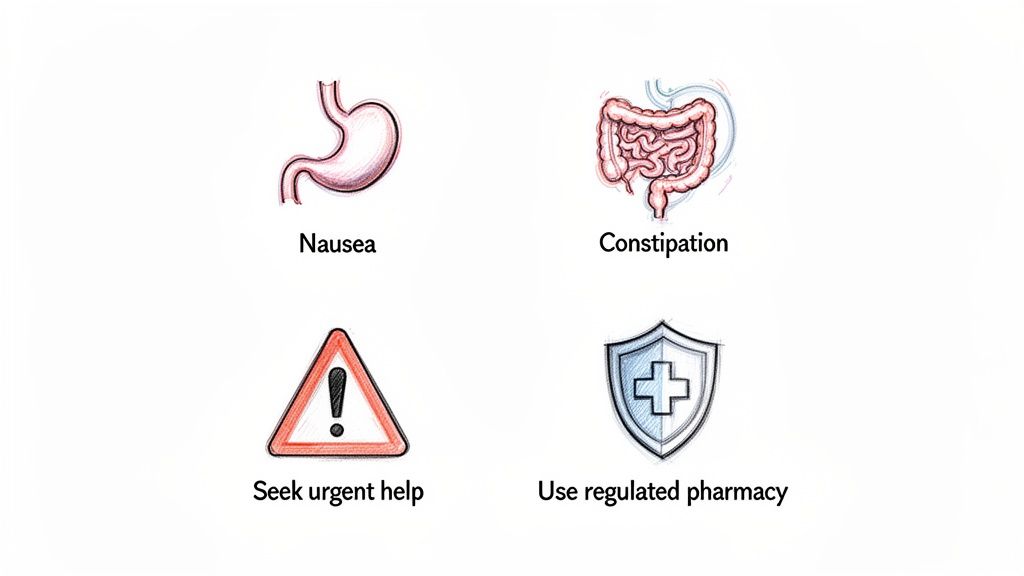
Common and manageable side effects
GLP-1s work on your digestive system. So, it’s no surprise that the most common side effects are gut-related. You are most likely to notice them when you first start the medication.
Here are a few things you might experience:
- Nausea: This is the most common side effect. Eating smaller meals and avoiding greasy foods can make a huge difference.
- Constipation or Diarrhoea: Keeping yourself well-hydrated is key. Upping your fibre intake can also help your digestion.
- Fatigue or Dizziness: You might feel a bit tired as your body adjusts. Make sure you’re eating enough and drinking plenty of fluids.
For most people, these issues ease up or disappear once they settle on a stable dose. Our guide on managing Mounjaro side effects has more advice that applies to most GLP-1 medications.
Rare but serious risks to be aware of
Although very uncommon, there are a few serious risks to be aware of, like pancreatitis (inflammation of the pancreas). In the UK, organisations like the Medicines and Healthcare products Regulatory Agency (MHRA) keep a close eye on the safety of all medicines.
The MHRA recently updated its safety advice for GLP-1s. They noted 1,296 reports of pancreatitis linked to these drugs between 2007 and late 2025. This comes as research confirmed that 1.6 million UK adults used them for weight loss in the past year. Because of this, they've refreshed their guidance, reminding everyone to seek urgent medical help for symptoms like severe abdominal pain. You can read the full MHRA update on GLP-1 safety for all the details.
This official advice highlights how important it is to pay attention to your body. Act fast if something feels seriously wrong.
When to seek urgent medical help
You should contact your doctor or NHS 111 right away if you experience any of these symptoms:
- Severe abdominal pain that doesn't go away and might spread to your back.
- Persistent vomiting where you can't keep any fluids down.
- Signs of a severe allergic reaction, like swelling of the face, lips, or throat, or having trouble breathing.
Before you start, your clinical team will check for any pre-existing conditions. But it’s still crucial to stay vigilant.
Pharmacist's tip: Never buy GLP-1 medications from unregulated websites or social media sellers. They often sell counterfeit products that are dangerous. Always use a GPhC-registered UK pharmacy like Medical Mojo. It’s the only way to be sure you’re getting genuine medication and proper clinical support.
Thinking long-term: life after initial weight loss
Hitting your goal weight is a massive achievement. But as anyone who's been there knows, the journey isn’t over. Real, lasting success is about what comes next. It’s a shift from losing weight to sustaining your new, healthier lifestyle.
GLP-1 medications have exploded in popularity across the UK. With the NHS facing high demand, many people turn to regulated private services like ours. This surge shows how many people are looking for a weight management solution that works.
A 2026 study from University College London (UCL) put a number on this trend. Researchers estimated that a staggering 1.6 million adults in England, Wales, and Scotland used GLP-1 drugs for weight loss between early 2024 and early 2025. That’s nearly 2.9% of the adult population. You can read more about the UCL study findings here.
Here's a key snapshot from the official UCL report. It highlights just how many people are using or considering these treatments.
This data paints a clear picture. Millions are already on this path. This makes it more important than ever to talk about safe, sustainable strategies for the long haul.
What happens when you stop taking GLP-1s?
This is probably the most important question people ask. When you stop taking a GLP-1 medication, there's a real chance of regaining some of the weight. The medication is brilliant at quietening appetite signals. Once it's out of your system, those old hunger cues can return.
This isn’t a sign of failure—it's just biology. It highlights why GLP-1s are a powerful tool, not a standalone "cure". The habits you build while on the medication are what will safeguard your progress long after the prescription ends.
Pharmacist's tip: Think of your GLP-1 treatment like stabilisers on a bike. They give you crucial support while you learn to find your balance. The real goal is to build the strength and skill—healthy eating, regular activity—so you can ride confidently on your own long after the stabilisers come off.
The power of ongoing support and coaching
This is where having a solid maintenance plan becomes essential. Building habits that stick takes time, practice, and expert guidance. This is why ongoing support, like health coaching, can be a game-changer for long-term GLP-1 weight loss results.
A good health coach can help you:
- Create a sustainable nutrition plan that you enjoy.
- Find types of exercise that fit into your busy schedule.
- Develop strategies for navigating stress and emotional eating.
- Stay motivated and accountable as you transition off the medication.
By investing in this kind of support, you are investing in your future. You are building a foundation to help you maintain your weight—and your well-being—for years to come.
Summary
In summary, the GLP-1 weight loss results seen in the real world are very encouraging, with UK users typically losing 7-12% of their body weight. This is different from the higher figures in clinical trials because real life involves busy schedules and other challenges. Success isn't just about the medication; it's a team effort between the drug, your lifestyle choices, and professional support. By focusing on a balanced diet, consistent activity, and managing side effects, you can set realistic goals and achieve life-changing, sustainable results. Remember, safety is paramount, so always use a regulated provider.
FAQs
What is a realistic amount of weight to lose on GLP-1s?
A realistic goal is to lose 7% to 12% of your starting body weight over a year. While some people may lose more, this range reflects the average results seen by real UK users, which is still a very significant and healthy amount.
How quickly will I see results on GLP-1s?
You may notice a reduced appetite within the first month. However, significant weight loss usually becomes more consistent from month two onwards as your dose is gradually increased. The titration process is slow and steady to minimise side effects and ensure long-term success.
Will I regain weight if I stop taking GLP-1s?
There is a high chance of regaining some weight if you stop the medication without having solid lifestyle habits in place. GLP-1s work by managing your appetite. When you stop, your natural hunger signals return. This is why building sustainable diet and exercise habits during treatment is crucial for long-term maintenance.
Do GLP-1s work without diet and exercise?
GLP-1s will reduce your appetite, which will likely lead to some weight loss on its own. However, to get the best possible results and maintain them long-term, you must combine the medication with a healthy diet and regular physical activity. The medication is a tool that makes these lifestyle changes easier to adopt and stick to.
Are GLP-1 injections safe for long-term use?
Yes, GLP-1s are considered safe for long-term use under clinical supervision. They are designed to manage a chronic condition (obesity) over time, similar to medications for blood pressure. Your healthcare provider will monitor you to ensure the treatment remains safe and effective for your needs.
What are the most common side effects of GLP-1s?
The most common side effects are related to the digestive system and include nausea, constipation, diarrhoea, and fatigue. These are usually mild and tend to improve as your body adjusts to the medication over the first few months.
How much do GLP-1s cost in the UK?
The cost can vary depending on the specific medication (e.g., Wegovy, Mounjaro) and the provider. In the UK, private prescriptions typically range from £150 to £300 per month. This cost usually includes the medication, clinical support, and delivery.
Can I drink alcohol while on GLP-1s?
You can drink alcohol, but it's best to do so in moderation. Alcohol is high in calories and can affect your blood sugar levels. Some people also find that GLP-1 medication lowers their tolerance for alcohol or worsens side effects like nausea.
Meta Description
Discover the real GLP-1 weight loss results UK patients can expect. Our guide explains the 7-12% average loss, timelines, and tips for success.
Internal Links
- Why you might not be losing weight on Mounjaro
- Managing Mounjaro side effects
- Wegovy 2.4mg weight loss injection
- Mounjaro vs Wegovy: Which is Right for You?
Byline and Review
Written by: Dr. Tim Spark, MPharm, Clinical Pharmacist Clinically reviewed by: Dr. Jane Millan, MBBS, General Practitioner
How This Content Was Created
This article was written by a qualified UK pharmacist based on a comprehensive review of clinical trial data, real-world studies, and NHS guidelines. All information was fact-checked against sources like NICE and the MHRA. The content was then clinically reviewed by a practising UK doctor to ensure it is accurate, safe, and patient-friendly.
Disclaimer: This article is for informational purposes only and should not be taken as medical advice. Always consult with a healthcare professional before starting any new treatment.
References
[1] Gov.uk. (2025). MHRA updates guidance for GLP-1 prescribers and patients. [Online] Available at: https://www.gov.uk/government/news/mhra-updates-guidance-for-glp-1-prescribers-and-patients (Accessed: 15 October 2026).
[2] University College London. (2026). 1.6 million UK adults used weight loss drugs in past year. [Online] Available at: https://www.ucl.ac.uk/news/2026/jan/16-million-uk-adults-used-weight-loss-drugs-past-year (Accessed: 15 October 2026).


