Glp 1 Weight Loss Uk
Glp 1 weight loss uk. Explore GLP-1 weight loss UK options like Wegovy and Mounjaro. Learn about NHS eligibility, private access, side effects, and how Courier
You've checked your BMI, read about Wegovy and Mounjaro, and perhaps even completed an NHS referral, only to discover that access can depend on local services and clinical priority. GLP-1 weight loss treatment in the UK can help some adults manage obesity, but it isn't a quick fix or an automatic prescription. This guide explains how the medicines work, who may qualify, how NHS and private pathways differ, what side effects and supply problems mean in practice, and how to seek supervised care.
SEO brief
- Primary keyword: GLP-1 weight loss UK
- Secondary keywords: Wegovy UK, Mounjaro UK, weight loss injections UK, NHS weight loss medication, private weight loss pharmacy
- Search intent: Understand eligibility, access, treatment differences, safety and practical next steps
- Target reader: UK adults considering medically supervised weight management
- Product or service mention: Courier Pharmacy's online GLP-1 assessment, prescribing and optional coaching
- Internal links available: Relevant Courier Pharmacy weight-management and treatment guidance pages
Five key takeaways
- NHS access is clinical, not cosmetic: BMI and weight-related health risks both matter.
- Wegovy and Mounjaro aren't identical: They have different active ingredients and UK treatment pathways.
- Private care may reduce waiting: It still requires a proper clinical assessment and isn't suitable for everyone.
- Side effects need a plan: Nausea, constipation and other stomach symptoms often need careful dose management.
- Medication works best with support: Food, movement, follow-up and realistic goals remain part of treatment.
Understanding how GLP-1 medications work
GLP-1 medicines copy the action of a natural hormone involved in appetite and blood sugar control. After eating, your body releases GLP-1, or glucagon-like peptide-1. The medicine strengthens that signal, helping you feel satisfied with less food.
Think of appetite as a set of messages between your gut and brain. GLP-1 treatment turns up the “I've had enough” message. It can also slow the movement of food from the stomach, so fullness lasts longer. The medicine also affects blood sugar control, which explains why related treatments first became widely known in diabetes care.
That doesn't mean the injection makes healthy habits unnecessary. It gives some people better control over hunger, making regular meals and sensible portions easier to maintain.

What the medicine changes
GLP-1 treatment may help with:
- Appetite: Hunger can feel less urgent or intrusive.
- Portion size: Smaller meals may feel more satisfying.
- Blood sugar: The medicine supports blood glucose regulation.
- Eating patterns: Reduced appetite can create space for planned meals.
People sometimes call this reduction in persistent food thoughts “less food noise”. That phrase isn't a medical diagnosis, but it describes a real experience some patients report. Others notice only modest appetite change, particularly during the early treatment stages.
The response also depends on the person, the dose, other medicines, medical history and lifestyle. A clinician should review progress rather than assuming that a higher dose automatically means a better result.
Why gradual treatment matters
Prescribers usually increase treatment in stages. Your body needs time to adjust, especially because the stomach and bowel effects can be noticeable. Increasing too quickly can make nausea, vomiting, diarrhoea or constipation harder to manage.
Pharmacist's tip: Eat slowly and stop when you feel comfortably full. Large meals can feel especially unpleasant when the medicine is slowing stomach emptying.
If you have a complex condition or take several medicines, tell your prescriber before starting. You can also read this clinical discussion of GLP-1 receptor agonists and mast cell activation disorders for a more detailed look at a specialist issue.
Navigating NHS and private prescribing pathways
The NHS pathway depends on eligibility, clinical risk, service capacity and local implementation. NICE recommended semaglutide 2.4 mg, sold as Wegovy, for weight management in relevant adults through Technology Appraisal TA875, published on 8 March 2023 (NICE guidance briefing). That decision helped place GLP-1 treatment within a regulated public-health framework.
However, approval doesn't mean immediate access for every eligible person. London's health committee noted that NICE estimated 220,000 people would receive treatment under current eligibility criteria, while wider policy analysis described a long-term NHS ambition of 3.4 million people (London Assembly report). Those figures show why a patient may meet a clinical threshold yet still face referral delays, local variation or a specialist-service waiting list.
What NHS access looks like
NHS England began phasing in tirzepatide, sold as Mounjaro, for weight management from 23 June 2025, initially prioritising adults with the highest clinical need (NHS England obesity medicines guidance). NHS England says tirzepatide can be prescribed in primary and secondary care, but local services still organise delivery and prioritisation.
A British population study estimated that 2.9% of adults in Great Britain, about 1.6 million people, had used a GLP-1 or GLP-1/GIP medicine for weight loss during the previous year. It also estimated that 1.7%, roughly 910,000 adults, had used these medicines exclusively for weight loss, while 3.3 million adults expressed interest in using them during the next year (British population study). Separate reporting estimated that around 50,000 people were prescribed GLP-1 medicines through the NHS at that point (Food Foundation briefing).
How private prescribing differs
Private providers may offer a quicker assessment, but responsible care still starts with a prescriber reviewing your history, medicines, BMI and risks. A questionnaire alone shouldn't replace clinical judgement.
A private route may suit someone who can pay for treatment and wants structured follow-up while NHS access remains delayed. It won't remove medical restrictions, and the cost can continue for as long as treatment remains clinically appropriate.
Before using an online service, check:
- Named prescribers: You should know which qualified professional reviews your assessment.
- Medicine supply: The pharmacy should source licensed medicines through proper channels.
- Follow-up care: Ask how the service handles side effects, missed doses and supply interruptions.
- Clear costs: Understand consultation, medicine, delivery and coaching charges before proceeding.
You can also review how ordering treatment works at Courier Pharmacy before choosing an online pathway.
Comparing Wegovy and Mounjaro options
Wegovy contains semaglutide, a GLP-1 receptor agonist. Mounjaro contains tirzepatide, which acts on both GIP and GLP-1 pathways. Both support appetite control, but they aren't interchangeable products and you shouldn't switch without prescriber guidance.
NHS England describes Wegovy as available through specialist weight-management services. Mounjaro has a newer NHS pathway and can be prescribed in primary and secondary care under current England guidance, subject to eligibility and local implementation (NHS weight-management injections).
Wegovy vs Mounjaro at a glance
| Feature | Wegovy, semaglutide | Mounjaro, tirzepatide |
|---|---|---|
| Main action | GLP-1 receptor agonist | Dual GIP and GLP-1 agonist |
| UK NHS route | Specialist weight-management services | Primary and secondary care, within NHS criteria |
| Clinical use | Weight management alongside diet and activity | Weight management alongside reduced-calorie eating and increased activity |
| Access focus | BMI and weight-related health problems | BMI, comorbidity and clinical priority |
| Practical decision | May suit a specialist semaglutide pathway | May suit a clinician considering dual-pathway treatment |
| Switching | Requires a planned clinical review | Requires a planned clinical review |
Neither medicine should become a competition between brands. A prescriber needs to consider your medical history, current medicines, treatment goals, side-effect tolerance and access route.
For example, a busy parent may value a treatment plan that fits around childcare and work. A shift worker may need help planning meals around changing hours, nausea or missed injections. A gym-goer may need advice that protects food quality, hydration and muscle-strengthening activity while appetite falls.
Choose the treatment you can use safely and consistently, not the one with the loudest online praise.
If a change becomes necessary, read this guide to switching from Mounjaro to Wegovy and discuss the decision with your prescriber first.
Checking your eligibility and BMI thresholds
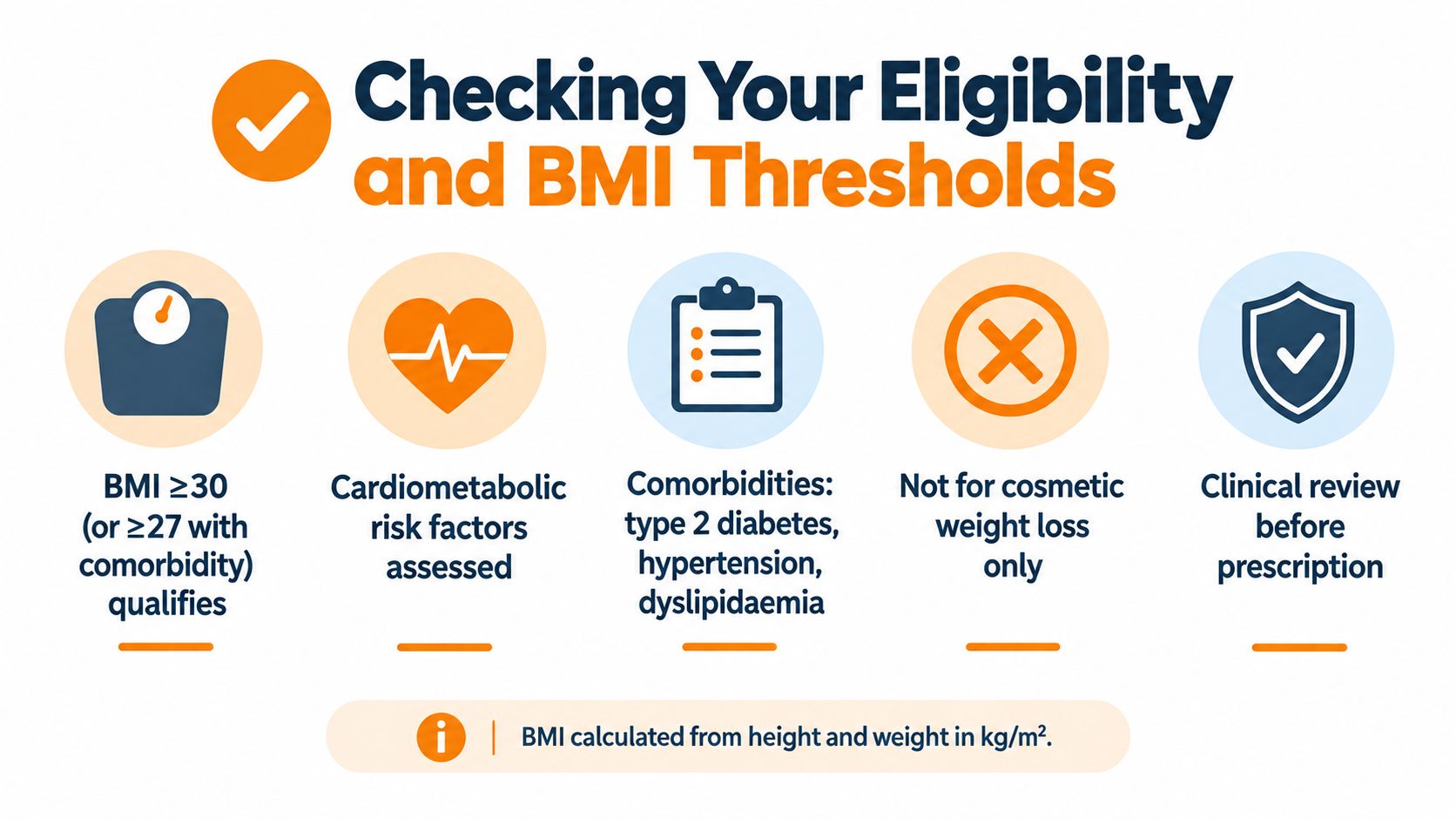
UK eligibility usually combines BMI with a weight-related health condition. Clinicians do not prescribe these medicines only because someone wants cosmetic weight loss. They assess whether excess weight is contributing to health risk and whether treatment is suitable alongside diet and physical activity.
NICE guidance commonly uses these thresholds for specialist weight-management access:
- BMI of 35 kg/m² or more, plus at least one weight-related comorbidity.
- BMI from 30.0 to 34.9 kg/m², plus a weight-related comorbidity and eligibility for specialist management.
- Some pathways use adjusted thresholds for certain ethnic groups, including a lower threshold stated by NHS England for some groups.
Relevant conditions can include dysglycaemia, type 2 diabetes, hypertension, dyslipidaemia, obstructive sleep apnoea and cardiovascular disease. NICE lists examples in its guidance on GLP-1 receptor agonists and tirzepatide.
A practical eligibility checklist
Before a consultation, gather:
- Your height and weight: BMI uses kilograms per metre squared.
- Your diagnosed conditions: Include blood pressure, cholesterol, sleep apnoea and blood sugar problems.
- Your medicine list: Include prescribed, over-the-counter and herbal products.
- Your previous weight-management efforts: Explain what you tried and what happened.
- Your treatment priorities: These might include mobility, blood sugar, sleep or appetite control.
A BMI number doesn't tell the whole story. Two people with the same BMI may have different risks, medicines and treatment options.
Consider a patient with a BMI of 36 kg/m² and hypertension. Their consultation will focus on blood pressure, current treatment, cardiovascular risk and whether the medicine can fit safely into their care. Someone with a lower BMI but no relevant health condition may not meet the same NHS criteria, even if they feel frustrated with weight loss.
You can review Courier Pharmacy's weight-loss treatment information before booking an assessment. A clinician still needs to confirm suitability.
Managing expectations, side effects and safety
A common mistake is judging treatment after the first few weeks. Early treatment often focuses on tolerability and safe dose changes. Appetite may change gradually, and weight may not fall in a neat straight line.
NICE gives a clear review point for semaglutide. Treatment should stop if the person has lost less than 5% of their initial body weight after 6 months (NICE TA875). That rule helps clinicians avoid continuing an ineffective medicine without review.
Managing everyday stomach symptoms
Nausea, constipation, diarrhoea and abdominal discomfort can occur, especially after starting or increasing treatment. Helpful habits may include:
- Choose smaller meals and eat slowly.
- Avoid very rich or greasy foods if they worsen symptoms.
- Sip fluids regularly.
- Keep some gentle, familiar foods available.
- Contact your prescriber before changing the dose.
A shift worker might struggle because meal timing changes each day. Planning simple meals before a night shift can help them avoid eating a large meal quickly when nausea is already present.
Pharmacist's tip: Don't treat persistent vomiting as a normal part of treatment. Contact your prescriber, particularly if you can't keep fluids down or feel weak.
When supply becomes uncertain
UK patients have faced supply constraints affecting some GLP-1 products, including reports involving higher-dose Mounjaro pens. Diabetes UK also reported the discontinuation of exenatide, sold as Bydureon, in its shortage information. Availability can change, so ask your prescriber or pharmacy for a medication-specific plan rather than guessing.
That plan may cover:
- Whether to wait for the same strength.
- Whether a different strength or product is clinically suitable.
- How to restart after a treatment gap.
- Which symptoms require urgent assessment.
Do not borrow a pen, double a dose or buy an unverified product online. For practical information about Mounjaro symptoms, see Mounjaro side effects.
Seek urgent help for severe or persistent abdominal pain, repeated vomiting, signs of a serious allergic reaction, fainting or severe dehydration. If you're pregnant, planning pregnancy or breastfeeding, contact your clinician before using weight-loss medicine.
How Courier Pharmacy supports your journey
Medication is only one part of weight management. A safe private service should connect prescribing with assessment, follow-up and practical support. Courier Pharmacy provides an online questionnaire reviewed by human prescribers, with GLP-1 treatment options such as Wegovy and Mounjaro where clinically appropriate.

The useful distinction is between dispensing a medicine and supporting a treatment plan. A proper assessment should consider your medical history, current medicines, weight-related conditions and goals. Optional coaching can then help translate the prescription into meals, movement, routines and progress reviews.
Personalised blood testing may also help when a clinician thinks another health issue could affect your symptoms or weight-management plan. Testing doesn't replace the consultation, and it shouldn't create a long list of unnecessary investigations. The right tests depend on your history.
What ongoing support can cover
A structured plan may include:
- Dose reviews: Checking response and side effects before changes.
- Lifestyle coaching: Building meals and activity around your real routine.
- Monitoring: Reviewing progress rather than focusing only on the scales.
- Supply advice: Discussing safe alternatives if availability changes.
- Formulation needs: Considering allergies, intolerances or needle concerns.
A gym-goer may need help preserving regular protein-rich meals when appetite drops. A carer may need quick meal ideas that don't depend on long preparation. Good coaching starts with those constraints instead of prescribing an imaginary perfect lifestyle.
The following video offers additional context on the treatment journey:
Pharmacist's tip: Ask who will contact you if side effects appear, where your follow-up happens and what the service does during a shortage. Clear answers are part of safe care.
Taking the next steps toward better health
Start with your health information, not a brand name. Write down your height, weight, diagnosed conditions, allergies, current medicines and previous treatment attempts. Include details that feel unrelated, such as digestive problems, pregnancy plans or a history of pancreatitis.
Next, choose the access route that fits your circumstances. NHS care may avoid private medicine costs, but staged rollout and local capacity can create delays. Private care may offer a faster review, but you'll need to pay and should check the provider's clinical process carefully.
A safe route to consultation
- Check the criteria: Use BMI as a starting point, not a diagnosis.
- Prepare your history: Include medicines, conditions and past side effects.
- Ask about the medicine: Discuss Wegovy, Mounjaro and alternatives openly.
- Agree a monitoring plan: Know how dose changes and follow-up will work.
- Plan for interruptions: Ask what to do if you miss doses or can't obtain your usual strength.
- Build supportive habits: Prioritise regular meals, hydration, movement and sleep.
Medication can make appetite control easier, but it won't remove every challenge. Your plan should also protect your relationship with food, maintain strength and address health goals beyond weight.
For someone working irregular shifts, that might mean two reliable meal options and a hydration reminder. For a busy parent, it may mean cooking in batches and taking a short walk after the school run. Small, repeatable actions often work better than an ambitious plan that collapses after a difficult week.
This article is for general information only. It isn't a substitute for personal medical advice, diagnosis or a prescription. A qualified UK prescriber must decide whether treatment is suitable for you.
Summary
- GLP-1 medicines support appetite and blood sugar control.
- NHS access depends on BMI, health risk and service capacity.
- Wegovy and Mounjaro use different active ingredients and pathways.
- Private prescribing still requires a clinical assessment.
- Side effects and supply gaps need practical plans.
- Coaching, food and activity support long-term care.
Courier Pharmacy offers online clinical assessment for suitable GLP-1 weight-loss treatment, with optional coaching and follow-up support. If you're considering Wegovy or Mounjaro in the UK, visit Courier Pharmacy to begin a supervised assessment.
FAQs
What are GLP-1 medicines used for in the UK?
GLP-1 medicines can support weight management in eligible adults when combined with diet and physical activity. They can reduce appetite, increase fullness and support blood sugar control. A prescriber must assess whether treatment suits your health and medicines.
Can I get Wegovy on the NHS?
Wegovy is available through specialist NHS weight-management services under NICE criteria. Access depends on BMI, a weight-related health condition, referral arrangements and local capacity. Meeting the criteria doesn't always mean treatment starts immediately.
Is Mounjaro available through the NHS?
NHS England has phased in Mounjaro for weight management, initially prioritising adults with the highest clinical need. Current guidance links access to BMI, weight-related comorbidity and clinical pathways. Your local NHS service can explain how the rollout operates in your area.
What BMI do I need for GLP-1 weight-loss treatment?
NICE guidance commonly uses a BMI of 35 kg/m² or more with a weight-related comorbidity for specialist access. Some people with a BMI from 30.0 to 34.9 kg/m² may qualify when they also have a relevant condition and meet specialist-service criteria. Private providers may apply their own licensed and clinical eligibility checks.
Are Wegovy and Mounjaro the same?
No. Wegovy contains semaglutide and acts on GLP-1 receptors. Mounjaro contains tirzepatide and acts on GIP and GLP-1 pathways. Both require clinical review, and you shouldn't switch between them without advice.
What side effects can GLP-1 injections cause?
Common problems include nausea, constipation, diarrhoea and abdominal discomfort. Symptoms may be more noticeable when treatment starts or the dose increases. Contact your prescriber if symptoms persist, become severe or stop you drinking and eating normally.
What happens if I miss a dose?
The correct action depends on the product, timing and your prescribed schedule. Don't take extra medicine to compensate unless your prescriber specifically tells you to. Contact the dispensing pharmacy or prescriber for product-specific advice.
Can I buy GLP-1 treatment privately?
You may be able to obtain treatment through a regulated private prescribing service if a clinician confirms that it's suitable. A safe service should review your medical history, current medicines, BMI and risks. Avoid sellers who offer injections without a proper consultation.
When should I seek urgent help?
Seek urgent medical help for severe or persistent abdominal pain, repeated vomiting, severe dehydration, fainting or symptoms of a serious allergic reaction. Contact your prescriber promptly if side effects are difficult to manage. Pregnancy or plans to become pregnant also require medical advice before treatment.
Suggested internal links
- How ordering treatment works at Courier Pharmacy
- Courier Pharmacy weight-loss treatments
- Mounjaro side effects
- Switching from Mounjaro to Wegovy
- GLP-1 medicines and mast cell activation disorders
Visual ideas
- Appetite and hormone illustration: Painterly cellular signals around a person choosing a meal, using bright lime green, pale yellow-green and light grey with an ornate brass plaque overlay. Alt text: “Illustration of GLP-1 appetite and hormone signals supporting fullness.”
- NHS and private pathway chart: A steampunk-inspired brass split-panel infographic comparing referral, assessment and monitoring routes. Alt text: “Comparison of NHS and private GLP-1 prescribing pathways in the UK.”
- Eligibility checklist: A pale yellow-green checklist with brass icons for BMI, blood pressure, sleep apnoea and clinical review. Alt text: “UK GLP-1 treatment eligibility checklist showing BMI and health risks.”
- Pharmacist consultation scene: A pharmacist reviewing a treatment plan on a tablet, with lime accents and light grey clinical details. Alt text: “UK pharmacist reviewing a GLP-1 weight-management plan with a patient.”
Byline and clinical review
Written by: Medical Mojo editorial team, UK health content specialists
Clinically reviewed by: Review by a UK-registered pharmacist or prescriber should be completed before publication.
How this content was created
This article uses NICE and NHS England guidance, UK population research and UK reporting supplied for editorial review. It was written for patient clarity, checked against the stated eligibility and stopping rules, and should receive clinical review before publication.
Meta description
GLP-1 weight loss UK guide covering Wegovy, Mounjaro, NHS eligibility, private access, side effects, supply issues and safe next steps for patients.


