Healthy Hair Crown: Care, Causes and When to See a GP
Keep your healthy hair crown with scalp care, nutrition and gentle styling. Learn the signs of crown thinning and when to see a GP or dermatologist in the UK.
You notice a thinner-looking crown in a photo and wonder whether it is your usual swirl or a change worth checking. A healthy hair crown has comfortable scalp skin and coverage that stays broadly stable for you. A little scalp showing at the centre of the swirl can be normal.
The most useful comparison is with your own crown over time, not someone else's. Take dated photos in similar light, from the same angle, with your hair parted the same way. They give you a baseline, like matching marks on a measuring tape, and can show whether a change is gradual or sudden.
Look for clues alongside the photos. Widespread shedding, broken hairs, and smooth patches can point to different causes, so the pattern matters more than a single glimpse of scalp. Gentle care may ease irritation and help limit breakage, but it cannot address every reason for thinning.
Five key takeaways
- Compare like with like: Take dated photos using similar lighting, angle, and parting.
- Check the pattern: Widespread shedding, broken hairs, and smooth patches are different clues.
- Keep care gentle: Clean your scalp without scrubbing, burning, or pulling.
- Skip guesswork with supplements: Look for a confirmed need rather than relying on marketing promises.
- Act on warning signs: Ask for medical review if you notice pain, pus, crusting, or bald patches changing quickly.
What a healthy crown looks like and why it changes
The crown is the upper back part of your scalp. Hair often grows in a swirl here, so the centre can show some skin even when your hair is healthy. Wet hair, oily roots and overhead lighting can make that gap look larger.
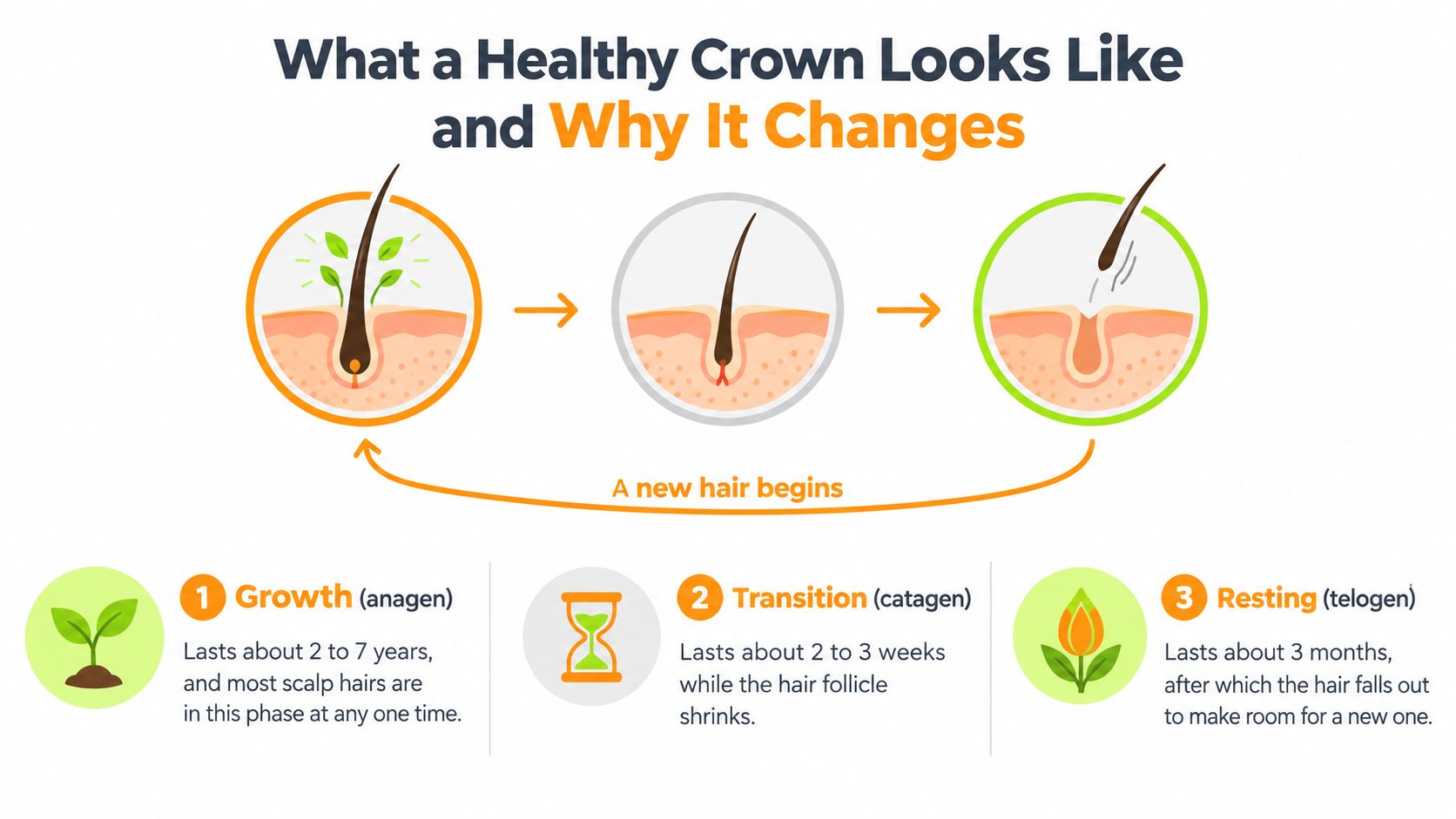
Each hair follows its own cycle. It grows, slows down, then rests before shedding so another hair can grow. Because hairs don't all shed together, your crown usually keeps its coverage.
The hair cycle in plain English
- Growth, or anagen: The follicle, the small pocket in your skin, makes hair.
- Transition, or catagen: Growth stops and the follicle becomes smaller.
- Rest and shedding, or telogen: The hair rests before it falls out.
This diagram shows the stages in order.
Loose hairs on wash day don't, by themselves, prove that you're losing density. If you wash less often, you may see more shed hairs together. A widening part or a growing area of visible scalp tells you more than a single shower drain check.
Your own baseline matters most
Pattern hair loss is common. NHS MyHealth Devon states that, by age 50, it affects approximately 50% of men and 25% of women [1].
Genes and hormones can gradually change how thick individual hairs grow. Men may notice crown thinning with a receding hairline, while women often notice a wider part across the top.
Practical rule: Compare your crown with your own earlier photos, not a stranger's hair density.
Look for comfortable skin, stable coverage and no new patches. A mirror or a trusted person can help you check an area that's awkward to see. Judge gradual density changes over months, rather than checking several times a day.
Crown thinning causes and how they differ
Crown thinning has several causes. The pattern, speed and scalp symptoms help a clinician sort them out. You can also have more than one cause at once.
First, separate shedding from breakage. Shed hairs usually come out along their full length. Breakage leaves shorter pieces and uneven lengths, often after friction, heat or chemical damage.
Common causes of crown thinning, clues and next steps
| Likely cause | Typical pattern | Clues to check | Usual next step |
|---|---|---|---|
| Pattern hair loss, male or female | Gradual thinning across the crown | Family history, finer hairs, hairline recession in men | GP review; discuss treatment options |
| Telogen effluvium | Widespread shedding after a trigger | Illness, surgery, childbirth, crash dieting or stress | GP review if marked, ongoing or unexplained |
| Traction alopecia | Thinning at the crown or hairline | Tight styles, extensions, tenderness or headaches | Reduce tension; GP review if loss continues |
| Alopecia areata | Sudden, sharply defined bald patches | Smooth round patches; sometimes nail changes | Prompt GP review; referral when appropriate |
| Seborrhoeic dermatitis or psoriasis | Scaly, itchy or inflamed areas | Greasy flakes, thick scale, soreness | Pharmacist or GP; dermatology if severe |
| Iron deficiency or thyroid disease | Diffuse thinning across the scalp | Tiredness, cold sensitivity, heavy periods or weight change | GP blood tests |
| Scarring alopecia | Smooth bald areas where follicles suffer permanent damage | Burning, pain, pus, crusting or marked inflammation | Urgent medical assessment and dermatology referral |
Telogen effluvium means a shift towards shedding across the scalp. It can follow a major strain on the body, and the shedding may start well after the event. That delay can make the cause hard to recognise.
Pattern loss is different. Hairs gradually become finer, so you may lose coverage without seeing dramatic handfuls in the shower.
What a GP may check
The NHS Scotland alopecia pathway supports a scalp examination and, where appropriate, blood tests such as a full blood count, ferritin and thyroid function [2]. Ferritin helps assess stored iron.
Your GP may ask about periods, diet, medicines and recent illness. Hormonal symptoms or other health changes may guide further tests. Not everyone needs the same blood panel.
If shedding starts during weight loss, consider both the medicine history and changes in food intake. This guide to Mounjaro and hair loss offers related context for that discussion.
A shampoo won't correct thyroid disease or stop scarring inflammation. Likewise, taking supplements without checking the cause can delay useful treatment.
Daily scalp care habits that protect the crown
A healthy scalp supports healthy hair, so start with the skin. The aim is to remove sweat, oil and product without leaving your scalp sore or tight.
There's no wash schedule that suits every texture and scalp. Daily washing can suit some people; others need longer gaps. Let oil, sweat, build-up and comfort guide you.
A simple healthy hair crown routine
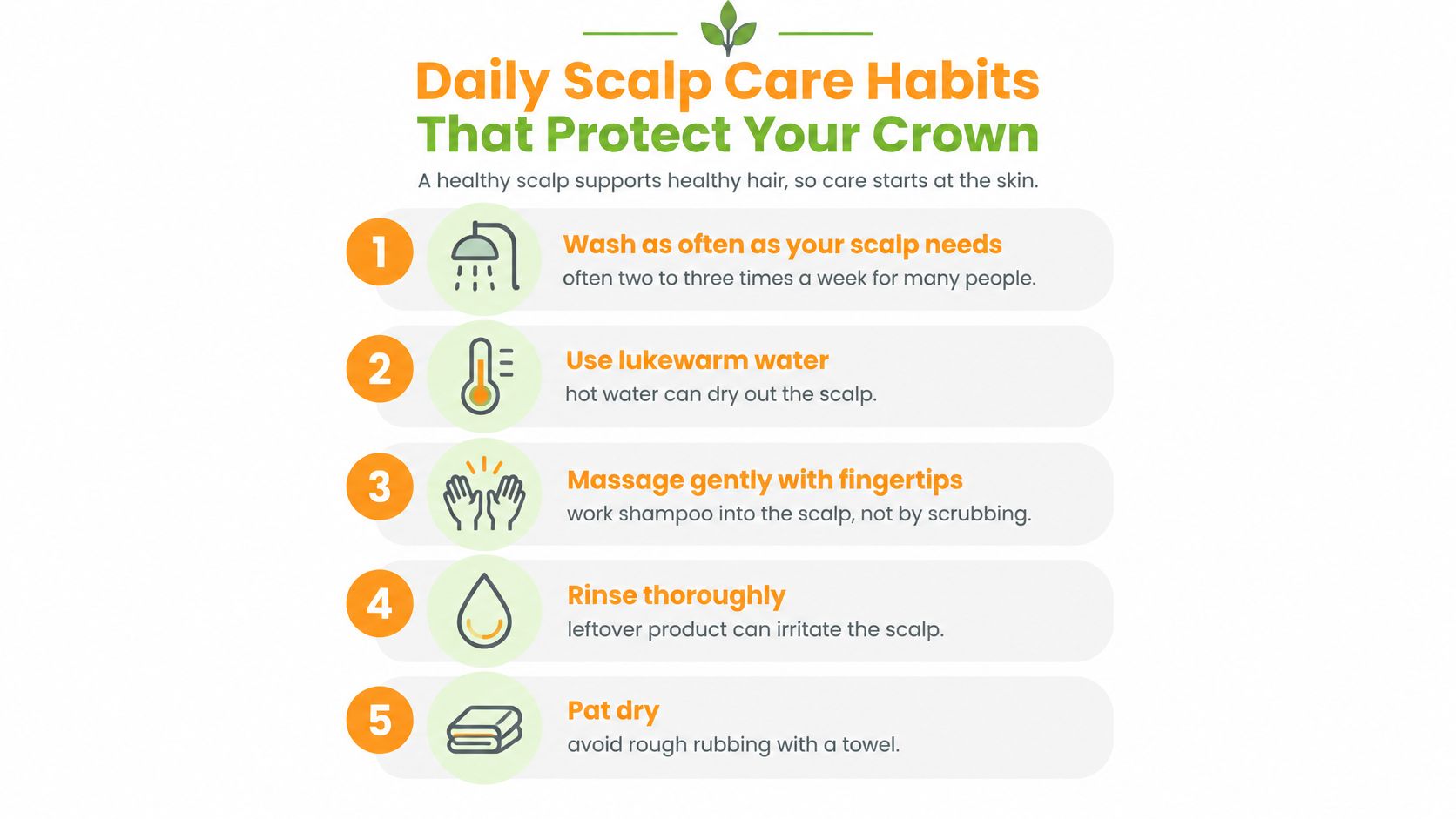
- Wash when needed. Use a mild shampoo and focus it on the scalp.
- Choose lukewarm water. Very hot water can worsen dryness and discomfort.
- Use fingertips, not nails. Work shampoo in gently without scratching.
- Rinse well, including around the crown and behind the ears.
- Condition the lengths. Keep heavy products off an easily irritated scalp.
- Press out water with a soft towel rather than rubbing.
- Detangle gently with a wide-toothed comb, starting at the ends.
- Protect exposed skin. Wear a hat in strong sun, especially over thin areas.
For example, a busy parent washes after every sweaty school run. Their scalp feels tight after using a strongly fragranced shampoo. They could try a milder product, cooler water and washing according to scalp need, rather than forcing a fixed schedule.
That change might ease irritation. It wouldn't prove that a thinning patch had started to regrow.
The visual below summarises gentle washing habits.
Flakes, dry shampoo and home remedies
Flakes don't always mean your scalp needs more oil. An anti-dandruff shampoo may help, but thick scale, pain or persistent redness needs a closer look. Follow the product's contact time so you don't rinse an active shampoo away too soon.
Dry shampoo can absorb oil between washes. It doesn't replace cleaning with water and shampoo, so remove build-up rather than layering it indefinitely.
Pharmacist's tip: Describe whether your flakes are dry, greasy, itchy or sore. That helps a pharmacist choose a suitable product rather than treating every flaky scalp alike.
Avoid abrasive scrubs, undiluted essential oils and harsh home mixtures. Stop a new product if it causes burning or a rash. Gentle care should feel comfortable, not painful.
Nutrition for crown hair and what to avoid taking
No single food makes crown hair grow faster. However, a poor intake or a nutrient deficiency can contribute to shedding.
Hair needs enough food overall, not just a “hair vitamin”. A balanced diet with regular protein sources is a better starting point than a stack of pills.
Nutrients for crown hair, sources and cautions
| Nutrient | Role in hair | Good food sources | Caution |
|---|---|---|---|
| Protein | Supplies building blocks for keratin, the main hair protein | Eggs, fish, pulses, lean meat, tofu | Crash diets can leave total food and protein intake too low |
| Iron | Helps make red blood cells; low stores can accompany shedding | Red meat, lentils, fortified cereals | Don't self-treat with iron; too much is harmful |
| Zinc | Supports normal cell growth and repair | Seeds, wholegrains, beef, chickpeas | Long-term high doses can lower copper levels |
| Vitamin D | Plays a part in normal follicle function | Oily fish, eggs, fortified foods | Don't use high doses as a hair-growth treatment without advice |
| Vitamin B12 | Helps make red blood cells | Meat, fish, dairy, fortified foods | Vegans need a reliable source; some gut conditions affect absorption |
| Biotin | Helps the body process nutrients | Eggs, nuts, seeds | High-dose products can interfere with some blood tests |
Food gaps matter more than extra products
Say a gym-goer cuts meals sharply and adds protein shakes. They may still fall short on energy, iron and dietary variety. More protein powder won't solve every gap.
A practical reset could include regular meals, a protein source at each meal, and a wider range of foods. If weight-loss treatment reduces appetite, discuss that early with the prescriber. The guide to Mounjaro and protein intake explores meal planning in that setting.
Vitamin D supplements can have a role in general health, but they aren't a proven shortcut to a fuller crown. Ask a pharmacist about current UK seasonal advice and your own risk factors.
Before you buy a supplement
True biotin deficiency is rare, so extra biotin often adds little. Tell your GP and the testing service if you take it, since high doses can distort some results. Ask whether you need to pause it before testing.
Iron deserves particular care. Your GP should assess the reason for low stores, rather than adding tablets without a plan.
Pharmacist's tip: Bring every supplement label, including gummies and gym products. Check for overlapping iron, zinc and vitamin doses before adding anything else.
Hair changes take time to become visible. A better diet supports future growth; it won't repair hair that has already broken.
Gentle styling to reduce tension on the crown
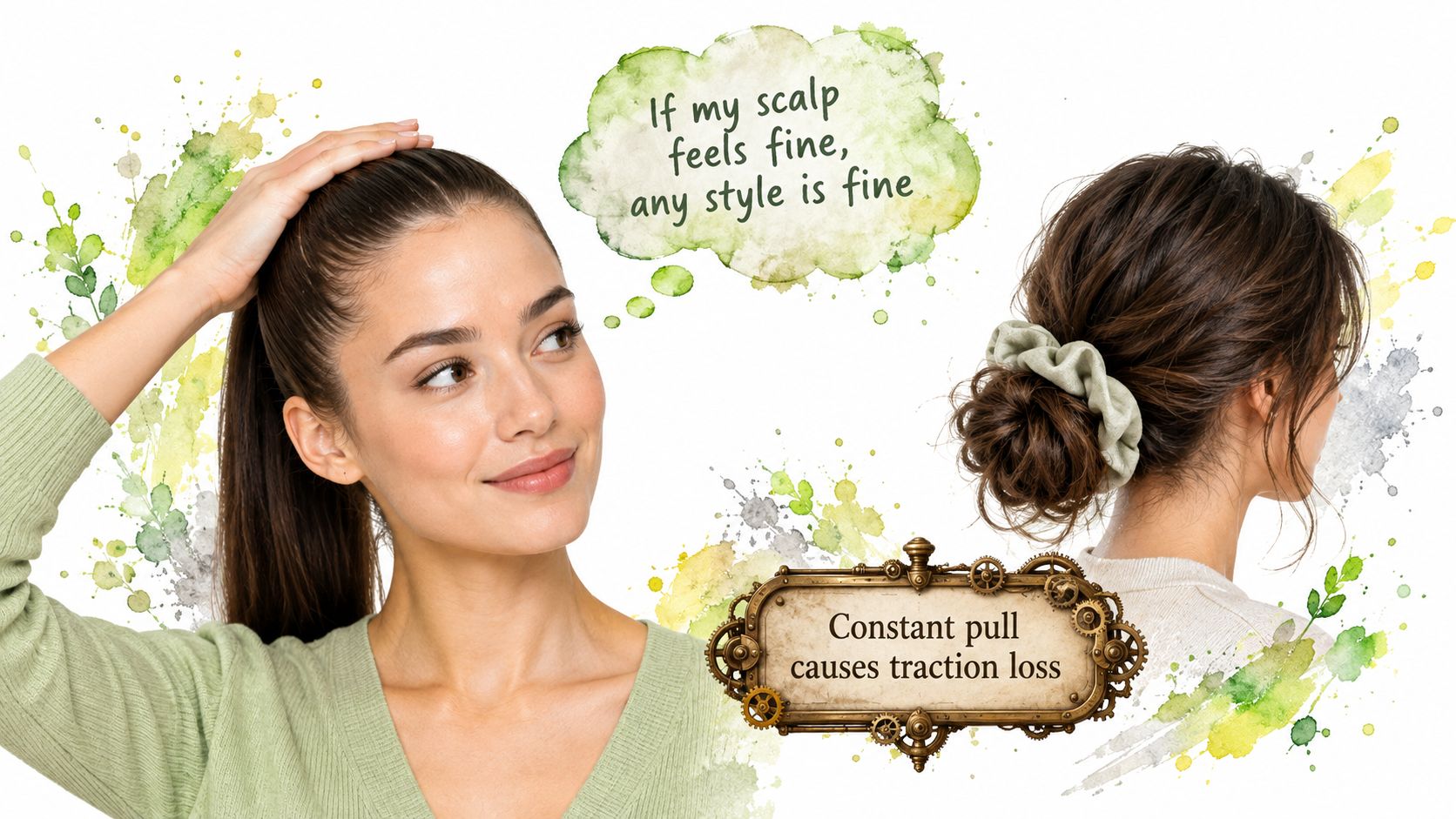
A style doesn't have to hurt to cause trouble. Repeated pulling can stress the same follicles even when you've grown used to the sensation.
Traction alopecia means hair loss caused by ongoing tension. Early changes may improve when you remove the pull, but lasting damage can leave permanent loss.
This illustration highlights the difference between tight and lower-tension styling.
Common styling habits and gentler swaps
| Habit | Why it matters | Gentler swap |
|---|---|---|
| Tight ponytails or high buns worn daily | Repeated pull on the crown and hairline | Loose low style, soft scrunchie and changes in placement |
| Tight braids, cornrows, locs or extensions | Tension and added weight can damage follicles | Looser installation, less weight and breaks between styles |
| Frequent high heat | Dries and breaks hair shafts | Heat protectant and the lowest effective setting |
| Frequent bleaching or relaxers | Can weaken hair and irritate skin | Space treatments and avoid overlapping damaged areas |
| Heavy wigs or hair glue | Can cause traction and skin irritation | Well-fitted lighter options; remove adhesive with the recommended remover |
The City and Hackney NHS hair-loss pathway includes styling history in the assessment of hair loss [3]. Your usual bun, wig, extensions or work headwear can be medically relevant.
For example, a healthcare assistant wears a tight bun beneath a cap throughout each shift. They notice short broken hairs and tenderness near the crown. A lower, looser bun and a better-fitting cap may reduce the strain without compromising workplace hygiene rules.
Comfort may improve before hair coverage does. Ongoing thinning still needs a GP check.
Protective styles should protect the scalp too
Braids, locs and weaves aren't automatically harmful. Their weight, tightness and repeated pull matter more than the style's name. Ask for adjustments if installation causes pain or leaves the skin feeling stretched.
Watch for these clues:
- Tender skin: Your scalp hurts when you touch or move the hair.
- Headaches: Symptoms start or worsen with a particular style.
- Broken hairs: Short pieces appear where the hair bears tension.
- Inflammation: Redness, bumps or crusting develop around roots.
For heat or chemical treatments, allow recovery time and avoid treating an irritated scalp. Follow the product's allergy-test instructions where relevant; a skin test won't predict hair-shaft damage.
This video provides additional context on traction-related hair loss.
Oils and supplements can't cancel out continuing mechanical pull. If loss persists after changes, seek assessment rather than switching to another growth oil.
Treatments to discuss with a doctor or pharmacist
Treatment works best when the cause is clear. Most hair-loss treatments need patience, and none can promise a full return to your previous density.
For pattern loss, the goal may be to slow further thinning as well as improve coverage. For other causes, treating inflammation or correcting a deficiency may matter more than a growth product.
Crown thinning treatments, timelines and key cautions
The British Association of Dermatologists guide describes 5% topical minoxidil, with benefit generally assessed after at least 6 months, sometimes 12 months; it also notes that finasteride may need up to 14 months, with recognised sexual adverse effects in approximately 2% of treated patients [4].
| Treatment | Who it suits | Time before judging | Key caution |
|---|---|---|---|
| Topical minoxidil | Suitable adults with confirmed pattern thinning | Allow a sustained trial over months | Requires ongoing use; can irritate; avoid broken or inflamed skin |
| Low-dose oral minoxidil | Selected patients under a prescriber's supervision | Prescriber sets the review plan | Can affect the whole body; needs medical assessment |
| Finasteride | Suitable men, on prescription | A long-term trial with planned review | Discuss sexual and mood effects; not suitable for women who may become pregnant |
| Other treatments, including alopecia areata treatment | People with a confirmed diagnosis | Clinician sets treatment-specific checkpoints | Specialist review may be needed |
Using minoxidil safely
Minoxidil supports follicle growth and helps hairs remain in the growth phase. It doesn't permanently cure pattern hair loss. When treatment stops, its benefit fades and the underlying process continues.
For example, a woman in midlife starts topical treatment and notices extra shedding early on. Rather than guessing whether it's normal, she checks with her pharmacist and keeps dated photos. Marked shedding, new patches or scalp symptoms deserve review.
For more detail about monitoring progress, read how long minoxidil takes to work.
Pharmacist's tip: Apply topical minoxidil to dry, intact scalp skin, not just the hair. Wash your hands afterwards and keep it away from your eyes.
Tell the clinician about heart problems, blood-pressure medicines, pregnancy or breastfeeding before starting treatment. Oral minoxidil needs a prescribing assessment, not a decision based on a social media recommendation.
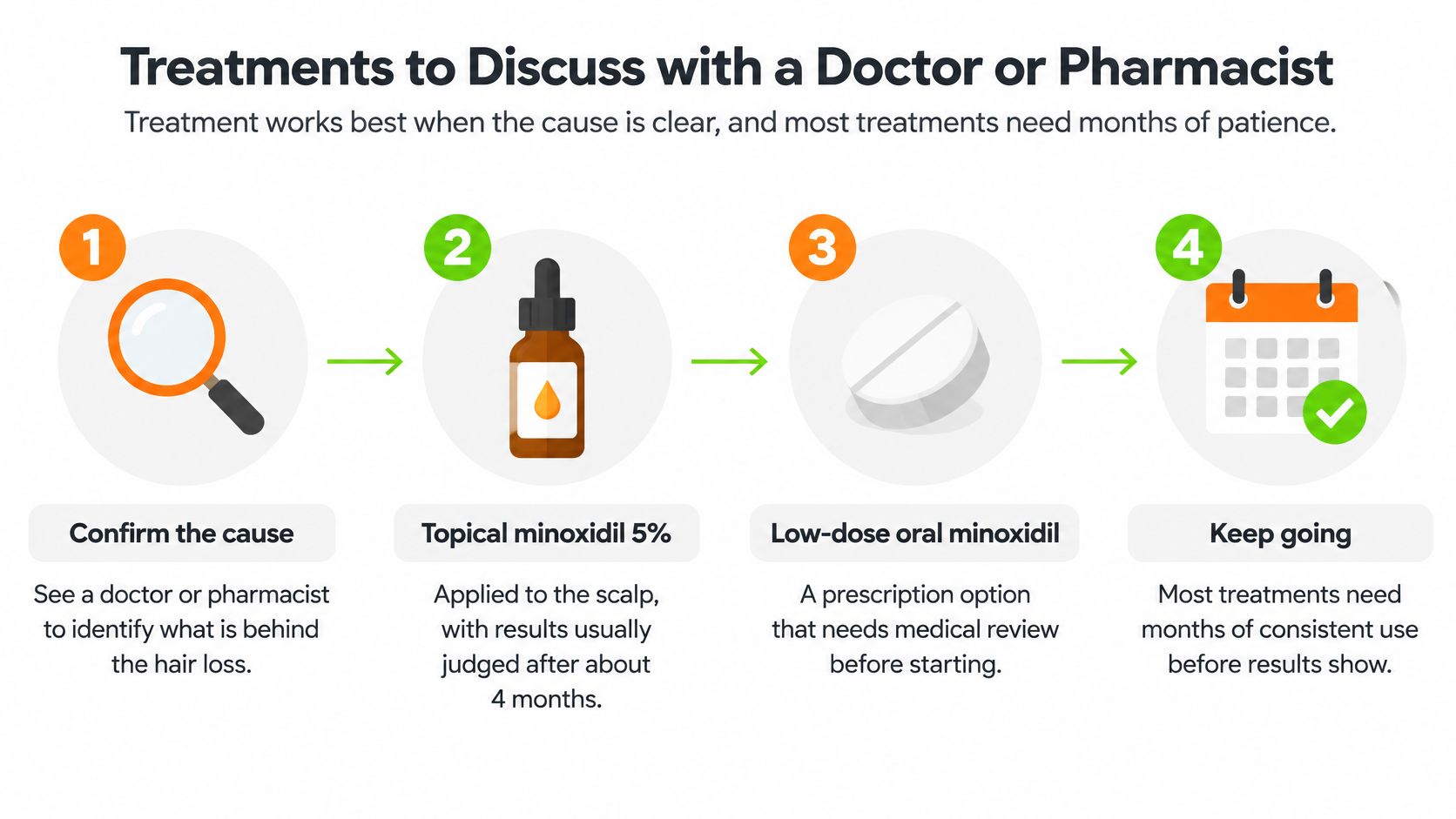
The visual below outlines the treatment discussion. Use your clinician's review schedule rather than treating an infographic as a personal treatment plan.
Choosing a consultation
A GP, dermatologist or GPhC-registered online pharmacy can help assess treatment options. A clinician should still confirm the likely cause and arrange an examination when needed.
Finasteride reduces production of DHT, a hormone involved in male-pattern loss. Don't borrow someone else's prescription or assume a combination product is suitable because it contains familiar ingredients.
When to see a GP or dermatologist and what to do next
A new or changing view of the crown can be hard to judge in the mirror. Compare dated photos taken in similar light and with the same parting. If the scalp is becoming more visible, thinning is worsening, or the change has no clear explanation, book a GP appointment. You do not need to try a different shampoo first.
A GP can examine the scalp and use your symptoms and health history to decide what checks or referral may help. Seek prompt care for signs of inflammation, infection, sudden patchy loss or rapid widespread shedding. Early assessment can matter if a condition may cause lasting follicle damage.
Warning signs that need prompt care
- Sudden smooth patches: Arrange a prompt GP appointment. Alopecia areata can cause sudden patches, but the appearance alone does not confirm the cause.
- Pain, burning, pus or crusting: Request urgent medical review.
- Rapid widespread shedding: Contact your GP, especially if you have other health changes.
- Fever with a sore or infected scalp: Seek same-day GP care or contact NHS 111.
- Shiny bald skin with ongoing symptoms: Ask about urgent dermatology assessment.
Cause clues help sort what needs attention. A smooth patch is different from gradual thinning across the crown, while pain, crusting or fever points to a scalp problem that deserves prompt review. Stress alone cannot establish a diagnosis, and treatment for alopecia areata requires one.
Consider someone who notices gradual widening at the crown. Their dated photos show whether coverage has changed over time, while a symptom and health history helps the GP decide whether iron testing is appropriate. If tests show low iron stores, the next step is to look for the reason.
A new coin-shaped patch calls for a different response. Arrange a prompt appointment so the GP can assess its appearance and examine the scalp, rather than assuming a stressful month explains it.
Prepare for your appointment
- Take baseline photos. Use consistent lighting, angle, hairstyle and parting so changes are easier to compare.
- Note when you first noticed the change, along with any illness, weight change or new styling.
- List medicines and supplements. Include products bought without a prescription.
- Book a GP appointment and ask which blood tests fit your symptoms and history.
- Discuss referral if the cause remains unclear or hair loss continues to progress.
If you are a woman noticing changes across the top of the scalp, this guide to female hair loss may help you prepare questions for your appointment.
Pharmacist's tip: Bring your photos and medicine list. They give the clinician a clearer starting point than trying to recall how the crown looked months ago.
This guide is for information and does not replace advice from a healthcare professional.
Summary
A healthy crown may show some scalp, and appearance varies from person to person.
A dated photo provides a useful baseline for comparison.
Cause clues include the pattern of loss and any scalp symptoms.
Ask a GP about new, worsening or unexplained thinning.
Seek prompt care for sudden patches, pain, infection signs or rapid change.
Common questions about healthy hair crowns
Is shedding hair each day normal?
Yes, some daily shedding is part of the hair cycle. A change in coverage, a widening part or new patches matters more than counting every loose hair.
How long before minoxidil works?
Expect a trial lasting months, not days. Agree review points with your clinician and use consistent photos to judge progress. Its benefit relies on continued use.
Can biotin help crown hair?
Biotin may help when a person has a genuine deficiency. Extra doses aren't a reliable treatment for unexplained thinning. Tell your doctor about biotin before blood tests.
Does washing more often stop thinning?
Washing removes oil, sweat and build-up. It doesn't reverse pattern hair loss or damage from continued pulling. Choose a routine that keeps your scalp comfortable.
Are braids always bad for the crown?
No, the style alone doesn't determine the risk. Tightness, weight and ongoing tension matter. Pain, bumps or thinning mean you should change the style and seek advice.
Can women use finasteride?
Finasteride isn't a routine self-care treatment for women. It isn't suitable for women who may become pregnant; any exceptional specialist use needs careful assessment. This comparison of minoxidil and combination treatment explains why ingredients need individual review.
When is crown thinning urgent?
Pain, pus, crusting or burning with hair loss needs urgent review. Sudden bald patches also need prompt assessment. Fever with a possible scalp infection calls for same-day GP care or NHS 111.
Should I see a GP or pharmacist first?
A pharmacist can advise on mild flakes, gentle products and medicine safety. A GP should assess new or worsening thinning, unexplained shedding or bald patches. Choose urgent care if infection symptoms develop.
Courier Pharmacy offers online hair-loss consultations and blood-testing services where appropriate. To discuss treatment options for a thinning crown, visit Courier Pharmacy, and arrange a GP examination promptly if you have patches, pain or signs of infection.


