Home Blood Test Kits UK: Your Guide to At-Home Health Insights
Discover how home blood test kits uk provide accurate results, simple sample collection, and clinician oversight for reliable at-home health insights.
In this article
- Key Takeaways
- The Rise of Convenient Health Diagnostics in the UK
- A Shift in Healthcare Access
- From General Wellness to Specialised Insights
- Choosing The Right Blood Sample Collection Method
- The Standard Finger-Prick Test
- Modern Devices: The Tasso Option
- The Venous Blood Draw: Gold Standard
- Comparing Blood Sample Collection Methods
- How Your Home Blood Test Works Step by Step
- Step 1: Placing Your Order and the Clinical Questionnaire
- Step 2: Preparing for and Collecting Your Sample
- Step 3: Packaging and Returning Your Sample
- Step 4: Lab Analysis and Receiving Your Results
- Why Clinical Oversight Is Non-Negotiable
- Turning Data Into Actionable Insights
- From Interpretation to Clear Next Steps
- The Gold Standard of Patient Care
- Ensuring Your Test Is Accurate and Secure
- The UK Regulatory Framework
- Finger-Prick Accuracy and When It's Right
- Protecting Your Personal Health Data
- Summary
- FAQs
Ever wondered about your vitamin D levels after a long UK winter, or wanted a quick check on your cholesterol without waiting weeks for a GP appointment? This is exactly where home blood test kits come in. They give you a straightforward way to get proactive insights into your health, all from the comfort of your own home. This guide will walk you through everything you need to know, from how the kits actually work to making sense of your results with professional guidance.
Key Takeaways
- Clinical Oversight is Essential: A professional review turns raw data into meaningful, actionable health advice. A pharmacist might see a client, like Sarah, who is worried about slightly high cholesterol, but by reviewing her recent diet changes, can provide reassurance and practical lifestyle tips instead of causing unnecessary alarm.
- Multiple Sample Collection Methods: From a simple finger-prick test to the painless Tasso device for your upper arm, the method is chosen to suit the specific test's requirements and your comfort level.
- Accredited Labs Ensure Accuracy: Reputable providers always use the same CQC-registered and regulated laboratories as the NHS to guarantee your results are reliable and meet the highest clinical standards.
- A Convenient End-to-End Process: The whole journey, from ordering online and filling out a clinical questionnaire to receiving your clinician-reviewed results, is designed to be as easy and efficient as possible.
- Your Data is Kept Secure: Your personal health information is protected by strict privacy regulations like GDPR, ensuring complete confidentiality from the secure questionnaire to the final report.
The Rise of Convenient Health Diagnostics in the UK
Not too long ago, getting a blood test meant booking time off work, travelling to a clinic, and then waiting your turn. Now, home blood test kits uk have become a familiar option, largely because we're all looking for faster, more convenient ways to stay on top of our health.
This shift is part of a much bigger trend across the UK. People are taking a more active role in their own health journey, whether that's keeping tabs on a long-term condition, fine-tuning their wellness routine, or simply getting a baseline understanding of their health without the usual hassle.
A Shift in Healthcare Access
Regulated online pharmacies have been key to this change. They offer a trustworthy model that blends the simplicity of ordering online with the crucial safety net of having a clinician review everything. This structure has opened the door to a huge range of diagnostic tests, making proactive healthcare a genuine option for thousands.
Since the mid-2010s, this market has really taken off. Dozens of UK companies now provide direct-to-consumer kits for everything from cholesterol and thyroid function to hormone levels and vitamin D. This growth is part of the wider UK home care testing market, which brought in around USD 478.4 million in one year and is projected to hit USD 887.6 million by 2030. You can read more on these developments in the BMJ/LabMed report on the expansion of direct-to-consumer testing.
Pharmacist's Insight: "We've seen a clear move towards self-empowerment in health. Patients no longer want to wait for symptoms to become severe. They want to understand their bodies better and catch potential issues early. Home diagnostics give them the tools to do just that, safely and effectively."
This accessible approach is all about fitting healthcare into your life, not forcing you to fit your life around healthcare.
From General Wellness to Specialised Insights
The variety of tests you can get has also expanded massively. While many people start out with general wellness panels to check the basics, the technology now allows for much more specific investigations.
For example, you could use a home test to look for nutrient deficiencies that might be behind that feeling of constant tiredness. In other cases, people are exploring more advanced diagnostics to make truly personal health choices. This even extends into genetics, where services like our NutriGen genetic test can offer unique insights into how your body handles different nutrients, helping you shape a diet that’s optimised just for you.
This kind of detailed, personal information used to be the domain of specialist clinics. Now, it's available from the comfort of your own home, closing the gap between health curiosity and real, actionable knowledge.
Choosing The Right Blood Sample Collection Method
Not all blood tests are the same, and neither are the ways we collect the sample. The right method often comes down to what you’re testing for, which is why getting to grips with your options is so important. Knowing the difference empowers you to choose a home blood test kit in the UK that truly fits your health goals.
We'll walk you through the three main collection types you're likely to come across. We'll start with the familiar finger-prick test, explore newer devices designed to make collection easier, and finish with the gold-standard venous draw you'd get at a clinic.
The Standard Finger-Prick Test
This is the most common method for at-home testing. It involves using a tiny, spring-loaded needle called a lancet to make a small puncture on the side of your fingertip. From there, you collect small droplets of blood into a collection tube.
While it's straightforward enough for many tests, getting a clean, high-quality sample is absolutely vital for accurate results. A poor sample might clot or not be enough for the lab to analyse, meaning you might have to do it all over again.
A Pharmacist’s Practical Tips for Finger-Prick Success: "To get the best blood flow, warm your hands first by washing them in warm water or swinging your arms by your side for a minute. Always use the side of your ring or middle finger, as it's less sensitive. After using the lancet, stand up and let gravity help you collect the drops—don't squeeze too hard, as this can damage the sample."
Following these simple steps can make the process quick, nearly painless, and successful on the first try. You can find essential tools like lancets and other supplies in our range of medical supplies to ensure you're well-prepared.
Modern Devices: The Tasso Option
For anyone who feels a bit squeamish about the finger-prick method, modern technology offers a much more comfortable, automated alternative. At Courier Pharmacy, we offer the Tasso device, which makes collecting a capillary blood sample incredibly simple.
You place the Tasso device on your upper arm and, with a single push of a button, it creates a gentle vacuum to draw blood from the tiny capillaries just beneath the skin. It’s designed to be virtually painless, and you won’t see a single drop of blood. This makes it a fantastic choice for anyone with a fear of needles or for those who've found finger-prick tests tricky in the past.
- Painless and Easy: The process is quick and gentle, minimising discomfort.
- Automated Collection: It takes the guesswork out of collecting the right amount of blood.
- High-Quality Sample: The device is designed to prevent common issues like sample clotting.
This visual guide helps put into perspective where home testing fits within your overall health journey.
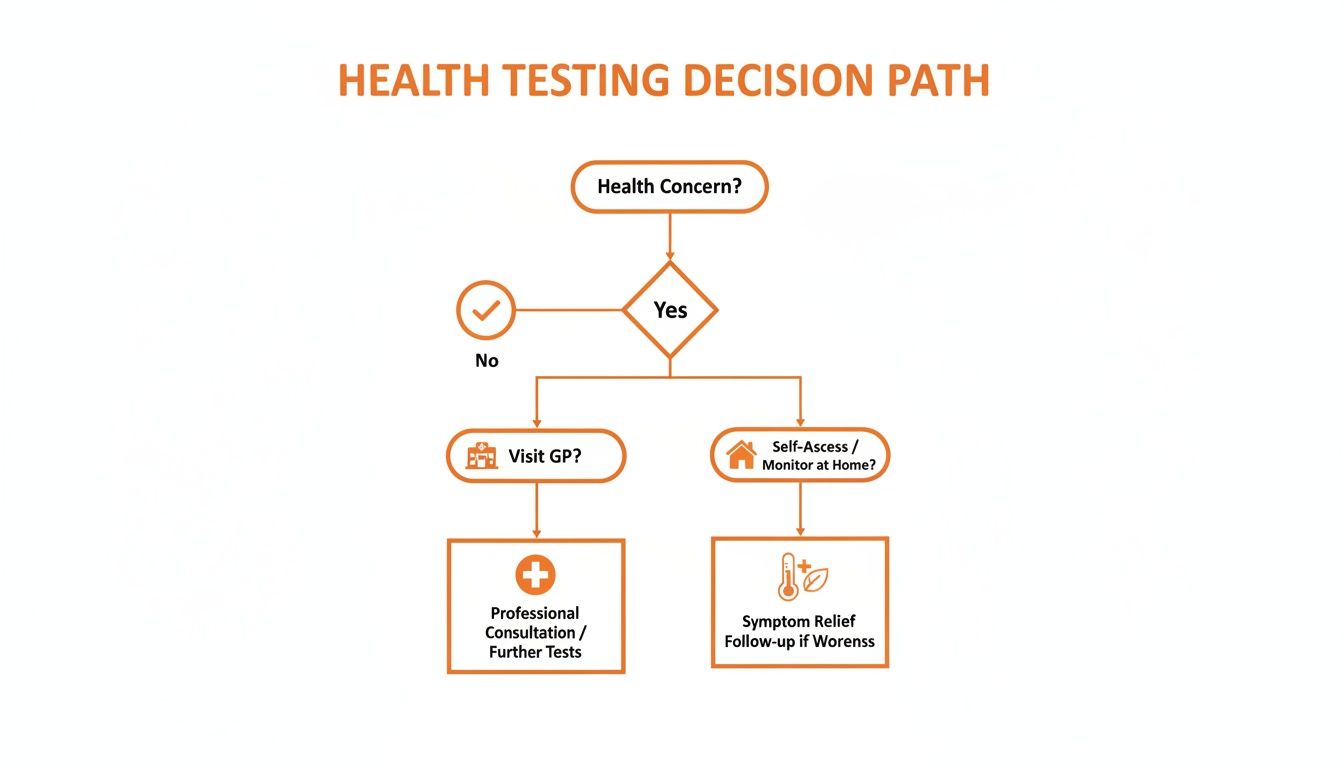
The flowchart shows that after identifying a health concern, you have a choice between visiting a GP or opting for a home test, highlighting the different pathways available in modern healthcare.
The Venous Blood Draw: Gold Standard
Finally, we have the venous blood draw. This is the method you’ll be most familiar with from visits to your GP or the hospital, where a trained professional (a phlebotomist) collects blood directly from a vein in your arm. While it’s not a DIY home test, it is a service that can be arranged at your home or at a partner clinic.
A venous draw is considered the ‘gold standard’. Why? Because it provides a much larger volume of blood, which is essential for more complex or comprehensive tests that need to analyse lots of different biomarkers at once.
Think of it like this: a finger-prick sample is like a snapshot, perfect for checking specific details. A venous sample is like a high-resolution panoramic photo, capturing a much wider and more detailed view of your health. That's why it's required for certain advanced hormone panels or extensive wellness checks where a larger sample ensures the highest degree of accuracy.
Comparing Blood Sample Collection Methods
Choosing the right blood collection method is a key step in taking control of your health monitoring. This table offers a clear comparison to help you decide which option best suits your needs, whether you prioritise convenience, comfort, or the comprehensive detail required for certain tests.
| Feature | Finger-Prick Test | Tasso Home Device | Venous Blood Draw |
|---|---|---|---|
| Collection Site | Fingertip | Upper Arm | Inner Arm (Vein) |
| Pain Level | Low (a quick prick) | Virtually Painless | Moderate (a sharp scratch) |
| Ease of Use | Simple, but requires technique | Very Easy (push-button) | Requires a trained professional (phlebotomist) |
| Sample Volume | Small (a few drops) | Small to Medium | Large |
| Best For | Specific biomarker tests (e.g., Vitamin D, Cholesterol) | Needle-phobic users, tests requiring a high-quality capillary sample | Comprehensive panels, advanced hormone tests, full health MOTs |
| Risk of Error | Moderate (user error can lead to poor sample) | Low (automated process) | Very Low (performed by a professional) |
| Convenience | High (can be done anywhere) | High (can be done anywhere) | Moderate (requires appointment at home or in a clinic) |
Each method has its place in modern health testing. The finger-prick offers simple, accessible insights, the Tasso provides a user-friendly and painless alternative, and the venous draw remains the undisputed leader for in-depth, complex analysis. Your choice ultimately depends on the test you need and your personal comfort level.
How Your Home Blood Test Works Step by Step
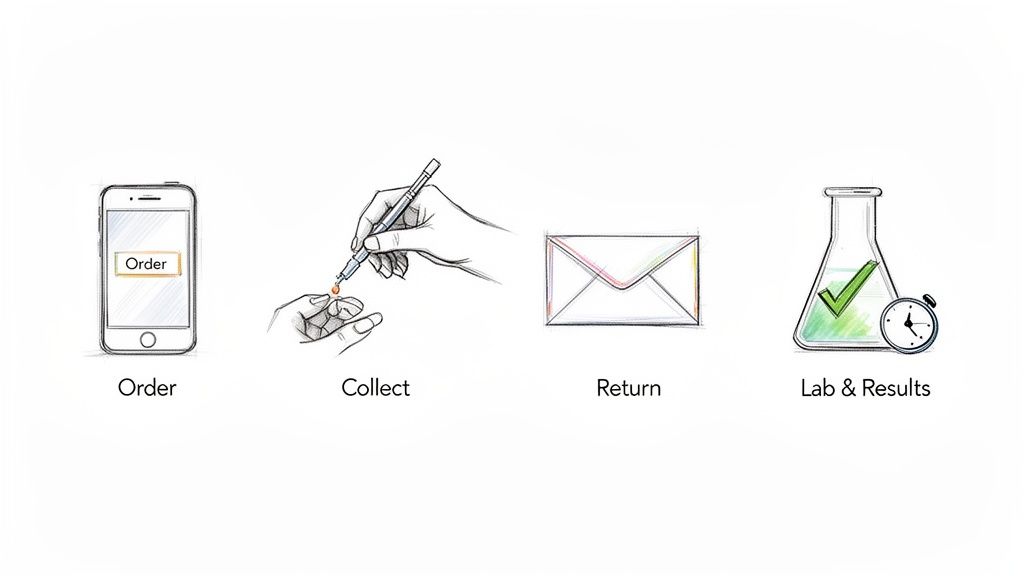
So, you've decided to take control of your health with a home blood test kit in the UK. But what actually happens after you click ‘buy’? It's a surprisingly slick process, blending the ease of online ordering with the accuracy of a professional lab.
Let's walk through the entire journey, from browsing tests on your phone to understanding what your results mean for you.
Step 1: Placing Your Order and the Clinical Questionnaire
It all starts with choosing the right test and placing your order. This isn't just like adding another item to your online basket. Any reputable provider, including regulated services like our online pharmacy uk, will ask you to fill out a secure clinical questionnaire first.
This step is absolutely essential. It’s a confidential form covering your symptoms, medical history, and lifestyle. Think of it as the conversation you’d have with a doctor before a test. This context is what allows a clinician to make sense of your results later—without it, they’re just numbers on a page.
Step 2: Preparing for and Collecting Your Sample
When your kit arrives in plain, discreet packaging, it’s time to collect your sample. Inside, you’ll find everything you need: instructions, lancets, a collection tube, and cleansing wipes. A little bit of prep work here can make all the difference.
A Pharmacist’s Top Tip for Sample Collection: "Hydration is your best friend. Drink a large glass of water about an hour before you plan to take your sample. This increases your blood volume and makes it much easier to get a good flow. Also, don’t do it first thing in the morning when you might be slightly dehydrated—mid-morning is often a perfect time."
For a hassle-free collection, just follow these simple steps:
- Warm Your Hands: Get the blood flowing by washing your hands in warm water or swinging your arms around for a minute.
- Choose the Right Finger: Go for the side of your middle or ring finger on your non-dominant hand. The skin is usually softer and less sensitive there.
- Let Gravity Help: Stand up and let your arm hang down below your waist. Gravity will help pool the blood in your fingertips.
- Collect Gently: After using the lancet, gently massage down from the base of your finger. Try not to squeeze the very tip, as this can damage the blood cells and mess up the sample.
We had a client, Sarah, who was worried she wouldn't be able to get enough blood for her vitamin D test. By following these tips, she found the process was straightforward and got it right on the first try, saving herself the frustration of having to do it again.
Step 3: Packaging and Returning Your Sample
Once you’ve collected your sample, the next bit is easy. Your kit will come with a pre-paid, tracked envelope specifically designed to keep the sample safe on its way to the lab.
Just make sure you’ve labelled the sample vial correctly with the stickers provided and sealed everything up as shown in the instructions. Then, pop it into a designated Royal Mail priority postbox. These postboxes have later collection times, ensuring your sample gets to the lab as quickly as possible.
Step 4: Lab Analysis and Receiving Your Results
When your sample reaches the accredited laboratory, the real science kicks in. Highly trained technicians use advanced equipment to analyse your blood for the specific biomarkers you’ve chosen. The whole process is incredibly stringent, with multiple quality checks to guarantee every result is spot-on.
You can usually expect your results back within a few working days. But you won't just get a list of raw data. A qualified clinician will review your lab report, comparing it against the information you gave in your initial questionnaire. This is the most important part—they add the expert interpretation, explaining what your results mean in the context of your health. You’ll receive a secure digital report with clear explanations and practical, actionable next steps.
Why Clinical Oversight Is Non-Negotiable
Getting a page full of medical terms and numbers can be pretty overwhelming. Without the right context, these results can easily spark more confusion and anxiety than clarity. This is precisely why professional clinical oversight is the most critical part of any home blood test kit in the UK. It’s what turns raw data into a health story that actually makes sense.
Just seeing a marker flagged as ‘in-range’ or ‘out-of-range’ isn’t the whole picture. Your body is a complex system, and a single number rarely tells the full story on its own. A qualified clinician acts as your expert interpreter, connecting the dots between your lab results and the crucial information you provided in your initial health questionnaire.
Turning Data Into Actionable Insights
Imagine your results show slightly elevated liver enzymes. On its own, this could mean anything from having a glass of wine the night before to taking certain medications, or it could be an early sign of something needing a closer look. Without clinical context, you're left guessing.
A clinician, however, reviews this result alongside your personal profile—your age, lifestyle, symptoms, and medical history. This lets them build a complete picture and understand what that number actually means for you.
A Pharmacist’s Perspective: "We see it all the time. Someone might see a result that’s borderline and immediately start worrying. But a clinician can look at their profile and say, 'Given your new fitness routine, this slight elevation in muscle enzymes is expected and nothing to worry about.' That context is everything—it provides reassurance and stops unnecessary stress."
This professional review is what turns a simple number into a clear, actionable health plan.
From Interpretation to Clear Next Steps
Good clinical oversight doesn't just stop at explaining your results. Its real value is in giving you clear, personalised guidance on what to do next. This advice is tailored specifically to your individual situation.
Based on your unique results and health profile, a clinician can recommend a variety of next steps, so you're never left wondering what to do with your newfound health information.
- Lifestyle Adjustments: You might get practical advice on diet, exercise, or supplement changes to help optimise a specific biomarker, like low vitamin D or high cholesterol.
- Further Investigation: If a result is unclear or points to a potential issue, the clinician can recommend follow-up tests to get a more detailed understanding.
- Prescription Medication: For certain conditions identified through testing, a clinician can issue a prescription directly, allowing you to start treatment promptly and safely.
- Specialist Referral: Should your results suggest a more complex issue, they will recommend that you see your GP or a specialist for further management.
For example, a client named Mark used a home blood test kit and discovered his thyroid-stimulating hormone (TSH) was high. Instead of just getting a number, our clinician reviewed his symptoms of fatigue and weight gain, explained what an underactive thyroid means, and provided a letter for his GP outlining the results and suggesting the next steps for diagnosis and treatment. This expert guidance empowered Mark to have a productive conversation with his doctor and get the help he needed quickly.
The Gold Standard of Patient Care
Ultimately, clinical oversight makes sure your health journey is safe, responsible, and effective. It provides a crucial safety net, preventing misinterpretation and ensuring that any significant health concerns are handled properly. It’s the essential human element that makes home blood test kits in the UK a truly powerful tool for proactive health management, offering you not just data, but genuine understanding and a clear path forward.
Ensuring Your Test Is Accurate and Secure

When it comes to your health, trust is everything. With the boom in home blood test kits in the UK, it's only natural to wonder just how reliable and secure they really are. Let's pull back the curtain on the systems that ensure your test is accurate and your personal data stays completely private.
We’ll walk through the key regulatory bodies that oversee these services, the exacting standards of the labs that process your sample, and the strict privacy laws that safeguard your information. The goal here is simple: to give you total peace of mind.
The UK Regulatory Framework
In the UK, home diagnostic services don't operate in a vacuum. They're held to a very high standard to guarantee safety and quality. The kits themselves are regulated as medical devices by the Medicines and Healthcare products Regulatory Agency (MHRA), which makes sure they're fit for purpose and meet tough safety criteria.
But the kit is only half the story. The real linchpin of the process is the laboratory analysis. Any reputable provider of home blood test kits uk will only use labs registered with the Care Quality Commission (CQC). The CQC is the independent regulator for all health and social care in England, and their seal of approval is a big deal. It means the lab is regularly inspected for accuracy, safety, and quality.
A Pharmacist’s Insight: "Always, always check that the provider uses a CQC-registered lab. It's a non-negotiable quality mark. This registration means they adhere to the same exacting standards as NHS labs, so you can be confident your sample is being handled professionally and the results are dependable."
Finger-Prick Accuracy and When It's Right
A question we hear all the time is whether a small finger-prick sample can really be as accurate as a full venous draw from your arm. The short answer is yes. For a huge range of common tests—like checking vitamin levels, cholesterol, or HbA1c for diabetes monitoring—a capillary blood sample is medically valid and provides highly accurate results.
The key, however, is the quality of the sample you provide. Following the collection instructions to the letter is absolutely essential. That said, for more complex tests that demand a larger volume of blood, a venous draw is still the gold standard, which is why we offer it as an option for certain comprehensive health panels.
Protecting Your Personal Health Data
Your health information is some of the most sensitive data you have, and its protection is taken extremely seriously. As a General Pharmaceutical Council (GPhC) registered pharmacy, all our processes are designed from the ground up to be fully compliant with the General Data Protection Regulation (GDPR).
Here's what that looks like in practice:
- Secure Questionnaires: Any clinical information you share is collected through encrypted, secure forms. No exceptions.
- Strict Confidentiality: Your data is only ever accessed by the clinical team directly responsible for reviewing your results.
- Anonymised Samples: When your sample arrives at the lab, it's processed using a unique identifier, not your personal details.
This multi-layered approach ensures your privacy is protected at every single step. We have detailed information about our commitment to protecting patient consultation data and our strict adherence to confidentiality standards. Your trust is our priority, and that starts with robust data security.
Summary
Home blood test kits offer a convenient, confidential, and reliable way to gain valuable insights into your health from home. By choosing a service that uses accredited labs and provides essential clinical oversight, you can empower yourself with accurate information. From the simple finger-prick test to more advanced options, these kits make proactive health monitoring accessible to everyone. The process is straightforward: order your kit, collect your sample following simple tips, return it via post, and receive a secure, easy-to-understand report with actionable advice. This empowers you to take a more informed and proactive role in managing your health journey.
FAQs
1. Is a finger-prick blood test painful? Most people find it's just a quick, sharp pinch that's over in a second. To minimise discomfort, a pharmacist would recommend using the side of your ring or middle finger and warming your hands first to improve blood flow.
2. Are home blood test kits as accurate as NHS tests? Yes, provided the service uses the same CQC-registered and UKAS-accredited labs that the NHS uses. The accuracy depends on the quality of the lab and ensuring you collect a good quality sample by following the instructions carefully.
3. What happens if my results show something abnormal? You won't be left to figure it out alone. A qualified clinician will review your results in the context of your health profile. They will provide a clear explanation of what the results mean and give you actionable next steps, which could range from lifestyle advice to recommending a follow-up with your GP.
4. How much do private home blood test kits cost in the UK? Prices vary depending on the complexity of the test. A single-marker test like vitamin D can start from around £30, while comprehensive health checks can cost over £200. Always ensure the price is all-inclusive, covering the kit, lab analysis, and the clinician's report.
Ready to take the first step towards a better understanding of your health? At Courier Pharmacy, we offer a range of accurate, clinician-supported home blood test kits designed to give you the clear insights you need. Explore our secure and confidential testing services today.


