A Guide To Using A Home Test For BV In The UK in 2026
Think you have BV? Our guide to using a home test for BV covers accuracy, understanding results, and when to see a doctor for discreet, fast answers.
In this article
- What is bacterial vaginosis (BV)?
- What causes BV?
- A real-life example: The busy parent
- How to choose a home BV test
- Vaginal pH test strips
- Home collection lab kits
- Comparing home BV test kits
- How to use a home BV test and read the results
- Get ready to test
- A step-by-step guide to taking a sample
- How to read your results
- A real-life example: The gym-goer
- What to do with your test result
- If your test is positive
- If your test is negative
- When to always seek medical advice
- How to prevent BV from coming back
- Gentle hygiene habits
- Breathable clothing choices
- Consider probiotics
- Summary
- FAQs
- How accurate are home BV tests?
- Can a home test for BV detect STIs?
- What should I do if my test result is borderline?
- Can I use a home BV test while on my period?
- Will antibiotics affect my home BV test result?
- What if my symptoms come back after treatment?
A home test for BV is a discreet kit you can use to check for signs of bacterial vaginosis (BV) without leaving your house. It works by measuring the pH level of your vaginal fluid, giving you a quick, private way to see if a bacterial imbalance might be causing your symptoms. This guide will walk you through choosing a test, using it correctly, and understanding what to do with your result. We’ll explain the science in simple terms, offer practical tips from a pharmacist, and help you feel confident in managing your intimate health.
- Five key takeaways
- Home BV tests measure vaginal pH; a level above 4.5 is a key sign of BV.
- They are a screening tool, not a final diagnosis. Always follow up with a clinician.
- For accurate results, avoid testing during your period or within 48 hours of sex.
- A positive result means you should seek treatment, usually prescription antibiotics.
- A negative result with symptoms means you should investigate other causes like thrush or an STI.
What is bacterial vaginosis (BV)?
Bacterial vaginosis (BV) is a common vaginal condition. It is not a sexually transmitted infection (STI). It happens when the natural balance of bacteria in your vagina is disrupted.
What is bacterial vaginosis? A common vaginal condition caused by an overgrowth of certain bacteria, leading to a pH imbalance and symptoms like unusual discharge and a fishy odour.
Think of your vagina as a healthy garden. It needs plenty of ‘good’ bacteria, mainly a type called Lactobacilli. These bacteria produce lactic acid, which keeps your vaginal pH low (acidic, below 4.5). This acidic environment naturally protects you from harmful germs.
BV occurs when these protective Lactobacilli are outnumbered by other types of bacteria, called anaerobes. This overgrowth makes the vagina less acidic, causing its pH to rise. This change is what causes the classic BV symptoms. A home test for BV works by detecting this tell-tale pH shift.

What causes BV?
Certain things can upset your vagina’s delicate balance and increase your risk of getting BV. Common triggers include:
- Douching: Washing inside your vagina flushes out the good bacteria.
- Scented products: Perfumed soaps, bubble baths, and ‘vaginal deodorants’ can cause irritation.
- A new sexual partner: This can introduce new bacteria and alter your vaginal environment.
- Smoking: Research shows a clear link between smoking and a higher risk of BV.
Pharmacist's tip: Stick to plain, unperfumed soap or a gentle, pH-balanced intimate wash. Your vagina is self-cleaning, so you only need to wash the outside area (the vulva).
A real-life example: The busy parent
Imagine Aisha, a busy mum of two from Birmingham. She noticed a change in her discharge but felt she had no time for a GP appointment. She used a home BV test one evening after the kids were in bed. It showed a high pH, prompting her to use an online pharmacy for a consultation. This quick, discreet step meant she got the right treatment without disrupting her family routine.
How to choose a home BV test
When you suspect you have BV, choosing the right test is important. Your choice comes down to what you need: a quick clue or a definite, lab-backed answer? In the UK, you will find two main types of home tests for BV.
Vaginal pH test strips
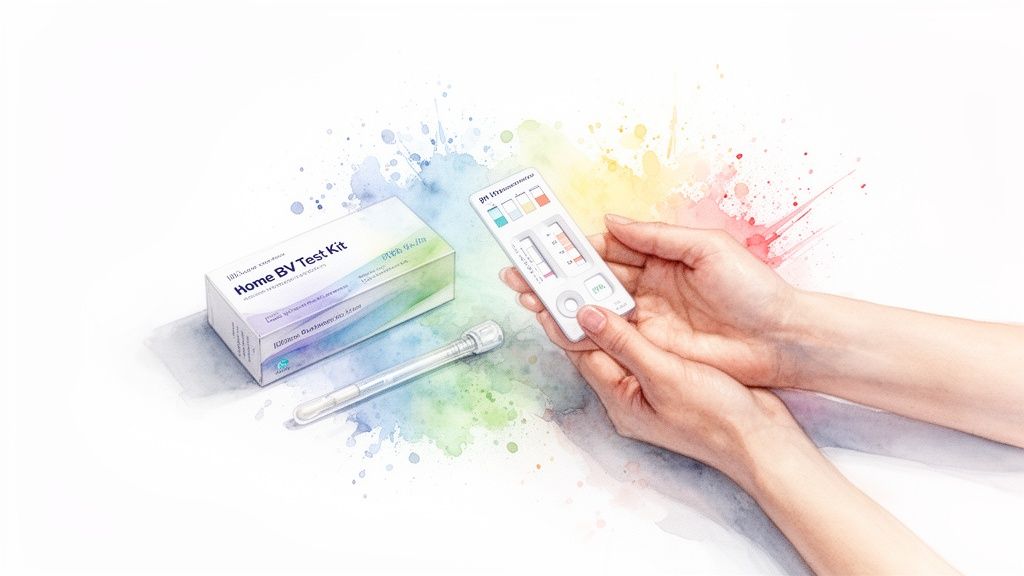
These are the most common type of home BV test you will find online or in pharmacies. They work by checking the pH level of your vaginal fluid. A healthy vagina has a pH below 4.5. BV causes this level to rise.
You simply use a swab to collect a sample and apply it to a colour-coded strip. The colour change gives you an answer in minutes. However, other things can also raise your pH, like your period or recent sex. So, a high pH is a strong clue, but it’s not a definite diagnosis on its own.
Home collection lab kits
These kits offer a much more detailed and accurate result. You use a sterile swab to collect a sample at home. Then you send it in pre-paid packaging to a certified laboratory.
Scientists at the lab don’t just check pH. They use advanced methods to identify the specific bacteria causing the problem. This gives you a clear diagnosis. Many of these kits also let you test for other conditions like thrush or STIs at the same time. This is very helpful if your symptoms are unclear. The process is similar to other at-home health checks, which you can learn about in our guide to using a home blood test in the UK.
Comparing home BV test kits
This table helps you see the main differences between the two types of tests at a glance.
| Feature | Vaginal pH Test Strips | Home Collection Lab Kits |
|---|---|---|
| How it Works | Measures vaginal pH level | Lab analysis of a vaginal swab |
| Result Speed | Instant (within minutes) | 2-5 days after lab receives sample |
| Level of Detail | Basic (pH level only) | High (identifies specific bacteria) |
| Accuracy | Good indicator, but less specific | Very high diagnostic accuracy |
| Checks for... | pH imbalance only | BV, often with options for thrush & STIs |
| Best For | A quick, low-cost initial check | A definitive diagnosis or complex symptoms |
| Cost | £ | ££ - £££ |
Ultimately, a pH strip can be a great starting point. But for a firm diagnosis and the right treatment path, a lab test is the better choice.
Pharmacist's tip: If you are pregnant and have symptoms of BV, speak directly to your doctor or midwife. Do not rely solely on a home test. They will ensure you get the right care.
How to use a home BV test and read the results
You’ve got your home test kit. Using one for the first time can feel a bit odd, but the kits are designed to be simple. Let’s walk through how to use it correctly and make sense of your results.
Get ready to test
Timing is key for an accurate result. A few things can temporarily affect your vaginal pH and give a false reading.
To get the most accurate result, avoid testing if you:
- Are on your period (wait at least 48 hours after it ends).
- Have had sex in the last 48 hours.
- Have used any vaginal products (like creams or douches) in the last 72 hours.
Waiting gives your body time to reset, so the test can measure your true baseline.
A step-by-step guide to taking a sample
The process is quick and designed for comfort. The steps are generally the same across different brands.
- Wash your hands: Use soap and water to prevent contamination.
- Unwrap the swab: Open the sterile wrapper carefully. Don't let the soft tip touch any surface.
- Get comfortable: Stand with one foot on a chair or lie down with your knees bent.
- Insert the swab: Gently guide the swab into your vagina, about two inches deep, like a tampon.
- Collect the sample: Rotate the swab slowly for 10-15 seconds, touching the vaginal walls.
- Remove the swab: Carefully pull the swab out, ensuring the tip doesn't touch anything.
How to read your results
Now it's time to see the result. If you are using a pH test strip, apply the fluid from the swab to the test panel. After a minute or two, the panel will change colour. Compare this colour to the chart in the box.
- A normal pH (below 4.5): If the colour matches the 'normal' range, your pH is healthy and acidic. This means BV is unlikely to be the cause of your symptoms.
- An elevated pH (above 4.5): If the colour falls into the higher range, your vagina is less acidic. This is a classic sign of bacterial vaginosis.
These tests are quite reliable. Research shows a strong link between self-test results and clinical diagnoses. In fact, studies published by Cambridge University Press confirm their overall accuracy can be as high as 88% when used correctly.
If you chose a home collection lab kit, your job is even simpler. After collecting the sample, seal it in the pre-paid package and post it. The lab handles the rest, and you get your secure results in a few days. You can find more information in our practical guide to using a home blood test kit in the UK.
A real-life example: The gym-goer
Consider Sarah, a 28-year-old from Manchester who loves her spin classes. She worried her sweaty gym gear might be causing some mild symptoms. She used a simple home pH test, which showed an elevated result. This gave her the confidence to book an online consultation. It was a simple, proactive step that let her get a diagnosis and treatment sorted quickly, without taking time off work.
What to do with your test result
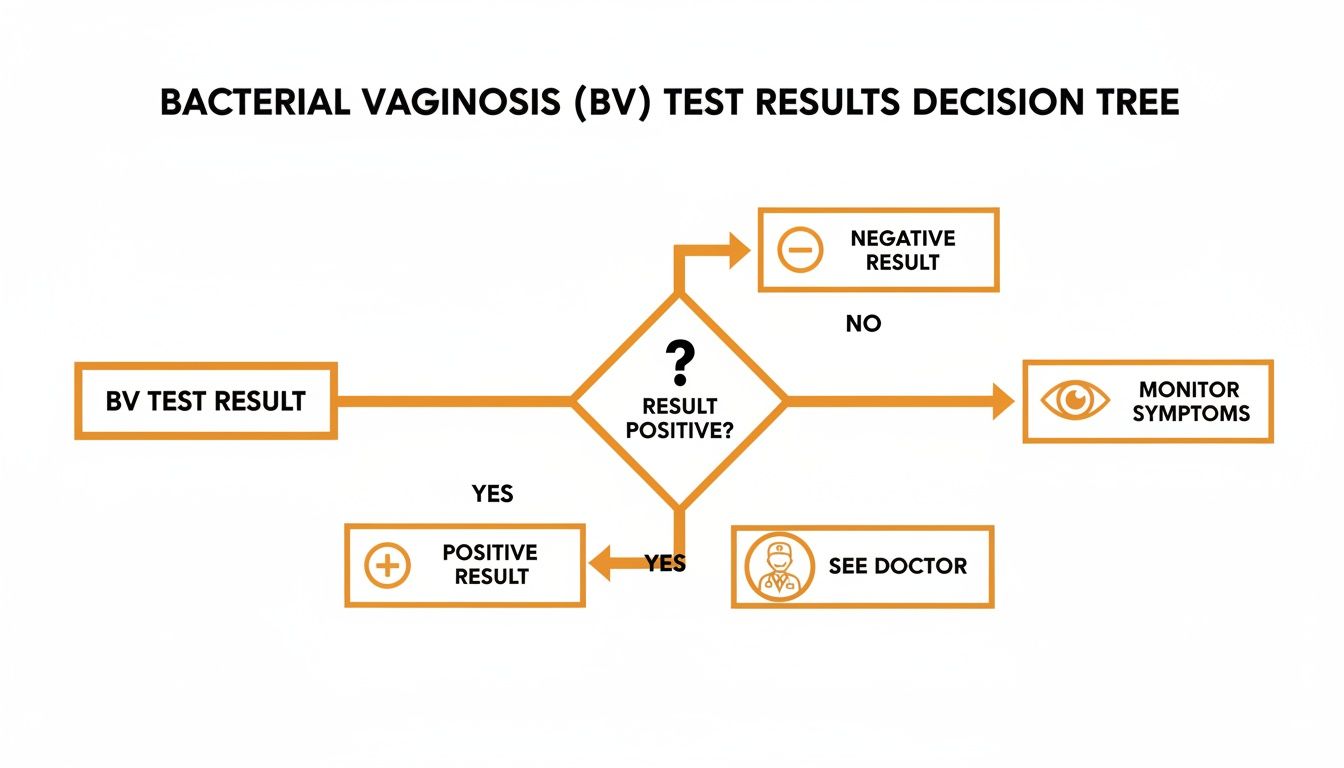
You have your result. What does it mean for you? Think of the result as a signpost that points you in the right direction. A home BV test is a screening tool, not a final diagnosis. A clinician should always make the final call.
If your test is positive
A positive result means your vaginal pH is high, which strongly suggests you have BV. This is your signal to contact a healthcare professional. BV is common and treatable, but it needs a proper diagnosis to get the right medicine.
The standard treatment is prescription-only antibiotics like Metronidazole. These drugs work to rebalance your vaginal flora. Following a consultation, our prescribers can help you get Metronidazole 400mg tablets. A formal diagnosis is vital to be sure it’s BV and to get the correct treatment.
Pharmacist's tip: A common mistake is self-diagnosing symptoms as thrush and using over-the-counter creams. Antifungal treatments do not work for bacterial infections like BV and can sometimes make the imbalance worse. Always get a proper diagnosis first.
If your test is negative
A negative result is good news. It suggests your pH level is normal, and BV is unlikely. However, if you still have symptoms like discharge, odour, or itching, you should still speak to a doctor or pharmacist. The cause could be something else, like a yeast infection (thrush) or an STI like trichomoniasis.
When to always seek medical advice
Regardless of your home test result, you should see a healthcare professional immediately if:
- You are pregnant and have any symptoms.
- You think you might have been exposed to an STI.
- Your symptoms are severe or getting worse.
- Your symptoms keep coming back after treatment (recurrent BV).
Studies show that participants can perform home pH tests with 100% accuracy, which helps them decide when to seek care. You can read the full research on these findings here. If you need to take the next step, our discreet online consultations offer a confidential way forward.
How to prevent BV from coming back
Getting rid of a BV infection is one thing; keeping it away is another. If you suffer from recurrent BV, you are not alone. The key is to focus on long-term prevention. This means creating an environment where your vaginal microbiome can stay healthy.
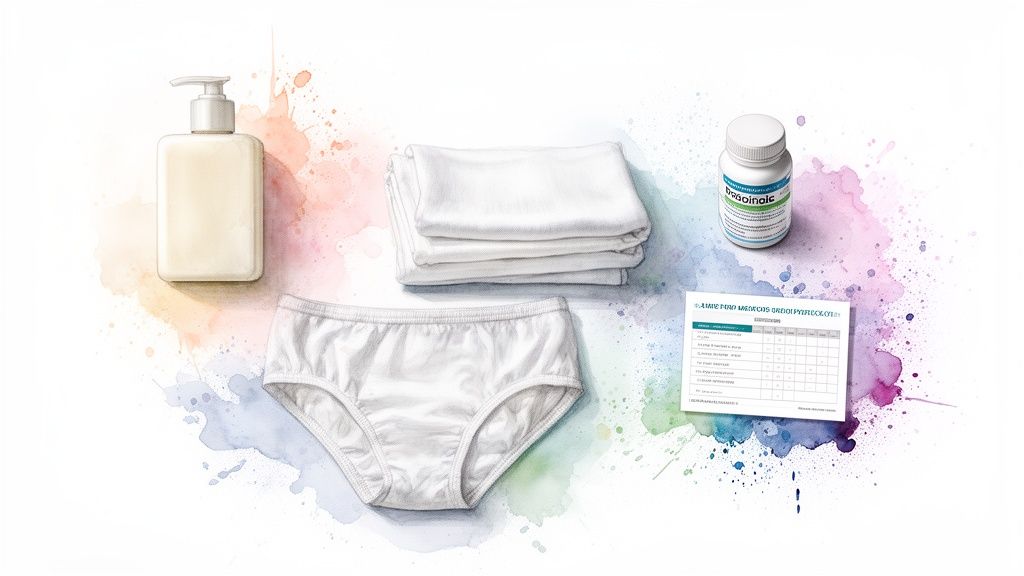
Small, consistent changes to your routine can help your 'good' bacteria thrive and keep your vaginal pH balanced.
Gentle hygiene habits
Your vagina is a self-cleaning organ. Using harsh products can disrupt its natural balance.
- Avoid scented products: Steer clear of perfumed soaps, bubble baths, and vaginal deodorants. The chemicals can cause irritation and upset your pH balance.
- Do not douche: Douching flushes out the protective Lactobacilli bacteria, leaving you more vulnerable to BV.
Breathable clothing choices
Your choice of underwear can also make a difference. The goal is to maximise airflow and reduce moisture.
- Choose cotton underwear: Cotton is a natural, breathable fabric that helps wick moisture away.
- Avoid tight clothing: Tight trousers or synthetic gym wear can trap heat and moisture. This creates a perfect environment for disruptive bacteria to grow.
Consider probiotics
There is growing evidence that probiotics can help prevent BV. These supplements contain live, friendly bacteria that help restore a healthy vaginal flora. Always talk to a pharmacist or doctor before starting a new supplement. They can help you choose a product with the right bacterial strains for your needs.
Summary
A home test for BV is a fast and discreet way to check your vaginal health. It measures your vaginal pH, with a reading above 4.5 suggesting a bacterial imbalance consistent with BV. For an accurate result, you must use the test correctly, avoiding it during your period or shortly after sex. While these tests are a very useful screening tool, they do not replace a professional diagnosis. If you get a positive result, or a negative result with persistent symptoms, you should always speak to a clinician to confirm the cause and get the right treatment.
FAQs
How accurate are home BV tests?
Home tests that check vaginal pH are very good screening tools. They reliably detect the pH imbalance that is a classic sign of BV. However, a doctor's diagnosis is the most definitive way to know for sure, as they can rule out other conditions.
Can a home test for BV detect STIs?
No, a standard home test for BV only measures pH levels and cannot detect STIs. Some STIs, like trichomoniasis, can also raise vaginal pH. If you think you have been exposed to an STI, you must get a proper STI test.
What should I do if my test result is borderline?
If your result is unclear, wait a day or two and test again. Make sure you have followed all the pre-test guidance, such as avoiding sex for 48 hours. If the result is still unclear, or you still have symptoms, speak to a healthcare professional.
Can I use a home BV test while on my period?
You should not use a test during your period. Blood has a higher pH and will give an inaccurate result. Wait at least two full days after your period has completely finished before testing.
Will antibiotics affect my home BV test result?
Yes. Antibiotics can alter the bacteria in your body, including your vaginal microbiome. This can make a test result unreliable. Wait until you have finished your full course of antibiotics before using a home BV test.
What if my symptoms come back after treatment?
Recurrent BV is frustrating but common. If your symptoms return after treatment, do not self-medicate. Speak with a clinician. They can confirm it is BV and create a better management plan, which might involve a different treatment.
Meta description: Wondering about your vaginal health? Our 2026 UK guide explains how a home test for BV works, what your results mean, and your next steps for treatment and prevention.
Internal links:
Image/infographic ideas:
- Infographic: "The pH Scale of Vaginal Health". A simple visual scale from 0 to 14. A green "healthy" zone highlights pH 3.8-4.5 with an icon of thriving Lactobacilli. A yellow-to-red "imbalance" zone highlights pH >4.5 with icons representing BV, thrush, and trichomoniasis. Alt text: "An infographic showing the vaginal pH scale, with a healthy acidic zone below 4.5 and an imbalanced alkaline zone above 4.5, which can indicate BV."
- Illustration: "Do's and Don'ts for Vaginal Health". A split-panel illustration. The "Do" side shows a person wearing cotton underwear and using plain soap in light grey and pale yellow-green. The "Don't" side shows a no-entry sign over a douche bottle and perfumed bubble bath in a brighter, more cautionary lime green. Alt text: "An illustration of do's and don'ts for vaginal health. The 'do' side shows cotton underwear and plain soap. The 'don't' side shows a cross over douching and perfumed products."
Disclaimer: This article is for informational purposes only and should not be taken as medical advice. Always consult with a healthcare professional for any health concerns or before starting a new treatment.
Byline: Written by James O'Loan (MRPharmS) Clinical review: Clinically reviewed by Dr. Sarah Jarvis MBE (FROCGP)
How this content was created: This article was written by a qualified UK pharmacist using trusted, evidence-based sources, including the NHS, NICE guidelines, and peer-reviewed medical journals. The content was then reviewed for clinical accuracy by a registered GP to ensure it is safe, clear, and patient-friendly. All information is up-to-date as of its publication date.
References: [1] Cambridge University Press. (2010). Vaginal symptoms and bacterial vaginosis (BV): how useful is self-report? Development of a screening tool for predicting BV status. Available at: https://www.cambridge.org/core/journals/epidemiology-and-infection/article/vaginal-symptoms-and-bacterial-vaginosis-bv-how-useful-is-selfreport-development-of-a-screening-tool-for-predicting-bv-status/EEA1CC60DE25CC78E73A20555F9D19F9 [2] National Center for Biotechnology Information (NCBI). (2013). The Clinical and Laboratory Diagnosis of Bacterial Vaginosis. Available at: https://pmc.ncbi.nlm.nih.gov/articles/PMC3818598/


