How Does Ibuprofen Gel Work: A Clear UK Guide
Learn how does ibuprofen gel work, how it absorbs through skin, how long it lasts, how it compares to tablets, and safe UK application tips.

You're home after a long walk, and your knee feels stiff. Or perhaps your neck has tightened after a day at a desk. How does ibuprofen gel work? It delivers an anti-inflammatory medicine through the skin to the sore area, where it helps reduce pain and inflammation. This guide explains what reaches the deeper tissue, why the gel can feel slower than tablets, how to apply it safely, and when a pharmacist or GP should check your symptoms.
Five key takeaways
- Local action: Ibuprofen gel works mainly in the tissues beneath the skin.
- Pain and swelling: It reduces prostaglandins, chemicals involved in inflammation and pain.
- Lower blood levels: Less medicine usually reaches the bloodstream than with tablets, although absorption still occurs.
- Regular use matters: UK guidance allows application up to 3 or 4 times daily, with at least 4 hours between applications, depending on the product leaflet. NHS guidance
- Safety first: Don't use it on damaged skin, combine it with oral ibuprofen without advice, or ignore breathing problems or severe swelling.
How Ibuprofen Gel Targets Sore Tissue
After gardening, a long walk, or hours at a laptop, a knee, wrist, or shoulder may feel hot, tight, and tender. Ibuprofen gel belongs to the non-steroidal anti-inflammatory drugs, or NSAIDs. You rub it over the painful area, allowing the medicine to work near the irritated tissue.
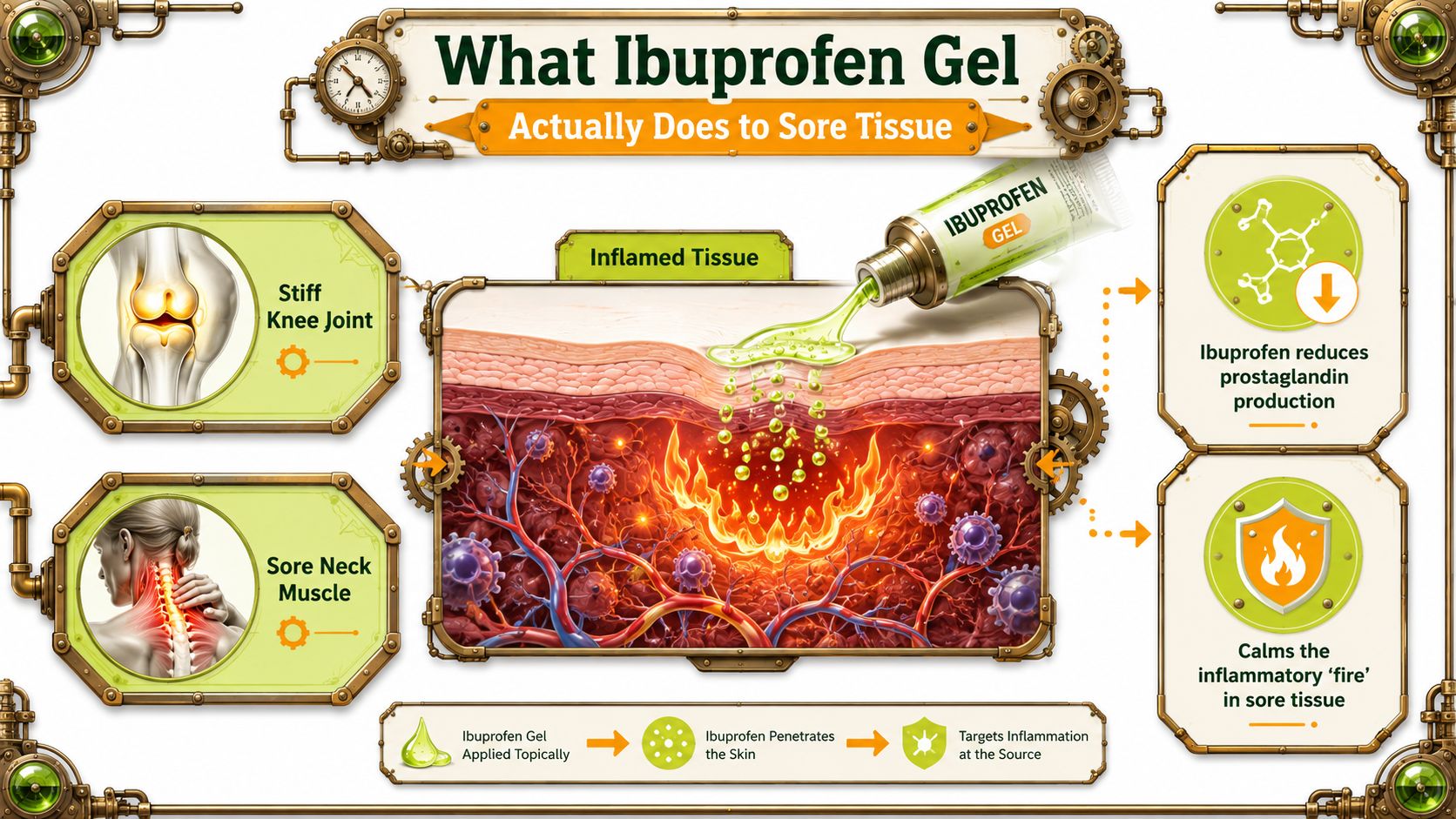
Ibuprofen blocks enzymes called cyclooxygenase, or COX enzymes. These enzymes help the body produce prostaglandins, which contribute to pain and inflammation. Lowering prostaglandin production can ease tenderness, swelling, and stiffness. UK medicines information describes topical ibuprofen as acting mainly in the inflamed tissue beneath the skin. BNF information on ibuprofen
The gel is like turning down a local fire alarm rather than changing every alarm in a building. Tablets circulate more widely, while gel is applied close to a sore knee, muscle, shoulder, or joint. Some medicine still enters the bloodstream, but the intended effect is nearer the application site. This local approach may be gentler on the stomach than an ibuprofen tablet, although it does not remove all NSAID risks.
Why the application site matters
Gel is most useful when pain comes from a small, reachable area, such as a sore wrist, knee, ankle, or shoulder. As local inflammation settles, movement may become easier. The medicine does not repair a serious injury or explain pain with no clear cause.
For general guidance about everyday aches, see pain support and treatment options. Severe or worsening pain, or pain after an injury, needs advice from a pharmacist or clinician rather than gel alone.
How Ibuprofen Gel Absorbs Through the Skin
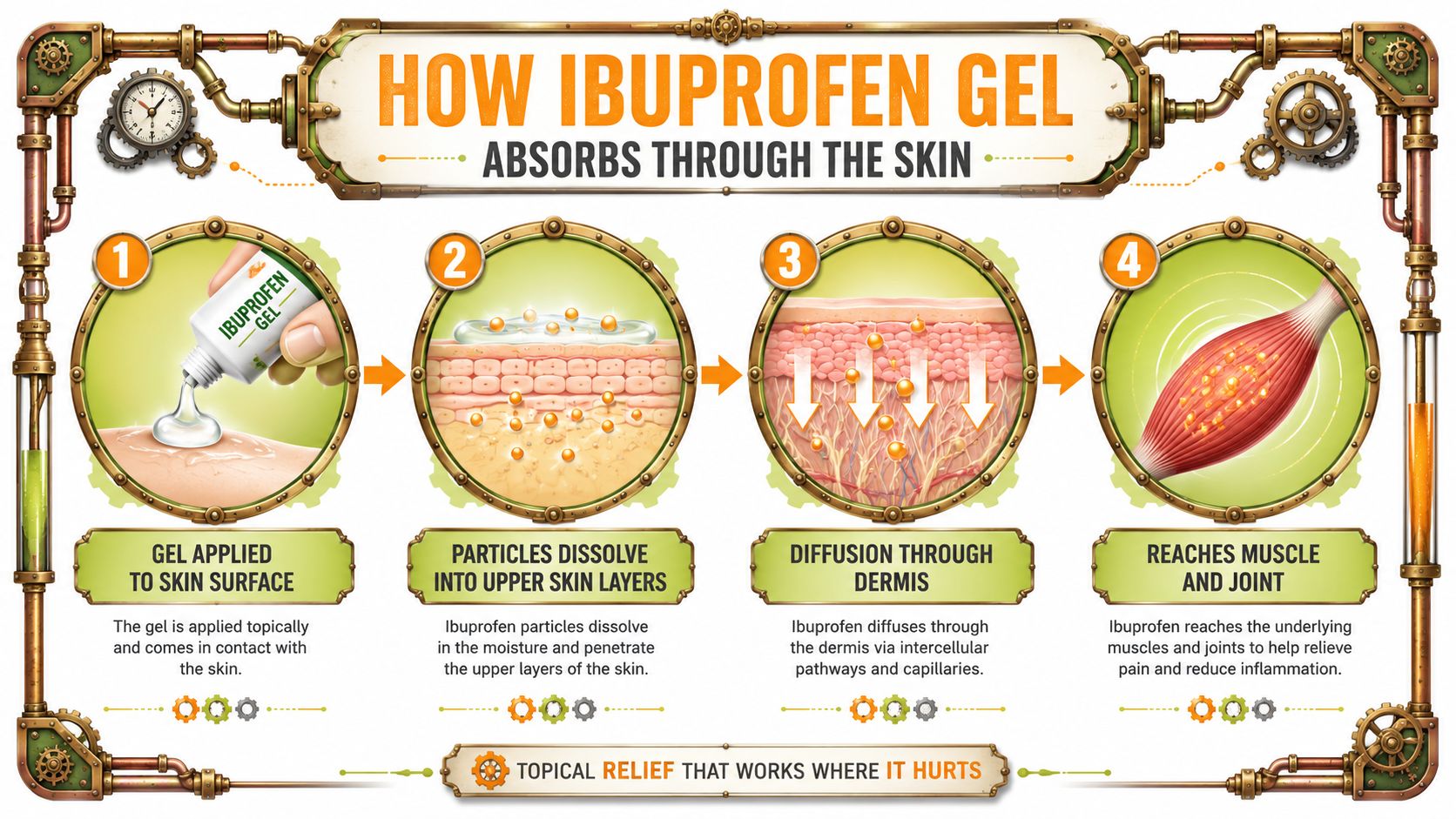
Skin forms a strong barrier. It protects you from the outside world, but it also makes it harder for medicines to pass through. After you apply ibuprofen gel, the medicine dissolves in the surface layer and gradually moves through the epidermis and dermis. It can then reach soft tissues, joints, and synovial fluid, the slippery fluid around many joints.
Think of rain soaking through layers of clothing before reaching soil underneath. Some of the water stays in the fabric, while some travels deeper. Ibuprofen behaves in a similar way. The amount that reaches the deeper tissue depends on the product, the skin, the amount applied, and the area treated.
UK product information for one 10% ibuprofen gel reports that about 22% of a finite dose penetrates through the skin within 48 hours, reaching useful local concentrations. UK product information for 10% ibuprofen gel A separate UK SmPC states that a 5% gel has percutaneous absorption of about 5% of oral ibuprofen, with therapeutic levels reached locally rather than throughout the body. UK SmPC for ibuprofen gel
Local does not mean zero absorption
Some ibuprofen still enters the blood. In a controlled study, researchers applied 500 mg of 5% gel to a 20 x 20 cm area with 2-hour occlusion. The study recorded a mean plasma Cmax of 7.1 micrograms/ml at 2.4 hours, with dose-corrected relative bioavailability around 22% of oral ibuprofen. Controlled topical ibuprofen study
That result matters because “topical” doesn't mean risk-free. Large areas, frequent use, damaged skin, or coverings that trap the gel may increase absorption. Gently rubbing the gel into clean, intact skin helps spread it evenly, but using more won't make it work faster.
If your skin reacts easily to creams or gels, read this UK guide to choosing a cream for dermatitis before trying a new product.
How Long It Takes to Work and How Long It Lasts
Ibuprofen gel doesn't always provide instant relief. You may notice the gel's cooling feel quickly, but the anti-inflammatory effect builds as the medicine moves through the skin and local tissue.
A South Tees NHS leaflet says ibuprofen gel usually takes 1 to 2 days to work. South Tees NHS patient information That slower start makes sense. The gel needs time to reach the tissue, and inflammation may take time to settle.
| Stage | Typical time | What it means |
|---|---|---|
| Initial sensation | Soon after application | The gel may feel cool or soothing on the skin. |
| Early benefit | Gradually | Pain may start to feel less intrusive as local medicine reaches the sore tissue. |
| Building effect | 1 to 2 days | Regular use may produce a clearer anti-inflammatory benefit. South Tees NHS patient information |
| Repeat application | At least 4 hours apart | Follow the pack, with no more than 4 uses in 24 hours where that product gives this limit. BNF information |
Practical rule: If the label allows repeated applications, that doesn't mean the gel has failed. Local treatment often works through steady use.
Use the exact directions for your strength and brand. If you're comparing products, check the instructions for Voltarol Emulgel joint and back pain relief cream rather than assuming every gel has identical directions.
Ibuprofen Gel vs Tablets and Other Pain Relief
The choice between gel and tablets depends on the shape of the problem. A small, sore area suits local treatment. Widespread pain, fever, or inflammation in several areas may need a different plan.
Gel places ibuprofen close to the painful tissue. Tablets pass through the digestive system and then circulate through the bloodstream. That wider exposure can help when pain affects more than one area, but it also brings more potential for whole-body side effects.
| Option | How it works | Best for | Key consideration |
|---|---|---|---|
| Ibuprofen gel | Delivers ibuprofen through the skin near the painful area | A local muscle, joint, sprain, or soft-tissue ache | Skin reactions can occur, and some medicine still reaches the blood. |
| Ibuprofen tablets | Sends ibuprofen through the bloodstream around the body | Pain or inflammation affecting a wider area | More systemic exposure can increase stomach, kidney, heart, and interaction concerns. |
| Paracetamol | Changes how the body processes pain signals | Some mild to moderate pain where inflammation isn't the main issue | It doesn't work in the same way as an NSAID. Follow the pack instructions. |
| Ibuprofen with menthol | Combines ibuprofen with a cooling ingredient in some products | Local aches where cooling feels helpful | Check the ingredients and don't assume it suits sensitive skin. |
Gel may be kinder to the stomach for many people because blood levels generally stay lower than with oral dosing. However, it isn't suitable for everyone, and extensive or repeated use can still matter.
Don't add tablets automatically. Ask a pharmacist before combining oral and topical ibuprofen, especially if you take other medicines or have kidney, stomach, heart, or asthma concerns. You can review the product information for ibuprofen 400 mg tablets before discussing your options with a professional.
Safe UK Application Tips and Pharmacist Pointers
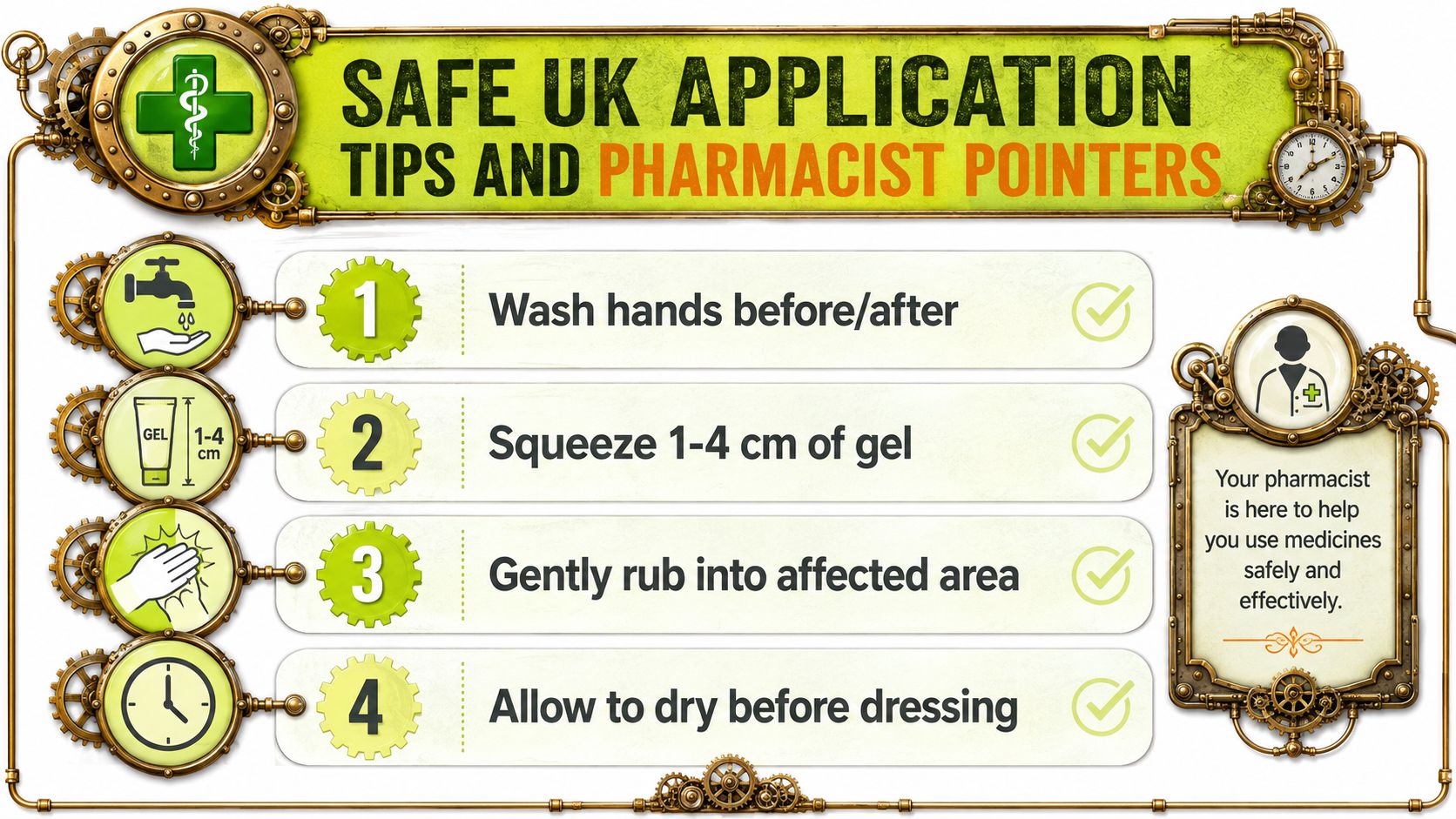
Start with the product leaflet. Gel strengths differ, so the correct amount depends on the brand and the size of the painful area. Many UK products describe using roughly 1 to 4 cm of gel, but the pack instructions take priority.
A simple application routine
- Wash your hands before applying the gel.
- Squeeze the stated amount, often around 1 to 4 cm for the affected area.
- Rub it in gently until the skin absorbs it.
- Wash your hands again, unless your hands need treatment.
- Wait before covering the area, and never use an airtight dressing unless a clinician tells you to.
Apply it only to clean, unbroken skin. Avoid cuts, infected areas, eczema flares, sunburn, eyes, lips, and other sensitive surfaces. Leave at least 4 hours between applications, and follow the maximum daily use on the label. NHS adult ibuprofen guidance
More gel isn't better. A thick layer won't force the medicine through faster and may increase skin exposure.
Pharmacist's tip: Don't combine ibuprofen gel with oral ibuprofen unless a pharmacist or clinician confirms that's appropriate.
Pharmacist's tip: Keep the gel away from your eyes and mucous membranes. Wash the area with water if accidental contact causes irritation.
Pharmacist's tip: Stop using the product if a rash develops. Ask for advice if the reaction spreads, blisters, swells, or feels severe.
People with asthma, especially asthma triggered by NSAIDs, should seek advice first. Do the same if you take blood thinners. UK packs also carry a warning about using ibuprofen products during the last trimester of pregnancy. Ask a clinician about ibuprofen during pregnancy, particularly after 20 weeks.
For a locally focused option, see ibuprofen gel 10% 100 g, then check its directions before use.
Real UK Examples of When the Gel Helps Most
A 58-year-old gardener in Sheffield spends Saturday digging, lifting pots, and clearing a border. By evening, both knees feel sore, but the discomfort stays in a fairly clear area. Applying gel as directed, then doing gentle movement, may fit this kind of short-term flare-up. The gel can target the painful region without exposing the whole body to the same medicine levels as a tablet.
That example doesn't prove the pain comes from simple overuse. Persistent knee pain, marked swelling, or difficulty walking needs a proper assessment. A topical medicine can ease symptoms, but it shouldn't hide a problem that needs diagnosis.
A 34-year-old gym-goer in Bristol develops a sore shoulder after heavy overhead work. The pain affects one area and improves with rest, careful movement, and cold treatment. Ibuprofen gel may support comfort during ordinary daily activity, but it won't replace rest or assessment if the shoulder becomes weak, unstable, or very swollen.
Where the gel tends to fit
- A small soft-tissue ache: The painful area is easy to identify.
- A mild sprain or strain: Movement remains possible, although uncomfortable.
- A short flare-up: Symptoms have a clear trigger and begin to settle.
- A reachable joint: The gel can be applied directly over the affected region.
Long-standing arthritis, severe injury, unexplained pain, or symptoms affecting several parts of the body may need more than a topical NSAID. A pharmacist can help you decide whether self-care remains sensible.
Side Effects, Precautions and When to Get Help
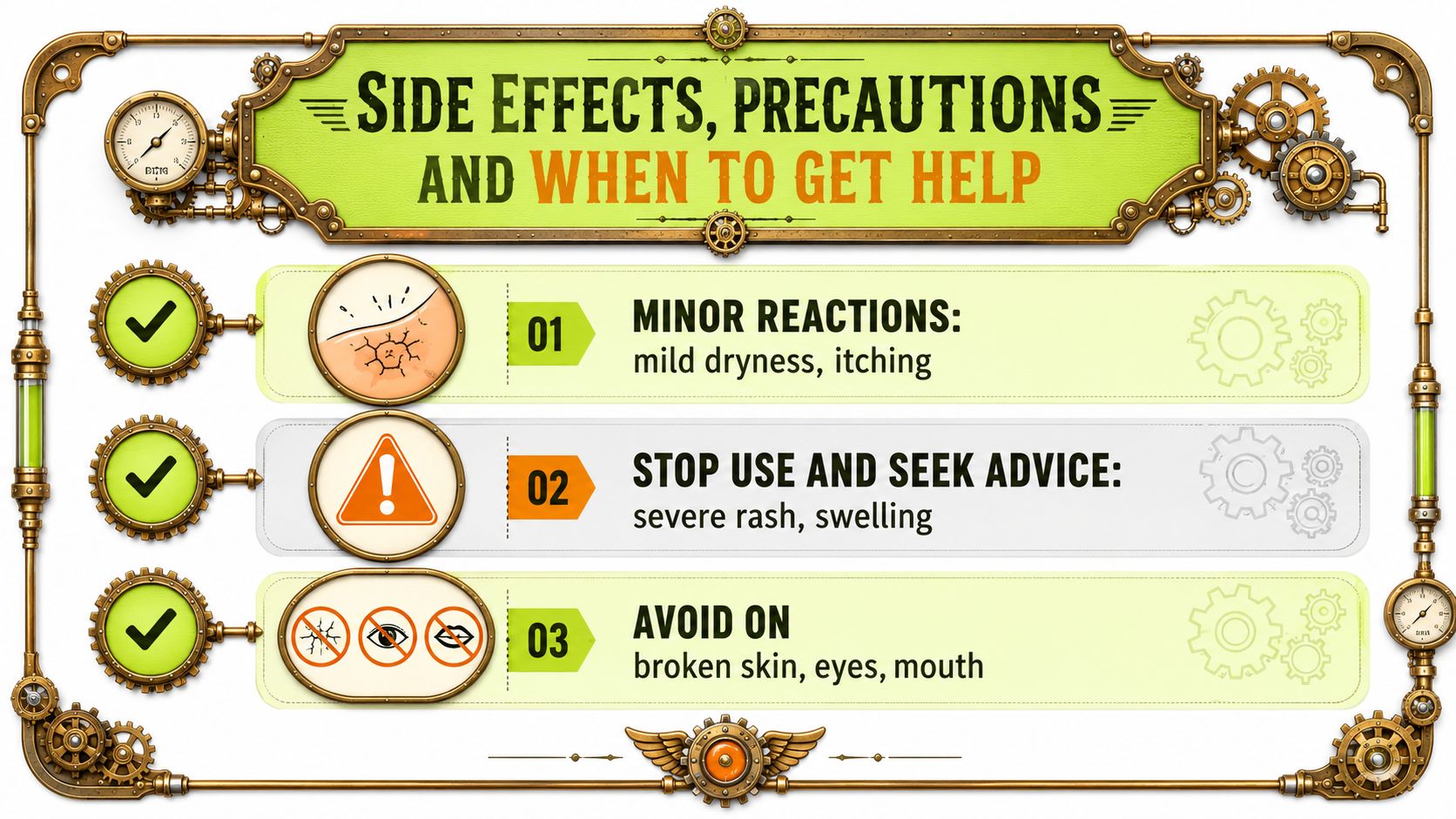
Many people tolerate ibuprofen gel, but the skin can still react. Mild dryness, itching, tingling, burning, redness, or irritation may occur where you apply it. UK leaflets also warn about more serious reactions, including wheezing, swelling, severe rashes, and photosensitivity. UK ibuprofen gel medicine information
Stop using the gel and seek advice if you develop a troublesome rash, blistering, swelling, or marked irritation. Get urgent help for facial swelling, wheezing, difficulty breathing, or signs of a serious allergic reaction.
Situations needing extra care
Avoid ibuprofen gel on:
- Broken or infected skin
- Sunburn or diseased skin
- Areas near the eyes or mouth
- Skin covered by tight bandages, plasters, or heat pads
Ask a pharmacist or clinician before use if you have an ibuprofen or NSAID allergy, asthma triggered by NSAIDs, an active peptic ulcer, kidney problems, or heart concerns. Also check first if you take anticoagulants, low-dose aspirin, another NSAID, or medicines that affect the kidneys.
Use ibuprofen during pregnancy only when a clinician recommends it, particularly after 20 weeks. Avoid giving it to children unless the specific product label allows it.
Get medical help: severe or unexplained pain, a hot swollen joint, fever, weakness, numbness, inability to bear weight after an injury, or symptoms that persist for about a week need professional advice.
A pharmacist can check whether the symptoms fit a simple strain, whether the product is suitable, and whether you need a different treatment.
Quick Summary and Common Questions Answered
You have a sore wrist after gardening, or a stiff knee after a long walk. Ibuprofen gel is designed for that kind of local problem. It is rubbed over the painful area, where ibuprofen can reach nearby tissues and reduce inflammation. The body usually receives less medicine overall than it would from an ibuprofen tablet, although some still enters the bloodstream. BNF information on ibuprofen
How does ibuprofen gel work? Ibuprofen reduces the activity of COX enzymes. These enzymes help the body make prostaglandins, which contribute to pain, swelling and tenderness. Lowering prostaglandin production near the treated area can make movement more comfortable.
How long does it take to work? Some people notice relief sooner, but the full benefit may take 1 to 2 days. Apply it regularly only as the product leaflet directs. Gel can feel slower than tablets because it must pass through the skin before reaching deeper tissues.
Is gel better than ibuprofen tablets? Neither option is best for everyone. Gel suits a small, clearly located area, such as a sore knee, ankle or hand. Tablets may be more suitable for pain affecting several areas or tissue that is difficult to reach from the skin. They also expose the whole body to more medicine and may cause more problems for people with stomach, kidney, heart or medicine-related risks.
Can ibuprofen gel treat every ache? No. It is intended for short-term, local pain relief. Use it only on intact skin, not beneath airtight coverings, and not for children unless the product label permits it.
More quick answers
Can ibuprofen gel upset the stomach? Stomach effects may be less likely because overall exposure is usually lower than with oral ibuprofen. The medicine is not confined completely to the skin, however. Ask a pharmacist before use if you have health conditions or take medicines that increase this risk.
Can I use gel with ibuprofen tablets? Do not combine them automatically. A pharmacist can check the total NSAID exposure and your other medicines, especially aspirin, anticoagulants, another NSAID, or medicines that affect the kidneys.
Why does the gel feel cold? Its base may feel cool as it spreads and dries. That sensation comes from the formulation and does not show whether the anti-inflammatory effect has finished.
Should I massage the gel hard into the skin? Rub it in gently until it has been absorbed. Firm rubbing can irritate already sore skin and does not guarantee that more medicine will reach the tissue.
When should I stop self-treating? Ask for advice if the pain worsens, lasts about a week, follows a significant injury, or occurs with fever, numbness, weakness, a hot swollen joint, or difficulty bearing weight.
Can I use it during pregnancy? Speak to a clinician before using it. UK product information warns against use in the last trimester, and advice is particularly important after 20 weeks.
Summary
- Ibuprofen gel is a topical NSAID for local pain and inflammation.
- It reduces prostaglandin production near the treated area.
- Some ibuprofen reaches deeper tissue, while blood exposure is usually lower than with tablets.
- Relief may build over 1 to 2 days, so follow the product directions.
- Apply it to intact skin and keep applications at least 4 hours apart.
- Ask a pharmacist before combining it with tablets or regular medicines.
- Get urgent help for breathing problems, facial swelling, or a severe skin reaction.
Disclaimer: This article provides general information for UK readers. It is not a substitute for advice from a pharmacist, GP, prescriber, or another qualified healthcare professional.


