How Does Wegovy Work? A UK Patient’s Guide
Curious how does Wegovy work for weight loss? Our patient-friendly guide explains the science, what to expect, and real-world results in the UK.

In this article
- The science behind Wegovy: how it makes you feel full
- Three ways Wegovy supports your body
- How Wegovy works: a quick summary
- Your Wegovy treatment journey
- Your dosing schedule
- Making Wegovy work for your lifestyle
- Wegovy effectiveness and results in the UK
- What do the numbers mean for you?
- Managing common Wegovy side effects
- Tips for handling nausea and other digestive issues
- When to seek urgent help
- Is Wegovy the right choice for you?
- UK eligibility criteria
- When Wegovy is not recommended
- In summary
- Frequently asked questions about how Wegovy works
- How quickly does Wegovy work?
- What happens if I miss a Wegovy dose?
- Can I drink alcohol while taking Wegovy?
- Is Wegovy the same as Ozempic?
- How long do I need to take Wegovy for?
- Why does Wegovy make you feel full?
- How this content was created
- References
Wegovy works by copying a natural gut hormone called GLP-1, which tells your brain you are full. Its active ingredient, semaglutide, reduces your appetite and slows down how quickly your stomach empties, helping you feel fuller for longer after eating. This makes it easier to stick to a lower-calorie diet and supports sustained weight loss.
This guide explains how Wegovy works in simple, clear terms. We will walk you through the science, explain the typical treatment journey, and offer practical, UK-relevant advice from our pharmacists. You will learn what to expect when starting Wegovy, how it fits into a healthy lifestyle, and how to manage common side effects.
Here are five key takeaways on how Wegovy works:
- It mimics a natural "fullness" hormone to turn down hunger signals in your brain.
- It slows stomach emptying, which helps you feel physically full for longer after meals.
- Treatment starts with a low dose and increases slowly over five months to help your body adjust.
- It’s a tool, not a cure. The best results come when you combine it with a healthier diet and more activity.
- Mild nausea is common at first but usually improves as your body gets used to the medicine.
For a broader look at medical weight management, our experts have created a comprehensive overview of our weight loss services.

The science behind Wegovy: how it makes you feel full
So, how does Wegovy work inside your body? First, we need to talk about a natural hormone called glucagon-like peptide-1 (GLP-1). Think of GLP-1 as your body’s built-in ‘fullness messenger.’
After you eat, your gut releases this hormone. It travels to your brain and sends a clear signal: you're satisfied, and it's time to stop eating. The only problem is that natural GLP-1 works very quickly and is broken down in just a few minutes.
This is where Wegovy comes in. It contains a medicine called semaglutide, which is a near-perfect copy of your natural GLP-1. The clever part is that scientists have designed it to last much longer in your body—about a week. This long-lasting action is the key to how Wegovy supports weight management.
Pharmacist's tip: Wegovy helps you feel full, so listen to your body’s new signals. Serve yourself smaller portions to start with. You can always go back for more if you're still hungry, which is better than overfilling your plate and feeling uncomfortably stuffed later.
Three ways Wegovy supports your body
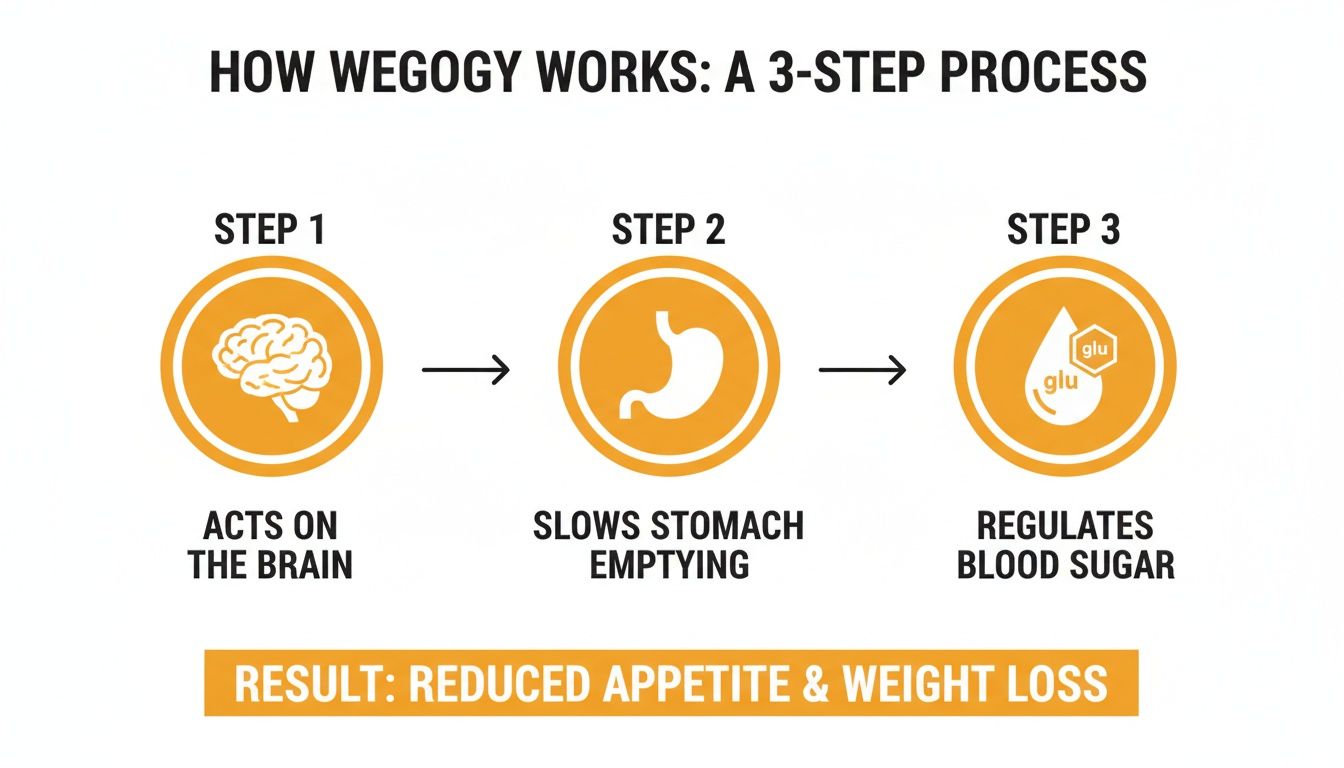
By acting like a long-lasting version of GLP-1, Wegovy helps your body in three main ways. It targets different areas involved in appetite, digestion, and metabolism to support weight loss.
It works on your brain's appetite centre The main way how Wegovy works is by influencing the appetite control centre in your brain. It activates specific receptors there, which turns down the volume on your hunger signals. This action helps reduce food cravings and makes you feel satisfied with smaller meals. For more on the science of appetite, our guide to the melanocortin 4 receptor (MC4R) is a great read.
It slows down stomach emptying Wegovy also slows down the speed at which your stomach moves food into your small intestine. This process, called gastric emptying, means food stays in your stomach for longer. The result? You feel physically full for a longer time after you've eaten.
It helps regulate blood sugar Finally, Wegovy encourages your pancreas to release insulin when your blood sugar rises, like after you eat. This supports your metabolic health and also helps prevent the sharp spikes and crashes in blood sugar that often trigger cravings for sugary snacks.
How Wegovy works: a quick summary
| Action | What it does in your body | How it helps you |
|---|---|---|
| Reduces appetite | Acts on hunger centres in the brain to lower hunger signals. | You feel less hungry and are satisfied with smaller meals. |
| Slows digestion | Delays the speed at which food leaves your stomach. | You feel physically full for a longer period after eating. |
| Manages blood sugar | Helps your pancreas release insulin more effectively after meals. | It stabilises your energy levels and reduces cravings for sugary foods. |
Your Wegovy treatment journey
Starting Wegovy isn't about jumping straight to the highest strength. It’s a carefully managed process where you begin with a very small dose that slowly increases over several months. Think of it like easing into a new exercise routine rather than trying to lift the heaviest weight on day one.
This step-by-step approach is called titration. Its main purpose is to give your body plenty of time to get used to the medication. This simple but crucial process dramatically reduces the chances of experiencing common side effects, especially nausea, and makes the whole experience much smoother.
Your dosing schedule
The standard Wegovy dosing schedule is a five-month plan that takes you from the starting dose to the full maintenance dose. Each month, you simply move up to the next strength using a new pre-filled injection pen. It's a steady and predictable climb.
Here is a typical five-month titration journey:
| Month | Weekly dose | Pen colour | Purpose |
|---|---|---|---|
| 1 | 0.25 mg | Green | Starting dose: To introduce the medication gently. |
| 2 | 0.5 mg | Pink | First increase: To continue building tolerance. |
| 3 | 1.0 mg | Brown | Second increase: To move closer to the therapeutic level. |
| 4 | 1.7 mg | Blue | Third increase: To prepare for the final maintenance dose. |
| 5+ | 2.4 mg | Black/Grey | Maintenance dose: The target dose for long-term weight management. |
This is a standard guide. Your prescriber is there to support you and might adjust the schedule based on how you feel and respond to the treatment. For more on the practical side of things, check out our guide on how ordering treatment works at Courier Pharmacy.
Pharmacist's tip: When you start Wegovy, keep a simple diary. Jot down your injection day, any side effects, and how your appetite feels. This information is gold dust for your follow-up consultations and helps you and your prescriber spot patterns.
Making Wegovy work for your lifestyle
Knowing how a medication works is one thing; fitting it into your real life is another. Let's look at a couple of examples of how different people can adapt.
Real-life example: Sarah, a busy teacher Sarah is a primary school teacher who used to rely on sugary snacks between lessons. After starting Wegovy, her appetite dropped significantly, but she also felt a bit queasy if she ate too quickly.
Her solution? She started preparing smaller, protein-rich snacks like Greek yoghurt pots and a handful of almonds. She found that eating these slowly during her short breaks stopped the nausea and kept her energy levels steady. By planning ahead, she made her new, smaller appetite work for her hectic schedule.
Real-life example: David, a night-shift worker David works rotating night shifts as a security guard, and his eating patterns were always all over the place. He was worried about finding the right time for his weekly injection and how it might affect him during his shifts.
After chatting with his pharmacist, David decided to take his injection on his first day off each week. This gave his body a full day to adjust before he went back to work. He also realised that eating a light, balanced meal before his shift was far better than grazing on fatty foods all night—something he no longer craved anyway.
Wegovy effectiveness and results in the UK
So, how well does Wegovy actually work for people here in the UK? The clinical trials paint a very clear picture of its potential. This isn’t about losing a few pounds; for many people, the results can be truly significant when the medication is used correctly.
The strongest evidence comes from the landmark STEP clinical trials, which involved thousands of adults [1]. The headline figure from these studies is that, on average, participants taking Wegovy alongside diet and exercise changes lost around 15% of their initial body weight over 68 weeks.
What do the numbers mean for you?
It helps to translate that percentage into real-world terms. If someone weighs 16 stone (about 102 kg) when they start, a 15% weight loss works out to nearly 2.5 stone (around 15 kg). That level of weight loss often leads to major health improvements, like better blood pressure and cholesterol levels [2].
Of course, results are never guaranteed and can vary from person to person. How much weight you lose is heavily influenced by your commitment to healthier eating habits and a more active lifestyle for the long haul.
Pharmacist's tip: Think of Wegovy as a powerful tool to help you build a healthier future, not a magic wand. Use the support it provides—the reduced appetite and feeling of fullness—to build new, sustainable habits. These are the habits that will help you maintain your results long after treatment ends.
The best and most lasting results come from a partnership between the medicine and your own efforts. Wegovy makes it easier to make those difficult but necessary lifestyle changes. To get the best outcome, you need to combine your treatment with a reduced-calorie diet and more physical activity. You can learn more about the final maintenance dose in our detailed guide to the Wegovy 2.4mg weight loss injection.
Managing common Wegovy side effects

Starting any new medicine can bring a few changes, so it helps to know what to expect. Most Wegovy side effects are mild and related to your digestive system. They tend to appear when you first start treatment or each time you increase the dose.
The good news? For most people, these effects are temporary. They usually fade as your body gets used to how Wegovy works. UK clinical data shows that starting with a low dose and increasing it slowly is one of the best ways to reduce initial side effects. This strategy is particularly effective for nausea, which affected around 44% of people in clinical trials [3].
Tips for handling nausea and other digestive issues
Nausea is the most common side effect we hear about. It’s usually a mild, lingering queasiness rather than a sudden wave of sickness. Here are a few simple tips to help you manage it:
- Eat smaller, more frequent meals: An overfull stomach can make nausea worse. Try smaller portions throughout the day instead of three large meals.
- Choose bland foods: When you feel queasy, simple foods like toast, rice, or crackers can help. Avoid anything too rich, greasy, or spicy.
- Stay hydrated: Sipping water, clear broths, or herbal teas all day is a great idea. Dehydration can worsen nausea, so keeping your fluids up is key.
- Get some fresh air: Sometimes, a short, gentle walk is all it takes to ease that feeling of sickness.
If you’d like to learn more, take a look at our detailed guide on how to handle GLP-1 nausea.
When to seek urgent help
While most side effects are mild, it’s vital to know the signs of rare but more serious reactions.
Seek immediate medical attention if you experience:
- Severe abdominal pain that doesn’t go away and might spread to your back (a possible sign of pancreatitis).
- Signs of a serious allergic reaction, like swelling of your face, lips, or tongue, or difficulty breathing.
- Gallbladder problems, such as pain in your upper stomach, a fever, or yellowing of your skin or eyes.
Is Wegovy the right choice for you?
Figuring out if Wegovy is a good fit always starts with a conversation with a healthcare professional. This is not a treatment you can choose for yourself; it requires a prescription and a thorough medical assessment.
In the UK, strict eligibility rules are in place, set by both NICE (National Institute for Health and Care Excellence) and the MHRA (Medicines and Healthcare products Regulatory Agency) [4]. These guidelines ensure Wegovy is used safely and only by those who will benefit most.
UK eligibility criteria
To be considered for Wegovy, you’ll generally need to meet specific criteria based on your Body Mass Index (BMI).
- You must have a BMI of 30 kg/m² or more (obesity).
- Alternatively, you can have a BMI of 27 kg/m² or more and at least one weight-related health issue, like high blood pressure or pre-diabetes.
When Wegovy is not recommended
It is just as important to know who should not take Wegovy. You should not use Wegovy if you have:
- A personal or family history of medullary thyroid carcinoma (MTC), a rare type of thyroid cancer.
- An endocrine condition known as Multiple Endocrine Neoplasia syndrome type 2 (MEN 2).
- A known serious allergy to semaglutide or any other ingredients in the Wegovy pen.
Be open with your prescriber about your complete medical history, including any past issues with pancreatitis, your gallbladder, or your kidneys. This honest conversation is key to a safe and effective treatment plan.
In summary
Wegovy works by mimicking a natural hormone (GLP-1) to help you manage your weight. It acts on your brain to reduce your appetite and slows down your stomach so you feel full for longer. This powerful combination makes it easier to eat less and lose weight.
Treatment involves a gradual, five-month dose increase to help your body adjust and minimise side effects like nausea. Wegovy is most effective when used as part of a long-term plan that includes a healthy diet and regular exercise. It is a tool to help you build and sustain healthier habits for lasting success.
Frequently asked questions about how Wegovy works
How quickly does Wegovy work?
You will likely feel your appetite reduce within the first few weeks, even on the starting 0.25 mg dose. However, more significant weight loss usually begins once you reach the higher maintenance doses (1.7 mg and 2.4 mg) after a few months.
What happens if I miss a Wegovy dose?
If you miss a dose and your next one is more than 2 days (48 hours) away, take the missed dose as soon as you remember. If it is less than 2 days until your next dose, skip the missed one and take your next dose as normal. Never take two doses to catch up.
Can I drink alcohol while taking Wegovy?
It’s best to be cautious. Wegovy and alcohol can both lower your blood sugar, which could increase your risk of hypoglycaemia (low blood sugar). Alcohol is also high in calories, which can work against your weight management goals. Discuss your alcohol intake with your prescriber.
Is Wegovy the same as Ozempic?
No, but they are related. Both contain the same active ingredient, semaglutide, but they are licensed for different uses and come in different doses. In the UK, Wegovy is licensed and dosed for weight management, while Ozempic is licensed for managing type 2 diabetes.
How long do I need to take Wegovy for?
Wegovy is a long-term treatment. To achieve the best results and maintain your weight loss, you need to continue taking it alongside a healthy lifestyle. If you stop the medication, it's very likely you will regain the weight you lost.
Why does Wegovy make you feel full?
Wegovy makes you feel full in two main ways. First, it slows down how quickly your stomach empties after a meal, leaving you feeling physically fuller for longer. Second, it sends signals to the appetite centre in your brain, telling it that you are satisfied and no longer hungry.
Disclaimer: This article is for informational purposes only and does not constitute medical advice. It is not a substitute for professional medical advice, diagnosis, or treatment. Always seek the advice of a qualified healthcare provider with any questions you may have regarding a medical condition.
How this content was created
This article was written and reviewed by UK-based medical professionals. Our team of pharmacists and clinicians create content by reviewing sources like the NHS, NICE, the MHRA, and recent peer-reviewed medical journals. This ensures our information is accurate, up-to-date, and patient-focused.
Author: Scott McDougall, MPharm Superintendent Pharmacist (GPhC 2056322)
Clinically reviewed by: Parvinder Sagoo, MPharm Lead Medical Advisor (GPhC 2083236)
References
- Wilding, J.P.H. et al. (2021) 'Once-Weekly Semaglutide in Adults with Overweight or Obesity', New England Journal of Medicine, 384(11), pp. 989–1002. https://www.nejm.org/doi/full/10.1056/NEJMoa2032183
- National Institute for Health and Care Excellence (NICE) (2023) Semaglutide for managing overweight and obesity. Technology appraisal guidance [TA875]. https://www.nice.org.uk/guidance/ta875
- Electronic Medicines Compendium (emc) (2023) Wegovy FlexTouch Patient Information Leaflet. https://www.medicines.org.uk/emc/product/13799/pil
- MHRA (2023) Press release: MHRA authorises new drug for weight management and weight loss. https://www.gov.uk/government/news/mhra-authorises-new-drug-for-weight-management-and-weight-loss


