How Much Does TRT Cost? A Complete UK Guide
Wondering how much does TRT cost in the UK? Get a clear breakdown of NHS vs. private pricing, hidden fees, and medication costs to budget for your treatment.
In this article
- Key Takeaways
- Deconstructing Every TRT Cost from Start to Finish
- The Upfront Investment: Initial Consultation and Blood Tests
- Ongoing Expenses: Medication and Monitoring
- Choosing Your Path: NHS vs Private TRT
- The NHS Route: A Game of Patience
- The Private Route: Speed and Personalisation
- TRT Costs and Services: NHS vs Private Clinics vs Online Pharmacies
- Why TRT Prices Vary So Much
- Service Models and Overheads
- Medication Complexity and Formulation
- A Pharmacist’s Guide to Budgeting for TRT
- Demand Clarity from the Outset
- Aligning Medication Choice with Your Budget
- The Value of Streamlined Online Services
- Summary: Key TRT Cost Considerations
- Frequently Asked Questions (FAQs)
- Can I get TRT for free on the NHS?
- Are online TRT clinics safe and legitimate?
- How often will I need to pay for blood tests?
- What is a realistic annual cost for private TRT in the UK?
Testosterone Replacement Therapy (TRT) is a significant investment in your health, but understanding the financial commitment can be confusing. Here in the UK, a private TRT plan typically costs between £80 and £150 per month, covering medication, consultations, and monitoring. However, this figure can vary widely depending on the clinic, the type of treatment, and whether you choose the NHS or a private provider. This guide will break down every potential cost to help you budget effectively.
Key Takeaways
- Average Monthly Cost: Expect to pay between £80 and £150 per month for a private TRT plan. This usually covers medication and ongoing care, but always check for hidden extras.
- Upfront Costs are Significant: Before you even start treatment, you'll face initial consultation fees (£200-£400) and comprehensive blood tests (£150-£300), making the initial investment substantial.
- NHS vs. Private is the Biggest Factor: The NHS is the cheapest route (often just a prescription fee), but access is very difficult due to strict criteria and long waits. Private clinics offer speed and choice at a much higher cost.
- Medication Type Dictates Price: Testosterone injections are generally the most cost-effective option (around £40/month), while gels and custom-compounded creams are more expensive (often over £90/month).
- Online Pharmacies Offer a Middle Ground: Regulated online services like Courier Pharmacy often provide all-inclusive monthly packages, bundling consultations and blood tests for a clearer, more predictable price, striking a balance between cost and convenience.
Deconstructing Every TRT Cost from Start to Finish
The price you see advertised for Testosterone Replacement Therapy rarely tells the whole story. To get a true picture of what you'll actually pay, you have to look beyond the monthly medication fee and break down the entire process, step by step.
Your TRT journey involves one-off costs to get you started and recurring expenses to keep you on track. Let's pull back the curtain and itemise every potential charge, from that very first conversation with a specialist to your regular medication refills.
The Upfront Investment: Initial Consultation and Blood Tests
Before a single prescription is written, a thorough assessment is absolutely essential. This isn't just a box-ticking exercise; it's the foundation for safe and effective treatment, and it's made up of two key parts.
First, you have the initial consultation with a specialist doctor or pharmacist. This is your chance to discuss your symptoms in detail, go through your medical history, and talk about what you hope to achieve with TRT. In the private sector, expect this first meeting to cost between £200 and £400. This covers the clinician's time, their expertise, and all the admin that goes into setting you up as a patient.
Next up, and just as crucial, are the diagnostic blood tests. A quick check of your testosterone level simply isn't enough. A responsible clinic will insist on a comprehensive hormone panel. This dives deep into your total and free testosterone, oestrogen, SHBG, LH, FSH, and other vital health markers like your full blood count and PSA (prostate-specific antigen).
These detailed tests confirm whether TRT is truly necessary and, more importantly, safe for you. You can get a good idea of what’s involved by looking at the biomarkers included in a comprehensive Well Man Test. Arranged privately, these initial bloods will typically set you back anywhere from £150 to £300.
Ongoing Expenses: Medication and Monitoring
Once your treatment plan is in place, your costs shift to a regular, ongoing basis. The biggest piece of this puzzle is the medication itself, and the price can vary dramatically depending on the type you and your clinician decide on.
- Testosterone Injections: Options like Testosterone Enanthate are often the most affordable route, usually costing around £30 to £60 per month. Don't forget to ask about the cost of supplies like needles and syringes if they aren't bundled in.
- Transdermal Gels and Creams: Gels like Testogel, which are applied to the skin daily, offer convenience but come with a higher price tag. You can expect monthly costs to be in the £80 to £120 range.
- Compounded Formulations: Some men need a bespoke cream or gel made by a specialist compounding pharmacy. While these allow for highly customised dosing, they are a premium choice and will cost more than standard off-the-shelf products.
A Pharmacist’s Tip: "When you see an advertised monthly price, always ask if it includes monitoring. Follow-up blood tests are essential every 3-6 months in the first year to ensure your levels are optimal and safe. These can add £100-£250 per test if not bundled into your plan."
Here in the UK, the headline monthly cost for TRT can be a bit misleading. While the medication alone might be around £45 per month for a common protocol, the true "all-in" price for private care, once you factor in consultations and blood work, often lands between £150–£300 per month.
This is a world away from the NHS, where eligible patients might only pay a standard prescription fee of under £15. It really highlights the huge cost difference between going private and using the public health service. You can explore more detailed pricing breakdowns from UK TRT providers to see how these costs add up.
Choosing Your Path: NHS vs Private TRT
When it comes to starting Testosterone Replacement Therapy, one of the first big decisions you’ll face is whether to go through the NHS or a private provider. This choice isn't just about cost; it fundamentally shapes your entire experience, from how quickly you get seen to the types of treatment available.
Each route has its own set of pros and cons. You need to weigh them up carefully against what you need, how urgently you need it, and what your budget looks like. Let's break down the differences.
The NHS Route: A Game of Patience
Opting for TRT through the NHS is, without a doubt, the most budget-friendly path. For many men, the cost is often just the standard prescription charge, making it the only realistic financial option.
However, getting access is another story. The NHS has incredibly strict criteria for diagnosing low testosterone. You'll typically need to show consistently low levels across multiple blood tests, along with having significant clinical symptoms. The whole process can be painfully slow, and it's not uncommon to face long waiting lists just to see an endocrinologist.
If you do get approved, your treatment options might be more limited than what's available privately. It’s a classic trade-off: you save a lot of money, but in return, you'll need a huge amount of patience and may have less say in your treatment plan.
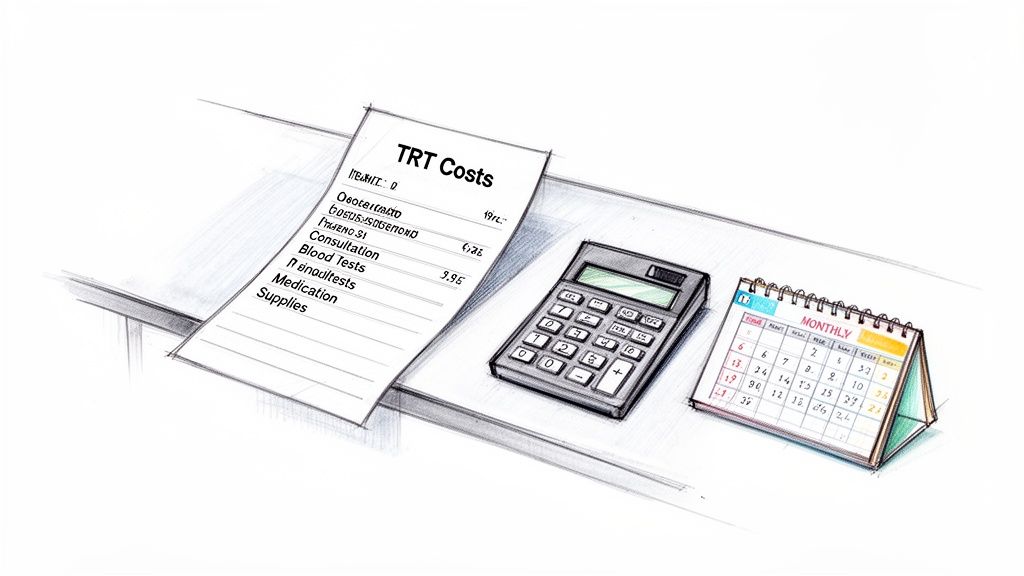
When you're trying to figure out the final bill, remember it's not just about the medicine. The consultations, blood tests, and the medication itself are the three main things that drive the total cost.
This image gives you a good idea of how each part of the process adds up. It's easy to forget about the costs beyond the prescription itself.
The Private Route: Speed and Personalisation
If waiting isn't an option and you want a more tailored approach, then going private is probably the right move for you. Private clinics offer fast-track access to specialists and a much broader menu of modern treatments, including different types of injectables and custom-compounded creams.
Of course, this premium service comes with a premium price tag. For men in the UK, the real cost of TRT can vary wildly. On the NHS, if you manage to meet the tough criteria, your yearly medication bill could be under £120.
Go private, and the numbers look very different. You could be looking at £300–£400 for just the initial consultation and blood tests. After that, you're typically paying monthly fees of £150–£300.
A new middle ground is emerging with online services. Regulated online pharmacies often provide all-inclusive packages for around £145 per month. They blend the convenience of remote consultations with more predictable costs, which is a game-changer for many.
A Pharmacist’s Tip: "When you’re looking at private options, always ask for a full, itemised breakdown of the costs. Make sure you know if the monthly fee covers your regular blood tests and follow-up appointments. Hidden extras can really add up over the year, so getting clarity from the start is vital."
This is where a bit of homework pays off. By digging into the services offered by a regulated online pharmacy in the UK, you can often find bundled packages that remove those nasty financial surprises.
TRT Costs and Services: NHS vs Private Clinics vs Online Pharmacies
To make things clearer, let’s compare the three main routes side-by-side. This table breaks down what you can generally expect in terms of cost, speed, and service from the NHS, a traditional private clinic, and an online provider like Courier Pharmacy.
| Feature | NHS | Private Clinic (In-Person) | Online Pharmacy (e.g., Courier Pharmacy) |
|---|---|---|---|
| Initial Consultation Cost | Free (covered by NHS) | £200 - £400+ | Often bundled into a monthly fee (e.g., £145 all-inclusive) |
| Waiting Times | Months to years | Days to weeks | Days to weeks |
| Medication Costs | Standard prescription charge (approx. £9.65 per item in England) | £50 - £150+ per month | Included in monthly subscription |
| Blood Test Costs | Free (covered by NHS) | £100 - £300 per set | Often included in monthly subscription |
| Treatment Flexibility | Limited (often starts with gels) | High (wide range of modern options) | High (access to injectables, gels, compounded formulas) |
| Convenience | In-person appointments required | In-person appointments required | Remote consultations and home delivery |
| Typical Annual Cost | < £120 (if eligible) | £1,800 - £4,000+ | £1,500 - £2,000 (often all-inclusive) |
Ultimately, choosing the right path comes down to what matters most to you. Are you looking for the lowest possible cost and willing to wait, or is quick access and a personalised treatment plan your top priority? Your answer will point you in the right direction.
Why TRT Prices Vary So Much
Ever looked at TRT prices and felt a bit lost? One clinic might charge double what another does, and it’s natural to wonder why. The truth is, the final cost isn't just about the medication; it’s a reflection of the entire service, from the level of medical oversight to the quality of care you receive. Understanding what goes into that price tag is the key to figuring out what you’re really paying for.
The huge range in TRT costs across the UK isn’t random. It’s all down to the provider’s specific approach. You’ve got everything from premium, high-touch clinics offering round-the-clock support to streamlined online pharmacies that focus on getting your treatment to you efficiently. Each model has a totally different cost structure, and that’s what you see in the final price.
Service Models and Overheads
A big piece of the puzzle is the level of service and the clinic's running costs. A traditional, brick-and-mortar clinic has some hefty overheads to cover. Think rent for a physical location, salaries for admin staff, and the specialist’s time for face-to-face consultations. All these expenses naturally get passed on to the patient, leading to higher fees for appointments and follow-ups.
On the other hand, an online provider can run a much leaner operation. By using telemedicine for consultations and shipping medication straight to your door, they slash many of these physical costs. This model often means they can offer more competitive and transparent pricing without cutting corners on clinical quality, as long as they are properly regulated, of course.
Medication Complexity and Formulation
The type of testosterone you're prescribed also plays a massive role in your final bill. From a pharmacist's perspective, not all TRT is created equal.
- Standard Injections: Formulations like Testosterone Enanthate are usually the most affordable. They're mass-produced and widely available, which keeps costs down.
- Gels and Creams: These are trickier to manufacture and package, so they naturally come with a higher price tag.
- Long-Acting Injectables: Options like Testosterone Undecanoate (often known by the brand name Nebido) have a higher upfront cost for each vial. However, since they’re only administered every 10-12 weeks, it can change how you budget for treatment over the long term.
- Custom-Compounded Formulations: Some men need very specific doses or are sensitive to certain ingredients in standard products. In these cases, a compounding pharmacy in the UK can create a bespoke cream from scratch. This is personalised medicine at its best, requiring specialised facilities and expertise, which makes it a premium option.
A Pharmacist’s Insight: "When you choose a more advanced or customised formulation, you're paying for the research, development, and specialised manufacturing processes behind it. A custom-compounded cream, for example, is made specifically for you, which is a very different process from dispensing a standard pre-packaged gel."
The UK's TRT market itself, now valued at around £85–£90 million, is another reason for the price differences you see. As more providers join the scene, they create different service tiers to attract patients with varying needs and budgets. This growth is being driven by an ageing population and a much better understanding of low testosterone symptoms. Many providers now bundle diagnostics and follow-ups into subscription plans, turning what used to be a simple prescription into a full-blown healthcare service. You can learn more about the factors driving the European TRT market growth.
A Pharmacist’s Guide to Budgeting for TRT
Testosterone Replacement Therapy is a major investment in your long-term health, not just a quick fix. As a pharmacist, I always tell patients to think of it that way and map out a clear financial plan before they start. Knowing the costs and managing them properly is key to staying on your treatment without financial stress, which means you can consistently get the full benefits.
When you're thinking about how much TRT costs, you need to look at the big picture. It’s not just about the first prescription; it’s about setting up a sustainable budget for a therapy that could continue for years. This means digging deeper than the headline prices and getting to grips with every single component that adds up to the total cost.
Demand Clarity from the Outset
Before you sign up with any clinic or agree to a treatment plan, always ask for a fully itemised breakdown of the costs. It's a simple request, but it can save you from a lot of nasty surprises down the road. Any transparent, reputable provider will have no problem laying out every potential charge for you.
Make sure you get clear answers on these points in particular:
- Consultation Fees: Are the initial consultation and any follow-up appointments part of a package deal, or will you be billed for each one separately?
- Blood Test Costs: Are the regular monitoring blood tests rolled into your monthly fee, or are they an extra charge you'll have to cover every 3-6 months? This alone can add £100-£250 per test.
- Medication and Supplies: Does the price of your prescription include all the necessary kit, like needles, syringes, and alcohol swabs?
Aligning Medication Choice with Your Budget
The type of medication you use is one of the biggest factors determining your ongoing TRT costs. Your clinician will obviously recommend what’s best for your health, but it’s still a good idea to have a frank conversation about the financial side of each option.
Testosterone injections, for example, are often the most budget-friendly choice on a per-dose basis. On the other hand, gels and creams cost more but offer a needle-free daily application that many men find more convenient. Then you have long-acting injections, which have a higher upfront cost for each vial but are only administered every few weeks, which changes the whole cash flow of your treatment.
A Pharmacist’s Tip: "Don't just assume that the cheapest option offers the best value. An inexpensive injection might look good on paper, but if it means you have to take time off work for frequent clinic visits to have it administered, the 'all-in' cost could easily end up being higher than a more expensive at-home treatment. Always do the maths on the total price."
The Value of Streamlined Online Services
Modern, regulated online pharmacies have completely changed how men can access TRT. Because they don't have the overheads of a physical clinic, these services can offer really competitive, and often all-inclusive, pricing. It’s common to see them bundle consultations, medication, and sometimes even blood tests into one predictable monthly payment.
This model takes all the guesswork out of budgeting, making it much simpler to plan your finances accurately. It also offers a discreet and incredibly convenient way to manage your entire treatment journey, from the first consultation right through to getting your medication delivered to your door. This is exactly the approach we take to provide personalised care for treatments like hormone replacement therapy and TRT. By understanding all the options available, you can find a way to make TRT affordable without ever compromising on the quality or safety of your care.
Summary: Key TRT Cost Considerations
Navigating the cost of Testosterone Replacement Therapy in the UK requires a clear understanding of the entire process, not just the monthly medication price. Your total investment is determined by the choice between the slow but affordable NHS route and the fast but costly private sector. Initial consultations (£200-£400) and comprehensive blood tests (£150-£300) are significant upfront costs. The type of medication is also a major factor, with injections being the most budget-friendly and gels or compounded creams costing more.
To manage your budget effectively, always demand a full cost breakdown from your provider. Modern online pharmacies often offer transparent, all-inclusive packages that can provide a balance of convenience and predictable pricing. By planning for both initial and ongoing expenses, you can make an informed decision that aligns with your health needs and financial situation.
Frequently Asked Questions (FAQs)
Can I get TRT for free on the NHS?
While TRT isn't completely 'free' on the NHS, it's by far the most budget-friendly option. If you manage to meet the very strict clinical criteria for low testosterone, your main expense will be the standard NHS prescription fee, which currently sits at £9.65 per item in England. The big hurdle, though, is eligibility. You'll need to show consistently low testosterone levels across multiple blood tests, along with significant symptoms. For patients in Scotland, Wales, and Northern Ireland, where prescription charges don't apply, the treatment is free if they qualify.
Are online TRT clinics safe and legitimate?
Yes, reputable online clinics are a perfectly safe and legitimate route for treatment, provided they are properly regulated. A trustworthy online provider in the UK must be registered with the Care Quality Commission (CQC), employ UK-based, GMC-registered doctors or GPhC-registered pharmacist prescribers, and insist on thorough blood testing before and during treatment. This is non-negotiable for safe and effective care.
A Pharmacist's Insight: "Never, ever go with a provider that doesn't demand blood tests. Proper monitoring isn't just a suggestion; it’s essential for safe TRT. It’s the only way to get your dosage right and keep an eye out for any potential side effects."
How often will I need to pay for blood tests?
Regular blood tests are a recurring cost you need to budget for. In the first year of treatment, expect to need tests every three to six months. Once your hormone levels are stable and optimised, this frequency typically drops to once every six to twelve months. When comparing private clinics, always ask if these tests are bundled into a monthly package or if they are an extra cost, as this can significantly impact your overall annual spend.
What is a realistic annual cost for private TRT in the UK?
A realistic annual cost for a private TRT plan in the UK typically falls between £1,500 and £2,500. This range usually covers initial consultations, regular blood tests, medication, and follow-up appointments. More premium clinics or those offering specialised compounded treatments may cost upwards of £3,000 per year.
At Courier Pharmacy, we believe in clear pricing and patient-first care. Our all-inclusive TRT services are built to take the guesswork out of budgeting, combining your consultations, medication, and essential monitoring into a single, transparent monthly fee. This way, you can focus on what really matters: your health.
Ready to start your journey with a regulated, patient-focused online pharmacy? Visit us at https://courierpharmacy.co.uk.


