How Much Weight Can You Safely Lose in 2 Months? A 2026 UK Guide
Discover how much weight can lose in 2 months with safe, realistic UK health advice for 2026. Learn science-backed strategies for success.
In this article
- Five key takeaways
- What is a realistic two-month goal?
- Why slower is better
- Your starting point matters
- The simple science behind a calorie deficit
- How to create a 500-calorie deficit
- Key factors that influence your weight loss rate
- Biological and lifestyle factors
- Smart diet and exercise strategies
- Exploring medically supervised weight loss
- Who qualifies for prescription treatment?
- How medications can help
- Summary
- Frequently asked questions
Are you ready to make a meaningful change to your health over the next two months? The most important question is: how much weight can you realistically and safely lose? Based on trusted NHS guidance, you can safely aim to lose between 0.5kg and 1kg (about 1 to 2 pounds) per week. Over an eight-week period, this means a healthy total weight loss of 4kg to 8kg (roughly 8 to 16 pounds).
This guide will show you how to achieve that goal with sustainable habits, not quick fixes. We'll explain the simple science behind weight loss and provide practical, UK-relevant tips. You will learn how your body works, what affects your progress, and when you might need to speak to a professional. This isn't about crash dieting; it's about building a healthier lifestyle that lasts.
Five key takeaways
- Realistic goal: Aim to lose 4–8 kg (8–16 lbs) in two months. This is safe and sustainable.
- Create a calorie deficit: You need to burn about 500 more calories than you eat each day.
- Focus on nutrition & exercise: Combine protein-rich food with 150 minutes of weekly activity.
- Your journey is unique: Your starting weight, age, and lifestyle all affect your results.
- Seek help if needed: If lifestyle changes aren't enough, medical options are available.
Disclaimer: This article is for informational purposes only. It is not a substitute for professional medical advice. Always consult a healthcare professional for diagnosis and treatment.
What is a realistic two-month goal?

When you commit to a healthier lifestyle for two months, what can you expect? The answer, grounded in UK health advice, is about steady progress, not dramatic drops.
The NHS recommends a safe pace of 0.5 to 1 kg (about 1 to 2 pounds) per week [1]. Over two months, that adds up to a total loss between 4 kg and 8 kg (roughly 8 to 16 pounds). This measured approach is your best strategy for long-term success. It helps you avoid the health risks and rebound weight gain that often follow crash diets. You can learn more about how the NHS frames these healthy weight goals on yourhealthmagazine.net.
How much weight can you lose in 2 months? A safe and realistic amount to lose in two months is between 4 and 8 kilograms (8–16 pounds), based on the NHS goal of losing 0.5–1 kg per week.
Why slower is better
Chasing a bigger, faster number is tempting. However, a slower, controlled approach delivers results that last. When you lose weight too quickly, you often shed water and muscle mass—not just fat. This can slow your metabolism, making it harder to keep weight off long-term.
Small, daily wins are the key. This is where a sustainable calorie deficit, the cornerstone of steady weight loss, comes into play.
Your starting point matters
Your personal results will vary. Your starting weight is one of the biggest factors. Someone with a higher Body Mass Index (BMI), especially over 30, often finds weight comes off faster at the start.
This happens because a larger body burns more calories to function day-to-day. This means creating a 500-calorie deficit has a more noticeable effect.
Let's look at two realistic, UK-based scenarios:
Real-life example 1: The busy parent. Sarah is a 42-year-old mum with a starting BMI of 28. She creates a 500-calorie daily deficit by swapping sugary snacks for fruit. She also adds three 30-minute jogs a week. It is realistic for her to lose around 5–6 kg in two months.
Real-life example 2: The shift worker. Mark is a 35-year-old nurse with a starting BMI of 32. He commits to meal prepping and using the hospital gym. Due to his higher starting weight and shift patterns, he might see a larger initial drop and could lose 7–8 kg over the same period.
The simple science behind a calorie deficit
Before we set targets, let's look at what is happening inside your body. It all comes down to a simple concept: the calorie deficit.
Think of your body's energy like a bank account. Food and drink are your deposits (calories in). Everything you do—from breathing to working out—are your withdrawals (calories out).
Weight loss happens when your withdrawals are greater than your deposits. This calorie deficit forces your body to find energy elsewhere. It uses the fat it has stored for this exact purpose.
How to create a 500-calorie deficit
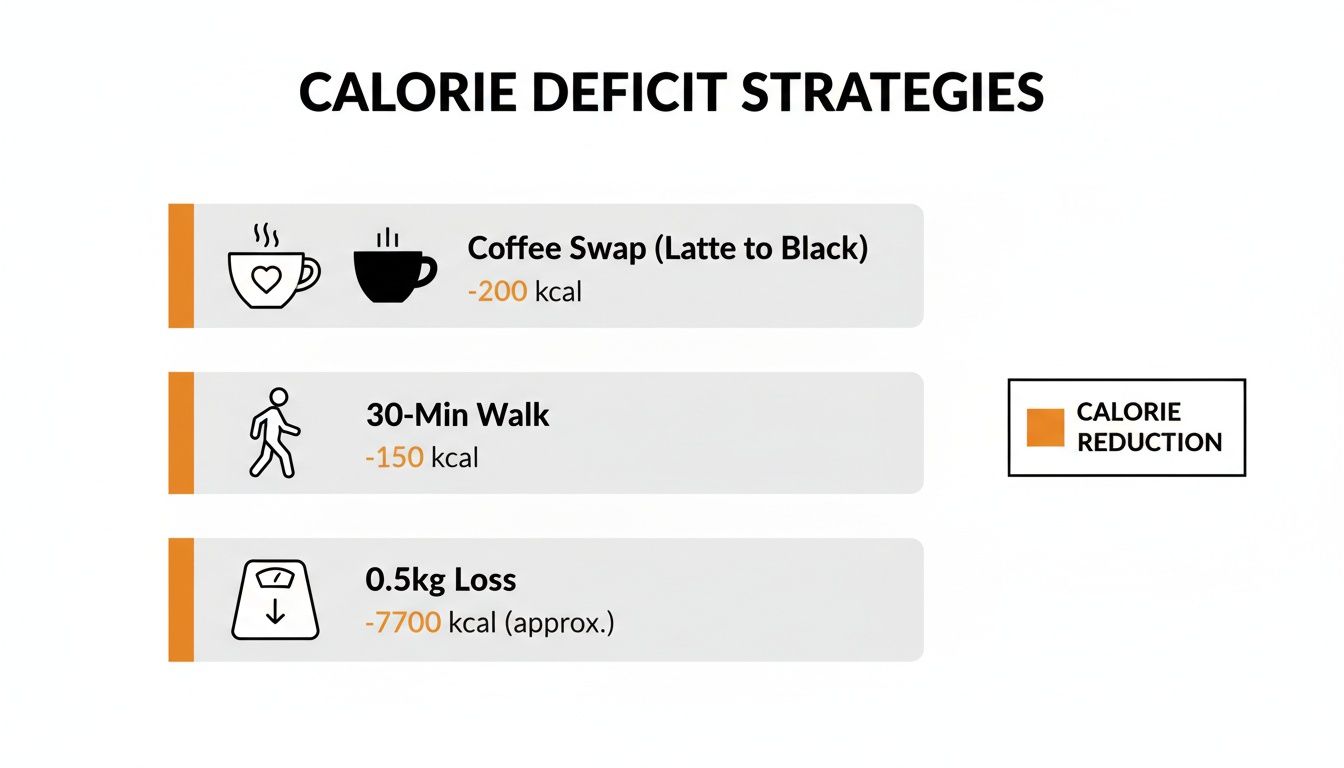
To lose about 0.5 kg (1 pound) in a week, you need a weekly deficit of roughly 3,500 calories. This breaks down to a daily deficit of 500 calories. This number is a realistic and sustainable goal for most people.
Creating this deficit doesn't mean you must overhaul your life. Small, consistent tweaks drive real results. A 500-calorie deficit can come from eating less, moving more, or a combination of both.
Here are a few examples:
- Rethink your coffee: Swap a large latte for a black Americano to save ~150 calories.
- Walk it out: A brisk 45-minute walk can burn an extra ~200 calories.
- Snack mindfully: Switch from biscuits to an apple to save another ~150 calories.
Just like that, you have created your 500-calorie deficit without feeling deprived. The table below shows how many calories someone weighing around 70 kg (11 stone) might burn in 30 minutes.
| Activity (30 minutes) | Approximate Calories Burned |
|---|---|
| Brisk Walking | 150 calories |
| Housework (e.g., vacuuming) | 120 calories |
| Moderate Cycling | 250 calories |
| Jogging | 300 calories |
As you can see, you don't need to live in the gym. Weaving more movement into your daily life is a powerful way to chip away at your calorie goal.
Key factors that influence your weight loss rate
It’s normal to feel frustrated if a friend loses weight faster than you. But your weight loss journey is unique. Many factors determine how quickly you lose weight. Comparing your progress is often unhelpful.
Think of it as a personal project. Once you understand the factors at play, you can set realistic expectations for what you can achieve in two months.
Biological and lifestyle factors
- Age and Gender: Metabolism naturally slows as we age. Men also typically lose weight faster than women. This is because they tend to have more muscle, which burns more calories at rest.
- Muscle Mass: The more muscle you have, the higher your resting metabolic rate. This is why strength training is so effective. It helps you burn more calories around the clock.
- Sleep and Stress: Poor sleep and high stress increase cortisol levels. This hormone can increase appetite and signal your body to store more fat, especially around your middle.
- Health Conditions: Some conditions can make weight loss harder. An underactive thyroid or Polycystic Ovary Syndrome (PCOS) can affect your metabolism [2]. Even our genes can play a role. You can learn how genetic markers like the Melanocortin 4 Receptor (MC4R) can impact weight regulation in our article.
Pharmacist's tip: Don't lose heart if your weight plateaus. It’s common to lose a lot of water weight at the start. Focus on non-scale victories, like your clothes fitting better or having more energy.
Smart diet and exercise strategies
To lose 4–8 kg in two months, you need a plan built on lasting habits. Focus on simple adjustments to what you eat and how you move.
Smart nutrition swaps:
- Boost Protein: Include chicken, fish, lentils, or tofu in meals. Protein helps you feel full. We explain more in our guide on Mounjaro and protein intake.
- Fill Up on Fibre: Load your plate with vegetables, fruit, and whole grains. They add bulk to meals for very few calories.
- Hydrate Wisely: Aim for 6–8 glasses of water a day. Swap sugary drinks for water or herbal tea.
Fitting in fitness: The NHS recommends 150 minutes of moderate-intensity activity each week [3]. Mix cardio (like brisk walking or cycling) with strength training. Cardio burns calories, while strength training builds muscle. More muscle means a faster metabolism.
Pharmacist's tip: Consistency is more important than intensity. A daily 20-minute walk is more effective than one gruelling gym session a week that leaves you too sore to continue.
Exploring medically supervised weight loss
Sometimes, diet and exercise aren't enough. It can be incredibly frustrating, especially if you have other health conditions linked to weight.
In these cases, you can talk to a healthcare professional about medically supervised options. These treatments work alongside a healthy lifestyle to help you see real results. For some people, these treatments can be a powerful tool. You can explore this in our detailed overview of medically supported weight loss programmes.
Who qualifies for prescription treatment?
In the UK, healthcare professionals follow specific guidelines from NICE (the National Institute for Health and Care Excellence). You might be eligible if you have:
- A Body Mass Index (BMI) of 30 or higher.
- A BMI of 27 or higher plus a weight-related health problem, like type 2 diabetes [4].
These criteria ensure treatments go to those whose health is most at risk. Your GP or local pharmacist can help you work out your BMI.
How medications can help
Modern treatments like Wegovy and Mounjaro are important tools in weight management. They are a type of medicine called GLP-1 receptor agonists.
They work by mimicking a natural gut hormone. This hormone signals to your brain that you are full. As a result, your appetite reduces, and cravings quieten. This makes it much easier to stick to a lower-calorie diet. For a detailed guide on eating well with these treatments, our The Ultimate Mounjaro Diet Guide is a great resource.
Pharmacist's tip: It is vital you only get prescription treatments like Wegovy or Mounjaro from a regulated UK source, such as a GPhC-registered pharmacy. Unregulated websites may sell unsafe or counterfeit products. Always put your safety first.
Summary
Losing weight over two months is a fantastic goal. A realistic and safe target is a loss of 4–8 kg (8–16 pounds). You can achieve this by creating a daily 500-calorie deficit through a mix of smart eating and regular exercise. Remember that your age, starting weight, and lifestyle will all influence your personal results. Be patient with yourself and celebrate non-scale victories like having more energy. If you struggle to make progress with lifestyle changes alone, don't hesitate to speak to a healthcare professional about medically supervised options.
Frequently asked questions
Can I lose 10kg in 2 months? Yes, it is possible for some people to lose 10kg (about 22 pounds) in two months, but it is at the very top end of the healthy range. This would require a consistent, significant calorie deficit and a dedicated exercise plan. This rate of loss is more likely for someone with a higher starting weight. For most people, 4–8kg is a more realistic and sustainable goal.
How can I stay motivated if the scales don't move? Plateaus are a normal part of any weight loss journey. When this happens, focus on non-scale victories. Are your clothes looser? Do you feel stronger? These are all signs of progress. You can also review your diet and activity levels to see if small adjustments are needed. If you're on a medical plan and the stall continues, check out our guide on why you might not be losing weight on Mounjaro.
Can I still drink alcohol and lose weight? Yes, but you must be mindful. Alcohol contains "empty calories" that can quickly add up. A medium glass of wine has around 160 calories. Alcohol also lowers inhibitions, making you more likely to choose unhealthy food. If you drink, opt for lower-calorie choices like a spirit with a diet mixer and factor it into your weekly calorie goal.
Is it safe to lose 20kg in 2 months? No, trying to lose 20kg (over 3 stone) in two months is not considered safe or realistic. This would require an extreme calorie deficit, which can lead to muscle loss, nutrient deficiencies, and other health problems. It also dramatically increases the risk of regaining the weight once you stop the diet.
What is the best exercise to lose weight? The best exercise is one you enjoy and will stick with. A combination of cardiovascular exercise (like brisk walking, running, or cycling) and strength training is ideal. Cardio burns calories, while strength training builds muscle, which boosts your metabolism. The NHS recommends at least 150 minutes of moderate-intensity activity per week.
Do I need a gym membership to lose weight? No, you do not need a gym membership. There are many effective ways to exercise for free. Brisk walking, jogging, cycling, and home workout videos are all excellent options. The key is to be consistent and find activities that fit into your lifestyle.
Meta description: Wondering how much weight you can lose in 2 months? Our 2026 UK guide explains a safe target (4-8kg) and offers practical diet and exercise tips.
Internal links to use:
- detailed overview of medically supported weight loss programmes: https://medicalmojo.co.uk/conditions/weight-loss/
- the Melanocortin 4 Receptor (MC4R) can impact weight regulation in our article: https://medicalmojo.co.uk/the-melanocortin-4-receptor-mc4r/
- Mounjaro and protein intake: https://medicalmojo.co.uk/mounjaro-and-protein-intake/
- The Ultimate Mounjaro Diet Guide: https://medicalmojo.co.uk/the-ultimate-mounjaro-diet-guide/
- why you might not be losing weight on Mounjaro: https://medicalmojo.co.uk/why-am-i-not-losing-weight-on-mounjaro/
Author: Scott McDougall, MPharm Clinically reviewed by: Dr. Chun Tang, MRCGP
How this content was created: This article was written by a qualified UK pharmacist. It uses evidence from trusted sources like the NHS, NICE, and peer-reviewed medical journals. All information was checked for clinical accuracy by a UK-based GP to ensure it is safe, reliable, and patient-friendly.
References: [1] NHS. 2022. How to lose weight. [online] Available at: https://www.nhs.uk/live-well/healthy-weight/managing-your-weight/how-to-lose-weight/ [Accessed 15 October 2026]. [2] Stachenfeld, N.S., 2021. Hormonal changes during menopause and the impact on fluid regulation. Reproductive sciences, 28(3), pp.585-591. Available at: https://link.springer.com/article/10.1007/s43032-020-00398-4 [Accessed 15 October 2026]. [3] NHS. 2022. Exercise. [online] Available at: https://www.nhs.uk/live-well/exercise/ [Accessed 15 October 2026]. [4] NICE. 2023. Semaglutide for managing overweight and obesity. [online] Available at: https://www.nice.org.uk/guidance/ta875 [Accessed 15 October 2026].


