How to Get Melatonin in the UK: A Patient-Friendly Guide
Learn how to get melatonin uk safely in 2026 - your guide to NHS access, prescriptions, and trusted online options.

In this article
- Why is melatonin prescription-only in the UK?
- The official licence and 'off-label' use
- UK Melatonin: A Quick Comparison
- How to talk to your GP about a melatonin prescription
- Preparing for your appointment
- Framing the conversation
- Using a private online pharmacy to get melatonin
- How the online consultation works
- The benefits of using a private service
- How to take melatonin safely and effectively
- Starting doses and short-term use
- Understanding common side effects
- When to seek urgent medical help
- Natural sleep aids and lifestyle changes to try first
- Building a better wind-down routine
- Cognitive Behavioural Therapy for Insomnia (CBT-I)
- Other supplements and when to be cautious
- Summary
- FAQs about getting melatonin in the UK
In the UK, you can only get melatonin with a prescription from a qualified healthcare professional. Unlike in the US, melatonin is a prescription-only medicine (POM), meaning you cannot buy it over the counter in pharmacies or health food shops. To get it safely and legally, you must have a consultation with a doctor or another licensed prescriber.
Struggling with sleep is tough. Hearing about melatonin but finding it hard to get can feel like another setback. This guide cuts through the confusion about its legal status and availability. We'll show you the official and safe ways to access melatonin in the UK, from talking to your GP to using a registered online pharmacy.
Here are five key takeaways:
- Prescription is essential: Melatonin is a prescription-only medicine in the UK.
- Two main paths: You can get a prescription from your NHS GP or a private service.
- NHS use is specific: It's licensed for short-term insomnia in adults over 55.
- 'Off-label' use is common: Doctors can prescribe it for jet lag, shift work, or other age groups.
- Safety first: Always use a regulated UK service to ensure the medicine is genuine.
Why is melatonin prescription-only in the UK?
You might wonder why you can't just buy melatonin in a UK pharmacy like you can in the US. The Medicines and Healthcare products Regulatory Agency (MHRA) classifies melatonin as a prescription-only medicine (POM). This means you can't legally purchase it over the counter.
This rule exists to protect your health. It ensures a qualified professional, like a doctor or pharmacist prescriber, assesses your situation. They check if melatonin is safe for you, determine the right dose, and monitor for side effects or interactions with other medicines.
The official licence and 'off-label' use
The main licensed melatonin product in the UK is called Circadin®. The MHRA approves it for the short-term treatment of primary insomnia in adults aged 55 and over. This is its 'on-label' use, meaning its safety and effectiveness are proven for this specific group and condition.
So, what about everyone else? This is where 'off-label' prescribing happens. A prescriber can use their clinical judgement to give a medicine for a purpose outside its official licence. This is a normal and safe part of modern medicine.
Common off-label uses for melatonin include:
- Jet Lag: Helping frequent flyers reset their body clock.
- Shift Work: Supporting workers like nurses or factory staff with irregular sleep patterns.
- Younger Adults: Treating insomnia in those under 55 who haven't found success with other methods.
- Children with Neurodevelopmental Conditions: Managing severe sleep issues in children with conditions like autism spectrum disorder (ASD), usually supervised by a specialist.
Pharmacist's tip: 'Off-label' does not mean experimental or unsafe. It simply means the manufacturer hasn't gone through the lengthy process to license it for that extra use. Your prescriber makes a professional decision based on your health needs and the available medical evidence.
This table shows the different forms of melatonin and how they are handled in the UK.
UK Melatonin: A Quick Comparison
| Type of Melatonin | UK Legal Status | How to Get It | Common Use |
|---|---|---|---|
| Circadin® (Licensed) | Prescription-Only | NHS or private prescription | Short-term insomnia in adults aged 55+ |
| 'Off-Label' Melatonin | Prescription-Only | NHS or private prescription | Jet lag, shift work, insomnia in under-55s |
| Supplements (Imported) | Legal for personal use, illegal to sell in UK | Online import | Unregulated for general sleep support |
| Unlicensed Products | Illegal to sell in UK | Unregulated websites | Illegal and high-risk; avoid completely |
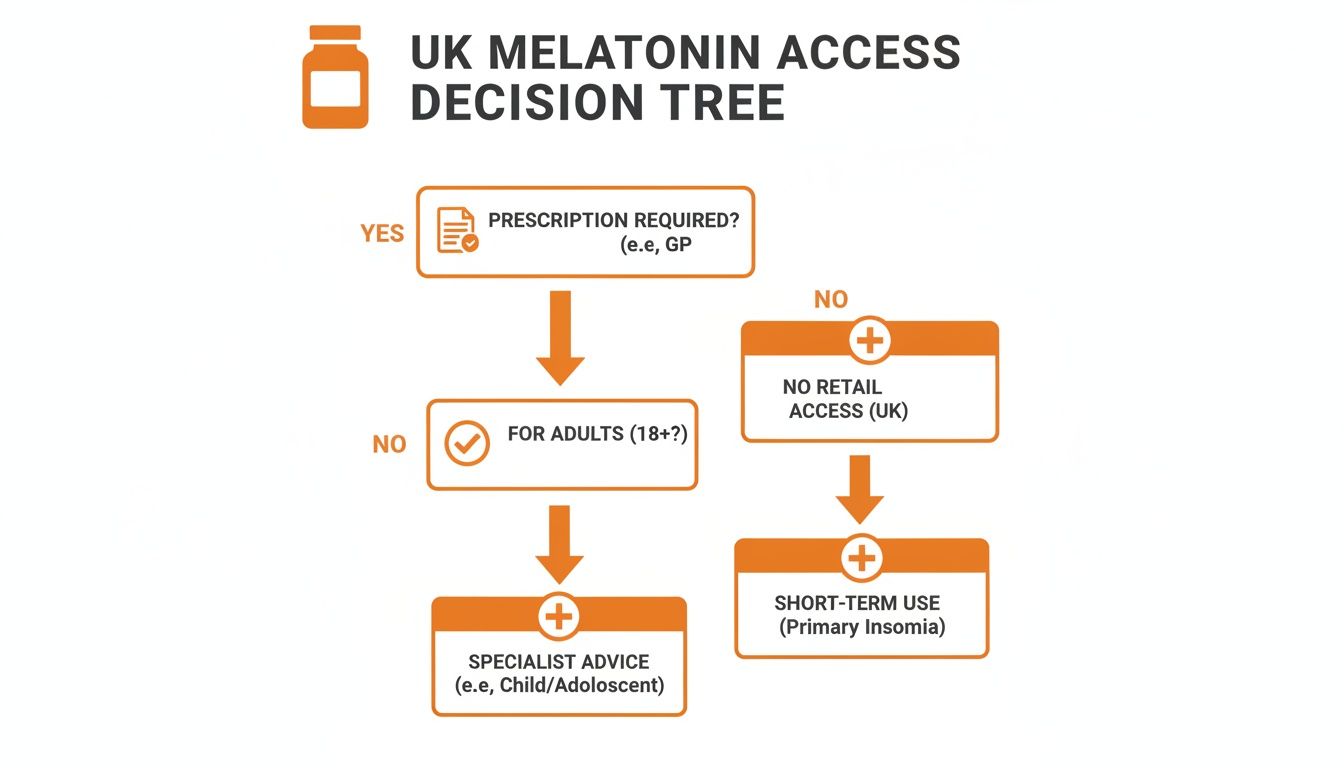
As the table and flowchart show, a consultation with a UK prescriber is always the crucial first step for getting melatonin safely. For more detail, read our guide on why melatonin isn't available over the counter in the UK.
How to talk to your GP about a melatonin prescription
Thinking of asking your GP for melatonin? A good conversation can make all the difference. Going to your appointment prepared with clear information helps your doctor understand your situation and make the best decision with you.
GPs follow specific guidelines, so showing them the full picture is key. It proves you are taking your sleep health seriously and helps them provide the right support.

Preparing for your appointment
To make your appointment effective, gather some information first. Instead of just saying, "I can't sleep," provide specific details. A simple sleep diary for one or two weeks is a great tool.
Note down:
- The time you went to bed.
- When you think you fell asleep.
- How many times you woke up in the night.
- The time you got up for the day.
- How you felt the next day (e.g., groggy, tired, okay).
This diary turns a general complaint into useful data for your GP.
Pharmacist's tip: Be ready to talk about what you've already tried. Have you cut back on caffeine? Tried a relaxing bedtime routine? Mentioning these things shows you are proactive and helps your GP see what hasn't worked so far.
Framing the conversation
It's helpful to know the NHS approach. The National Institute for Health and Care Excellence (NICE) recommends trying non-drug options first. These include lifestyle changes and a technique called Cognitive Behavioural Therapy for Insomnia (CBT-I).
Frame your request for melatonin as part of a wider plan. Explain that you're working on your sleep habits but need short-term help to reset your sleep cycle. This collaborative approach is often more successful. You can learn about longer-term use in our guide on if it's safe to take melatonin every night.
Real-life example: The busy parent Let's take Aisha, a 42-year-old marketing manager and parent to two young children. Juggling work deadlines and family life left her unable to switch off at night. She kept a sleep diary, noting her frequent waking and next-day exhaustion.
At her appointment, she showed her GP the diary and explained she had already tried sleep hygiene changes. Her doctor suggested a referral for CBT-I but also prescribed a short, 4-week course of melatonin to provide immediate relief and help her get the most out of the therapy.
Using a private online pharmacy to get melatonin
What if you don't meet the NHS criteria, or you can't get a GP appointment? For many people, a regulated private online pharmacy in the UK offers a convenient and modern solution. It's a popular route for its simplicity and speed.
The process starts with a confidential online consultation. You answer a questionnaire about your sleep problems, health, and medical history from home. There are no waiting rooms and no need to travel.

How the online consultation works
After you submit the questionnaire, a UK-based independent prescriber reviews your answers. They carefully check if melatonin is a safe and appropriate treatment for you. This assessment is just as thorough as a face-to-face appointment.
If the prescriber approves your request, they issue a private prescription. The pharmacy team then dispenses the medication and sends it to you in discreet, tracked packaging. The whole process is designed for busy, modern lives.
Real-life example: The shift worker Consider Mark, a 38-year-old paramedic whose rotating shifts wrecked his sleep cycle. Finding a GP appointment that fit his schedule was nearly impossible. He tried a registered online pharmacy and completed his consultation late one night after a long shift.
The next day, a prescriber approved a short course of melatonin to help him reset his body clock on his days off. For Mark, this was a fast, practical solution that fit his demanding job.
Pharmacist's tip: Always do your research when choosing an online pharmacy. Look for its General Pharmaceutical Council (GPhC) registration number and a physical UK address. A trustworthy service will be transparent about its prescribers, processes, and prices.
The benefits of using a private service
Choosing a private service offers clear advantages if you're figuring out how to get melatonin in the UK.
- Convenience: Complete the consultation anytime, anywhere, without waiting for an appointment.
- Speed: Treatment can be approved and dispatched quickly, often arriving the next day.
- Accessibility: It's an ideal option for those who struggle to visit a GP clinic due to work, mobility, or location.
- Flexibility: Private prescribers can often consider 'off-label' uses for jet lag or shift work insomnia.
The demand for sleep aids is growing fast. The melatonin market is expanding, with some reports projecting significant growth as more people seek solutions for stress and poor sleep [4]. This makes choosing a safe, legal pathway like a regulated online pharmacy more important than ever.
How to take melatonin safely and effectively
You have your prescription—what's next? Using melatonin correctly is key to getting good results. It's not just about taking a pill; it's about working with your body's natural sleep rhythm.
Timing is crucial. Take your dose 1 to 2 hours before your planned bedtime. This gives the medicine time to absorb and signal to your brain that it's time to wind down.

Starting doses and short-term use
Your prescriber will always start you on the lowest effective dose. For Circadin®, the licensed UK product, this is typically 2mg. The goal is to find the smallest amount that helps you sleep without causing next-day grogginess. Do not change your dose without talking to your doctor or pharmacist first.
Melatonin is intended as a short-term solution to help reset your sleep pattern. A typical course lasts for a few weeks, up to a maximum of 13 weeks.
Pharmacist's tip: Avoid alcohol while taking melatonin. Alcohol disrupts sleep quality on its own. Mixing it with melatonin can increase dizziness and drowsiness, making the medication less effective and potentially unsafe.
Understanding common side effects
Melatonin is generally well-tolerated, but it's good to be aware of possible side effects. Most are mild and often disappear as your body adjusts.
Common melatonin side effects include:
- Headaches
- Feeling dizzy or sick
- Next-day drowsiness or a 'hangover' feeling
If these side effects bother you or don't go away, speak to your prescriber. They might suggest adjusting when you take your dose or re-evaluating if melatonin is right for you. The global rise in sleep issues means many are turning to melatonin, with insomnia management driving much of this trend [5].
When to seek urgent medical help
Serious side effects from melatonin are very rare, but you must know the warning signs.
Call 999 or go to A&E immediately if you have:
- Signs of a severe allergic reaction (anaphylaxis): a bad skin rash, swelling of the face, lips, or throat, or difficulty breathing.
- Chest pain or a fast, pounding, or irregular heartbeat.
- Fainting or loss of consciousness.
These are medical emergencies. Do not delay in seeking help.
Natural sleep aids and lifestyle changes to try first
Knowing how to get melatonin in the UK is useful, but it's only one piece of the puzzle. Melatonin works best when combined with healthy sleep habits. Before starting any medication, exploring these non-medical strategies can make a huge difference. They help fix the root cause of sleep problems, not just the symptoms.
Building a better wind-down routine
You can't expect a busy mind to switch off instantly. A consistent wind-down routine signals to your body that it's time for rest. This creates a helpful buffer between your day and your bed.
Your pre-sleep ritual could include:
- Dimming the lights an hour before bed to encourage your body's own melatonin production.
- Putting screens away. The blue light from phones, tablets, and TVs can suppress melatonin and keep you awake.
- Sipping a warm, caffeine-free drink like chamomile tea.
- Reading a physical book or doing some gentle stretching.
Pharmacist's tip: Consistency is key. Sticking to the same routine around the same time each night, even on weekends, trains your internal body clock. This makes falling asleep and waking up feel much more natural over time.
Cognitive Behavioural Therapy for Insomnia (CBT-I)
If lifestyle changes are not enough, the NHS recommends Cognitive Behavioural Therapy for Insomnia (CBT-I) as the gold-standard treatment. It is a structured programme that helps you identify and change the unhelpful thoughts and behaviours that ruin your sleep.
CBT-I is highly effective because it gives you long-term skills to manage your sleep. You can access it through your GP or find digital programmes and private therapists online.
Other supplements and when to be cautious
Health food shops and websites sell many other 'natural' sleep aids, like valerian root, magnesium, and 5-HTP. While some people find them helpful, it's important to be cautious. The market for these products is large and growing [6], but 'natural' does not always mean 'safe'.
Pharmacist's tip: Always talk to your doctor or pharmacist before trying any new supplement. They can have their own side effects and can interfere with other medications you take or worsen existing health conditions.
Summary
In the UK, the only legal and safe way to get melatonin is with a prescription from a doctor or a qualified prescriber. It is licensed for short-term use in adults over 55 with insomnia but is also commonly prescribed 'off-label' for other situations like jet lag or shift work. You can speak to your NHS GP or use a regulated private online pharmacy. While melatonin can be an effective short-term solution, it works best alongside good sleep hygiene and lifestyle changes. Always use a GPhC-registered pharmacy to ensure your treatment is safe and genuine.
FAQs about getting melatonin in the UK
1. Can you buy melatonin over the counter in the UK? No, you cannot. Melatonin is a prescription-only medicine in the UK. You must have a consultation with a UK-registered prescriber, like a doctor or specialist pharmacist, to get it legally.
2. Is it legal to bring melatonin into the UK for personal use? Yes, it is generally considered legal to bring a small amount (usually up to a three-month supply) of melatonin into the UK for your own personal use. However, selling these imported products in the UK is illegal. Be aware that supplements bought abroad are not regulated to UK standards.
3. How much does a private melatonin prescription cost? The cost of a private prescription for melatonin varies between different online clinics. The price usually includes the online consultation with the prescriber and the medication itself. It's best to check the website of the specific service for their current pricing.
4. What is the difference between melatonin and sleeping pills? Melatonin is a hormone that helps regulate your natural sleep-wake cycle, signalling to your brain that it's time to sleep. Traditional sleeping pills (like Z-drugs) are sedatives that slow down your brain activity to make you feel sleepy. Melatonin is generally considered to have a lower risk of dependence.
5. Can children get melatonin on the NHS? Yes, but it is typically prescribed by a specialist, such as a paediatrician, not a GP. It is used 'off-label' to treat severe sleep problems in children with certain neurodevelopmental conditions, like autism spectrum disorder (ASD).
6. How long can I take melatonin for? Melatonin is intended for short-term use to help reset your body clock. For adults with primary insomnia, a course usually lasts for a few weeks, up to a maximum of 13 weeks. Your prescriber will advise on the correct duration for you.
Disclaimer: This article is for informational purposes only and does not constitute medical advice. Always consult with a qualified healthcare professional for any health concerns or before making any decisions related to your health or treatment.
Author: [Author Name], [Credentials] Clinically Reviewed by: [Reviewer Name], [Credentials]
How this content was created: This article was written based on high-quality, reliable sources, including the NHS, NICE, and peer-reviewed medical journals. All information has been carefully checked for clinical accuracy by a qualified healthcare professional to ensure it is trustworthy and up-to-date.
References
- NHS. Melatonin. [Online]. Available at: https://www.nhs.uk/medicines/melatonin/ (Accessed: [Date])
- National Institute for Health and Care Excellence (NICE). Insomnia: Scenario: Management of short-term insomnia. [Online]. Available at: https://cks.nice.org.uk/topics/insomnia/management/short-term-insomnia/ (Accessed: [Date])
- MHRA. Circadin 2mg prolonged-release tablets. [Online]. Available at: https://www.gov.uk/drug-safety-update/circadin-melatonin-prolonged-release-not-licensed-for-use-in-children-in-the-uk (Accessed: [Date])
- Future Market Insights. Melatonin Supplements Market. [Online]. Available at: https://www.futuremarketinsights.com/reports/melatonin-supplements-market (Accessed: [Date])
- Nutraceuticals Business Review. Melatonin supplements market set to reach $13.1 billion. [Online]. Available at: https://nutraceuticalbusinessreview.com/melatonin-supplements-market-set-to-reach-13-1-billion (Accessed: [Date])
- Future Market Insights. Melatonin Market Outlook. [Online]. Available at: https://futuremarketinsights.com/reports/melatonin-supplements-market (Accessed: [Date])


