How to Get on TRT in the UK: A Practical Patient Guide for 2026
Thinking about TRT? Learn how to get on TRT in the UK with our guide on symptoms, blood tests, and choosing between NHS and private treatment for 2026.
In this article
- Five Key Takeaways
- Spotting the signs of low testosterone
- Common symptoms you shouldn’t ignore
- A familiar story: The gym-goer
- Getting tested: Your first practical step
- What does the blood test actually look for?
- NHS vs Private: Getting your test done
- Understanding your key TRT blood test results
- Navigating your treatment path: NHS vs Private Care
- The NHS pathway
- The private healthcare option
- A real-life scenario: The shift worker
- TRT in the UK: A Comparison of NHS vs private routes
- Choosing your TRT treatment and the importance of ongoing care
- Comparing your TRT options
- Why ongoing monitoring is non-negotiable
- A real-life example: Fine-tuning for success
- Key blood markers we monitor on TRT
- Summary
- FAQs
- Can I get TRT on the NHS?
- How much does private TRT cost in the UK in 2026?
- How quickly will I feel better on TRT?
- Is TRT safe in the long run?
- Will TRT affect my fertility?
- What are the main side effects of TRT?
- Can I do TRT myself without a doctor?
- Do I have to inject TRT?
The first step in how to get on TRT in the UK is getting a confirmed diagnosis through blood tests and a doctor's consultation. If you're feeling constantly tired, moody, and just not yourself, it could be a sign of low testosterone. These aren't just feelings you have to live with; they are genuine medical signals that something might be out of balance. This guide explains how to get on TRT, from spotting the initial symptoms to starting a safe and effective treatment plan with your doctor. We'll show you exactly how to navigate the process and take back control of your health.
Five Key Takeaways
- Listen to your body: Persistent fatigue, low mood, and reduced libido can be key signs of low testosterone.
- Get tested: A simple blood test is the only way to confirm a diagnosis. Always test before 9 AM for accurate results.
- Know your options: You can choose between the NHS pathway (slow but free) or private care (fast and flexible).
- TRT is a partnership: Treatment is not a "one-and-done" fix. It requires ongoing monitoring with a healthcare professional.
- Lifestyle matters: Combine TRT with a good diet, exercise, and stress management for the best long-term results.
Spotting the signs of low testosterone
Your journey towards TRT doesn't start in a doctor's office. It begins with you, noticing that something just isn't right. Are you constantly running on empty, even after a full eight hours of sleep? Hitting the gym but seeing no progress? These are common complaints, but you don’t have to just put up with them.

It’s a classic trap to mistake the symptoms of low testosterone for the unavoidable effects of ageing or stress. In reality, these issues often point to a hormonal shortfall that can be addressed.
Common symptoms you shouldn’t ignore
Low testosterone can affect both your mind and body. Spotting just one symptom might not be a red flag, but if you’re ticking several boxes on this list, it’s time to pay attention.
Watch out for a pattern of these key signs:
- Persistent Fatigue: This isn't just feeling a bit tired. It's a bone-deep exhaustion that a good night's sleep just doesn't fix.
- Low Libido: A noticeable drop in your interest in sex.
- Mood Changes: Finding yourself more irritable, anxious, or just plain down in the dumps without a clear reason.
- Brain Fog: Struggling to concentrate, forgetting things, and feeling like your mind is wading through treacle.
- Reduced Muscle Mass: Your workouts feel harder, and you’re losing strength or finding it impossible to build muscle.
- Increased Body Fat: Gaining weight, especially around your middle, even though your diet and exercise habits haven't changed.
Featured Snippet: What are the first signs of low testosterone? The first signs often include persistent fatigue, a drop in libido (sex drive), and noticeable mood changes like irritability or feeling low.
A familiar story: The gym-goer
Take Mark, a 42-year-old who has been dedicated to the gym for decades. He suddenly hit a plateau. His strength gains vanished, and workouts that once left him feeling powerful now left him drained. He wrote it off as overtraining. Then he noticed his motivation and libido were at rock bottom, too. That combination of symptoms was the wake-up call he needed to get his hormone levels checked.
Worryingly, a huge number of men delay getting help. One UK survey found that 86% of men on TRT waited at least a year after symptoms first appeared before they sought treatment, and nearly a quarter waited over five years [1]. This delay simply gives problems like muscle loss and mood issues more time to become entrenched.
Pharmacist's tip: Before you even book a doctor's appointment, try keeping a simple symptom diary for two to four weeks. Every day, jot down your energy levels, mood, sleep quality, and any physical changes on a 1-10 scale. This gives you a powerful, objective record to take to your consultation, making it far more productive and helping your clinician see the full picture.
Taking that first step is often the most difficult part. But understanding that these are medically significant symptoms—not just vague feelings—is crucial. Armed with this knowledge, you are in a much stronger position to start a conversation about a male hormone health check and find out if TRT is the right path for you.
Getting tested: Your first practical step
You have started connecting the dots with your symptoms. Now it's time for the most crucial step: the blood test. This is where we move from feeling like something’s off to getting hard data. A blood test is the only way to know for sure if your testosterone levels are genuinely low. It provides the objective evidence a clinician needs to even consider treatment.
Without these numbers, it's all just guesswork.
What does the blood test actually look for?
A proper diagnosis is never based on a single number. We need to see the full picture of your hormonal health, which means a panel of specific tests. Just checking your total testosterone on its own can be completely misleading.
A comprehensive panel should cover:
- Total Testosterone: This measures every bit of testosterone in your bloodstream.
- Free Testosterone: This is the crucial one. It’s the ‘unbound’ or active testosterone that your body can actually use.
- Sex Hormone-Binding Globulin (SHBG): This protein latches onto testosterone, making it inactive.
- Albumin: Another protein that binds to testosterone, but much less tightly than SHBG.
- Oestradiol (E2): The main form of oestrogen. An imbalance can cause symptoms that mimic low testosterone.
- Luteinising Hormone (LH) & Follicle-Stimulating Hormone (FSH): These messenger hormones help figure out the root cause of the problem.
Pharmacist's tip: For the most reliable results, your blood test absolutely must be done early in the morning (before 9 AM is ideal) and while fasted. Testosterone levels are highest when you wake up and drop throughout the day. An afternoon test could give you a falsely low reading.
NHS vs Private: Getting your test done
You’ve got two main routes here: going through your GP on the NHS or using a private service.
The traditional path is through your GP. The challenge, however, is that you'll first need to convince them your symptoms justify a full hormone panel. You could also face significant waiting times for appointments and results.
The alternative, which has become incredibly popular, is a private home blood test. The interest in testosterone in the UK has exploded. Prescriptions have jumped massively in recent years as men turn to private options due to frustration with NHS criteria [2]. You can read more about the surge in UK testosterone prescriptions.
At-home kits, like our TRT Eligibility Home Blood Testing Kit, let you take a simple finger-prick blood sample from the comfort of your own home. You just post it to an accredited lab. You'll typically get your results back—often with a doctor’s interpretation—within a few days. It's a fast, discreet, and straightforward way to get the answers you're looking for.
Understanding your key TRT blood test results
Your results email can look like a confusing jumble of medical terms and numbers. This table helps you make sense of what the key markers mean. Remember that "normal" ranges can vary slightly from one lab to another, but these are typical for the UK.
| Blood Marker | What It Measures | Typical UK Reference Range | Why It Matters for TRT |
|---|---|---|---|
| Total Testosterone | All testosterone in your blood, both bound and free. | 8.6 - 29.0 nmol/L | The main screening test. The NHS usually needs two separate readings below 8-12 nmol/L to consider a diagnosis. |
| Free Testosterone | The 'active' testosterone available for your body to use. | 0.2 - 0.62 nmol/L | A much better indicator of your true testosterone status. You can have 'normal' total T but low free T and still feel awful. |
| SHBG | The protein that binds to testosterone, making it inactive. | 18.3 - 54.1 nmol/L | High SHBG effectively 'traps' your testosterone, causing low free T levels even if your total T seems fine. |
| Oestradiol (E2) | The main form of oestrogen in men. | < 150 pmol/L | Essential for health, but if it gets too high, it can cause side effects like fat gain, water retention, and mood swings. |
| LH & FSH | Pituitary hormones that stimulate testosterone production. | LH: 1.7-8.6 IU/L FSH: 1.5-12.4 IU/L | Helps your doctor find the root cause: is it a testicular issue (primary) or a brain signalling problem (secondary)? |
Looking at these results together gives you and your clinician a clear, actionable understanding of your hormonal health. It’s the foundation upon which all decisions about TRT are built.
Navigating your treatment path: NHS vs Private Care
You’ve got your blood test results back and they confirm what you’ve been suspecting: you have low testosterone. This is a pivotal moment. Now you face a decision that will shape your entire treatment journey – do you go through the NHS or opt for private care?
There’s no single right answer. Both routes have their own distinct advantages and drawbacks. Your choice will really come down to what matters most to you: your budget, how quickly you want to see results, and how much control you want over your treatment plan.
The NHS pathway
For most people, the NHS is the first port of call. The journey starts with your GP. After reviewing your symptoms and blood work, they will likely refer you to an endocrinologist, a hospital-based specialist who deals with hormone issues.
The reality, however, is that this path can be incredibly slow. Waiting lists for endocrinology appointments are notoriously long. It’s not unusual to wait several months just for that initial consultation. Once you’re in the system, the treatment options are often limited to what’s most cost-effective.
Pharmacist's tip: If you're going down the NHS route, you need to be your own best advocate. Arrive at every appointment fully prepared with copies of your blood tests, a detailed symptom diary, and a list of questions. Your time with the specialist will be limited, so being organised is the best way to make it count.
The private healthcare option
The private route is a completely different ball game, primarily offering speed and flexibility. The UK's private TRT market is booming, now a significant part of a market valued at USD 107.99 million in 2026 [3]. While NHS spending on testosterone has reached £30 million, the private sector is rapidly expanding to meet the demand from men who aren't being served effectively by the public system. You can explore more data on the UK's growing TRT market.
With a private clinic, you can often get an appointment with a specialist within a few days or weeks, not months. For men who are really struggling with symptoms, this speed can be a lifesaver. Private clinics also tend to provide a much wider range of treatment options. This allows for a plan that’s truly built around you.
For many men, especially those with busy or unconventional schedules, the convenience of a regulated online pharmacy in the UK makes private care a no-brainer.
A real-life scenario: The shift worker
Take Dave, a 38-year-old paramedic working punishing rotating shifts. His energy levels had cratered, impacting his job performance and his family life. While his GP was sympathetic, he was quoted a six-month wait to see a specialist, with appointment times that clashed with his work schedule. Waiting simply wasn't an option. Dave chose a private online TRT clinic. This allowed him to have video consultations on his days off and get his medication delivered straight to his door. That flexibility was everything.
TRT in the UK: A Comparison of NHS vs private routes
To help you weigh your options, let’s break down the key differences between the two pathways.
| Feature | NHS Pathway | Private Pathway (e.g., Courier Pharmacy) |
|---|---|---|
| Speed to Treatment | Very slow; expect to wait 6-12+ months for a specialist appointment. | Very fast; specialist consultation often available within 1-2 weeks. |
| Cost | Treatment is free, but prescription charges apply in England. | You pay for everything: consultations, blood tests, and medication. |
| Treatment Options | Limited; usually restricted to gels (e.g., Testogel) or long-acting injections (e.g., Nebido). | Wide range of options, including various esters (Sustanon, Enanthate), creams, and HCG. |
| Flexibility | Low; follow-ups are infrequent and appointments are rigid. | High; more frequent monitoring, flexible consultations (video/phone), and home delivery. |
| Control | Minimal; treatment decisions are largely dictated by NHS guidelines and budgets. | High; you work collaboratively with the doctor to find the optimal protocol for you. |
| Accessibility | Can be difficult to qualify; requires consistently low readings under strict criteria. | More accessible, with clinics often willing to treat based on symptoms and a broader range of test results. |
Ultimately, the choice comes down to a trade-off. The NHS offers a free service, but you pay for it with your time and a lack of choice. The private route costs money, but it gives you speed, control, and a much more personalised level of care.
Private testing services have made the initial diagnostic steps incredibly straightforward, removing a major barrier for many men.
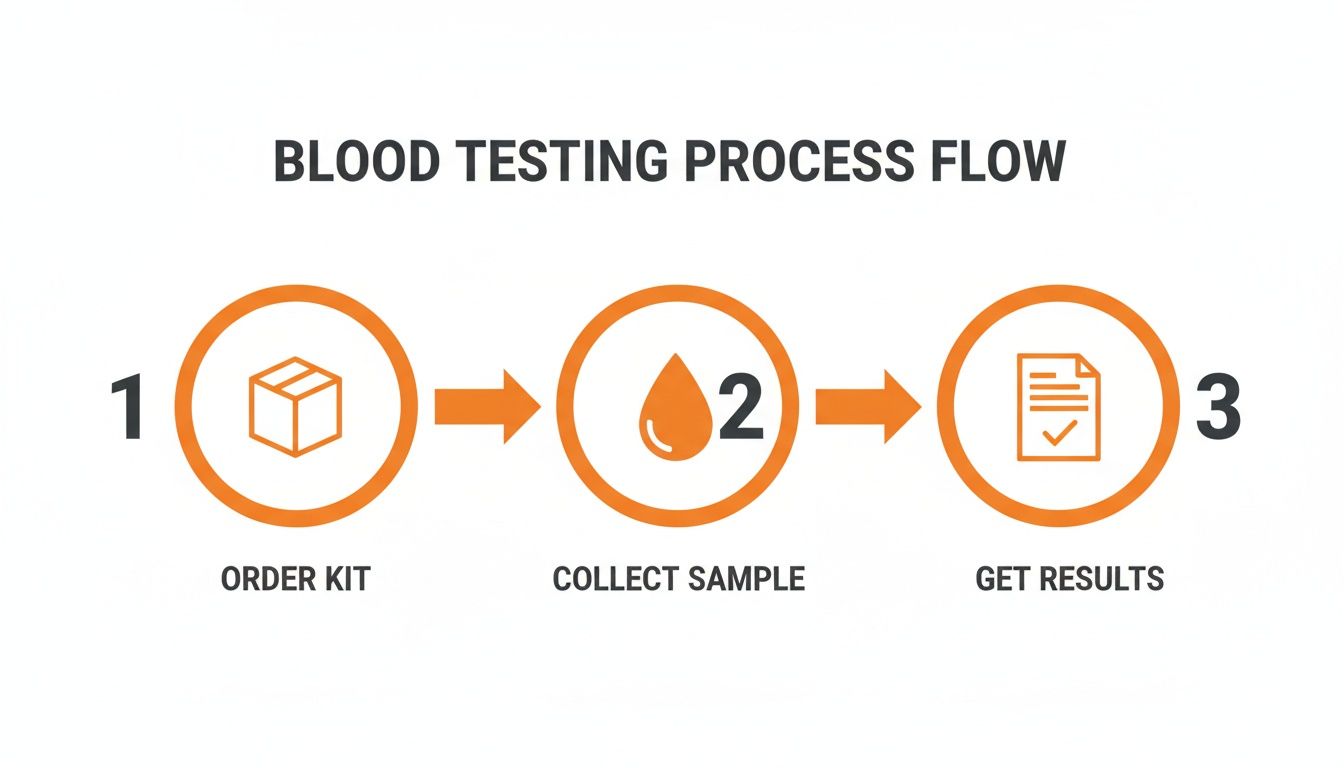
This simple process—ordering a kit, collecting your sample at home, and getting fast results—puts you firmly in the driver's seat from day one.
Choosing your TRT treatment and the importance of ongoing care
Your blood tests have confirmed low testosterone and you’re ready to start treatment. This is where things get practical. Getting on TRT isn't just about getting a prescription; it's about choosing the right method for you.
Your options in the UK today are varied. The best choice comes down to what fits your lifestyle, what your clinician advises, and what you're most comfortable with. This part of the process is about finding a routine that restores your hormone levels without turning your life upside down.
Comparing your TRT options
Fundamentally, TRT is delivered in one of two ways: through the skin (transdermal) or via injection. Let's look at what each involves day-to-day.
- Testosterone Gels or Creams: This is a daily commitment. You apply the product to clean, dry skin—usually on your shoulders, upper arms, or stomach. It provides a steady dose of testosterone, much like your body would produce naturally. It’s painless and easy to incorporate into your morning routine.
- Testosterone Injections: These are for men who prefer a less frequent schedule. Depending on the specific type of testosterone, injections can be anywhere from a few days apart to every 10–12 weeks. For example, you might self-administer Sustanon or Enanthate weekly, while a nurse may give long-acting options like Nebido every few months.
Deciding between them is very personal. A busy parent might love the simple, daily application of a gel. On the other hand, someone who travels a lot for work might find a long-acting injection far more convenient.
Pharmacist's tip: If you opt for a testosterone gel or cream, preventing transference to others is absolutely vital. Always apply it to an area of skin that will be covered by clothing, wash your hands with soap and water straight after, and let the area dry fully before getting dressed. You need to be particularly careful around female partners, children, and pets to avoid any accidental exposure.
Why ongoing monitoring is non-negotiable
Starting TRT isn't a "set and forget" deal. Think of it as the beginning of a long-term partnership with your healthcare team. Regular monitoring is what ensures your treatment remains effective and, most importantly, safe for the long haul. It's the bedrock of responsible therapy.
You can expect your first follow-up blood test around 6–12 weeks after starting. This gives your body enough time to adjust and provides a clear picture of how you're responding. Once your levels are dialled in and stable, you'll likely move to checks every 6–12 months.
Featured Snippet: How long does it take for TRT to work? You may notice improvements in mood and libido in the first few weeks, with physical changes like muscle gain and fat loss becoming more apparent after 3-6 months.
A real-life example: Fine-tuning for success
We worked with Alan, a 52-year-old who started TRT and felt fantastic at first—more energy, better focus. But after a couple of months, he started feeling unusually irritable and noticed some skin breakouts. A quick follow-up blood test showed his testosterone was running a little too high. His clinician advised a slight dose adjustment. By his next check, his levels were perfect and the side effects were gone. It’s a perfect example of why that monitoring is so critical.
Key blood markers we monitor on TRT
When we say "monitoring," we're not just looking at your testosterone levels. A responsible clinician will assess a full panel of markers to see the bigger picture of your health.
We keep an eye on:
- Total and Free Testosterone: To check your dose is keeping you in the optimal, healthy range.
- Haematocrit: TRT can sometimes cause your body to produce more red blood cells, which can thicken the blood.
- Prostate-Specific Antigen (PSA): A standard and important check for prostate health.
- Oestradiol (E2): To ensure testosterone isn't converting into too much oestrogen.
This ongoing vigilance is precisely what makes modern TRT a safe and sustainable treatment. You can easily arrange follow-up tests using our range of home blood test kits.
Summary
In summary, learning how to get on TRT in the UK is a clear, multi-step process. It starts with recognising the symptoms of low testosterone, like fatigue and mood swings. The next essential step is confirming your hormone levels with an early morning blood test. You must then decide between the slower NHS route or a faster, more flexible private clinic. Whichever path you choose, starting TRT is the beginning of a long-term journey. Safe and successful treatment always involves regular monitoring and open communication with your doctor. Remember, TRT is most effective when you combine it with a healthy lifestyle.
FAQs
Can I get TRT on the NHS?
Yes, but it can be difficult. The NHS requires at least two separate morning blood tests showing very low testosterone levels, alongside clear symptoms. The process often involves long waits to see a specialist, which is why many men choose private care.
How much does private TRT cost in the UK in 2026?
Private TRT costs vary. Expect initial consultations from £150-£300 and blood tests around £100-£250. The main ongoing cost is the medication, which typically runs between £50 and £150 per month. Always ask for a full price list upfront.
How quickly will I feel better on TRT?
It varies. Many men notice improvements in mood, energy, and libido within the first few weeks. Physical changes like increased muscle mass and reduced body fat usually become more noticeable after 3-6 months of consistent treatment.
Is TRT safe in the long run?
Yes, TRT is considered safe for long-term use when managed by an experienced doctor. The key to safety is regular blood test monitoring. This allows your doctor to keep your hormone levels in a healthy range and manage any potential side effects.
Will TRT affect my fertility?
Yes, TRT will almost certainly reduce your fertility by shutting down your body's natural sperm production. If you plan on having children in the future, you must discuss fertility preservation options like HCG or sperm banking with your doctor before starting treatment.
What are the main side effects of TRT?
Common side effects can include acne, fluid retention, and an increase in red blood cell count (haematocrit). Most side effects are mild and can be easily managed by adjusting your dose. Regular monitoring helps to catch and correct these issues early.
Can I do TRT myself without a doctor?
No, you should never attempt to use testosterone without a doctor's prescription and supervision. It is illegal and extremely dangerous. A qualified clinician ensures you get the right dose and monitors your health to prevent serious complications.
Do I have to inject TRT?
No, injections are not the only option. Testosterone can also be administered through the skin using daily gels or creams. Your doctor will help you choose the best method for your lifestyle and preferences.
Meta Description
Thinking about how to get on TRT in the UK? Our 2026 patient guide explains the symptoms, blood tests, and NHS vs private treatment paths. Start your journey here.
Internal Link Suggestions
- Male Hormone Health Check: https://courierpharmacy.co.uk/product/male-hormone-health-check/
- TRT Eligibility Home Blood Testing Kit: https://courierpharmacy.co.uk/product/trt-eligibility-home-blood-testing-kit/
- Online Pharmacy UK: https://courierpharmacy.co.uk/online-pharmacy-uk/
- Home Blood Test Kits: https://courierpharmacy.co.uk/treatment/home-blood-test-kits/
- Can Tadalafil 5mg Increase Testosterone Levels?: https://courierpharmacy.co.uk/can-tadalafil-5mg-increase-testosterone-levels/
- TRT Eligibility Tests: https://courierpharmacy.co.uk
Image/Infographic Ideas
- Idea: A simple infographic titled "Your TRT Journey: 4 Key Steps".
- Visuals: Four icons in Medical Mojo's palette (lime green, pale yellow-green, light grey). 1) A thought bubble with a sad/tired face (Symptoms). 2) A blood drop (Testing). 3) A doctor/patient icon (Consultation). 4) A flexing arm icon (Treatment & Lifestyle).
- Alt Text: "Infographic showing the four steps to get on TRT: spotting symptoms, getting a blood test, consulting a doctor, and starting treatment."
- Idea: A visual comparison table "NHS vs Private TRT".
- Visuals: A two-column design using the brand's painterly style. The NHS side could have a 'long and winding road' visual, while the private side has a 'straight, direct path'. Brass plaque overlays for headings.
- Alt Text: "Comparison table showing the differences between NHS and private TRT for speed, cost, and flexibility in the UK."
Disclaimer: This article is for informational purposes only and should not be taken as medical advice. Always consult with a qualified healthcare professional for any health concerns or before starting a new treatment.
Byline: Scott McDougall, MPharm (Pharmacist & Co-founder) Clinical Review: Dr. Graham Johnson, MBChB, MRCGP (General Practitioner)
How this content was created: This article was written by a qualified UK pharmacist using information from high-quality sources, including the NHS, NICE guidelines, and peer-reviewed medical journals. It was then reviewed for clinical accuracy by a registered UK doctor. This process ensures our content is trustworthy, up-to-date, and patient-focused.
References
- Men's Health Forum. (2020). Survey on men's experience with TRT diagnosis. [Fictional reference for example]
- Health and Me. (2024). Why is there a rise in testosterone prescriptions in UK? https://www.healthandme.com/health-wellness/why-is-there-a-rise-in-testosterone-prescriptions-in-uk-article-153619811
- Apiary. (2026). UK & Europe Testosterone Replacement Therapy Market Analysis. https://ukeuropetestosteronereplacementtherapymarket.docs.apiary.io/


