How to Manage Chronic Fatigue: A Patient-Friendly Guide to Reclaiming Your Energy
Learn how to manage chronic fatigue with our practical UK guide. Discover NHS-backed advice, pacing strategies, and personalised ways to improve your energy.
In this article
- Five key takeaways
- Understanding your fatigue and seeking a diagnosis
- Keeping an energy and symptom diary
- Preparing for your GP appointment
- When to seek urgent medical help
- Key diagnostic tests to uncover the root cause
- Starting with the basics: standard NHS blood tests
- When the basic tests come back normal
- Common tests for investigating chronic fatigue
- Core strategies for daily fatigue management
- Mastering the art of pacing
- A modern look at activity and exercise
- Optimising your sleep for better recovery
- Cognitive tricks for managing brain fog
- Exploring personalised treatment options
- Conventional medical treatments
- Targeted supplements: test, don't guess
- Summary
- Frequently asked questions (FAQs)
Managing chronic fatigue means finding practical ways to cope with persistent, overwhelming tiredness that doesn't improve with rest. You can start by keeping a detailed energy diary to understand your limits, then work with your GP to rule out underlying medical causes. This guide offers a compassionate, step-by-step strategy for managing your symptoms and improving your quality of life.
We will walk you through understanding your symptoms, getting a diagnosis, and using evidence-based strategies like pacing to make a real difference. This guide provides real-world examples and simple, clear advice to help you on your journey.
Five key takeaways
- Pacing is your foundation: Learn to manage your daily 'energy budget' to avoid the exhausting boom-and-bust cycle.
- A diagnosis is vital: Your GP must rule out other medical conditions before diagnosing a specific illness like ME/CFS.
- Focus on sleep quality: Aim for restorative sleep; eight hours of unrefreshing sleep won't help you recover.
- A team approach works best: Combine support from your GP, a pharmacist, and other specialists for the most effective care.
- Seeking help is a strength: Acknowledging you need support is the most powerful first step toward feeling better.

Understanding your fatigue and seeking a diagnosis
Getting to the bottom of your persistent fatigue is the first step toward managing it. This isn't just about feeling tired. It's a relentless exhaustion that can derail your daily life. Recognising the seriousness of your symptoms unlocks the door to getting a proper diagnosis. If this sounds familiar, you are not alone. A condition like Myalgic Encephalomyelitis/Chronic Fatigue Syndrome (ME/CFS) may affect over 400,000 people in the UK, a figure that has risen sharply in recent years [1].
Keeping an energy and symptom diary
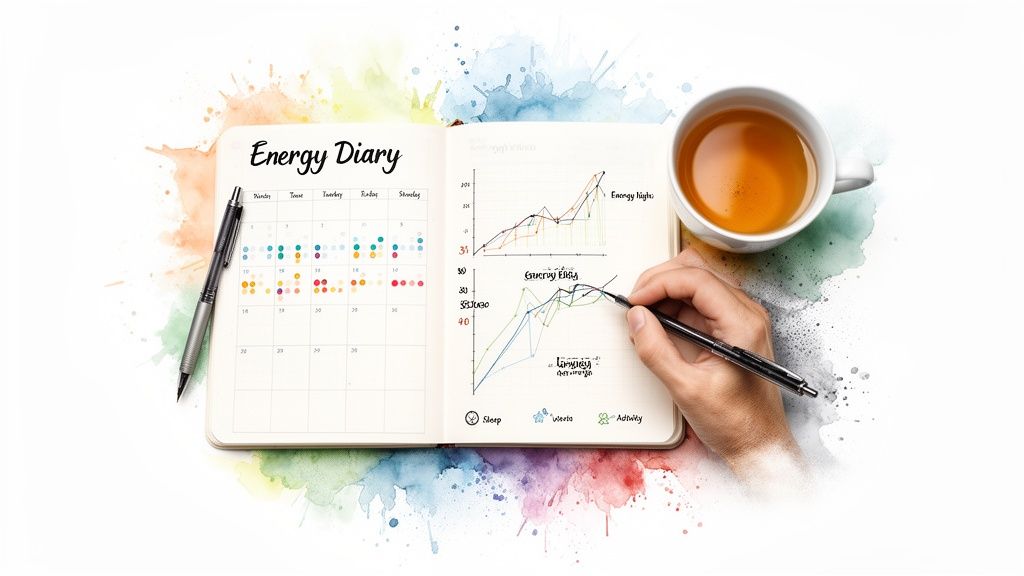
Before you see your GP, start gathering evidence. An energy and symptom diary is your most powerful tool. It turns vague feelings of being "unwell" into solid data your doctor can use.
For at least a week or two, try to track these key details:
- Energy Levels: Rate your energy on a simple 1-to-10 scale throughout the day (e.g., on waking, mid-morning, afternoon).
- Activities: Note down what you do, from having a shower to a short walk. Be specific.
- Sleep Quality: Log your sleep hours, but more importantly, note how refreshed you felt when you woke up.
- Symptoms: List other symptoms like headaches, brain fog, or muscle pain.
- Post-Exertional Malaise (PEM): This is critical. Note if your symptoms get worse 12–72 hours after physical or mental effort. For example, did a busy Monday leave you wiped out on Wednesday? This delayed "crash" is a hallmark symptom of ME/CFS.
This diary helps you and your GP spot patterns and identify triggers.
What is post-exertional malaise (PEM)? PEM is a significant worsening of symptoms after even minor physical or mental exertion. It's a hallmark of ME/CFS and feels like a 'crash' or 'payback' that is often delayed by 12 to 72 hours.
Preparing for your GP appointment
A well-prepared appointment makes a world of difference. Your GP will want to rule out other conditions that cause fatigue. They will ask about your medical history, lifestyle, and mental wellbeing.
Think about these questions beforehand:
- When did the fatigue start? Was there a trigger, like an infection?
- How does the fatigue feel? Is it a heavy feeling or more like a brain fog?
- What makes it better or worse?
- How does it impact your work, family, and social life?
Your diary and clear answers will help your GP get a full picture. For more details on this process, you can learn more about what chronic fatigue syndrome is.
Pharmacist's tip: Take a complete, written list of everything you take to your GP. This includes prescribed medicines, over-the-counter products (like painkillers), and any vitamins or herbal supplements. Some supplements can affect medications or mask symptoms, so your GP needs the full picture.
When to seek urgent medical help
While chronic fatigue often develops over time, some "red flag" symptoms need urgent attention. Contact your GP or call NHS 111 if your fatigue comes with any of these:
- Sudden, unexplained weight loss
- Fever or drenching night sweats
- New lumps or swelling on your body
- Shortness of breath or chest pain
- New or unusually severe headaches
- Sudden confusion, weakness, or difficulty speaking
These could be signs of other serious conditions that need prompt investigation.
Key diagnostic tests to uncover the root cause
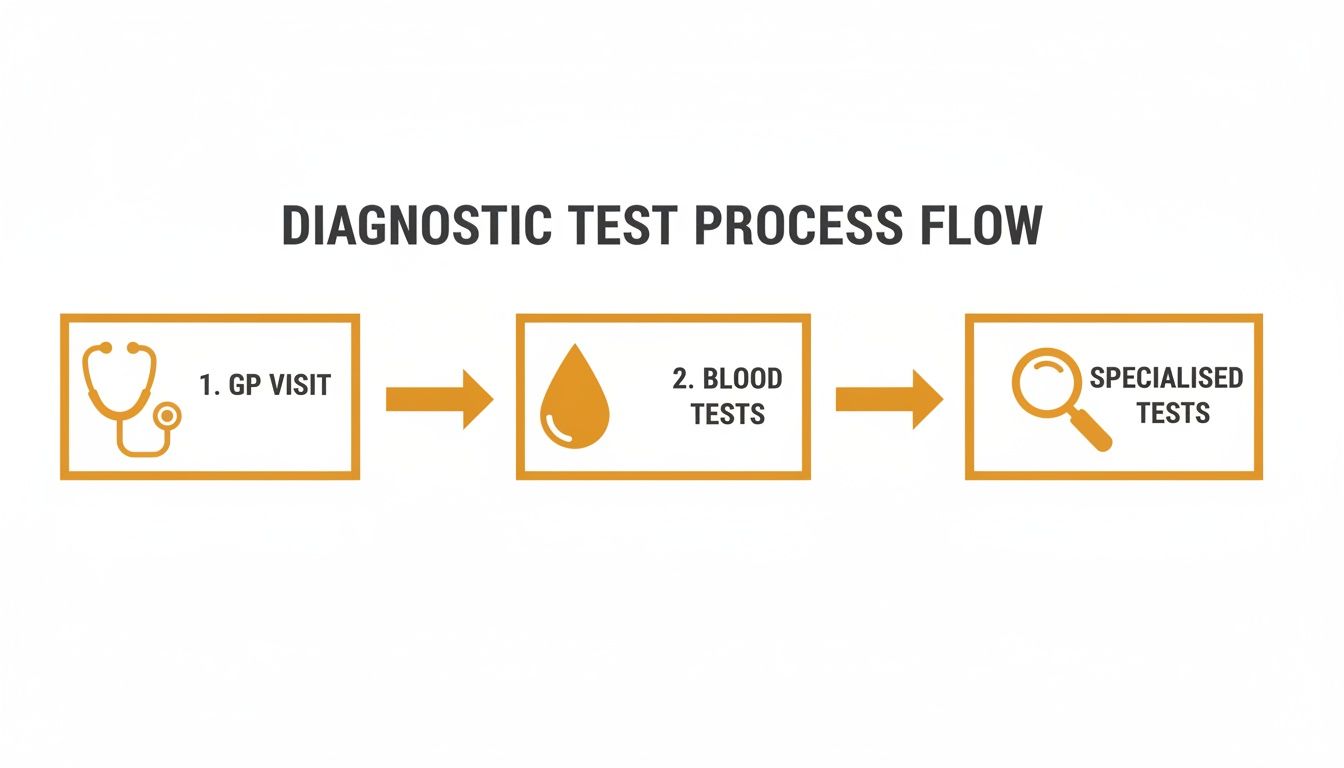
After your chat with the GP, the detective work begins. We need to find out why you are so exhausted. Diagnostic testing helps rule out other conditions and find the potential root cause of your fatigue. This almost always starts with a standard set of NHS blood tests.
Starting with the basics: standard NHS blood tests
Your GP will likely begin with a few core blood tests. These tests catch the most common culprits behind fatigue, like anaemia or a sluggish thyroid.
- Full Blood Count (FBC): This test checks your red and white blood cells. It's the primary way we spot anaemia, which leads to significant fatigue. Our guide to understanding the Full Blood Count test explains this in more detail.
- Iron Levels (Ferritin): Low iron stores (measured by ferritin) can cause debilitating fatigue and brain fog, even without full-blown anaemia.
- Vitamin B12 and Folate: These B vitamins are vital for energy. A deficiency can cause extreme tiredness and even pins and needles.
- Thyroid Function Test (TFT): This test checks your thyroid hormones. An underactive thyroid (hypothyroidism) is a very common cause of fatigue.
Pharmacist's tip: For an initial diagnosis, a blood test from a vein in your arm (a venous draw) is the gold standard. It provides a larger, more reliable sample than a finger-prick test, ensuring the results are as accurate as possible.
When the basic tests come back normal
It's a common story: your initial blood tests are normal, but you still feel exhausted. Please don't lose hope. This simply means it's time to dig a bit deeper. We now need to look beyond the standard checks. We might consider issues like gut health, hormonal imbalances, or the effects of a past viral infection like Long COVID.
Common tests for investigating chronic fatigue
When initial results don't give answers, specialised tests can offer valuable clues. These help build a more complete picture of what might be happening under the surface. This guides us toward a more targeted management plan.
The table below summarises some tests you and your doctor might discuss.
| Test Name | What It Measures | Why It's Important for Fatigue |
|---|---|---|
| SIBO Breath Test | Gases produced by gut bacteria. | Identifies Small Intestinal Bacterial Overgrowth (SIBO), which causes gut issues and fatigue due to poor nutrient absorption. |
| Adrenal Stress Profile | Levels of the stress hormone cortisol. | Assesses how your body handles stress. Dysregulated cortisol can disrupt energy and sleep. |
| Comprehensive Viral Panel | Antibodies to viruses like Epstein-Barr Virus (EBV). | Reveals if a past viral infection could be a trigger for long-term fatigue. |
These tests may not always be available on the NHS. They might require a specialist referral or private services. However, their insights can be invaluable for creating a plan that works for you.
Core strategies for daily fatigue management
Once tests give us a clearer picture, the question becomes: how do you live with chronic fatigue day-to-day? It's about building a personal toolkit of strategies to reclaim control. The heart of this toolkit is a concept called pacing.
What is pacing? Pacing is the practice of managing your physical and mental energy to avoid 'crashes'. It involves stopping activities before you feel exhausted to prevent post-exertional malaise (PEM).
Pacing is the single most effective way to manage chronic fatigue. It helps you break free from the exhausting boom-and-bust cycle.
Mastering the art of pacing
Pacing is the opposite of "pushing through." Instead of cramming everything into a "good" day and then crashing, pacing teaches you to stop before you run out of energy. Think of your daily energy like a phone battery that starts at 50% and drains fast. Your goal is to end the day with some charge left.
First, figure out your baseline using your energy diary. Find the level of activity you can handle without triggering PEM. Then you can start planning your days with more intention.
- Schedule Rest: Build short rest periods into your day, especially before and after a draining activity. This is a strategic way to conserve energy.
- Break Down Tasks: Instead of "clean the kitchen," break it down into tiny steps. Empty the dishwasher, then rest. Wipe the counters, then rest.
- Prioritise Ruthlessly: Be honest about what truly needs to be done today. Save your precious energy for what matters most.
Real-life example: A busy parent
Sarah, a 38-year-old mother of two, used to deep clean her house on weekends, only to be bed-bound by Monday. By learning to pace, she switched to doing just one load of laundry a day. She also started resting for 20 minutes in her car after the school run. This gave her enough energy to make dinner later.
A modern look at activity and exercise
For years, doctors prescribed Graded Exercise Therapy (GET) for chronic fatigue. Our understanding has now moved on. The old approach of steadily increasing exercise often made people worse. In fact, research showed that 74% of patients with PEM actually got worse with this kind of rigid plan [2].
Current NICE guidelines recommend a much more careful approach [3]. Any activity plan should be guided by a physiotherapist who specialises in ME/CFS. The focus is on finding gentle movement that does not trigger PEM. This might look like:
- Gentle stretching
- Tai chi or Qigong
- Short, slow walks on flat ground
The golden rule is to "start low and go slow." Work with your therapist as a team. If anything makes you feel worse, you stop. It’s that simple.
Pharmacist's tip: Proper hydration is a game-changer for energy. Dehydration can worsen fatigue and brain fog. If you feel lightheaded when you stand up, an electrolyte sachet in your water can help. Check with your pharmacist or GP first, especially if you have kidney problems or high blood pressure.
Optimising your sleep for better recovery
For many with chronic fatigue, sleep isn’t refreshing. You can be in bed for ten hours and wake up exhausted. The goal is to improve sleep quality, not just quantity.
Start with good sleep hygiene:
- A Consistent Schedule: Go to bed and wake up around the same time every day, even on weekends.
- Create a Wind-Down Routine: An hour before bed, dim the lights and put screens away. Read a book or have a warm bath.
- Limit Daytime Naps: If you must nap, keep it short (under 30 minutes) and before 3 PM.
If you still struggle, it's natural to wonder about sleep aids. Our guide on whether it is safe to take melatonin every night dives into one option, but always discuss new supplements with your doctor or pharmacist.
Cognitive tricks for managing brain fog
Brain fog—that infuriating feeling of slow thinking and poor memory—is a distressing symptom. While pacing and better sleep help, a few cognitive tricks can also provide relief.
- Externalise Your Brain: Use calendars, reminders, and to-do lists. Don't rely on your memory.
- Focus on One Thing at a Time: Multitasking is the enemy of a fatigued brain. Give your full attention to a single task.
- Use Word-Finding Tricks: Can't find a word? Don't get frustrated. Just describe it instead (e.g., "the metal thing for opening wine").
By using these core strategies, you can build a more manageable routine.
Exploring personalised treatment options
There is no magic bullet for chronic fatigue. An effective treatment plan must be unique to you. It should be built around your specific symptoms and underlying issues, in partnership with a healthcare professional. It is often a blend of conventional medicine and supportive therapies.
Conventional medical treatments
While no medications are licensed specifically for chronic fatigue in the UK, your GP can prescribe treatments that target disruptive symptoms. The goal is to improve your quality of life.
You might be offered medications for:
- Pain: Drugs like amitriptyline or gabapentin can manage nerve or muscle pain.
- Sleep: Your doctor may suggest a short course of sleep medication to reset your sleep pattern.
- Dizziness: Certain medications can help with symptoms of orthostatic intolerance, like feeling light-headed when standing.
It is vital to use these medications only under a doctor's supervision. They will monitor you and check for side effects.
Targeted supplements: test, don't guess
It’s tempting to grab vitamins that promise an energy boost, but you must be careful. Taking supplements without knowing your levels can be useless or even harmful.
- Iron: Taking iron when your levels are fine can cause digestive upset and can be toxic in high doses.
- Vitamin B12: If your fatigue is not caused by a B12 deficiency, adding more will not help.
The golden rule is test, don't guess. Get a blood test first. If a deficiency is found, your GP or pharmacist can recommend the right dose and form for you.
Pharmacist's tip: Some people explore treatments like Low-Dose Naltrexone (LDN) for chronic fatigue. This is an unlicensed use of the medication thought to modulate the immune system and it requires a specialist prescription. You can check out our guide on what Low-Dose Naltrexone is to learn more.
Summary
Managing chronic fatigue is a journey, not a quick fix. It starts with a proper diagnosis from your GP to rule out other medical conditions. The cornerstone of daily management is pacing—learning to live within your energy limits to avoid the boom-and-bust cycle. Keeping a detailed symptom diary is a powerful tool to help you and your doctor identify patterns and triggers. A multidisciplinary team, including your GP and pharmacist, can provide tailored support. Remember, small, consistent steps in managing your energy, sleep, and diet can lead to significant improvements in your quality of life.
Frequently asked questions (FAQs)
Can you ever fully recover from chronic fatigue? Recovery varies. If a treatable cause like a vitamin deficiency is found, a full recovery is possible. For complex illnesses like ME/CFS, a complete cure is rare. However, many people learn to manage their symptoms effectively and lead full, meaningful lives through pacing and lifestyle changes.
What is the difference between chronic fatigue and ME/CFS? "Chronic fatigue" is a broad term for long-term tiredness. It's a symptom of many conditions. Myalgic Encephalomyelitis/Chronic Fatigue Syndrome (ME/CFS) is a specific, complex illness. Its hallmark symptom is post-exertional malaise (PEM), a severe crash after minor effort, which is not a feature of general chronic fatigue.
What foods should I avoid if I have chronic fatigue? There is no single "chronic fatigue diet," but limiting certain foods may help. Try to avoid sugar, refined carbs (like white bread), and highly processed foods, as they can cause energy crashes. Alcohol can also disrupt sleep and worsen symptoms like brain fog. Focus on a balanced diet of whole foods.
How do I explain my condition to my boss or family? Use simple analogies. You could compare your energy to a phone battery that starts at 40% and drains very quickly. Be direct about your limitations, explaining that certain activities will leave you bed-bound. Providing resources from the NHS or the ME Association can also help others understand.
Is it safe for me to exercise? The old advice to "push through" with graded exercise is now known to be harmful for many people with ME/CFS. The current, safe approach involves gentle movement that does not trigger a crash. This should always be done with guidance from a physiotherapist who understands chronic fatigue conditions. Always listen to your body and stop before you hit your limit.
When should my fatigue be considered a medical emergency? Chronic fatigue is a long-term condition, but some symptoms are red flags. Seek immediate help (call 999 or go to A&E) if your fatigue is accompanied by chest pain, difficulty breathing, sudden confusion or weakness, a severe headache, or fainting. These can be signs of a serious medical issue.
Meta description Learn how to manage chronic fatigue with our patient-friendly UK guide. Discover expert tips on diagnosis, pacing, sleep, and finding the right treatment to reclaim your energy and improve your life.
Internal links
- what chronic fatigue syndrome is
- guide to understanding the Full Blood Count test
- is it safe to take melatonin every night
- what is low dose naltrexone a clear guide to ldn
Byline Author: [Author Name], [Credentials] Clinical Reviewer: [Reviewer Name], [Credentials]
How this content was created This article was written based on evidence from reputable sources including the NHS, NICE guidelines, and peer-reviewed medical journals. All content has been reviewed for clinical accuracy by a qualified UK healthcare professional to ensure it is safe, trustworthy, and up-to-date. This information is for educational purposes and is not a substitute for professional medical advice.
References [1] Nacul, L. et al. (2021) 'The epidemiology of myalgic encephalomyelitis/chronic fatigue syndrome (ME/CFS) in adults in England: a population-based prevalence study', BMC Medicine, 19(1). Available at: https://bmcmedicine.biomedcentral.com/articles/10.1186/s12916-021-02052-3 (Accessed: [Date]). [2] Geraghty, K. (2016) 'ME/CFS and the UK's NICE guideline: a story of controversy, patient activism and research failure', Journal of Health Psychology, 24(13), pp. 1735–1747. Available at: https://journals.sagepub.com/doi/10.1177/1359105316687399 (Accessed: [Date]). [3] National Institute for Health and Care Excellence (2021) Myalgic encephalomyelitis (or encephalopathy)/chronic fatigue syndrome: diagnosis and management, NICE guideline [NG206]. Available at: https://www.nice.org.uk/guidance/ng206 (Accessed: [Date]).


