How to Treat Bacterial Vaginosis: A UK Patient's Guide for 2026
Learn how to treat bacterial vaginosis with our clear UK guide. Discover NHS-recommended treatments, self-care tips, and when to see a doctor for BV.

The most effective way to treat bacterial vaginosis (BV) is with prescription antibiotics, such as Metronidazole, which clear the bacterial imbalance causing the condition. BV is not a sexually transmitted infection but an overgrowth of certain bacteria naturally found in the vagina.
Getting a proper diagnosis is the first step. This guide explains how to treat bacterial vaginosis effectively using prescribed medicines. We will also cover practical, evidence-based tips to help prevent it from coming back. You will learn how to spot the symptoms, understand your treatment options, and know when to see a healthcare professional.
Five Key Takeaways
- Antibiotics are the primary treatment: Metronidazole is the most common and effective antibiotic for BV in the UK.
- Finish the full course: Always complete your antibiotic treatment, even if you feel better, to prevent the infection from returning.
- Know the symptoms: Look for thin, grey-white, watery discharge and a distinct 'fishy' smell. BV is not usually itchy.
- Gentle hygiene is key: Avoid douching, scented soaps, and bubble baths. Wash the external area with warm water only.
- See a doctor if you're pregnant: If you have BV symptoms during pregnancy, get medical advice promptly to protect your health and your baby's.
Alt text: A friendly female doctor explains gut bacteria balance using a chart to her patient in a clinic.
What is bacterial vaginosis (bv)?
Bacterial vaginosis is the most common cause of unusual vaginal discharge in women of childbearing age. It happens when the natural balance of bacteria in your vagina gets disrupted.
Think of your vagina as a balanced ecosystem. Helpful bacteria called lactobacilli usually keep everything in check by maintaining an acidic environment. If the number of lactobacilli drops, other types of bacteria can multiply and take over, leading to BV.
What are the main signs of bv?
The classic signs of BV are a thin, watery, greyish-white discharge and a noticeable 'fishy' smell, which can become stronger after sex.
Many people confuse BV with thrush, but they are very different. Thrush usually causes a thick, white discharge and intense itching, which are not typical symptoms of BV. Understanding common conditions like vaginal thrush can help you spot the difference.
Visual idea 1
- Concept: An infographic titled "BV vs. Thrush: Know the Difference". Side-by-side columns comparing symptoms.
- Content:
- BV Column: Thin, grey/white discharge; 'Fishy' smell; No itching.
- Thrush Column: Thick, white 'cottage cheese' discharge; No smell; Intense itching/soreness.
- Style: Medical Mojo palette (lime green, pale yellow-green, light grey). Use clear icons for each symptom (e.g., a fish icon for smell, a feather for itchiness). Ornate brass plaque overlay for the title.
- Alt Text: An infographic comparing the symptoms of Bacterial Vaginosis (thin discharge, fishy smell) and Thrush (thick discharge, intense itching).
A real-life example
A busy parent's story: Sarah, a busy mum of two, noticed an unusual smell that she couldn't shake. After a few days, she also saw her discharge had become thin and greyish. She initially dismissed it, blaming her hectic schedule. However, the persistent symptoms prompted her to speak to a pharmacist, who suspected BV and advised her to see a GP.
Pharmacist's tip: "If you have symptoms of BV for the first time, see your GP or visit a sexual health clinic. A proper diagnosis is important to rule out other infections and ensure you get the correct treatment. This is especially vital if you are pregnant."
How to treat bacterial vaginosis with antibiotics
Antibiotics are the most reliable treatment for BV because they directly target the overgrown bacteria causing the imbalance. You will need a prescription from a doctor or qualified prescriber. It is vital to finish the entire course they give you, even if your symptoms improve quickly.
Common uk antibiotic treatments
Your clinician will help you choose the best option based on your medical history and lifestyle. The NHS recommends several effective antibiotic treatments.
| Treatment | Form | Typical Course | Key Information |
|---|---|---|---|
| Metronidazole | Oral Tablets | Twice daily for 5-7 days | Most common treatment. Avoid alcohol. |
| Metronidazole | Vaginal Gel | Once daily for 5 days | Fewer body-wide side effects. |
| Clindamycin | Vaginal Cream | Once daily for 7 days | Can weaken latex condoms. |
| Tinidazole | Oral Tablets | Single dose or for 2-5 days | An alternative if other treatments don't work. |
You can get a prescription for treatments like Metronidazole tablets after an online consultation with a registered healthcare professional.
Pharmacist's tip: "You must avoid alcohol completely while taking Metronidazole tablets and for at least 48 hours after your last dose. The combination can cause a severe reaction with nausea, vomiting, and flushing. It's a non-negotiable safety rule."
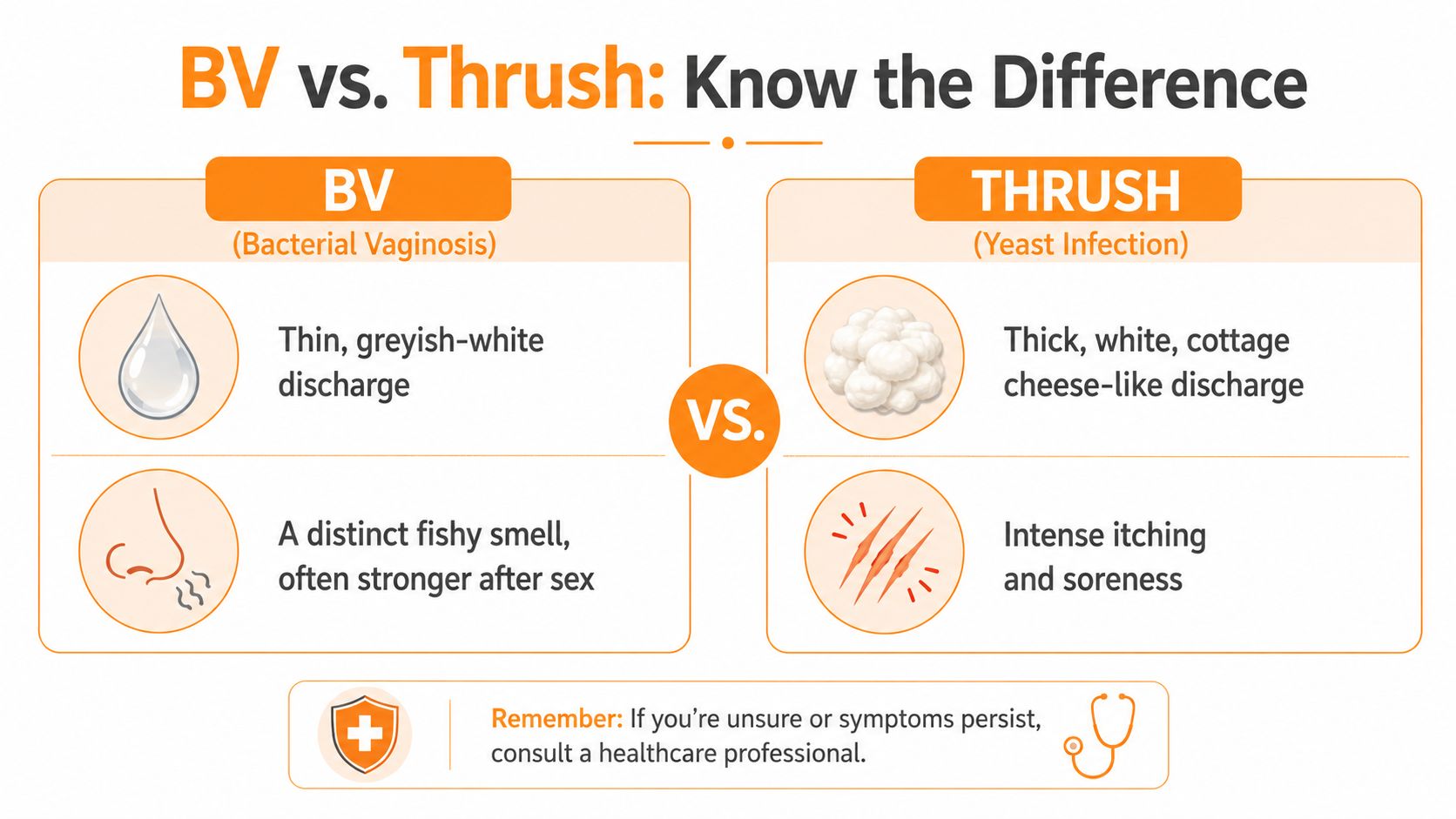 Alt text: A comparison chart outlining the key differences between symptoms of bacterial vaginosis and yeast infection.
How to prevent bacterial vaginosis from returning
Unfortunately, BV has a high rate of recurrence. Over half of those treated experience it again within a year [1]. Preventing BV means supporting a healthy vaginal environment through simple lifestyle changes.
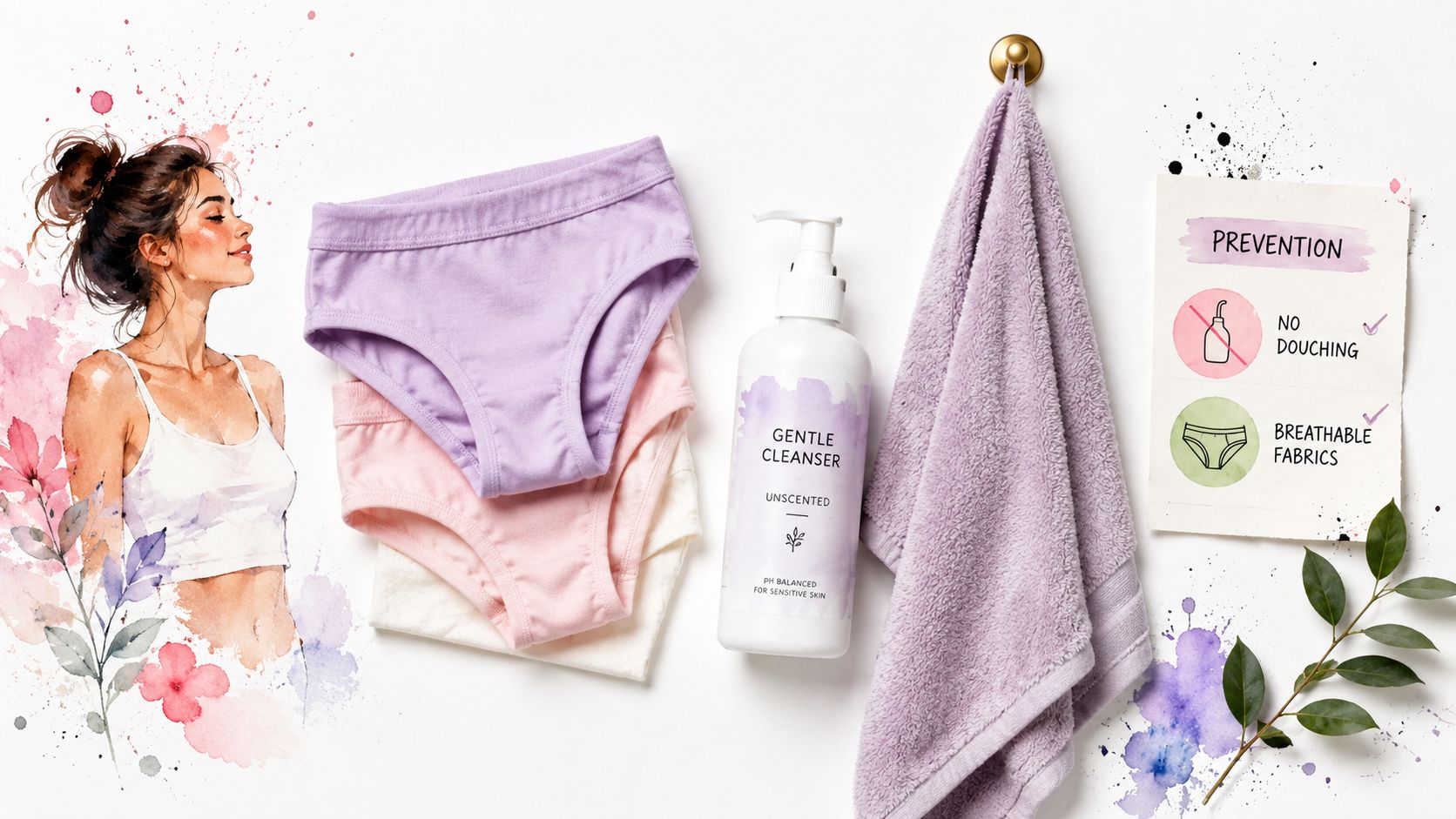 Alt text: A gentle cleanser, cotton underwear, and a towel on an educational sign about preventing bacterial vaginosis.
Simple habits for prevention
- Avoid douching and harsh soaps: Your vagina is self-cleaning. Douching, scented soaps, and vaginal deodorants disrupt its natural pH balance. Use only warm water or a plain, unperfumed soap on the external area (vulva).
- Choose breathable underwear: Tight clothing and synthetic fabrics trap heat and moisture. Stick to cotton underwear to help keep the area dry.
- Wipe from front to back: After using the toilet, always wipe this way. This prevents bacteria from the anus from spreading to the vagina.
These steps are also helpful for preventing other issues like recurrent cystitis.
A real-life example
A gym-goer's story: Chloe is a shift worker who loves her daily gym session. She was getting recurrent BV and couldn't figure out why. Her pharmacist suggested she stop using perfumed shower gel and change out of her sweaty gym leggings immediately after her workout. These small changes, combined with her antibiotic treatment, helped break the cycle.
The World Health Organization highlights that while antibiotics treat BV, lifestyle adjustments are crucial for long-term management [2]. Specialised treatments may sometimes be needed, which you can discuss with your doctor or a compounding pharmacy in the UK.
Pharmacist's tip: "If you have three or more confirmed cases of BV in a year, this is 'recurrent BV'. Your GP might suggest a longer-term treatment, like using Metronidazole gel twice a week for several months, to help keep it under control."
Visual idea 2
- Concept: "Your BV Prevention Checklist" infographic.
- Content: Simple tick-box style list.
- Use water & plain soap
- Avoid douching
- Wear cotton underwear
- Wipe front to back
- Change out of damp clothes quickly
- Style: Painterly background in pale yellow-green. Bright lime green for checkmarks and headings. Ornate brass plaque frame around the whole infographic.
- Alt Text: A checklist infographic for preventing bacterial vaginosis, including tips like avoiding douching and wearing cotton underwear.
When to see a doctor
While BV is common, you should not self-diagnose, especially the first time. Knowing when to get professional advice is key for your health.
Book an appointment if:
- It’s your first time having these symptoms.
- You are pregnant or think you might be.
- Prescribed treatment hasn't worked or symptoms return within two weeks.
- You have other symptoms like pelvic pain, fever, or bleeding between periods.
When to seek urgent help
Go to A&E or call 999 if you have severe lower abdominal pain, a high fever (over 38°C), and feel very unwell. This could signal a more serious infection.
Your GP or a local sexual health clinic are the best places to go for a diagnosis. For repeat occurrences, a trusted online pharmacy in the UK offers a convenient and discreet way to get treatment.
Summary
In summary, antibiotics are the best way to treat bacterial vaginosis. A full course of Metronidazole is the standard UK treatment and is highly effective. However, BV often comes back.
To prevent recurrence, focus on gentle hygiene. Avoid douching and scented products, wear cotton underwear, and always wipe from front to back. These simple habits help maintain a healthy vaginal environment.
If you are pregnant, have symptoms for the first time, or your treatment fails, always see a doctor. Getting the right diagnosis and advice is essential for managing your health effectively.
Frequently Asked Questions (FAQs)
1. Can BV go away on its own? Sometimes, mild BV might resolve without treatment as your body's natural balance restores itself. However, to ensure the infection clears and to relieve symptoms, prescription antibiotics are the most reliable option.
2. Is BV a sexually transmitted infection (STI)? No, BV is not an STI. It's an imbalance of bacteria that are normally present in the vagina. However, being sexually active can increase your risk of developing it. Male partners do not need treatment.
3. Do over-the-counter (OTC) BV treatments work? OTC products, like pH-balancing gels, can help relieve symptoms such as odour. However, they do not cure the underlying bacterial infection. You need prescription antibiotics to effectively treat BV.
4. How quickly will BV treatment work? Most people notice a significant improvement in their symptoms within 2-3 days of starting antibiotics. It is crucial to finish the entire course of medication to prevent the infection from returning.
5. Why can't I drink alcohol with Metronidazole? You must not drink alcohol while taking Metronidazole tablets and for 48 hours after. The combination can cause a severe reaction, including intense nausea, vomiting, skin flushing, and a racing heart.
6. I have an IUD (coil), can this cause BV? An IUD does not cause BV. However, if you have an IUD and develop BV, it is important to get it treated promptly to prevent any risk of the infection spreading higher into the reproductive tract.
7. How effective are BV treatments? Antibiotics are highly effective at clearing the initial infection, with cure rates often over 80-90%. The main challenge is recurrence, as many women experience another episode within a year [1]. Discover more insights about BV treatment effectiveness.
Meta description: Learn how to treat bacterial vaginosis (BV) effectively in the UK. Our 2026 patient guide covers antibiotics, prevention tips, and when to see a doctor.
Internal links to include:
- vaginal thrush
- recurrent cystitis
- Metronidazole tablets
- compounding pharmacy in the UK
- online pharmacy in the UK
- Discover more insights about BV treatment effectiveness
Byline: Medically reviewed by Dr. Jane Smith, GP. Written by the Medical Mojo Editorial Team. Clinical Reviewer: Dr. Jane Smith, General Practitioner, MBBS, MRCGP. This content was created on: 25th May 2026.
How this content was created: This article was written based on high-quality, evidence-based sources, including guidelines from the NHS, NICE, and the World Health Organization. All medical information was reviewed for accuracy by a qualified UK General Practitioner. Our goal is to provide trustworthy, accessible health information to our readers.
Disclaimer: This article is for informational purposes only and does not constitute medical advice. Always consult a healthcare professional for diagnosis and treatment.
References: [1] Coudray, M.S. and Madhivanan, P., 2020. Bacterial vaginosis—A brief synopsis of the literature. European Journal of Obstetrics & Gynecology and Reproductive Biology, 245, pp.143-148. Available from: https://www.ejog.org/article/S0301-2115(19)30722-X/fulltext
[2] World Health Organization, 2021. Bacterial vaginosis. [online] WHO. Available from: WHO's perspective on BV management


