How to Use Otex Ear Drops Safely and Effectively
Learn how to use Otex ear drops correctly, from dosing and technique to safety tips, side effects and when to seek help. UK pharmacist guide.

You're sitting at your desk, but one ear feels full. Voices sound muffled, and you're wondering whether a few drops could help. Otex ear drops help soften hardened ear wax so it's easier to remove, rather than clearing every blockage instantly. This guide explains how to use Otex ear drops, how long to keep them in place, how often to repeat them, and when to ask for professional help. It also covers common mistakes, such as wiping the drops away too soon or using cotton wool inside the ear. Otex is licensed in the UK as an aid for removing hardened ear wax. [1]
Introduction to Otex Ear Drops and What They Do
How to use Otex ear drops: place up to 5 drops in the affected ear, keep your head tilted for several minutes, then repeat once or twice daily for at least 3 to 4 days, following the official leaflet. [1]
Otex contains urea hydrogen peroxide. It helps break hardened wax into smaller pieces, which can make the blockage easier to clear. The drops work gradually, so you may need patience rather than a quick rinse after the first application. [1]
Ear wax often causes a blocked feeling, muffled hearing, or pressure. Those symptoms can feel worrying, especially if they start before work, travel, or an important family event. However, wax build-up is usually manageable when you use drops carefully and know when to seek advice.
This guide is for UK adults, carers, and anyone helping a child or older relative. The official leaflet says Otex is suitable for adults, children, and older people, but you should check with a pharmacist first if you're unsure whether wax explains your symptoms. [1] You can also use Courier Pharmacy's online pharmacy service to explore confidential healthcare options.
Five key takeaways
- Use up to 5 drops: Follow the Otex patient leaflet and don't add extra drops.
- Keep them in place: Tilt your head for several minutes after applying them.
- Repeat consistently: Use Otex once or twice daily for at least 3 to 4 days.
- Avoid cotton wool: It can absorb the drops before they reach the wax. [2]
- Know when to stop: Don't use ear drops if you suspect a perforated eardrum. [3]
Practical rule: The drops need time in the ear. Applying them and standing up straight straight away can reduce contact with the wax.
How Otex Ear Drops Work and Who Can Use Them
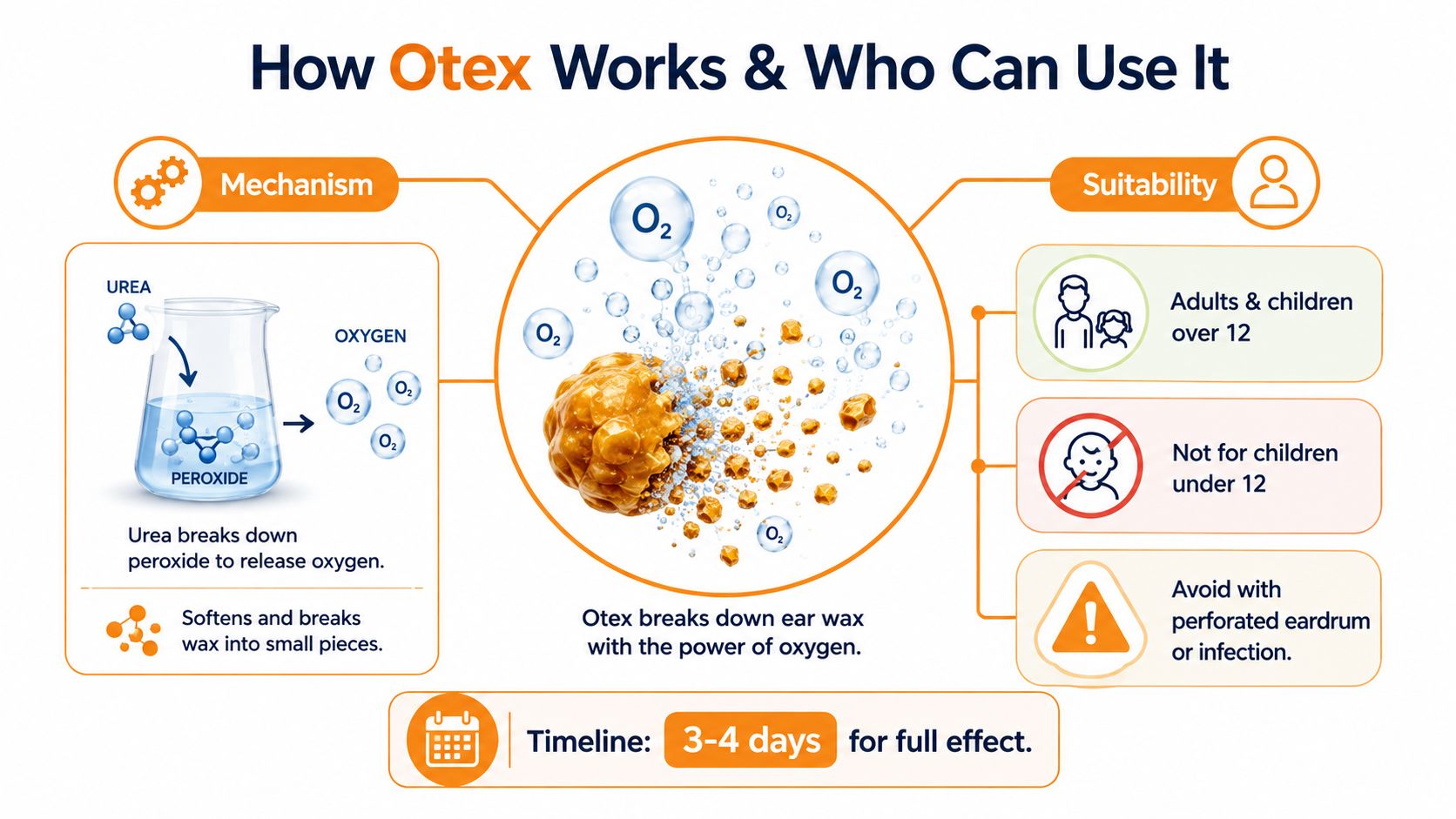
Otex ear drops are a wax-softening treatment. They contain urea hydrogen peroxide, which breaks hardened ear wax into smaller pieces and helps prepare it for removal. [1]
The bubbling or fizzing sensation comes from the drops working against the wax. You might also hear crackling or popping. These sensations can feel odd, but they often settle as the drops move through the wax.
Otex isn't designed to force a solid plug out immediately. Instead, it changes the wax so it can move out more easily or become easier for a healthcare professional to remove. The official leaflet advises using up to five drops, keeping your head tilted for several minutes, and repeating once or twice daily for at least three to four days. [1]
Who may use Otex
The UK patient leaflet states that Otex is suitable for adults, children, and older people. [1] That doesn't mean every person with a blocked ear should start treatment without checking first.
Ask a pharmacist before using it if:
- The cause isn't clear: Hearing changes can have causes other than wax.
- You have ear pain: Pain may point to irritation or infection.
- You notice discharge: Fluid or pus needs assessment.
- You have a history of ear problems: Previous surgery or a damaged eardrum changes the advice.
- You're treating a child: Check the product leaflet and obtain age-specific advice.
A pharmacist can help you decide whether self-care fits your symptoms. Courier Pharmacy also provides a patient consultation service for people seeking an online clinical assessment.
What timeline should you expect
The Otex leaflet describes a course lasting at least 3 to 4 days. [1] NHS ear-care advice often allows a longer softening window, using drops or oil regularly for 3 to 5 days, with many cases settling within about 2 weeks. [2]
That difference reflects the gap between softening wax and clearing it fully. You may feel some relief before the ear clears, but don't treat early improvement as a reason to pour in extra drops or continue indefinitely.
Correct Technique for Using Otex Ear Drops at Home
Good technique helps the liquid reach the wax instead of running straight back out. Wash your hands first, then check the bottle and leaflet before you begin.
Warm the bottle gently in your hand. Don't heat it in hot water or use a microwave. Cold liquid can feel unpleasant and may make you feel light-headed.
Sit or lie comfortably. Tilt your head so the affected ear faces upwards. If someone is helping you, ask them to support the bottle without touching the dropper tip against your ear, fingers, or skin.
Instil up to 5 drops into the ear. Keep your head tilted for several minutes, as the leaflet advises. This retention time matters because the solution needs contact with the hardened wax. [1]
Don't poke the ear, massage thoroughly, or try to push the drops further inside. When the time has passed, sit upright and let excess liquid run out. Wipe only the outer ear with a clean tissue.
Keep the dropper clean and dry. Contamination can spoil the product and may irritate the ear.
Repeat once or twice daily for at least 3 to 4 days, according to the official directions. [1] If both ears feel blocked, treat each ear separately so you can keep the correct position and timing.
Making the routine easier
Choose a time when you can sit still. A morning application may suit someone working from home, while an evening dose may work better after washing and before bed.
Avoid placing anything inside the ear after applying Otex. In particular, don't seal the opening with cotton wool. NHS guidance says cotton wool absorbs the drops instead of allowing them to soften the wax. [2]
Some people compare different ear treatments when they're choosing a product. If you're considering another option, read the directions carefully rather than combining products. For example, you can review information about Otomize ear spray separately, but don't substitute it for Otex without suitable advice.
Common Mistakes to Avoid and Pharmacist Tips for Best Results
The drops can be used correctly yet still have too little time against the wax. A parent applying Otex while packing a school bag may stand up within seconds when a child calls. The liquid then runs out before it has softened the blockage properly.
A gym-goer can lose the same treatment time by applying Otex just before training and sealing the ear with cotton wool. NHS advice warns that cotton wool absorbs the drops instead of keeping them against the wax. [2]
Three pharmacist-tested habits
Keep the drops in place for the full retention time. Apply the directed amount while seated or lying with the treated ear facing upwards. Set a five-minute phone timer before applying the drops, then stay in that position until it rings. Standing early is like watering a plant and immediately tipping the soil away, the product has less opportunity to contact the wax.
Repeat the application consistently. Otex is intended to soften wax over a course, not act as a one-off rinse. Use it once or twice daily for at least 3 to 4 days, following the official directions. [1] Missing doses or stopping after one application can leave hardened wax only partly softened, making later removal more difficult.
Give each ear its own timed turn. If both ears feel blocked, treat one ear while you can remain positioned correctly, then repeat the process for the other. This avoids rushing between sides and makes it easier to remember which ear has received the dose.
Rushed application compared with proper technique
| Situation | Rushed application | Proper technique |
|---|---|---|
| Busy parent | Applies drops while packing, then stands when interrupted | Applies them before a quiet five-minute period and waits for the timer |
| Gym-goer | Uses drops before training and inserts cotton wool | Chooses a time away from exercise and leaves the ear opening clear |
| Repeated doses | Adds extra drops because the ear still feels blocked | Keeps to the directed amount and repeats the course consistently |
Other errors worth avoiding
- Using cotton buds: They can push wax deeper into the canal.
- Scooping at the blockage: Objects may scratch delicate skin or cause injury.
- Adding extra product: More drops do not necessarily clear a stubborn plug.
- Mixing wax treatments: Combining products may increase irritation.
- Ignoring a poor response: Ongoing blockage may need examination and removal.
A short note can help you judge the direction of change. Record whether fullness or hearing seems better, unchanged, or worse, without trying to test the ear by inserting anything.
If you're ordering treatment online, read the service instructions closely. See how treatment ordering works at Courier Pharmacy so you know what to expect from the process.
Safety Contraindications and Side Effects to Watch For
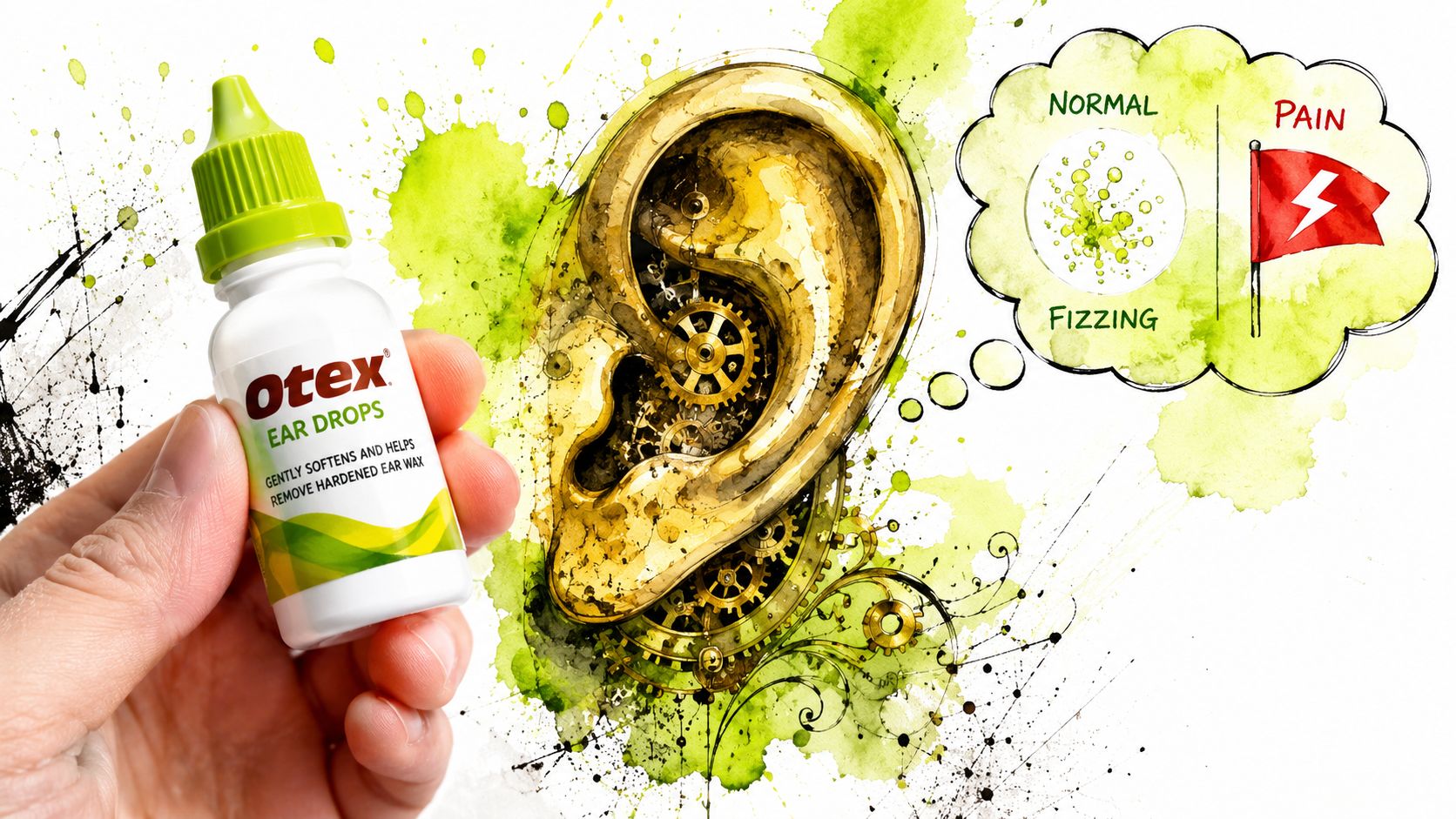
A little fizzing can happen when Otex meets hardened wax. You may hear bubbling or notice a strange sensation. Mild, short-lived awareness of the drops doesn't automatically mean something is wrong.
Sharp pain, worsening discomfort, discharge, or persistent dizziness needs attention. Stop using the drops and speak to a pharmacist, GP, or another suitable healthcare professional if these symptoms occur.
When not to use Otex
Don't use earwax treatments if you suspect a perforated eardrum, also called a hole or tear in the eardrum. UK guidance warns against using these treatments in that situation. [3]
You should also ask for advice before starting if you have:
- Ear pain or marked tenderness
- Fluid, pus, or blood from the ear
- A recent ear injury
- A known eardrum problem
- A current or suspected ear infection
- Symptoms that don't fit ordinary wax build-up
Otex treats wax. It doesn't treat an infection, repair an eardrum, or explain every type of hearing loss. If you have ear symptoms and aren't sure of the cause, speak to a healthcare professional about ear infections before using drops.
When to seek urgent help
Seek urgent medical advice if you develop sudden hearing loss, severe pain, significant dizziness, bleeding, or discharge. Get help promptly if symptoms become severe or rapidly worse.
Fizzing may be expected. Severe pain is not something to push through.
A sensitivity reaction may cause increasing irritation, swelling, or a rash around the ear. Stop the product and ask for advice if that happens. Don't restart it just because the original blockage remains.
If drops fail, a clinician may recommend another removal method. UK pathways note that irrigation or microsuction may be needed when drops don't work, but a professional should assess whether that option suits you. [3]
What to Do Next if Wax Persists and When to Get Help
After the recommended course, give the softened wax time to move. NHS guidance describes a longer clearance period for many people, with cases often resolving within about 2 weeks. [2] Don't keep extending treatment without advice, especially if your hearing remains reduced.
Speak to a pharmacist if the ear still feels blocked. They can help decide whether wax remains likely and whether you need a clinical examination.
The UK care pathway
NICE says adults with ear wax causing hearing loss, other symptoms, or difficulty examining the ear should have it removed in primary care or community ear-care services. People shouldn't wait for a specialist referral when symptomatic wax needs removal. [4]
NICE stopped recommending manual syringing in its hearing-loss guidance because of risks such as eardrum trauma and infection. Later UK parliamentary answers also reaffirmed that earwax treatment is available when wax causes hearing loss. [4]
A clinician may consider irrigation or microsuction after checking your ear. The right option depends on the wax, your symptoms, and the condition of the ear canal and eardrum. Don't attempt forceful flushing at home.
Before an appointment, tell the clinician:
- Which ear feels blocked
- How long symptoms have lasted
- How you used Otex
- Whether you had pain, discharge, or dizziness
- Whether you've had ear surgery or eardrum problems
Plain-English summary
- Otex softens hardened ear wax.
- Use up to 5 drops as directed.
- Keep your head tilted for several minutes.
- Repeat once or twice daily for at least 3 to 4 days.
- Don't use cotton wool or objects inside the ear.
- Stop and ask for help if warning symptoms appear.
- Persistent blockage may need irrigation or microsuction.
This article provides general information only. It isn't a substitute for personal medical advice, an examination, or the product leaflet.
Frequently asked questions
How long should I leave Otex ear drops in my ear?
Keep your head tilted for several minutes after applying the drops. NHS ear-care guidance often suggests keeping softening drops in place for about 5 to 10 minutes, so they can reach the wax effectively. [2]
How many Otex drops should I use?
The official UK leaflet says to instil up to 5 drops into the ear. Follow the leaflet and don't use extra drops to try to speed up clearance. [1]
How often should I use Otex?
The leaflet advises repeating the application once or twice daily for at least 3 to 4 days. Use the product consistently, but stop and ask for advice if symptoms worsen. [1]
Can I use cotton wool after Otex?
No. Cotton wool can absorb the drops instead of allowing them to soften the wax. Let excess liquid run out and wipe the outside of the ear with clean tissue. [2]
Is fizzing after Otex normal?
Otex may fizz or bubble as its active ingredient works on hardened wax. Stop using it and seek advice if you experience severe pain, worsening symptoms, discharge, or persistent dizziness.
Can I use Otex with a perforated eardrum?
You shouldn't use earwax treatments if you suspect a perforated eardrum. Ask a pharmacist or clinician for advice before putting anything into the ear. [3]
What if Otex doesn't clear the blockage?
Speak to a pharmacist first. If wax remains and causes hearing loss or other symptoms, primary care or community ear-care services may assess you for irrigation or microsuction. [4]
Can children use Otex?
The official patient leaflet states that Otex is suitable for adults, children, and older people. Check the product leaflet and ask a pharmacist for advice before treating a child. [1]
Can Otex treat an ear infection?
Otex is licensed as an aid to remove hardened ear wax, not as an infection treatment. Pain, discharge, or worsening symptoms should prompt medical advice before you use wax drops.
Suggested visual ideas
- Mechanism infographic: Use bright lime green, pale yellow-green, light grey, and ornate brass plaque overlays to show wax breaking into smaller pieces. Alt text: “Diagram showing Otex softening hardened ear wax inside the ear canal.”
- Application guide: Create a painterly, steampunk-inspired sequence showing head position, drop placement, and the waiting period. Alt text: “Person applying Otex ear drops while keeping the affected ear facing upwards.”
- Mistakes comparison: Use brass-framed panels for a rushed parent and a gym-goer using cotton wool. Alt text: “Common mistakes that can reduce the effectiveness of Otex ear drops.”
- Safety visual: Show a mechanical ear beside warning symbols for pain, discharge, dizziness, and suspected eardrum damage. Alt text: “Safety warning signs to check before using Otex ear drops.”
Suggested Medical Mojo internal links
- Online pharmacy services
- Ear infection support
- Patient consultation information
- Otomize ear spray
- How online treatment ordering works
Meta description: Learn how to use Otex ear drops safely, including dosing, retention time, common mistakes, side effects, and when to seek UK medical advice.
Byline: Written by the Medical Mojo health writing team.
Clinical review: Reviewed by a UK-registered pharmacist.
How this content was created: We used the official Otex patient leaflet, NHS ear-care guidance, NICE quality standards, and a UK clinical pathway. The content was checked for clear dosing, safe use, warning signs, and appropriate routes to care.
References
- Electronic Medicines Compendium. (n.d.) Otex ear drops patient information leaflet. Available at: https://www.medicines.org.uk/emc/product/299/pil
- Northern Care Alliance NHS Foundation Trust. (n.d.) ENT ear wax patient information. Available at: https://www.northerncarealliance.nhs.uk/patient-information/patient-leaflets/ent-ear-wax
- NHS Tayside. (n.d.) Ear wax clinical pathway. Available at: https://www.rightdecisions.scot.nhs.uk/nhs-tayside-refguide/specialist-surgery-and-specialist-services/ent/ear-wax/?topic=local-pathways
- National Institute for Health and Care Excellence. (n.d.) Earwax removal, quality statement 1. Available at: https://www.nice.org.uk/guidance/qs185/chapter/quality-statement-1-earwax-removal
If you're unsure whether wax is causing your blocked ear, Courier Pharmacy offers a confidential online assessment for relevant ear symptoms and treatment questions. Visit Courier Pharmacy to complete the consultation and get advice on the next safe step.


