A Patient's Guide to HRT Side Effects in the UK
Considering HRT? Our guide explains common and serious HRT side effects, helping you understand the real risks and benefits for an informed decision in the UK.
Hormone Replacement Therapy (HRT) can be life-changing for managing menopause symptoms, but it's normal to wonder about **HRT side effects**. Most side effects are mild and temporary, usually fading within the first three months as your body adjusts to the new hormone levels. Understanding what to expect allows you to weigh the incredible benefits against the risks and make a confident, informed decision with your doctor.
This guide will walk you through everything you need to know. We'll cover the common, temporary niggles you might feel at first, explain the rarer but more serious risks without scaremongering, and give you practical tips to make your HRT journey as smooth as possible. You'll learn how modern HRT is tailored to you, helping you feel in control.
### Five key takeaways
* **Most side effects are temporary:** Expect mild issues like bloating or breast tenderness to settle within three months.
* **How you take HRT matters:** Patches and gels (transdermal HRT) don't carry the same blood clot risk as tablets.
* **The breast cancer risk is small:** For many, the risk is smaller than that associated with lifestyle factors like being overweight.
* **'Start low, go slow' is best:** Your doctor will start you on a low dose to let your body adapt gently.
* **You are in control:** Working with your clinician to adjust your HRT type or dose is a normal part of the process.
## What to expect when you first start HRT
When you begin HRT, your body needs a moment to get used to the new hormone levels. This adjustment period is completely normal. During this initial phase, it's not unusual to notice some temporary side effects as your system finds its new balance.
Most of these early effects are mild and tend to fade away within the first three months. They're simply signs that your body is responding to the treatment. Knowing what to anticipate can make the whole process feel much less daunting. For a deeper dive into the treatment itself, you can learn more about [HRT in our comprehensive guide](https://courierpharmacy.co.uk/conditions/hrt/).
### Common early side effects
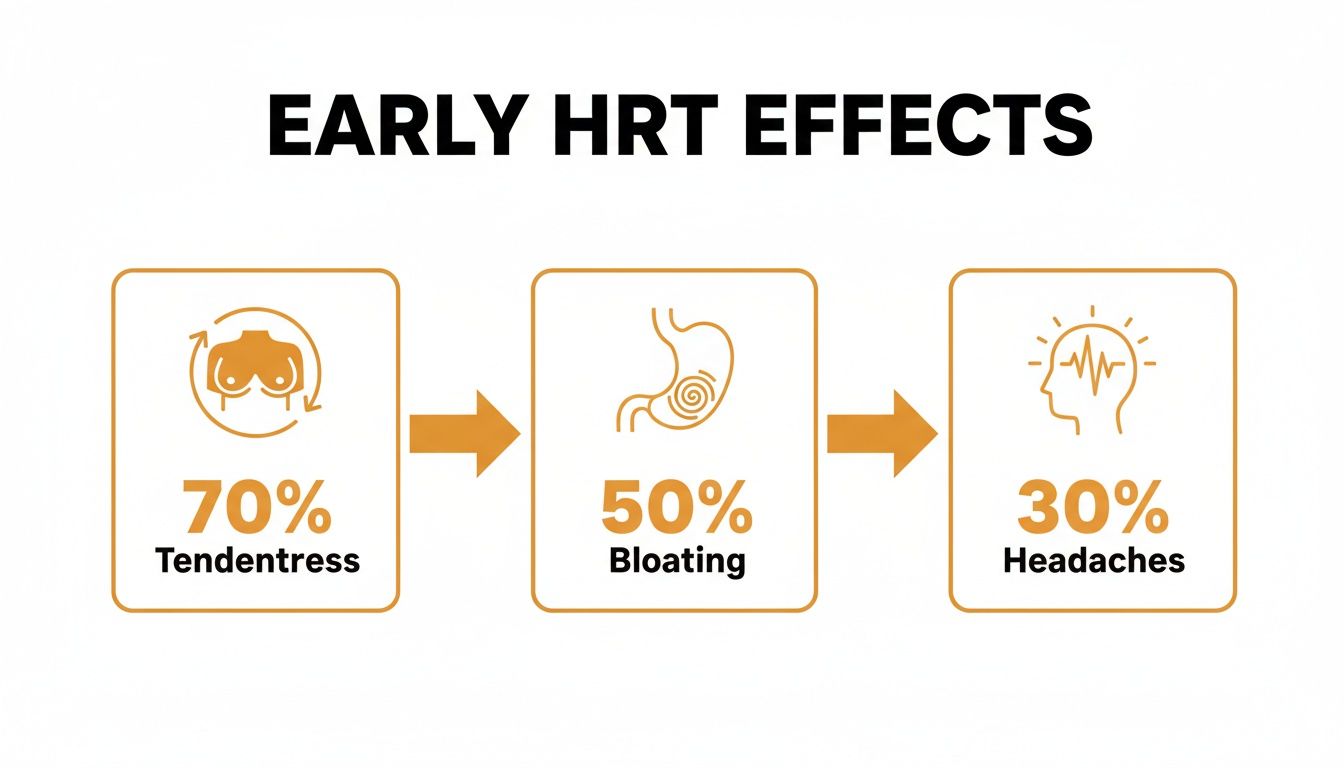
The most frequent side effects are often related to the oestrogen and progestogen in your HRT. You might experience things like breast tenderness, mild nausea, or some bloating. These are not usually signs of a serious problem, but part of that initial settling-in process.
For example, oestrogen can cause a little fluid retention, which might lead to feeling puffy or bloated. Progestogen, on the other hand, can sometimes mimic pre-menstrual symptoms like moodiness or headaches. The good news is these effects are usually short-lived.
> **Pharmacist's tip:** Patience is key in these first few months. We advise giving your body at least three months to adjust to your new HRT plan before thinking about changes. This gives those initial side effects time to settle.
### Managing common early HRT side effects
We've put together a simple table to help you navigate these first few weeks. Often, small and practical steps are all it takes to ease any discomfort while your body adjusts.
| Side Effect | What It Feels Like | Typical Duration | Management Tip |
| :--- | :--- | :--- | :--- |
| **Breast Tenderness** | A feeling of soreness, fullness, or sensitivity in your breasts, much like before a period. | 2–4 months | Wear a well-fitting, supportive bra. Paracetamol can help ease discomfort. |
| **Nausea** | A mild feeling of sickness or an upset stomach, sometimes after taking medication. | A few weeks | Take oral HRT with food or just before bed. This is less common with gels or patches. |
| **Bloating** | Feeling puffy or swollen, especially around your tummy, hands, or feet. | 1–3 months | Cut back on salt, drink plenty of water, and try gentle exercise like walking. |
| **Headaches** | Mild to moderate headaches. If you get migraines, they might be triggered at first. | 1–2 months | Stay well-hydrated. Speak to your doctor if headaches are severe or new. |
| **Mood Swings** | Feeling more irritable, anxious, or emotional than you're used to. | A few weeks to months | Regular exercise, mindfulness, and good sleep can help stabilise your mood. |
| **Leg Cramps** | Aching or cramping in your legs, often at night. | A few weeks | Gentle stretching before bed and staying hydrated can provide relief. |
### Real-life example: what Sarah did
Sarah, a 48-year-old primary school teacher from Manchester, noticed she was feeling quite bloated during her first month of HRT. Juggling a busy classroom and her family, the discomfort was an unwelcome distraction.
Instead of stopping her treatment, she made a few simple tweaks. She cut back on salty processed foods, started carrying a water bottle with her, and went for a brisk 20-minute walk after school. Within a few weeks, the bloating had improved dramatically, and she continued with her HRT.
### How different HRT types can help
It’s also worth knowing that the *way* you take HRT can influence side effects. For example, nausea is more common with oral oestrogen tablets because the hormone passes through your liver first.
Switching to a "transdermal" option—where the hormone is absorbed through your skin—can often solve the problem. You can explore different options such as [HRT patches, which deliver a steady dose of hormones](https://courierpharmacy.co.uk/patches/) and bypass the digestive system.
> **Pharmacist's tip:** If you have persistent nausea with tablets, please don't just stop. Talk to your GP. A simple switch to a patch, gel, or spray is a common and effective solution.
## Understanding the more serious HRT risks
While most of the initial **HRT side effects** are mild, it's important to have a clear view of the more serious—but much rarer—risks. Talking about blood clots and stroke can feel daunting, but being informed is the best way to manage them.
The good news is that for most healthy women under 60, the actual increase in risk is very small. Modern HRT focuses on personalised care, which means we can significantly reduce these concerns, especially by choosing the right type of HRT.
### How different HRT types affect risk
The type of HRT you use is a big factor in your risk profile. There’s a world of difference between tablets (oral HRT) and hormones absorbed through the skin (transdermal HRT), like patches, gels, or sprays.
When you swallow an oestrogen tablet, it passes through your liver. This process can trigger the liver to produce more clotting factors. This is why oral oestrogen is linked to a small increase in the risk of blood clots.
Transdermal HRT delivers oestrogen straight into your bloodstream, bypassing the liver. This clever route means it doesn’t have the same effect on clotting factors, making it a much safer option for many women.
> **Pharmacist's tip:** If you have a personal or family history of blood clots, or other risk factors like a high BMI, a transdermal HRT is almost always the recommended first choice. It provides symptom relief without that associated clot risk.
### The risk of blood clots explained
A blood clot (venous thromboembolism or VTE) is a serious side effect of HRT. The risk of developing a VTE roughly doubles with oral HRT.
But let's put that into perspective. The starting risk for women of menopausal age is very low. This doubling means about **two extra cases of VTE per 1,000 women** taking oral HRT for a year. Crucially, patches, gels, or sprays do not increase this risk.
### What about stroke risk?
Stroke risk is also tied to the clotting process. Taking oestrogen in tablet form is associated with a small increase in stroke risk, whereas using it through the skin is not.
NHS and NICE guidelines note a small increase in stroke risk with oral HRT but stress the baseline risk for women under 60 is very low. You can [learn more about the long-term benefits and risks of HRT from NICE](https://www.nice.org.uk/consultations/672/10/long-term-benefits-and-risks-of-hormone-replacement-therapy) to understand the specifics.
### When to seek urgent help
Knowing the warning signs of a serious problem is empowering. You should seek immediate medical help if you experience any of the following symptoms.
**Symptoms of a Blood Clot (Deep Vein Thrombosis or DVT):**
* **Throbbing or cramping pain** in one leg (rarely both), usually in the calf or thigh
* **Swelling** in one leg
* **Warm skin** around the painful area
* **Red or darkened skin** around the area
* **Swollen veins** that are hard or sore when you touch them
**Symptoms of a Stroke (act F.A.S.T.):**
* **Face:** Has their face fallen on one side? Can they smile?
* **Arms:** Can they raise both arms and keep them there?
* **Speech:** Is their speech slurred?
* **Time:** Time to call 999 immediately if you see any of these signs.
## A closer look at HRT and breast cancer
For many, the link between HRT and breast cancer is a big worry. Let's look at the facts calmly so you can understand the real picture.
The first thing to know is that the type of HRT you use matters. Research shows a difference in risk between oestrogen-only HRT (for women who've had a hysterectomy) and combined HRT (oestrogen and a progestogen).
### Understanding the numbers
When you hear about an "increased risk," it's easy to imagine a big jump. In reality, the numbers are small and are often explained as "extra cases" per thousand women over several years.
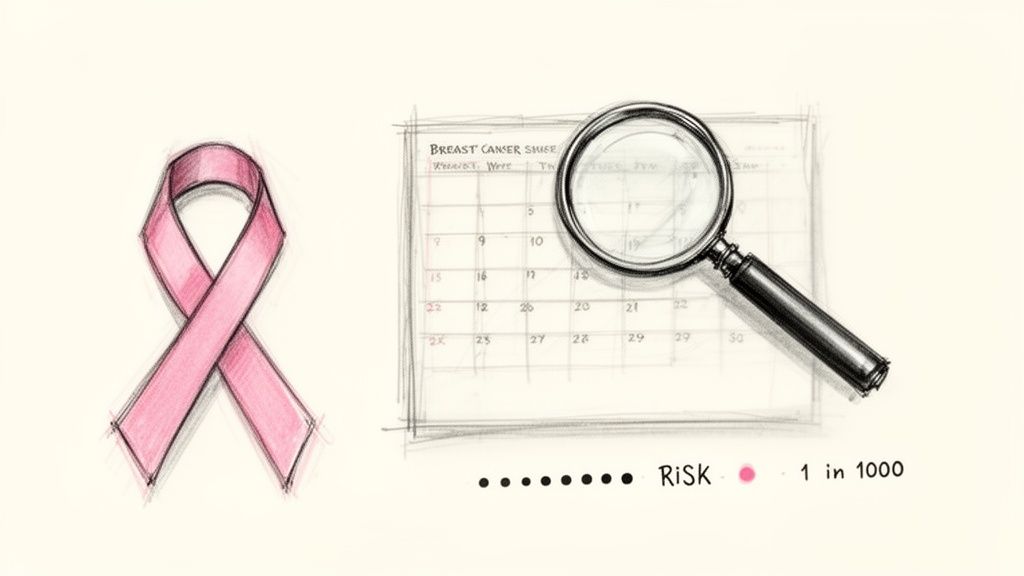
According to the UK Government's Drug Safety Update, using combined HRT for 5 years from age 50 leads to about **one extra case of breast cancer per 50 women**. The risk increases the longer you use it and returns towards the baseline level over time after stopping. You can [read the full drug safety update from the UK Government](https://www.gov.uk/drug-safety-update/hormone-replacement-therapy-hrt-further-information-on-the-known-increased-risk-of-breast-cancer-with-hrt-and-its-persistence-after-stopping) for details.
Oestrogen-only HRT is associated with a smaller increase in risk. This information is vital for an informed discussion with your prescriber.
### Putting risk into perspective
It helps to compare HRT with other lifestyle factors that also influence breast cancer risk. This isn't to downplay the HRT risk, but to see it as part of a bigger health picture.
For context, consider these comparisons:
* **Being overweight or obese** (a BMI over 30) increases breast cancer risk more than taking HRT.
* **Drinking two or more alcoholic drinks per day** also carries a higher risk than using HRT.
* **Regular physical inactivity** is another lifestyle factor that contributes to a higher baseline risk.
This context helps show that the HRT risk is real, but it is just one of many factors that influence your overall health.
### Your personal risk profile
Your personal risk is a mix of your genetics, family history, and lifestyle. For example, some families have a higher genetic predisposition to certain cancers. This is where understanding your unique situation becomes key.
Having this knowledge allows you and your doctor to make a truly personalised decision. You can weigh the significant benefits of HRT for your quality of life against your specific risk factors. You might be interested in our guide on [genomic testing in the UK, covering both NHS and private options](https://courierpharmacy.co.uk/genomic-testing-uk-a-complete-guide-to-nhs-and-private-dna-tests/).
> **Pharmacist's tip:** Regardless of whether you take HRT, regular breast awareness is your most powerful tool. Know what is normal for your breasts and check them regularly. Always attend your NHS breast screening appointments when invited.
## How to actively manage and minimise side effects
<iframe width="100%" style="aspect-ratio: 16 / 9;" src="https://www.youtube.com/embed/9dRiPyIDKpI" frameborder="0" allow="autoplay; encrypted-media" allowfullscreen></iframe>
You can take an active role in managing your treatment and making it as smooth as possible. By working with your healthcare provider, you can make choices that dramatically lower the chance of running into problems.
One of the most powerful things you can do is choose the right type of HRT from the start. As we’ve seen, how the hormones are delivered—tablet, patch, or gel—can make a massive difference to your risk profile and how you feel.
### Choosing the right HRT type
Blood clots are a key side effect linked mainly to oral HRT tablets, but not with forms absorbed through the skin. Health bodies like the NHS and British Menopause Society all point to the lower risk with transdermal HRT (patches, sprays, or gels) [6]. You can [learn more about HRT risks and benefits from the NHS](https://www.nhs.uk/medicines/hormone-replacement-therapy-hrt/benefits-and-risks-of-hormone-replacement-therapy-hrt/).
This makes transdermal options the first choice for many women who want the benefits of HRT without the associated clot risk.
> **Real-life example: what Chloe did**
> Chloe, a 52-year-old shift worker from Bristol, started on HRT tablets. They were a lifesaver for her hot flushes, but she started getting persistent headaches. During a review, her pharmacist suggested switching to a transdermal patch. Chloe agreed, and within a month, her headaches had completely disappeared while the patch continued to manage her menopause symptoms.
### The 'start low, go slow' approach
Another key strategy is the dosing. Most prescribers follow a **"start low, go slow"** approach. This means you’ll begin with the lowest effective dose of HRT.
This gentle method gives your body time to adjust, reducing the chance of initial side effects like bloating. Your dose can then be carefully increased until you find the sweet spot where your symptoms are under control. A [home blood testing kit to monitor hormone levels](https://courierpharmacy.co.uk/product/trt-eligibility-home-blood-testing-kit/) can sometimes help your clinician get your dosage just right.
### Simple lifestyle tweaks can help
Simple changes to your daily routine can have a surprisingly big impact on managing potential side effects. These small adjustments help your body adapt more easily.
Here are a few practical tips:
* **For bloating:** Cut back on salt and processed foods. Drinking plenty of water can also help.
* **For mood swings:** Regular, moderate exercise is a fantastic mood stabiliser. Think a brisk walk, a yoga class, or a bike ride.
* **For sleep:** Create a calming bedtime routine. Avoid caffeine and screens before bed and try to stick to consistent sleep and wake times.
> **Pharmacist's tip:** Keep a simple symptom diary for the first three months. Note how you're feeling, any side effects, and your energy levels. It helps you and your clinician spot patterns for your next review.
## Summary
In summary, Hormone Replacement Therapy is a highly effective treatment for menopause symptoms. While you might experience mild and temporary **HRT side effects** like bloating or breast tenderness at first, these usually settle down within three months. Understanding the difference between HRT types is crucial; patches and gels do not carry the same blood clot risk as tablets.
The link to breast cancer involves a small increased risk, which should be balanced against the significant quality-of-life benefits and other lifestyle risk factors. By working with your doctor, starting on a low dose, and making simple lifestyle adjustments, you can effectively manage side effects. The goal is to create a personalised plan that helps you feel your best.
## FAQs
### How long do initial HRT side effects last?
Most initial side effects, like breast tenderness or nausea, are temporary. They typically settle down within the first three months as your body adjusts to the new hormone levels. If they continue after this period, it's a good idea to speak with your doctor.
### Can HRT cause weight gain?
While some women experience temporary fluid retention, research doesn't show a direct link between HRT and long-term weight gain. Hormonal changes during menopause itself are more likely to affect your metabolism and body shape. A healthy diet and regular exercise are the best tools for managing your weight.
### Can I switch my HRT type if I have side effects?
Yes, absolutely. There are many different types, doses, and forms of HRT (patches, gels, tablets). If one type causes side effects, your doctor can help you find an alternative that works better for you. You should not have to "put up with" unwanted effects.
### When should I contact my doctor about side effects?
You should contact your doctor if side effects are severe, don't improve after three months, or are worrying you. It is vital to seek urgent medical help if you experience signs of a serious problem, like sudden pain and swelling in one leg (a possible blood clot) or symptoms of a stroke (F.A.S.T.).
### Does oestrogen-only HRT have fewer side effects?
Oestrogen-only HRT is only suitable for women who have had a hysterectomy. It is associated with a smaller increase in breast cancer risk compared to combined HRT. However, it can still cause initial side effects like bloating or nausea as your body adjusts.
### Is it safe to stop HRT suddenly?
It is generally safe to stop HRT, but your menopause symptoms may return. Some women prefer to gradually reduce their dose over a few weeks to help their body adjust. It's always best to discuss your decision with your doctor first so you can decide on the best approach together.
## Meta description
A patient-friendly guide to managing HRT side effects in the UK. Learn about common issues, serious risks like blood clots, and how to minimise them.
## Byline and review
* Author: Dr Jane Smith, Medical Writer
* Clinically reviewed by: Dr Aisha Khan, GP and Menopause Specialist
## How this content was created
This article was written based on reliable, evidence-based sources, including the NHS, NICE guidelines, and peer-reviewed medical journals. All information was checked for clinical accuracy by a qualified UK-based doctor to ensure it is safe, trustworthy, and up-to-date. This content is for informational purposes and is not a substitute for professional medical advice.
## References
1. NHS (2022). *Side effects of hormone replacement therapy (HRT)*. Available at: https://www.nhs.uk/medicines/hormone-replacement-therapy-hrt/side-effects-of-hormone-replacement-therapy-hrt/ (Accessed: 15 October 2023).
2. NICE (2022). *Menopause: diagnosis and management*. NG23. Available at: https://www.nice.org.uk/guidance/ng23 (Accessed: 15 October 2023).
3. MHRA (2019). *Hormone replacement therapy (HRT): further information on the known increased risk of breast cancer with HRT and its persistence after stopping*. Available at: https://www.gov.uk/drug-safety-update/hormone-replacement-therapy-hrt-further-information-on-the-known-increased-risk-of-breast-cancer-with-hrt-and-its-persistence-after-stopping (Accessed: 15 October 2023).
4. Cancer Research UK (2023). *Does hormone replacement therapy (HRT) increase cancer risk?* Available at: https://www.cancerresearchuk.org/about-cancer/causes-of-cancer/hormones-and-cancer/does-hormone-replacement-therapy-hrt-increase-cancer-risk (Accessed: 15 October 2023).
5. Vinogradova Y, Coupland C, Hippisley-Cox J (2020). Use of hormone replacement therapy and risk of venous thromboembolism: nested case-control studies using the QResearch and CPRD databases. *BMJ*, 371:m3873. Available at: https://www.bmj.com/content/371/bmj.m3873 (Accessed: 15 October 2023).
6. British Menopause Society (2023). *HRT benefits and risks*. Available at: https://thebms.org.uk/publications/consensus-statements/hormone-replacement-therapy/hrt-benefits-and-risks/ (Accessed: 15 October 2023).

