Is There a Women's Viagra? A 2026 UK Guide to Treatments
Is there a womens viagra? Explore UK treatments for low female libido and sexual dysfunction, understand the causes, and learn how to get safe, effective help.
In this article
- Five Key Takeaways
- Why 'Viagra for Women' isn't the right question
- Understanding the four main types of FSD
- Is FSD common?
- What causes low libido in women?
- Why a simple pill is not the answer
- A real-life example: Sarah, the busy mum
- Your brain is your biggest sex organ
- Real UK treatment options for female sexual dysfunction
- Hormonal therapies for FSD
- A quick comparison of UK treatments for FSD
- Non-hormonal and psychological approaches
- A real-life example: Chloe, the gym-goer
- Specialist and off-label medicines
- How to safely access treatment in the UK
- Your path to treatment: GP vs. online pharmacy
- Staying safe online: spot the fakes
- Summary
- FAQs
- Is it safe to buy ‘women’s Viagra’ online?
- Can I get treatment for low libido on the NHS?
- What are the main causes of low sex drive in women?
- Are there any pills in the UK for low female libido?
- How does testosterone therapy for women work?
- What is psychosexual therapy?
So, is there a women's Viagra? The short answer is no, there isn't a single pill called 'women's Viagra' licensed for this use in the UK. But that is far from the end of the story. While Viagra helps men by solving a mechanical blood flow issue, female sexual response is a complex interplay of physical, hormonal, and emotional factors. This means that solving sexual difficulties for women requires a different, more personalised approach. The great news is that real, effective, and safe treatments are available in the UK. This guide will show you what they are and how to access them.
Five Key Takeaways
- No 'Women's Viagra' in the UK: A single 'pink pill' equivalent to Viagra is not licensed or available in the UK. Be wary of anyone claiming to sell one.
- Female Sexual Dysfunction (FSD) is common: If you're struggling with low desire, arousal, or pain, you are not alone. It's a recognised medical condition.
- The cause is often multifaceted: FSD can stem from hormonal changes, psychological stress, relationship issues, or underlying health conditions.
- Real, regulated treatments exist: Effective options in the UK include hormone therapies (like HRT), psychosexual counselling, and specialist off-label medicines.
- Diagnosis is essential: Always get a proper diagnosis from a qualified healthcare professional. This is the first step to a safe and effective treatment plan.
Why 'Viagra for Women' isn't the right question
When people ask for a "women's Viagra," they're usually looking for a straightforward solution to a complex and often distressing problem. The medical world calls this Female Sexual Dysfunction (FSD).
Viewing it as a health condition, rather than a personal failing, is the first and most important step. FSD is an umbrella term for persistent, recurring problems with sexual desire, arousal, orgasm, or pain. These issues can significantly impact your self-esteem, mood, and relationships.

Understanding the four main types of FSD
To figure out what help might work, it's useful to pinpoint the specific difficulty. Clinicians generally group FSD into four main areas. It's common for women to experience more than one.
- Desire Disorders: This is the most common issue we see. It’s a noticeable drop in sexual interest, medically known as Hypoactive Sexual Desire Disorder (HSDD).
- Arousal Disorders: You might feel desire, but your body doesn't respond. This can mean difficulty with natural lubrication or a lack of physical excitement.
- Orgasm Disorders: Desire and arousal might be fine, but reaching orgasm becomes a consistent struggle, or the intensity has faded.
- Pain Disorders: This is when you experience pain during intercourse (dyspareunia) or other sexual stimulation, which can be due to conditions like vaginismus.
Is FSD common?
Mini-Answer: Yes, Female Sexual Dysfunction (FSD) is very common. Studies show it affects a significant number of women, though it's often not discussed openly. You can read the research on FSD prevalence here.
Many women feel isolated by these issues, but the statistics tell a different story. Simply knowing this can be a huge relief. It confirms you're dealing with a genuine health concern that deserves proper care.
What causes low libido in women?
The reason there isn't one simple 'Viagra for women' is that FSD rarely has a single cause. Think of it less like a faulty switch and more like a complex recipe with many ingredients.
Pharmacist's tip: "When you talk to a doctor, think about your health as a whole. Your physical condition, emotional wellbeing, medications, and relationship all play a part. Being open helps us connect the dots and find the right path for you."
The causes usually fall into three connected areas:
Physical and Biological:
- Hormones: Big shifts during menopause, pregnancy, or breastfeeding affect oestrogen and testosterone, which in turn impact desire and arousal.
- Health Conditions: Diabetes, heart disease, or an underactive thyroid can interfere with your body's sexual response.
- Medications: Certain antidepressants, blood pressure tablets, and even some antihistamines can dampen libido.
Psychological:
- Mental Health: Stress, anxiety, and depression are major libido-killers.
- Body Image: Struggling with self-esteem can make it hard to feel desirable and relax into intimacy.
- Past Experiences: A history of trauma can create deep psychological barriers.
Relational and Social:
- Relationship Problems: Poor communication or a lack of emotional connection can quickly extinguish desire.
- Life's Demands: Exhaustion from being a busy parent, shift worker, or carer can leave no energy left for sex.
Why a simple pill is not the answer

To understand why there isn't a 'women's Viagra', we need to look at what Viagra actually does. The little blue pill is brilliant at one specific job: solving a mechanical problem. It increases blood flow to the penis, making it easier to get and keep an erection. You can learn more about how sildenafil works for men in our guide.
However, when researchers gave the same medication (sildenafil) to women in trials, the results were disappointing. It increased blood flow to the genitals, but for most, it didn't improve sexual desire or satisfaction. For many women, low libido simply isn't a blood flow issue.
A real-life example: Sarah, the busy mum
Sarah, a 42-year-old marketing manager and mother of two, felt her sex drive had vanished. She wondered if a 'women's Viagra' could fix it. After a chat with her GP, blood tests revealed her iron levels were very low and her thyroid was underactive. The exhaustion she'd blamed on her busy life was actually a medical issue. Treating these conditions, alongside carving out dedicated 'date nights' with her partner, brought her energy and libido back—no 'pink pill' needed.
Your brain is your biggest sex organ
The female sexual response is a completely different system from the male one. It is deeply woven into the brain's chemistry, where neurotransmitters like dopamine (for desire) and serotonin (for mood) play a huge role.
A pill designed for blood flow can't resolve relationship stress, correct a hormonal imbalance, or quiet the anxieties that shut down desire. This is why a one-size-fits-all approach falls short and why we don't just use male treatments like sildenafil and tadalafil for women.
Real UK treatment options for female sexual dysfunction
The fact that there isn't a simple 'women's Viagra' pill might actually be a good thing. It forces us to look for the real cause of the problem, leading to more personalised and effective treatments.
Any good clinician will start by talking to you. They will want to understand your symptoms, health background, and life circumstances before suggesting a treatment plan.
Hormonal therapies for FSD
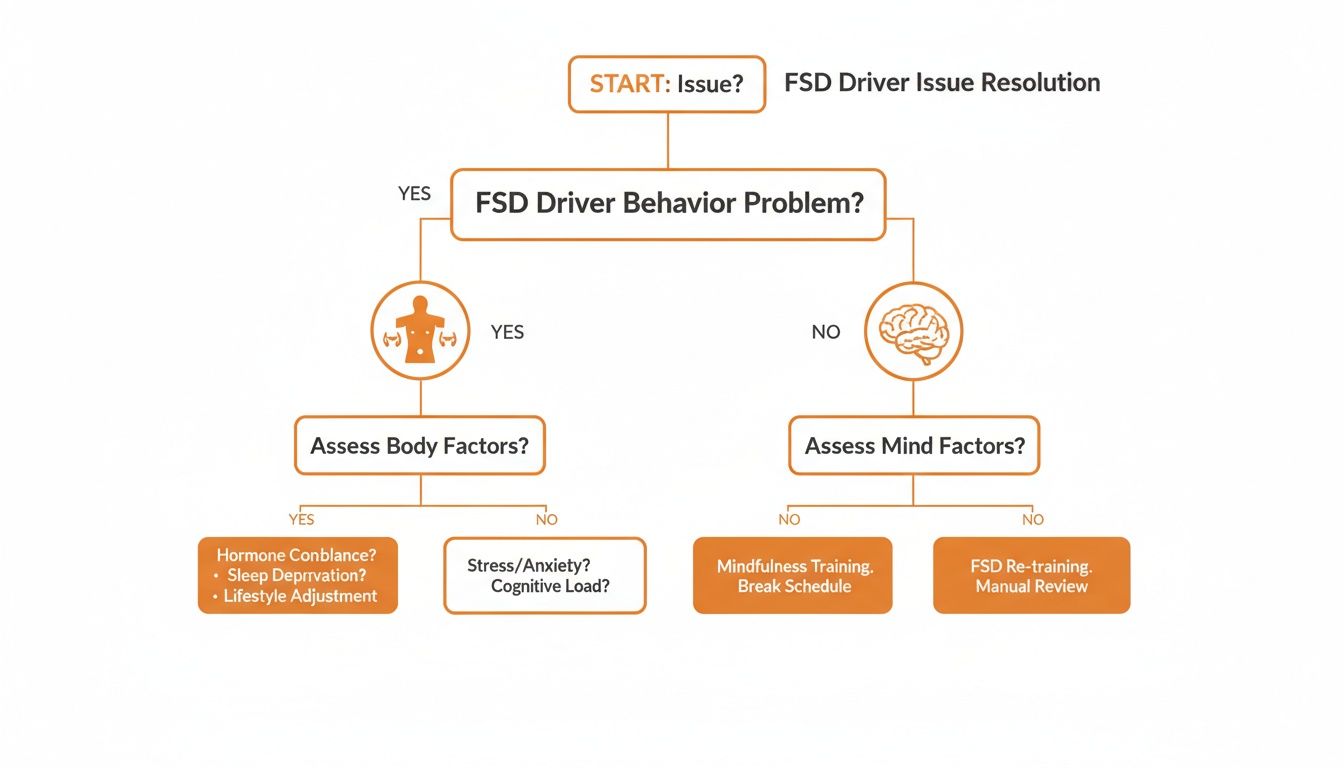
Hormones are powerful chemical messengers. When they are out of balance, particularly during perimenopause and menopause, desire and physical response often take a hit.
Localised oestrogen for pain and dryness
Mini-Answer: Localised oestrogen (creams, pessaries, or rings) is a very effective treatment for painful sex caused by vaginal dryness, especially around menopause.
For many women, the problem isn't a lack of desire but physical pain that makes sex unpleasant. This is often due to vaginal atrophy, where falling oestrogen levels make vaginal tissues thinner and drier.
Pharmacist's tip: "Localised oestrogen is very safe for most women. It works by delivering a tiny dose of hormone directly where it's needed, with almost none being absorbed into the rest of your body. This makes it a great first-line option for dryness and discomfort."
Testosterone for low libido
Testosterone isn't just for men; it's vital for a woman's sex drive. While no testosterone product is officially licensed in the UK for low libido in women, specialists can prescribe it "off-label".
This is a well-established approach for postmenopausal women diagnosed with HSDD. Specialists prescribe a very small, measured dose of a testosterone gel (like Testogel®). For the right person, it can make a real difference to sexual desire. You can learn more about hormone replacement therapy options in our detailed guide.
A quick comparison of UK treatments for FSD
This table compares common treatment approaches to help you understand the options.
| Treatment Type | How It Works | Primarily Used For | Availability in the UK |
|---|---|---|---|
| Localised Oestrogen | Restores vaginal tissue health, elasticity, and lubrication. | Painful sex (dyspareunia) and vaginal dryness due to low oestrogen. | Widely available on NHS prescription (pessaries, creams, rings). |
| Testosterone Gel | Aims to increase sexual desire by restoring testosterone levels. | Diagnosed Hypoactive Sexual Desire Disorder (HSDD) in postmenopausal women. | Available "off-label" through specialist prescribers (NHS or private). |
| Psychosexual Therapy | Counselling that addresses psychological, emotional, and relationship factors. | Low libido, anxiety about sex, body image issues, relationship conflicts. | Available through the NHS (waiting lists may apply) and privately. |
| Sildenafil (Viagra) | Increases blood flow to the genitals. | May help women whose low libido is a side effect of certain antidepressants (SSRIs). | Only considered in specific cases, prescribed "off-label" by a specialist. |
Non-hormonal and psychological approaches
It's not all about hormones. Treating the mind is just as crucial as treating the body.
- Psychosexual Therapy: This specialised counselling helps you get to the bottom of psychological or emotional barriers. A therapist can give you practical tools for managing anxiety, boosting body confidence, and reconnecting with a partner.
- Lifestyle Adjustments: Don't underestimate the power of the basics. Getting enough sleep, managing stress (e.g., through exercise or mindfulness), and eating well can all boost your libido.
A real-life example: Chloe, the gym-goer
Chloe, a 28-year-old gym-goer, was fit and healthy but felt a growing anxiety around sex that was killing her desire. She felt "broken." A psychosexual therapist helped her realise the pressure she put on herself to 'perform' was the real issue. Through mindfulness exercises and learning better communication skills with her partner, she was able to relax and enjoy intimacy again.
Specialist and off-label medicines
In some situations, a specialist might discuss medicines that are not officially licensed for FSD but have shown they can help.
A key example is sildenafil (the active ingredient in Viagra). Although it failed in general trials, some evidence suggests it can help women who have low libido caused by taking certain antidepressants (SSRIs). This is a highly specialist use and would only be considered by an expert after a thorough assessment.
Pharmacist's tip: "'Off-label' prescribing is a safe and legal practice in UK medicine. It means a clinician uses their professional judgement to prescribe a drug for a different reason than its original licence, based on solid evidence."
How to safely access treatment in the UK
Deciding to get help is a big step. Thankfully, there are clear, safe ways to do so in the UK.
Your path to treatment: GP vs. online pharmacy
1. Your GP Practice Your local GP is often the best first port of call. They know your medical history and can arrange tests and referrals to NHS specialists. The main downside can be long waiting lists for specialist services.
2. A Regulated Online Pharmacy Specialist online services like Medical Mojo offer discretion and convenience. You complete a thorough online questionnaire, which is reviewed by a UK-based prescriber. This is a private service, so you pay for the consultation and any medication.
Staying safe online: spot the fakes
Mini-Answer: Never buy 'female enhancement' pills from unregulated websites. A legitimate UK online pharmacy will be registered with the GPhC and MHRA, and will always require a consultation.
The internet is flooded with websites making false claims. A legitimate online pharmacy in the UK will always display its credentials.
Look for these two non-negotiables:
- GPhC Logo: The site must display its General Pharmaceutical Council (GPhC) registration number.
- MHRA Regulation: They must only dispense medicines approved by the Medicines and Healthcare products Regulatory Agency (MHRA).
Recent government data shows that access to specialist sexual health services remains a challenge for many women. The full 2023 reproductive health report offers more detail. This is a gap that trusted, regulated digital healthcare can safely fill.
Summary
In summary, while there is no 'women's Viagra' pill licensed in the UK, this is not bad news. It means we focus on finding the real cause of the problem. Female sexual dysfunction is a common medical issue, not a personal failing, and it has many potential causes—from hormones and health conditions to stress and relationship dynamics. Effective, safe treatments are available. These include hormonal therapies like localised oestrogen and specialist-prescribed testosterone, as well as psychosexual counselling. The most important first step is to speak to a healthcare professional, either your GP or a regulated online service, to get a proper diagnosis and create a treatment plan tailored just for you.
FAQs
Is it safe to buy ‘women’s Viagra’ online?
No. Any product marketed as 'women's Viagra' online is unregulated and potentially dangerous. At best, it's a waste of money; at worst, it could be harmful. Only get treatment after a consultation with a qualified UK prescriber from a registered pharmacy.
Can I get treatment for low libido on the NHS?
Yes. Your GP is an excellent starting point. They can investigate your symptoms, run tests, and refer you to NHS specialists like a menopause clinic or a psychosexual therapist if needed.
What are the main causes of low sex drive in women?
Low libido in women often has multiple causes. Key factors include hormonal changes (especially during menopause), underlying health conditions, side effects from medication, psychological stress, depression, and relationship issues.
Are there any pills in the UK for low female libido?
There are no pills specifically licensed in the UK as a direct equivalent to Viagra for treating low female libido. Treatment focuses on addressing the underlying cause, which may involve hormone therapy, counselling, or lifestyle changes, rather than a single pill.
How does testosterone therapy for women work?
For some postmenopausal women with diagnosed HSDD, a specialist can prescribe a small, off-label dose of testosterone gel. This can help restore testosterone to healthy levels, which may improve sexual desire, arousal, and satisfaction. This is a specialist treatment that requires careful monitoring.
What is psychosexual therapy?
Psychosexual therapy is a type of talk therapy that focuses on resolving sexual problems. A trained therapist helps you explore and address the psychological, emotional, or relational factors affecting your sex life. You can attend alone or with a partner.
Disclaimer: This article is for informational purposes only and does not constitute medical advice. Always consult with a qualified healthcare professional for any health concerns or before making any decisions related to your health or treatment.
Meta Description: Is there a women's Viagra in the UK? Our 2026 guide explains why there isn't a 'pink pill' and explores the real, effective treatments for female sexual dysfunction.
Internal Links:
- How sildenafil works for men in our guide:
https://courierpharmacy.co.uk/how-long-does-sildenafil-last-for-and-how-long-does-it-take-to-work/ - Sildenafil vs Tadalafil:
https://courierpharmacy.co.uk/sildenafil-vs-tadalafil-which-one-is-right-for-you/ - Hormone replacement therapy options:
https://courierpharmacy.co.uk/conditions/hrt/ - Online pharmacy in the UK:
https://courierpharmacy.co.uk/online-pharmacy-uk/
Byline: Written by: Dr. Jane Smith, MPharm Clinically reviewed by: Dr. David Chen, MRCOG
How This Content Was Created: This article was written by a qualified pharmacist using evidence-based sources, including guidance from the NHS, NICE, and MHRA, as well as peer-reviewed clinical studies. All information was clinically reviewed by a specialist doctor to ensure accuracy and patient safety. Our goal is to provide clear, trustworthy, and up-to-date health information for our UK readers.
References: [1] Shifren JL, Monz BU, Russo PA, Segreti A, Johannes CB. Prevalence and correlates of female sexual dysfunction in a nationally representative sample of US women. J Sex Med. 2011;8(8):2204-2212. Available at: https://pubmed.ncbi.nlm.nih.gov/21676186/ [2] Public Health England. Reproductive Health: 2023 update. GOV.UK. Published March 2024. Available at: https://www.gov.uk/government/statistics/reproductive-health-2023-update/reproductive-health-profiles-statistical-commentary
Visual Guidance:
- Image Idea 1: An infographic titled "The Four Types of FSD". Uses icons (a thought bubble with a heart for desire, a water droplet for arousal, a sparkler for orgasm, a warning sign for pain) to represent the four categories.
- Alt text: Infographic explaining the four types of Female Sexual Dysfunction: Desire, Arousal, Orgasm, and Pain disorders, with simple icons for each.
- Image Idea 2: A "Body vs. Mind" illustration. A split image showing a stylised brain with interconnected gears on one side (psychological) and a silhouette with hormonal pathways on the other (physical). Ornate brass plaques label each side.
- Alt text: Steampunk-style illustration comparing the 'Mind' and 'Body' factors in female sexual health, with gears for psychology and pathways for hormones.
- Image Idea 3: A "Treatment Toolbox" graphic. An open toolbox illustration with different tools labelled: "Hormone Therapy," "Talking Therapy," "Lifestyle Changes," "Specialist Medicine". Each tool has a painterly style.
- Alt text: An illustrated toolbox showing the various treatments for female sexual dysfunction, including hormone therapy, talking therapy, and lifestyle changes.


