Light Pink Discharge Causes and When to Get Help
Light pink discharge is usually a little blood in mucus. See common UK causes, pregnancy red flags, tests, treatments and when to call a GP or NHS 111.

Light pink discharge is a small amount of blood mixed into mucus, not a diagnosis. The safe next step depends on timing, pregnancy possibility, pain and age. Use the triage table below to match your situation to the right UK service.
Can a colour really tell you whether something is wrong? Not on its own. A pink streak near a period has a different meaning from new spotting during pregnancy or after menopause. It's understandable to feel worried, but the amount, timing and other symptoms give better clues than colour alone. Here's how to judge the urgency, understand likely causes and prepare for a useful conversation with a clinician.
SEO brief
- Primary keyword: light pink discharge
- Secondary keywords: vaginal spotting, pink discharge during pregnancy, bleeding after sex, post-menopausal bleeding, cervical screening
- Search intent: Understand the symptom and choose the right level of care.
- Target reader: UK adults with new or recurring blood-stained discharge.
- Product/service mention: Pharmacy assessment and treatment only where appropriate.
- Internal links available: Relevant Courier Pharmacy condition pages supplied. No Medical Mojo page URLs supplied, so none have been assumed.
When light pink discharge needs same-day care
What to do about light pink discharge by situation
Choose the row that best matches today's symptoms, not just the colour. If several rows apply, follow the most urgent action.
| Situation | Often means | Action in the UK |
|---|---|---|
| Mid-cycle, no pain, pregnancy unlikely | A little blood in fertile mucus around ovulation | Note the cycle day and see a GP if it returns |
| Start or end of a period | Ordinary menstrual spotting | Track it and get checked if bleeding happens between periods |
| After sex, especially in younger adults or while using contraception | Infection or a contraception issue more often than cancer | Book a GP visit and don't wait for a smear |
| Possible pregnancy, light pink loss, no pain | Spotting that may be harmless or an early pregnancy problem | Take a pregnancy test and contact a GP, midwife or NHS 111 |
| Very early pregnancy, bleeding, no pain, no known ectopic risk factors | A clinician may recommend monitoring with a clear safety net | Seek advice before choosing this route; follow the repeat-test plan |
| Unexplained bleeding beyond early pregnancy | A problem that needs maternity review | Contact your midwife or maternity unit the same day |
| Late pregnancy, pink sticky jelly-like mucus | The show as the mucus plug comes away | Follow maternity advice and call if you're unsure |
| Any unexplained pink loss after menopause | Post-menopausal bleeding until a clinician checks the cause | Contact a GP promptly; an urgent referral may be needed |
| Itch, smell, soreness or pain when passing urine | Possible thrush, bacterial vaginosis or a sexually transmitted infection | See a GP or sexual health clinic for assessment and suitable tests |
| A pad soaks quickly, severe pain, shoulder-tip pain, dizziness or fainting | Heavy bleeding or possible ectopic pregnancy | Call 999 or go to A&E immediately |
Why pain and pregnancy change the action
The Royal College of Obstetricians and Gynaecologists guidance on early pregnancy bleeding explains that bleeding or cramps don't always mean something is wrong, but they need medical advice. They can signal miscarriage or another pregnancy complication. [1]
An ectopic pregnancy develops outside the womb. It can cause internal bleeding, sometimes with little visible vaginal blood. Don't wait for a positive pregnancy test if you have severe pain, shoulder-tip pain, dizziness or fainting.
If you feel faint or unwell, don't drive yourself. Ask someone to stay with you while you get help.
When brief monitoring may be reasonable
A single, slight episode can have a harmless explanation. Brief monitoring is reasonable only when you've ruled out pregnancy, periods haven't stopped, and there's no pain, unusual smell or repeat bleeding.
If the discharge returns, arrange a GP appointment. Don't keep restarting a watch-and-wait approach each time.
Practical rule: Small amounts don't always mean low risk. Pregnancy, menopause and associated symptoms matter more than the shade of pink.
What turns normal mucus light pink
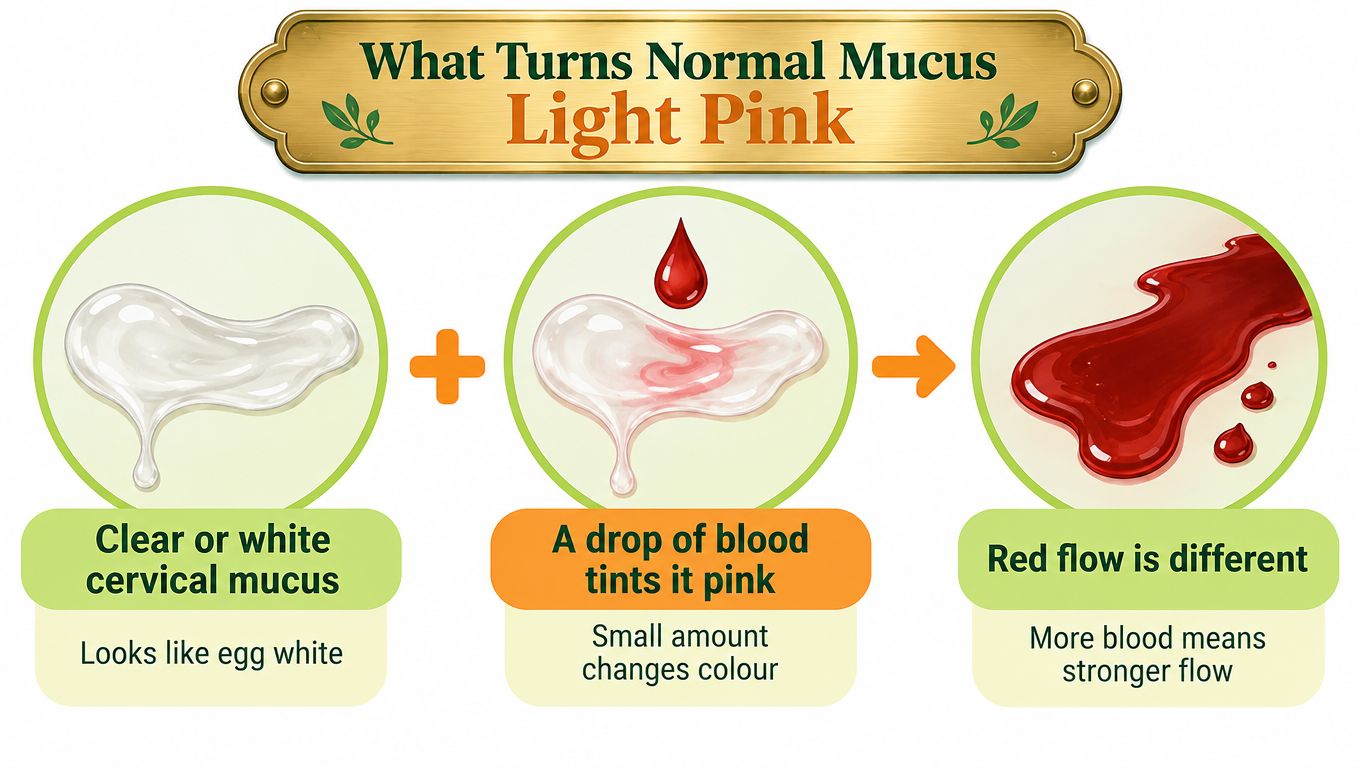
Light pink discharge can look like a drop of squash stirred into water. A small amount changes the colour of the whole mixture. Blood can tint otherwise clear or white mucus in the same way.
Cervical mucus sometimes looks slippery and stretchy, like egg white. At other times, it looks creamy or sticky. These normal changes make a colour-only diagnosis unreliable.
The diagram shows how a small amount of blood changes mucus.
Spotting isn't the same as a flow
The NHS guide to vaginal discharge in pregnancy describes spots of pink, red or brown blood as spotting. Larger amounts that need a pad count as light bleeding. [2]
Brown discharge often contains blood that has taken longer to leave the body. It isn't automatically safer than pink or red blood. The symptoms around it still matter.
What is light pink discharge? It's vaginal or cervical mucus containing a small amount of blood. It describes what you see, not why it happened.
What to write down
A short phone note can help more than a long search through colour charts. Record:
- Timing: Your last period, cycle day and when the discharge began.
- Pregnancy possibility: Recent sex, contraception use and any test result.
- Amount: A streak on tissue, marks on underwear or blood needing a pad.
- Pattern: Whether it follows sex or changes from pink to brown.
- Other symptoms: Pain, smell, itch, soreness or pain when passing urine.
- Medicine changes: A new pill, coil, HRT product or other medicine.
Normal discharge is often clear or white. It can increase around ovulation, pregnancy, sexual activity or contraceptive use, according to the NHS vaginal discharge guide. A change alongside bleeding, pain, soreness or an unpleasant smell needs assessment. [3]
If you use medicines for period delay, include their names and dates in your notes. Don't assume that changing a period explains every new symptom.
Five key takeaways
- Treat the symptom, not the colour: Pink doesn't name a disease.
- Keep context in view: A light, isolated episode may be harmless.
- Check pregnancy possibility: It lowers the threshold for seeking advice.
- Take menopause seriously: New blood-stained discharge needs review.
- Don't rely on screening: A routine smear isn't a test for current symptoms.
Causes that are not pregnancy
Periods, ovulation and contraception
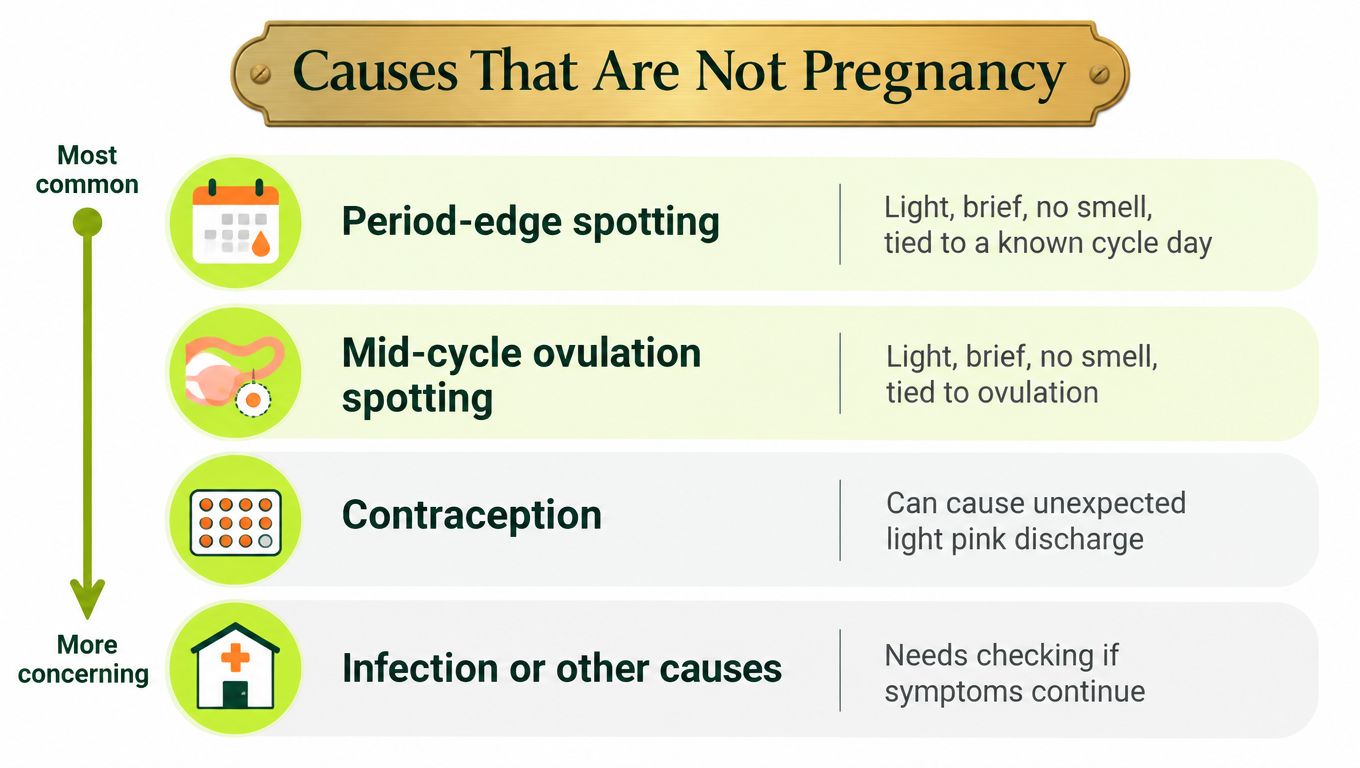
At the start or end of a period, a little menstrual blood can mix with mucus. Mid-cycle vaginal spotting can also happen around ovulation. Timing provides a clue, but it doesn't prove the cause.
Contraception can cause breakthrough spotting. This may happen after starting or changing a combined pill, progestogen-only pill, implant, injection or hormonal coil. Missed pills can also disrupt a bleeding pattern.
Don't stop contraception on your own just because you notice spotting. Check missed-dose advice and arrange a review if bleeding persists or troubles you.
This chart separates cycle-related spotting from causes that may need testing.
Infection and sensitive tissue
Different symptoms can suggest different causes:
- Thrush: Itch, soreness and thick white discharge are typical clues. Pink blood isn't a defining feature.
- Bacterial vaginosis: A fishy smell and thin discharge are more typical. Read about bacterial vaginosis, but don't use smell alone to diagnose it.
- Sexually transmitted infections: Chlamydia and gonorrhoea can cause spotting, pelvic pain or pain when passing urine. They can also cause few symptoms.
- Surface changes: Dry tissue, a cervical polyp or cervical ectropion can bleed with contact. Ectropion means delicate cells sit on the outer surface of the cervix.
The NHS cervical-screening sample-taker guidance notes that most bleeding after sex isn't due to cancer. In younger people, infection or contraception-related problems are more likely explanations. [4]
That's reassuring, but it isn't a reason to ignore unexplained bleeding. A GP may need to examine the vagina and cervix to identify the source.
Why a smear isn't the next step
Cervical screening helps prevent cancer. It doesn't replace an examination when you have symptoms.
NHS cervical-screening information estimates that England's programme prevents 70% of cervical-cancer deaths. However, symptomatic patients shouldn't wait for their next invitation. [5]
An up-to-date result can't explain a new discharge or rule out every cause. Book a GP appointment for persistent, unexplained, between-period or post-sex bleeding.
A reassuring screening result and a new symptom can both be real. The symptom still deserves its own assessment.
Colour alone can't sort these causes. Timing, testing and sometimes an examination can.
Light pink discharge during pregnancy
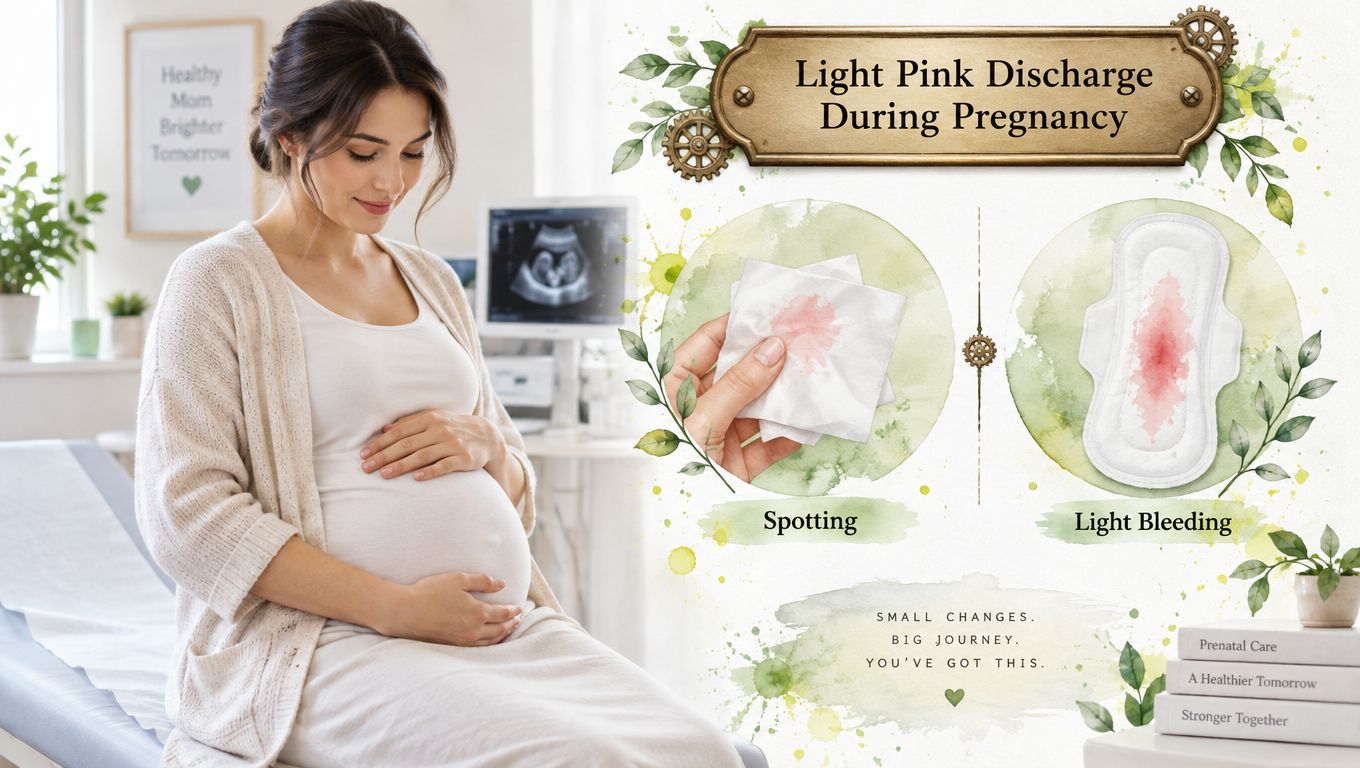
Spots on tissue are different from a flow that needs a pad. Tell your maternity team which you've noticed, even if the loss looks very light.
Early bleeding is common and doesn't always mean miscarriage. Still, you can't confirm a healthy pregnancy from the amount or colour of blood.
The illustration below highlights the difference between spotting and bleeding during pregnancy.
Around a missed period
People often call a short, light episode near an expected period implantation bleeding. That's a possible explanation, not something you can confirm from a pink streak. A pregnancy test and clinical advice are more useful than comparing photos online.
The NICE briefing on pain and bleeding in early pregnancy lists a missed period, abdominal or pelvic pain and vaginal bleeding among possible ectopic pregnancy symptoms. Clots may or may not occur. [6]
If recent unprotected sex is the concern, emergency contraception advice addresses pregnancy prevention. It doesn't assess bleeding or treat an established pregnancy.
When a clinician recommends monitoring
For someone under 6 weeks pregnant, with bleeding but no pain and no ectopic risk factors, NICE guidance on ectopic pregnancy and miscarriage allows monitoring with a repeat urine pregnancy test after 7–10 days. [7]
This isn't a plan to choose without advice. A clinician needs to check whether that pathway fits your history.
The safety net includes:
- Continuing bleeding: Contact the service again.
- New pain: Seek reassessment rather than waiting for the repeat test.
- A positive repeat test: Return for further advice.
- Heavy bleeding or feeling unwell: Get urgent help.
Say a shift worker notices a pink streak during very early pregnancy. She has no pain, checks her pregnancy test and calls the early pregnancy service. That gives her a clear plan rather than an anxious night spent searching.
For a visual explanation, the video below can support, but not replace, advice from your maternity team.
Later pregnancy and the show
Unexplained bleeding beyond early pregnancy needs maternity assessment, not home treatment. Contact your midwife or maternity unit the same day.
Near labour, pink, sticky, jelly-like mucus may be the show as the mucus plug comes away. Call if you're unsure, especially with bleeding, pain or leaking fluid.
Any vaginal bleeding in pregnancy deserves a conversation with a midwife or doctor. Pregnancy removes the option to ignore a repeat episode.
Pink discharge after the menopause
Don't ignore an unexplained pink tinge after menopause when it contains blood. HRT doesn't automatically make it safe to dismiss.
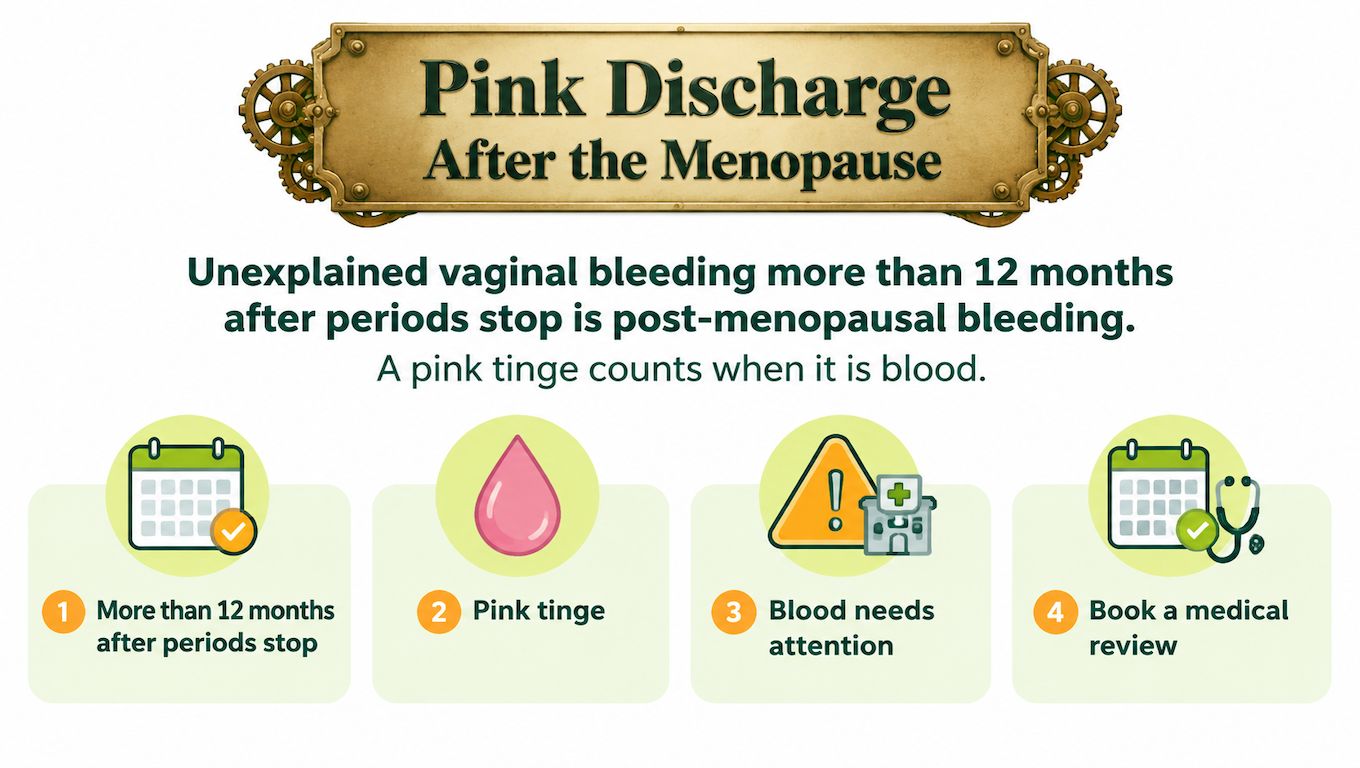
NICE suspected-cancer guidance defines post-menopausal bleeding as unexplained vaginal bleeding more than 12 months after periods stop; for people aged 55 and over, it recommends an urgent suspected-cancer referral. [8]
What an urgent referral means
The same guidance says unexplained vaginal discharge at that age may warrant an urgent ultrasound, particularly when new or accompanied by a high platelet count or blood in the urine. [8] A referral checks for serious causes. It is not a cancer diagnosis.
Dryness and thinning of vaginal tissue can cause small surface bleeds. Infection, cervical changes and HRT-related bleeding are other possible explanations.
This checklist helps you prepare for a medical review.
What to record if you use HRT
Bring your medicine pack or prescription list. Note:
- The colour: Whether it seems to contain blood, rather than yellow or cream discharge.
- The pattern: Whether it happened once or has returned.
- Recent changes: Any change in dose, product or how you take it.
Some HRT schedules include expected bleeding. New bleeding after a settled pattern, or bleeding outside that expected pattern, needs review.
Information about HRT can help you identify your treatment type. Don't change or stop it without discussing the bleeding with your prescriber.
Don't assume exercise explains it
Say a gym-goer sees pink on a liner after a run. She assumes friction and dryness caused it. A prompt GP appointment is more useful than buying lubricant alone.
The clinician can assess dryness while checking for other causes. If you can't get a timely GP appointment, contact NHS 111 for advice.
Keep the distinction clear: A pink tinge isn't proof of cancer. It's a reason to find out where the blood came from.
Likely tests and everyday care
A GP or sexual health clinician starts with your story. They'll ask about periods, pregnancy possibility, sex, contraception, HRT and other symptoms.
You can ask for a chaperone during an examination. Tell the clinician if you're anxious, in pain or need them to pause.
What may happen at the appointment
The tests should fit the symptoms, not the colour.
- History first. Your notes help identify a cycle pattern or medicine change.
- Pregnancy testing where relevant. A very early negative result may need repeating.
- An examination if needed. The clinician may look at the vagina and cervix to find the source.
- Swabs or urine tests. These can check for yeast, bacterial vaginosis or sexually transmitted infections.
- Further tests for specific concerns. Ultrasound can help assess pregnancy-related or post-menopausal bleeding.
Not everyone needs every test. A single mid-cycle spot doesn't automatically need a scan, and pink mucus alone doesn't routinely need blood tests.
If a pregnancy's location is unclear, clinicians may use ultrasound and pregnancy-hormone blood tests. Post-menopausal assessment may also include checking the womb lining.
Match treatment to the finding
| Finding | Usual treatment approach |
|---|---|
| Thrush | A suitable antifungal |
| Bacterial vaginosis | Antibiotics when appropriate |
| A sexually transmitted infection | The correct antibiotic and sexual health follow-up |
| Contraception-related spotting | A review of the method, use and bleeding pattern |
| Vaginal dryness | Moisturisers or clinician-prescribed vaginal oestrogen where suitable |
| A polyp | Clinical review and possible removal |
Don't use leftover antibiotics or assume every itch needs thrush cream. Online treatment is a poor starting point when pregnancy is possible or the cause remains unclear.
A busy parent with itch and a pink streak might reach for old cream. A sexual health clinic can instead check whether this is vaginal thrush, another infection or irritated tissue.
Pharmacist advice you can use
- Pharmacist's tip: If your period is late, take a pregnancy test before starting a new treatment for these symptoms. Check medicine safety with a pharmacist.
- Pharmacist's tip: Take prescribed antibiotics exactly as directed. Use a pharmacy follow-up call if offered, and report side effects.
- Pharmacist's tip: Skip scented washes and vaginal deodorants. They can irritate tissue and won't stop spotting.
Wash the outside gently with warm water or a mild, unperfumed product. Don't wash inside the vagina.
How to get the right help in the UK
A short script for your call
You don't need medical terminology. Say when the blood-stained discharge started, how much there is, when your last period was, and whether pregnancy is possible.
Mention whether you needed a pad, whether the bleeding followed sex, and whether you use HRT. Describe any other symptoms. Say straight away if you have shoulder-tip pain, dizziness or severe pain.
- Emergency help: Call 999 or go to A&E for rapidly soaking bleeding, collapse, severe pain or shoulder-tip pain.
- Pregnancy advice: Contact your GP, midwife, early pregnancy service or NHS 111.
- Prompt GP review: Arrange an appointment for unexplained bleeding after menopause or recurring bleeding after sex.
- Routine advice: If a single episode has settled but still concerns you, book a GP appointment.
Summary
Light pink discharge can be mucus mixed with a little blood. Its colour alone cannot identify the cause. Cycle timing can help, while possible pregnancy or bleeding after menopause changes how promptly you should seek advice. If symptoms recur or you are concerned, contact a healthcare professional.
FAQs
Can this be implantation?
Light spotting can happen in early pregnancy, but colour, timing and amount cannot confirm the cause. Take a pregnancy test when appropriate, and seek advice about bleeding if you may be pregnant.
Is brown discharge the same as pink?
Both colours can indicate blood. Brown blood may have taken longer to leave the body, but colour alone does not show whether the cause is harmless. Consider the timing and any other symptoms.
Does a pink tinge after menopause count?
Yes, if the pink colour is from blood. Arrange a GP review for unexplained bleeding after menopause, even if it happens once or is only a small amount.
Can the pill or HRT cause it?
The pill and HRT can change bleeding patterns. New, persistent or unexpected bleeding still needs assessment. Bring your medicine details to your appointment.
Should I wait for my smear?
No. Cervical screening is a preventive test, not an investigation of current bleeding. Contact your GP rather than waiting for your next invitation.
Can thrush look pink?
Thrush commonly causes itching, soreness and white discharge. Irritated tissue may bleed, but pink discharge alone does not confirm thrush. Get advice if the blood is unexplained or symptoms return.
Can I use an online pharmacy first?
A pharmacist can discuss medicines and whether treatment may be suitable. They cannot replace an examination when the source of bleeding needs checking. Contact urgent services or your GP first if pregnancy, menopause or warning symptoms apply.
When is it an emergency?
Get emergency care for heavy, rapidly soaking bleeding, severe tummy pain, shoulder-tip pain, fainting or marked dizziness. Don't wait for a pregnancy test if these symptoms occur. Call 999 if you collapse or feel too unwell to travel safely.
Disclaimer
This information is not a personal medical assessment or a substitute for medical advice.
Meta description: Light pink discharge can be blood mixed with mucus. Learn how cycle timing, pregnancy possibility and menopause affect when to seek help.
Book or call according to your symptoms. If bleeding recurs, contact a healthcare professional rather than continuing to monitor it without advice.
Courier Pharmacy offers pharmacist advice and, after a suitable assessment, treatment for some causes of vaginal symptoms. It can also discuss options for people with allergies or specific formulation needs. Visit Courier Pharmacy to discuss appropriate care. Use urgent services or contact your GP first when bleeding needs an examination.


