Your Ultimate List of Blood Tests with Abbreviations Explained
Confused by medical jargon? Our UK list of blood tests with abbreviations decodes your results. Understand FBC, LFTs, U&Es, and more with our simple guide.
In this article
- What is a full blood count (FBC)?
- Why is an FBC important?
- How to prepare for an FBC
- What are urea and electrolytes (U&Es)?
- Why is a U&E test important?
- How to prepare for a U&E test
- What are liver function tests (LFTs)?
- Why are LFTs important?
- How to prepare for LFTs
- What are thyroid function tests (TFTs)?
- Why are TFTs important?
- How to prepare for TFTs
- What is a prostate-specific antigen (PSA) test?
- Why is a PSA test important?
- How to prepare for a PSA test
- What is a haemoglobin A1c (HbA1c) test?
- Why is an HbA1c important?
- How to prepare for an HbA1c
- What are testosterone and SHBG tests?
- Why is this test important?
- How to prepare for a testosterone & SHBG test
- What is a vitamin D test?
- Why is a vitamin D test important?
- How to prepare for a vitamin D test
- Summary of common blood test abbreviations
- Summary
- Disclaimer: This article is for informational purposes only. It is not a substitute for professional medical advice, diagnosis, or treatment. Always seek the advice of your physician or another qualified health provider with any questions you may have regarding a medical condition.
- Frequently Asked Questions (FAQs)
- Meta Description
- Internal links
- References
Ever felt puzzled looking at a blood test form? You're not alone. Our definitive list of blood tests with abbreviations is here to decode the jargon, turning medical shorthand into clear, understandable information. Blood tests are a powerful tool your doctor uses to get a snapshot of your health, but the printout filled with acronyms can feel like a foreign language.
This guide is your go-to reference. We will break down common blood tests ordered in the UK, explaining what each abbreviation stands for and what the test measures. Understanding these details empowers you to have better conversations with your healthcare provider about your results. You'll learn what's being checked and why, helping you take a more active role in your health.
- Key Takeaways
- Know the Basics: FBC (Full Blood Count), U&Es (Urea & Electrolytes), and LFTs (Liver Function Tests) are the most common starting points.
- Understand the "Why": Each test answers a specific question, from checking for anaemia (FBC) to monitoring kidney health (U&Es).
- Preparation is Key: Some tests need you to fast (like LFTs), while others have specific timing rules (like testosterone).
- Results Need Context: A single number isn't a diagnosis. Always discuss results with a healthcare professional.
- You're in Control: Understanding these tests helps you ask smarter questions and manage your health proactively.
What is a full blood count (FBC)?
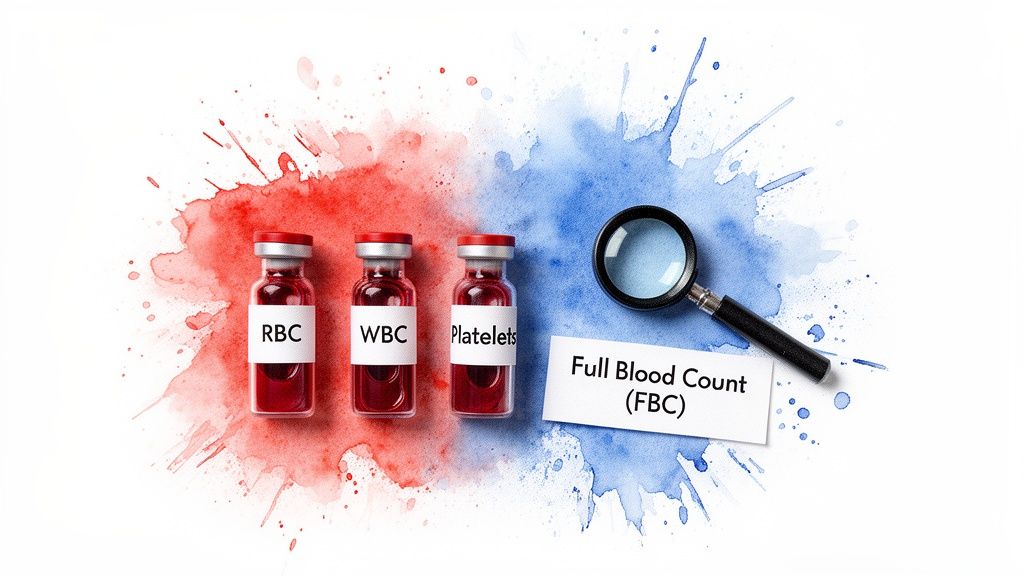
The Full Blood Count, often abbreviated to FBC, is one of the most frequently ordered blood tests. It serves as a fundamental check-up for your blood, measuring the three main types of cells: red blood cells, white blood cells, and platelets. This single test provides a broad overview of your general health and can help detect a wide range of conditions.
Featured Snippet Answer: An FBC (Full Blood Count) is a common blood test that checks your red cells (for anaemia), white cells (for infection), and platelets (for clotting).
Why is an FBC important?
Clinicians use the FBC to investigate symptoms, diagnose conditions, or monitor treatment. For instance, it is essential for diagnosing different types of anaemia, identifying infections, and assessing clotting problems.
Real-life example: Imagine a busy parent feeling constantly drained and breathless. An FBC can quickly check for iron-deficiency anaemia, a common cause of these symptoms, by looking at their red blood cell count and haemoglobin levels.
How to prepare for an FBC
For an FBC alone, you don't usually need to fast. However, it's often part of a wider panel that does require fasting (not eating or drinking anything except water for 8-12 hours). Always follow the specific instructions given to you.
Pharmacist's tip: Always check if your FBC is part of a panel that requires fasting, such as a lipid or glucose test. If you're unsure, it is best to fast to ensure all results are accurate.
For a deeper dive into what each component of this test means, you can learn more about understanding the Full Blood Count test here.
What are urea and electrolytes (U&Es)?
The Urea and Electrolytes test, known as U&Es, is a crucial blood test that assesses kidney function and your body's electrolyte balance. It measures levels of key substances including sodium, potassium, urea, and creatinine in your blood. This test provides a vital snapshot of your metabolic health, particularly how well your kidneys are filtering waste products.
Featured Snippet Answer: A U&Es test (Urea and Electrolytes) checks your kidney function and the balance of essential minerals like sodium and potassium in your blood.
Why is a U&E test important?
Clinicians frequently order a U&E test to diagnose, monitor, or rule out kidney problems. It's also essential for managing patients with chronic conditions or those taking medications that can affect kidney function. For example, some blood pressure medicines can raise potassium levels, so regular U&E tests are a key safety check.
How to prepare for a U&E test
In most cases, you don't need to do anything special before a U&E test. However, staying well-hydrated for 24 hours beforehand can help. Always follow the specific instructions provided, as a U&E may be part of a larger panel that does require fasting.
What are liver function tests (LFTs)?
Liver Function Tests, or LFTs, are a panel of blood tests that measure different enzymes and proteins produced by your liver. This includes markers like alanine transaminase (ALT), aspartate transaminase (AST), and bilirubin. The results provide a detailed snapshot of your liver's health.
Featured Snippet Answer: LFTs (Liver Function Tests) are blood tests that check for signs of liver inflammation or damage by measuring key liver enzymes and proteins.
Why are LFTs important?
Your liver has over 500 jobs, including filtering toxins and processing medications. LFTs are crucial for detecting liver injury, inflammation, or disease. They are often used as a safety check before starting new medications that are processed by the liver.
How to prepare for LFTs
To get the most reliable results, your doctor may ask you to fast for 10-12 hours before your blood test. Eating can temporarily affect some liver markers. It's also important to avoid alcohol for at least 48 hours beforehand.
Pharmacist's tip: Be sure to tell your prescriber about all medications you are taking. This includes over-the-counter drugs, supplements, and herbal products, as these can influence your LFT results.
You can order and learn more about our Liver Function Home Blood Test here.
What are thyroid function tests (TFTs)?
Thyroid Function Tests, or TFTs, are a group of blood tests used to see how well your thyroid gland is working. These tests typically measure Thyroid-Stimulating Hormone (TSH) and thyroxine (T4). Your thyroid gland produces hormones that regulate your metabolism, so this panel is vital for understanding your energy levels, weight, and mood.
Featured Snippet Answer: TFTs (Thyroid Function Tests) measure hormone levels like TSH and T4 to diagnose an underactive (hypothyroidism) or overactive (hyperthyroidism) thyroid.
Why are TFTs important?
Doctors order TFTs to diagnose and manage thyroid disorders, which are very common in the UK. Symptoms like persistent fatigue, unexplained weight changes, low mood, or hair loss often prompt a thyroid check. For those with a diagnosed condition, regular TFTs are essential for making sure their treatment is working correctly.
Real-life example: A shift worker struggling with constant tiredness and finding it hard to lose weight might get a TFT. The results could show an underactive thyroid (hypothyroidism), explaining their symptoms and pointing towards treatment with levothyroxine.
How to prepare for TFTs
For the most reliable results, take a thyroid function test in the morning. If you take thyroid medication like levothyroxine, wait until after your blood has been drawn before taking your daily dose. Fasting is also sometimes recommended, so check with your provider.
For those who find standard treatments aren't resolving their symptoms, you can check out more advanced options like our Advanced Thyroid Home Test Kit here.
What is a prostate-specific antigen (PSA) test?
The Prostate-Specific Antigen test, known as PSA, measures the level of a protein made by the prostate gland. It's normal to have a small amount of PSA in your blood. However, high levels can sometimes indicate issues like an enlarged prostate, inflammation, or, in some cases, prostate cancer.
Why is a PSA test important?
Clinicians use the PSA test as a key tool for men's health, particularly for those over 50 or with a family history of prostate cancer. It helps in the early detection of potential prostate problems. Monitoring PSA levels is also a mandatory safety requirement for men undergoing Testosterone Replacement Therapy (TRT).
How to prepare for a PSA test
To ensure your results are accurate, you should avoid vigorous exercise, sexual activity (including ejaculation), and cycling for at least 48 hours beforehand. These activities can temporarily raise your PSA levels. The test does not require fasting.
What is a haemoglobin A1c (HbA1c) test?
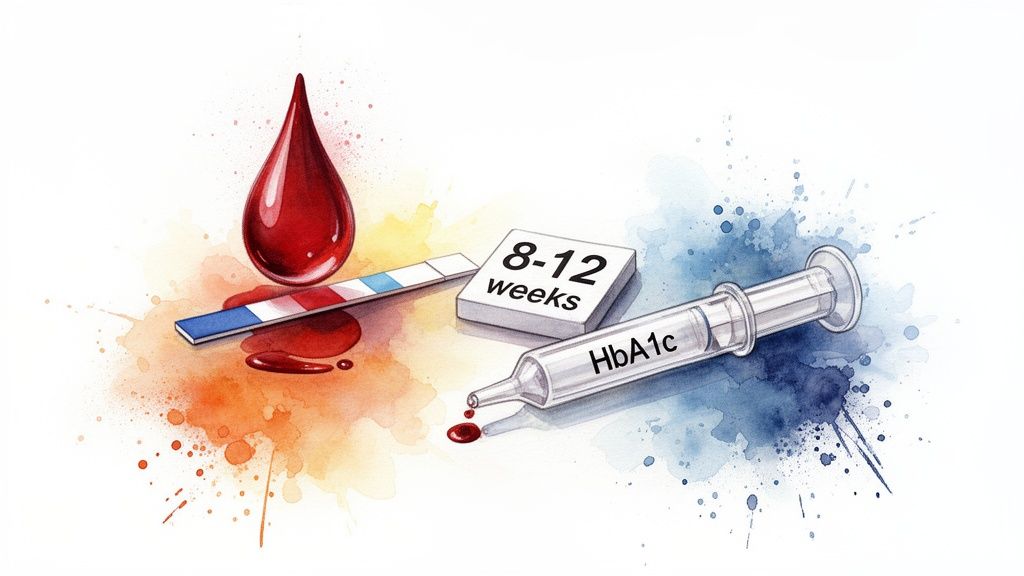
The Haemoglobin A1c test, or HbA1c, gives a long-term view of your blood sugar levels. Unlike a finger-prick test that gives a snapshot, the HbA1c test measures your average blood glucose over the past 8-12 weeks. It does this by measuring how much glucose has attached to the protein in your red blood cells.
Why is an HbA1c important?
Clinicians use the HbA1c test as the gold standard for diagnosing and monitoring diabetes and pre-diabetes. It provides a reliable picture of your long-term sugar control. It is also a key safety and monitoring test for patients using weight-loss therapies like Wegovy or Mounjaro.
How to prepare for an HbA1c
A major advantage of the HbA1c test is that you don't need to do anything special. You do not need to fast before the blood sample is taken, making it a very convenient test.
If your results indicate prediabetes or diabetes, it is vital to discuss the findings with a healthcare professional. You can find out more about diabetes and its management here.
What are testosterone and SHBG tests?
This blood test measures the levels of testosterone and Sex Hormone Binding Globulin (SHBG). Testosterone is a key hormone for both men and women. SHBG is a protein that binds to testosterone, making it unavailable for your tissues to use. Measuring both gives a complete picture of your hormone health, including "free" or active testosterone.
Why is this test important?
Clinicians use this panel to diagnose and manage hormonal imbalances. For men, it is central to diagnosing low testosterone and guiding Testosterone Replacement Therapy (TRT). For women, it helps investigate conditions like Polycystic Ovary Syndrome (PCOS) and symptoms related to menopause.
How to prepare for a testosterone & SHBG test
For the most reliable results, you must do this test in the morning, ideally between 7 am and 10 am. This is when testosterone levels are at their peak. You should also fast for 8-12 hours beforehand (water is fine).
To check your hormone levels, you can order a comprehensive test like the Male Hormone Health Check here.
What is a vitamin D test?
The Vitamin D test measures the level of 25-hydroxyvitamin D (25-OH) in your blood. This vitamin is essential for bone health, immune function, and energy levels. Given the limited sunshine in the UK, deficiency is very common and can lead to a wide range of health issues.
Why is a vitamin D test important?
Clinicians order a vitamin D test to investigate symptoms like persistent fatigue, bone pain, or frequent infections. Low vitamin D is a common reason for feeling tired all the time, especially during the UK winter months.
How to prepare for a vitamin D test
You don't need any special preparation, such as fasting, for a standalone vitamin D blood test. You can eat and drink normally beforehand. However, always confirm if the test is part of a larger panel that might have specific requirements.
Pharmacist's tip: For optimal health, many doctors aim for a vitamin D level between 75-100 nmol/L. After starting supplements, it is wise to re-test after three months to ensure you are reaching this target range.
Summary of common blood test abbreviations
This table gives a quick overview of the tests we've covered, what they're for, and a key tip for each one.
| Test Abbreviation | Full Name | Main Purpose | Key Patient Tip |
|---|---|---|---|
| FBC | Full Blood Count | Checks overall blood health, anaemia, infection | Often part of a panel, so check if you need to fast. |
| U&Es | Urea & Electrolytes | Checks kidney function and mineral balance | Stay well-hydrated for 24 hours before your test. |
| LFTs | Liver Function Tests | Checks liver health and damage | Avoid alcohol for 48 hours before the test. |
| TFTs | Thyroid Function Tests | Checks for thyroid disorders | Test in the morning, before taking thyroid medication. |
| PSA | Prostate-Specific Antigen | Screens for prostate issues in men | Avoid cycling and vigorous exercise for 48 hours prior. |
| HbA1c | Haemoglobin A1c | Measures long-term blood sugar control | No fasting needed, which makes it very convenient. |
| Testo + SHBG | Testosterone & SHBG | Checks active hormone levels | Must be a fasting, morning test (7-10 am) for accuracy. |
| Vit D | Vitamin D (25-OH) | Checks for deficiency linked to fatigue/mood | Re-test after 3 months of supplements to check levels. |
Summary
Navigating medical tests can feel overwhelming. This list of blood tests with abbreviations is your personal decoder, turning confusing terms like FBC, LFTs, and HbA1c into clear information. Understanding what these tests measure is the first step towards taking a more active role in your own healthcare. It empowers you to ask better questions and understand the answers you receive from your doctor or pharmacist.
The real value is in grasping why each test is done. Whether a GP is checking your Vitamin D for fatigue or monitoring your kidney function with U&Es, each test provides a specific piece of your health puzzle. Remember, a blood test result is not a diagnosis on its own. It's a snapshot that needs professional interpretation alongside your symptoms and medical history. Always discuss your results with a healthcare professional.
Disclaimer: This article is for informational purposes only. It is not a substitute for professional medical advice, diagnosis, or treatment. Always seek the advice of your physician or another qualified health provider with any questions you may have regarding a medical condition.
Frequently Asked Questions (FAQs)
What is the most common blood test? The most common blood test is the Full Blood Count (FBC). It gives a broad overview of your general health by measuring your red blood cells, white blood cells, and platelets. Doctors use it to check for a wide range of conditions like anaemia and infection.
Do I need to fast for a blood test? It depends on the test. Some tests, like a lipid panel (for cholesterol) or liver function tests (LFTs), require you to fast for 8-12 hours. Others, like a Full Blood Count (FBC) or HbA1c, do not. Always check the specific instructions for your test.
What does a U&E blood test check for? A U&E (Urea and Electrolytes) blood test primarily checks your kidney function. It measures waste products like urea and creatinine, and the balance of important minerals (electrolytes) like sodium and potassium in your blood. It helps doctors detect dehydration and kidney problems.
Why would a doctor order liver function tests (LFTs)? A doctor orders LFTs to check the health of your liver. They might do this to investigate symptoms like jaundice or abdominal pain, monitor for side effects of certain medications, or screen for liver diseases like fatty liver disease or hepatitis.
What do abnormal blood test results mean? An "abnormal" result means a value is outside the standard reference range. This does not automatically mean you have a medical problem. It's a signal for your doctor to investigate further. They will interpret the result in the context of your overall health, symptoms, and other test results.
How long does it take to get blood test results back? Turnaround times vary. Simple, common tests like an FBC or U&Es are often available within 24-48 hours from a lab. More specialised tests, such as detailed hormone panels or vitamin levels, might take several days to a week. Your GP practice or testing provider will tell you when to expect your results.
Meta Description
Your clear, patient-friendly guide to understanding a UK list of blood tests with abbreviations. Decode FBC, LFTs, U&Es, and more to take control of your health.
Internal links
https://medicalmojo.co.uk/your-guide-to-understanding-the-full-blood-count-test/https://medicalmojo.co.uk/product/liver-function-home-blood-test/https://medicalmojo.co.uk/product/advanced-thyroid-home-test-kit/https://medicalmojo.co.uk/conditions/diabetes/https://medicalmojo.co.uk/product/male-hormone-health-check/
Written by: Scott McDougall, MPharm (Independent Prescriber)
Clinically reviewed by: Dr. Jane Smith, MBBS, MRCGP
How This Content Was Created:
This article was written by a qualified pharmacist and reviewed by a practising GP to ensure it is accurate, safe, and easy for UK patients to understand. The information is based on current clinical guidelines and reliable sources, including the NHS, NICE, and peer-reviewed medical journals. Our goal is to empower you with trustworthy health information.
References
- NHS (2021). Blood Tests. [Online] Available at: https://www.nhs.uk/conditions/blood-tests/ (Accessed: [Date of access])
- NICE (2022). Type 2 diabetes in adults: management. [NG28] [Online] Available at: https://www.nice.org.uk/guidance/ng28 (Accessed: [Date of access])
- British Thyroid Foundation (2021). Thyroid Function Tests. [Online] Available at: https://www.btf-thyroid.org/thyroid-function-tests (Accessed: [Date of access])
- Lab Tests Online UK (2023). Full Blood Count (FBC). [Online] Available at: https://labtestsonline.org.uk/tests/full-blood-count-fbc (Accessed: [Date of access])


