Liver Function Tests Explained: A Simple UK Guide
Our expert UK guide makes liver function tests explained easy. Understand what ALT, AST & GGT results mean, causes of abnormalities, and your next steps.

A liver function test is a blood test that measures different enzymes and proteins your liver produces. It helps your doctor check the health of your liver and spot signs of liver damage or disease.
Primary keyword: liver function tests explained
Secondary keywords: liver function test results, abnormal liver blood tests, ALT blood test, GGT blood test, liver blood test UK, liver function test normal range
Search intent: Informational with practical UK next steps
Target reader: UK adults who have had a liver blood test or are considering one
Product/service mention: Private and home liver testing options in the UK
Internal links available: Assumed from provided URLs
Liver function tests explained
If you're reading this with a blood test result open on your phone, you're not alone. Many people see a raised ALT or GGT and immediately think the worst. In reality, these tests need context.
This guide explains what liver function tests are, what the common markers mean, how NHS follow-up usually works, and when an abnormal result needs quick medical review. I'll keep it practical, plain English, and focused on the patient journey in the UK.
What are liver function tests and why do I need them
Your liver is like a busy factory
Your liver works like a busy factory with several production lines. It processes waste, helps handle medicines, makes proteins, and moves bile through a drainage system. A liver blood test gives clues about how that factory is coping.
Here's a common point of confusion. Many so-called liver function tests do not measure function in the strict sense. UK clinician guidance states that “most LFTs measure liver damage rather than liver function” [1]. In simple terms, enzymes such as ALT and AST often rise because irritated liver cells leak them into the blood.
That means a raised enzyme doesn't always mean your liver is failing. It can mean the liver has been stressed, inflamed, or irritated. On the other hand, tests like albumin, bilirubin, and clotting measures can tell doctors more about how well the liver is carrying out key jobs.
Raised liver enzymes often mean “something has annoyed the liver”. They do not automatically mean permanent damage.
Why doctors order these tests
Doctors request liver tests for lots of everyday reasons. Sometimes they're checking symptoms. Sometimes they're monitoring medicines. Sometimes the test is part of a routine health check.
Common reasons include:
- Symptoms to investigate: Tiredness, itching, yellowing of the skin or eyes, tummy pain, dark urine, or pale stools.
- Medicine monitoring: Some medicines can affect the liver, so blood tests help your prescriber keep an eye on things.
- Alcohol or metabolic concerns: Drinking patterns, weight, and related conditions can all affect liver markers.
- Following up a previous result: A mildly abnormal test often needs repeating rather than panicking over one result.
In England, premature deaths from liver disease rose by almost 40% between 2001 and 2022, increasing from 6,140 deaths in 2001 to 10,593 deaths in 2022 [2]. At the same time, mildly abnormal liver blood tests are common in the UK population, while the proportion of people with abnormal results who have severe liver disease is estimated to be less than 5% [2]. That's why interpretation matters so much.
A practical note on home testing
If you've done a finger-prick test at home, don't worry if the process felt fiddly. What matters most is using the kit exactly as instructed and making sure the sample reaches the lab properly. A step-by-step guide to using a home blood test kit in the UK can make the process much less stressful.
Decoding your liver function test results
A liver test report can look like alphabet soup. ALT. ALP. GGT. Bilirubin. Albumin. The easiest way to make sense of it is to split the markers into two groups. First, the ones that suggest irritation or blockage. Second, the ones that reflect the liver's output.
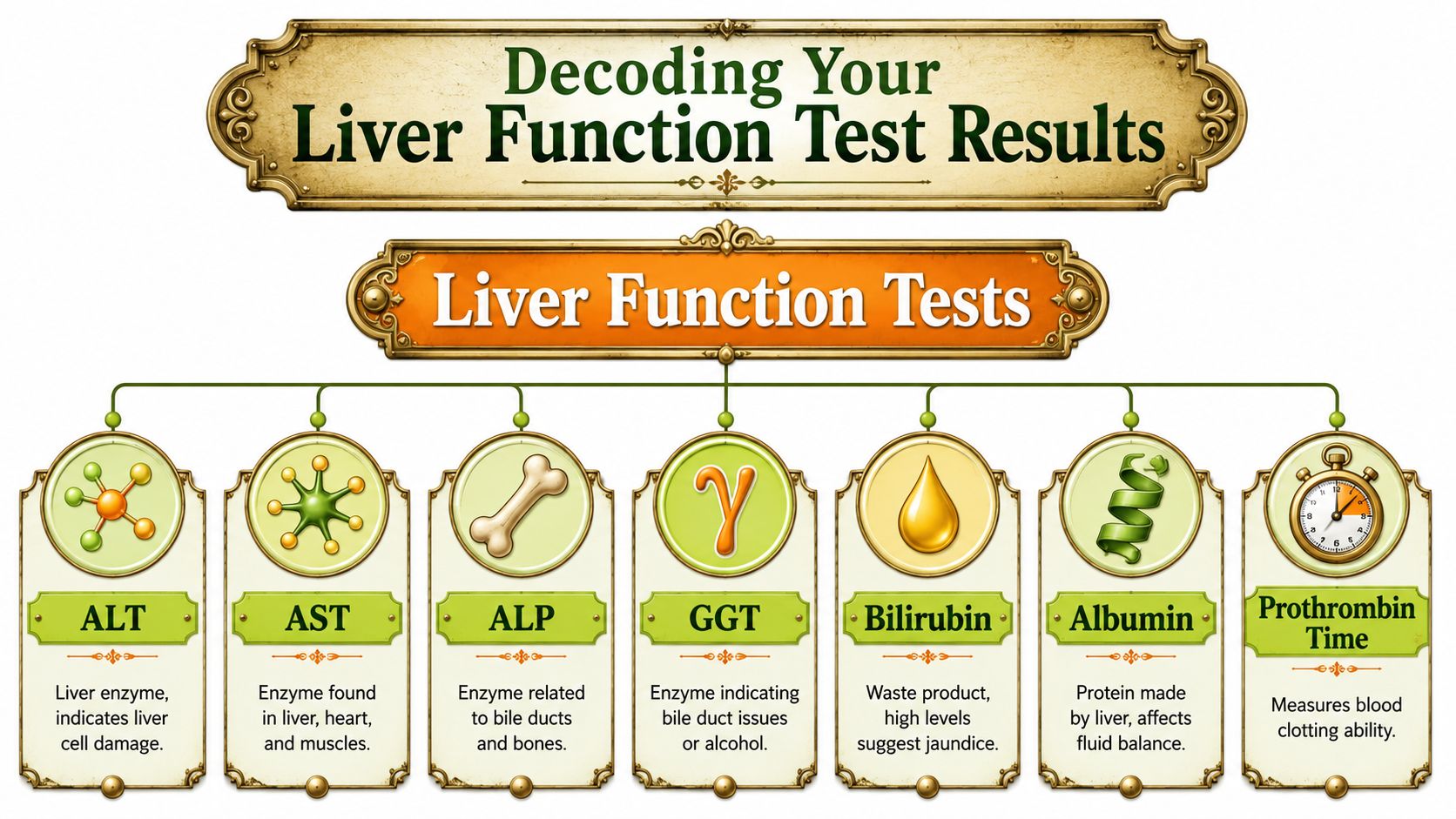
Understanding your liver function test markers
| Test Marker | What It Primarily Measures | Typical UK Adult Reference Range |
|---|---|---|
| ALT | Liver cell damage marker | 5–40 IU/L [3] |
| AST | Enzyme found in liver and other tissues. Often requested separately | No routine default UK range provided in the verified dataset |
| ALP | Bile duct irritation or blockage. Can also come from bone | 25–115 IU/L [3] |
| GGT | Helps confirm a liver or bile duct source, especially with raised ALP | 0–32 IU/L in UK primary care guidance [3] |
| Bilirubin | Waste product the liver processes | 0–17 µmol/L [3] |
| Albumin | Protein made by the liver | 38–50 g/L [3] |
| Total Protein | Combined blood proteins | 60–85 g/L [3] |
| Prothrombin Time | Blood clotting ability linked to liver synthetic function | 12 to 16 seconds [4] |
UK pathology services usually include albumin, ALT, ALP, and total bilirubin in the standard LFT profile. AST is not part of the default set and must be requested separately. If ALP is raised, GGT is often added automatically to help confirm whether the source is hepatobiliary rather than bone-related [5].
For a broader blood test context, this guide to understanding the full blood count test can help if your GP ordered several tests at once.
What each marker means in plain English
ALT and AST
Think of ALT as one of the main “leak markers” from liver cells. If it's raised, doctors think about inflammation or cell injury. In UK clinical practice, ALT or AST above 1,000 IU/L is a red-flag pattern that can suggest drug-induced liver injury, acute viral hepatitis, or ischaemic hepatitis [4].
AST can rise with liver problems, but it can also come from muscle and other tissues. That's one reason doctors don't interpret it alone.
ALP and GGT
ALP often points toward the liver's bile drainage system, but it can also come from bone. That's why GGT is useful. If ALP is high and GGT is also high, that supports a liver or bile duct source [3][5].
An isolated GGT rise can be frustrating because it's not very specific. UK primary care guidance says an isolated GGT elevation under 5 times the upper limit of normal usually needs repeat testing after 3 months, while GGT above 5 times the upper limit should prompt ultrasound imaging to confirm hepatobiliary pathology [3].
A practical NHS pathology point helps here. Repeating liver tests with GGT and vitamin D will usually help differentiate between liver and bone turnover when the cause of a raised ALP isn't obvious [6].
Bilirubin and albumin
Bilirubin is a yellow waste product. If it rises enough, you may notice jaundice. Albumin is a protein your liver makes, so it gives a better feel for manufacturing ability than ALT does.
Practical rule: Enzymes often show irritation. Albumin and clotting tests tell you more about how well the liver is still doing its core jobs.
Mini answers to common result questions
Is one mildly raised result always serious?
No. A single mildly abnormal result often needs repeating and interpreting alongside symptoms, medicines, alcohol intake, and other markers.
Can I have normal albumin with raised ALT?
Yes. That often means liver cell irritation without obvious loss of protein-making function.
Does a normal test rule out liver disease?
No. UK guidance stresses that normal liver blood tests do not definitively exclude liver disease [2].
Understanding patterns in your results
Doctors rarely look at one number in isolation. They look for patterns. That's more useful than treating every raised marker as a separate mystery.
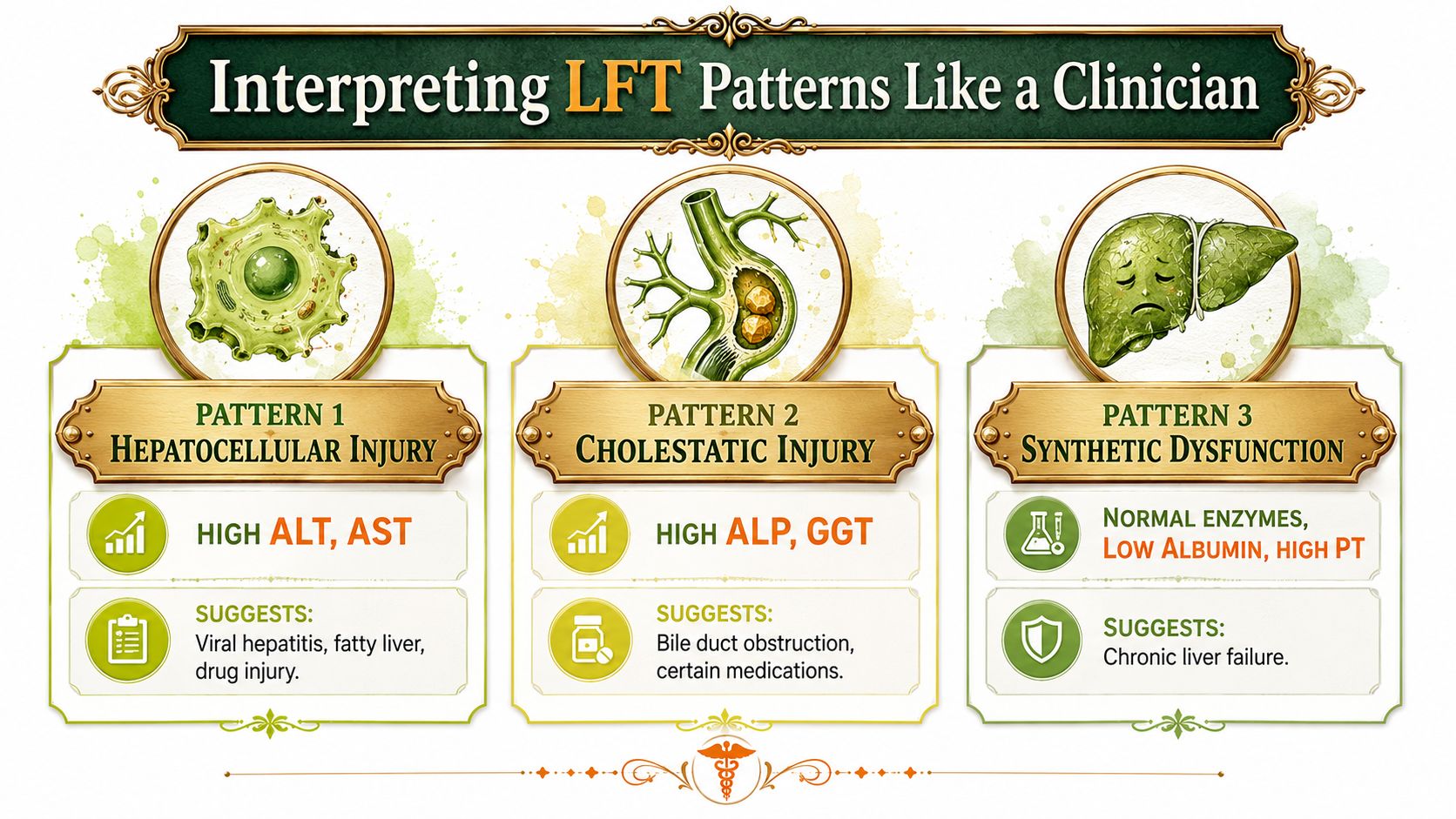
Leaky pipes pattern
If ALT and sometimes AST are the main raised markers, doctors often think of a hepatocellular pattern. I explain this to patients as leaky pipes in the factory walls. The contents of liver cells leak into the blood.
This pattern can fit things like fatty liver, viral hepatitis, or medicine-related liver irritation. The exact cause depends on the story around the result. Recent illness, new tablets, supplements, and alcohol all matter.
Blocked drain pattern
If ALP and GGT are the main abnormalities, that suggests a cholestatic pattern. Think of it as the liver's drainage system getting sluggish or blocked.
Doctors then think about bile duct problems, gallbladder issues, or certain medicines. Because ALP can also come from bone, GGT helps point the finger more clearly toward the liver and bile ducts.
Factory slowing down pattern
If enzymes aren't dramatically raised but albumin falls or prothrombin time rises, doctors worry more about synthetic dysfunction. This is the factory production line slowing down.
That matters because the liver makes proteins and clotting factors. A prolonged prothrombin time can also reflect vitamin K deficiency in chronic cholestasis or warfarin treatment, so the full context still matters [4].
In UK practice, very large enzyme rises have a different meaning from small shifts. Marked ALT or AST elevations above 1,000 IU/L call for urgent specialist assessment because they are highly specific indicators of severe acute injury patterns [4].
Common causes of abnormal liver tests
Most abnormal liver tests turn out to have an explanation that needs calm sorting out, not panic. Some causes are linked to lifestyle. Others are linked to medicines or short-term stress on the body.

Everyday reasons results can change
Here are some common reasons doctors consider:
- Alcohol intake: GGT can rise with alcohol-related liver stress. How alcohol interacts with medicines more broadly, as detailed in this article on drinking alcohol while taking sildenafil, demonstrates why honest medicine and alcohol discussions matter.
- Weight and fatty liver risk: Raised ALT often leads clinicians to think about metabolic dysfunction-associated steatotic liver disease.
- Medicines: Paracetamol overdose is an urgent example, but other prescribed drugs can also affect liver markers.
- Bone versus liver confusion: Raised ALP doesn't always mean a liver problem.
- Short-term illness or physical stress: Context can shift the picture.
In Wales, testing practice changed a lot over time. ALT testing rose from 2% to 33% of the adult population between 2000 and 2017, while AST testing fell from 3% to 1%, reflecting the stronger role of ALT as a marker for liver injury in UK care [7].
Two real-life examples
Sarah, a busy parent
Sarah has a routine blood test after feeling tired. Her ALT comes back mildly raised, but her albumin and bilirubin are normal. Her GP looks at her weight, medicines, and alcohol intake before jumping to conclusions. That pattern often suggests irritation rather than loss of liver function.
David, a gym-goer
David checks his health after a hard training block and sees raised AST with some ALT movement. His clinician asks about intense exercise before assuming it's a liver disease picture. That question matters because AST can come from muscle as well as liver.
Here's a short explainer if you prefer to hear the basics spoken through:
When very high results are urgent
A very high result is different from a mild wobble. In UK clinical practice, ALT or AST greater than 1,000 IU/L strongly suggests severe acute liver injury such as paracetamol-related injury, acute viral hepatitis, or ischaemic hepatitis, and it needs urgent referral to secondary care [4].
That's one of the reasons doctors don't treat all abnormal results the same way.
What happens after an abnormal result
The next step usually depends on three things. Your symptoms. The pattern in the bloods. Whether the result is mildly off, steadily worsening, or sharply abnormal.
What the NHS usually does next
For asymptomatic adults with abnormal liver blood tests, NHS guidance recommends a 1 to 3 month period before arranging a full liver screen if the abnormality persists despite lifestyle measures such as weight loss where appropriate and keeping alcohol within national limits [8].
That gap can feel frustrating, but it often makes clinical sense. A repeat test shows whether the change was temporary or persistent.
A doctor may also:
- Review medicines and supplements: This includes prescribed drugs, over-the-counter pain relief, and herbal products.
- Ask about alcohol: This isn't about judgement. It helps interpret GGT and overall risk.
- Check for symptoms: Jaundice, tummy pain, itching, dark urine, and weight changes matter.
- Arrange further tests: These may include a fuller liver screen or an ultrasound, depending on the pattern.
If ALT exceeds 100 IU/L and is climbing, or if ALT persists above 150 IU/L, NHS guidance says the patient should be referred to Gastroenterology or Hepatology [8].
For people with persistently high ALT on repeat testing, some UK guidance also uses thresholds such as ALT above 70 IU/L, or ALT 50 to 70 IU/L with abnormal GGT or ALP, to trigger further investigation. If ALT is 100 to 150 IU/L, investigation should happen before starting a statin, while ALT consistently exceeding 150 IU/L should prompt GI review before statins are considered [9].
Don't judge your result by the red flag on the app alone. Doctors judge it by the trend, the pattern, your symptoms, and your medicines.
If you need medicine advice, access to repeat prescriptions, or support around tests and treatment, a regulated online pharmacy in the UK can help with practical next steps alongside your usual NHS care.
When to seek urgent help
Seek prompt medical advice if you have an abnormal result plus symptoms, especially:
- Yellow skin or yellow eyes
- Severe upper abdominal pain
- Confusion, drowsiness, or feeling very unwell
- Vomiting after possible overdose
- Dark urine with pale stools
- Rapidly worsening symptoms
If you think you may have taken too much paracetamol, get urgent help straight away. Don't wait for symptoms.
Pharmacist's tips
Pharmacist's tip: Bring a full list of tablets, supplements, gym products, and herbal remedies to any appointment. People often forget non-prescription items, but they matter.
Pharmacist's tip: Don't stop prescribed medicines on your own because one liver marker is raised. Ask the clinician who prescribed it.
Pharmacist's tip: Avoid a “detox” scramble after one abnormal result. Sudden supplement changes can muddy the picture rather than help.
How to get a liver function test in the UK
You've got a few routes in the UK, and the best one depends on why you need the test. Some people need NHS follow-up for symptoms. Others want a baseline check, repeat monitoring, or a more convenient option around work.

Your main options
| Option | Best for | Main pros | Main watch-outs |
|---|---|---|---|
| NHS GP route | Symptoms, ongoing care, abnormal prior results | NHS-funded, linked to your records, medical follow-up | Appointment and result times can vary |
| Private clinic blood draw | Faster access and in-person sampling | Often convenient and straightforward | You'll usually pay privately |
| Home testing kit | Privacy, convenience, busy schedules | Can fit around work, childcare, or travel | You must collect the sample correctly |
Which route suits which person
Busy parent
If childcare and work make appointments awkward, a home kit can be easier to fit around life. It may also feel less stressful than taking time off.
Shift worker
If your sleep pattern changes each week, private booking or home sampling may suit you better than chasing a standard weekday GP slot.
Needle-wary patient Some people prefer newer home collection methods rather than a standard venous draw. Others feel more confident with a trained phlebotomist. The right choice is the one you'll complete.
If you want a private option, a liver function home blood test can be a practical way to check your markers from home. Some services also offer a finger-prick test or newer collection devices such as Tasso, which may suit people who want a simpler home sampling experience.
Visual ideas for Medical Mojo
Infographic idea 1: A “factory and drainage” explainer showing ALT/AST as leaks and ALP/GGT as blocked pipes.
Alt text: Painterly infographic of a liver as a factory with leaking pipes and blocked drains to explain liver blood test patterns.Infographic idea 2: A patient journey map from first abnormal result to repeat test, ultrasound, or specialist referral.
Alt text: UK liver test patient journey infographic showing repeat blood tests, lifestyle advice, ultrasound, and referral steps.Infographic idea 3: A side-by-side comparison of GP, clinic, and home testing routes in bright lime green, pale yellow-green, and light grey with ornate brass labels.
Alt text: Comparison chart of NHS GP, private clinic, and home liver blood testing options in the UK.
If you'd like a convenient private route, Courier Pharmacy offers UK-regulated testing options, including home blood testing and venous sampling support. It's a practical choice if you want to check liver markers without the hassle of fitting everything around a busy week. Always share abnormal results with your GP or specialist so your care stays joined up.
Summary
Liver function tests are blood tests that help doctors spot signs of liver stress, damage, or reduced output.
Many of the common markers measure damage, not true function, which is why raised enzymes can be confusing.
Doctors look at the pattern of results, not just one number in isolation.
Mild abnormalities are common, and many need repeat testing rather than urgent action.
Very high ALT or AST can be serious and need quick medical review.
If your result is abnormal, don't panic. Get it interpreted in context.
This article is for information only and isn't a substitute for personal medical advice.
FAQs
What is a liver function test?
A liver function test is a blood test that checks enzymes and proteins linked to liver health. It can show signs of liver cell irritation, bile flow problems, or reduced protein-making ability.
Do liver function tests actually measure liver function?
Not always. Many standard LFTs mainly measure liver damage or inflammation rather than true liver function [1]. Albumin, bilirubin, and clotting tests help more with function.
What is the normal ALT range in the UK?
In UK primary care guidance, the adult ALT reference range is 5 to 40 IU/L [3]. Your own lab report may still vary slightly by local laboratory method.
What does a high GGT mean?
A high GGT can support a liver or bile duct source for abnormal results, especially if ALP is also raised. On its own, it isn't very specific and can be affected by alcohol, medicines, and other conditions [3].
Can abnormal liver tests be harmless?
Sometimes, yes. Mildly abnormal liver blood tests are common, and the proportion of people with abnormal LFTs who have severe liver disease is estimated to be less than 5% [2]. That said, every result still needs proper interpretation.
How long does the NHS usually wait before repeating abnormal liver blood tests?
For asymptomatic adults, NHS guidance recommends 1 to 3 months before a full liver screen if the abnormality persists despite lifestyle measures [8]. The exact timing depends on the result and your symptoms.
When should an abnormal ALT be referred to a specialist?
If ALT exceeds 100 IU/L and is climbing, or if ALT persists above 150 IU/L, NHS guidance says the patient should be referred to Gastroenterology or Hepatology [8].
Is AST part of a standard liver function test?
Not usually. In standard NHS pathology profiles, AST is excluded from the default set and has to be requested separately [5].
Can one blood test diagnose liver disease?
No. A liver blood test is a clue, not a final diagnosis. Doctors may need repeat tests, a fuller liver screen, imaging, and your clinical history before they can say what's going on.
Meta description
Liver function tests explained in plain English. Learn what ALT, ALP, GGT and bilirubin mean, what happens after abnormal results, and UK follow-up steps.
Suggested internal links
- Medical Mojo article on cholesterol blood tests
- Medical Mojo article on full blood count results
- Medical Mojo article on thyroid blood tests explained
- Medical Mojo article on private blood tests in the UK
- Medical Mojo article on how home blood test kits work
Byline and clinical review
Byline: Medical Mojo Editorial Team, written by a pharmacist
Clinical review: Clinically reviewed by a UK-registered pharmacist
How this content was created
This article was written using UK clinical guidance, NHS and government resources, and peer-reviewed literature listed below. A pharmacist reviewed the content for clarity, safety, and alignment with UK practice.
References
[1] Helvy (n.d.) Liver function test UK. Available at: https://helvy.co.uk/guides/liver-function-test-uk
[2] UK Government (2024) Liver disease profile April 2024 update. Available at: https://www.gov.uk/government/statistics/liver-disease-profile-april-2024-update/liver-disease-profile-april-2024-update
[3] City and Hackney CCG (n.d.) Liver function tests pathway. Available at: https://gps.cityandhackneyccg.nhs.uk/cdn/serve/pathway-downloads/1518527622-1d9f844c892cea135e68d0c80377bf8f.pdf
[4] Specialist Pharmacy Service (n.d.) Assessing liver function and interpreting liver blood tests. Available at: https://www.sps.nhs.uk/articles/assessing-liver-function-and-interpreting-liver-blood-tests/
[5] University Hospitals of North Midlands NHS Trust (n.d.) Liver function tests. Available at: https://www.uhnm.nhs.uk/our-services/pathology/tests/liver-function-tests/
[6] Royal United Hospitals Bath NHS Foundation Trust (n.d.) Liver function tests in adults. A guide for GPs. Available at: https://www.ruh.nhs.uk/pathology/documents/clinical_guidelines/PATH_025_Liver_Function_Tests_in_Adults_A_Guide_for_GPs.pdf
[7] BMJ Open Gastroenterology (2022) Trends in liver function testing in Wales 2000 to 2017. Available at: https://bmjopengastro.bmj.com/content/9/1/e000885
[8] NENC Hepatology Network (2024) Abnormal liver blood test guidelines. Available at: https://ntag.nhs.uk/wp-content/uploads/2024/08/Abnormal-Liver-blood-test-Guidelines-NENC-Hepatology-Network-V3.1-01-08-2024.pdf
[9] NHS Borders (n.d.) Abnormal liver function tests in asymptomatic patient in primary care. Available at: https://www.rightdecisions.scot.nhs.uk/nhs-borders-clinical-guidelines/acute-services/general-medicine/abnormal-liver-function-tests-lfts-in-asymptomatic-patient-in-primary-care/


