Low Dose Naltrexone Side Effects and How to Manage Them
Worried about low dose naltrexone side effects? Learn common vs rare effects, how long they last and when to contact your prescriber.

SEO brief
- Primary keyword: low dose naltrexone side effects
- Secondary keywords: LDN side effects, how long LDN side effects last, naltrexone side effects, LDN dosing, LDN interactions
- Search intent: Understand expected symptoms, timing, duration, practical management and safety
- Target reader: UK adults, carers and health-curious readers considering or taking LDN
- Product or service mention: Low-dose naltrexone consultations and personalised pharmacy support
- Internal links available: Courier Pharmacy educational and consultation pages
You've started low dose naltrexone and now you're lying awake, wondering whether the vivid dreams, queasy stomach or headache are normal. This is a common worry, especially when symptoms begin soon after a dose change. Low dose naltrexone side effects are usually mild and short-lived, but they still deserve careful monitoring. This guide explains what may happen, how long symptoms can last, whether taking LDN at a different time may help, and when to contact your prescriber. It also covers interactions, warning signs and practical questions to ask your GP or pharmacist.
Introduction to Low Dose Naltrexone Side Effects
You start LDN, then notice a vivid dream, unsettled stomach or headache after a dose change. It is understandable to wonder whether the medicine is harming you. Low dose naltrexone uses naltrexone at a much lower dose than the licensed treatment for opioid or alcohol dependence. In the UK, prescribers may use it off-label for conditions including fibromyalgia, chronic fatigue and some autoimmune illnesses. This means the medicine is prescribed for a purpose outside its main licence.
Many LDN side effects are mild and settle as the body adjusts, although severe, worsening or unusual symptoms need medical advice. UK naltrexone guidance lists headaches, sleep problems, restlessness, nervousness, nausea, vomiting, abdominal cramps, and muscle or joint pain among possible reactions 1.
Timing can provide useful clues. Some symptoms begin within the first few days, particularly after starting treatment or raising the dose. Others may continue when the dose increases too quickly or when LDN is taken close to bedtime. UK patient information notes that a small minority of people may have symptoms that feel more severe or last for several weeks 2.
Five useful takeaways
- Early symptoms are often manageable: Nausea, cramps, headache and sleep changes can occur during adjustment.
- Timing may affect sleep: Taking LDN at bedtime can worsen vivid dreams or insomnia for some people.
- Slow titration may improve tolerance: Ask your prescriber whether a gradual dose increase is suitable.
- Keep a simple record: Note the dose, time, symptoms, sleep and food, so your clinician can identify patterns.
- Check opioid medicines: LDN can interfere with opioid painkillers and other opioid-containing treatments.
Featured answer: Low dose naltrexone side effects are unwanted symptoms that appear after starting LDN or increasing the dose. They may affect sleep, digestion, energy, mood or the head.
For a plain-English explanation of how the medicine is used, read this clear guide to low dose naltrexone. LDN is not suitable for everyone, so use the information alongside advice from your prescriber or pharmacist.
How Low Dose Naltrexone Works and Why Side Effects Happen
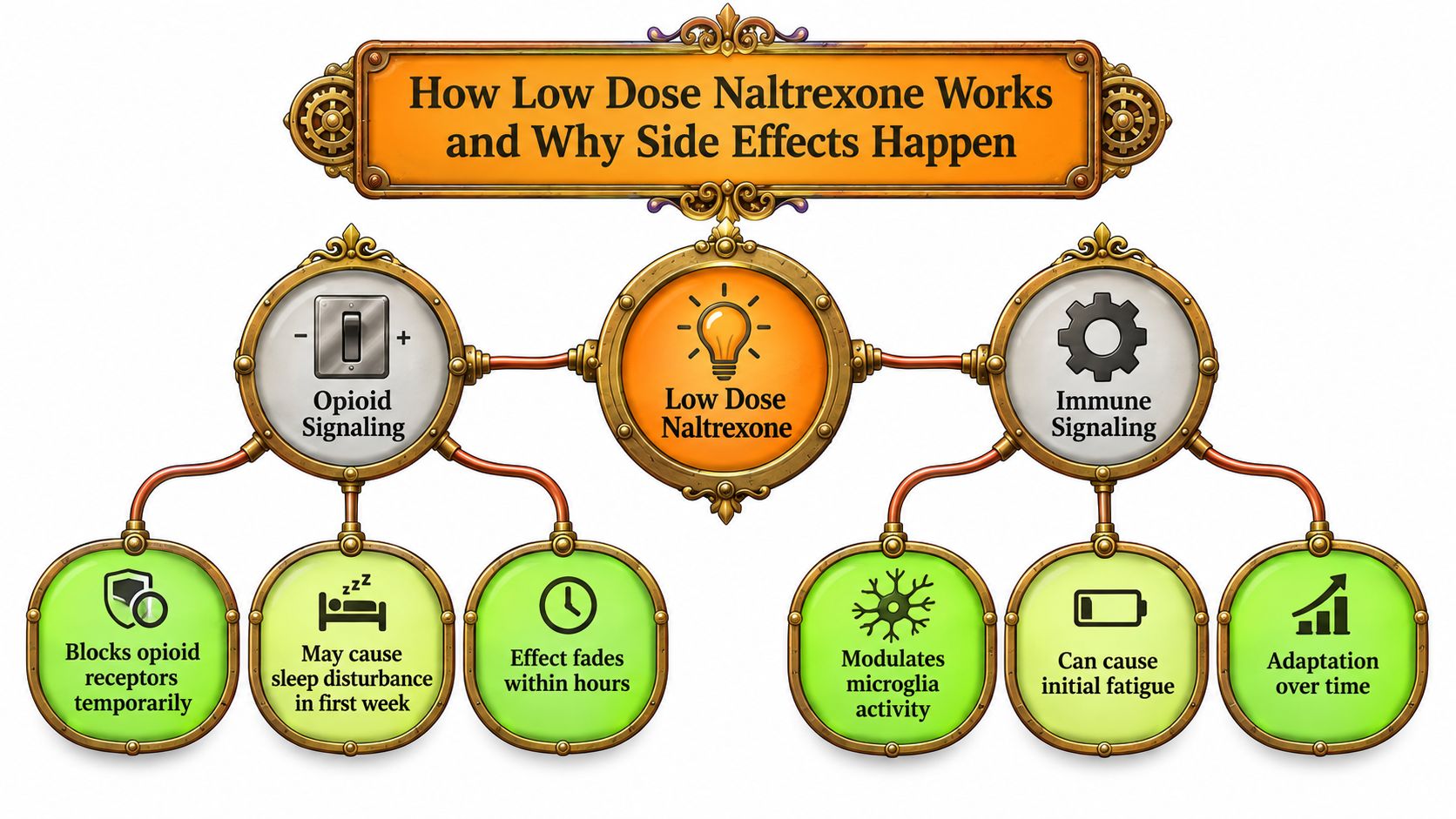
After starting LDN, you might notice a restless night, vivid dreams or mild nausea before any benefit becomes clear. The reason lies in how naltrexone briefly changes signalling in the nervous system.
Naltrexone temporarily blocks opioid receptors, small docking points involved in pain, mood and other body signals. Once that block wears off, the body adjusts to the change, rather like a room adapting when a dimmer switch is moved and then returned.
Researchers and clinicians also discuss LDN's effect on microglia, immune cells in the nervous system. This may help explain changes in pain, energy or inflammation-related symptoms for some people. The exact reason LDN helps particular conditions remains uncertain, so responses differ between individuals.
That temporary signalling change can also produce unwanted effects. The brain may respond with altered sleep, vivid dreams, restlessness or nervousness. The gut may react with nausea, vomiting, cramps, diarrhoea or constipation. These symptoms often indicate that the body is adjusting or that the regimen is not yet well tolerated, rather than proving injury.
UK prescribing guidance associates naltrexone with insomnia, anxiety, nervousness, abdominal pain or cramps, nausea, vomiting, low energy, joint and muscle pain, and headache 3. It also supports a practical dosing point: taking LDN at bedtime may aggravate sleep symptoms for some people, while changing the dose time or increasing it more slowly may help them settle.
Why sleep and stomach symptoms stand out
Sleep and digestion can reveal intolerance early. Someone taking LDN late in the evening may feel wired during a night shift, while another person may feel nauseated after each dose, especially on an empty stomach.
That pattern does not automatically mean LDN is unsuitable. The dose, formulation, timing or speed of increase may need review. Ask your prescriber or pharmacist before changing the plan, and read this explanation of how LDN works.
Common and Uncommon Side Effects by Frequency
Frequency bands provide a useful guide to how often standard-dose naltrexone side effects are reported. They cannot predict exactly what will happen with LDN, because a low dose may still be noticeable in someone who is sensitive to changes in sleep, digestion or pain.
| Frequency band | What it means | Example symptoms |
|---|---|---|
| Very common | Affects more than 1 in 10 people | Headache, sleep disorders, restlessness, nervousness, abdominal cramps, nausea, vomiting, joint or muscle pain |
| Common | Affects 1 in 100 to less than 1 in 10 people | Reduced appetite, diarrhoea, constipation, thirst, irritability, rash, increased sweating, increased tear production |
| Rare | Affects 1 in 10,000 to less than 1 in 1,000 people | Symptoms in this band are much less frequent, but any concerning reaction still needs assessment |
| Very rare | Affects fewer than 1 in 10,000 people | A reaction in this band is exceptionally uncommon, but seek help for serious or rapidly worsening symptoms |
The table gives context, not a personal forecast. Your other medicines, health conditions, dose timing and speed of dose increases can all affect tolerability. Slow titration may give the body more time to adjust, so discuss any change with your prescriber or pharmacist rather than changing the plan alone.
Royal Free NHS patient information lists headache, nervousness or restlessness, nausea, dizziness, reduced appetite and tummy discomfort among recognised effects 4. These symptoms can be unpleasant without indicating harm, particularly if they are mild and begin to settle.
Symptoms people often notice first
Sleep changes may mean difficulty falling asleep, lighter sleep or vivid dreams. Some people feel restless instead of sleepy, while others notice reduced energy during the day. If taking LDN at night makes sleep worse, the dosing time may need review.
The digestive system may respond with nausea, vomiting, abdominal cramps, diarrhoea or constipation. Appetite can decrease, thirst can increase, and headache or dizziness may occur alongside these symptoms.
A side effect is uncomfortable, but that alone does not show toxicity. Severity, timing and whether the symptom is improving provide more useful clues. Keep a short record of the dose, time taken and symptoms, then share it with your prescriber.
For further guidance on naltrexone side effects before starting the Sinclair Method, check your medicine plan with your prescriber. Do not use a frequency label to dismiss a symptom that feels severe, unusual or rapidly worse.
How Long Side Effects Last and What Affects Them
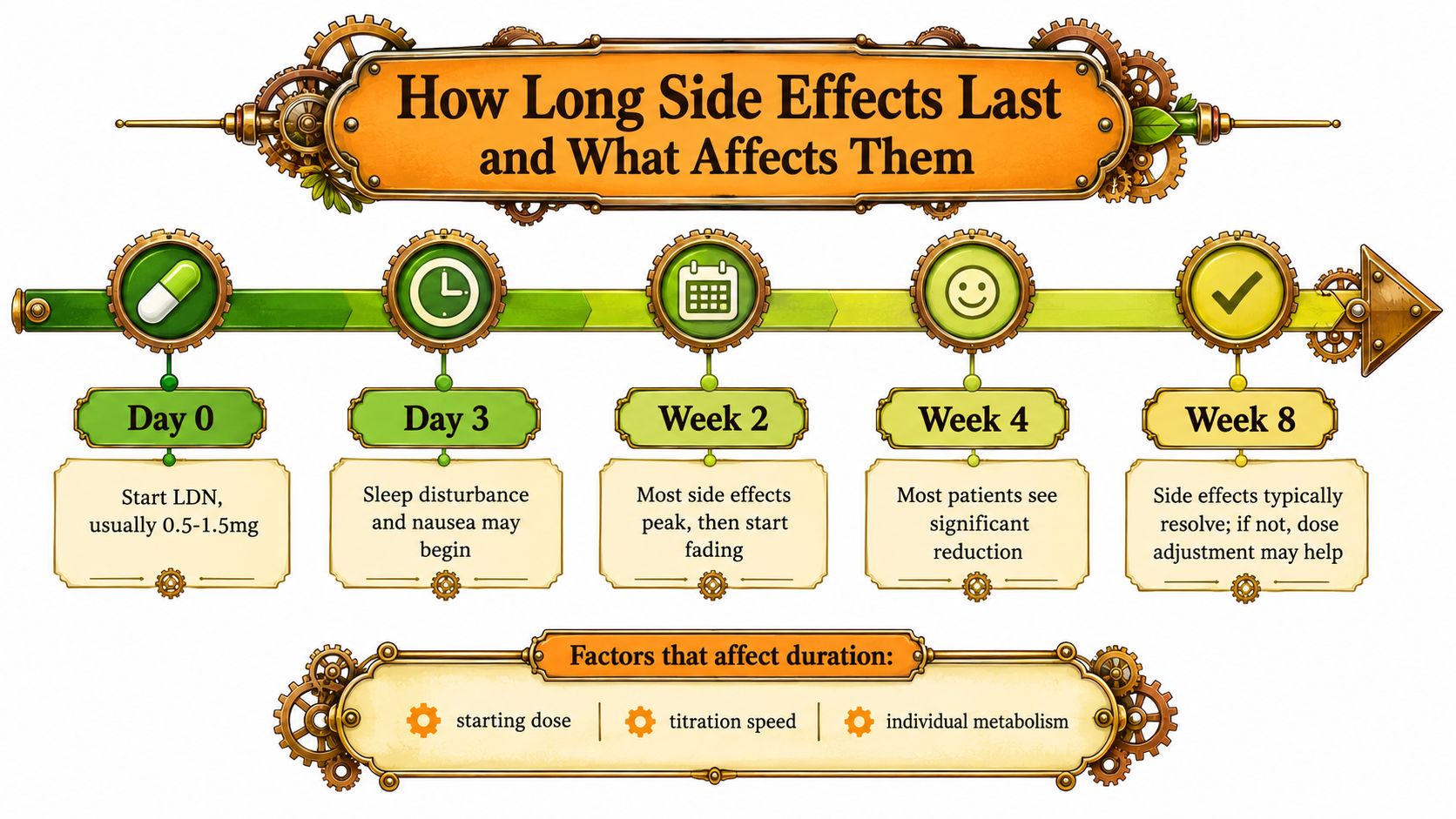
A few days after starting LDN, you may notice nausea or stomach cramps. These effects often improve as your body adjusts. Headache, dizziness, lower energy and muscle or joint aches may also ease with continued use. UK NHS prescribing guidance describes these early reactions as symptoms that can improve during treatment 5.
Sleep effects can follow a different pattern. Vivid dreams or insomnia may settle, yet taking LDN close to bedtime can prolong them. If poor sleep affects daytime functioning, speak to your prescriber instead of enduring it. A change in timing may help, although it should form part of an agreed plan.
What changes the timeline
Several features can affect how quickly symptoms settle:
- Starting dose: Someone who is sensitive to medicines may react to a dose another person manages comfortably.
- Titration speed: Gradual increases give the body longer to adjust.
- Dose timing: Evening doses may worsen insomnia or vivid dreams.
- Individual response: Existing sleep, digestive or migraine symptoms can make changes harder to interpret.
- Other medicines: Treatments affecting sleep, mood or digestion may add to the overall experience.
A parent with a busy routine might take LDN late at night, then associate broken sleep with the medicine alone. The timing may be contributing. Their prescriber could consider another schedule or a slower increase.
Shift workers may need advice based on their changing sleep pattern rather than a fixed clock time. Agreeing a consistent approach that fits the person's routine can make symptom patterns easier to assess.
Muscle aches or low energy after exercise can resemble an LDN reaction. Recording the dose, timing, training and symptoms may show whether discomfort follows each dose or follows exertion instead.
One UK MS resource reports that symptoms may initially become more severe or last longer for several weeks in fewer than 10% of people 2. This figure cannot predict whether treatment will work. Symptoms that persist, worsen or interfere with daily life warrant a prescriber review.
Managing Side Effects and Dosing Considerations
A patient who feels nauseated after every dose may wonder whether to stop immediately. A symptom diary gives the prescriber something more useful than memory: record the dose, time, food, sleep, and whether the symptom appeared soon afterwards or the following morning.
Practical steps that may improve tolerance
- Protect sleep: Vivid dreams or insomnia may improve if the dose is taken at a different time. Ask your prescriber before changing it.
- Support your stomach: A small, light snack may reduce nausea for some people. Follow the instructions supplied with your prescription.
- Drink regularly: Fluids can help maintain comfort if headache, nausea, vomiting or diarrhoea occur.
- Increase slowly: A slower titration can give your body more time to adjust. Discuss the pace before increasing the dose.
- Review the dose: Do not add doses, skip them or split them without professional guidance.
Pharmacist's tip: Keep the diary beside your medicines. A brief note such as “dose, time, sleep, nausea, headache” can reveal a pattern more clearly than trying to remember several days later.
The aim is to identify whether symptoms are settling, unchanged or worsening after a dose change. Patient information for naltrexone describes some reactions as mild or temporary, while advising patients to seek healthcare advice if symptoms cause concern. That approach is helpful with LDN too: do not dismiss symptoms, but do not assume every symptom proves the medicine is unsuitable.
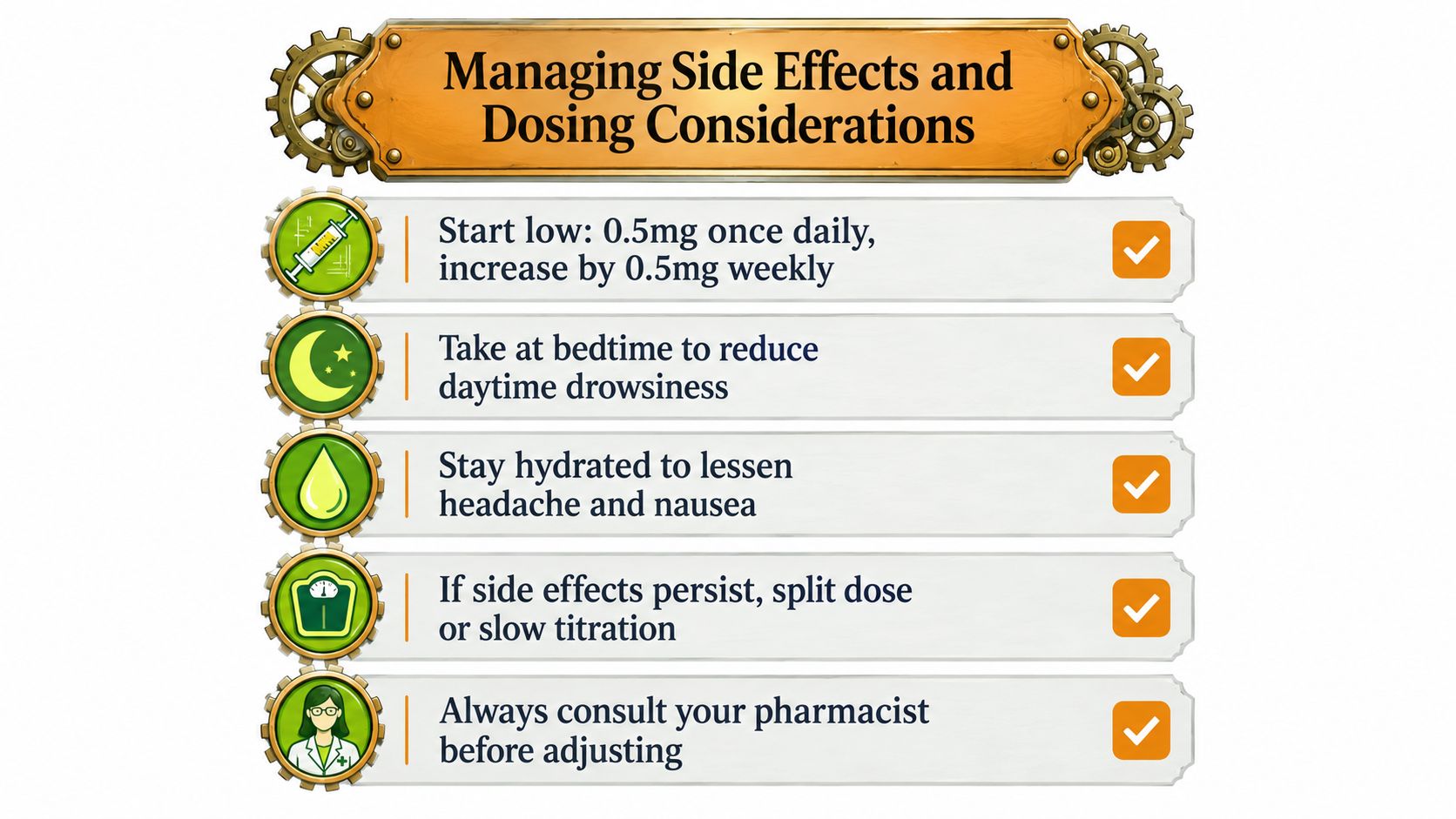
The timing of the dose can matter. Someone whose sleep becomes unsettled after taking LDN at bedtime might ask whether a morning schedule is appropriate. Someone with nausea after dosing might discuss taking it with a light snack. The prescriber should approve either change, particularly if symptoms are strong or persistent.
Pharmacist's tip: A higher dose does not necessarily bring faster benefit. If symptoms increase after titration, ask whether returning to the last tolerated dose or pausing the increase is sensible.
Some patients need a particular liquid, capsule or compounded strength. Compounding pharmacy support in the UK may be relevant, but the formulation should be chosen with your prescriber and pharmacist.
Drug Interactions and Who Should Avoid LDN
A missed medicine check can become important when pain treatment is needed. Opioids are the main interaction to discuss because naltrexone blocks opioid receptors. It can therefore reduce or prevent relief from morphine, codeine, oxycodone and other opioid painkillers. Some cough and cold products contain opioid ingredients too.
Tell every doctor, dentist, pharmacist and hospital team that you take LDN. Mention it before an operation, emergency treatment or new prescription. If opioid pain relief may be required, your prescriber can plan the safest approach, including whether a gap is needed. The timing depends on your treatment and clinical situation, so do not make this decision alone.
Safety checks before starting
Ask your prescriber for individual advice if you:
- have acute hepatitis or serious liver problems
- currently use opioids or receive opioid replacement treatment
- take sedatives or medicines affecting mood or sleep
- may need an operation or strong pain relief
- are pregnant, trying to conceive or breastfeeding
Alcohol also needs a personal discussion, especially alongside other medicines or liver concerns. Keep prescribed treatment unchanged unless advised otherwise, and tell your care team about shop-bought medicines, supplements and remedies.
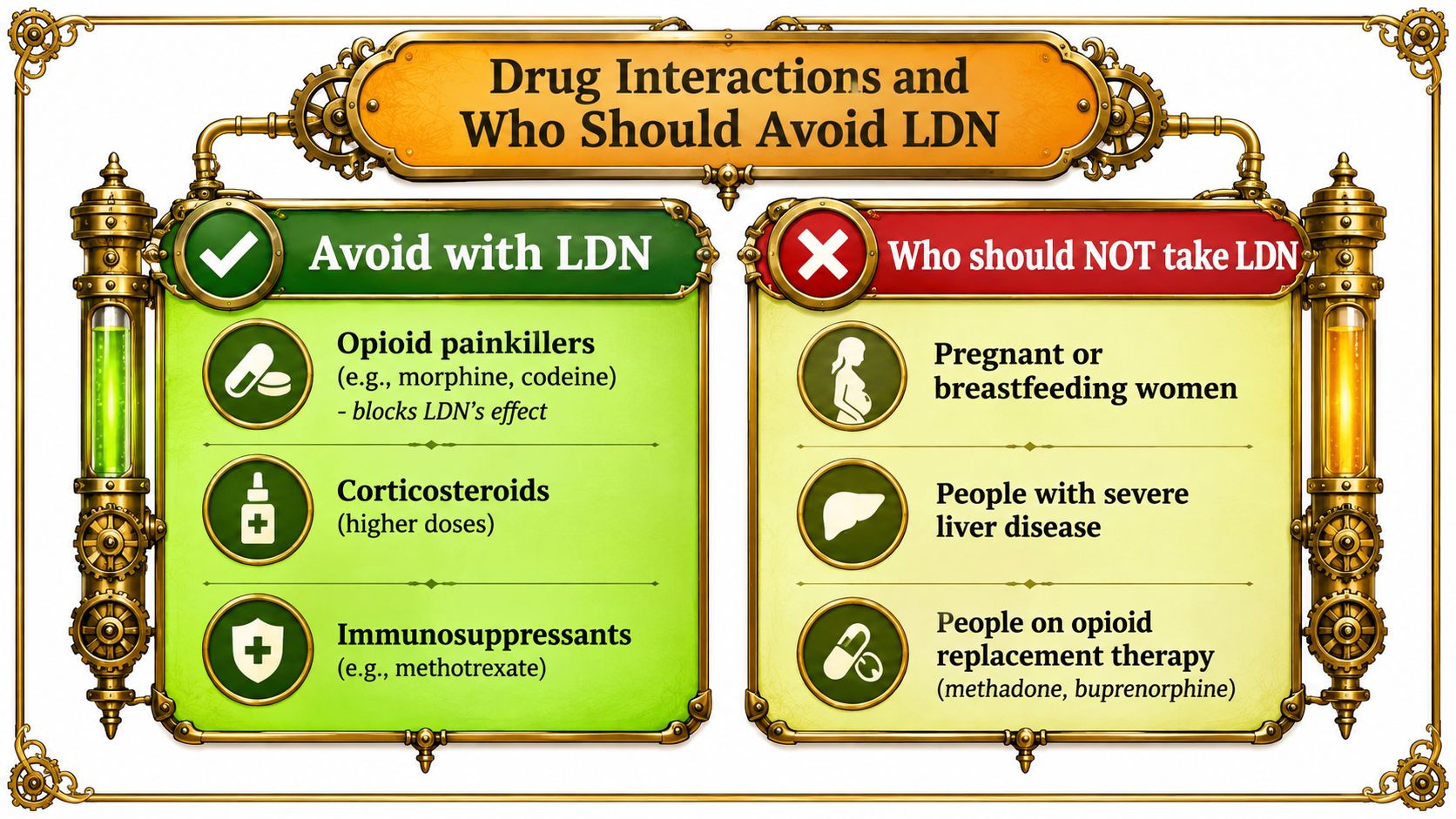
Your health history determines whether LDN is suitable. A checklist cannot replace a medicines review. Read this UK safety guide on who should avoid naltrexone alongside advice from a qualified clinician.
Pharmacist's tip: Save an up-to-date medicines list on your phone. Include painkillers, cough remedies, sleep aids, supplements and medicines bought from a shop.
When to Contact Your Prescriber and Safety Summary
If LDN side effects are severe, continue without improvement or disrupt daily life, contact your prescriber or pharmacist. Prompt advice is sensible for repeated vomiting, a troublesome rash, marked mood changes or sleep disruption that does not settle. A short-lived symptom can be monitored, but ongoing or worsening symptoms deserve review rather than being accepted as part of treatment.
Seek urgent help for swelling of the lips, mouth or throat, severe difficulty breathing or collapse. Severe abdominal pain, yellowing of the skin or eyes, confusion, fainting or rapidly worsening symptoms also need urgent medical assessment. In the UK, use NHS 111 for urgent advice when appropriate, or call 999 for a life-threatening emergency.
The simple safety plan
- Record the pattern: Write down the dose, time taken, symptoms, sleep and any change over the following hours. This can show whether symptoms peak soon after a dose or appear later.
- Don't self-adjust: Ask your prescriber before changing the dose, formulation or schedule. A slower increase may help tolerance, but the plan should be individual.
- Check pain medicines: Ensure every prescriber, dentist and pharmacist knows you take naltrexone, particularly before treatment for pain.
- Review persistent symptoms: Do not assume discomfort must continue. Your clinician can decide whether the dose, timing or another cause needs checking.
- Trust your judgement: If your condition feels seriously wrong, seek help rather than waiting for the next routine appointment.
Most low dose naltrexone side effects are mild and may improve as the body adjusts. Nausea, cramps and headache often occur early, while sleep symptoms may relate to taking LDN near bedtime. Moving the dose earlier or later can sometimes be discussed, but do not change the schedule without advice. Slow titration may give the body more time to settle, especially when symptoms follow an increase.
A practical example is a sleep problem that starts after a dose change. Record when the tablet was taken and when the symptom began, then share that pattern with your prescriber. This gives them useful information without turning a timing experiment into self-treatment.
This article is for information only. It does not replace personal medical advice, diagnosis or treatment. Your prescriber must consider your health history, medicines and reason for using LDN before recommending any change.
Summary
LDN side effects often affect sleep, digestion, energy or the head.
Nausea and cramps may start during the first few days.
Sleep problems can worsen when you take LDN close to bedtime.
A symptom diary can reveal useful timing patterns.
Ask before changing the dose, formulation or schedule.
Tell every healthcare professional that you use naltrexone.
Frequently asked questions
How long do low dose naltrexone side effects last?
Many early symptoms improve as your body adjusts. UK guidance says stomach cramps and nausea may occur during the first few days and tend to improve over time 5. Persistent or worsening symptoms need a review.
Do LDN side effects mean the medicine is working?
No. Side effects don't prove that LDN will benefit you, and their absence doesn't prove that it won't. They mainly show how your body responds to the medicine.
Can LDN cause vivid dreams?
Yes, sleep disturbance and vivid dreams can occur. Taking LDN close to bedtime may make sleep symptoms worse for some people. Ask your prescriber whether another dosing time is appropriate.
Can I take LDN in the morning?
Some people may tolerate morning dosing better when night-time treatment disrupts sleep. Don't change the schedule without checking first. Your prescriber can consider your symptoms, routine and other medicines.
Should I take LDN with food?
A small snack may help some people with nausea, but follow the directions supplied with your prescription. Food won't solve every side effect. Contact your pharmacist if nausea continues.
Can I take opioid painkillers with LDN?
Naltrexone can block opioid medicines and reduce their pain-relieving effect. Tell your healthcare team before planned surgery, dental treatment or any new pain prescription.
What should I do if I miss a dose?
Follow the instructions provided by your prescriber or pharmacy. Don't double the next dose unless a healthcare professional specifically tells you to do so.
Is LDN safe during pregnancy or breastfeeding?
The decision needs individual medical advice. Tell your prescriber if you're pregnant, trying to conceive or breastfeeding before starting or continuing LDN.
When should I stop LDN?
Don't stop or restart it based only on an online article. Contact your prescriber if symptoms are severe, persistent or worrying. Seek urgent help for serious allergic symptoms or rapidly worsening illness.
Meta description
Low dose naltrexone side effects explained for UK patients, including timing, duration, sleep, nausea, interactions, dose changes and when to seek help.
Byline and clinical review
Written by: Medical Mojo editorial team, patient education writers.
Clinically reviewed by: UK-registered pharmacist, medicines safety reviewer.
How this content was created
We based this article on UK NHS-affiliated prescribing and patient guidance, then checked the advice for clear language, interaction warnings and practical safety steps. The content received a clinical review for consistency with the supplied naltrexone information and UK patient context.
References
[1] West Hampshire Clinical Commissioning Group, 2022. Naltrexone shared-care guideline. Available at: UK NHS-affiliated naltrexone shared-care guidance
[2] Eden Clinic, n.d. Low dose naltrexone. Available at: UK information on low dose naltrexone
[3] NHS-affiliated prescribing guidance, 2025. Naltrexone prescribing information. Available at: UK naltrexone prescribing guidance
[4] Royal Free London NHS Foundation Trust, n.d. Naltrexone. Available at: Royal Free NHS naltrexone patient information
[5] NHS-affiliated prescribing guidance, 2025. Shared-care agreement for naltrexone. Available at: Updated UK naltrexone prescribing guidance
Courier Pharmacy offers consultations for low-dose naltrexone, with prescription assessment and personalised support for treatment tolerance. If you're concerned about LDN side effects or need help discussing dose timing, visit Courier Pharmacy to learn about the available service.


