Low Estrogen Levels: A Practical UK Guide
Low Estrogen Levels. Low oestrogen levels explained for UK adults — causes, symptoms, testing and treatment options, with pharmacist tips and NHS-aligned
A 49-year-old juggling work and family may start waking with night sweats, losing her train of thought and finding sex uncomfortable. A younger runner might miss periods after increasing training and cutting back on food. Both may wonder if they have low oestrogen levels, but the same symptom or test result can have different causes.
Oestrogen is a group of hormones with jobs across the body. “Low” doesn't mean one fixed number on a blood test. It can reflect a natural change, a medical condition or a temporary shift. This guide explains common causes, symptoms, testing and treatment, plus when to speak to a clinician.
Key takeaways
- Low oestrogen can happen during menopause, before age 40, or for other reasons.
- For typical menopause symptoms from age 45, diagnosis usually relies on symptoms and periods, not a single hormone test. NICE guidance on diagnosis
- Vaginal and urinary symptoms can occur without hot flushes.
- HRT isn't the only option, and treatment depends on the cause and your health.
- Seek medical advice for missed periods, persistent symptoms or unexpected bleeding.
What Low Oestrogen Actually Means
Think of oestrogen as one of the body's maintenance hormones. It affects more than periods and fertility. It also plays a role in bones, the brain, heart, bladder and skin.
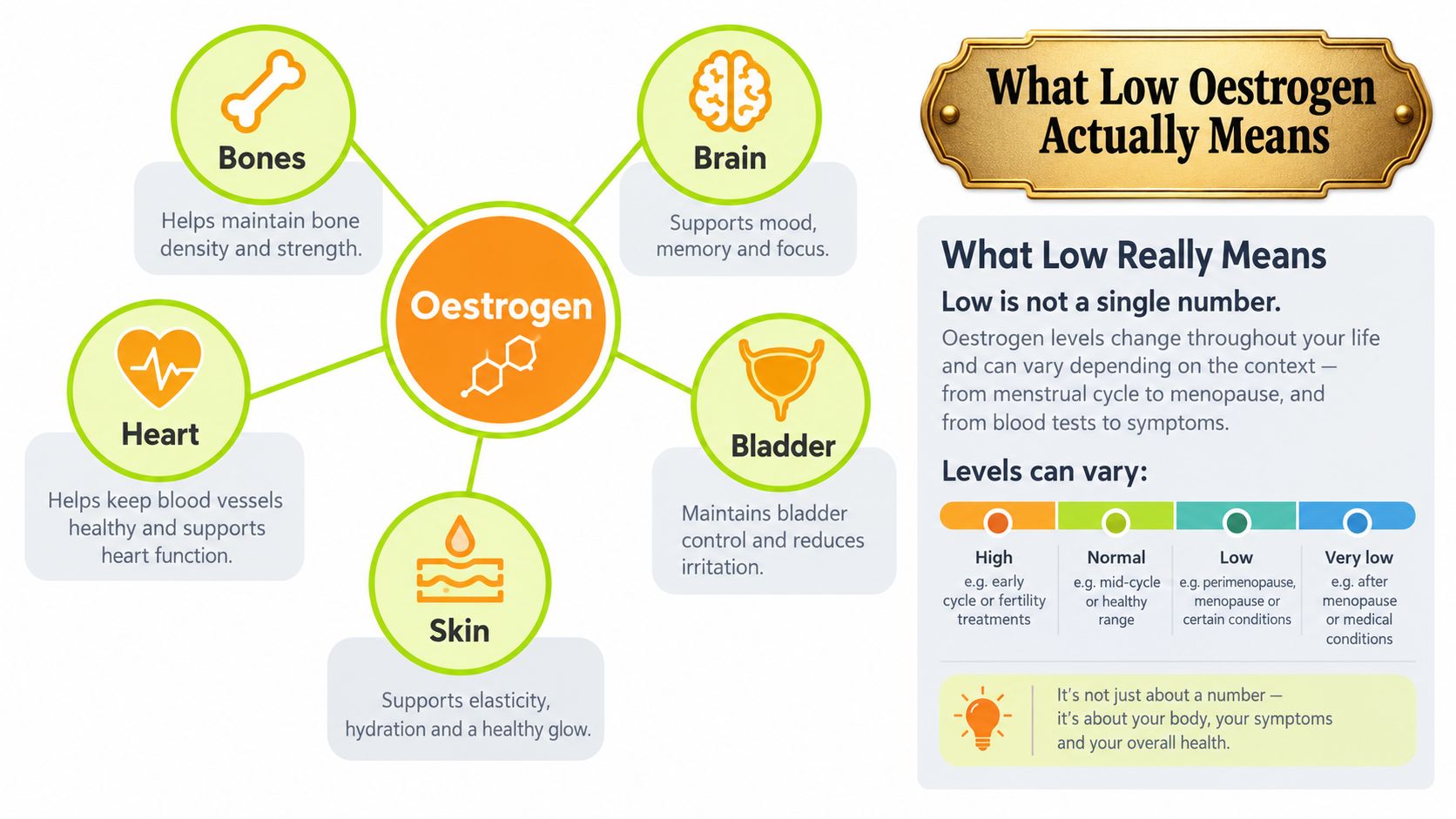
During perimenopause, ovarian hormone levels can rise and fall before declining. Symptoms may come and go, and a blood result can vary depending on when it's taken. Menopause is identified after 12 consecutive months without a period, when hormonal contraception isn't affecting the picture. NICE explains how clinicians identify menopause
Low oestrogen can also have a different meaning in someone under 40. Premature ovarian insufficiency (POI) means ovarian function has reduced earlier than expected. It needs clinical assessment, rather than being treated as ordinary menopause. Other causes, such as reduced food intake or intense exercise, may also affect periods and hormones.
A useful way to think about it: A hormone result is a snapshot. Your symptoms, menstrual history, medicines and health all help explain what it means.
This guide looks at menopause and other possible causes, including those that can be missed when people assume every symptom points to menopause. If you're concerned, a GP or another qualified clinician can help work out whether testing or treatment makes sense.
Common Causes of Low Oestrogen at Every Age
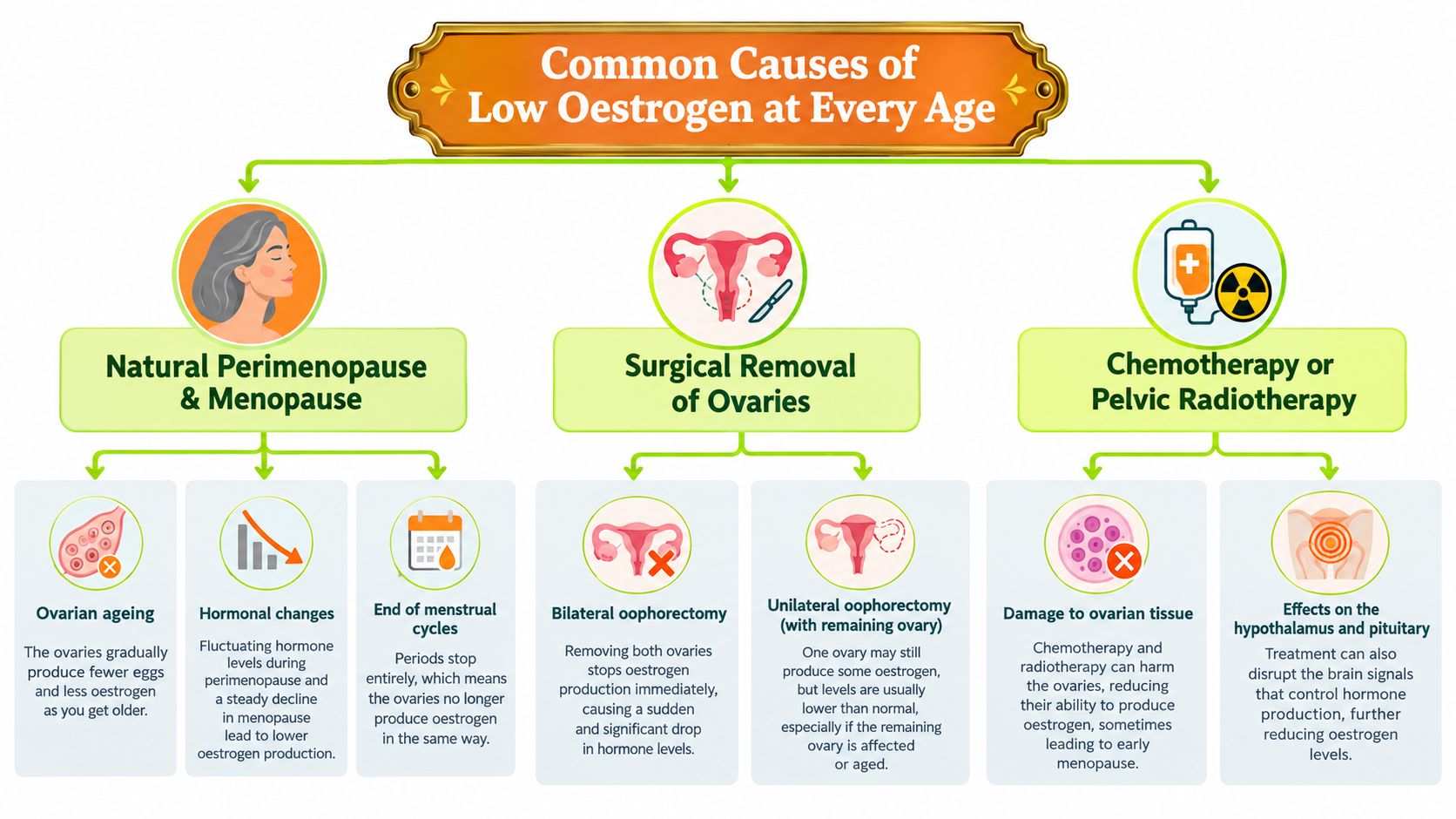
A 29-year-old training hard for a marathon whose periods have stopped, and a 52-year-old noticing her cycles becoming irregular, can both have low oestrogen. The reason behind it is usually very different. Age offers a strong clue, but medical treatment, lifestyle and other health conditions all shape the picture too.
In the UK, menopause usually occurs between 45 and 55, with an average age of around 51. UK Government information on HRT and menopause Within that window, falling oestrogen is typically part of the natural transition. Surgery that removes both ovaries triggers an abrupt drop rather than a gradual one, and chemotherapy or pelvic radiotherapy can reduce ovarian function at any age.
Early menopause is less common than people sometimes assume. UK public-sector guidance estimates that around one in 100 women experience menopause before age 40, a figure that includes premature ovarian insufficiency. The Local Government Association's menopause factfile When periods stop or hormones drop at that age, the cause needs identifying before any treatment decisions are made.
Causes that may be temporary or need specialist care
Some causes settle once the underlying issue does. Low energy intake, substantial weight loss, intense exercise and sustained stress can all quieten the signals the brain sends to the ovaries. Clinicians call this functional hypothalamic amenorrhoea. The brain works like a cautious manager here: when it senses the body is under strain, reproduction moves down the priority list. Periods stop, and oestrogen falls with them.
A busy shift worker whose periods have stopped might be eating less, sleeping poorly and exercising hard. That pattern deserves a check-up. Stress may play a part, but treating it as the whole story risks missing another cause. Thyroid disorders can disrupt cycles too, so mention any related symptoms to your clinician. You can read about hypothyroidism and its symptoms.
Certain medicines, including some hormonal treatments, can also alter bleeding patterns or hormone activity.
The distinction that matters is between a temporary disruption and a lasting change. A dip caused by under-fuelling may reverse when eating and training settle, while menopause after surgery or cancer treatment often calls for a longer-term plan. A GP or specialist can usually tell these apart, starting with your history rather than a test.
For a visual overview of menopause symptoms and care, watch this video.
Symptoms Worth Taking Seriously
A woman of 36 has irregular periods, uncomfortable sex and 3am waking she blames on stress. Feeling 'too young for the menopause', she waits two years before anyone checks her ovarian function. That delay is the risk.
Low oestrogen doesn't check your date of birth.
Oestrogen affects several body systems, and its symptoms overlap with other conditions, so they're easy to mislabel.
- Body temperature: hot flushes and night sweats.
- Sleep and mood: night waking, low mood, anxiety or poor concentration.
- Vagina and bladder: dryness, discomfort during sex, urgency or repeated urinary symptoms.
- Muscles and joints: aches or stiffness.
- Other changes: skin, hair and sexual desire.
Genitourinary symptoms are the easiest to miss. Someone may seek help for recurring discomfort without ever having a hot flush, or treat what feels like repeated thrush when the vaginal tissue itself has thinned and dried. Read more about vaginal dryness and possible care.
Most women at midlife notice at least some menopausal symptoms, and for a sizeable minority they're severe enough to disrupt sleep, work and relationships. Under 40 the same cluster gets far less attention, yet premature ovarian insufficiency (POI) can produce it too.
A quick symptom check
Three questions help. Did symptoms begin alongside a change in periods? Did several appear together? Do they persist or affect daily life? A 'yes' pattern gives your clinician clues, though it can't confirm the cause. A home hormone kit can't settle it either; it captures one moment, not your overall pattern.
Pharmacist's tip: If period changes arrive with flushes or vaginal symptoms, describe the full pattern at your appointment. Stress, thyroid problems and iron deficiency can produce similar effects, so one symptom alone is a weak basis for self-diagnosis.
Book a review if symptoms trouble you, periods stop unexpectedly or you're under 40 and notice changes suggesting reduced ovarian function. Act sooner if anything is severe or changes suddenly.
Testing for Low Oestrogen and When It Helps
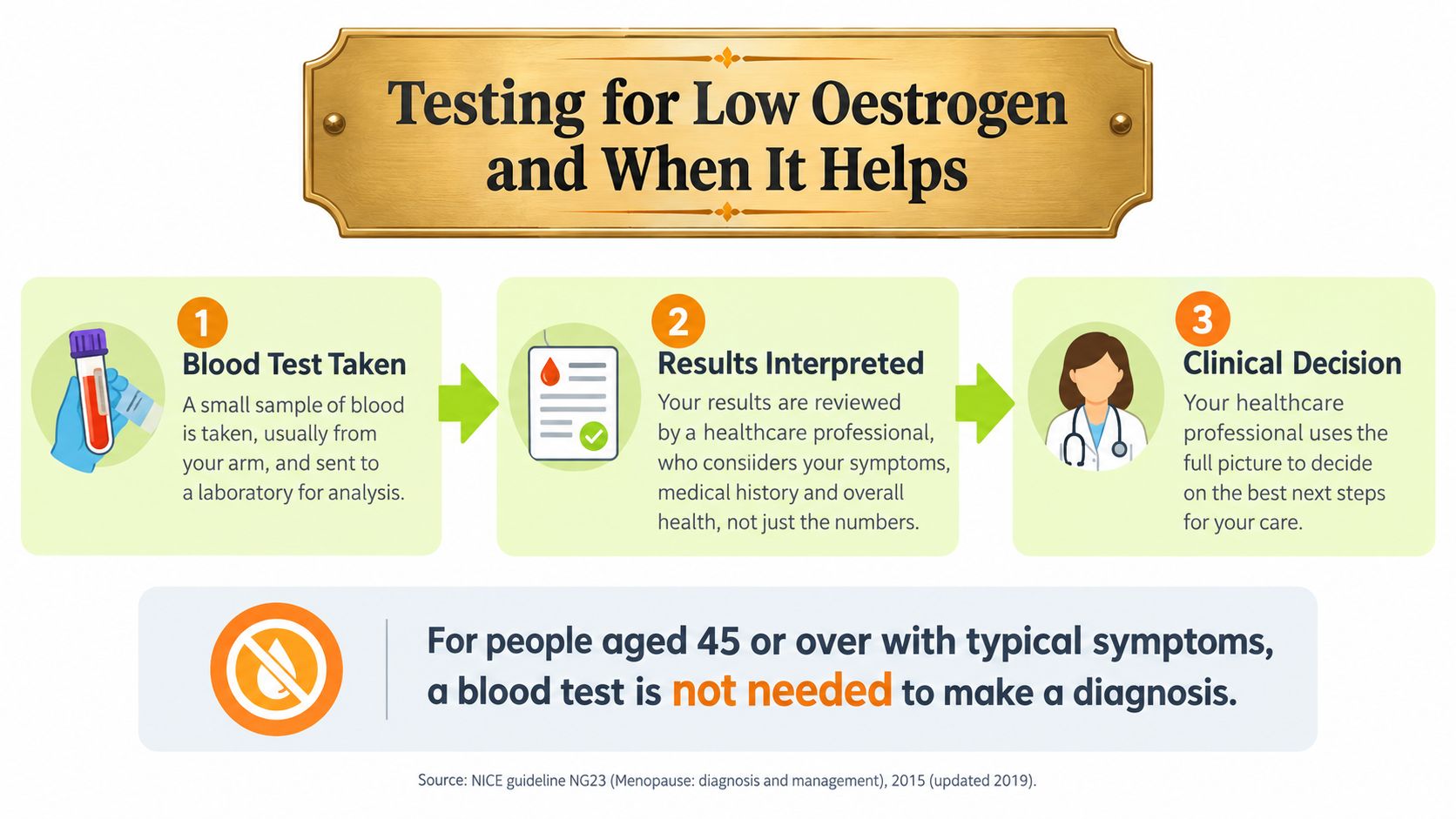
An oestradiol level can look low on a Monday and normal a week later. Hormones swing, especially during perimenopause, so one reading rarely tells the full story. That is why, for people aged 45 or over with typical symptoms, NICE recommends identifying menopause from symptoms and menstrual history rather than routine blood tests. NICE quality statement on diagnosis
The same guidance advises against using blood oestradiol to confirm menopause in this group, and says tests such as anti-Müllerian hormone or inhibin should not be used either.
When a test may help
Younger patients are a different case. A clinician may arrange FSH testing when menopause is suspected between 40 and 45, or premature ovarian insufficiency (POI) under 40, where a diagnosis shapes both treatment and long-term health monitoring. Testing can also form part of checking why periods have stopped when another cause is possible. FSH gives misleading results in people using combined hormonal contraception or high-dose progestogens, so it is not used for routine diagnosis in that situation. NICE recommendations on menopause identification and testing
If a test is ordered, context shapes the reading. Share when your last period started, any hormonal contraception you use and your regular medicines. Reference ranges differ between laboratories and cycle days, so your clinician interprets the result against your circumstances.
A home finger-prick kit can collect a sample, yet it cannot weigh your symptoms against your cycle or explain why periods stopped. If you have already done one, bring the result to your appointment instead of starting hormones yourself. For a clear look at what one popular panel measures, read what the DUTCH test can and can't tell you.
Pharmacist's tip: Note your cycle dates and medicines before a blood test. It helps whoever interprets the result see the whole picture.
Treatment Options That Work
Two people can have the same low oestrogen result and need entirely different treatment. A woman of 34 with premature ovarian insufficiency is usually advised to take HRT until around the average age of menopause, partly to protect her bones and heart. Someone with vaginal dryness after menopause may do well with a local treatment alone. Your symptoms and the reason behind them shape the plan far more than a single lab figure.
For hot flushes and night sweats linked to menopause, NICE recommends weighing the benefits and risks of HRT against your own situation rather than applying one rule to everyone. NICE guidance on menopause management Reading a plain-language overview of how HRT treatment works before your appointment can help you arrive with the right questions.
| Treatment option | Main symptoms targeted | Best suited for | Key safety note |
|---|---|---|---|
| Systemic HRT (tablets, patches, gels or sprays) | Hot flushes and night sweats; may also help sleep and mood | Menopause symptoms that affect daily life | With a uterus, a progestogen is added to protect the womb lining |
| Vaginal oestrogen | Vaginal dryness, discomfort and related urinary symptoms | People whose main concern is local vaginal or urinary discomfort | A clinician checks it suits your history, and NICE recommends regular review |
| Non-hormonal prescription options | Some hot flushes or related symptoms, depending on the medicine | People who cannot use, or prefer to avoid, HRT | A prescriber selects and monitors the treatment |
| Lubricants and vaginal moisturisers | Dryness or discomfort during sex | Non-hormonal relief, alone or alongside other care | They ease symptoms, but seek assessment if problems persist |
| Lifestyle measures | Sleep, general wellbeing and bone health | Support alongside any treatment | Exercise, stopping smoking and a balanced diet help, though they do not replace needed care |
If you have a uterus, systemic oestrogen needs a progestogen alongside it to keep the womb lining healthy. After a total hysterectomy, a clinician may prescribe oestrogen on its own. Which route fits depends on your medical history and what matters to you. NICE briefing on HRT choices
Vaginal oestrogen works like a targeted treatment for one area rather than whole-body therapy, acting mainly on vaginal and urinary tissues. A clinician can consider it alone or alongside systemic HRT. Some people are offered tibolone or non-hormonal prescription medicines instead, depending on their symptoms and health. Where low oestrogen stems from something else, such as an underlying condition or a medicine you take, treating that cause comes first and HRT may not feature at all.
Weighing benefits and risks
The NHS describes HRT as replacing the hormones that fall as menopause approaches, and lists hot flushes, night sweats, sleep problems, mood changes and vaginal dryness among the symptoms it can ease. NHS information about HRT
UK medicines safety advice is that systemic HRT should be prescribed for symptoms affecting quality of life, at the lowest effective dose, and continued only while the benefits outweigh the risks for that individual. MHRA advice on discussing HRT benefits and risks
Pharmacist's tip: If your prescription includes a progestogen, it is there to protect the womb lining. Treat it as part of the safety plan, not an optional extra.
Monitoring, Follow-Up and When to Act
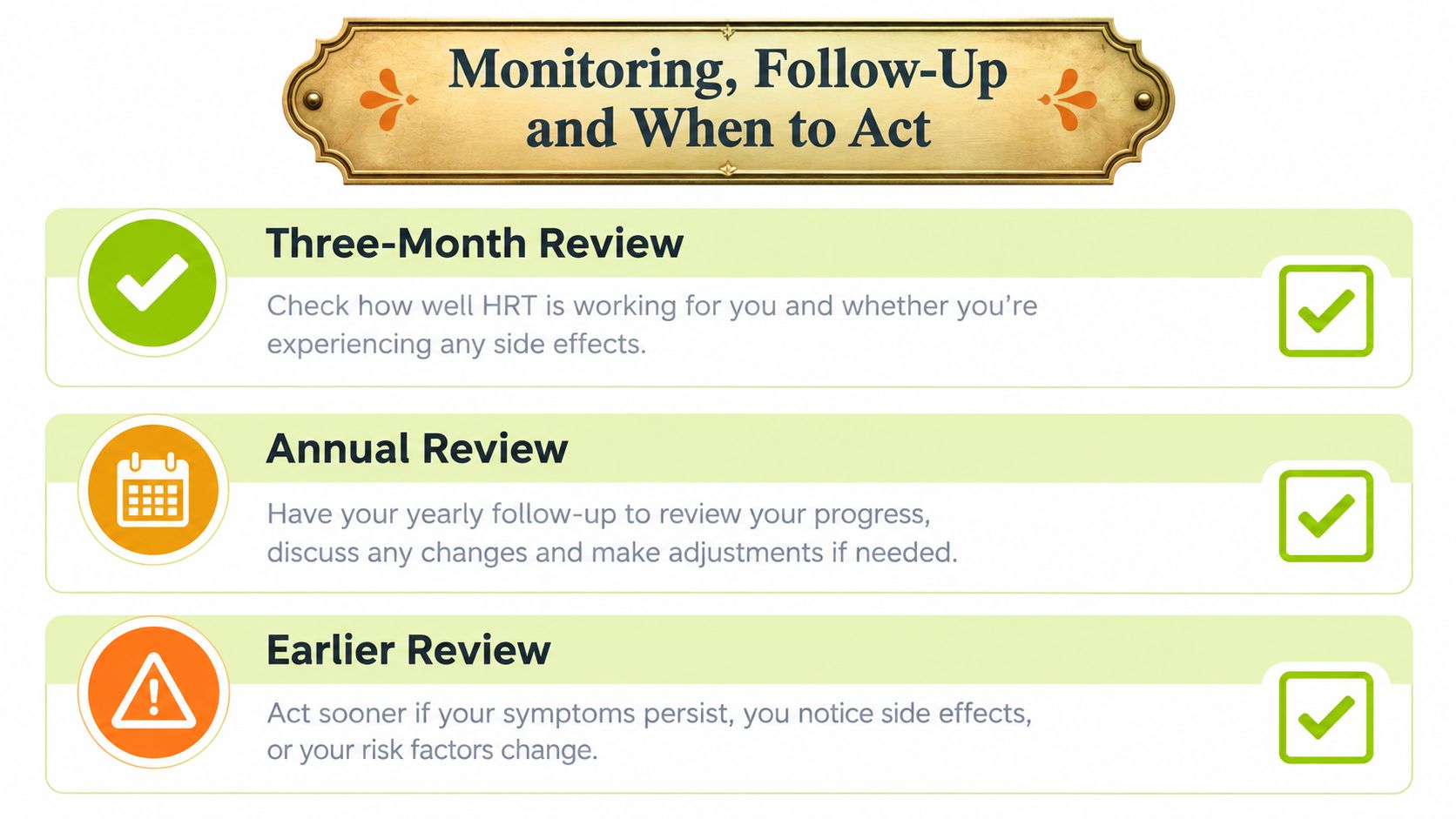
A prescription for low oestrogen is a starting point, and monitoring is what turns it into a plan. As noted earlier, UK guidance sets out an early review, commonly around three months after starting HRT, then a yearly check unless something changes sooner. That first appointment answers one question: is life better, worse or unchanged?
Arrive at each review ready to report on symptoms, side effects and any new health events. If problems persist between appointments, contact your prescriber rather than waiting. The dose or formulation may need adjusting, the diagnosis may need a second look, or specialist input may be warranted. Leave prescribed treatment unchanged until you have that conversation.
Follow-up looks different depending on why oestrogen fell. Someone with premature ovarian insufficiency usually needs reviews for years, because treatment often continues until around the typical age of menopause and bone health becomes part of the picture. Genitourinary symptoms deserve their own check-ins too, since vaginal and urinary changes can creep back after local treatment stops. A person managing low oestrogen caused by a medicine or another condition follows yet another timetable, tied to how that underlying cause responds.
Know when to seek urgent help
Some symptoms cannot wait for a routine review. Seek prompt medical advice for unexpected bleeding while using systemic HRT, a new breast lump, severe headaches, chest pain, calf swelling or sudden changes in vision. Call 999 for signs of a possible emergency, such as severe chest pain or sudden loss of sight. For urgent concerns that are not life-threatening, NHS 111 can advise.
Low sexual desire that persists despite treatment, or symptoms that return after stopping vaginal oestrogen, both justify a booked review rather than self-directed changes. If you have a history of fractures or long-term steroid use, ask whether your bone health needs checking as well.
Pharmacist's tip: Keep a short symptom diary. Note what changed, when it happened and any treatment side effects, so your review can focus on practical next steps.
Practical Next Steps and Common Questions
Your first port of call is a GP or another suitably qualified prescriber. Bring a list of your symptoms, any period changes, the medicines you take and relevant health history. If you have already had a blood test, bring the result with a note of when the sample was taken, because timing changes how a result reads.
If you are under 40 and your periods have become irregular or stopped, say so plainly at the appointment. That detail matters, because premature ovarian insufficiency needs ruling out rather than assuming menopause.
A UK-regulated online pharmacy can be another route into treatment for some people, but an online questionnaire or home test cannot replace a full assessment when symptoms need investigating. Courier Pharmacy offers online assessments reviewed by human prescribers and provides HRT for eligible patients. Ask whether the service suits your situation, particularly if you have unexplained bleeding, missed periods or a possible cause other than menopause.
Mention any allergies or a need for a particular formulation when you speak to the prescriber. Personalised or compounded medicines can be considered for specific needs, though they still require a clinician's assessment and a clear clinical reason.
Common questions
Can men have low oestrogen? Yes. Men produce oestrogen too, although their hormone patterns differ from women's. Symptoms alone cannot confirm a hormone problem, so seek clinical advice rather than trying to correct a test result yourself.
Does low oestrogen always mean I need HRT? No. Treatment follows the cause, your symptoms and your health history. Some people need investigation or non-hormonal care, while others may benefit from systemic or local treatment.
How long can menopause symptoms last? Longer than many people expect. Symptoms often continue for years after periods stop, and a substantial minority live with them for much longer still. That is one reason ongoing review matters more than a predicted end date.
Should I use a home hormone test to diagnose menopause? A home test gives you a number, not a diagnosis. For typical menopause symptoms at age 45 or over, the recommended approach is a symptom-led assessment rather than routine hormone testing, as noted earlier.
Can vaginal dryness happen without hot flushes? Yes. Genitourinary symptoms can be someone's main concern even when flushes never arrive, which surprises many people. A clinician can rule out other causes and talk through suitable options. If desire or comfort during sex is part of the picture, our guide to low libido in women explains how those symptoms are usually assessed.
Is this information a substitute for medical advice? No. This article is for general information only and cannot replace advice based on your own health and medicines. For personalised guidance, speak to your GP or pharmacist, or consult NHS and NICE resources directly.
Summary
- Low oestrogen describes a change, not one universal test result.
- Menopause is one cause, but it is not the only one.
- Period changes and symptoms need context, especially under 40.
- A single blood test often cannot diagnose menopause in people aged 45 or over.
- Treatment may be hormonal or non-hormonal, depending on your needs.
- Seek urgent help for serious symptoms or unexpected bleeding on treatment.
Byline: Written by the Medical Mojo editorial team. Clinical review: Review by a UK-registered healthcare professional before publication.
How this content was created: This article draws on UK NHS, NICE, MHRA, Government and Local Government Association guidance. A qualified clinician should review medical content for accuracy and suitability before publication.
Meta description: Low oestrogen levels can have many causes. Learn about symptoms, testing, menopause, POI and treatment options, plus when to seek medical advice in the UK.
Courier Pharmacy offers online assessments with human prescribers for eligible HRT treatments, alongside personalised formulations where clinically appropriate. If you're exploring care for low oestrogen symptoms, visit Courier Pharmacy to learn about its services and assessment process.


