Understanding low testosterone symptoms in men: A UK guide
Discover the low testosterone symptoms in men: learn the signs, diagnosis steps, and UK-focused treatment options to reclaim energy.
In this article
- Five key takeaways
- The telltale signs of low testosterone
- Common symptoms of low testosterone at a glance
- Physical changes you might notice
- Impact on your sexual health
- Emotional and mental symptoms
- Why your testosterone levels might be dropping
- The role of age and health conditions
- How your lifestyle affects testosterone
- How doctors diagnose low T in the UK
- Starting the conversation
- The all-important blood test
- Understanding your results
- Comparing your testing options
- Treatment options for reclaiming your vitality
- Starting with lifestyle changes
- Demystifying testosterone replacement therapy (TRT)
- Different types of TRT available
- Summary
- FAQs about low testosterone
- At what age do testosterone levels typically drop?
- Can stress cause low testosterone?
- How quickly will I see results from TRT?
- Are there natural ways to boost testosterone?
- Is TRT a lifelong treatment?
- Can I still have children if I am on TRT?
Feeling constantly drained, no matter how much rest you get? You're not alone. That persistent fatigue, low mood, and dip in your sex drive could all be pointing towards low testosterone symptoms in men. This condition, often called 'Low T', affects how you feel physically, mentally, and sexually.
This guide cuts through the noise to give you a clear, patient-friendly look at what's going on. We'll explain the common signs to watch for, how doctors diagnose it in the UK, and what modern treatment options are available. Think of this as your straightforward manual with practical next steps, helping you figure out if it's time to get things checked.
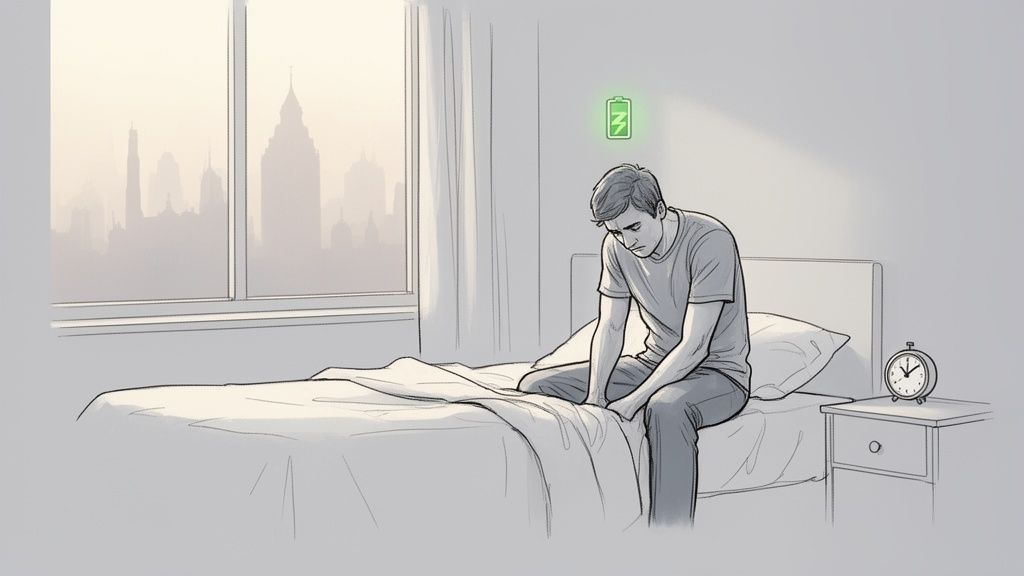 Alt text: A man sits on his bed, looking tired, with a green charging battery icon above his head, indicating low energy.
Five key takeaways
Before we get into the details, here are the main points you need to know about low testosterone symptoms:
- Symptoms are widespread: Low T isn't just about sex drive. It affects your physical, sexual, and emotional health, causing everything from fatigue to mood swings.
- Age isn't the only factor: Lifestyle choices like chronic stress, poor sleep, and certain medical conditions can have a huge impact.
- Accurate diagnosis is crucial: Getting a reliable diagnosis in the UK involves a simple morning blood test, combined with a chat about your symptoms with a professional.
- Effective treatments are available: From lifestyle adjustments to Testosterone Replacement Therapy (TRT), there are proven ways to manage the condition.
- You don't have to "tough it out": Ignoring persistent symptoms isn’t a solution. Seeking professional advice is the first step toward feeling like yourself again.
The telltale signs of low testosterone
Low testosterone's effects can ripple through your physical, mental, and sexual health. The symptoms often creep in so gradually that it’s easy to write them off as just part of getting older or the price of a stressful job. But they are often more than that.
The truth is, low testosterone symptoms in men are more common than most people realise. Often just called 'Low T', it affects a staggering 1 in 4 men over 30 here in the UK. This figure climbs to 40% for men over 45. What’s truly shocking is that an estimated 90% of these men go untreated, left to silently struggle with symptoms that can disrupt their entire lives.
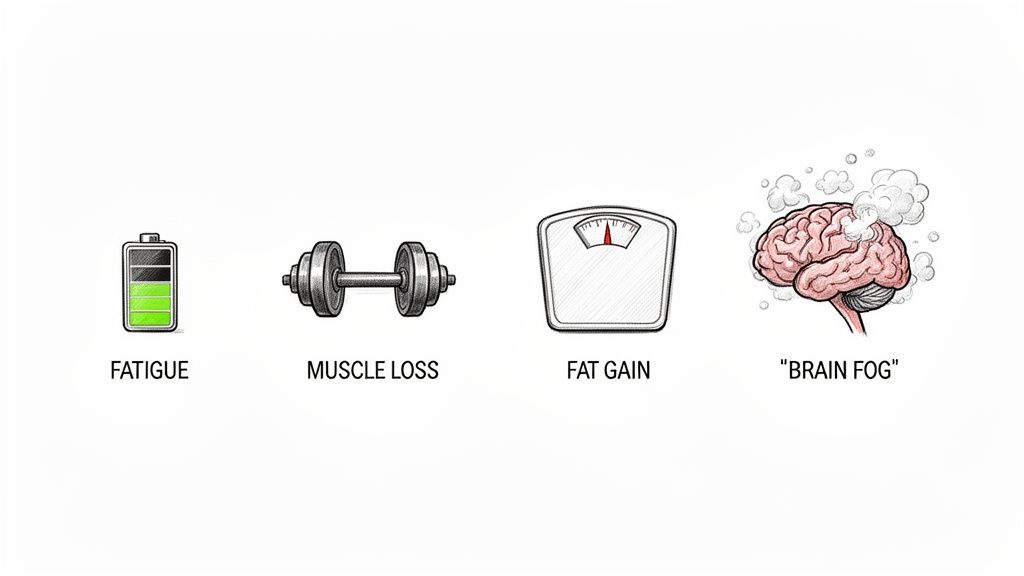 Alt text: Four illustrations showing the main low testosterone symptoms: a depleted battery for fatigue, a shrinking dumbbell for muscle loss, a sad face on a weighing scale for fat gain, and a steaming brain for brain fog.
To help you connect the dots, we’ve put together a quick guide to the most common signs.
Common symptoms of low testosterone at a glance
| Symptom category | Specific signs to look for |
|---|---|
| Physical | Persistent fatigue, loss of muscle mass, increased body fat (especially around the waist), reduced bone density, and sometimes hot flushes. |
| Sexual | A noticeable drop in libido (sex drive), difficulty achieving or maintaining an erection, and reduced semen volume. |
| Emotional & mental | Increased irritability, mood swings, feelings of anxiety or depression, and a general lack of motivation or drive. |
| Cognitive | "Brain fog," which includes difficulty concentrating, memory problems, and a feeling of mental slowness. |
These symptoms can overlap and vary from person to person. However, seeing a pattern across these categories is a strong indicator that it's time to investigate further.
Physical changes you might notice
The physical signs are often the first clue that your hormone levels are off-kilter. They go well beyond just feeling a bit run down.
Featured snippet: One of the biggest complaints is persistent fatigue. This isn’t typical tiredness; it's a bone-deep exhaustion that sleep just can’t seem to touch. Waking up feeling just as drained as when you went to bed is a classic sign.
You might also see unwelcome changes in your body composition. Testosterone is the architect of muscle mass, so when levels fall, you may find it tougher to build muscle at the gym. Worse, you might even notice a drop in your existing strength and muscle tone.
At the same time, body fat can start to creep up, especially around your stomach. This happens because low testosterone can slow your metabolism. It shifts your body from a fat-burning machine to a fat-storing one.
Other physical clues can include:
- Reduced bone density, making you more susceptible to fractures.
- Body hair loss, such as your beard or other body hair thinning out.
- Hot flushes or sweats (yes, men can get them too).
Impact on your sexual health
For many men, it’s the changes in the bedroom that finally prompt them to seek help. Testosterone is the primary engine driving male libido. So, a nosedive in your interest in sex is a hallmark symptom.
But it’s not just about desire. The hormone is crucial for achieving and maintaining an erection. While many things can cause erectile dysfunction (ED), low testosterone is a common culprit. Our guide on the causes of erectile dysfunction explains this in more detail.
Some men also report a decrease in the volume of their ejaculate. Others notice their testicles seem smaller. These are all signs that your reproductive system isn’t getting the hormonal cues it needs to work at its best.
Emotional and mental symptoms
The impact of Low T isn't just physical; it can profoundly affect your mood and mental sharpness. It’s common for men to feel irritable, anxious, or even down without any obvious reason.
You might find your fuse is much shorter, snapping at people over minor frustrations. This can be especially bewildering if you’ve always been a pretty level-headed person. These mood swings are often a direct result of hormonal imbalances messing with your brain chemistry.
Another frequent complaint is "brain fog." It’s the perfect term for that feeling of mental sluggishness, poor concentration, and forgetfulness. It can make focusing at work a real struggle or leave you fumbling to remember simple tasks.
Why your testosterone levels might be dropping
It's a fact of life for men: testosterone levels naturally decline as we get older. This slow slide usually kicks in around the age of 30, dropping by about 1% each year [1]. But let's be clear, this gradual, age-related dip is only one piece of the puzzle.
Plenty of other factors can hit the accelerator on this process. Many are tangled up with modern life and can cause a significant drop at any age. Getting to grips with these root causes is the first real step toward taking back control.
The role of age and health conditions
While ageing is the most well-known driver, certain health conditions can be major players in lowering testosterone. They can disrupt the body's delicate hormonal orchestra.
Here are some of the key medical factors you should know about:
- Obesity: Carrying excess weight, especially around your middle, can seriously drag down your testosterone. Fat cells produce an enzyme that converts testosterone into oestrogen, knocking your hormones further out of balance.
- Type 2 diabetes: There's a strong, two-way link connecting type 2 diabetes and low testosterone. Men with diabetes are far more likely to have low T, and men with low T face a higher risk of developing diabetes [2].
- Pituitary gland issues: Your brain's pituitary gland is the command centre for hormone production. Any problems with it, like tumours or injuries, can mess with the signals it sends to the testes to produce testosterone.
- Injury to the testicles: Direct injury, infections like mumps, or medical treatments such as chemotherapy can damage the testicles, hampering their ability to do their job.
How your lifestyle affects testosterone
It’s easy to overlook, but your daily habits have a massive impact on your hormone levels. The relentless pace and pressures of a busy life are often the hidden culprits behind falling testosterone.
Pharmacist's tip: It's a great idea to review all the medications you're taking with your pharmacist or GP. Some drugs, like certain opioids, steroids, and antidepressants, can interfere with hormone production. An open chat can help pinpoint if your medicines might be part of the problem.
Modern life often throws a cocktail of factors at us that work against hormonal health. Take chronic stress, for instance. A high-pressure job or personal struggles can keep your cortisol (the "stress hormone") levels elevated, which in turn suppresses testosterone production.
Real-life example: John, a 45-year-old shift worker from Birmingham, was constantly exhausted. He struggled to stay alert during his night shifts and felt irritable at home. He put it down to his demanding job, but a blood test revealed very low testosterone. A combination of TRT and better sleep hygiene helped him regain his energy and improve his mood.
Poor sleep is another big one. Your body does most of its testosterone production while you're asleep. If you consistently get less than seven hours of quality shut-eye, your levels can plummet [3]. You can find out more in our detailed guide about how certain medications interact with testosterone.
Finally, never underestimate your diet and exercise habits. A diet heavy in processed foods and a sedentary lifestyle are major contributors to hormonal imbalance. The good news is that making positive changes here, particularly adding strength training, can powerfully boost your natural testosterone levels.
How doctors diagnose low T in the UK
If you suspect your testosterone levels are off, getting a clear answer is simpler than you might think. In the UK, the process is usually a straightforward combination of discussing how you feel and confirming it with a blood test.
Starting the conversation
Your first move is to have an open and honest chat with a healthcare professional. They'll need to know about your specific symptoms—whether that’s fatigue, low libido, or mental fog. The more detailed you are, the better they can build a complete picture of your health.
A lot of men put this conversation off. In the UK, a staggering 86% of men with low T symptoms wait over a year to get help. Shockingly, 24% suffer for more than five years before finally getting a diagnosis. You can break that cycle by simply taking the first step.
The all-important blood test
Featured snippet: A blood test is the only definitive way to measure your testosterone levels. Your GP or a specialist clinic will measure the amount of testosterone circulating in your blood.
Timing is everything here. To get the most accurate reading, the test must be done in the morning, usually between 7 AM and 11 AM. This is because your testosterone levels naturally peak in the early hours. A test taken in the afternoon could give a misleadingly low result.
Pharmacist's tip: For the most reliable blood test results, try to be well-rested and avoid strenuous exercise the day before. Also, make sure you are well-hydrated. Certain illnesses, like a common cold, can temporarily lower your testosterone, so it's best to wait until you're fully recovered before getting tested.
Understanding your results
Once the results are in, your doctor will interpret them alongside your symptoms. While reference ranges can vary slightly between labs, there are generally accepted thresholds in the UK:
- Normal: Anything above 12 nmol/L is generally considered in the clear.
- Borderline: Levels between 8 and 12 nmol/L fall into a grey area. Treatment might be considered if you have significant symptoms.
- Low: A level below 8 nmol/L on two separate morning tests, combined with symptoms, typically confirms a diagnosis of testosterone deficiency.
Because levels can fluctuate, your doctor will likely want to test you twice to confirm the reading. They might also check other hormones to help figure out why your testosterone is low.
Comparing your testing options
These days, you have more choice than ever when it comes to getting tested. The traditional route is visiting your GP, but modern services now offer convenient at-home options. For a comprehensive overview, you could explore a complete Male Hormone Health Check.
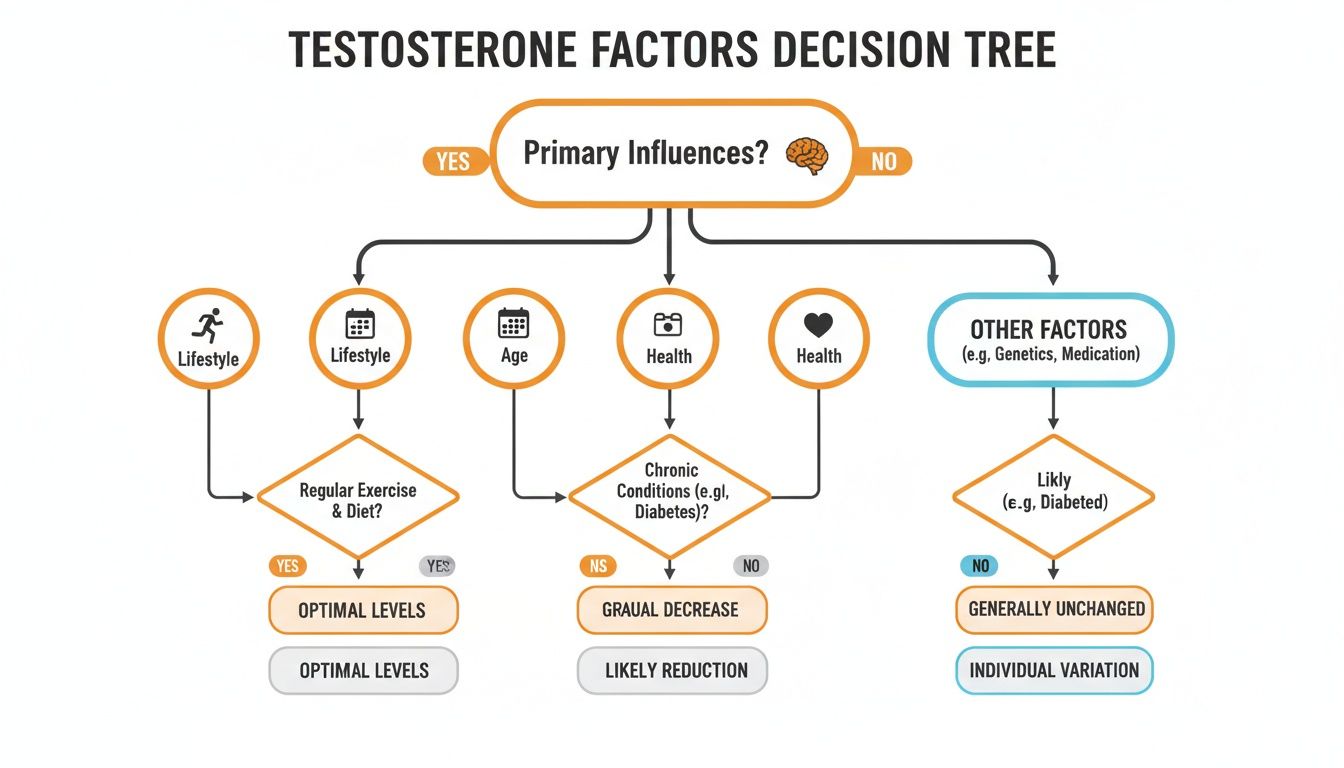 Alt text: A decision tree diagram in green and grey showing how factors like age, lifestyle, and health conditions can lead to a diagnosis of low testosterone.
This image shows that diagnosing low T means looking at the whole picture—not just a single number. To help you decide which path is right for you, here’s a quick comparison of the different blood testing methods available.
| Testing method | How it works | Pros | Cons |
|---|---|---|---|
| GP venous draw | A nurse takes a blood sample from a vein in your arm. | Considered the 'gold standard' for accuracy. | Requires a clinic appointment; can be inconvenient. |
| At-home finger-prick | You use a lancet to collect a small blood sample. | Highly convenient and private; do it on your own schedule. | Can be tricky to collect enough blood; risk of error. |
| At-home venous draw | A trained phlebotomist visits your home to take a sample. | Combines accuracy with the convenience of being at home. | More expensive than other options. |
Ultimately, the best option depends on what you value most: gold-standard accuracy, pure convenience, or a hybrid approach that brings professional accuracy to your doorstep.
Treatment options for reclaiming your vitality
Getting a diagnosis of low testosterone is the first step, but it’s also where the journey back to feeling like yourself really begins. The good news? You have powerful and effective options. Treatment isn’t just about medication; it starts with getting the foundations of your health right.
First, we’ll look at the huge impact lifestyle changes can make. After that, we’ll dive into the details of Testosterone Replacement Therapy (TRT), a highly effective medical treatment. This section will give you a balanced view, helping you understand the benefits and what you need to consider.
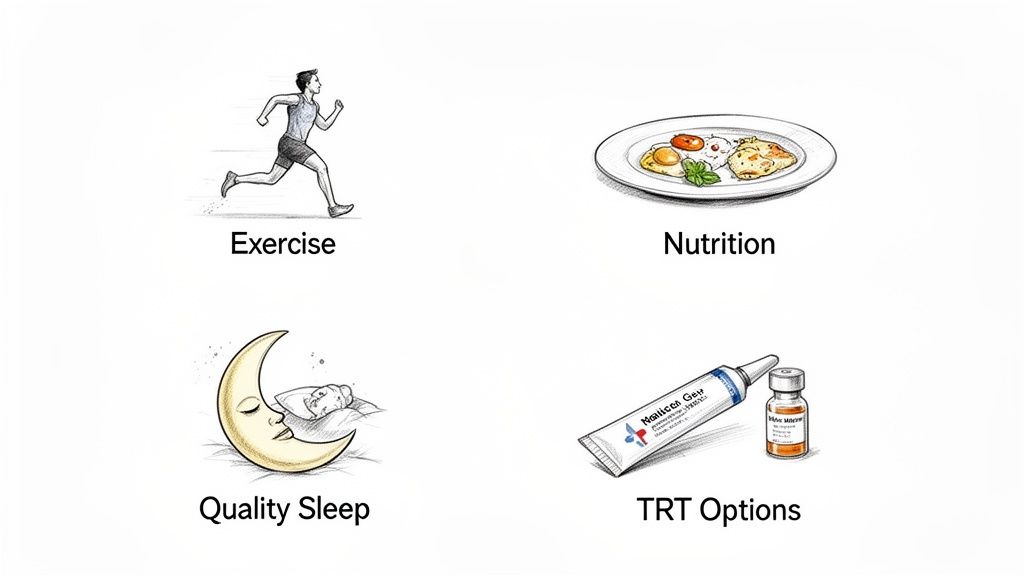 Alt text: Four icons representing key pillars of men's health: a kettlebell for exercise, an apple for nutrition, a crescent moon for sleep, and a medical bottle for TRT options.
Starting with lifestyle changes
Before discussing medical treatments, it's vital to look at lifestyle factors. Making positive changes here can sometimes be enough to boost your testosterone naturally. At the very least, it will support any medical treatment you undertake.
Think of it as building a stronger foundation for your overall health.
- Exercise regularly: Resistance training (like lifting weights) and high-intensity interval training (HIIT) can give testosterone production a serious kick-start.
- Improve your diet: Focus on a balanced diet packed with whole foods. Make sure you’re getting enough protein, healthy fats, and complex carbs. Zinc and vitamin D are crucial for hormone health.
- Prioritise sleep: Your body produces most of its testosterone while you sleep. Getting a solid 7-9 hours of quality, uninterrupted sleep each night is non-negotiable.
- Manage stress: Chronic stress pumps up cortisol, a hormone that works against testosterone. Find ways to wind down that work for you—whether it's mindfulness, a walk in nature, or a hobby.
Demystifying testosterone replacement therapy (TRT)
When lifestyle tweaks aren't enough, Testosterone Replacement Therapy (TRT) is the go-to medical treatment for clinically low testosterone. The goal of TRT is simple: bring your testosterone levels back into a healthy, normal range. This helps get rid of the disruptive low testosterone symptoms in men, like fatigue and low libido.
Testosterone prescriptions in the UK nearly doubled over a decade. Yet a staggering number of men still suffer in silence—up to 90% of symptomatic men remain untreated [4]. For a deeper dive into its background, you can explore the history and development of TRT in our detailed article.
Real-life example: Mark, a 38-year-old gym-goer from Manchester, felt like he’d hit a wall. Despite regular workouts, he was gaining weight and losing strength. A low T diagnosis led him to start TRT. Six months on, he had more energy, was hitting new personal bests, and felt his mood and focus had completely turned around.
Different types of TRT available
In the UK, TRT comes in several forms. The right choice for you will come down to your lifestyle, preference, and what your doctor recommends.
Here’s a quick rundown of the most common options:
- Gels: You apply these to the skin daily. They deliver a steady level of testosterone, but you must avoid skin-to-skin contact with others until the gel is dry.
- Injections: This common method is typically given every one to two weeks. The dose can be easily tweaked, but it means being comfortable with needles.
- Pellets: Small pellets are implanted under the skin, slowly releasing testosterone over several months. It’s a "set-and-forget" option but is less flexible if your dose needs adjusting.
Pharmacist's tip: Whichever TRT method you choose, regular monitoring is essential. Your prescriber will schedule follow-up blood tests to check your hormone levels and look for any potential side effects. Always stick to your prescribed dose and monitoring schedule.
Summary
In summary, the key is to recognise the signs of low testosterone. These include persistent fatigue, low mood, reduced sex drive, and physical changes like muscle loss. A proper diagnosis pairs your symptoms with the clear data from a morning blood test. This is the only way to know for sure what's going on.
Thankfully, there are clear and effective ways to feel better. You can start with powerful lifestyle changes like improving your diet, exercising regularly, and prioritising sleep. For a confirmed diagnosis, medical treatments like Testosterone Replacement Therapy (TRT) can restore your levels and your vitality. The most important thing is not to ignore how you are feeling. Taking that first step and speaking to a healthcare professional can start you on the path back to feeling like yourself again.
FAQs about low testosterone
At what age do testosterone levels typically drop?
Testosterone production usually peaks in your late teens and early twenties. After age 30, a slow, gradual decline of about 1% per year is a normal part of ageing. However, a significant drop that causes noticeable symptoms isn’t just inevitable. Other factors like lifestyle or health conditions can speed up this decline.
Can stress cause low testosterone?
Yes, absolutely. Chronic stress can throw a spanner in the works. When you’re constantly under pressure, your body pumps out the stress hormone, cortisol. Think of cortisol and testosterone as being on a see-saw. When cortisol goes up, testosterone tends to go down.
How quickly will I see results from TRT?
This can vary, but many men notice positive changes within a few weeks of starting Testosterone Replacement Therapy (TRT). Your sex drive often bounces back within 3-4 weeks. You might feel a lift in energy and mood within one to two months, while physical changes like increased muscle mass become more obvious after 3-6 months.
Are there natural ways to boost testosterone?
Definitely. Your lifestyle choices can have a huge impact. Focusing on strength training, getting 7-9 hours of quality sleep, eating a balanced diet, and managing your weight are all powerful, natural ways to support your body's own testosterone production. They're the best place to start.
Is TRT a lifelong treatment?
For most men diagnosed with hypogonadism (the clinical term for low testosterone), TRT is a long-term commitment. The therapy replaces the testosterone your body can no longer make on its own. If you stop treatment, your levels will drop back down, and your symptoms will likely return.
Can I still have children if I am on TRT?
This is a critical point. TRT often suppresses your body's natural sperm production, sometimes to zero. For this reason, TRT is not recommended for men who are trying to start a family. If you want to keep your fertility intact, discuss alternative treatments with your doctor.
Meta description: Feeling tired or irritable? Learn the common low testosterone symptoms in men with our UK guide. We cover signs, causes, diagnosis, and effective treatments.
Byline: Medically reviewed by Dr. Chun Tang, MRCGP. Written by the Medical Mojo Editorial Team.
How this content was created: This article was written based on reliable, evidence-based sources, including guidance from the NHS, NICE, and peer-reviewed medical journals. All information was fact-checked and clinically reviewed by a qualified UK GP to ensure it is accurate, patient-friendly, and up-to-date.
Disclaimer: This article is for informational purposes only and does not constitute medical advice. Please consult with a healthcare professional for any health concerns or before making any decisions related to your health or treatment.
References: [1] Stanworth, R.D. and Jones, T.H., 2008. Testosterone for the aging male: current evidence and recommended practice. Clinical interventions in aging, 3(1), p.25. Available from: https://www.ncbi.nlm.nih.gov/pmc/articles/PMC2544367/ [2] Dandona, P. and Dhindsa, S., 2011. Update: hypogonadotropic hypogonadism in type 2 diabetes and obesity. The Journal of Clinical Endocrinology & Metabolism, 96(9), pp.2643-2651. Available from: https://academic.oup.com/jcem/article/96/9/2643/2834708 [3] Leproult, R. and Van Cauter, E., 2011. Effect of 1 week of sleep restriction on testosterone levels in young healthy men. Jama, 305(21), pp.2173-2174. Available from: https://jamanetwork.com/journals/jama/fullarticle/1029127 [4] Loo, H.L., Gujral, S., Maheshwari, A., Chalishazar, M., Williams, D., Shah, M., Hackett, G. and Jayasena, C.N., 2023. Real-world patterns of testosterone prescribing and monitoring in UK primary care. Clinical Endocrinology, 98(2), pp.200-209. Available from: https://onlinelibrary.wiley.com/doi/full/10.1111/cen.14811


